Investigating the Impact of ULEZ Regulations on Private Hire Drivers
VerifiedAdded on 2023/01/23
|17
|4326
|43
Report
AI Summary
This research inquiry examines the impact of London's Ultra Low Emission Zone (ULEZ) regulations on private hire drivers. The report begins with an introduction outlining the academic significance of the topic and the importance of the problem, focusing on the impact of air quality regulations on the private car drivers in London. It identifies the research objectives and questions guiding the study, including the issues faced due to degrading air quality, the effects of new regulations, and the relationship between ULEZ and private car drivers. A literature review explores existing research on air quality, ULEZ, and the impact on drivers. The methodology section details the research design, approach, and data collection methods. The report also addresses data access, research ethics, and limitations of the study, providing a comprehensive analysis of the ULEZ's effects on private hire drivers, and recommending activities that might be undertaken by the private car drivers in London for adhering to ULEZ. The references include a variety of sources to support the findings.
Running head: RESEARCH ENQUIRY
RESEARCH ENQUIRY
Name of the student
Name of the university
Author note
RESEARCH ENQUIRY
Name of the student
Name of the university
Author note

Paraphrase This Document
Need a fresh take? Get an instant paraphrase of this document with our AI Paraphraser
1RESEARCH ENQUIRY
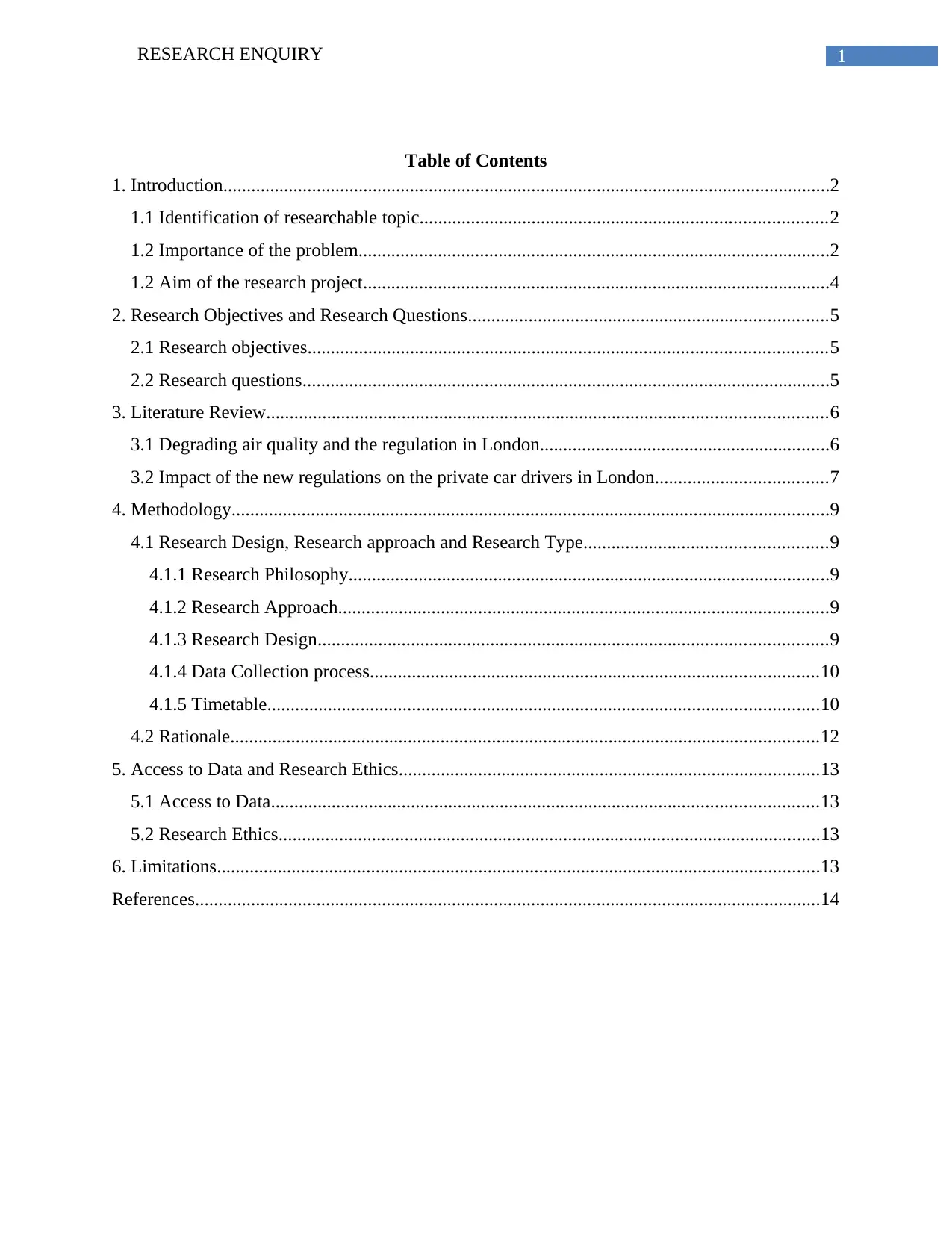
Table of Contents
1. Introduction..................................................................................................................................2
1.1 Identification of researchable topic.......................................................................................2
1.2 Importance of the problem.....................................................................................................2
1.2 Aim of the research project....................................................................................................4
2. Research Objectives and Research Questions.............................................................................5
2.1 Research objectives...............................................................................................................5
2.2 Research questions.................................................................................................................5
3. Literature Review........................................................................................................................6
3.1 Degrading air quality and the regulation in London..............................................................6
3.2 Impact of the new regulations on the private car drivers in London.....................................7
4. Methodology................................................................................................................................9
4.1 Research Design, Research approach and Research Type....................................................9
4.1.1 Research Philosophy.......................................................................................................9
4.1.2 Research Approach.........................................................................................................9
4.1.3 Research Design.............................................................................................................9
4.1.4 Data Collection process................................................................................................10
4.1.5 Timetable......................................................................................................................10
4.2 Rationale..............................................................................................................................12
5. Access to Data and Research Ethics..........................................................................................13
5.1 Access to Data.....................................................................................................................13
5.2 Research Ethics....................................................................................................................13
6. Limitations.................................................................................................................................13
References......................................................................................................................................14
Table of Contents
1. Introduction..................................................................................................................................2
1.1 Identification of researchable topic.......................................................................................2
1.2 Importance of the problem.....................................................................................................2
1.2 Aim of the research project....................................................................................................4
2. Research Objectives and Research Questions.............................................................................5
2.1 Research objectives...............................................................................................................5
2.2 Research questions.................................................................................................................5
3. Literature Review........................................................................................................................6
3.1 Degrading air quality and the regulation in London..............................................................6
3.2 Impact of the new regulations on the private car drivers in London.....................................7
4. Methodology................................................................................................................................9
4.1 Research Design, Research approach and Research Type....................................................9
4.1.1 Research Philosophy.......................................................................................................9
4.1.2 Research Approach.........................................................................................................9
4.1.3 Research Design.............................................................................................................9
4.1.4 Data Collection process................................................................................................10
4.1.5 Timetable......................................................................................................................10
4.2 Rationale..............................................................................................................................12
5. Access to Data and Research Ethics..........................................................................................13
5.1 Access to Data.....................................................................................................................13
5.2 Research Ethics....................................................................................................................13
6. Limitations.................................................................................................................................13
References......................................................................................................................................14
2RESEARCH ENQUIRY
Topic: Impact of new air quality related regulations (ULEZ) on private hire drivers in
London
1. Introduction
1.1 Identification of researchable topic
Academic significance of topic area is based on the relevance of the different current
environmental protection based regulations and the manner in which it affects the interests of the
common people. The research will help in delineating the impact of the ULEZ on the private car
drivers in London. On the other hand, the imposition of the regulations has affected the business
enterprises, which provide rental car services in accordance to the needs of the Londoners. The
imposition of the different penalties has restricted the operations of the private car driver in the
region.
1.2 Importance of the problem
The decreasing rate of air quality has been a concern all around the world, which has
resulted to the development of different environmental protection policies. The diverse range of
policies that are framed by the environmental protection agencies ahs helped in monitoring and
controlling the degradation of the air quality. On the other hand, it was also noted that the
imposition of different protective and conservative regulations affected the lifestyle of the
people. Beevers et al. (2016) stated that the imposition of the ULEZ and the propositions made
by Transport for London (TfL) related to the Congestion Charge exemption for private hire
vehicles (PHVs) has helped in the growth of the private cars. Therefore, it might be stated that
the new proposition has helped the government in adhering to the sustainable operations.
Topic: Impact of new air quality related regulations (ULEZ) on private hire drivers in
London
1. Introduction
1.1 Identification of researchable topic
Academic significance of topic area is based on the relevance of the different current
environmental protection based regulations and the manner in which it affects the interests of the
common people. The research will help in delineating the impact of the ULEZ on the private car
drivers in London. On the other hand, the imposition of the regulations has affected the business
enterprises, which provide rental car services in accordance to the needs of the Londoners. The
imposition of the different penalties has restricted the operations of the private car driver in the
region.
1.2 Importance of the problem
The decreasing rate of air quality has been a concern all around the world, which has
resulted to the development of different environmental protection policies. The diverse range of
policies that are framed by the environmental protection agencies ahs helped in monitoring and
controlling the degradation of the air quality. On the other hand, it was also noted that the
imposition of different protective and conservative regulations affected the lifestyle of the
people. Beevers et al. (2016) stated that the imposition of the ULEZ and the propositions made
by Transport for London (TfL) related to the Congestion Charge exemption for private hire
vehicles (PHVs) has helped in the growth of the private cars. Therefore, it might be stated that
the new proposition has helped the government in adhering to the sustainable operations.
⊘ This is a preview!⊘
Do you want full access?
Subscribe today to unlock all pages.

Trusted by 1+ million students worldwide
3RESEARCH ENQUIRY
The Londoners aimed at reducing the air pollution and thereby protecting public health
through the regulation. The different changes that are made in the regulations are dependent on
promoting the green approach of conservation and sustainability. Drummond and Ekins (2016)
stated that the development of the regulation has helped in the growth of the private hire vehicles
as the Cleaner Vehicle Discount encouraged and motivated the same to develop resources for
maintaining the sustainability standards. The development of the amended policies ands
regulations has helped in encouraging the drivers to bring forth changes in the vehicles for
supporting the sustainable approach towards reduction of air pollution and enhancement of the
air quality. Laybourn-Langton, Quilter-Pinner and Ho (2016) stated that the initial Congestion
charges that were applied in the zone affected the transportation system by 15%. The major aim
of the government and the environmental protection agencies was to minimize the rate of air
pollution in the region, which has led the same to bring forth subtle modification. In this relation,
the changes in the regulations has encouraged the involvement of the community and the private
car drivers in the sustainable measures for diminishing the rate of air pollutants in the air.
A research conducted by the TfL indicated that the removal of the PHV Congestion
Charge exemption will be helping to reduce the number of PHVs in the region, which will not
only minimize the rate of congestion but also effectively reduce the rate of air pollution in the
region (Moody and Tate 2017). However, the measure will be affecting the interests of the PHV
drivers due to lower amount of intervention in the different regions. Kirby (2016) stated that the
reduced rate of PHVs in the region would help in reducing the rate of air pollutants and toxic
emission in the region resulting to suitable measures for maintaining the sustainability of the
people living in the region. The imposition of strict legislations has affected the interests of the
private car drivers while operating in the diverse fields. On the other hand, it has been noted that
The Londoners aimed at reducing the air pollution and thereby protecting public health
through the regulation. The different changes that are made in the regulations are dependent on
promoting the green approach of conservation and sustainability. Drummond and Ekins (2016)
stated that the development of the regulation has helped in the growth of the private hire vehicles
as the Cleaner Vehicle Discount encouraged and motivated the same to develop resources for
maintaining the sustainability standards. The development of the amended policies ands
regulations has helped in encouraging the drivers to bring forth changes in the vehicles for
supporting the sustainable approach towards reduction of air pollution and enhancement of the
air quality. Laybourn-Langton, Quilter-Pinner and Ho (2016) stated that the initial Congestion
charges that were applied in the zone affected the transportation system by 15%. The major aim
of the government and the environmental protection agencies was to minimize the rate of air
pollution in the region, which has led the same to bring forth subtle modification. In this relation,
the changes in the regulations has encouraged the involvement of the community and the private
car drivers in the sustainable measures for diminishing the rate of air pollutants in the air.
A research conducted by the TfL indicated that the removal of the PHV Congestion
Charge exemption will be helping to reduce the number of PHVs in the region, which will not
only minimize the rate of congestion but also effectively reduce the rate of air pollution in the
region (Moody and Tate 2017). However, the measure will be affecting the interests of the PHV
drivers due to lower amount of intervention in the different regions. Kirby (2016) stated that the
reduced rate of PHVs in the region would help in reducing the rate of air pollutants and toxic
emission in the region resulting to suitable measures for maintaining the sustainability of the
people living in the region. The imposition of strict legislations has affected the interests of the
private car drivers while operating in the diverse fields. On the other hand, it has been noted that
Paraphrase This Document
Need a fresh take? Get an instant paraphrase of this document with our AI Paraphraser
4RESEARCH ENQUIRY
the current Ultra Low Emission Discount is applicable to the vehicles meeting the Euro 5
standard of air quality through emission of 75g/km or less of CO2 (Childress et al. 2015).
However, the first phase of the changes in the regulations is aimed at encouraging the zero-
emission capable vehicles through exemption from the charge (Fagnant and Kockelman 2014).
On the other hand, the development of the policy would affect the 10% of vehicle, which are
currently eligible for a discount (Wadud, MacKenzie and Leiby 2016). The delineation of the
diverse range of activities relating to the regulations has affected the attitude and interests of
most of the private car drivers in the region. The research will thereby aim at identifying the
different impact that is created by the new regulations (ULEZ) on the private car drivers in
London. A thorough understanding of the different clauses in the regulation and their impact on
the interests of the private car drivers will help in understanding the overall scenario of the
regulatory changes and the sustainable practices. It has been noted that the decreasing air quality
at London has affected the health of the people. Therefore, the research will identify the
sustainability -based operation that is planned in the regulation and the manner in which it
affected the interests of the private car drivers in the region.
1.2 Aim of the research project
The aim of undertaking the research will be to identify the impact of new air quality
related regulations (ULEZ) on private hire drivers in London.
the current Ultra Low Emission Discount is applicable to the vehicles meeting the Euro 5
standard of air quality through emission of 75g/km or less of CO2 (Childress et al. 2015).
However, the first phase of the changes in the regulations is aimed at encouraging the zero-
emission capable vehicles through exemption from the charge (Fagnant and Kockelman 2014).
On the other hand, the development of the policy would affect the 10% of vehicle, which are
currently eligible for a discount (Wadud, MacKenzie and Leiby 2016). The delineation of the
diverse range of activities relating to the regulations has affected the attitude and interests of
most of the private car drivers in the region. The research will thereby aim at identifying the
different impact that is created by the new regulations (ULEZ) on the private car drivers in
London. A thorough understanding of the different clauses in the regulation and their impact on
the interests of the private car drivers will help in understanding the overall scenario of the
regulatory changes and the sustainable practices. It has been noted that the decreasing air quality
at London has affected the health of the people. Therefore, the research will identify the
sustainability -based operation that is planned in the regulation and the manner in which it
affected the interests of the private car drivers in the region.
1.2 Aim of the research project
The aim of undertaking the research will be to identify the impact of new air quality
related regulations (ULEZ) on private hire drivers in London.
5RESEARCH ENQUIRY
2. Research Objectives and Research Questions
2.1 Research objectives
The research objectives guide a study towards the favorable outcomes through
delineation of the different systematic procedures that might be implemented by the same in
order to facilitate the smooth functioning of the systems (Laumbach, Meng and Kipen 2015).
To understand the issues that is faced due to the degrading air quality and the context of
the regulation
To examine the manner in which new air pollution based regulation affected the interests
of the private car drivers
To identify the relationship between ULEZ and its impact on the private car drivers in
London
To suggest recommended activities that might be undertaken by the private car drivers in
London for adhering to ULEZ
2.2 Research questions
The research questions helps in identifying the major areas of the study through
segregating the research problem into different sections for culminating into the favorable
outcome (Brand 2016).
What are the issues that are faced due to the degrading air quality and the context of the
regulation?
How did the new air pollution based regulation affected the interests of the private car
drivers?
2. Research Objectives and Research Questions
2.1 Research objectives
The research objectives guide a study towards the favorable outcomes through
delineation of the different systematic procedures that might be implemented by the same in
order to facilitate the smooth functioning of the systems (Laumbach, Meng and Kipen 2015).
To understand the issues that is faced due to the degrading air quality and the context of
the regulation
To examine the manner in which new air pollution based regulation affected the interests
of the private car drivers
To identify the relationship between ULEZ and its impact on the private car drivers in
London
To suggest recommended activities that might be undertaken by the private car drivers in
London for adhering to ULEZ
2.2 Research questions
The research questions helps in identifying the major areas of the study through
segregating the research problem into different sections for culminating into the favorable
outcome (Brand 2016).
What are the issues that are faced due to the degrading air quality and the context of the
regulation?
How did the new air pollution based regulation affected the interests of the private car
drivers?
⊘ This is a preview!⊘
Do you want full access?
Subscribe today to unlock all pages.
Trusted by 1+ million students worldwide
6RESEARCH ENQUIRY
What is the relationship between ULEZ and the private car drivers in London?
What are the recommended activities that might be undertaken by the private car drivers
in London for adhering to ULEZ?
3. Literature Review
3.1 Degrading air quality and the regulation in London
Steg et al. (2014) noted that the development of the new air pollution- based regulation
have enhanced the capabilities of the nations in supporting the sustainable needs. In this context,
the development of the new policy (ULEZ) has helped Londoners is aimed at improving the air
quality and protecting public life. The regulation aimed at improving the air quality through strict
adherence to the sustainable and conservative mechanisms. The environmental agencies divided
the region into different zones for suitable monitoring and controlling the emissions. In this
relation, the ULEZ (Ultra Low Emissions Zone) has helped in reducing the rate of emissions in
the particular area. Gibson and Carnovale (2015) noted that the degrading quality of air and the
emission of CO2 and NO as exhausts has affected the health of the people in the region. It has
been noted that more than 60% of the population in London are affected by cancerous diseases
which might be linked to the degrading quality of air (Goulden, Ryley and Dingwall 2014).
Therefore, in this relation, the implementation of the different penalties and charges on the
private cars has brought about significant changes in the rate of air quality degradations.
On the other hand, the charges have also helped in minimizing the rate of private vehicles
in the roads, which has resulted to minimization of congestions. Barbieri et al. (2016) noted that
the Cleaner Vehicle Discount, in accordance to the proposition, helped in motivating the private
car drivers to adhere to the green consumption based needs. Initially the Congestion Charge on
What is the relationship between ULEZ and the private car drivers in London?
What are the recommended activities that might be undertaken by the private car drivers
in London for adhering to ULEZ?
3. Literature Review
3.1 Degrading air quality and the regulation in London
Steg et al. (2014) noted that the development of the new air pollution- based regulation
have enhanced the capabilities of the nations in supporting the sustainable needs. In this context,
the development of the new policy (ULEZ) has helped Londoners is aimed at improving the air
quality and protecting public life. The regulation aimed at improving the air quality through strict
adherence to the sustainable and conservative mechanisms. The environmental agencies divided
the region into different zones for suitable monitoring and controlling the emissions. In this
relation, the ULEZ (Ultra Low Emissions Zone) has helped in reducing the rate of emissions in
the particular area. Gibson and Carnovale (2015) noted that the degrading quality of air and the
emission of CO2 and NO as exhausts has affected the health of the people in the region. It has
been noted that more than 60% of the population in London are affected by cancerous diseases
which might be linked to the degrading quality of air (Goulden, Ryley and Dingwall 2014).
Therefore, in this relation, the implementation of the different penalties and charges on the
private cars has brought about significant changes in the rate of air quality degradations.
On the other hand, the charges have also helped in minimizing the rate of private vehicles
in the roads, which has resulted to minimization of congestions. Barbieri et al. (2016) noted that
the Cleaner Vehicle Discount, in accordance to the proposition, helped in motivating the private
car drivers to adhere to the green consumption based needs. Initially the Congestion Charge on
Paraphrase This Document
Need a fresh take? Get an instant paraphrase of this document with our AI Paraphraser
7RESEARCH ENQUIRY
the number of vehicles minimized their activity in the zone by 30% (Kodjak 2015). On the other
hand, it was also noted that the number of PHVs entering the zone in the charging hours rose by
4,000 to 18,000 (Moody and Tate 2017). However, Fagnant and Kockelman (2014) noted that
the revised policy assisted in encouraging the private car drivers to adhere to the different
sustainable measures that are planned by the environmental agencies and government. The
imposition of the regulation aimed at minimizing the rate of air pollution in the specified zones
through certain Congestion Charges. It affected the interests of the private car owners due to the
enhanced costing of the operations and the threatened sustainability of the same.
The Cleaner Vehicle Discount aimed at encouraging sustainable practices among the
private car drivers. Drummond and Ekins (2016) noted that the enumeration of the cleaner
vehicle discount aimed at encouraging the involvement of the private car owners and drivers in
adopting the new sustainable technologies that will yield emission free rides. The development
and imposition of the regulations in different zones helped in minimizing the rate of air
pollutants and particulate matter in the air while protecting public health. Therefore, the
regulation helped in reducing the rate of emissions in the region through different charges,
penalties and encouragement- related discounts.
3.2 Impact of the new regulations on the private car drivers in London
The new regulation regarding the Ultra-Low Emission Zone (ULEZ) leaves mixed
impact on the drivers in UK. According to the report of Childress et al. (2015) for the disabled
passengers there are lots of advantages in terms of the paying for the tax of ULEZ. It means they
can enjoy a sunset period or redemption of paying tax up to 2025. Moreover, it can also be seen
through the article of Brand (2016) that the ULEZ regulation is going to be beneficial for the
private car drivers because of its tax exemption facilities. The UK government intends to
the number of vehicles minimized their activity in the zone by 30% (Kodjak 2015). On the other
hand, it was also noted that the number of PHVs entering the zone in the charging hours rose by
4,000 to 18,000 (Moody and Tate 2017). However, Fagnant and Kockelman (2014) noted that
the revised policy assisted in encouraging the private car drivers to adhere to the different
sustainable measures that are planned by the environmental agencies and government. The
imposition of the regulation aimed at minimizing the rate of air pollution in the specified zones
through certain Congestion Charges. It affected the interests of the private car owners due to the
enhanced costing of the operations and the threatened sustainability of the same.
The Cleaner Vehicle Discount aimed at encouraging sustainable practices among the
private car drivers. Drummond and Ekins (2016) noted that the enumeration of the cleaner
vehicle discount aimed at encouraging the involvement of the private car owners and drivers in
adopting the new sustainable technologies that will yield emission free rides. The development
and imposition of the regulations in different zones helped in minimizing the rate of air
pollutants and particulate matter in the air while protecting public health. Therefore, the
regulation helped in reducing the rate of emissions in the region through different charges,
penalties and encouragement- related discounts.
3.2 Impact of the new regulations on the private car drivers in London
The new regulation regarding the Ultra-Low Emission Zone (ULEZ) leaves mixed
impact on the drivers in UK. According to the report of Childress et al. (2015) for the disabled
passengers there are lots of advantages in terms of the paying for the tax of ULEZ. It means they
can enjoy a sunset period or redemption of paying tax up to 2025. Moreover, it can also be seen
through the article of Brand (2016) that the ULEZ regulation is going to be beneficial for the
private car drivers because of its tax exemption facilities. The UK government intends to
8RESEARCH ENQUIRY
provide a Cleaner vehicle discount for the drives as a promotional offer. The purpose of the
government is to encourage the drivers to adopt the emission reducing techniques so that it will
help both the environment and the drivers as well. The report proved the growing practice of the
drivers to opt for the private vehicle rather than driving cabs and public cars. The decrease in the
rate of number of vehicles is supplemented by the increase in PHV drivers from 4,000 a day to
18,000. As a result of that, it seems to be an effective measure for the drivers as they are intend
to skip the tax related issues.
On the contrary, Kodjak (2015) reported that the difference in charge is seemed to be a
discriminatory practice for the minicab drivers. The empirical studies have argued that the role of
the tax exempting nature of the ULEZ creates a division among the cab drivers and the drivers in
UBER and other minicabs are losing their profit by about 13% in compare to the private vehicle
drivers. This discrimination is totally unconstitutional and creates a huge problem for the
minicab drivers to exist in the market. As a matter of fact, from the review of the congestion
charge exemption affects the private hire vehicles like UBER and minicabs intensely that they
started protesting against the government decisions and forced the government to reconsider the
decision. A direct impact of such dilemma can leave an impact on the local tourism where the
private hire vehicle drivers are witnessing a change in the entire level of substantial costs. It is
true that the removal of congestion charge led the PHV drivers a strategic advantage but at the
same time the license fees and the additional daily charges per vehicle to enter into the ULEZ is
hiked extensively. Therefore, the real picture of the benefits of ULEZ on PHV drivers is a matter
of further introspection.
provide a Cleaner vehicle discount for the drives as a promotional offer. The purpose of the
government is to encourage the drivers to adopt the emission reducing techniques so that it will
help both the environment and the drivers as well. The report proved the growing practice of the
drivers to opt for the private vehicle rather than driving cabs and public cars. The decrease in the
rate of number of vehicles is supplemented by the increase in PHV drivers from 4,000 a day to
18,000. As a result of that, it seems to be an effective measure for the drivers as they are intend
to skip the tax related issues.
On the contrary, Kodjak (2015) reported that the difference in charge is seemed to be a
discriminatory practice for the minicab drivers. The empirical studies have argued that the role of
the tax exempting nature of the ULEZ creates a division among the cab drivers and the drivers in
UBER and other minicabs are losing their profit by about 13% in compare to the private vehicle
drivers. This discrimination is totally unconstitutional and creates a huge problem for the
minicab drivers to exist in the market. As a matter of fact, from the review of the congestion
charge exemption affects the private hire vehicles like UBER and minicabs intensely that they
started protesting against the government decisions and forced the government to reconsider the
decision. A direct impact of such dilemma can leave an impact on the local tourism where the
private hire vehicle drivers are witnessing a change in the entire level of substantial costs. It is
true that the removal of congestion charge led the PHV drivers a strategic advantage but at the
same time the license fees and the additional daily charges per vehicle to enter into the ULEZ is
hiked extensively. Therefore, the real picture of the benefits of ULEZ on PHV drivers is a matter
of further introspection.
⊘ This is a preview!⊘
Do you want full access?
Subscribe today to unlock all pages.
Trusted by 1+ million students worldwide
9RESEARCH ENQUIRY
4. Methodology
4.1 Research Design, Research approach and Research Type
4.1.1 Research Philosophy
The research will be undertaken through the application of interpretivism philosophy,
which will assist in identifying the experiences of the private car drivers after the implementation
of the new air pollution related policy in London. The study on the experience of the private car
drivers will ensure the proper understanding of the issues that might be faced by the same
through the imposition of the policy. On the contrary, the utilization of the philosophy will
support the research through the delineation of the different attitude of private hire car drivers
towards the imposition of the policy.
4.1.2 Research Approach
The research will be undertaken through the utilization of a deductive approach, which
will focus on scrutinizing the different available models and theories that are related to air
pollution and the manner in which it might be controlled (Fox and Alldred 2015). On the other
hand, the research will deduce data from the different sources depending on the needs of meeting
to objective. The deductive approach will help in guiding the study towards the objective of
examining the impact of the policy changes on the interests of the PHV drivers.
4.1.3 Research Design
The research will be undertaken through the implementation of Explanatory research
design, which will assist in developing coherent argumentation related to cause-effect
relationship between the policies and the change in the attitude of the private hire vehicles’
drivers. On the other hand, the design will also help in enhancing the study by forecasting the
4. Methodology
4.1 Research Design, Research approach and Research Type
4.1.1 Research Philosophy
The research will be undertaken through the application of interpretivism philosophy,
which will assist in identifying the experiences of the private car drivers after the implementation
of the new air pollution related policy in London. The study on the experience of the private car
drivers will ensure the proper understanding of the issues that might be faced by the same
through the imposition of the policy. On the contrary, the utilization of the philosophy will
support the research through the delineation of the different attitude of private hire car drivers
towards the imposition of the policy.
4.1.2 Research Approach
The research will be undertaken through the utilization of a deductive approach, which
will focus on scrutinizing the different available models and theories that are related to air
pollution and the manner in which it might be controlled (Fox and Alldred 2015). On the other
hand, the research will deduce data from the different sources depending on the needs of meeting
to objective. The deductive approach will help in guiding the study towards the objective of
examining the impact of the policy changes on the interests of the PHV drivers.
4.1.3 Research Design
The research will be undertaken through the implementation of Explanatory research
design, which will assist in developing coherent argumentation related to cause-effect
relationship between the policies and the change in the attitude of the private hire vehicles’
drivers. On the other hand, the design will also help in enhancing the study by forecasting the
Paraphrase This Document
Need a fresh take? Get an instant paraphrase of this document with our AI Paraphraser
10RESEARCH ENQUIRY
future outcomes of the policies and the manner in which it might affect the interests of the
private car drivers in London.
4.1.4 Data Collection process
The data for the research will be collected through the utilization of mixed methodology,
which will ensure the proportionate facilitation of the primary and secondary data collection
methods. The primary data collection will be done through the development of survey
questionnaire, which will be aimed at gathering responses from 100 private car drivers. The
survey will help in understanding the change in the attitudes of the drivers due to the
implementation of the policy and the restrictions. Cluster sampling strategy will be employed for
gathering feedbacks from the respondents which will assist in avoiding unbiased responses. On
the other hand, a secondary analysis of the different available air pollution reports, government
and industry reports, relevant article, blogs and online publications will be undertaken for
supporting the research through the delineation of the different available models, theories and
information related to the air quality and the manner in which they might be controlled. Dumay
and Cai (2015) stated that the potentiality of a research is based on the proportional utilization of
the primary and the secondary sources of information. Therefore, in this relation, the suitable
utilization of the primary and the secondary sources of information will guide the study in
adherence to the objectives.
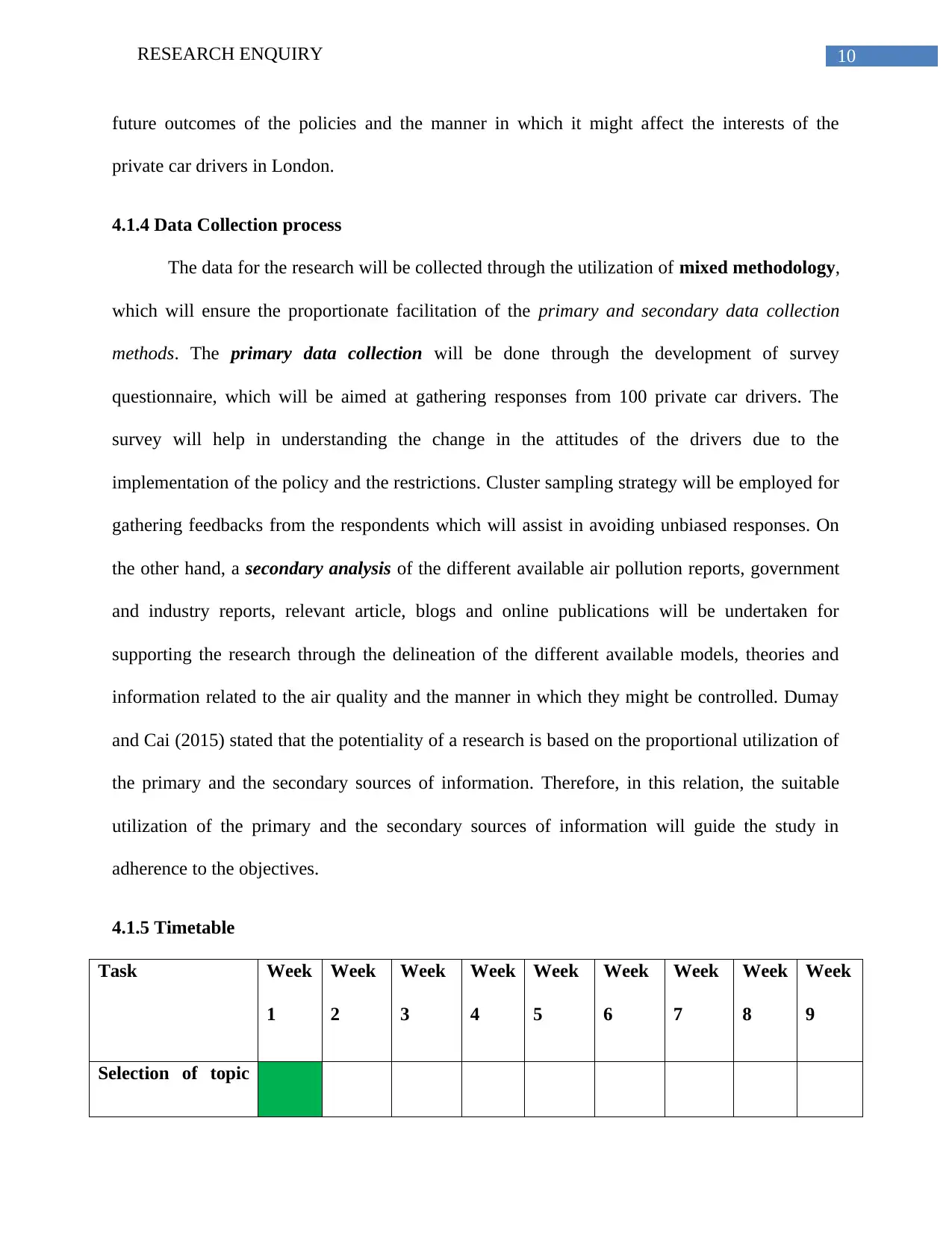
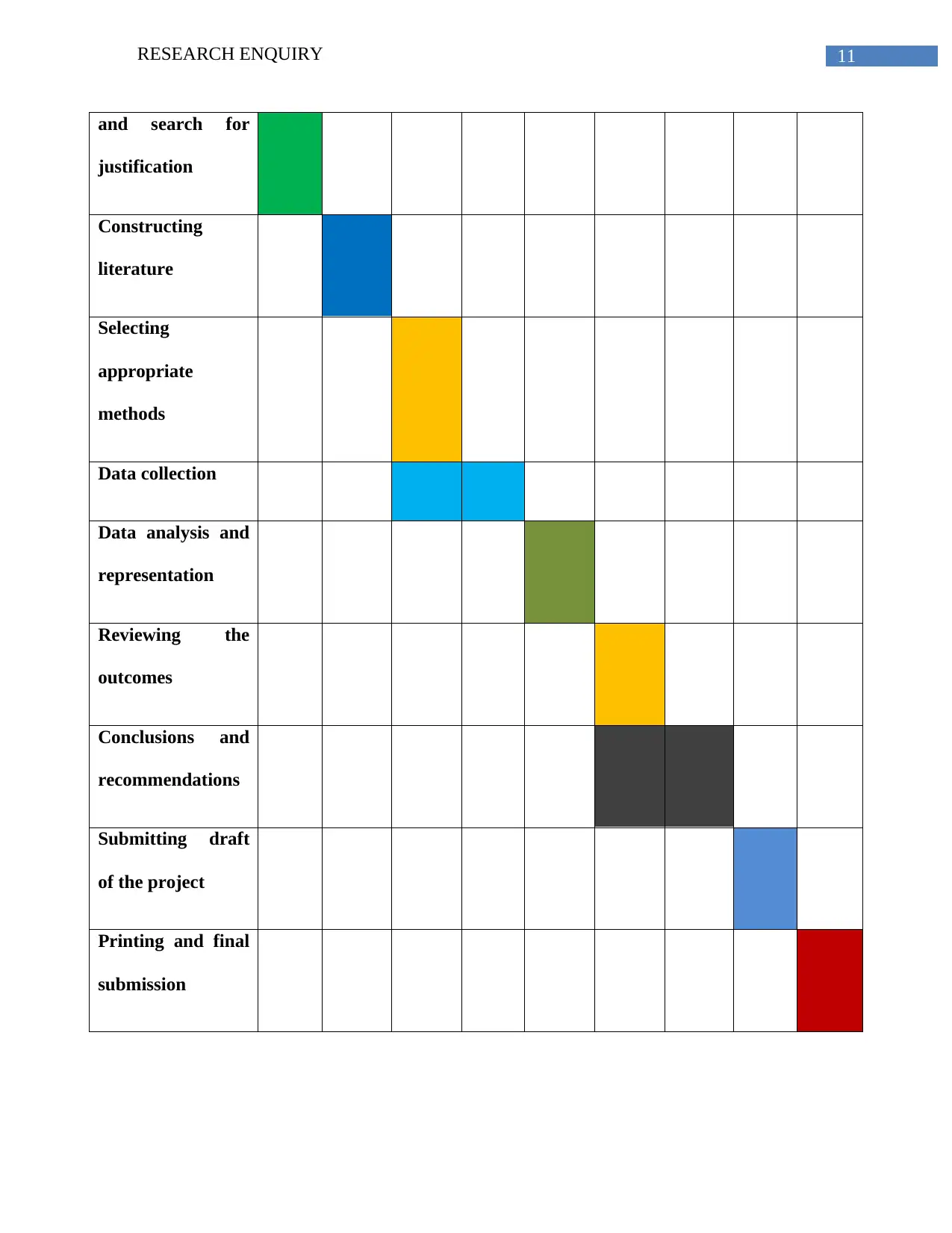
4.1.5 Timetable
Task Week
1
Week
2
Week
3
Week
4
Week
5
Week
6
Week
7
Week
8
Week
9
Selection of topic
future outcomes of the policies and the manner in which it might affect the interests of the
private car drivers in London.
4.1.4 Data Collection process
The data for the research will be collected through the utilization of mixed methodology,
which will ensure the proportionate facilitation of the primary and secondary data collection
methods. The primary data collection will be done through the development of survey
questionnaire, which will be aimed at gathering responses from 100 private car drivers. The
survey will help in understanding the change in the attitudes of the drivers due to the
implementation of the policy and the restrictions. Cluster sampling strategy will be employed for
gathering feedbacks from the respondents which will assist in avoiding unbiased responses. On
the other hand, a secondary analysis of the different available air pollution reports, government
and industry reports, relevant article, blogs and online publications will be undertaken for
supporting the research through the delineation of the different available models, theories and
information related to the air quality and the manner in which they might be controlled. Dumay
and Cai (2015) stated that the potentiality of a research is based on the proportional utilization of
the primary and the secondary sources of information. Therefore, in this relation, the suitable
utilization of the primary and the secondary sources of information will guide the study in
adherence to the objectives.
4.1.5 Timetable
Task Week
1
Week
2
Week
3
Week
4
Week
5
Week
6
Week
7
Week
8
Week
9
Selection of topic
11RESEARCH ENQUIRY
and search for
justification
Constructing
literature
Selecting
appropriate
methods
Data collection
Data analysis and
representation
Reviewing the
outcomes
Conclusions and
recommendations
Submitting draft
of the project
Printing and final
submission
and search for
justification
Constructing
literature
Selecting
appropriate
methods
Data collection
Data analysis and
representation
Reviewing the
outcomes
Conclusions and
recommendations
Submitting draft
of the project
Printing and final
submission
⊘ This is a preview!⊘
Do you want full access?
Subscribe today to unlock all pages.
Trusted by 1+ million students worldwide

1 out of 17


Related Documents


Your All-in-One AI-Powered Toolkit for Academic Success.
+13062052269
info@desklib.com
Available 24*7 on WhatsApp / Email
![[object Object]](/_next/static/media/star-bottom.7253800d.svg)
Unlock your academic potential
Copyright © 2020–2026 A2Z Services. All Rights Reserved. Developed and managed by ZUCOL.