Investigating the Use of Wastewater in Concrete Mixing and Curing
VerifiedAdded on 2023/04/04
|31
|7670
|64
Report
AI Summary
This report investigates the feasibility of utilizing wastewater in concrete mixing and curing processes, addressing the increasing need for sustainable resource management in construction. It includes a literature review examining the effects of wastewater on concrete performance, drawing from previous research on wastewater from various plants and industries. The report also outlines the materials and methods involved in concrete production, including cement, water, and aggregates, as well as the curing process. The study emphasizes the potential environmental and economic benefits of replacing potable water with recycled water in concrete production, while also considering the potential impacts on concrete strength, durability, and setting times. It references various studies that explore the use of different types of wastewater, such as from water treatment plants and ready-mix concrete plants, and highlights the importance of proper testing and treatment of wastewater before its application in concrete to ensure acceptable performance.
Use of wastewater in concrete mixing
and curing.
Table of Contents
Chapter 1 Introduction:..........................................................................................................................2
Chapter 2 Literature review:..................................................................................................................5
2.1 Wastewater Effect on Concrete Performance..............................................................................5
2.2 Previous research.........................................................................................................................5
2.2.1 Effects of mixing wastewater from various plants:...............................................................5
2.2.2 Effects of mixing wastewater from Industries:.....................................................................8
Chapter 3 Materials and Methods:.......................................................................................................13
3.1 Components of Concrete:..........................................................................................................13
3.1.2 Cement – The glue in Concrete:..........................................................................................13
3.1.3 Water – The activator in Concrete......................................................................................14
3.1.4 Aggregates – The filler in Concrete:...................................................................................14
3.2 Curing:.......................................................................................................................................15
3.3 Mixing Water:...........................................................................................................................15
Chapter 4: Methodology.....................................................................................................................15
Chapter 4 Reference:...........................................................................................................................16
Table of Figures
Figure 1. Distribution of water .............................................................................................................2
Figure 2 Concrete................................................................................................................................12
Figure 3. Cement Powder ...................................................................................................................13
Figure 4. Tap water or Potable water...................................................................................................13
P a g e 1 | 31
and curing.
Table of Contents
Chapter 1 Introduction:..........................................................................................................................2
Chapter 2 Literature review:..................................................................................................................5
2.1 Wastewater Effect on Concrete Performance..............................................................................5
2.2 Previous research.........................................................................................................................5
2.2.1 Effects of mixing wastewater from various plants:...............................................................5
2.2.2 Effects of mixing wastewater from Industries:.....................................................................8
Chapter 3 Materials and Methods:.......................................................................................................13
3.1 Components of Concrete:..........................................................................................................13
3.1.2 Cement – The glue in Concrete:..........................................................................................13
3.1.3 Water – The activator in Concrete......................................................................................14
3.1.4 Aggregates – The filler in Concrete:...................................................................................14
3.2 Curing:.......................................................................................................................................15
3.3 Mixing Water:...........................................................................................................................15
Chapter 4: Methodology.....................................................................................................................15
Chapter 4 Reference:...........................................................................................................................16
Table of Figures
Figure 1. Distribution of water .............................................................................................................2
Figure 2 Concrete................................................................................................................................12
Figure 3. Cement Powder ...................................................................................................................13
Figure 4. Tap water or Potable water...................................................................................................13
P a g e 1 | 31

Paraphrase This Document
Need a fresh take? Get an instant paraphrase of this document with our AI Paraphraser
Chapter 1 Introduction:
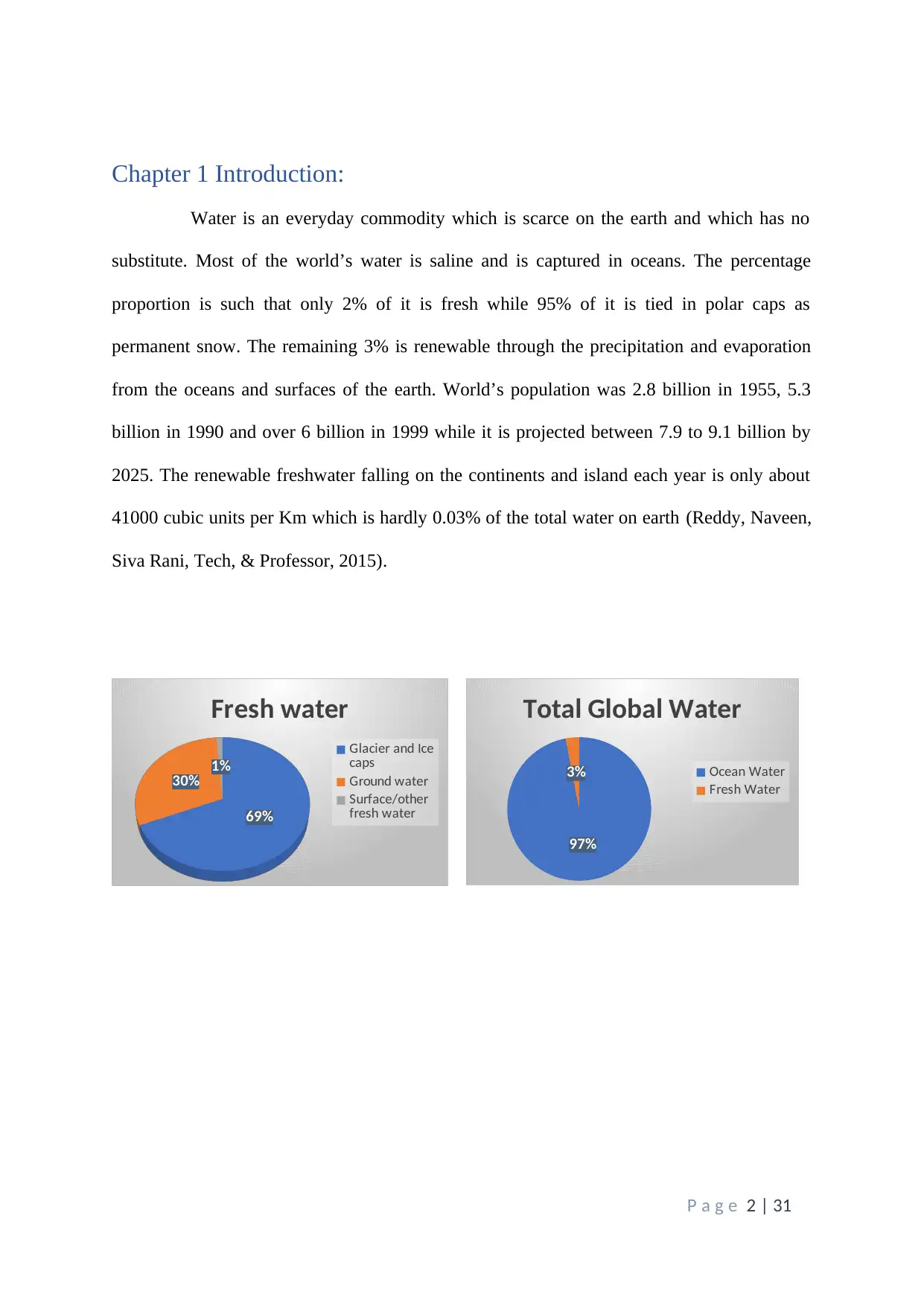
Water is an everyday commodity which is scarce on the earth and which has no
substitute. Most of the world’s water is saline and is captured in oceans. The percentage
proportion is such that only 2% of it is fresh while 95% of it is tied in polar caps as
permanent snow. The remaining 3% is renewable through the precipitation and evaporation
from the oceans and surfaces of the earth. World’s population was 2.8 billion in 1955, 5.3
billion in 1990 and over 6 billion in 1999 while it is projected between 7.9 to 9.1 billion by
2025. The renewable freshwater falling on the continents and island each year is only about
41000 cubic units per Km which is hardly 0.03% of the total water on earth (Reddy, Naveen,
Siva Rani, Tech, & Professor, 2015).
69%
30% 1%
Fresh water
Glacier and Ice
caps
Ground water
Surface/other
fresh water
97%
3%
Total Global Water
Ocean Water
Fresh Water
P a g e 2 | 31
Water is an everyday commodity which is scarce on the earth and which has no
substitute. Most of the world’s water is saline and is captured in oceans. The percentage
proportion is such that only 2% of it is fresh while 95% of it is tied in polar caps as
permanent snow. The remaining 3% is renewable through the precipitation and evaporation
from the oceans and surfaces of the earth. World’s population was 2.8 billion in 1955, 5.3
billion in 1990 and over 6 billion in 1999 while it is projected between 7.9 to 9.1 billion by
2025. The renewable freshwater falling on the continents and island each year is only about
41000 cubic units per Km which is hardly 0.03% of the total water on earth (Reddy, Naveen,
Siva Rani, Tech, & Professor, 2015).
69%
30% 1%
Fresh water
Glacier and Ice
caps
Ground water
Surface/other
fresh water
97%
3%
Total Global Water
Ocean Water
Fresh Water
P a g e 2 | 31
71%
22%
4%
3%1%
Surface water and other fresh water
Ground ice and Permafrost
Lakes
Soil moisture
Swamps, marshes
River
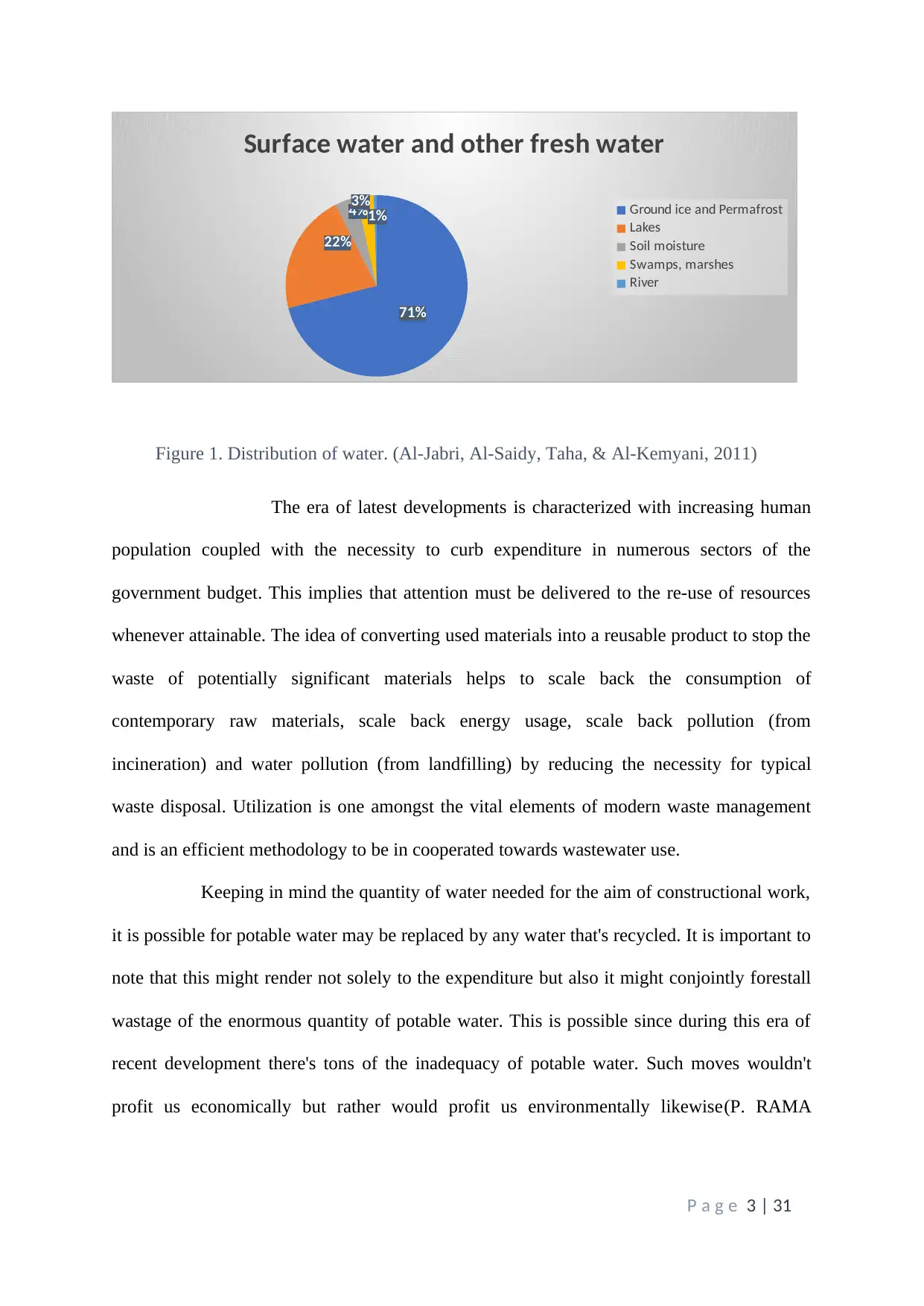
Figure 1. Distribution of water. (Al-Jabri, Al-Saidy, Taha, & Al-Kemyani, 2011)
The era of latest developments is characterized with increasing human
population coupled with the necessity to curb expenditure in numerous sectors of the
government budget. This implies that attention must be delivered to the re-use of resources
whenever attainable. The idea of converting used materials into a reusable product to stop the
waste of potentially significant materials helps to scale back the consumption of
contemporary raw materials, scale back energy usage, scale back pollution (from
incineration) and water pollution (from landfilling) by reducing the necessity for typical
waste disposal. Utilization is one amongst the vital elements of modern waste management
and is an efficient methodology to be in cooperated towards wastewater use.
Keeping in mind the quantity of water needed for the aim of constructional work,
it is possible for potable water may be replaced by any water that's recycled. It is important to
note that this might render not solely to the expenditure but also it might conjointly forestall
wastage of the enormous quantity of potable water. This is possible since during this era of
recent development there's tons of the inadequacy of potable water. Such moves wouldn't
profit us economically but rather would profit us environmentally likewise(P. RAMA
P a g e 3 | 31
22%
4%
3%1%
Surface water and other fresh water
Ground ice and Permafrost
Lakes
Soil moisture
Swamps, marshes
River
Figure 1. Distribution of water. (Al-Jabri, Al-Saidy, Taha, & Al-Kemyani, 2011)
The era of latest developments is characterized with increasing human
population coupled with the necessity to curb expenditure in numerous sectors of the
government budget. This implies that attention must be delivered to the re-use of resources
whenever attainable. The idea of converting used materials into a reusable product to stop the
waste of potentially significant materials helps to scale back the consumption of
contemporary raw materials, scale back energy usage, scale back pollution (from
incineration) and water pollution (from landfilling) by reducing the necessity for typical
waste disposal. Utilization is one amongst the vital elements of modern waste management
and is an efficient methodology to be in cooperated towards wastewater use.
Keeping in mind the quantity of water needed for the aim of constructional work,
it is possible for potable water may be replaced by any water that's recycled. It is important to
note that this might render not solely to the expenditure but also it might conjointly forestall
wastage of the enormous quantity of potable water. This is possible since during this era of
recent development there's tons of the inadequacy of potable water. Such moves wouldn't
profit us economically but rather would profit us environmentally likewise(P. RAMA
P a g e 3 | 31
⊘ This is a preview!⊘
Do you want full access?
Subscribe today to unlock all pages.

Trusted by 1+ million students worldwide
MOHAN RAO, 2014). Water is an essential ingredient of concrete. It participates in the
hydration of cement and contributes to the workability of fresh concrete(Nan Sua, 2002).
The quality of water mixing is also regarded as critical to the properties of hardened
and fresh concrete, including durability and strength. (Al-Assadi, Casati, Gálvez, Fernández,
& Aparicio, 2015).Different standards in the world specify that water that is used for the
country. It might be reasonably clean as well as free of oil, alkali, acid, organic matter, or
other harmful and deleterious materials. Developed countries acquire less limited volume of
drinking water resources while developing countries have enough drinking water resources
although these drinking water resources are more expensive. It has been confirmed that
various concrete producers have utilized underground water as mixing water for concrete
. This process helps in reducing the production cost. One of the major problems
regarding water in the concrete industry is to obtain fresh water from washing mixtures. This
is because of the unique properties of wash water coming out of ready-mixed concrete plants
which needs to be treated before releasing. The most commonly used construction material in
the world is concrete. It contains aggregate, water, Portland cement, chemicals as well as
mineral admixtures. The properties of the concrete can be categorized into two groups of
hardened and fresh concrete. The most important properties of the hardened concrete include
the following: The formation is under load, strength, shrinkage, permeability, and durability.
Concrete is available in various types such as lightweight concrete, plain
concrete, prestressed concrete, and reinforced concrete. Curing in concrete mixing and water
mixing is defined as the procedure to ensure the hydration of Portland cement in newly
placed concrete. Curing can be done using various methods that are either by emergent,
forging, or spraying. Generally, control of moisture loss is employed, and sometimes the
temperature is also controlled in this procedure. In other words, it can be said that water is
kept in concrete where a chemical combination of the cement with the water is changed into
P a g e 4 | 31
hydration of cement and contributes to the workability of fresh concrete(Nan Sua, 2002).
The quality of water mixing is also regarded as critical to the properties of hardened
and fresh concrete, including durability and strength. (Al-Assadi, Casati, Gálvez, Fernández,
& Aparicio, 2015).Different standards in the world specify that water that is used for the
country. It might be reasonably clean as well as free of oil, alkali, acid, organic matter, or
other harmful and deleterious materials. Developed countries acquire less limited volume of
drinking water resources while developing countries have enough drinking water resources
although these drinking water resources are more expensive. It has been confirmed that
various concrete producers have utilized underground water as mixing water for concrete
. This process helps in reducing the production cost. One of the major problems
regarding water in the concrete industry is to obtain fresh water from washing mixtures. This
is because of the unique properties of wash water coming out of ready-mixed concrete plants
which needs to be treated before releasing. The most commonly used construction material in
the world is concrete. It contains aggregate, water, Portland cement, chemicals as well as
mineral admixtures. The properties of the concrete can be categorized into two groups of
hardened and fresh concrete. The most important properties of the hardened concrete include
the following: The formation is under load, strength, shrinkage, permeability, and durability.
Concrete is available in various types such as lightweight concrete, plain
concrete, prestressed concrete, and reinforced concrete. Curing in concrete mixing and water
mixing is defined as the procedure to ensure the hydration of Portland cement in newly
placed concrete. Curing can be done using various methods that are either by emergent,
forging, or spraying. Generally, control of moisture loss is employed, and sometimes the
temperature is also controlled in this procedure. In other words, it can be said that water is
kept in concrete where a chemical combination of the cement with the water is changed into
P a g e 4 | 31
Paraphrase This Document
Need a fresh take? Get an instant paraphrase of this document with our AI Paraphraser
strong glue which helps in developing durable as well as strong concrete. The process of
proper curing helps to keep the concrete damps above 10 degrees Celsius until the concrete is
strong enough to perform its functions. The process of curing helps in increasing the strength
of concrete, abrasion resistance of concrete, reduce the chance of concrete scaling and
minimize the possibility of the concrete cracking as well as surface dusting. The water needs
of concrete are huge, and the utilization of wastewater from a swimming pool in this area can
be advantageous.
Swimming pool wastewater for concrete must be free from impurities as organic
matter, suspended soils as well as dissolved salts that might adversely affect the properties of
concrete. With the abundance, easy accessibility and cheapness of the turbid or wastewater,
various people are using it on concrete without prior testing of the water in order to
investigate its properties along with the effects of these properties on hardened concrete. All
such problems are because of the inadequate piped water for domestic purposes. Swimming
pool wastewater is classified by its chemical, physical as well as biological properties
whereas water required for concrete mixing requires clean water which is extensively utilized
in the field of construction.
In the construction industry, swimming pool wastewater is usually used as most
specifications recommend it, and its composition or chemical properties are known and well
regulated. There are various sources of non-fresh water or wastewater that were tested
previously for use in concrete mixing. These include alkali water, sea water, mine as well as
mineral waters, oily and brackish water which is containing sewage and industrial waste and
swimming pool wastewater.
P a g e 5 | 31
proper curing helps to keep the concrete damps above 10 degrees Celsius until the concrete is
strong enough to perform its functions. The process of curing helps in increasing the strength
of concrete, abrasion resistance of concrete, reduce the chance of concrete scaling and
minimize the possibility of the concrete cracking as well as surface dusting. The water needs
of concrete are huge, and the utilization of wastewater from a swimming pool in this area can
be advantageous.
Swimming pool wastewater for concrete must be free from impurities as organic
matter, suspended soils as well as dissolved salts that might adversely affect the properties of
concrete. With the abundance, easy accessibility and cheapness of the turbid or wastewater,
various people are using it on concrete without prior testing of the water in order to
investigate its properties along with the effects of these properties on hardened concrete. All
such problems are because of the inadequate piped water for domestic purposes. Swimming
pool wastewater is classified by its chemical, physical as well as biological properties
whereas water required for concrete mixing requires clean water which is extensively utilized
in the field of construction.
In the construction industry, swimming pool wastewater is usually used as most
specifications recommend it, and its composition or chemical properties are known and well
regulated. There are various sources of non-fresh water or wastewater that were tested
previously for use in concrete mixing. These include alkali water, sea water, mine as well as
mineral waters, oily and brackish water which is containing sewage and industrial waste and
swimming pool wastewater.
P a g e 5 | 31
Several types of research around the world have examined the use of wastewater in
concrete with various levels of achievement. The re-utilization of recycled water from the
recycling of unset concrete as mixing water for concrete is common practice in almost all
ready-mixed concrete plants. The discarding of such wastewater is no longer environmentally
accepted. The recycled water from concrete plants consists primarily of the mixture of water,
cement, and fines that stay when removal of the mixture is done. It additionally includes the
wash water used for washing and cleaning the returning mixer trucks, concrete pumps, and
alternative equipment, as well as the precipitation water collected from the production areas.
Wastewater from various sources such as Industries, car wash, treatment can be used
for the fulfillment of water needs in construction and has proven positive results. Wastewater
from the swimming pool is being used to test the practical applicability of this system, and
the swimming pool wastewater.
P a g e 6 | 31
concrete with various levels of achievement. The re-utilization of recycled water from the
recycling of unset concrete as mixing water for concrete is common practice in almost all
ready-mixed concrete plants. The discarding of such wastewater is no longer environmentally
accepted. The recycled water from concrete plants consists primarily of the mixture of water,
cement, and fines that stay when removal of the mixture is done. It additionally includes the
wash water used for washing and cleaning the returning mixer trucks, concrete pumps, and
alternative equipment, as well as the precipitation water collected from the production areas.
Wastewater from various sources such as Industries, car wash, treatment can be used
for the fulfillment of water needs in construction and has proven positive results. Wastewater
from the swimming pool is being used to test the practical applicability of this system, and
the swimming pool wastewater.
P a g e 6 | 31
⊘ This is a preview!⊘
Do you want full access?
Subscribe today to unlock all pages.
Trusted by 1+ million students worldwide
Chapter 2 Literature review:
2.1 Wastewater Effect on Concrete Performance
Concrete quality can be altered when exposed to wastewater. The process during
which concrete performance is evaluated appears to be comparatively sophisticated as several
elements such as pH value, microorganisms, sulphuric acid, Hydrogen Sulphide and gradients
of concrete are involved. A combination of these factors can have a devastating effect on the
performance and lifespan of the concrete. Sulfuric acid, for instance, forms from hydrogen
sulphide as the result of the chemical reaction triggered by Thiobacillus thiooxidans
microorganisms. The reaction of the aforesaid chemical ions with concrete, affects concrete
porosity, weaken the structure of concrete and leads to the formation of calcium sulphate.
(Sarray, 2013)
2.2 Previous research
2.2.1 Effects of mixing wastewater from various plants:
G Reddy Babu and Ramana (2018) presented the feasibility of wastewater
from water treatment plants at a small scale located in residential buildings as mixing water
in OPC (ordinary Portland cement). The performance of four plants wastewater on physical
properties, i.e., setting times, compressive strength, and flexural strength of ordinary Portland
cement (OPC) were performed in laboratories and compared same with reference specimens
No significant modification was observed in initial setting time, however necessary
modification was discovered in final setting time. No substantial modification was observed
in 90 days in compressive strengths in four plants wastewater compared to that of reference
specimens. XRD technique was utilized to search out main hydration compounds formed
within the method.
P a g e 7 | 31
2.1 Wastewater Effect on Concrete Performance
Concrete quality can be altered when exposed to wastewater. The process during
which concrete performance is evaluated appears to be comparatively sophisticated as several
elements such as pH value, microorganisms, sulphuric acid, Hydrogen Sulphide and gradients
of concrete are involved. A combination of these factors can have a devastating effect on the
performance and lifespan of the concrete. Sulfuric acid, for instance, forms from hydrogen
sulphide as the result of the chemical reaction triggered by Thiobacillus thiooxidans
microorganisms. The reaction of the aforesaid chemical ions with concrete, affects concrete
porosity, weaken the structure of concrete and leads to the formation of calcium sulphate.
(Sarray, 2013)
2.2 Previous research
2.2.1 Effects of mixing wastewater from various plants:
G Reddy Babu and Ramana (2018) presented the feasibility of wastewater
from water treatment plants at a small scale located in residential buildings as mixing water
in OPC (ordinary Portland cement). The performance of four plants wastewater on physical
properties, i.e., setting times, compressive strength, and flexural strength of ordinary Portland
cement (OPC) were performed in laboratories and compared same with reference specimens
No significant modification was observed in initial setting time, however necessary
modification was discovered in final setting time. No substantial modification was observed
in 90 days in compressive strengths in four plants wastewater compared to that of reference
specimens. XRD technique was utilized to search out main hydration compounds formed
within the method.
P a g e 7 | 31
Paraphrase This Document
Need a fresh take? Get an instant paraphrase of this document with our AI Paraphraser
Su, Miao, and Liu (2002) explored the impact of different types of mixing water
on properties of concrete and mortar such as setting times, workability, and compressive
strength. This was used for concrete and motor. It includes underground water, tap water,
freshwater as well as wash water from mixture washout operations in the ready-mix concrete
plant. Moreover, the quality of such types of waters is analyzed in this study and test
conducted on concrete and mortar. All the wash water, as well as underground water were
tested to meet the requirements of ASTM C94 when water is mixed for ready mixed concrete.
It was investigated that the compressive strength of the concrete mixed with underground or
wash water is as good as that with the tap water. Moreover, it has been suggested that
underground water must be used as mixing water for concrete while wash water must be
recycled from the scarcity of tap water resources. Moreover, it is advisable that other
properties such as shrinkage or durability must be studied before use of any mixing water.
Chatveera and Lertwattanaruk (2009) discussed the feasibility to use sludge water
from the ready-mix concrete plant after investigation as mixing water for concrete. It contains
either fly as a superplasticizer admixture or additive mixture supported sulfonated
naphthalene formaldehyde condensate-SNF. The physical as well as the chemical properties
of the sludge water along with the dry sludge was investigated during this study. Cement
paste was mixed with the assistance of sludge water that contains completely different levels
of total solid contents for determining the optimum content of sludge water. The compressive
strength reduced from 5 to 6 by increasing the entire solid contents, and it additionally
reduces the setting time. After this, the entire combination was ready with the assistance of
clutch water that contains 5 to 6 of total solid contents. The concrete samples were then
evaluated for the setting time, porosity, resistance to acid attacks, and compressive strength.
The effect of each superplasticizer, similarly as fly ash, will be reduced by using sludge water
P a g e 8 | 31
on properties of concrete and mortar such as setting times, workability, and compressive
strength. This was used for concrete and motor. It includes underground water, tap water,
freshwater as well as wash water from mixture washout operations in the ready-mix concrete
plant. Moreover, the quality of such types of waters is analyzed in this study and test
conducted on concrete and mortar. All the wash water, as well as underground water were
tested to meet the requirements of ASTM C94 when water is mixed for ready mixed concrete.
It was investigated that the compressive strength of the concrete mixed with underground or
wash water is as good as that with the tap water. Moreover, it has been suggested that
underground water must be used as mixing water for concrete while wash water must be
recycled from the scarcity of tap water resources. Moreover, it is advisable that other
properties such as shrinkage or durability must be studied before use of any mixing water.
Chatveera and Lertwattanaruk (2009) discussed the feasibility to use sludge water
from the ready-mix concrete plant after investigation as mixing water for concrete. It contains
either fly as a superplasticizer admixture or additive mixture supported sulfonated
naphthalene formaldehyde condensate-SNF. The physical as well as the chemical properties
of the sludge water along with the dry sludge was investigated during this study. Cement
paste was mixed with the assistance of sludge water that contains completely different levels
of total solid contents for determining the optimum content of sludge water. The compressive
strength reduced from 5 to 6 by increasing the entire solid contents, and it additionally
reduces the setting time. After this, the entire combination was ready with the assistance of
clutch water that contains 5 to 6 of total solid contents. The concrete samples were then
evaluated for the setting time, porosity, resistance to acid attacks, and compressive strength.
The effect of each superplasticizer, similarly as fly ash, will be reduced by using sludge water
P a g e 8 | 31
within the concrete mix. It is analyzed that sludge water with the contents of total solid of less
than 6% is appropriate for usage in producing concrete with acceptable durability and
strength.
G. Reddy Babu, Reddy, Ramana, and Reddy (2017) investigated the feasibility
about the outlet water stored in the water treatment plant as well as limewater over the
properties of PPC (Portland pozzolana cement). There were a total of 20 water treatment
plants which were identified in the region of Bhimavaram municipality in the district of
Andhra Pradesh situated in India. It was evaluated that almost in every plant available there
was supplying of the portable water about 4000- 5000 L per day. All the plants were
extracting the groundwater as well as treating via RO (Reverse Osmosis) process. Over the
outlet, the massive amount of wasted water is discharged into the side drains in the
municipality of Bhimavaram.
In this particular, a typical treatment plan was chosen, and the water was gathered as
well as the chemical and physical analysis was done according to the producer mentioned in
the APHA. The effect regarding POW (plant outlet water), lime eater and POWL (plant outlet
water with lime) on different physical properties such as flexural strength over PPC, setting
times, etc. were also studied in the laboratory as well as compared similarly with the
reference specimens. From this experiment, no change was found in the final and initial
setting time in POW, POWL, and LW as compared to the references specimens prepared with
the distilled water. The compressive strength was increased significantly with the LW and
POWL specimens as compared to the reference specimens.
Along with this, the XRD technique was also employed in order to study the
mineralogical analysis effectively. The results of this research confirmed that the
performance regarding LW, POWL, and POW in the initial time setting of PPC is always
similar as compared to DW. Apart from this, the initial time setting related to POWL, DW,
P a g e 9 | 31
than 6% is appropriate for usage in producing concrete with acceptable durability and
strength.
G. Reddy Babu, Reddy, Ramana, and Reddy (2017) investigated the feasibility
about the outlet water stored in the water treatment plant as well as limewater over the
properties of PPC (Portland pozzolana cement). There were a total of 20 water treatment
plants which were identified in the region of Bhimavaram municipality in the district of
Andhra Pradesh situated in India. It was evaluated that almost in every plant available there
was supplying of the portable water about 4000- 5000 L per day. All the plants were
extracting the groundwater as well as treating via RO (Reverse Osmosis) process. Over the
outlet, the massive amount of wasted water is discharged into the side drains in the
municipality of Bhimavaram.
In this particular, a typical treatment plan was chosen, and the water was gathered as
well as the chemical and physical analysis was done according to the producer mentioned in
the APHA. The effect regarding POW (plant outlet water), lime eater and POWL (plant outlet
water with lime) on different physical properties such as flexural strength over PPC, setting
times, etc. were also studied in the laboratory as well as compared similarly with the
reference specimens. From this experiment, no change was found in the final and initial
setting time in POW, POWL, and LW as compared to the references specimens prepared with
the distilled water. The compressive strength was increased significantly with the LW and
POWL specimens as compared to the reference specimens.
Along with this, the XRD technique was also employed in order to study the
mineralogical analysis effectively. The results of this research confirmed that the
performance regarding LW, POWL, and POW in the initial time setting of PPC is always
similar as compared to DW. Apart from this, the initial time setting related to POWL, DW,
P a g e 9 | 31
⊘ This is a preview!⊘
Do you want full access?
Subscribe today to unlock all pages.
Trusted by 1+ million students worldwide
LW, and POW are 141, 143, 144, 15 minutes. According to the author, the XRD related to
DW and the test sample POLW cured for total twenty-eight days (28 days). In the end, the
author concluded that the setting times related to LW, POW, and POWL were almost similar.
Along with this, the flexural and compressive strengths related to DW and POL was also
similar. From this complete study, authors predicted that the water treatment plants outlet
waters might be suggested to utilize in the cement mortar.
Sarray (2013) defined that the loss of serviceability overtime is one of the most
straightforward definition regarding the deterioration. Here, concrete deterioration can be
resulted by the interaction of various factors which impact the structure regarding concrete in
the context of durability. In this paper, the authors analyzed that the wastewater treatment
plant concretes should resist all the operational impacts and natural factors without any
requirement of significant maintenance as well as repair. For this particular reason, durable
and high-quality concretes need to be designed.
In this paper, the primary purpose of the author was to explore the impacts of
wastewater on the concrete durability and to illustrate the properties related to concrete that
was suitable for the wastewater treatment plant. The author concluded that there is a need to
produce the high durable concrete for the construction of wastewater treatment plan for
which different steps need to be followed as the concrete type must be at least C40, and the
amount of cement must be at least 300 kg/m3. Along with this, there is a need to follow the
vibration, casting, and proper curing methods and perform the tests for quality control as
well.
A. D. Mandlik (2018) defined the sludge as a specific product related to
wastewater treatment, which creates the issues related to disposal. With the increase of
regulations of strict environmental control there has been a resulted limitation on the options
P a g e 10 | 31
DW and the test sample POLW cured for total twenty-eight days (28 days). In the end, the
author concluded that the setting times related to LW, POW, and POWL were almost similar.
Along with this, the flexural and compressive strengths related to DW and POL was also
similar. From this complete study, authors predicted that the water treatment plants outlet
waters might be suggested to utilize in the cement mortar.
Sarray (2013) defined that the loss of serviceability overtime is one of the most
straightforward definition regarding the deterioration. Here, concrete deterioration can be
resulted by the interaction of various factors which impact the structure regarding concrete in
the context of durability. In this paper, the authors analyzed that the wastewater treatment
plant concretes should resist all the operational impacts and natural factors without any
requirement of significant maintenance as well as repair. For this particular reason, durable
and high-quality concretes need to be designed.
In this paper, the primary purpose of the author was to explore the impacts of
wastewater on the concrete durability and to illustrate the properties related to concrete that
was suitable for the wastewater treatment plant. The author concluded that there is a need to
produce the high durable concrete for the construction of wastewater treatment plan for
which different steps need to be followed as the concrete type must be at least C40, and the
amount of cement must be at least 300 kg/m3. Along with this, there is a need to follow the
vibration, casting, and proper curing methods and perform the tests for quality control as
well.
A. D. Mandlik (2018) defined the sludge as a specific product related to
wastewater treatment, which creates the issues related to disposal. With the increase of
regulations of strict environmental control there has been a resulted limitation on the options
P a g e 10 | 31
Paraphrase This Document
Need a fresh take? Get an instant paraphrase of this document with our AI Paraphraser
of sludge disposal. In this study, the disposal by the incineration was found to be a better and
accurate option. In this particular study, authors collected the application related to waste
sludge from STP (Sewage Treatment Plant) Nashik was utilized as a replacement of cement
in the concrete mix. This study mainly utilized the replacement of 2%, 15 %, 10% and 20 %
by weight of OPC with (W/C) water-binder ratio of 0.45 and 0.50 for the grade 30 and grade
20 respectively. The performance related to sludge concrete in the context of compressive
strength, flexure strength test, and split tensile strength test was also investigated by the
researcher in this research. It has been analyzed that all the values related to compressive
strength for the sludge concrete were lesser than the OPC control and the strength related to it
decrease as the %age of replacement with the obtained sludge increased for Grade 30 and
Grade 20, at the replacement of total 10 %. In the end, author-defined that with further
research in the production of quality, the capability of utilizing this waste as the material of
cement replacement is very promising. Through this research, the design of the concrete mix
was proposed by utilizing IS10262:2009.
Kanwal, Arif, Jawaid, Farooq, and Khan (2018) studied the impact of various
types of treated wastewater on the properties of the strength of concrete like tensile strength,
flexural strength and compressive strength with relation to the Potable water. The sample of
wastewater was collected from the wastewater treatment plant. Water samples were used
because the primary treated wastewater, secondary treated wastewater, and were analyzed
with relation to the chemical properties within the laboratory. In the use of a concrete mixture
of M30 with Potable water was absolutely replaced with domestic water waste, primarily
treated wastewater and secondary treated wastewater. The test was additionally conducted on
the final as well as initial settings with relation to setting the time on the cement, tensile
strength and compressive strength of concrete which are further compared with the mixing of
P a g e 11 | 31
accurate option. In this particular study, authors collected the application related to waste
sludge from STP (Sewage Treatment Plant) Nashik was utilized as a replacement of cement
in the concrete mix. This study mainly utilized the replacement of 2%, 15 %, 10% and 20 %
by weight of OPC with (W/C) water-binder ratio of 0.45 and 0.50 for the grade 30 and grade
20 respectively. The performance related to sludge concrete in the context of compressive
strength, flexure strength test, and split tensile strength test was also investigated by the
researcher in this research. It has been analyzed that all the values related to compressive
strength for the sludge concrete were lesser than the OPC control and the strength related to it
decrease as the %age of replacement with the obtained sludge increased for Grade 30 and
Grade 20, at the replacement of total 10 %. In the end, author-defined that with further
research in the production of quality, the capability of utilizing this waste as the material of
cement replacement is very promising. Through this research, the design of the concrete mix
was proposed by utilizing IS10262:2009.
Kanwal, Arif, Jawaid, Farooq, and Khan (2018) studied the impact of various
types of treated wastewater on the properties of the strength of concrete like tensile strength,
flexural strength and compressive strength with relation to the Potable water. The sample of
wastewater was collected from the wastewater treatment plant. Water samples were used
because the primary treated wastewater, secondary treated wastewater, and were analyzed
with relation to the chemical properties within the laboratory. In the use of a concrete mixture
of M30 with Potable water was absolutely replaced with domestic water waste, primarily
treated wastewater and secondary treated wastewater. The test was additionally conducted on
the final as well as initial settings with relation to setting the time on the cement, tensile
strength and compressive strength of concrete which are further compared with the mixing of
P a g e 11 | 31
M30 of potable water. The overall result indicated that the final and initial setting time of the
cement was same as compared to potable water and secondary treated water. The waste
however decreased for primarily treated water waste and for the compressive strength it's
increased in secondary treated wastewater. Whereas the domestic water wastes at the most
extended duration and for tensile strength test results were same and there's no improvement
within the flexural and tensile strength with the use of secondary treated wastewater.
2.2.2 Effects of mixing wastewater from Industries:
Shahidan, Abdul Kadir, Hai Yee, Ramzi Nurul Izzati, and Sheikh (2017) stated
that the rapid growth related to the car wash industry in these day results in the requirement
for the reclamation of wastewater. This paper aimed to examine the impact of utilizing the
wastewater on the concrete properties in the context of mechanical properties. The primary
characteristics related to wastewater were also investigated as per USEPA while different
mechanical properties related to concrete with the car wash wastewater were also compared
as per ASTM CI602 and BS EN 1008 standards. In this particular research, the compressive
strength, tensile strength, and modulus of elasticity were also studied. Along with this, the
percentages related to the wastewater replaced in the concrete mix ranged up to 40 % from
0%.
In addition to this, the results also recommend that the concrete with total 20 %
wastewater related to car wash achieved the high volume of compressive strength and
modulus related to the elasticity as compared to any other compositions related to
wastewater. Moreover, the results from this research also suggested that the concrete mixed
with the wastewater related to car wash has better compressive strength than the conventional
concrete. In this research, all the concrete specimens were designed in order to have a target
mean of total 35MPa as per DOE (Department of the environment) method. Authors
P a g e 12 | 31
cement was same as compared to potable water and secondary treated water. The waste
however decreased for primarily treated water waste and for the compressive strength it's
increased in secondary treated wastewater. Whereas the domestic water wastes at the most
extended duration and for tensile strength test results were same and there's no improvement
within the flexural and tensile strength with the use of secondary treated wastewater.
2.2.2 Effects of mixing wastewater from Industries:
Shahidan, Abdul Kadir, Hai Yee, Ramzi Nurul Izzati, and Sheikh (2017) stated
that the rapid growth related to the car wash industry in these day results in the requirement
for the reclamation of wastewater. This paper aimed to examine the impact of utilizing the
wastewater on the concrete properties in the context of mechanical properties. The primary
characteristics related to wastewater were also investigated as per USEPA while different
mechanical properties related to concrete with the car wash wastewater were also compared
as per ASTM CI602 and BS EN 1008 standards. In this particular research, the compressive
strength, tensile strength, and modulus of elasticity were also studied. Along with this, the
percentages related to the wastewater replaced in the concrete mix ranged up to 40 % from
0%.
In addition to this, the results also recommend that the concrete with total 20 %
wastewater related to car wash achieved the high volume of compressive strength and
modulus related to the elasticity as compared to any other compositions related to
wastewater. Moreover, the results from this research also suggested that the concrete mixed
with the wastewater related to car wash has better compressive strength than the conventional
concrete. In this research, all the concrete specimens were designed in order to have a target
mean of total 35MPa as per DOE (Department of the environment) method. Authors
P a g e 12 | 31
⊘ This is a preview!⊘
Do you want full access?
Subscribe today to unlock all pages.
Trusted by 1+ million students worldwide

1 out of 31


Your All-in-One AI-Powered Toolkit for Academic Success.
+13062052269
info@desklib.com
Available 24*7 on WhatsApp / Email
![[object Object]](/_next/static/media/star-bottom.7253800d.svg)
Unlock your academic potential
Copyright © 2020–2026 A2Z Services. All Rights Reserved. Developed and managed by ZUCOL.