Analyzing Dracula's Cinematic Transformations Over the Ages

Verified

Added on  2023/06/03

|15
|1582
|427
Essay
AI Summary
This essay provides a detailed analysis of the cinematic evolution of Count Dracula, examining his portrayal across various film adaptations. Beginning with the origins of the vampire myth and Bram Stoker's novel, the essay explores key films such as Nosferatu (1922), Tod Browning's Dracula (1931), and Francis Ford Coppola's Bram Stoker's Dracula (1992). It compares and contrasts how Dracula's character, appearance, and motivations have changed over time, highlighting the influence of each film on the evolving image of the vampire. The analysis considers aspects such as the shift from an animalistic to a more aristocratic portrayal, the incorporation of religious and social themes, and the impact of technological advancements in filmmaking. Through this comparative study, the essay illustrates how Dracula has become an iconic evil character, reflecting the cultural and societal contexts of each film's era. This document is available on Desklib, a platform that offers students AI-powered study tools and access to past papers and solved assignments.
Document Page
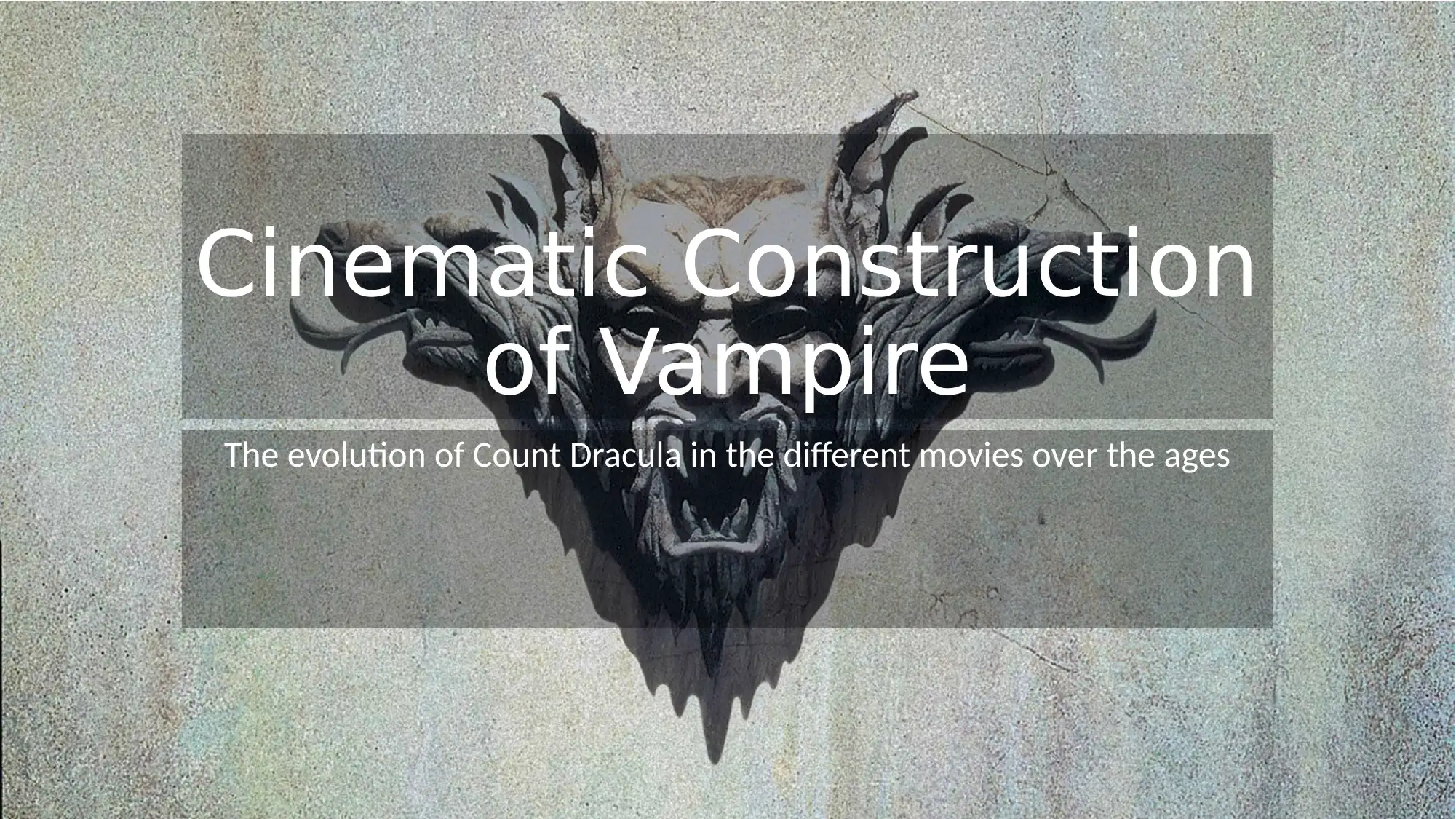
Cinematic Construction
of Vampire
The evolution of Count Dracula in the different movies over the ages
tabler-icon-diamond-filled.svg

Paraphrase This Document

Need a fresh take? Get an instant paraphrase of this document with our AI Paraphraser
Document Page
The development of Dracula in Bram Stoker’s novel:
Vampires were an age old myth, dating back to the Ancient Greek literature
There have been hundreds of literature over the years that have been developed on
the vampire stories
Bram Stoker’s Dracula set a new theme for the development of the character in the
20th century
The inspirations of the development of Dracula is said to be drawn from the character
of Vlad the Impaler, who was the prince of Wallachia.
However, the reference is a very loose one, except for the Romanian background or
the culture.
Bram Stoker developer Dracula on his own terms, which drew the figure in a very new
light.
Though the character by Bram Stoker gained popularity in the late 19th century, it was
brought to light when the film adaptations of the novel started to appear in the 20th
century.
Document Page
Representation of Dracula in the movies:
Dracula has been adapted in a number of movies over the years
However, none of the films have been a direct adaptation of the book
The films have recreated the characters and the backgrounds according
to the needs of the script
Most of the films have adopted the Scandinavian background
The character of Dracula has been represented as evil in most of the films
Document Page
Evolution of Dracula in Nosferatu (1922):
Nosferatu is one of the earliest film adaptations of Dracula
Being the first Dracula movie, the theme and the screenplay had an originality that was never
seen before
The character of Dracula has been represented as a cursed soul, which makes the character
more like an animal than an evil human being (Castel, Bourry, Thévenot & Burucoa, 2013)
However, most of the characters were changed in the film from that of the book
Nosferatu, being one of the earliest film adaptions have been the inspiration for the movies
that were made in the later period of the 20th century.
However, all the other films lacked the originality and the beautifully rendered artistic view that
was presented in Nosferatu
tabler-icon-diamond-filled.svg

Paraphrase This Document

Need a fresh take? Get an instant paraphrase of this document with our AI Paraphraser
Document Page
Evolution of Dracula in Nosferatu (1922):
The title of the movie Nosferatu has always been considered as a better title by the
critics
The title draws an interest of the viewer, who are more accustomed to the Dracula
name
The frightening image of Count Orlok standing up from the stack of coffins is one of
the most iconic horror scenes that has been created
Max Schrech, who plays the role of the vampire, does not align himself with the
polished and aristocratic character of Dracula that were to be played by the actors
in the later period of the 20th century
Document Page
Evolution of Dracula in Nosferatu (1922):
The animal like make up, portrayed the vampire from the iconic image of the
polished and aristocratic image of Count Dracula
Nosferatu highlighted many social aspects over the religious aspects
Bram Stoker originally highlighted Victorian values and social issues such as sexuality
and plague
The vampire is represented more as an objectionable rapist than a religiously evil
person
The artistry represented in the film is commendable and is free of the tricks and
techniques of the modern cinema
Document Page
Evolution of Dracula in Dracula (1931):
Tod Browning’s Dracula has been one of the most influential vampire
movies of the 20th century
The casting of Hungarian legend Bela Lugosi was an co-incidental decision
after Lon Claney’s death in the middle of the production
The film was appreciated for its cinematography, which depicted the
black and evil behind the character of Count Dracula
The Transylvanian setting and the startling Castle Dracula created an
impact on the audience that was never seen before
The movie took inspirations from the earlier made ‘Nosferatu’,
highlighting the darkness and evil setting, which creates the space for the
malice of Count Dracula
tabler-icon-diamond-filled.svg

Paraphrase This Document

Need a fresh take? Get an instant paraphrase of this document with our AI Paraphraser
Document Page
Evolution of Dracula in Dracula (1931):
The 1931 edition was the first talking movie of Bram Stoker’s adaptation
This created a new feeling among the viewers as they could feel Dracula for
the first time as a human monster and not as an animal as had been
presented in the earlier version
Count Dracula was presented as a more polished and aristocratic character
for the first time and the viewers were exposed to the fearsome evil for the
first time (Kirkland 2013)
The non-English accent of Lugosi created an eerie feeling as it gave Count
Dracula the required Transylvanian attitude
The character played by Lugosi set the character for the later years to
come and the aristocracy was imbibed to the character of Count Dracula
Document Page
Evolution of Dracula in Dracula (1931):
Being the first talking picture of Dracula, the dialogues played a very
important part in the development of the film
The sinister nature of Count Dracula is hidden behind the politeness and
aristocracy of Dracula.
The development of the character is hidden behind the overpowering
nature of Dracula, who attracts the people in his embrace before turning
them into the dead by drinking their blood
The film has been inspired by the earlier Nosferatu, but unlike the film it
has not addressed the social issues of sexuality (Azzarello, 2016)
Dracula is more of an evil character who is indomitable in nature and
explains vampirism in a more detailed light
Document Page
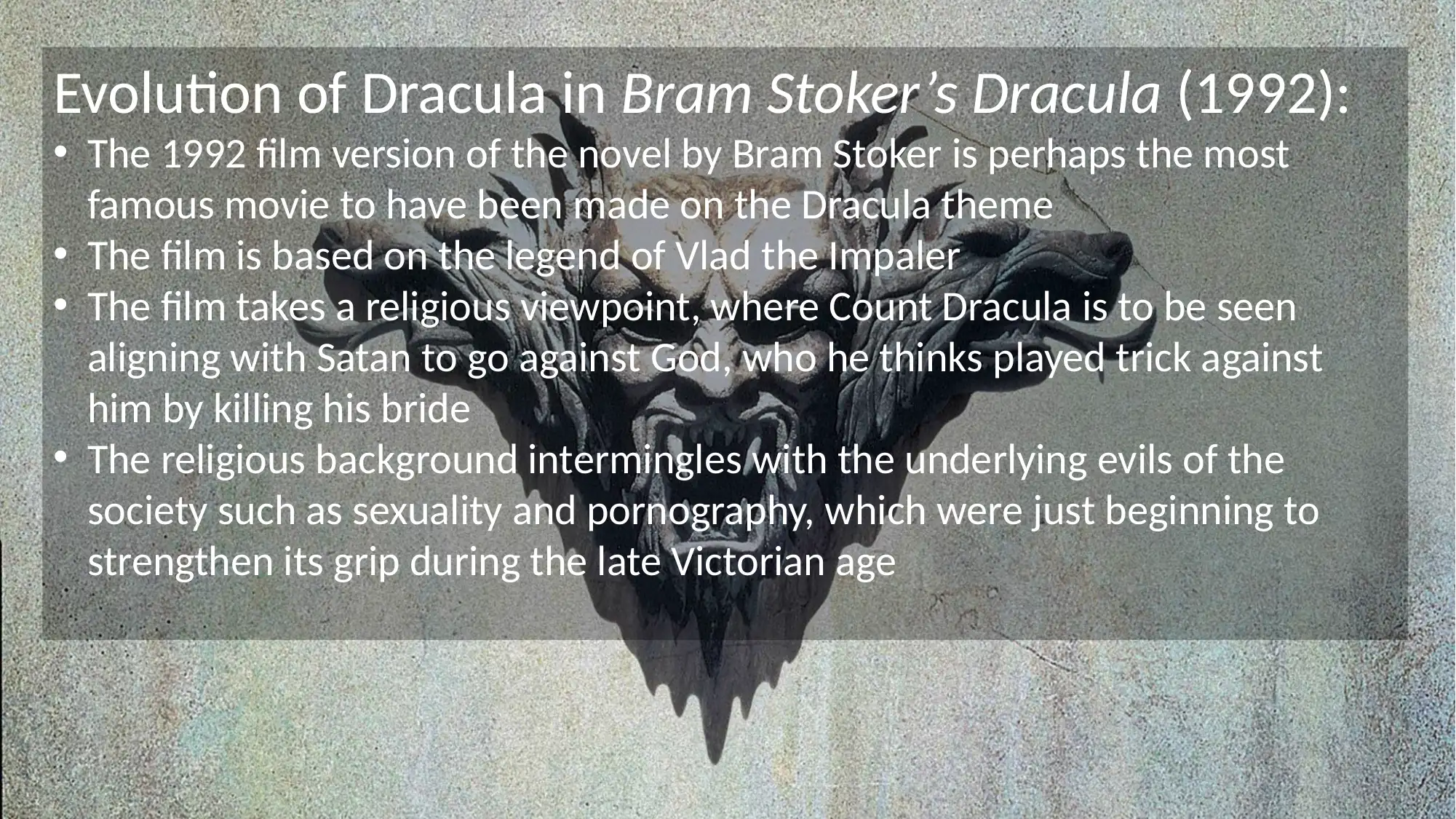
Evolution of Dracula in Bram Stoker’s Dracula (1992):
The 1992 film version of the novel by Bram Stoker is perhaps the most
famous movie to have been made on the Dracula theme
The film is based on the legend of Vlad the Impaler
The film takes a religious viewpoint, where Count Dracula is to be seen
aligning with Satan to go against God, who he thinks played trick against
him by killing his bride
The religious background intermingles with the underlying evils of the
society such as sexuality and pornography, which were just beginning to
strengthen its grip during the late Victorian age
tabler-icon-diamond-filled.svg

Paraphrase This Document

Need a fresh take? Get an instant paraphrase of this document with our AI Paraphraser
Document Page
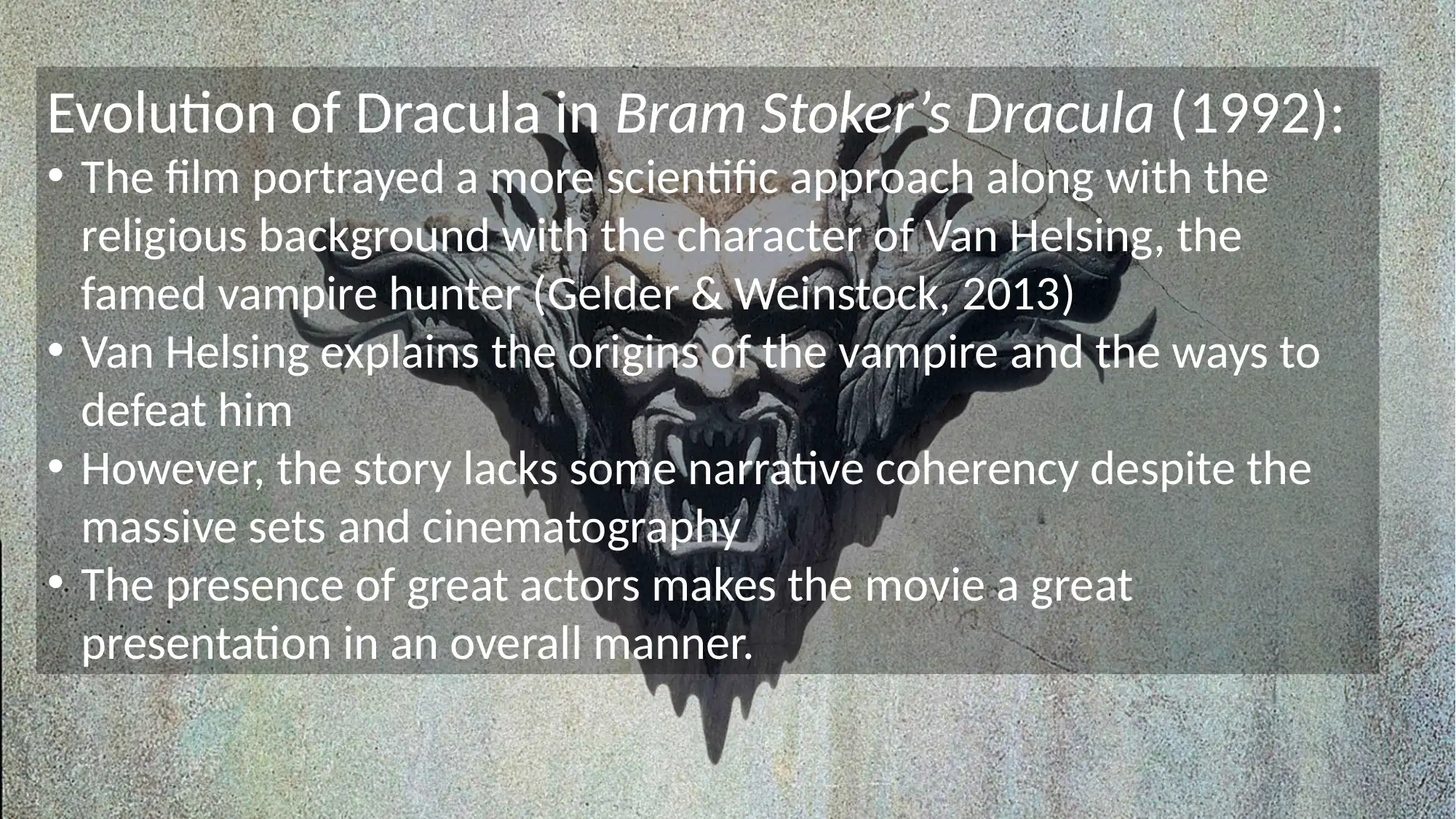
Evolution of Dracula in Bram Stoker’s Dracula (1992):
The film portrayed a more scientific approach along with the
religious background with the character of Van Helsing, the
famed vampire hunter (Gelder & Weinstock, 2013)
Van Helsing explains the origins of the vampire and the ways to
defeat him
However, the story lacks some narrative coherency despite the
massive sets and cinematography
The presence of great actors makes the movie a great
presentation in an overall manner.
Document Page
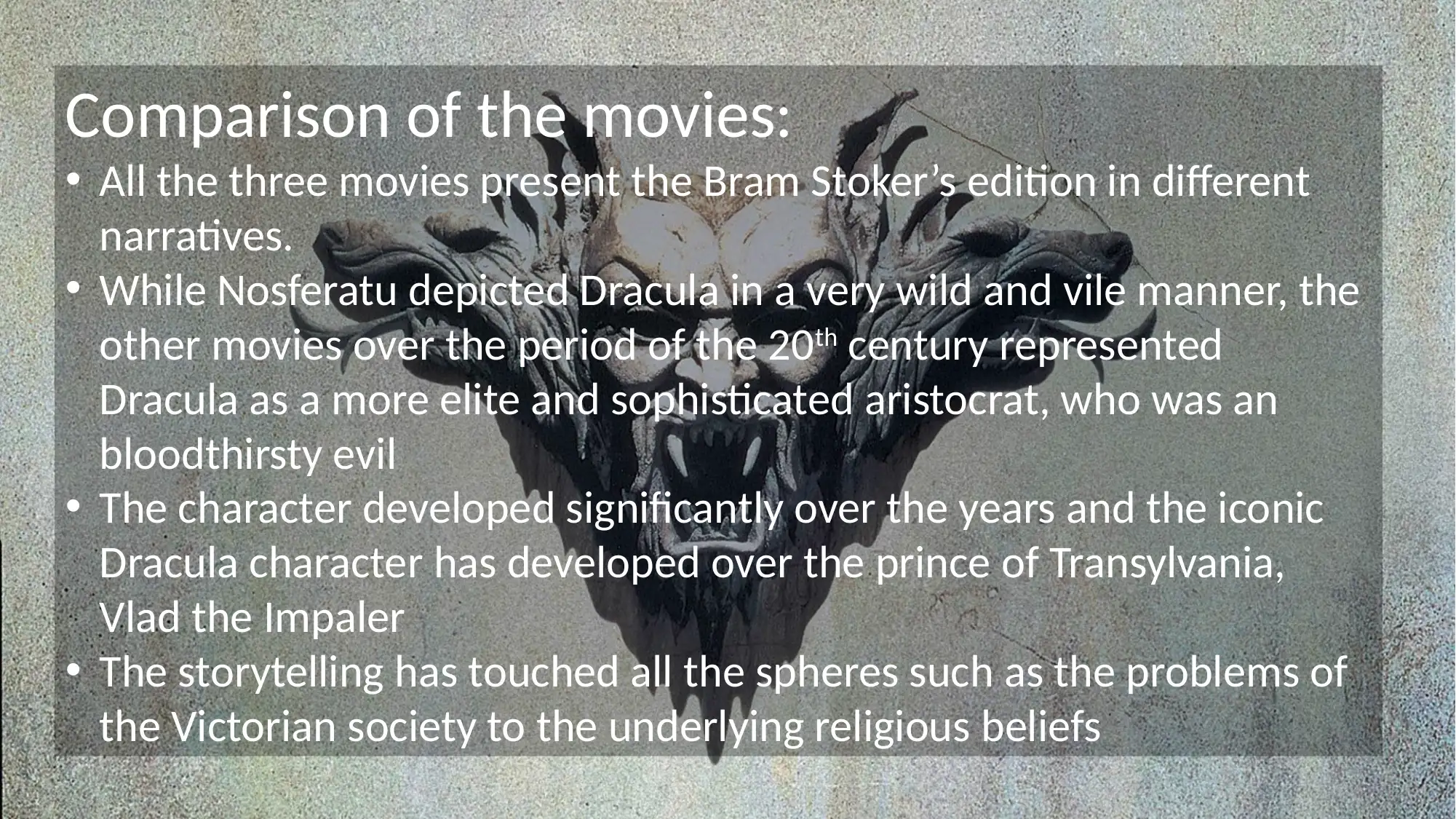
Comparison of the movies:
All the three movies present the Bram Stoker’s edition in different
narratives.
While Nosferatu depicted Dracula in a very wild and vile manner, the
other movies over the period of the 20th century represented
Dracula as a more elite and sophisticated aristocrat, who was an
bloodthirsty evil
The character developed significantly over the years and the iconic
Dracula character has developed over the prince of Transylvania,
Vlad the Impaler
The storytelling has touched all the spheres such as the problems of
the Victorian society to the underlying religious beliefs
chevron_up_icon
1 out of 15
circle_padding
hide_on_mobile
zoom_out_icon
[object Object]