Leadership Roles: Women in Business Leadership & Management 2
VerifiedAdded on 2024/05/16
|12
|1969
|195
Presentation
AI Summary
This presentation explores the challenges and leadership qualities of women in positions of power, addressing the historical difficulties they face due to societal structures and the 'glass ceiling.' It highlights the underrepresentation of women in CEO roles despite their leadership capabilities. The presentation discusses the impact of the Equal Pay Act and women's rights movements, while acknowledging the persistent issue of self-confidence among women aspiring to leadership roles. It examines the 'glass ceiling' as an invisible barrier caused by stereotypical assumptions, preventing women's career growth. Furthermore, it contrasts leadership qualities in women versus men, emphasizing women's persuasive abilities, logical decision-making, and nurturing management styles. The presentation concludes by encouraging women to view the 'glass ceiling' as a conditioning factor for unstoppable growth, emphasizing the social responsibilities of women in power to inspire and support aspiring leaders globally. The group presentation reflects on team collaboration, role distribution, and the application of leadership theories in addressing gender inequality in the workplace.
Business Leadership and Management 2
Paraphrase This Document
Need a fresh take? Get an instant paraphrase of this document with our AI Paraphraser

Table of Contents
Group presentation...........................................................................................................................2
Personal reflection...........................................................................................................................8
Reference List................................................................................................................................11
1
Group presentation...........................................................................................................................2
Personal reflection...........................................................................................................................8
Reference List................................................................................................................................11
1

Group presentation
Topic: Women In position of Power
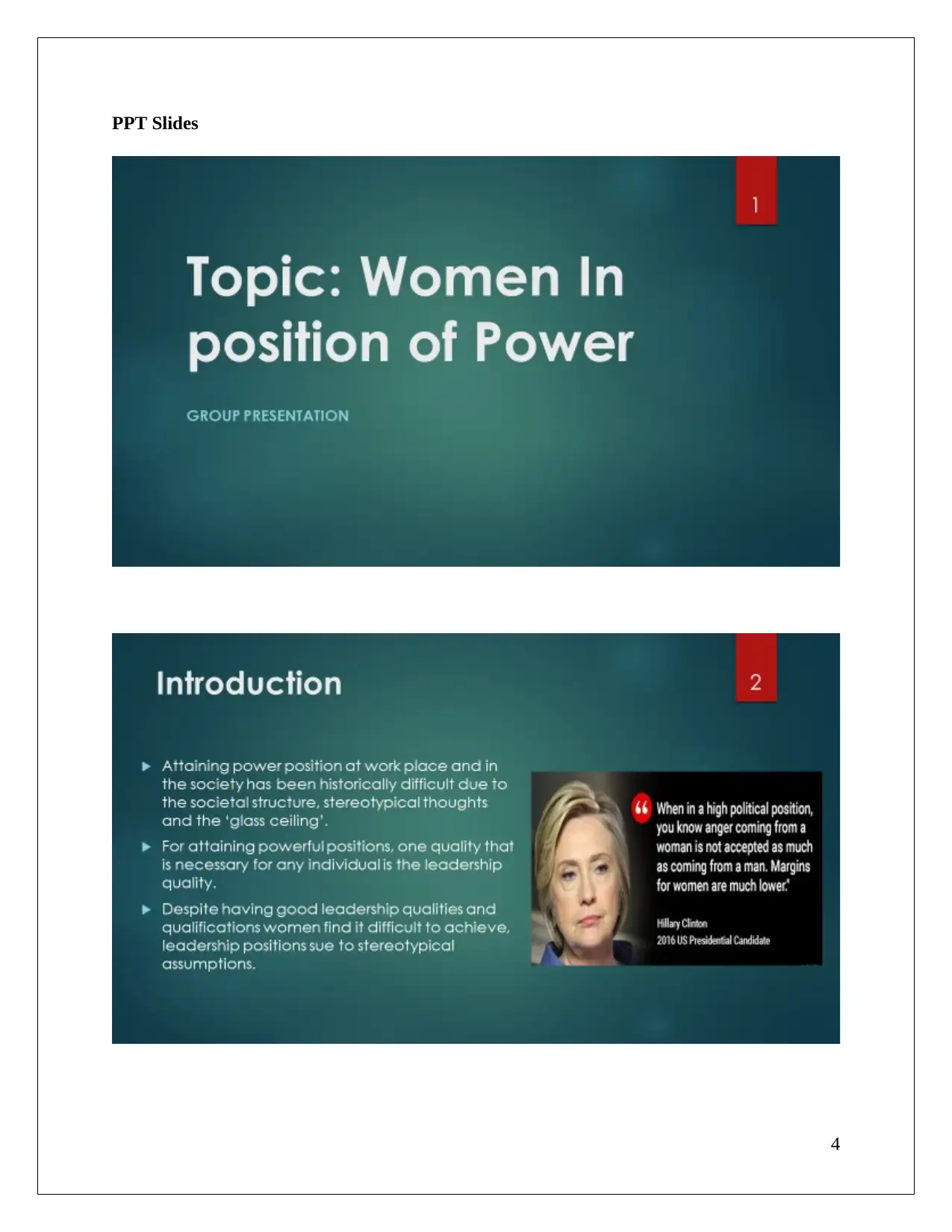
Introduction
Attaining power position at work place and in the society has been historically difficult
due to the societal structure, stereotypical thoughts and the ‘glass ceiling’.
For attaining powerful positions, one quality that is necessary for any individual is the
leadership quality.
Despite having good leadership qualities and qualifications women find it difficult to
achieve, leadership positions sue to stereotypical assumptions.
Women in powerful positions in Industry and Business
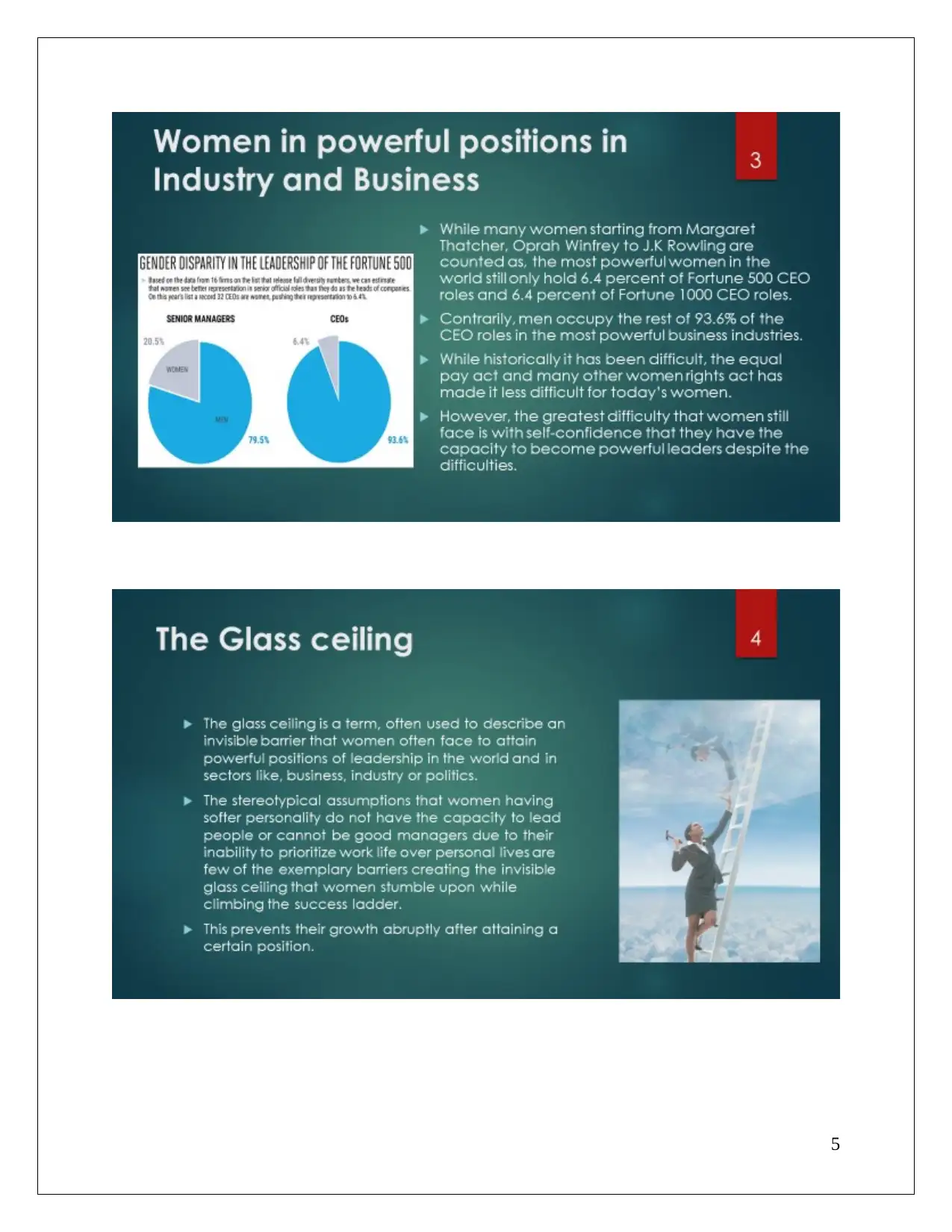
While many women starting from Margaret Thatcher, Oprah Winfrey to J.K Rowling are
counted as, the most powerful women in the world still only hold 6.4 percent of Fortune
500 CEO roles and 6.4 percent of Fortune 1000 CEO roles.
Contrarily, men occupy the rest of 93.6% of the CEO roles in the most powerful business
industries.
While historically it has been difficult, the equal pay act and many other women rights
act has made it less difficult for today’s women.
However, the greatest difficulty that women still face is with self-confidence that they
have the capacity to become powerful leaders despite the difficulties.
In this regard, those women who are already at position of power and capacity to
influence minds often become the role models for aspiring leaders and entrepreneurs and
therefore; have greater social responsibility.
The Glass ceiling
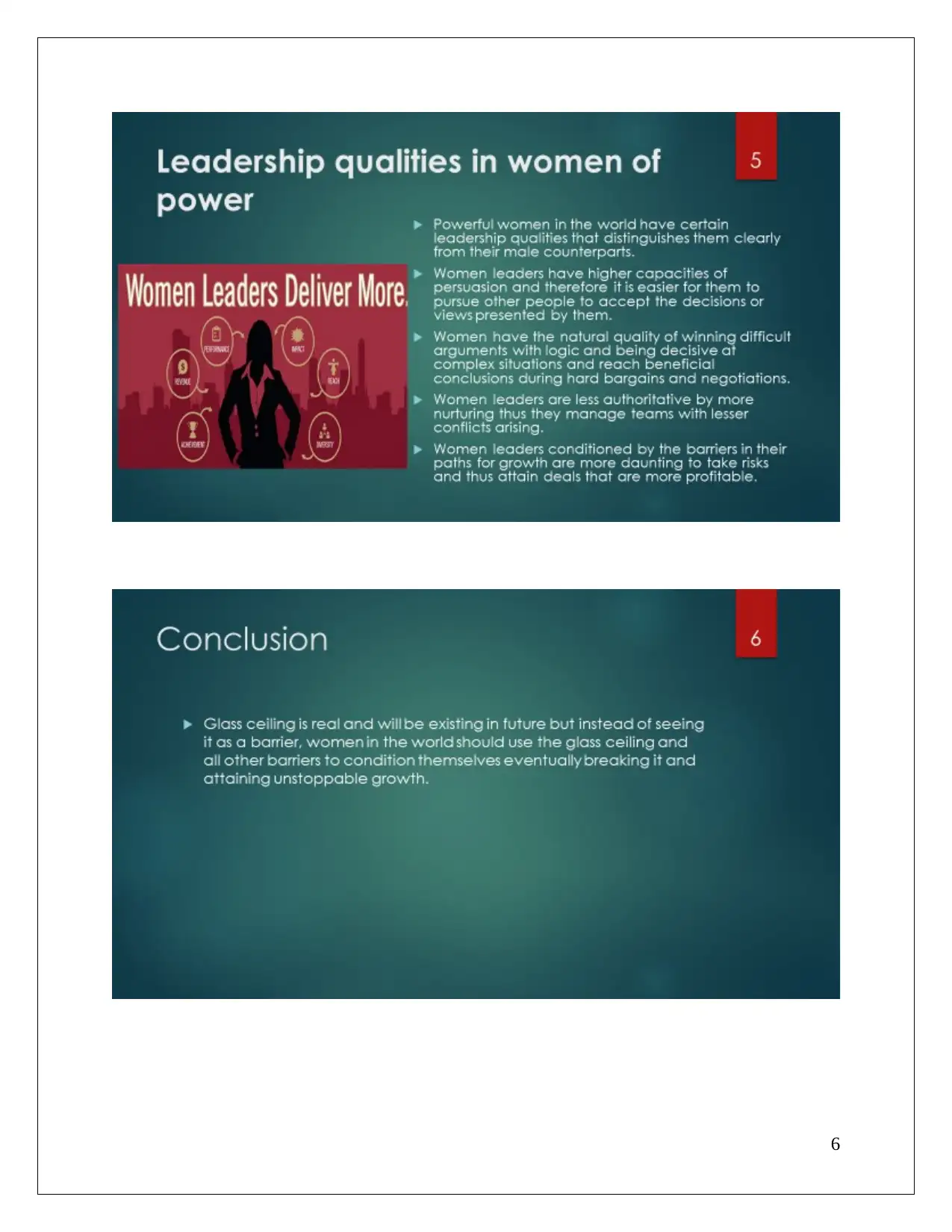
The glass ceiling is a term, often used to describe an invisible barrier that women often
face to attain powerful positions of leadership in the world and in sectors like, business,
industry or politics.
The stereotypical assumptions that women having softer personality do not have the
capacity to lead people or cannot be good managers due to their inability to prioritize
2
Topic: Women In position of Power
Introduction
Attaining power position at work place and in the society has been historically difficult
due to the societal structure, stereotypical thoughts and the ‘glass ceiling’.
For attaining powerful positions, one quality that is necessary for any individual is the
leadership quality.
Despite having good leadership qualities and qualifications women find it difficult to
achieve, leadership positions sue to stereotypical assumptions.
Women in powerful positions in Industry and Business
While many women starting from Margaret Thatcher, Oprah Winfrey to J.K Rowling are
counted as, the most powerful women in the world still only hold 6.4 percent of Fortune
500 CEO roles and 6.4 percent of Fortune 1000 CEO roles.
Contrarily, men occupy the rest of 93.6% of the CEO roles in the most powerful business
industries.
While historically it has been difficult, the equal pay act and many other women rights
act has made it less difficult for today’s women.
However, the greatest difficulty that women still face is with self-confidence that they
have the capacity to become powerful leaders despite the difficulties.
In this regard, those women who are already at position of power and capacity to
influence minds often become the role models for aspiring leaders and entrepreneurs and
therefore; have greater social responsibility.
The Glass ceiling
The glass ceiling is a term, often used to describe an invisible barrier that women often
face to attain powerful positions of leadership in the world and in sectors like, business,
industry or politics.
The stereotypical assumptions that women having softer personality do not have the
capacity to lead people or cannot be good managers due to their inability to prioritize
2
⊘ This is a preview!⊘
Do you want full access?
Subscribe today to unlock all pages.

Trusted by 1+ million students worldwide

work life over personal lives are few of the exemplary barriers creating the invisible glass
ceiling that women stumble upon while climbing the success ladder.
This prevents their growth abruptly after attaining a certain position.
Leadership qualities in women of power
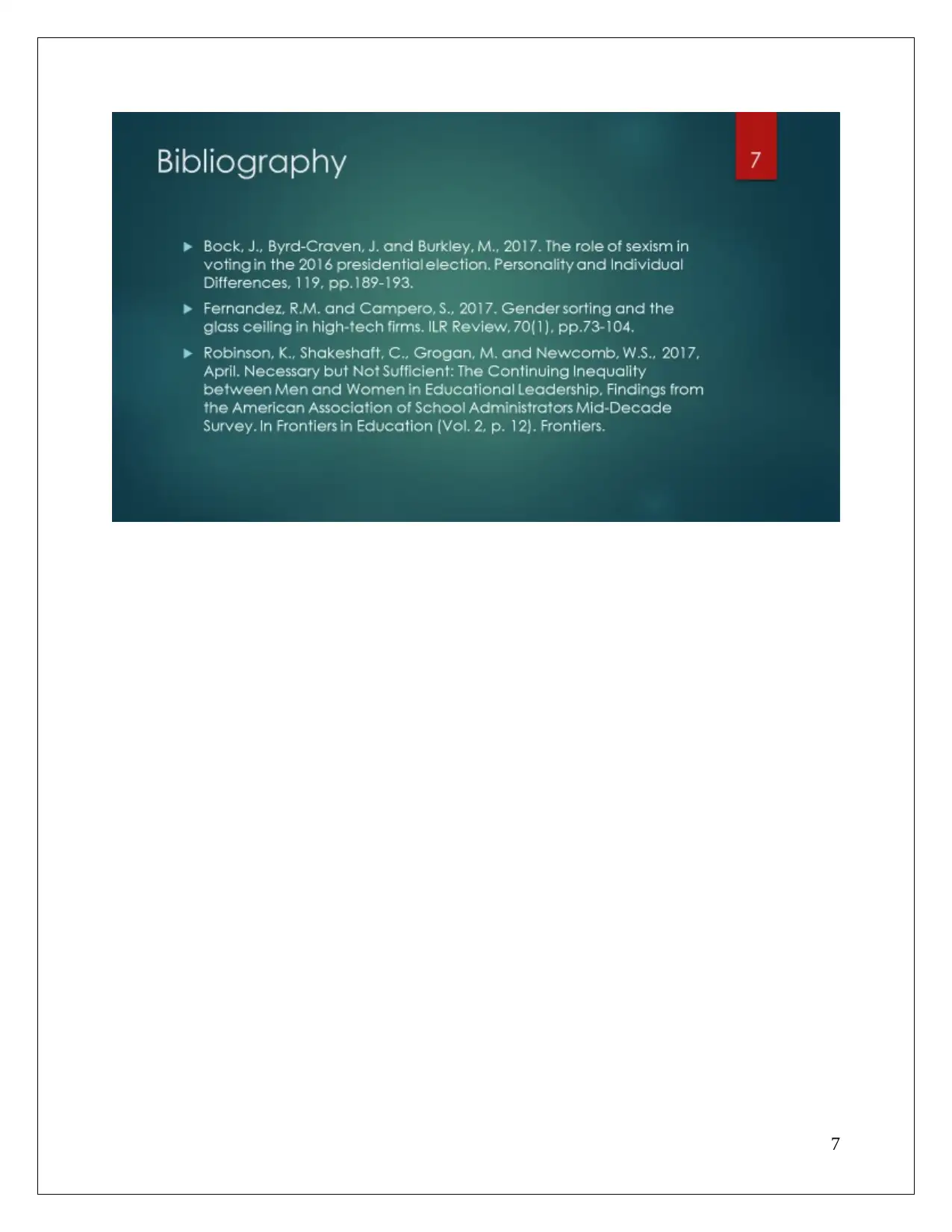
Powerful women in the world have certain leadership qualities that distinguishes them
clearly from their male counterparts.
Women leaders have higher capacities of persuasion and therefore it is easier for them to
pursue other people to accept the decisions or views presented by them.
Women have the natural quality of winning difficult arguments with logic and being
decisive at complex situations and reach beneficial conclusions during hard bargains and
negotiations.
Women leaders are less authoritative by more nurturing thus they manage teams with
lesser conflicts arising.
Women leaders conditioned by the barriers in their paths for growth are more daunting to
take risks and thus attain deals that are more profitable.
Conclusion
Glass ceiling is real and will be existing in future but instead of seeing it as a barrier, women in
the world should use the glass ceiling and all other barriers to condition themselves eventually
breaking it and attaining unstoppable growth.
3
ceiling that women stumble upon while climbing the success ladder.
This prevents their growth abruptly after attaining a certain position.
Leadership qualities in women of power
Powerful women in the world have certain leadership qualities that distinguishes them
clearly from their male counterparts.
Women leaders have higher capacities of persuasion and therefore it is easier for them to
pursue other people to accept the decisions or views presented by them.
Women have the natural quality of winning difficult arguments with logic and being
decisive at complex situations and reach beneficial conclusions during hard bargains and
negotiations.
Women leaders are less authoritative by more nurturing thus they manage teams with
lesser conflicts arising.
Women leaders conditioned by the barriers in their paths for growth are more daunting to
take risks and thus attain deals that are more profitable.
Conclusion
Glass ceiling is real and will be existing in future but instead of seeing it as a barrier, women in
the world should use the glass ceiling and all other barriers to condition themselves eventually
breaking it and attaining unstoppable growth.
3
Paraphrase This Document
Need a fresh take? Get an instant paraphrase of this document with our AI Paraphraser

PPT Slides
4
4

5
⊘ This is a preview!⊘
Do you want full access?
Subscribe today to unlock all pages.

Trusted by 1+ million students worldwide

6
Paraphrase This Document
Need a fresh take? Get an instant paraphrase of this document with our AI Paraphraser

7

Personal reflection
Part A
In the group presentation, we introduced the topic women in positions of power. We introduced
the topic with facts like how attaining power position at work place and in the society has been
historically difficult due to the societal structure, stereotypical thoughts and the ‘glass ceiling’.
We also analyzed about how leadership quality plays a significant role in becoming powerful for
men and women and how despite having good leadership qualities and qualifications women
find it difficult to achieve, leadership positions due to stereotypical assumptions. We presented
recent statics of population data of the percentage of women attaining CEO and higher
leadership, managerial positions. Similarly, we clarified how men still occupy greater percentage
of leadership positions globally. We also presented that historically it has been always difficult
for women than men due to social inequality. However, for contemporary women various
policies and laws related to equal pay and women rights have made it easier than before to be
equally educated and ability to apply for jobs. Consequently, it is true that there are other
invisible barriers such as thought process and social assumptions creating a Glass Ceiling for
women and preventing them from attaining highest positions (Streiff and Dundes, 2017). The US
although being one of the most liberated and forward nations globally still failed to have a
women president (McCarthy, 2017). We clarified how stereotypical assumptions that women due
to having softer personality do not have the capacity to lead people creates glass ceiling for
women. Notions like women cannot be good managers due to their inability to prioritize work
life over personal lives are few of the exemplary barriers creating the invisible glass ceiling that
women stumble upon while climbing the success ladder. This prevents their growth abruptly
after attaining a certain position although having proper qualifications and qualities of
leadership. We analyzed the difference in leadership qualities in men and women (Lammers and
Burgmer, 2017). The difference in men and women brain structures creates fundamental
differences in personal traits and therefore the qualities. For instance, women are better at
multitasking. We identified that some leadership qualities are unique to women. Such as
powerful women in the world have certain leadership, qualities that distinguishes them clearly
from their male counterparts. We identified that women leaders have higher capacities of
persuasion and therefore it is easier for them to pursue other people to accept the decisions or
8
Part A
In the group presentation, we introduced the topic women in positions of power. We introduced
the topic with facts like how attaining power position at work place and in the society has been
historically difficult due to the societal structure, stereotypical thoughts and the ‘glass ceiling’.
We also analyzed about how leadership quality plays a significant role in becoming powerful for
men and women and how despite having good leadership qualities and qualifications women
find it difficult to achieve, leadership positions due to stereotypical assumptions. We presented
recent statics of population data of the percentage of women attaining CEO and higher
leadership, managerial positions. Similarly, we clarified how men still occupy greater percentage
of leadership positions globally. We also presented that historically it has been always difficult
for women than men due to social inequality. However, for contemporary women various
policies and laws related to equal pay and women rights have made it easier than before to be
equally educated and ability to apply for jobs. Consequently, it is true that there are other
invisible barriers such as thought process and social assumptions creating a Glass Ceiling for
women and preventing them from attaining highest positions (Streiff and Dundes, 2017). The US
although being one of the most liberated and forward nations globally still failed to have a
women president (McCarthy, 2017). We clarified how stereotypical assumptions that women due
to having softer personality do not have the capacity to lead people creates glass ceiling for
women. Notions like women cannot be good managers due to their inability to prioritize work
life over personal lives are few of the exemplary barriers creating the invisible glass ceiling that
women stumble upon while climbing the success ladder. This prevents their growth abruptly
after attaining a certain position although having proper qualifications and qualities of
leadership. We analyzed the difference in leadership qualities in men and women (Lammers and
Burgmer, 2017). The difference in men and women brain structures creates fundamental
differences in personal traits and therefore the qualities. For instance, women are better at
multitasking. We identified that some leadership qualities are unique to women. Such as
powerful women in the world have certain leadership, qualities that distinguishes them clearly
from their male counterparts. We identified that women leaders have higher capacities of
persuasion and therefore it is easier for them to pursue other people to accept the decisions or
8
⊘ This is a preview!⊘
Do you want full access?
Subscribe today to unlock all pages.

Trusted by 1+ million students worldwide

views presented by them. Women have the natural quality of winning difficult arguments with
logic and being decisive at complex situations and reach beneficial conclusions during hard
bargains and negotiations (Fernandez and Campero, 2017). Women leaders are less authoritative
by more nurturing thus they manage teams with lesser conflicts arising. Women leaders
conditioned by the barriers in their paths for growth are more daunting to take risks and thus
attain deals that are more profitable. We conclude that women in position of power have unique
leadership qualities and the glass ceiling should be treated as conditioning factors rather than
barriers that prevent growth.
Part B
All group members participated equally during idea generation. Discussing among ourselves we
selected the topic Women In position of Power and the topic was selected with general
agreement, which showed our team spirit instead of our individual decision-making capacities.
We then divided responsibilities and selected particular subjects to research upon for preparing
the presentation. This task has been guided by our understanding of Belbin’s team roles, which
suggests specific roles that individual members have while working as a team (Faniko et al.,
2017). We compiled the presentation finally together and decided on the type of slide designs
and figures to be used for illustrations. During research, we followed our perceptions regarding
the topic of presentation, which made our key-word search easier. One of the team members
suggested that we should include the practicality of glass ceiling and how it is preventing the
growth of women of power and link it with how it can be used as a strength rather than viewed as
weakness. All of the team members agreed on this line of thought and the presentation was
prepared as such. The presentation being a group presentation required good team effort, which
has been actualized and aided by the understanding we have regarding the leadership qualities,
the theories of leadership and leadership styles. We successfully made the presentations with the
understanding of how teamwork helps in task completion and the different stages of team
building and its life cycle. Much of the storming stage has been faced with lesser contradictions
due to our inclination towards supporting team decisions and individual team members. The
absence of power play helped us in avoiding clashes with in the team and it was not needed
because each one of the members were enthusiastic and skilled. We never required persuasion or
authority but required mutual support and our team had it plenty during the work. The topics
9
logic and being decisive at complex situations and reach beneficial conclusions during hard
bargains and negotiations (Fernandez and Campero, 2017). Women leaders are less authoritative
by more nurturing thus they manage teams with lesser conflicts arising. Women leaders
conditioned by the barriers in their paths for growth are more daunting to take risks and thus
attain deals that are more profitable. We conclude that women in position of power have unique
leadership qualities and the glass ceiling should be treated as conditioning factors rather than
barriers that prevent growth.
Part B
All group members participated equally during idea generation. Discussing among ourselves we
selected the topic Women In position of Power and the topic was selected with general
agreement, which showed our team spirit instead of our individual decision-making capacities.
We then divided responsibilities and selected particular subjects to research upon for preparing
the presentation. This task has been guided by our understanding of Belbin’s team roles, which
suggests specific roles that individual members have while working as a team (Faniko et al.,
2017). We compiled the presentation finally together and decided on the type of slide designs
and figures to be used for illustrations. During research, we followed our perceptions regarding
the topic of presentation, which made our key-word search easier. One of the team members
suggested that we should include the practicality of glass ceiling and how it is preventing the
growth of women of power and link it with how it can be used as a strength rather than viewed as
weakness. All of the team members agreed on this line of thought and the presentation was
prepared as such. The presentation being a group presentation required good team effort, which
has been actualized and aided by the understanding we have regarding the leadership qualities,
the theories of leadership and leadership styles. We successfully made the presentations with the
understanding of how teamwork helps in task completion and the different stages of team
building and its life cycle. Much of the storming stage has been faced with lesser contradictions
due to our inclination towards supporting team decisions and individual team members. The
absence of power play helped us in avoiding clashes with in the team and it was not needed
because each one of the members were enthusiastic and skilled. We never required persuasion or
authority but required mutual support and our team had it plenty during the work. The topics
9
Paraphrase This Document
Need a fresh take? Get an instant paraphrase of this document with our AI Paraphraser

such as leadership qualities in women of power, the Glass ceiling and women in powerful
positions in industry and business had been proposed individually by individual members while
introduction and conclusion of the presentation has been developed through team effort. Making
presentation on this topic has been very enlightening for us as it helped us in understanding the
gender inequality persisting in the society. We acknowledged the reality of the barriers that
prevent the growth of the women in powerful and influential positions. We understood how
societal assumptions prevent even the most progressive nations to accept women in leadership
positions. We understood that people judge the professional abilities based on personal
characteristics and therefore, the soft natured women are often mistaken as weak leaders despite
being persuasive. Further, it became clear to us that those women in powerful positions have
social obligation and responsibility of speaking inspiringly and carefully to all the aspiring
women globally and light remarks may socially implicate the status of women in the world. It is
thus clear that with great power comes great responsibilities and those in powerful positions must
acknowledge and accept these responsibilities and must use their power for the greater good of
all the women in the world (Cohen et al., 2017).
10
positions in industry and business had been proposed individually by individual members while
introduction and conclusion of the presentation has been developed through team effort. Making
presentation on this topic has been very enlightening for us as it helped us in understanding the
gender inequality persisting in the society. We acknowledged the reality of the barriers that
prevent the growth of the women in powerful and influential positions. We understood how
societal assumptions prevent even the most progressive nations to accept women in leadership
positions. We understood that people judge the professional abilities based on personal
characteristics and therefore, the soft natured women are often mistaken as weak leaders despite
being persuasive. Further, it became clear to us that those women in powerful positions have
social obligation and responsibility of speaking inspiringly and carefully to all the aspiring
women globally and light remarks may socially implicate the status of women in the world. It is
thus clear that with great power comes great responsibilities and those in powerful positions must
acknowledge and accept these responsibilities and must use their power for the greater good of
all the women in the world (Cohen et al., 2017).
10

Reference List
Bock, J., Byrd-Craven, J. and Burkley, M., 2017. The role of sexism in voting in the 2016
presidential election. Personality and Individual Differences, 119, pp.189-193.
Cohen, J.R., Dalton, D.W., Holder-Webb, L. and McMillan, J.J., 2017. An Analysis of Glass
Ceiling Perceptions in the Accounting Profession.
Faniko, K., Ellemers, N., Derks, B. and Lorenzi-Cioldi, F., 2017. Nothing changes, really: Why
women who break through the glass ceiling end up reinforcing it. Personality and Social
Psychology Bulletin, 43(5), pp.638-651.
Fernandez, R.M. and Campero, S., 2017. Gender sorting and the glass ceiling in high-tech firms.
ILR Review, 70(1), pp.73-104.
Lammers, J. and Burgmer, P., 2017. Power increases anchoring effects on judgment. Social
cognition, 35(1), p.40.
McCarthy, A.C., 2017. Social Structure. Crime, and Social Control: An Examination of Factors
Influencing Rates and Probabilities of Arrest, 239, p.19.
Robinson, K., Shakeshaft, C., Grogan, M. and Newcomb, W.S., 2017, April. Necessary but Not
Sufficient: The Continuing Inequality between Men and Women in Educational Leadership,
Findings from the American Association of School Administrators Mid-Decade Survey. In
Frontiers in Education (Vol. 2, p. 12). Frontiers.
Streiff, M. and Dundes, L., 2017. Frozen in Time: How Disney Gender-Stereotypes Its Most
Powerful Princess. Social Sciences, 6(2), p.38.
11
Bock, J., Byrd-Craven, J. and Burkley, M., 2017. The role of sexism in voting in the 2016
presidential election. Personality and Individual Differences, 119, pp.189-193.
Cohen, J.R., Dalton, D.W., Holder-Webb, L. and McMillan, J.J., 2017. An Analysis of Glass
Ceiling Perceptions in the Accounting Profession.
Faniko, K., Ellemers, N., Derks, B. and Lorenzi-Cioldi, F., 2017. Nothing changes, really: Why
women who break through the glass ceiling end up reinforcing it. Personality and Social
Psychology Bulletin, 43(5), pp.638-651.
Fernandez, R.M. and Campero, S., 2017. Gender sorting and the glass ceiling in high-tech firms.
ILR Review, 70(1), pp.73-104.
Lammers, J. and Burgmer, P., 2017. Power increases anchoring effects on judgment. Social
cognition, 35(1), p.40.
McCarthy, A.C., 2017. Social Structure. Crime, and Social Control: An Examination of Factors
Influencing Rates and Probabilities of Arrest, 239, p.19.
Robinson, K., Shakeshaft, C., Grogan, M. and Newcomb, W.S., 2017, April. Necessary but Not
Sufficient: The Continuing Inequality between Men and Women in Educational Leadership,
Findings from the American Association of School Administrators Mid-Decade Survey. In
Frontiers in Education (Vol. 2, p. 12). Frontiers.
Streiff, M. and Dundes, L., 2017. Frozen in Time: How Disney Gender-Stereotypes Its Most
Powerful Princess. Social Sciences, 6(2), p.38.
11
⊘ This is a preview!⊘
Do you want full access?
Subscribe today to unlock all pages.

Trusted by 1+ million students worldwide
1 out of 12
Related Documents
Your All-in-One AI-Powered Toolkit for Academic Success.
+13062052269
info@desklib.com
Available 24*7 on WhatsApp / Email
Unlock your academic potential
Copyright © 2020–2026 A2Z Services. All Rights Reserved. Developed and managed by ZUCOL.