7002ICT Project: Requirements Analysis, Stakeholders, Questionnaire
VerifiedAdded on 2022/11/28
|10
|1306
|389
Project
AI Summary
This project proposal analyzes the requirements for a system, likely an electronic shelf label system for a pharmacy, as part of the 7002ICT course. It begins by outlining the functional and non-functional requirements using the FURPS+ framework, ensuring that the system meets usability, reliability, performance, and supportability standards. The assignment then identifies and categorizes stakeholders, including internal, external, operational, and executive groups, crucial for successful system implementation. A detailed questionnaire is designed to gather specific requirements from operational stakeholders, incorporating a mix of open and closed-ended questions. Furthermore, the assignment includes a domain model class diagram, use case diagram, activity diagram, and system sequence diagram, providing a comprehensive overview of the system's data structure and operational processes. This project demonstrates a thorough understanding of systems analysis and design principles within a practical business context.

Running head: 7002ICT
7002ICT
Name of the Student:
Name of the University:
Author Note:
7002ICT
Name of the Student:
Name of the University:
Author Note:
Paraphrase This Document
Need a fresh take? Get an instant paraphrase of this document with our AI Paraphraser

17002ICT
Table of Contents
Functional and Non-functional Requirements...........................................................................2
Functional Requirements.......................................................................................................2
Non-Functional Requirements...............................................................................................2
Identification of Stakeholders....................................................................................................3
Questionnaire.............................................................................................................................4
References..................................................................................................................................6
Table of Contents
Functional and Non-functional Requirements...........................................................................2
Functional Requirements.......................................................................................................2
Non-Functional Requirements...............................................................................................2
Identification of Stakeholders....................................................................................................3
Questionnaire.............................................................................................................................4
References..................................................................................................................................6

27002ICT
Functional and Non-functional Requirements
The Functional as well as Non-functional requirements of the system have been
highlighted with the help of the FURPS+ framework.
Functional Requirements
The newly proposed system carries the specific functionality of provisioning with the
protection against the prevalent leakage of data by identifying the particular loopholes
existing within the data management system belonging to that of the organization (Point,
2016). The system also covers the areas that need urgent rectification in relation to the terms
provisioning with the assurance of no misuse as well as no leakage of information belonging
to the organization in particular (Kurtanović & Maalej, 2017). One of the primary benefits of
the Universal Communications Group in Australia from this newly proposed system is to
have a better protection upon the leakage of data that belongs to the organization and in turn,
the sensitive information of the users forming a major part as well.
Non-Functional Requirements
Non-functional requirements of the system can be categorized by the following in
relation to the FURPS+ framework (Cummings, Stimpson & Clamann, 2016). These are,
i) Usability- the newly proposed system along with that of the application aims at
providing all the users interacting with the system with the best of the user
experience having a simple user centered design.
ii) Reliability- the newly proposed application is considered to be a reliable
information system having met the primary feature of protecting the data
belonging to every single user interacting with the system.
iii) Performance- the system carries the primary objective to perform at the most
efficient way when the users come and interact with the system specified having
Functional and Non-functional Requirements
The Functional as well as Non-functional requirements of the system have been
highlighted with the help of the FURPS+ framework.
Functional Requirements
The newly proposed system carries the specific functionality of provisioning with the
protection against the prevalent leakage of data by identifying the particular loopholes
existing within the data management system belonging to that of the organization (Point,
2016). The system also covers the areas that need urgent rectification in relation to the terms
provisioning with the assurance of no misuse as well as no leakage of information belonging
to the organization in particular (Kurtanović & Maalej, 2017). One of the primary benefits of
the Universal Communications Group in Australia from this newly proposed system is to
have a better protection upon the leakage of data that belongs to the organization and in turn,
the sensitive information of the users forming a major part as well.
Non-Functional Requirements
Non-functional requirements of the system can be categorized by the following in
relation to the FURPS+ framework (Cummings, Stimpson & Clamann, 2016). These are,
i) Usability- the newly proposed system along with that of the application aims at
providing all the users interacting with the system with the best of the user
experience having a simple user centered design.
ii) Reliability- the newly proposed application is considered to be a reliable
information system having met the primary feature of protecting the data
belonging to every single user interacting with the system.
iii) Performance- the system carries the primary objective to perform at the most
efficient way when the users come and interact with the system specified having
⊘ This is a preview!⊘
Do you want full access?
Subscribe today to unlock all pages.

Trusted by 1+ million students worldwide

37002ICT
no remaining issues with the performance to hamper the working of the user
(Laplante, 2017).
iv) Supportability- this newly built system has been developed keeping in mind all the
standards in accordance to the organization having met all the primary functions
necessary for solving the problems that had come up.
v) Design Constraints- this specific design typically carries no constraints that are
generally imposed by the users, the organization developing the system or the
regulations imposed upon from external sources.
vi) Implementation constraints- while the procedure of implementation was carried
out, no such constraints have been faced as well as dealt by the organization
having carried on with a smooth and effective method for implementation.
vii) Interface Constraints- interface of this newly developed application has been
aimed at having a very simple and user friendly interface, thus having no such
implications or constraints being imposed upon the interface (Khan et al., 2016).
viii) Physical Constraints- physically, the system along with the application is very
easy to handle be dealt with. Hence, carries no externally visible constraints as per
the usage by the individual users.
Identification of Stakeholders
Stakeholders specifically refer to that particular group of people who shall be affected
by the implementation of the system that has been newly proposed in a direct or an indirect
manner (Mahmoud, 2015).
Internal Stakeholders- the stakeholder of this particularly proposed system consists of
all the employees, the managers, members belonging to the board of directors along
no remaining issues with the performance to hamper the working of the user
(Laplante, 2017).
iv) Supportability- this newly built system has been developed keeping in mind all the
standards in accordance to the organization having met all the primary functions
necessary for solving the problems that had come up.
v) Design Constraints- this specific design typically carries no constraints that are
generally imposed by the users, the organization developing the system or the
regulations imposed upon from external sources.
vi) Implementation constraints- while the procedure of implementation was carried
out, no such constraints have been faced as well as dealt by the organization
having carried on with a smooth and effective method for implementation.
vii) Interface Constraints- interface of this newly developed application has been
aimed at having a very simple and user friendly interface, thus having no such
implications or constraints being imposed upon the interface (Khan et al., 2016).
viii) Physical Constraints- physically, the system along with the application is very
easy to handle be dealt with. Hence, carries no externally visible constraints as per
the usage by the individual users.
Identification of Stakeholders
Stakeholders specifically refer to that particular group of people who shall be affected
by the implementation of the system that has been newly proposed in a direct or an indirect
manner (Mahmoud, 2015).
Internal Stakeholders- the stakeholder of this particularly proposed system consists of
all the employees, the managers, members belonging to the board of directors along
Paraphrase This Document
Need a fresh take? Get an instant paraphrase of this document with our AI Paraphraser

47002ICT
with the inclusion of the investors playing a major part individually within the
Universal Communications Group in Australia.
External Stakeholders- particularly this group of individual refer to those individuals
along with the groups present outside the Universal Communications Group in
Australia having a specific interest within this newly proposed system (Eskerod &
Jepsen, 2016). These stakeholders include the Government, the customers along with
the inclusion of certain group of individuals who are the potential users to the new
application.
Operational stakeholders- operational stakeholders form the specific group of
stakeholders having the inclusion of the individuals belonging to the managerial
section of the Universal Communications Group in Australia.
Executive Stakeholders- this includes the Owner, the Chief Executive officer as well
as the senior members belonging to the Universal Communications Group in
Australia (Derakhshan, Turner & Mancini, 2019). This particular group of stakeholder
is responsible for taking all the major decisions keeping in mind the benefits and loss
of the organization respectively.
Questionnaire
The specific set of questions that shall be asked to the specific group of operational
stakeholders have been briefly discussed below. These are,
i) What shall be the basic requirements of the application in relation to the security
of data belonging to the Universal Communications Group in Australia?
ii) How shall the usability of the system be enhanced keeping in mind the users
interacting with the system?
with the inclusion of the investors playing a major part individually within the
Universal Communications Group in Australia.
External Stakeholders- particularly this group of individual refer to those individuals
along with the groups present outside the Universal Communications Group in
Australia having a specific interest within this newly proposed system (Eskerod &
Jepsen, 2016). These stakeholders include the Government, the customers along with
the inclusion of certain group of individuals who are the potential users to the new
application.
Operational stakeholders- operational stakeholders form the specific group of
stakeholders having the inclusion of the individuals belonging to the managerial
section of the Universal Communications Group in Australia.
Executive Stakeholders- this includes the Owner, the Chief Executive officer as well
as the senior members belonging to the Universal Communications Group in
Australia (Derakhshan, Turner & Mancini, 2019). This particular group of stakeholder
is responsible for taking all the major decisions keeping in mind the benefits and loss
of the organization respectively.
Questionnaire
The specific set of questions that shall be asked to the specific group of operational
stakeholders have been briefly discussed below. These are,
i) What shall be the basic requirements of the application in relation to the security
of data belonging to the Universal Communications Group in Australia?
ii) How shall the usability of the system be enhanced keeping in mind the users
interacting with the system?

57002ICT
iii) How can the application gain the reliability of the users relating to the primary
requirement met by the newly proposed system?
iv) How can the system be performing better keeping in mind the activities taking
place under the interaction of the system with the users?
v) What are the basic support needed by the system in order to have an enhanced
performance of the activity relating to the primary objective of the newly
proposed application?
vi) Are there any existence of constraints imposed upon the design of the new
application system and how shall they be overcome?
vii) Does the implementation procedure of the newly proposed system carry any kind
of constraints while the activity is taking place?
viii) What are the constraints related to the interface development of the application
and how are they properly mitigated?
ix) Are there any physically existing constraints to the system and if how are they
dealt with?
x) Is the newly developed application system by the Universal Communications
Group in Australia cost efficient?
iii) How can the application gain the reliability of the users relating to the primary
requirement met by the newly proposed system?
iv) How can the system be performing better keeping in mind the activities taking
place under the interaction of the system with the users?
v) What are the basic support needed by the system in order to have an enhanced
performance of the activity relating to the primary objective of the newly
proposed application?
vi) Are there any existence of constraints imposed upon the design of the new
application system and how shall they be overcome?
vii) Does the implementation procedure of the newly proposed system carry any kind
of constraints while the activity is taking place?
viii) What are the constraints related to the interface development of the application
and how are they properly mitigated?
ix) Are there any physically existing constraints to the system and if how are they
dealt with?
x) Is the newly developed application system by the Universal Communications
Group in Australia cost efficient?
⊘ This is a preview!⊘
Do you want full access?
Subscribe today to unlock all pages.

Trusted by 1+ million students worldwide

67002ICT
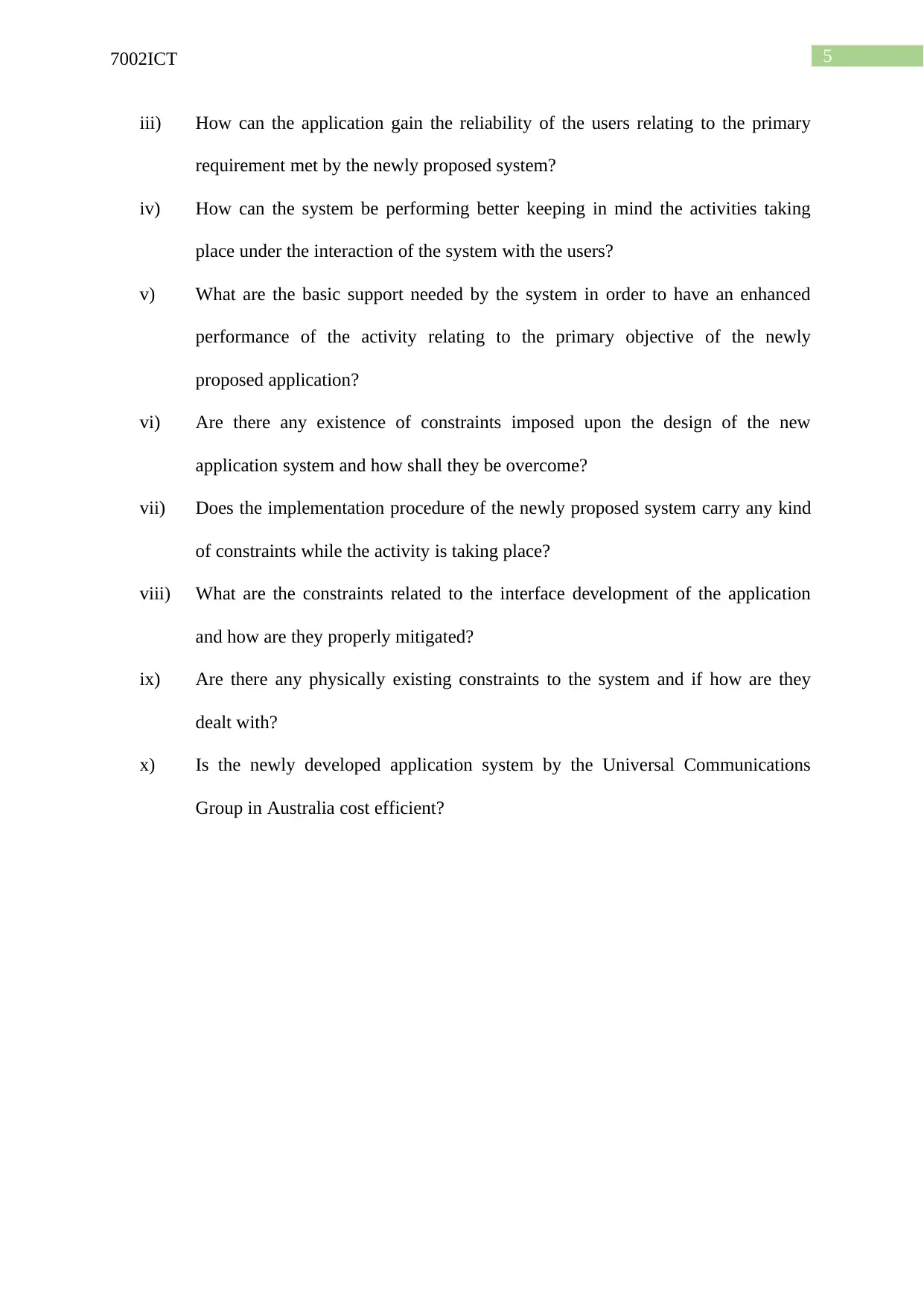
Domain model class diagram:
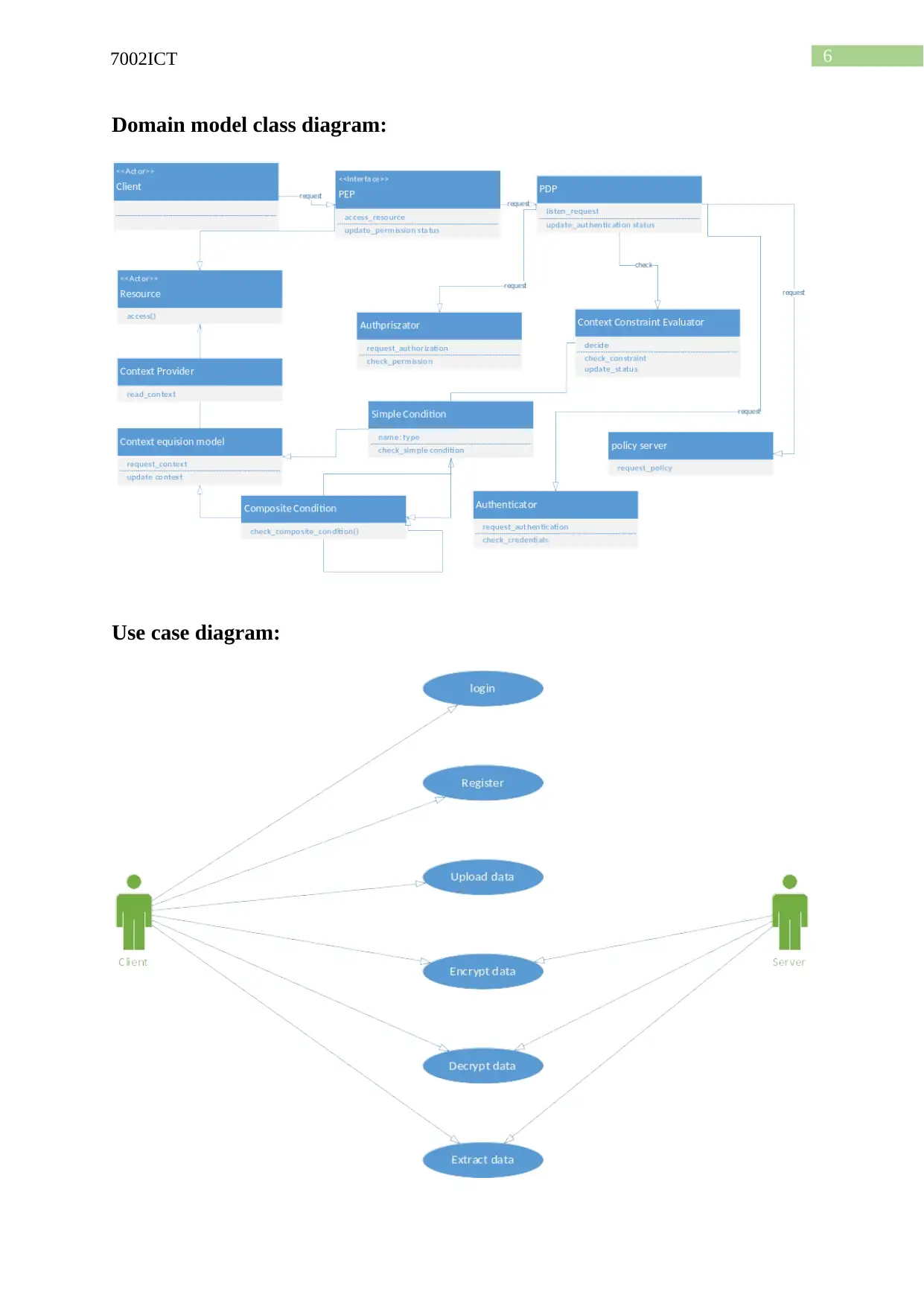
Use case diagram:
Domain model class diagram:
Use case diagram:
Paraphrase This Document
Need a fresh take? Get an instant paraphrase of this document with our AI Paraphraser

77002ICT
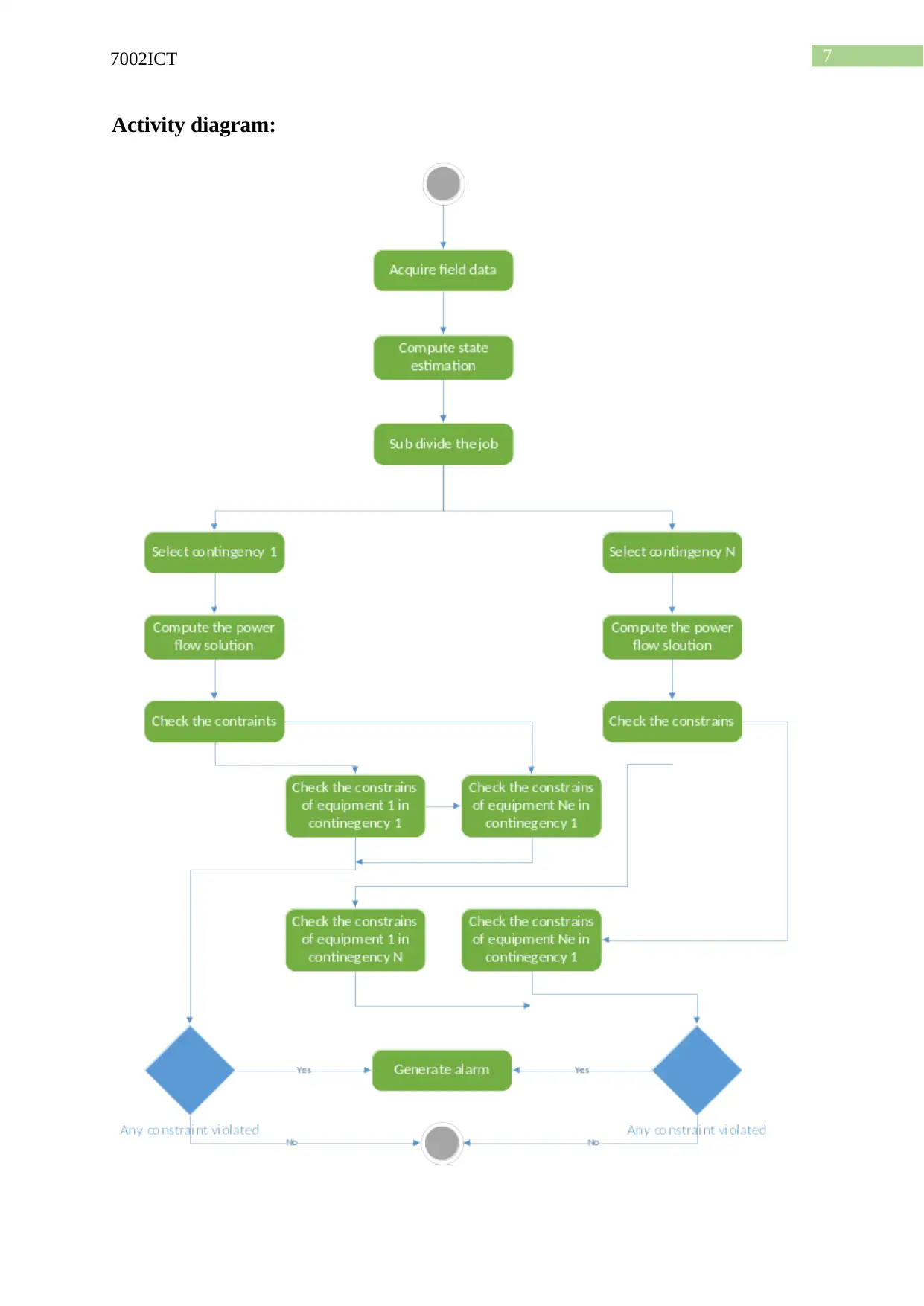
Activity diagram:
Activity diagram:

87002ICT
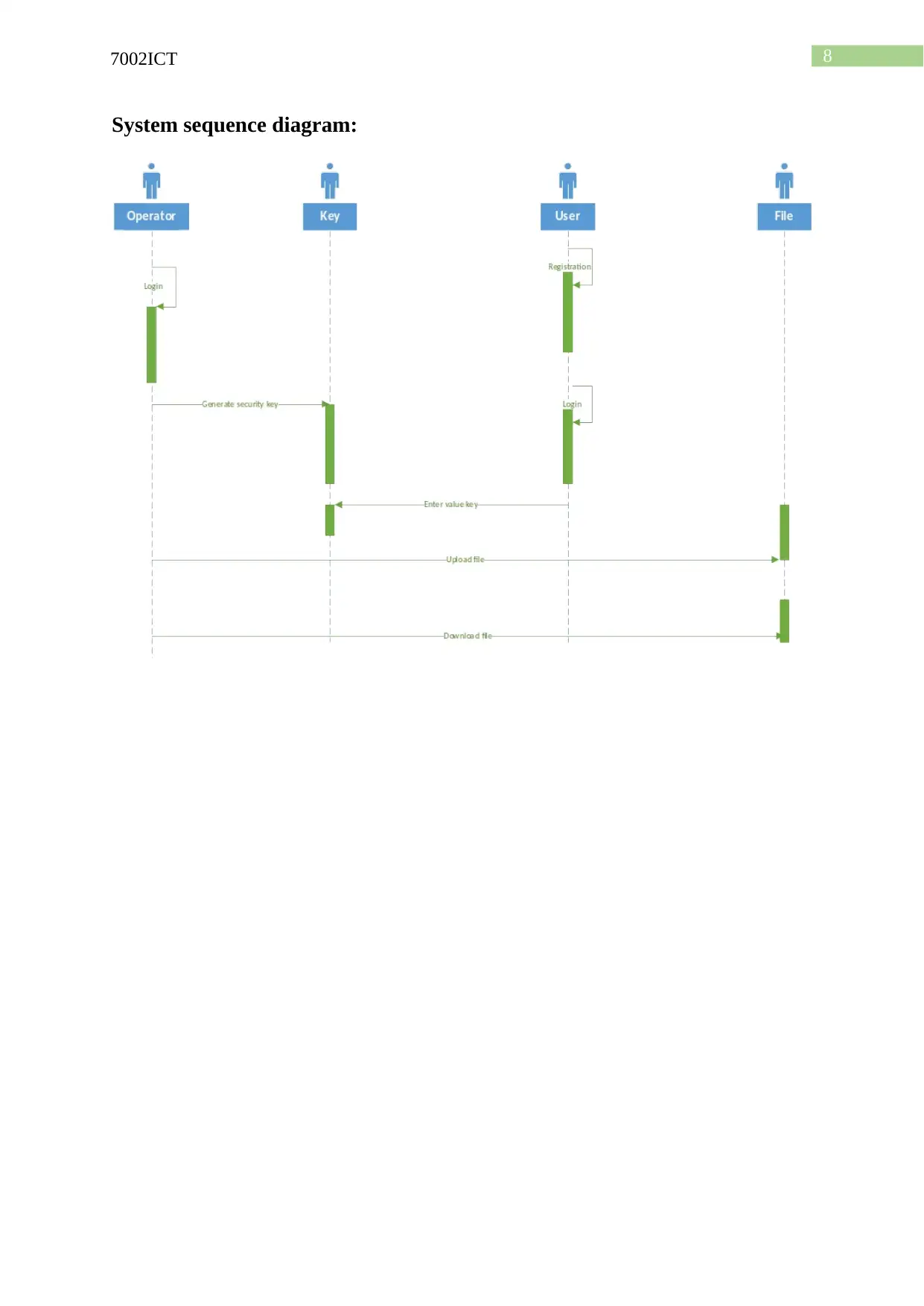
System sequence diagram:
⊘ This is a preview!⊘
Do you want full access?
Subscribe today to unlock all pages.

Trusted by 1+ million students worldwide

97002ICT
References
Cummings, M. L., Stimpson, A., & Clamann, M. (2016). Functional requirements for
onboard intelligent automation in single pilot operations. In AIAA Infotech@
Aerospace (p. 1652).
Derakhshan, R., Turner, R., & Mancini, M. (2019). Project governance and stakeholders: a
literature review. International Journal of Project Management, 37(1), 98-116.
Eskerod, P., & Jepsen, A. L. (2016). Project stakeholder management. Routledge.
Khan, F., Jan, S. R., Tahir, M., Khan, S., & Ullah, F. (2016). Survey: dealing non-functional
requirements at architecture level. VFAST Transactions on Software
Engineering, 9(2), 7-13.
Kurtanović, Z., & Maalej, W. (2017, September). Automatically classifying functional and
non-functional requirements using supervised machine learning. In 2017 IEEE 25th
International Requirements Engineering Conference (RE) (pp. 490-495). IEEE.
Laplante, P. A. (2017). Requirements engineering for software and systems. Auerbach
Publications.
Mahmoud, A. (2015, August). An information theoretic approach for extracting and tracing
non-functional requirements. In 2015 IEEE 23rd International Requirements
Engineering Conference (RE) (pp. 36-45). IEEE.
Point, T. U. T. O. R. I. A. L. S. (2016). Software requirements. Internet: https://www.
tutorailspoint. com/software_engineering/software_requirements/htm [Accessed 21
April 2019].
References
Cummings, M. L., Stimpson, A., & Clamann, M. (2016). Functional requirements for
onboard intelligent automation in single pilot operations. In AIAA Infotech@
Aerospace (p. 1652).
Derakhshan, R., Turner, R., & Mancini, M. (2019). Project governance and stakeholders: a
literature review. International Journal of Project Management, 37(1), 98-116.
Eskerod, P., & Jepsen, A. L. (2016). Project stakeholder management. Routledge.
Khan, F., Jan, S. R., Tahir, M., Khan, S., & Ullah, F. (2016). Survey: dealing non-functional
requirements at architecture level. VFAST Transactions on Software
Engineering, 9(2), 7-13.
Kurtanović, Z., & Maalej, W. (2017, September). Automatically classifying functional and
non-functional requirements using supervised machine learning. In 2017 IEEE 25th
International Requirements Engineering Conference (RE) (pp. 490-495). IEEE.
Laplante, P. A. (2017). Requirements engineering for software and systems. Auerbach
Publications.
Mahmoud, A. (2015, August). An information theoretic approach for extracting and tracing
non-functional requirements. In 2015 IEEE 23rd International Requirements
Engineering Conference (RE) (pp. 36-45). IEEE.
Point, T. U. T. O. R. I. A. L. S. (2016). Software requirements. Internet: https://www.
tutorailspoint. com/software_engineering/software_requirements/htm [Accessed 21
April 2019].
1 out of 10
Related Documents
Your All-in-One AI-Powered Toolkit for Academic Success.
+13062052269
info@desklib.com
Available 24*7 on WhatsApp / Email
Unlock your academic potential
Copyright © 2020–2025 A2Z Services. All Rights Reserved. Developed and managed by ZUCOL.