BE440 Brand Management: Aaker's Model and Singapore Brands
VerifiedAdded on 2022/09/02
|11
|2982
|19
Essay
AI Summary
This essay critically discusses the key elements a consumer goods company might use to build its brand identity in Singapore, referencing Aaker’s Brand Identity Planning Model. The introduction defines brand identity and its importance, followed by an overview of Aaker's model, which examines brand identity through four perspectives: brand as product, brand as organization, brand as person, and brand as symbol. The essay analyzes these perspectives, including product scope, country of origin, organizational attributes, local vs. global aspects, brand personality, customer relationships, visual image, and brand heritage, with relevant examples. Wilmar is used as a case study. The conclusion emphasizes the importance of brand identity for success in the competitive Singapore market, highlighting the value of a well-defined brand strategy and its impact on brand equity. The essay also references several scholarly journal articles to support its arguments.

Marketing
Brand Management
Brand Management

Paraphrase This Document
Need a fresh take? Get an instant paraphrase of this document with our AI Paraphraser
Brand Management 1
Contents
Introduction...........................................................................................................................................2
Aaker’s Brand Identity Planning Model................................................................................................2
Introduction to the model...................................................................................................................2
Perspective 1......................................................................................................................................3
Perspective 2......................................................................................................................................4
Perspective 3......................................................................................................................................5
Perspective 4......................................................................................................................................5
Conclusion.............................................................................................................................................6
References.............................................................................................................................................8
Appendices..........................................................................................................................................10
Contents
Introduction...........................................................................................................................................2
Aaker’s Brand Identity Planning Model................................................................................................2
Introduction to the model...................................................................................................................2
Perspective 1......................................................................................................................................3
Perspective 2......................................................................................................................................4
Perspective 3......................................................................................................................................5
Perspective 4......................................................................................................................................5
Conclusion.............................................................................................................................................6
References.............................................................................................................................................8
Appendices..........................................................................................................................................10
Brand Management 2
Introduction
The brand identity is the way a business depicts business to the customers. It comprises the
way a business elects a business name, design logo, colors and graphics used and the
language used. The brand identity is diverse to the brand image and is the outcome of the
exertions. An effective brand identity is translated into a optimistic brand image. The brands
having strong identities are instantly recognizable to everyone. The brand identities even
convey a message about the business. The popular brands even spend millions of dollars to
promote and advance themselves as it has a direct impact on the sales and market share. The
businesses having a strong brand identity can appreciate:
Price premium: The brand identity orders a price premium. A robust brand identity positions
in the mindset of customers by offering quality.
Consistency: Advancing a brand identity enables a brand to form a constant message across
all the marketing constituents. Each segment of a brand must have the equivalent basic styles
and strategy elements, forming a unified branding package.
Differentiation: A brand identity assists in differentiating the business from the rivalry and
suitably positioning the brand. Advancing a specialized and inventive identity design assists
in standing out to potential customers.
Aaker’s Brand Identity Planning Model
Introduction to the model
The necessity of surviving and prosper has enforced businesses from emerging economies to
sustain brands strategically. The brand identity initiatives have offered more mileage to the
products than another kind of promotion and marketing communication. As per the opinions
of Aaker, a specific vital perception for constructing brand equity is brand identity (Tanveer
and Lodhi, 2016). Aaker prescribes brand identity as an exclusive framework of brand links
that a company seeks to generate or maintain. Such links signify that the brand stances and
implies a potential to the customers from the organizational associates. Brand identity is
likely to form a link between brands and the customers by forming a value proposal
comprising emotional, functional and self-expressive assistances (Kennedy and Guzmán,
2016). The brand identity is even adapted for diverse market segments and products. A
company presenting a unified, distinguishing and pertinent brand identity can form a
Introduction
The brand identity is the way a business depicts business to the customers. It comprises the
way a business elects a business name, design logo, colors and graphics used and the
language used. The brand identity is diverse to the brand image and is the outcome of the
exertions. An effective brand identity is translated into a optimistic brand image. The brands
having strong identities are instantly recognizable to everyone. The brand identities even
convey a message about the business. The popular brands even spend millions of dollars to
promote and advance themselves as it has a direct impact on the sales and market share. The
businesses having a strong brand identity can appreciate:
Price premium: The brand identity orders a price premium. A robust brand identity positions
in the mindset of customers by offering quality.
Consistency: Advancing a brand identity enables a brand to form a constant message across
all the marketing constituents. Each segment of a brand must have the equivalent basic styles
and strategy elements, forming a unified branding package.
Differentiation: A brand identity assists in differentiating the business from the rivalry and
suitably positioning the brand. Advancing a specialized and inventive identity design assists
in standing out to potential customers.
Aaker’s Brand Identity Planning Model
Introduction to the model
The necessity of surviving and prosper has enforced businesses from emerging economies to
sustain brands strategically. The brand identity initiatives have offered more mileage to the
products than another kind of promotion and marketing communication. As per the opinions
of Aaker, a specific vital perception for constructing brand equity is brand identity (Tanveer
and Lodhi, 2016). Aaker prescribes brand identity as an exclusive framework of brand links
that a company seeks to generate or maintain. Such links signify that the brand stances and
implies a potential to the customers from the organizational associates. Brand identity is
likely to form a link between brands and the customers by forming a value proposal
comprising emotional, functional and self-expressive assistances (Kennedy and Guzmán,
2016). The brand identity is even adapted for diverse market segments and products. A
company presenting a unified, distinguishing and pertinent brand identity can form a
⊘ This is a preview!⊘
Do you want full access?
Subscribe today to unlock all pages.

Trusted by 1+ million students worldwide
Brand Management 3
presence in the market by adding value to the products (Voyer, Kastanakis, and Rhode,
2017).
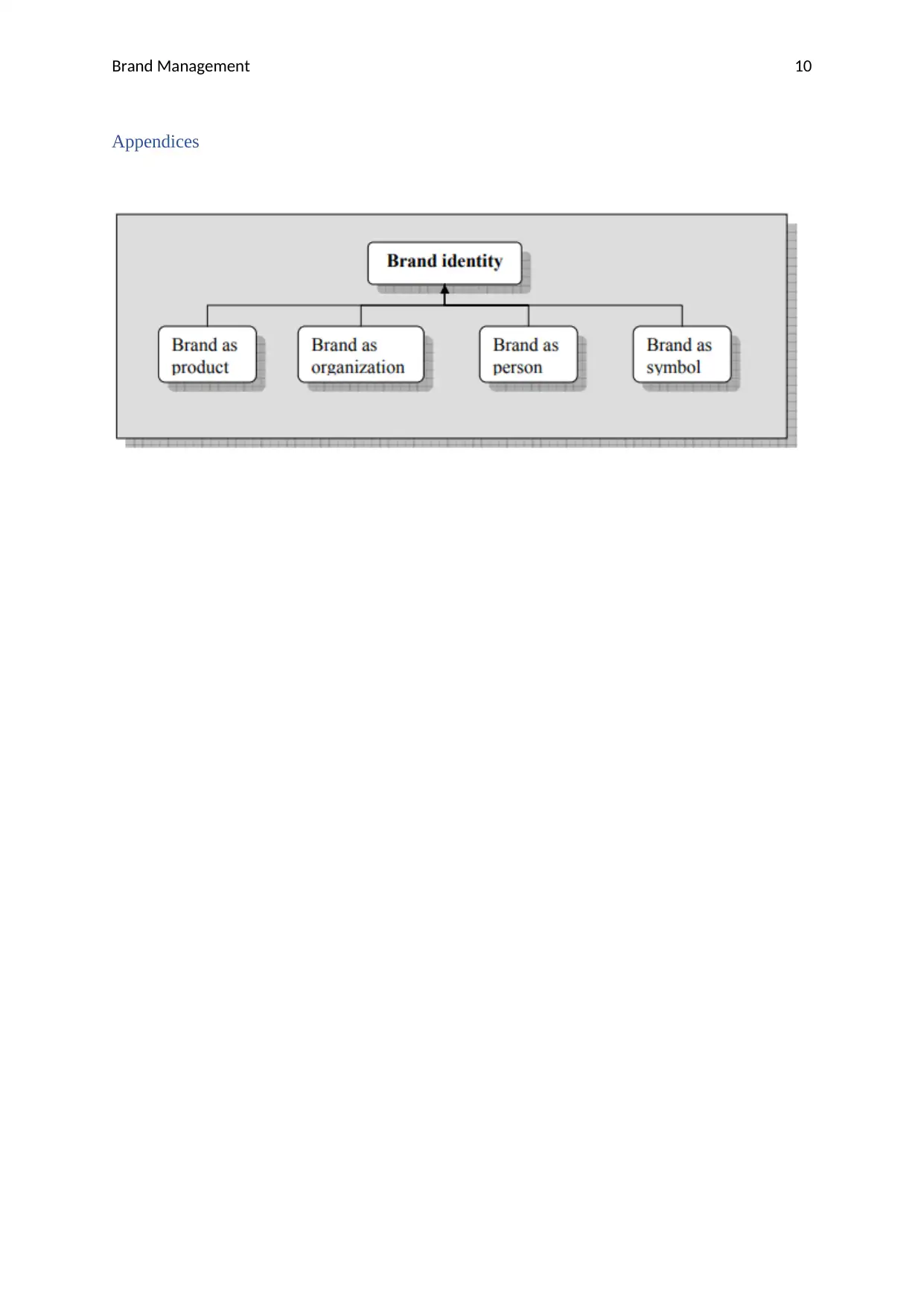
The brand identity system of Aaker recommends 4 dimensions under which identity is
typically advanced for a brand. The consideration of four dimensions while developing a
brand identity is to make sure that the brand identity has profundity and consistency (Tsaur,
Yen, and Yan, 2016).
This essay comprises the Aaker’s Brand Identity Planning Model concerning to the Wilmar.
The key elements which Wilmar can use to build its brand identity in Singapore. The brand
equity model of Aaker has been used by Wilmar to view brand equity as a blend of brand
loyalty, awareness and associations. The brand management initiates with building brand
identity which is one of the prearrangements of brand affiliations. Wilmar speaks what it
stands for and provides customers a desiring brand picture (Išoraitė, 2018).
Perspective 1
Brand as a product
1. Product scope: The brand Wilmar has become an essential part of Singapore culture and
has attained a strong brand identity. When it comes to the associations, the product class is
quite high with the Wilmar brand. The product category of Wilmar comprises oil palm
farming, refining eatable oils, oilseed crushing, sugar milling, and refining, producing
consumer products, oleochemicals, specialty fats, biodiesel, fertilizers, flour, and rice milling.
As a product, Wilmar includes scope, attributes, quality or value of the product, usages, users,
and nation of origin. The product portfolio of Wilmar includes rice, edible oils, flour, sauces,
noodles, margarine, soaps, shortening, and detergents (Iglesias, Ind and Alfaro, 2017). The
large product segment of Wilmar encompasses edible oils. The company is deliberated to be
an international leader in manufacturing volumes and leading producer of edible oils. The
product users can be found in various Asian markets comprising India, Indonesia, China, and
Vietnam. In order to lead in the market, Wilmar constantly engages in brand building,
research and development to form improved, differentiated and consumer-oriented products.
The company has even reinforced wide distribution networks to reach out to its customers
(Carvalho, Salazar, and Ramos,2018).
2.Country of origin: Wilmar was established in Singapore in 1991. The company is even
ranked as one of the major registered companies in terms of market capitalization on the
Singapore Exchange. The company is having over five hundred business plants with an
presence in the market by adding value to the products (Voyer, Kastanakis, and Rhode,
2017).
The brand identity system of Aaker recommends 4 dimensions under which identity is
typically advanced for a brand. The consideration of four dimensions while developing a
brand identity is to make sure that the brand identity has profundity and consistency (Tsaur,
Yen, and Yan, 2016).
This essay comprises the Aaker’s Brand Identity Planning Model concerning to the Wilmar.
The key elements which Wilmar can use to build its brand identity in Singapore. The brand
equity model of Aaker has been used by Wilmar to view brand equity as a blend of brand
loyalty, awareness and associations. The brand management initiates with building brand
identity which is one of the prearrangements of brand affiliations. Wilmar speaks what it
stands for and provides customers a desiring brand picture (Išoraitė, 2018).
Perspective 1
Brand as a product
1. Product scope: The brand Wilmar has become an essential part of Singapore culture and
has attained a strong brand identity. When it comes to the associations, the product class is
quite high with the Wilmar brand. The product category of Wilmar comprises oil palm
farming, refining eatable oils, oilseed crushing, sugar milling, and refining, producing
consumer products, oleochemicals, specialty fats, biodiesel, fertilizers, flour, and rice milling.
As a product, Wilmar includes scope, attributes, quality or value of the product, usages, users,
and nation of origin. The product portfolio of Wilmar includes rice, edible oils, flour, sauces,
noodles, margarine, soaps, shortening, and detergents (Iglesias, Ind and Alfaro, 2017). The
large product segment of Wilmar encompasses edible oils. The company is deliberated to be
an international leader in manufacturing volumes and leading producer of edible oils. The
product users can be found in various Asian markets comprising India, Indonesia, China, and
Vietnam. In order to lead in the market, Wilmar constantly engages in brand building,
research and development to form improved, differentiated and consumer-oriented products.
The company has even reinforced wide distribution networks to reach out to its customers
(Carvalho, Salazar, and Ramos,2018).
2.Country of origin: Wilmar was established in Singapore in 1991. The company is even
ranked as one of the major registered companies in terms of market capitalization on the
Singapore Exchange. The company is having over five hundred business plants with an
Paraphrase This Document
Need a fresh take? Get an instant paraphrase of this document with our AI Paraphraser
Brand Management 4
extensive network encompassing India, China, Indonesia, and fifty other nations and regions.
The multinational workforce includes almost 90,000 people (Lourenção and Giraldi, 2017).
The products of Wilmar are well placed to offer balanced growth with capitalizing on
fluctuating consumer patterns in the major developing markets like Myanmar and Africa
while leveraging strength in the central markets like India and China. The product quality of
Wilmar is a high and favored choice of the customers and the food trade industry. The
consumer-packed products of Wilmar have a foremost share in African and Asian countries.
The scale, incorporation and logical advantages of the business model enable us to abstract
margins at every stage of the value chain and in obtaining effective interactions and cost
competences (Bravo, et al. 2017). Wilmar’s reputation has a constant concentration on the
quality and is proliferated by word of mouth publicity which has led the brand to enjoy a
greater level of trust among the target audience.
Perspective 2
Brand as an organisation
3. The organisation attributes: The brand as an organization concentrates on the traits of the
organization such as the ambition for quality, innovation, people ethos, values and plans of
the organization. The brand aspects of Wilmar can be defined as product characteristics in
some framework and organizational features in others. The organizational qualities are also
more lasting and resilient to modest claims than product qualities. Wilmar is deliberated to be
an example of such an identity and introducing innovative products (He, et al. 2016). The
product range of the company is simple to complex with the latest benefits. The increase in
the sales of Wilmar takes place on the basis of product quality and variety.
4.Local vs global: Wilmar sells products through a wide distribution network to customers
internationally. The demand for the palm oil is anticipated to be assisted by the full-year
execution of prolonged biodiesel mandate in Indonesia along with the lower duties on palm
imports to India. Although a policy is projected by the European Union to prohibit the usage
of high indirect land-use change biofuels by 2030 (Rauschnabel, et al. 2016). The company
expected that palm oil-based biofuels can fall into the category. There is going to impact
palm oil overall but less for Wilmar as a contribution to the EU market is likely to be
restricted. Yet, Wilmar remains positive concerning the long-term forecasts of palm oil with
extensive network encompassing India, China, Indonesia, and fifty other nations and regions.
The multinational workforce includes almost 90,000 people (Lourenção and Giraldi, 2017).
The products of Wilmar are well placed to offer balanced growth with capitalizing on
fluctuating consumer patterns in the major developing markets like Myanmar and Africa
while leveraging strength in the central markets like India and China. The product quality of
Wilmar is a high and favored choice of the customers and the food trade industry. The
consumer-packed products of Wilmar have a foremost share in African and Asian countries.
The scale, incorporation and logical advantages of the business model enable us to abstract
margins at every stage of the value chain and in obtaining effective interactions and cost
competences (Bravo, et al. 2017). Wilmar’s reputation has a constant concentration on the
quality and is proliferated by word of mouth publicity which has led the brand to enjoy a
greater level of trust among the target audience.
Perspective 2
Brand as an organisation
3. The organisation attributes: The brand as an organization concentrates on the traits of the
organization such as the ambition for quality, innovation, people ethos, values and plans of
the organization. The brand aspects of Wilmar can be defined as product characteristics in
some framework and organizational features in others. The organizational qualities are also
more lasting and resilient to modest claims than product qualities. Wilmar is deliberated to be
an example of such an identity and introducing innovative products (He, et al. 2016). The
product range of the company is simple to complex with the latest benefits. The increase in
the sales of Wilmar takes place on the basis of product quality and variety.
4.Local vs global: Wilmar sells products through a wide distribution network to customers
internationally. The demand for the palm oil is anticipated to be assisted by the full-year
execution of prolonged biodiesel mandate in Indonesia along with the lower duties on palm
imports to India. Although a policy is projected by the European Union to prohibit the usage
of high indirect land-use change biofuels by 2030 (Rauschnabel, et al. 2016). The company
expected that palm oil-based biofuels can fall into the category. There is going to impact
palm oil overall but less for Wilmar as a contribution to the EU market is likely to be
restricted. Yet, Wilmar remains positive concerning the long-term forecasts of palm oil with
Brand Management 5
the increase in the comprehensive demand for food and non-food claims like oleochemicals
and sphere fats (Gómez Aguilar, et al. 2016).
Perspective 3
Brand as a person
5.Personality: This perspective recommends that a brand identity which is more affluent and
more stimulating than other qualities. For instance, a brand can be professed as being upscale,
capable, impressive, reliable, humorous and rational. A brand personality as defined by Aaker
is a framework of human characteristics linked with a specified brand. The co-founders of
the company are Kuok Khoon Hong and Martua Sitorus and are promoting the brand from
the front. Hong believes in leading the brand through leveraging his personality. A great part
of the personality of Wilmar is created on the personality of Hong. He is in charge of
handling the image of the brand from local to international operations (Çifci, et al. 2016).
6.Customer/ brand relationship: Wilmar is deliberated to be a classic example of branding
success. This brand exemplifies enthusiasm, energy, youthfulness, and freedom with the
touch of professionalism. Hong has represented himself as a classic example by maintaining
relationships and has constructed and sustained brand equity. Wilmar has maintained a
relationship with the companies in the form of customers such as Arnott Indonesia, Cargill
(US), Nestle (Switzerland), Hindustan Unilever (India), Procter and Gamble (US), WF
(India) and more. Unilever is one of the greatest customers of Wilmar. Unilever has plants in
Delft, Baarn, Oss, Loosdrecht, and Rotterdam. Unilever purchases more than one million
tonnes of palm oil every year majorly from Indonesia and Malaysia (Yuan, et al. 2016).
Perspective 4
Brand as symbol
7.Visual image and metaphor: The brand as a symbol can offer consistency and erection to
distinctiveness and makes easier to attain recognition and call. Enriching symbols to the
status of part of uniqueness indicates their budding power. The product quality and advance
options make things easy for the customers. Wilmar has been successful in offering the
products to meet the demand of the customers by providing suitable options. The resilient
business model of Wilmar comprises the complete value chain of the agrarian commodity
professional. At every step, the company extracts margins by reaping operational interactions
and cost competences (Essamri, McKechnie and Winklhofer, 2019). The company believes in
the increase in the comprehensive demand for food and non-food claims like oleochemicals
and sphere fats (Gómez Aguilar, et al. 2016).
Perspective 3
Brand as a person
5.Personality: This perspective recommends that a brand identity which is more affluent and
more stimulating than other qualities. For instance, a brand can be professed as being upscale,
capable, impressive, reliable, humorous and rational. A brand personality as defined by Aaker
is a framework of human characteristics linked with a specified brand. The co-founders of
the company are Kuok Khoon Hong and Martua Sitorus and are promoting the brand from
the front. Hong believes in leading the brand through leveraging his personality. A great part
of the personality of Wilmar is created on the personality of Hong. He is in charge of
handling the image of the brand from local to international operations (Çifci, et al. 2016).
6.Customer/ brand relationship: Wilmar is deliberated to be a classic example of branding
success. This brand exemplifies enthusiasm, energy, youthfulness, and freedom with the
touch of professionalism. Hong has represented himself as a classic example by maintaining
relationships and has constructed and sustained brand equity. Wilmar has maintained a
relationship with the companies in the form of customers such as Arnott Indonesia, Cargill
(US), Nestle (Switzerland), Hindustan Unilever (India), Procter and Gamble (US), WF
(India) and more. Unilever is one of the greatest customers of Wilmar. Unilever has plants in
Delft, Baarn, Oss, Loosdrecht, and Rotterdam. Unilever purchases more than one million
tonnes of palm oil every year majorly from Indonesia and Malaysia (Yuan, et al. 2016).
Perspective 4
Brand as symbol
7.Visual image and metaphor: The brand as a symbol can offer consistency and erection to
distinctiveness and makes easier to attain recognition and call. Enriching symbols to the
status of part of uniqueness indicates their budding power. The product quality and advance
options make things easy for the customers. Wilmar has been successful in offering the
products to meet the demand of the customers by providing suitable options. The resilient
business model of Wilmar comprises the complete value chain of the agrarian commodity
professional. At every step, the company extracts margins by reaping operational interactions
and cost competences (Essamri, McKechnie and Winklhofer, 2019). The company believes in
⊘ This is a preview!⊘
Do you want full access?
Subscribe today to unlock all pages.
Trusted by 1+ million students worldwide
Brand Management 6
establishing its image by reinforcing standard operating processes and partaking in the
pertinent certification schemes.
8.Brand heritage: The brand as a symbol can be the main element of brand advancement and
its absenteeism can be a significant handicap. The brand heritage can be realized in the
method of the value proposal is a statement of demonstrative, functional and self-expressive
benefits carried by a brand to offer value to the customers (Muhonen, Hirvonen and
Laukkanen, 2017). It is deliberated that active value propositions can lead to a brand-
customer relationship along with driving purchase decisions. The value propositions
comprise functional, demonstrative and self-expressive benefits. Wilmar is identified as a
brand to be lined with. It satisfies esteem needs with social needs. The brand is likely to be
linked with a higher level of social value. The company inspires everyone to be more
comprised of constructing relationships and spread happiness. The symbols are more
evocative when these comprise a metaphor with the symbol characteristic signifying
emotional, and functional benefit (Esmaeilpour and Hoseini, 2017).
Conclusion
Aaker model offers a deep insight into the entire concept of brand equity and ways to assess
it. This model has been successful in several stages of marketing such as enhancing the
perception of product performance to enhance the constancy of customers towards a brand.
The brands have created their unique identity. The intelligibility in generating an identity
assists the manager to advance proper brand strategies. The case of Wilmar validates the
implementation of Aaker’s brand identity planning model. The composite interaction
between the variables deliberated under the brand identity model regulates the success of the
brand. It can be believed that making a brand depends on the way how well key people
associate the brand with complete brand management strategies.
The need for surviving has enabled companies from developing economies to manage their
brands strategically. The brand building is deliberated to offer more mileage to the products
than other types of promotion and marketing communication activities. Aaker has deliberated
brand identity as a significant concept for constructing brand equity. The brand identity is a
distinct framework of brand links that are used by the organization to sustain. It infers what a
brand stands for implying promise to the customers through organizational members. It can
be concluded from the report that forming an association between brand and customers by
forming a value proposal comprising practical and self-expressive assistances. The brand
establishing its image by reinforcing standard operating processes and partaking in the
pertinent certification schemes.
8.Brand heritage: The brand as a symbol can be the main element of brand advancement and
its absenteeism can be a significant handicap. The brand heritage can be realized in the
method of the value proposal is a statement of demonstrative, functional and self-expressive
benefits carried by a brand to offer value to the customers (Muhonen, Hirvonen and
Laukkanen, 2017). It is deliberated that active value propositions can lead to a brand-
customer relationship along with driving purchase decisions. The value propositions
comprise functional, demonstrative and self-expressive benefits. Wilmar is identified as a
brand to be lined with. It satisfies esteem needs with social needs. The brand is likely to be
linked with a higher level of social value. The company inspires everyone to be more
comprised of constructing relationships and spread happiness. The symbols are more
evocative when these comprise a metaphor with the symbol characteristic signifying
emotional, and functional benefit (Esmaeilpour and Hoseini, 2017).
Conclusion
Aaker model offers a deep insight into the entire concept of brand equity and ways to assess
it. This model has been successful in several stages of marketing such as enhancing the
perception of product performance to enhance the constancy of customers towards a brand.
The brands have created their unique identity. The intelligibility in generating an identity
assists the manager to advance proper brand strategies. The case of Wilmar validates the
implementation of Aaker’s brand identity planning model. The composite interaction
between the variables deliberated under the brand identity model regulates the success of the
brand. It can be believed that making a brand depends on the way how well key people
associate the brand with complete brand management strategies.
The need for surviving has enabled companies from developing economies to manage their
brands strategically. The brand building is deliberated to offer more mileage to the products
than other types of promotion and marketing communication activities. Aaker has deliberated
brand identity as a significant concept for constructing brand equity. The brand identity is a
distinct framework of brand links that are used by the organization to sustain. It infers what a
brand stands for implying promise to the customers through organizational members. It can
be concluded from the report that forming an association between brand and customers by
forming a value proposal comprising practical and self-expressive assistances. The brand
Paraphrase This Document
Need a fresh take? Get an instant paraphrase of this document with our AI Paraphraser
Brand Management 7
identity is even modified for several market sections and products. An image is all about how
the brand is perceived whereas identity is all about how a brand aspires to be professed. In
the case of Wilmar, it has presented a cohesive, distinguishing and pertinent brand identity
which has helped in forming a partiality in the marketplace. The company can add worth to
the products and services and even commanded a price quality through Aaker’s brand
identity model.
identity is even modified for several market sections and products. An image is all about how
the brand is perceived whereas identity is all about how a brand aspires to be professed. In
the case of Wilmar, it has presented a cohesive, distinguishing and pertinent brand identity
which has helped in forming a partiality in the marketplace. The company can add worth to
the products and services and even commanded a price quality through Aaker’s brand
identity model.
Brand Management 8
References
Bravo, R., Buil, I., de Chernatony, L. and Martínez, E., 2017. Managing brand identity:
effects on the employees. International Journal of Bank Marketing, 35(1), pp.2-23.
Carvalho, P.C., Salazar, A.K. and Ramos, P.M.G., 2018, June. Conceptual Model of
Destination Branding: An Integrative Approach. In Academy of Marketing Science World
Marketing Congress (pp. 689-703). Springer, Cham.
Çifci, S., Ekinci, Y., Whyatt, G., Japutra, A., Molinillo, S. and Siala, H., 2016. A cross
validation of Consumer-Based Brand Equity models: Driving customer equity in retail
brands. Journal of Business Research, 69(9), pp.3740-3747.
Esmaeilpour, M. and Hoseini, M., 2017. Explaining the impact of service quality on identity
and brand personality. Polish Journal of Management Studies, 16.
Essamri, A., McKechnie, S. and Winklhofer, H., 2019. Co-creating corporate brand identity
with online brand communities: A managerial perspective. Journal of Business Research, 96,
pp.366-375.
Gómez Aguilar, A., Yagüe Guillén, M.J. and Villaseñor Roman, N., 2016. Destination brand
personality: An application to Spanish tourism. International Journal of Tourism
Research, 18(3), pp.210-219.
He, H., Harris, L.C., Wang, W. and Haider, K., 2016. Brand identity and online self-
customisation usefulness perception. Journal of marketing management, 32(13-14), pp.1308-
1332.
Iglesias, O., Ind, N. and Alfaro, M., 2017. The organic view of the brand: A brand value co-
creation model. In Advances in corporate branding (pp. 148-174). Palgrave Macmillan,
London.
Išoraitė, M., 2018. Brand Image Theoretical Aspects. Integrated Journal of Business and
Economics, 2(1), pp.116-122.
Kennedy, E. and Guzmán, F., 2016. Co-creation of brand identities: consumer and industry
influence and motivations. Journal of Consumer Marketing, 33(5), pp.313-323.
References
Bravo, R., Buil, I., de Chernatony, L. and Martínez, E., 2017. Managing brand identity:
effects on the employees. International Journal of Bank Marketing, 35(1), pp.2-23.
Carvalho, P.C., Salazar, A.K. and Ramos, P.M.G., 2018, June. Conceptual Model of
Destination Branding: An Integrative Approach. In Academy of Marketing Science World
Marketing Congress (pp. 689-703). Springer, Cham.
Çifci, S., Ekinci, Y., Whyatt, G., Japutra, A., Molinillo, S. and Siala, H., 2016. A cross
validation of Consumer-Based Brand Equity models: Driving customer equity in retail
brands. Journal of Business Research, 69(9), pp.3740-3747.
Esmaeilpour, M. and Hoseini, M., 2017. Explaining the impact of service quality on identity
and brand personality. Polish Journal of Management Studies, 16.
Essamri, A., McKechnie, S. and Winklhofer, H., 2019. Co-creating corporate brand identity
with online brand communities: A managerial perspective. Journal of Business Research, 96,
pp.366-375.
Gómez Aguilar, A., Yagüe Guillén, M.J. and Villaseñor Roman, N., 2016. Destination brand
personality: An application to Spanish tourism. International Journal of Tourism
Research, 18(3), pp.210-219.
He, H., Harris, L.C., Wang, W. and Haider, K., 2016. Brand identity and online self-
customisation usefulness perception. Journal of marketing management, 32(13-14), pp.1308-
1332.
Iglesias, O., Ind, N. and Alfaro, M., 2017. The organic view of the brand: A brand value co-
creation model. In Advances in corporate branding (pp. 148-174). Palgrave Macmillan,
London.
Išoraitė, M., 2018. Brand Image Theoretical Aspects. Integrated Journal of Business and
Economics, 2(1), pp.116-122.
Kennedy, E. and Guzmán, F., 2016. Co-creation of brand identities: consumer and industry
influence and motivations. Journal of Consumer Marketing, 33(5), pp.313-323.
⊘ This is a preview!⊘
Do you want full access?
Subscribe today to unlock all pages.
Trusted by 1+ million students worldwide
Brand Management 9
Lourenção, M.T.D.A. and Giraldi, J.D.M.E., 2017. Development of an identity model for
sector brands. Journal of Fashion Marketing and Management: An International
Journal, 21(3), pp.317-340.
Muhonen, T., Hirvonen, S. and Laukkanen, T., 2017. SME brand identity: its components,
and performance effects. Journal of Product & Brand Management, 26(1), pp.52-67.
Rauschnabel, P.A., Krey, N., Babin, B.J. and Ivens, B.S., 2016. Brand management in higher
education: the university brand personality scale. Journal of Business Research, 69(8),
pp.3077-3086.
Tanveer, Z. and Lodhi, R.N., 2016. The Effect of Brand Equity on Customer Satisfaction: An
Empirical Study Based on David Aaker's Brand Equity Model. IUP Journal of Brand
Management, 13(3), p.43.
Tsaur, S.H., Yen, C.H. and Yan, Y.T., 2016. Destination brand identity: scale development
and validation. Asia Pacific Journal of Tourism Research, 21(12), pp.1310-1323.
Voyer, B.G., Kastanakis, M.N. and Rhode, A.K., 2017. Co-creating stakeholder and brand
identities: A cross-cultural consumer perspective. Journal of Business Research, 70, pp.399-
410.
Yuan, R., Liu, M.J., Luo, J. and Yen, D.A., 2016. Reciprocal transfer of brand identity and
image associations arising from higher education brand extensions. Journal of Business
Research, 69(8), pp.3069-3076.
Lourenção, M.T.D.A. and Giraldi, J.D.M.E., 2017. Development of an identity model for
sector brands. Journal of Fashion Marketing and Management: An International
Journal, 21(3), pp.317-340.
Muhonen, T., Hirvonen, S. and Laukkanen, T., 2017. SME brand identity: its components,
and performance effects. Journal of Product & Brand Management, 26(1), pp.52-67.
Rauschnabel, P.A., Krey, N., Babin, B.J. and Ivens, B.S., 2016. Brand management in higher
education: the university brand personality scale. Journal of Business Research, 69(8),
pp.3077-3086.
Tanveer, Z. and Lodhi, R.N., 2016. The Effect of Brand Equity on Customer Satisfaction: An
Empirical Study Based on David Aaker's Brand Equity Model. IUP Journal of Brand
Management, 13(3), p.43.
Tsaur, S.H., Yen, C.H. and Yan, Y.T., 2016. Destination brand identity: scale development
and validation. Asia Pacific Journal of Tourism Research, 21(12), pp.1310-1323.
Voyer, B.G., Kastanakis, M.N. and Rhode, A.K., 2017. Co-creating stakeholder and brand
identities: A cross-cultural consumer perspective. Journal of Business Research, 70, pp.399-
410.
Yuan, R., Liu, M.J., Luo, J. and Yen, D.A., 2016. Reciprocal transfer of brand identity and
image associations arising from higher education brand extensions. Journal of Business
Research, 69(8), pp.3069-3076.
Paraphrase This Document
Need a fresh take? Get an instant paraphrase of this document with our AI Paraphraser
Brand Management 10
Appendices
Appendices

1 out of 11


Related Documents


Your All-in-One AI-Powered Toolkit for Academic Success.
+13062052269
info@desklib.com
Available 24*7 on WhatsApp / Email
![[object Object]](/_next/static/media/star-bottom.7253800d.svg)
Unlock your academic potential
Copyright © 2020–2026 A2Z Services. All Rights Reserved. Developed and managed by ZUCOL.