ACC701 Finance: Liquidation Analysis of ABC Learning, HIH, One.Tel
VerifiedAdded on 2023/06/08
|14
|2670
|147
Report
AI Summary
This report analyzes the liquidation of ABC Learning, HIH Insurance, and One.Tel, examining the events leading to their financial collapse. It identifies factors such as lack of transparency, unsound strategic planning, rapid expansion, mismanagement, and poor corporate governance as key contributors. The report also discusses the importance of APES 110 Code of Ethics for Professional Accountants, highlighting principles like integrity, objectivity, confidentiality, professional competence, and professional behavior. Furthermore, it explores the Listing Rules governing listed companies in terms of corporate governance, emphasizing board composition, appointment procedures, conflict of interest policies, share trading policies, remuneration, audit and risk management, and codes of conduct. The analysis concludes that while liabilities played a role, the primary causes of liquidation were the abuse of power and the absence of sound corporate governance practices within these organizations. Desklib provides access to this and other solved assignments.
Audit Assignment

Paraphrase This Document
Need a fresh take? Get an instant paraphrase of this document with our AI Paraphraser

1
By student name
Professor
University
Date: 4TH Sep 2018.
1 | P a g e
By student name
Professor
University
Date: 4TH Sep 2018.
1 | P a g e
2
Executive Summary
In this assignment few of the liquidation cases of some major organizations are discussed and the
main aim is to throw light on the events that had let to such liquidation. Also importantance of
APES110 is also discussed along with the various ethical principles that it states. The assignment
also highlights why it is important for the aduitors to perform their duties without any negligence
on their part as the stakeholders are highly dependant on the audit report of the company.
2 | P a g e
Executive Summary
In this assignment few of the liquidation cases of some major organizations are discussed and the
main aim is to throw light on the events that had let to such liquidation. Also importantance of
APES110 is also discussed along with the various ethical principles that it states. The assignment
also highlights why it is important for the aduitors to perform their duties without any negligence
on their part as the stakeholders are highly dependant on the audit report of the company.
2 | P a g e
⊘ This is a preview!⊘
Do you want full access?
Subscribe today to unlock all pages.

Trusted by 1+ million students worldwide
3
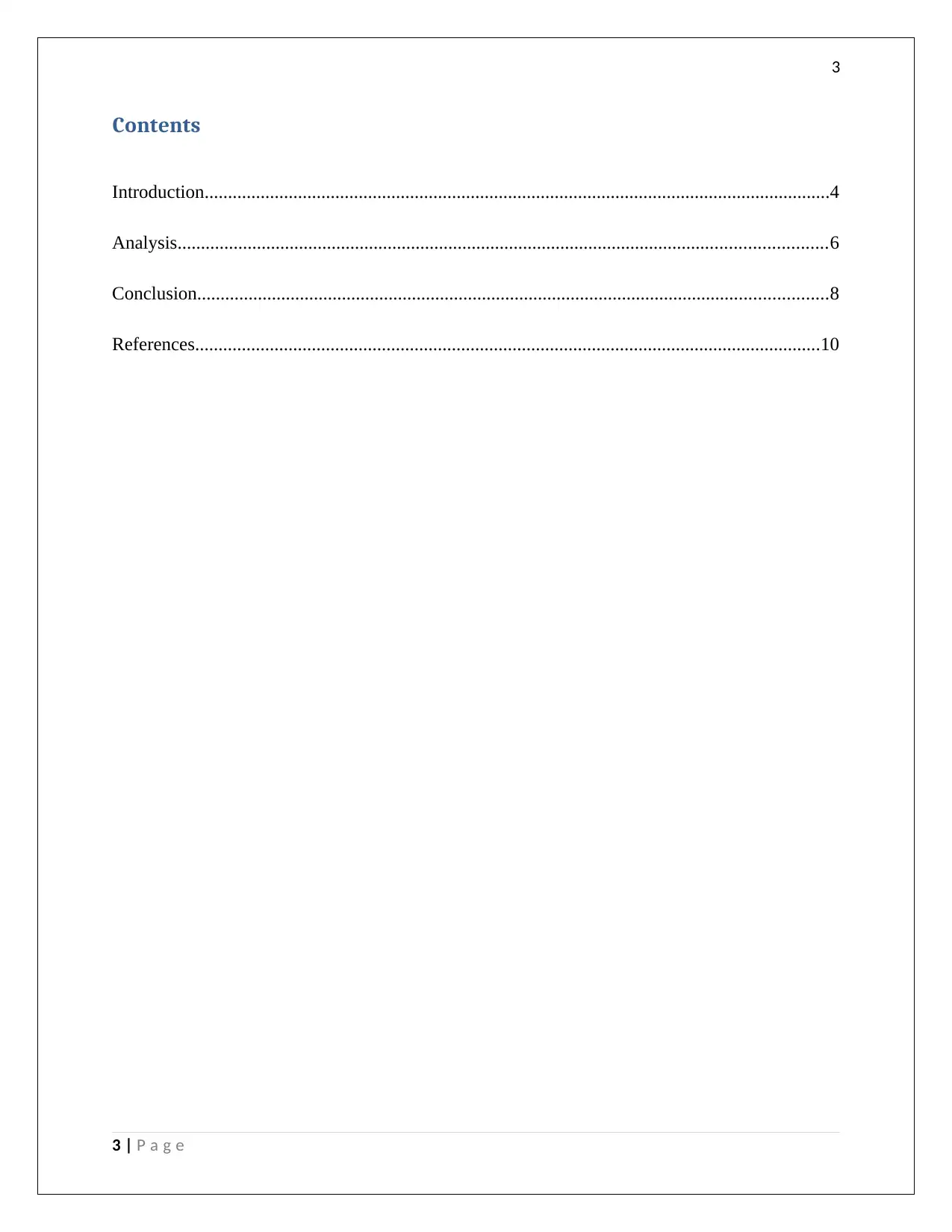
Contents
Introduction......................................................................................................................................4
Analysis...........................................................................................................................................6
Conclusion.......................................................................................................................................8
References......................................................................................................................................10
3 | P a g e
Contents
Introduction......................................................................................................................................4
Analysis...........................................................................................................................................6
Conclusion.......................................................................................................................................8
References......................................................................................................................................10
3 | P a g e
Paraphrase This Document
Need a fresh take? Get an instant paraphrase of this document with our AI Paraphraser
4
Introduction:
Liquidation refers to the process of selling up the unpledged assets of the firm or
company, so that the claimants or the creditors can be repaid what is owed to them. In simpler
terms, liquidation is basically putting the business to an end, when the company is unable to meet
its payments as and when they fall due. It can be voluntary or compulsory depending on the
events that lead to the liquidation (Alexander, 2016).
In this assignment, we will be reviewing three companies that went for liquidation and
the underlying reasons behind it. In spite of being among the biggest names of the industry, the
three companies failed miserably and went for liquidation.
Reasons for liquidation: ABC Learning
Followed by a lot of internal faults, ABC learning went into liquidation in the year 2008.
The possible reasons are as follows:
Lack Of transparency in accounts: The facts and figures stated in the books of accounts were
highly manipulated, which lead to misleading results. When Ernst & Young were appointed as
the new statutory auditors of the company, they informed the stakeholders that the financial
statements did not represent a true and d fair view.
Transactions with related parties: Further investigation led by the auditors revealed that the
volume of transactions entered into with the related parties were abnormally high. It was
discovered that the CEO Mr. Groves had appointed Queensland Maintenance Services (QMS)
for maintenance services of the learning centers (Arnott, et al., 2017). This QMS belonged to
Frank Zullo who was the former brother in law of the CEO. The company also paid a whopping
4 | P a g e
Introduction:
Liquidation refers to the process of selling up the unpledged assets of the firm or
company, so that the claimants or the creditors can be repaid what is owed to them. In simpler
terms, liquidation is basically putting the business to an end, when the company is unable to meet
its payments as and when they fall due. It can be voluntary or compulsory depending on the
events that lead to the liquidation (Alexander, 2016).
In this assignment, we will be reviewing three companies that went for liquidation and
the underlying reasons behind it. In spite of being among the biggest names of the industry, the
three companies failed miserably and went for liquidation.
Reasons for liquidation: ABC Learning
Followed by a lot of internal faults, ABC learning went into liquidation in the year 2008.
The possible reasons are as follows:
Lack Of transparency in accounts: The facts and figures stated in the books of accounts were
highly manipulated, which lead to misleading results. When Ernst & Young were appointed as
the new statutory auditors of the company, they informed the stakeholders that the financial
statements did not represent a true and d fair view.
Transactions with related parties: Further investigation led by the auditors revealed that the
volume of transactions entered into with the related parties were abnormally high. It was
discovered that the CEO Mr. Groves had appointed Queensland Maintenance Services (QMS)
for maintenance services of the learning centers (Arnott, et al., 2017). This QMS belonged to
Frank Zullo who was the former brother in law of the CEO. The company also paid a whopping
4 | P a g e
5
74 million dollars to QMS for their service. Apart from this, the Company also sponsored a
basketball team called ‘Brisbane Bullets’ which was owned by the CEO Groves himself.
Unsound strategic planning & expansion plans: ABC learning expanded with a terrific speed.
The expansion strategies adopted by the company were mainly acquisitions and mergers. The
risk analysis procedures adopted prior to these expansions were poor and were not backed by
proper estimates and forecasts. The company went international by acquiring daycare and
childcare facilities in New Zealand, U.S. and U.K. resultantly the company had huge loans,
which even got beyond their capacity to make the repayment. To repay its accumulated debt of
1.5 million dollars, the company ultimately had to sell 60 percent of its business to Morgan
Stanley (Das, 2017).
Reasons for liquidation: HIH Insurance
A majority of the insurance companies fail because of rapid expansion, unauthorized or
unjustified delegation of duties and responsibilities underpricing and obviously mismanagement.
If press reports are to be believed HIH’s management were warned by their actuarial advisor
about the events that may lead to liquidation in the near future. The advisor had stated that the
accounting practices adopted by the company could lead to “disastrous consequences”
HHI’s collapse was the most talked about ion the Australian economy. It was such a big
corporate failure that the Liberal Federal Government had to establish a Royal Commission that
would investigate the entire matter. The prime reason behind the failure was not liabilities but of
issues regarding transparency and accountability. The attitude of the CEO resulted in a
conservative corporate culture. The composition of the Board was not as it was supposed to be.
The Board was short of independent directors. Out of the eleven members in the BOD, three
5 | P a g e
74 million dollars to QMS for their service. Apart from this, the Company also sponsored a
basketball team called ‘Brisbane Bullets’ which was owned by the CEO Groves himself.
Unsound strategic planning & expansion plans: ABC learning expanded with a terrific speed.
The expansion strategies adopted by the company were mainly acquisitions and mergers. The
risk analysis procedures adopted prior to these expansions were poor and were not backed by
proper estimates and forecasts. The company went international by acquiring daycare and
childcare facilities in New Zealand, U.S. and U.K. resultantly the company had huge loans,
which even got beyond their capacity to make the repayment. To repay its accumulated debt of
1.5 million dollars, the company ultimately had to sell 60 percent of its business to Morgan
Stanley (Das, 2017).
Reasons for liquidation: HIH Insurance
A majority of the insurance companies fail because of rapid expansion, unauthorized or
unjustified delegation of duties and responsibilities underpricing and obviously mismanagement.
If press reports are to be believed HIH’s management were warned by their actuarial advisor
about the events that may lead to liquidation in the near future. The advisor had stated that the
accounting practices adopted by the company could lead to “disastrous consequences”
HHI’s collapse was the most talked about ion the Australian economy. It was such a big
corporate failure that the Liberal Federal Government had to establish a Royal Commission that
would investigate the entire matter. The prime reason behind the failure was not liabilities but of
issues regarding transparency and accountability. The attitude of the CEO resulted in a
conservative corporate culture. The composition of the Board was not as it was supposed to be.
The Board was short of independent directors. Out of the eleven members in the BOD, three
5 | P a g e
⊘ This is a preview!⊘
Do you want full access?
Subscribe today to unlock all pages.
Trusted by 1+ million students worldwide
6
were directors who were former partners of Arthur Andersen, the auditors of the company. The
company failed to strike a balance between their objective of profit maximization and the
adoption of corporate governance practices. It was so aggressive in its growth approach that any
news that had the possibility of being perceived as bad by the stakeholders, was never made
public. It was also reported that a number of fraudulent charges were imposed on the company.
As a result of which, few members were also imprisoned (Farmer, 2018).
Reasons for liquidation: One. Tel Phone Company
Before going for liquidation, One.Tel, with its presence in more than eight nations, was
the fourth largest company in Australia in the telecommunication sector. The annual sales of the
company stood at 653 million AUD, when it went for liquidation. This throws a lot of light on
the fact that the reasons that lead to liquidation had nothing o very little to do with accounting
figures. The main reason was a faulty corporate governance structure. This can be illustrated
with the fact that the two CEOs exercised huge and undue influence on the board of directors.
The intensity of this misused power was so strong, that the company never had a designated, full
time chairman. Apart from these issues, another factor, that added fuel to the fire, was the low
level of customer satisfaction. The customers were dissatisfied with the services of the call
centers. The customers complained that they had to wait for a long period of time before they
could get any help from the call centers. Cash flow was also a big problem for the company, may
be, because of its sales promotion strategies of giving huge discounts and distributing free
handsets to the subscribers (Jefferson, 2017).
6 | P a g e
were directors who were former partners of Arthur Andersen, the auditors of the company. The
company failed to strike a balance between their objective of profit maximization and the
adoption of corporate governance practices. It was so aggressive in its growth approach that any
news that had the possibility of being perceived as bad by the stakeholders, was never made
public. It was also reported that a number of fraudulent charges were imposed on the company.
As a result of which, few members were also imprisoned (Farmer, 2018).
Reasons for liquidation: One. Tel Phone Company
Before going for liquidation, One.Tel, with its presence in more than eight nations, was
the fourth largest company in Australia in the telecommunication sector. The annual sales of the
company stood at 653 million AUD, when it went for liquidation. This throws a lot of light on
the fact that the reasons that lead to liquidation had nothing o very little to do with accounting
figures. The main reason was a faulty corporate governance structure. This can be illustrated
with the fact that the two CEOs exercised huge and undue influence on the board of directors.
The intensity of this misused power was so strong, that the company never had a designated, full
time chairman. Apart from these issues, another factor, that added fuel to the fire, was the low
level of customer satisfaction. The customers were dissatisfied with the services of the call
centers. The customers complained that they had to wait for a long period of time before they
could get any help from the call centers. Cash flow was also a big problem for the company, may
be, because of its sales promotion strategies of giving huge discounts and distributing free
handsets to the subscribers (Jefferson, 2017).
6 | P a g e
Paraphrase This Document
Need a fresh take? Get an instant paraphrase of this document with our AI Paraphraser
7
Charges of breach of duty were also imposed on former managing directors Jodee Rich
and Brad Keeling, former chairman John Greaves and chief finance official Mark Silbermann
(Grenier, 2017)
Recommendation and Conclusion:
Having discussed the real reasons or events that lead to the liquidations of these three
corporate giants, one thing becomes clear that the common thing between the three companies is
the abuse of power or lack of corporate governance. While liabilities do play a role, it cannot be
said to be the sole reason behind the corporate fall. In fact the inability of these companies to
meet and repay the liabilities when they had fallen due can be clearly attributable to
mismanagement; mismanagement of funds, operations and business, as a whole. In the case of
ABC Learning, the company failed because of rapid expansion strategies, without being backed
by proper risk analysis and planning. On the other hand, HHI Insurance failed mainly because of
fraudulent practices adopted by the Directors and Management. Similarly, One.Tel phone
company had a corporate death because of a corporate structure which was highly bureaucratic
and dictating. Transparency, accountability and answerability were highly injured in all the___14
three companies. Had the companies had a sound and up to the mark corporate governance
structure, the situation of going for liquidation wouldn’t have arose at all. The liquidation was
not because of liabilities, but because of lack of corporate governance.
7 | P a g e
Charges of breach of duty were also imposed on former managing directors Jodee Rich
and Brad Keeling, former chairman John Greaves and chief finance official Mark Silbermann
(Grenier, 2017)
Recommendation and Conclusion:
Having discussed the real reasons or events that lead to the liquidations of these three
corporate giants, one thing becomes clear that the common thing between the three companies is
the abuse of power or lack of corporate governance. While liabilities do play a role, it cannot be
said to be the sole reason behind the corporate fall. In fact the inability of these companies to
meet and repay the liabilities when they had fallen due can be clearly attributable to
mismanagement; mismanagement of funds, operations and business, as a whole. In the case of
ABC Learning, the company failed because of rapid expansion strategies, without being backed
by proper risk analysis and planning. On the other hand, HHI Insurance failed mainly because of
fraudulent practices adopted by the Directors and Management. Similarly, One.Tel phone
company had a corporate death because of a corporate structure which was highly bureaucratic
and dictating. Transparency, accountability and answerability were highly injured in all the___14
three companies. Had the companies had a sound and up to the mark corporate governance
structure, the situation of going for liquidation wouldn’t have arose at all. The liquidation was
not because of liabilities, but because of lack of corporate governance.
7 | P a g e
8
The APES 110 Code of Ethics
The APES 110 Code of Ethics is applicable to all professional accountants in Australia. This also
includes members who are providing services in the form of honorarium services. The
fundamental principles of the code are as follows:
1. Integrity: This principle requires the professional accountant to be honest with his
approach in all the professional engagements. He should be straight forward in all the
Business relationships that he has with other firms, companies or individuals.
2. Objectivity: While performing his duties, the professional accountant should be free from
any sort of biasedness or conflict of interest. He should not be under the undue influence
of others and should apply his own professional judgment.
3. Confidentiality: The professional Accountant should not disclose any information,
acquired by him in the course of his professional relationship, unless mandated or
required by law or statute.
4. Professional Competence and due care: The professional accountant should possess the
requisite professional skill and knowledge required to provide competent service to his
clients. He should be well versed with all the recent developments and amendments in the
legislation and the recent practices and techniques in the accounting work.
5. Professional Behavior: This principle requires the professional accountant to abide by all
the rules, regulations and statutes, governing his profession, at all times. He should not
engage or do any act that brings disgrace to his profession (Sithole, et al., 2017).
Listing Rules governing listed companies in terms of corporate governance.
8 | P a g e
The APES 110 Code of Ethics
The APES 110 Code of Ethics is applicable to all professional accountants in Australia. This also
includes members who are providing services in the form of honorarium services. The
fundamental principles of the code are as follows:
1. Integrity: This principle requires the professional accountant to be honest with his
approach in all the professional engagements. He should be straight forward in all the
Business relationships that he has with other firms, companies or individuals.
2. Objectivity: While performing his duties, the professional accountant should be free from
any sort of biasedness or conflict of interest. He should not be under the undue influence
of others and should apply his own professional judgment.
3. Confidentiality: The professional Accountant should not disclose any information,
acquired by him in the course of his professional relationship, unless mandated or
required by law or statute.
4. Professional Competence and due care: The professional accountant should possess the
requisite professional skill and knowledge required to provide competent service to his
clients. He should be well versed with all the recent developments and amendments in the
legislation and the recent practices and techniques in the accounting work.
5. Professional Behavior: This principle requires the professional accountant to abide by all
the rules, regulations and statutes, governing his profession, at all times. He should not
engage or do any act that brings disgrace to his profession (Sithole, et al., 2017).
Listing Rules governing listed companies in terms of corporate governance.
8 | P a g e
⊘ This is a preview!⊘
Do you want full access?
Subscribe today to unlock all pages.
Trusted by 1+ million students worldwide
9
The Australian public listed companies have to adhere to a myriad of rules and comply with a lot
of legal requirements. The Australian Stock Exchange with a view to protect the interest of the
public and to create a robust culture of corporate governance has laid down the listing rules. The
corporate governance requirements of the ASX listing rules can be specifically understood by the
help of the following categories.
Board Composition:
A public company should have a minimum of three directors at all times. Out of
these, two directors should be an ordinary resident of Australia.
Majority of the directors in the Board should be independent directors.
One individual should not be given the role of both the chairman and the Chief
Executive officer.
There should be a nomination committee to recommend the appointment and
reappointment of directors.
The chairman should necessarily be an independent director.
Appointment
Generally, the directors are appointed by the Board. However these appointments are valid only
when an ordinary resolution is passed in the Annual general meeting following the appointment
or at a meeting of the shareholders, as the situation may be (Werner, 2017). When more than two
directors are proposed to be appointed at the same meeting, separate resolutions are required to
be passed for each of the proposed individual.
Conflicts of interest
9 | P a g e
The Australian public listed companies have to adhere to a myriad of rules and comply with a lot
of legal requirements. The Australian Stock Exchange with a view to protect the interest of the
public and to create a robust culture of corporate governance has laid down the listing rules. The
corporate governance requirements of the ASX listing rules can be specifically understood by the
help of the following categories.
Board Composition:
A public company should have a minimum of three directors at all times. Out of
these, two directors should be an ordinary resident of Australia.
Majority of the directors in the Board should be independent directors.
One individual should not be given the role of both the chairman and the Chief
Executive officer.
There should be a nomination committee to recommend the appointment and
reappointment of directors.
The chairman should necessarily be an independent director.
Appointment
Generally, the directors are appointed by the Board. However these appointments are valid only
when an ordinary resolution is passed in the Annual general meeting following the appointment
or at a meeting of the shareholders, as the situation may be (Werner, 2017). When more than two
directors are proposed to be appointed at the same meeting, separate resolutions are required to
be passed for each of the proposed individual.
Conflicts of interest
9 | P a g e
Paraphrase This Document
Need a fresh take? Get an instant paraphrase of this document with our AI Paraphraser
10
Any director having any material or pecuniary interest in the affairs of the company shall
disclose the same by way of a notice given to all other directors. There are certain exceptions to
the applicability of this rule.
Share Trading Policy
There should be a trading policy in place, which puts minimum restrictions, as laid out by the
listing rules, on the trading of shares by the directors and key managerial personnel. this policy
should specifically define a “closed period” during which trading should be constrained.
Directors are also required to make appropriate disclosures of their share trading (Kim, et al.,
2017).
Remuneration and performance
A remuneration report must accompany the director’s report for a particular financial year where
certain details, as prescribed by the listing rules, shall be given out. These details are about the
remuneration that was paid to each and every key managerial personnel.
Audit and risk management
ASX requires that a public listed company shall form an audit Committee that would be
responsible to oversee the implementation of a system of internal audit. These members of this
committee should be non-executive directors and should have the ability to understand financial
statements. Moreover, the audit committee should have at least three members. There should be
a clearly written document or charter where the responsibilities and duties of the members of the
committee are expressly mentioned (Trieu, 2017). The audit committee shall review the risks
associated with the size and nature of business and should see that the internal controls are
10 | P a g e
Any director having any material or pecuniary interest in the affairs of the company shall
disclose the same by way of a notice given to all other directors. There are certain exceptions to
the applicability of this rule.
Share Trading Policy
There should be a trading policy in place, which puts minimum restrictions, as laid out by the
listing rules, on the trading of shares by the directors and key managerial personnel. this policy
should specifically define a “closed period” during which trading should be constrained.
Directors are also required to make appropriate disclosures of their share trading (Kim, et al.,
2017).
Remuneration and performance
A remuneration report must accompany the director’s report for a particular financial year where
certain details, as prescribed by the listing rules, shall be given out. These details are about the
remuneration that was paid to each and every key managerial personnel.
Audit and risk management
ASX requires that a public listed company shall form an audit Committee that would be
responsible to oversee the implementation of a system of internal audit. These members of this
committee should be non-executive directors and should have the ability to understand financial
statements. Moreover, the audit committee should have at least three members. There should be
a clearly written document or charter where the responsibilities and duties of the members of the
committee are expressly mentioned (Trieu, 2017). The audit committee shall review the risks
associated with the size and nature of business and should see that the internal controls are
10 | P a g e
11
sufficient and appropriate. They should also make recommendations for strengthening the
internal controls.
Code of conduct and other stakeholders
The listing agreement gives utmost consideration to the interest of the public and investor
protection. It therefore specifies the formation, drafting and implementation of a code of conduct
so that the companies achieve the highest standards of fairness and ethical behavior, apart from
merely complying with the regulatory obligations and standards.
Continuous Disclosure
The listing rules also mandate continuous disclosure of material events and instances, with a
view to protect the interest of the shareholder’s and investors. Price sensitive information and
events are to be immediately disclosed at the appropriate level of authority. The Consequences of
not complying with these disclosure requirements can attract penalties as well as imprisonment
for the people responsible for such noncompliance.
11 | P a g e
sufficient and appropriate. They should also make recommendations for strengthening the
internal controls.
Code of conduct and other stakeholders
The listing agreement gives utmost consideration to the interest of the public and investor
protection. It therefore specifies the formation, drafting and implementation of a code of conduct
so that the companies achieve the highest standards of fairness and ethical behavior, apart from
merely complying with the regulatory obligations and standards.
Continuous Disclosure
The listing rules also mandate continuous disclosure of material events and instances, with a
view to protect the interest of the shareholder’s and investors. Price sensitive information and
events are to be immediately disclosed at the appropriate level of authority. The Consequences of
not complying with these disclosure requirements can attract penalties as well as imprisonment
for the people responsible for such noncompliance.
11 | P a g e
⊘ This is a preview!⊘
Do you want full access?
Subscribe today to unlock all pages.
Trusted by 1+ million students worldwide

1 out of 14


Related Documents


Your All-in-One AI-Powered Toolkit for Academic Success.
+13062052269
info@desklib.com
Available 24*7 on WhatsApp / Email
![[object Object]](/_next/static/media/star-bottom.7253800d.svg)
Unlock your academic potential
Copyright © 2020–2026 A2Z Services. All Rights Reserved. Developed and managed by ZUCOL.