Risk Assessment and Quality in Healthcare: ABC Hospital Waste Report

Verified

Added on  2023/06/10

|13
|711
|212
Report
AI Summary
This report presents a risk assessment of waste disposal practices at ABC Hospital, examining the issues and their impact on healthcare quality. The report highlights the organizational structure of the hospital, including its various departments and specialties, to provide context for the waste management challenges. It details the problems encountered before the implementation of waste disposal systems, such as waste generation, spread of diseases, and complaints from residents, along with the data collected over a year. The report then analyzes the reduction of these issues after the introduction of waste disposal systems, using the PDSA cycle (Plan-Do-Study-Act) to evaluate the changes. Finally, it suggests solutions like autoclaving, incineration, vitrification, and irradiation to manage and reduce waste generation effectively. The report aims to offer insights into improving healthcare quality through effective waste management strategies.

Document Page
Risk Assessment and Quality in Health
tabler-icon-diamond-filled.svg

Paraphrase This Document

Need a fresh take? Get an instant paraphrase of this document with our AI Paraphraser
Document Page
INTRODUCTION
An ABC hospital is selected for the study and has a
normal organizational structure.
ABC hospital have different kinds of the departments
that provide quality care to the patients.
Document Page
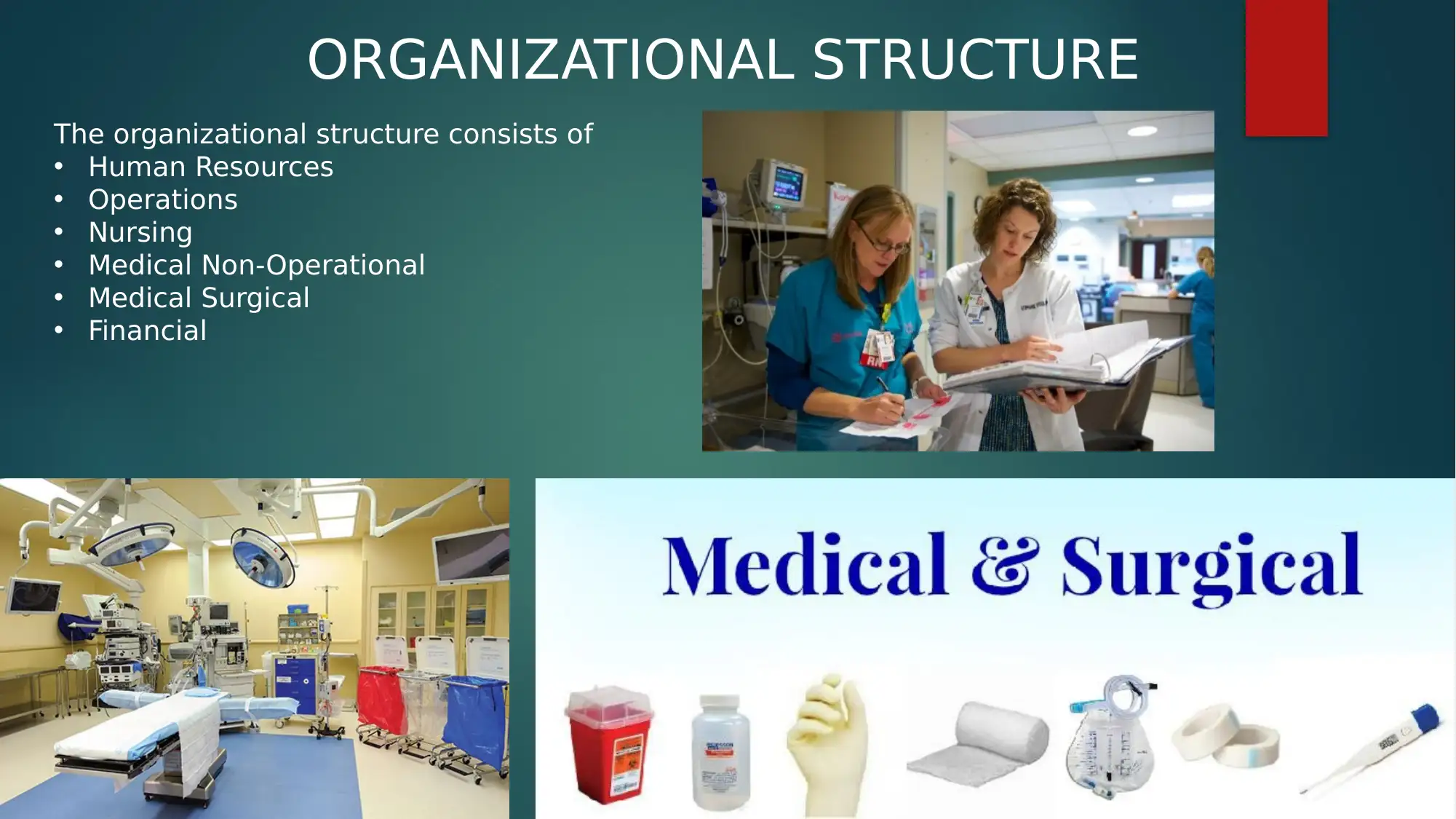
ORGANIZATIONAL STRUCTURE
The organizational structure consists of
Human Resources
Operations
Nursing
Medical Non-Operational
Medical Surgical
Financial
Document Page
SPECIALITIES of ABC HOSPITAL
Accident and emergency
Urology
Sexual Health
Rheumatology
Renal unit
Radiotherapy
Physiotherapy
Pharmacy
Pain Management clinics
Orthopedics
Ophthalmology
Oncology
Occupational Therapy
Gynecology and obstetrics units
Dietetics and nutrition
Neurology
Nephrology
General surgery
Hematology
Elderly services department
Critical care
Cardiology
Anesthetics
Accident and emergency
Neonatal unit
Microbiology
Dietetics and nutrition
tabler-icon-diamond-filled.svg

Paraphrase This Document

Need a fresh take? Get an instant paraphrase of this document with our AI Paraphraser
Document Page
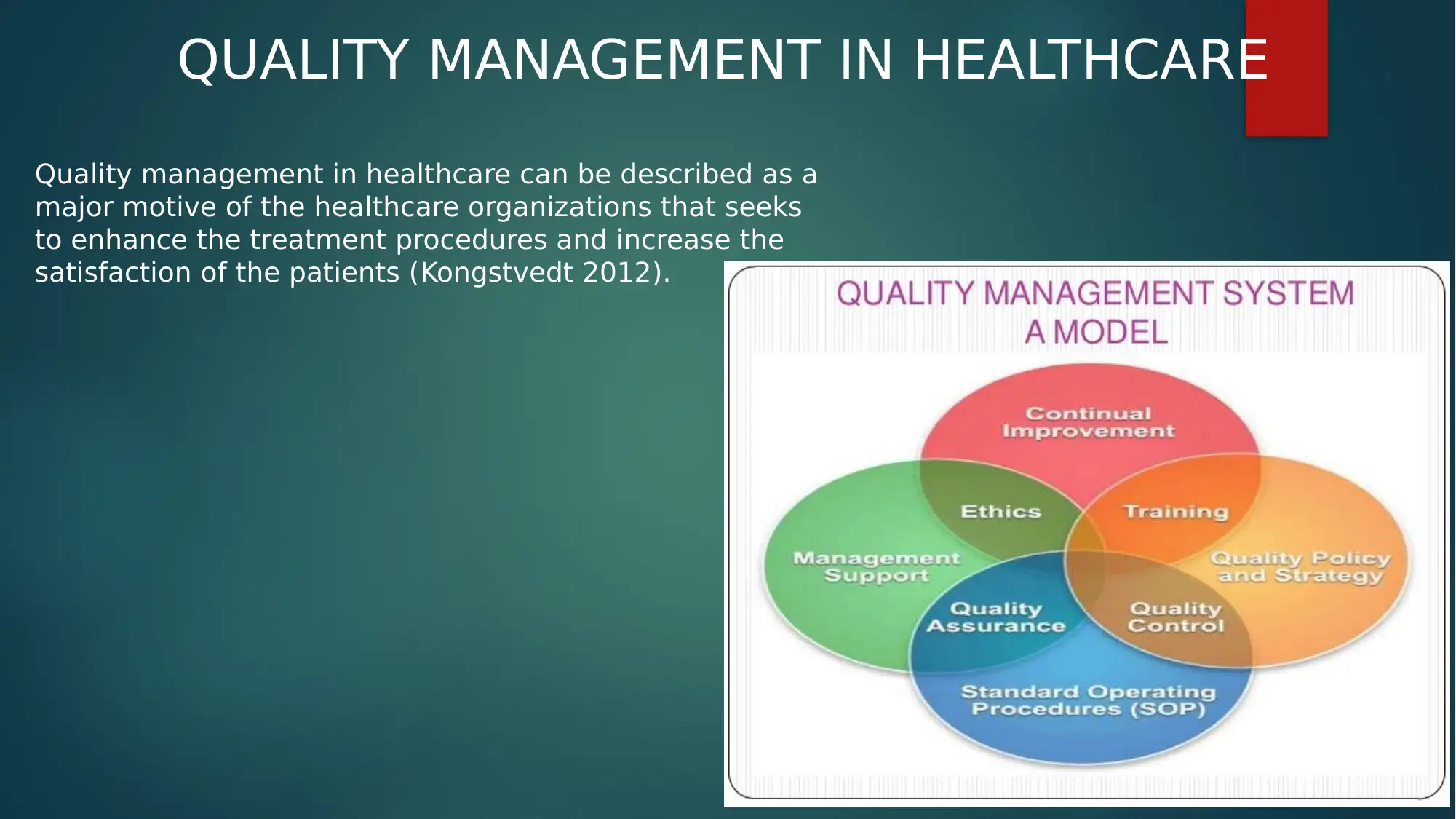
QUALITY MANAGEMENT IN HEALTHCARE
Quality management in healthcare can be described as a
major motive of the healthcare organizations that seeks
to enhance the treatment procedures and increase the
satisfaction of the patients (Kongstvedt 2012).
Document Page
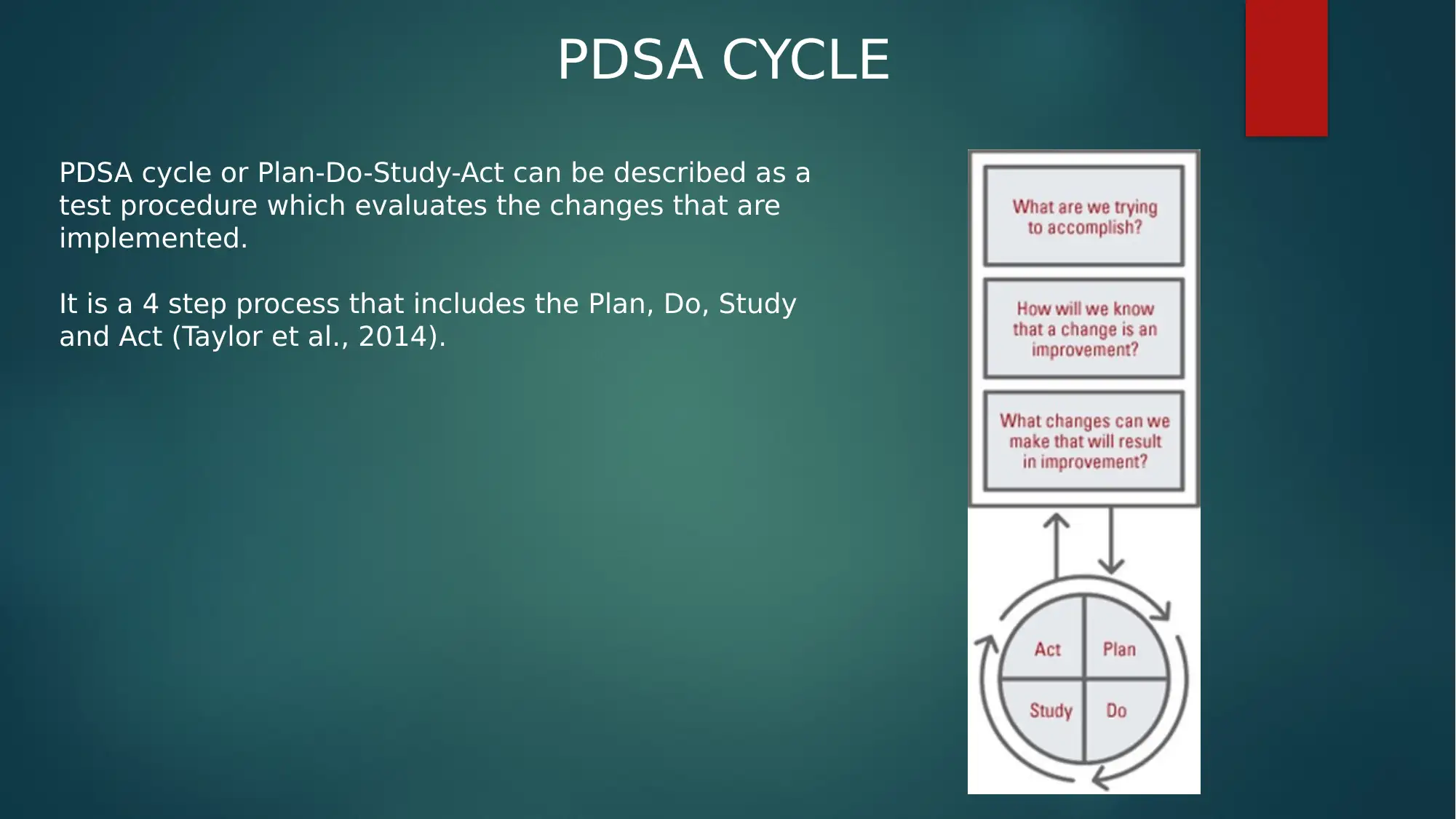
PDSA CYCLE
PDSA cycle or Plan-Do-Study-Act can be described as a
test procedure which evaluates the changes that are
implemented.
It is a 4 step process that includes the Plan, Do, Study
and Act (Taylor et al., 2014).
Document Page
PROBLEM IDENTIFICATION
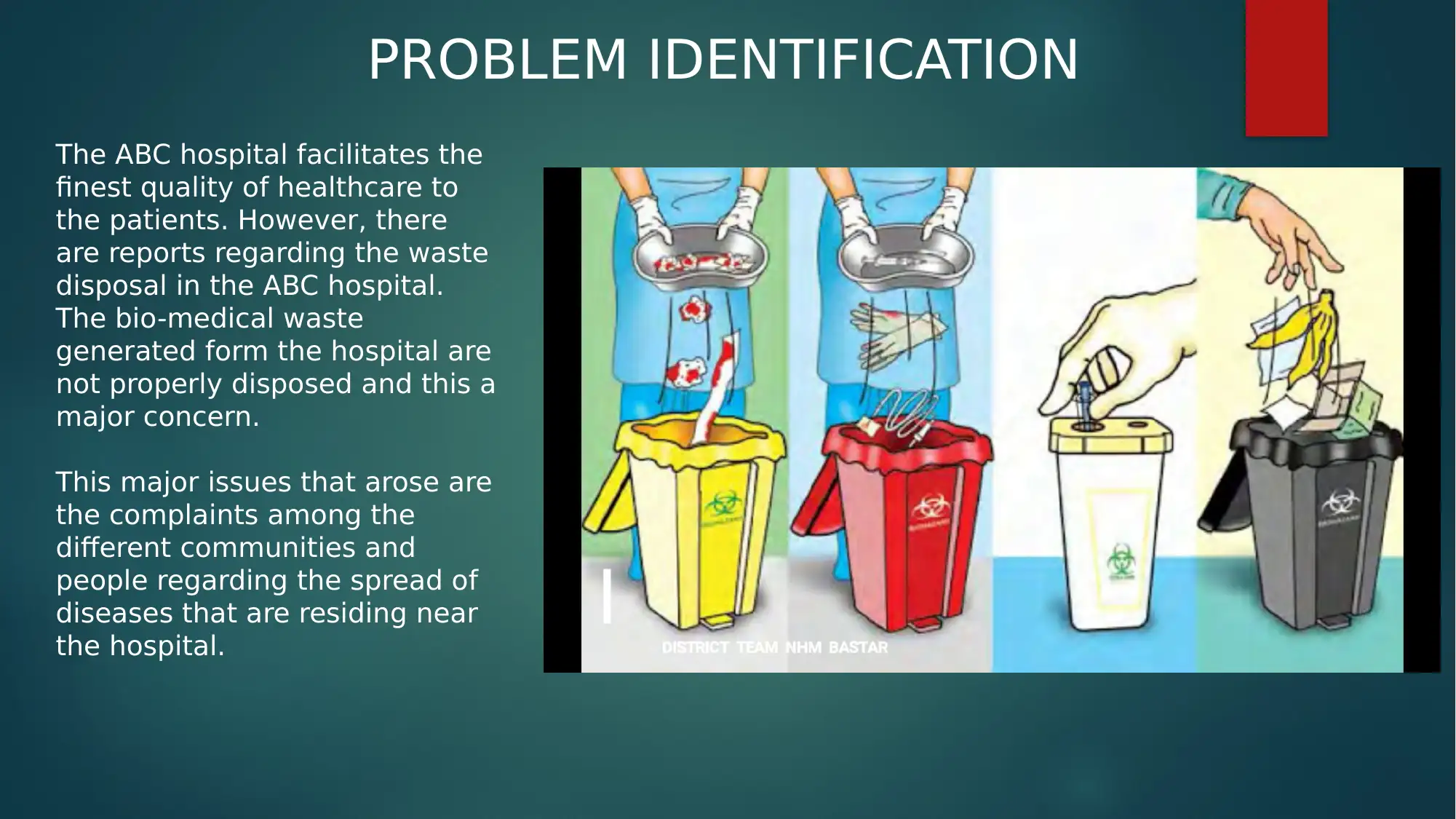
The ABC hospital facilitates the
finest quality of healthcare to
the patients. However, there
are reports regarding the waste
disposal in the ABC hospital.
The bio-medical waste
generated form the hospital are
not properly disposed and this a
major concern.
This major issues that arose are
the complaints among the
different communities and
people regarding the spread of
diseases that are residing near
the hospital.
tabler-icon-diamond-filled.svg

Paraphrase This Document

Need a fresh take? Get an instant paraphrase of this document with our AI Paraphraser
Document Page
ISSUES PRIOR TO INSTALLTION OF WASTE
DISPOSAL SYSTEMS
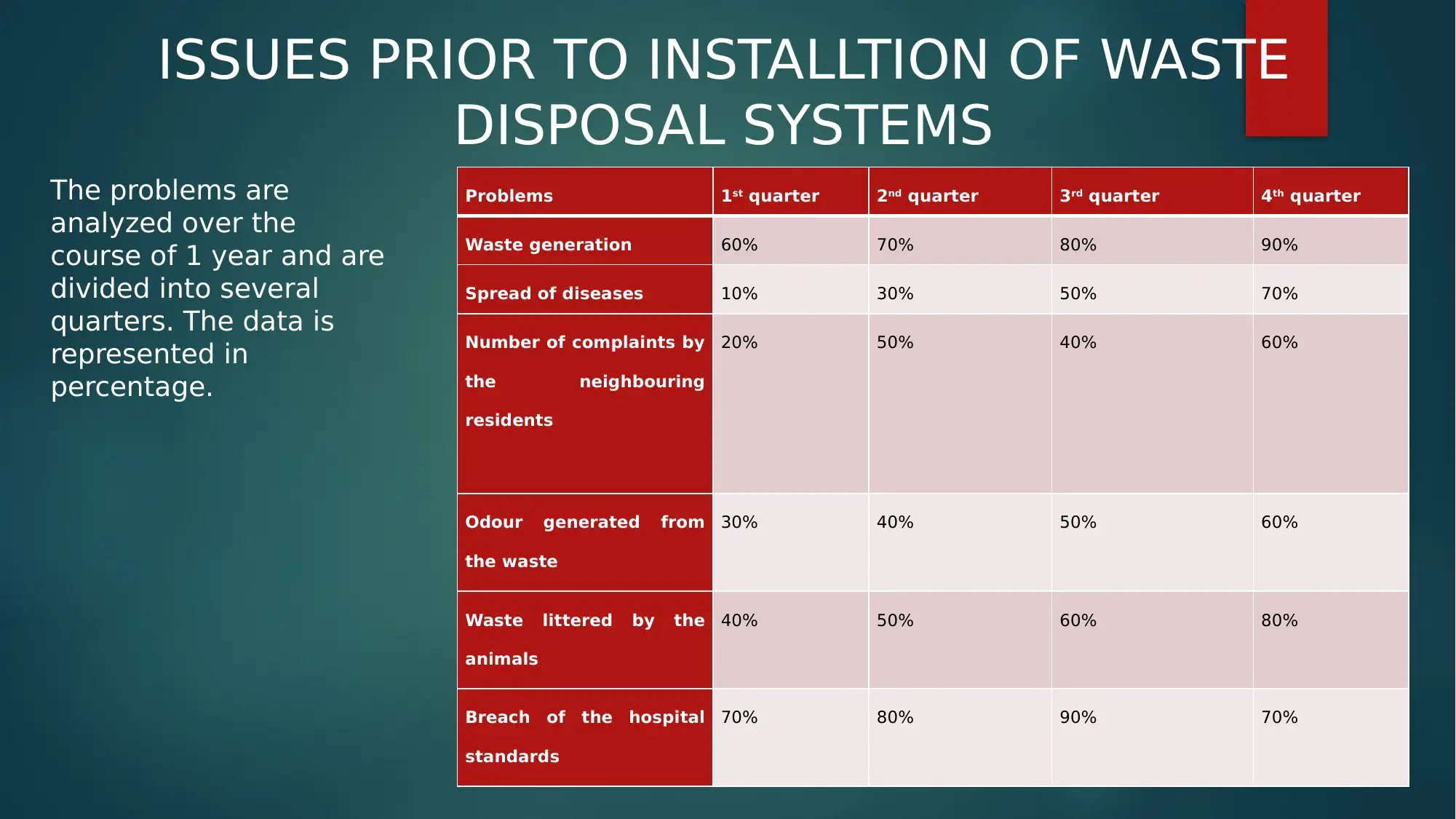
Problems 1st quarter 2nd quarter 3rd quarter 4th quarter
Waste generation 60% 70% 80% 90%
Spread of diseases 10% 30% 50% 70%
Number of complaints by
the neighbouring
residents
20% 50% 40% 60%
Odour generated from
the waste
30% 40% 50% 60%
Waste littered by the
animals
40% 50% 60% 80%
Breach of the hospital
standards
70% 80% 90% 70%
The problems are
analyzed over the
course of 1 year and are
divided into several
quarters. The data is
represented in
percentage.
Document Page
REDUCTION OF ISSUES AFTER THE INSTALLTION
OF WASTE DISPOSAL SYSTEMS
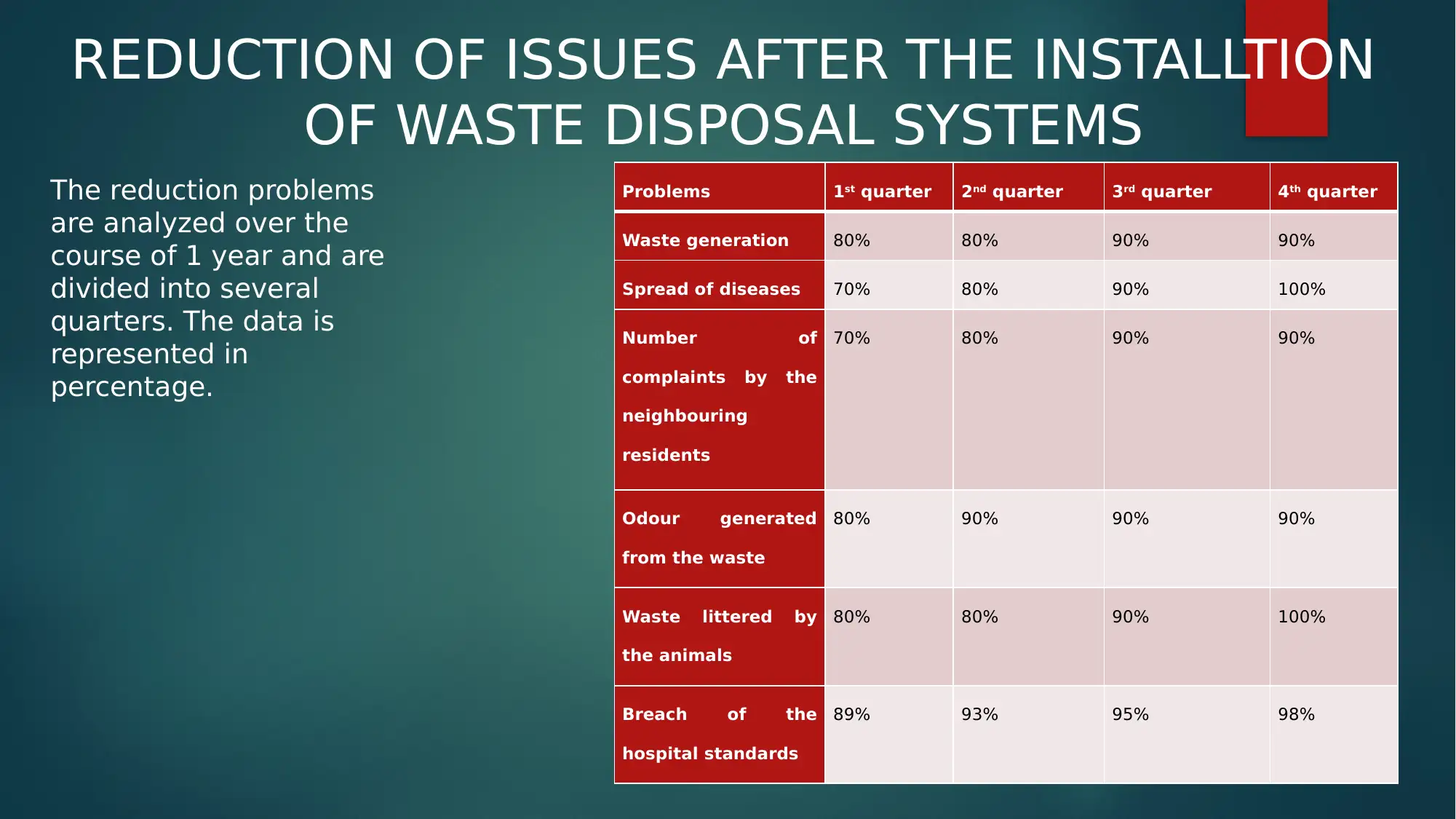
Problems 1st quarter 2nd quarter 3rd quarter 4th quarter
Waste generation 80% 80% 90% 90%
Spread of diseases 70% 80% 90% 100%
Number of
complaints by the
neighbouring
residents
70% 80% 90% 90%
Odour generated
from the waste
80% 90% 90% 90%
Waste littered by
the animals
80% 80% 90% 100%
Breach of the
hospital standards
89% 93% 95% 98%
The reduction problems
are analyzed over the
course of 1 year and are
divided into several
quarters. The data is
represented in
percentage.
Document Page
The suggested solutions
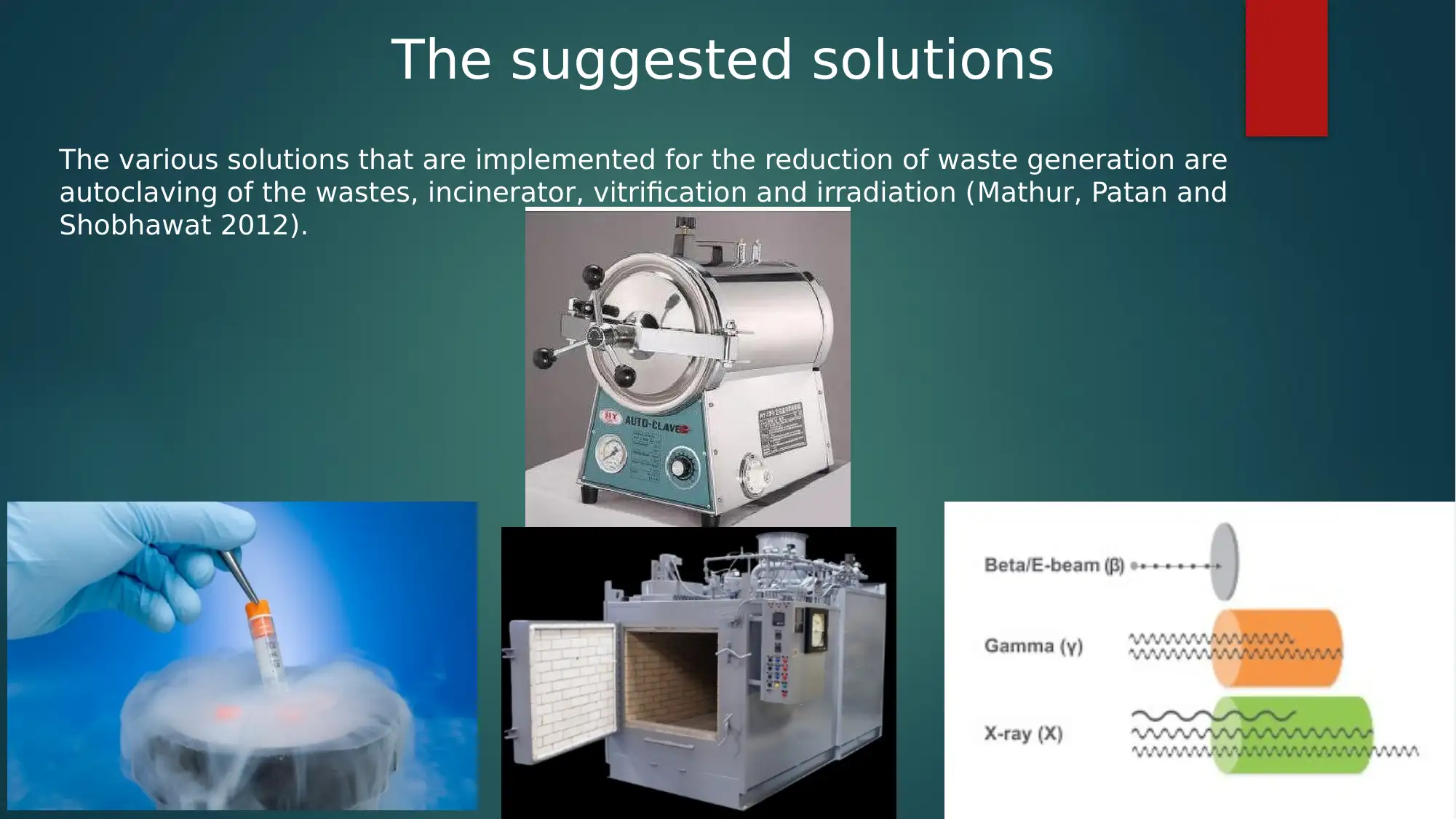
The various solutions that are implemented for the reduction of waste generation are
autoclaving of the wastes, incinerator, vitrification and irradiation (Mathur, Patan and
Shobhawat 2012).
tabler-icon-diamond-filled.svg

Paraphrase This Document

Need a fresh take? Get an instant paraphrase of this document with our AI Paraphraser
Document Page
The suggested Solutions
The suggested solutions can be described to be the best way through which the waste
generation is managed and reduced to a great extent. The usage of the incinerator,
autoclave, irradiation and vitrification.
Document Page
Reference
Kongstvedt, P.R., 2012. Essentials of managed health care. Jones & Bartlett Publishers.
Mathur, P., Patan, S. and Shobhawat, S., 2012. Need of biomedical waste management system in
hospitals-An emerging issue-a review. Curr World Environ, 7(1), pp.117-124.
Taylor, M.J., McNicholas, C., Nicolay, C., Darzi, A., Bell, D. and Reed, J.E., 2014. Systematic review
of the application of the plan–do–study–act method to improve quality in healthcare. BMJ Qual
Saf, 23(4), pp.290-298.
chevron_up_icon
1 out of 13
circle_padding
hide_on_mobile
zoom_out_icon
[object Object]