Research Report: Analysis of Accounting Frauds and Ethical Judgments

Verified

Added on  2022/11/15

|6
|750
|475
Report
AI Summary
This research report delves into the pervasive issue of accounting and financial frauds, highlighting the detrimental effects of misstated financial data and asset misappropriation on organizational brand image and investor confidence. It identifies various types of financial and accounting frauds, examines their nature and impact on organizational operations, and underscores the critical need for implementing ethical judgments to mitigate these fraudulent activities. Utilizing the Fraud Triangle and Fraud Diamond theories, the research explores the motivations, opportunities, rationalizations, and capabilities that drive fraudulent behavior. The methodology involves a secondary review of literature from peer-reviewed journals, blogs, and company reports to support the analysis. Ultimately, the report aims to provide recommended actions for organizations to avoid the risks associated with accounting-related fraudulent activities. Desklib provides access to similar documents and study resources for students.
Document Page
Running head: RESEARCH ON ETHICAL ACCOUNTING
RESEARCH ON ETHICAL ACCOUNTING
Name of the student
Name of the university
Author note
tabler-icon-diamond-filled.svg

Paraphrase This Document

Need a fresh take? Get an instant paraphrase of this document with our AI Paraphraser
Document Page
1RESEARCH ON ETHICAL ACCOUNTING
Topic: Analysis of accounting frauds and the need for ethical judgment to be implemented in
accounting
1.Statement of problem
Most of the companies are facing ethical concerns related to misstatement of the financial
data and asset misappropriation for influencing the investors to make investments to the
organization and profit maximization. In this relation, the misstatement and asset
misappropriation might affect the brand image of the venture. Therefore, organizations might
take steps to implement suitable ethical judgments.
2.Research objectives
The objectives for undertaking the research are:
To identify the different financial and accounting frauds that are undertaken by the
organizations
To examine the nature of accounting frauds and the manner in which it affects the
operations of an organization
To analyze the needs of implementing suitable ethical judgments for mitigating different
financial and accounting frauds that are encountered by organizations
To suggest recommended actions that might be considered by organizations with the
objective of avoiding the risks of different accounting related fraudulent activities
3.Research question
The research questions that will be undertaken in the study are:
What are the different financial and accounting frauds that are undertaken by the
organizations?
Document Page
2RESEARCH ON ETHICAL ACCOUNTING
What is the nature of accounting frauds and how does it affects the operations of an
organization?
Why is it necessary to implement suitable ethical judgments for mitigating different
financial and accounting frauds that are encountered by organizations?
What are the recommended actions that might be considered by organizations with the
objective of avoiding the risks of different accounting related fraudulent activities?
4.Theory to be used
The theories that will be utilized in the research are the Fraud Diamond theory and
Fraud Triangle theory.
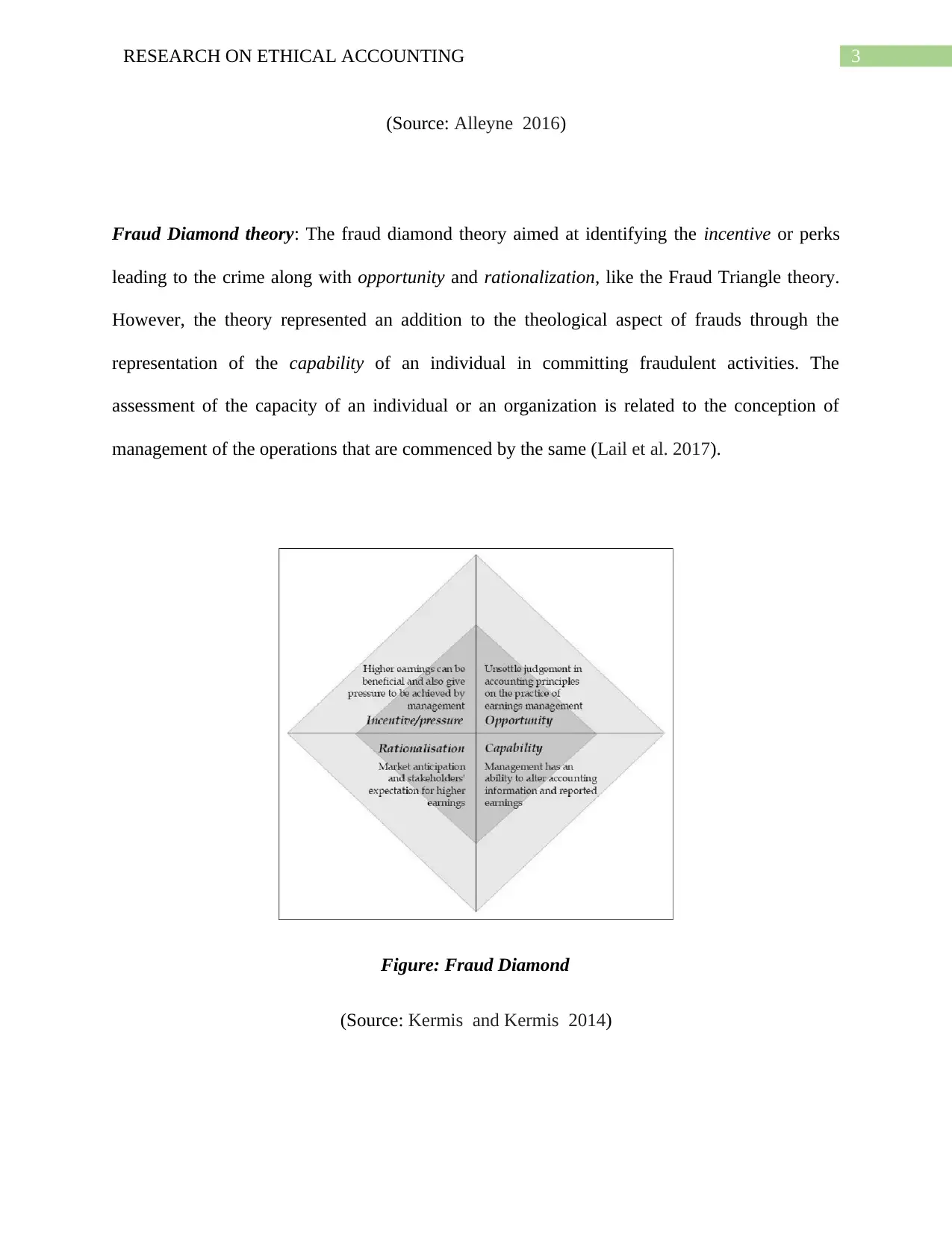
Fraud triangle theory: The theory aimed at examining the different factors that leads to a crime.
The major influencing factors of a crime is being evaluated through the enumeration of the
theory. The theory was designed by criminologist Donald Cressey with the objective of
identifying the behavior and mentality of the people related to the fraudulent activities. The
justification for the actions provides the motif of the criminal actions, opportunity illumines the
ability of a person to carry out the operations and pressure focuses on the motivation for
committing the crime (Huang et al. 2017).
Figure: Fraud Triangle
Document Page
3RESEARCH ON ETHICAL ACCOUNTING
(Source: Alleyne 2016)
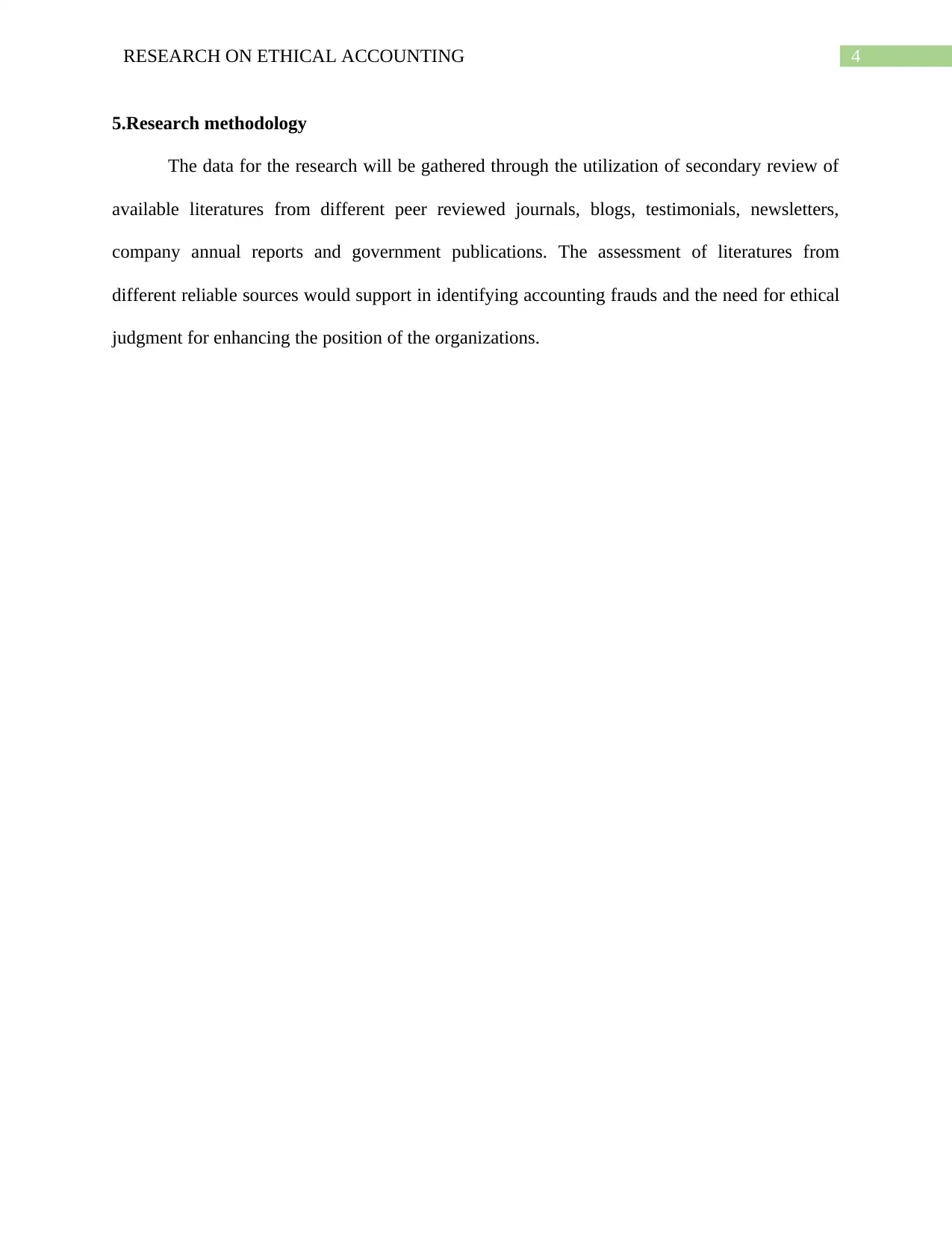
Fraud Diamond theory: The fraud diamond theory aimed at identifying the incentive or perks
leading to the crime along with opportunity and rationalization, like the Fraud Triangle theory.
However, the theory represented an addition to the theological aspect of frauds through the
representation of the capability of an individual in committing fraudulent activities. The
assessment of the capacity of an individual or an organization is related to the conception of
management of the operations that are commenced by the same (Lail et al. 2017).
Figure: Fraud Diamond
(Source: Kermis and Kermis 2014)
tabler-icon-diamond-filled.svg

Paraphrase This Document

Need a fresh take? Get an instant paraphrase of this document with our AI Paraphraser
Document Page
4RESEARCH ON ETHICAL ACCOUNTING
5.Research methodology
The data for the research will be gathered through the utilization of secondary review of
available literatures from different peer reviewed journals, blogs, testimonials, newsletters,
company annual reports and government publications. The assessment of literatures from
different reliable sources would support in identifying accounting frauds and the need for ethical
judgment for enhancing the position of the organizations.
Document Page
5RESEARCH ON ETHICAL ACCOUNTING
References
Alleyne, P., 2016. The influence of organisational commitment and corporate ethical values on
non-public accountants’ whistle-blowing intentions in Barbados. Journal of Applied Accounting
Research, 17(2), pp.190-210.
Huang, S.Y., Lin, C.C., Chiu, A.A. and Yen, D.C., 2017. Fraud detection using fraud triangle
risk factors. Information Systems Frontiers, 19(6), pp.1343-1356.
Kermis, G.F. and Kermis, M.D., 2014. Financial reporting regulations, ethics and accounting
education. Journal of Academic and Business Ethics, 8, p.1.
Lail, B., MacGregor, J., Marcum, J. and Stuebs, M., 2017. Virtuous professionalism in
accountants to avoid fraud and to restore financial reporting. Journal of business ethics, 140(4),
pp.687-704.
chevron_up_icon
1 out of 6
circle_padding
hide_on_mobile
zoom_out_icon
[object Object]