Income Tax, Accounting Principle, Business Law, Task Based Simulation

Verified

Added on  2022/10/10

|4
|920
|277
Quiz and Exam
AI Summary
This document presents a comprehensive set of exam questions designed to assess understanding of key accounting concepts. The questions cover a range of topics including income tax, accounting principles, business law, and task-based simulations. The income tax section explores filing status, while the accounting principles section delves into revenue recognition and the business entity principle. Business law questions focus on contract law and the parol evidence rule. The task-based simulation assesses the understanding of consideration and contract enforceability. The questions are designed to test the application of these concepts and require students to select the most appropriate answer from multiple-choice options. This resource can serve as a valuable tool for exam preparation, providing opportunities to practice and reinforce knowledge across various accounting disciplines. The document is a compilation of questions and answers, offering insights into exam formats and content.
Document Page
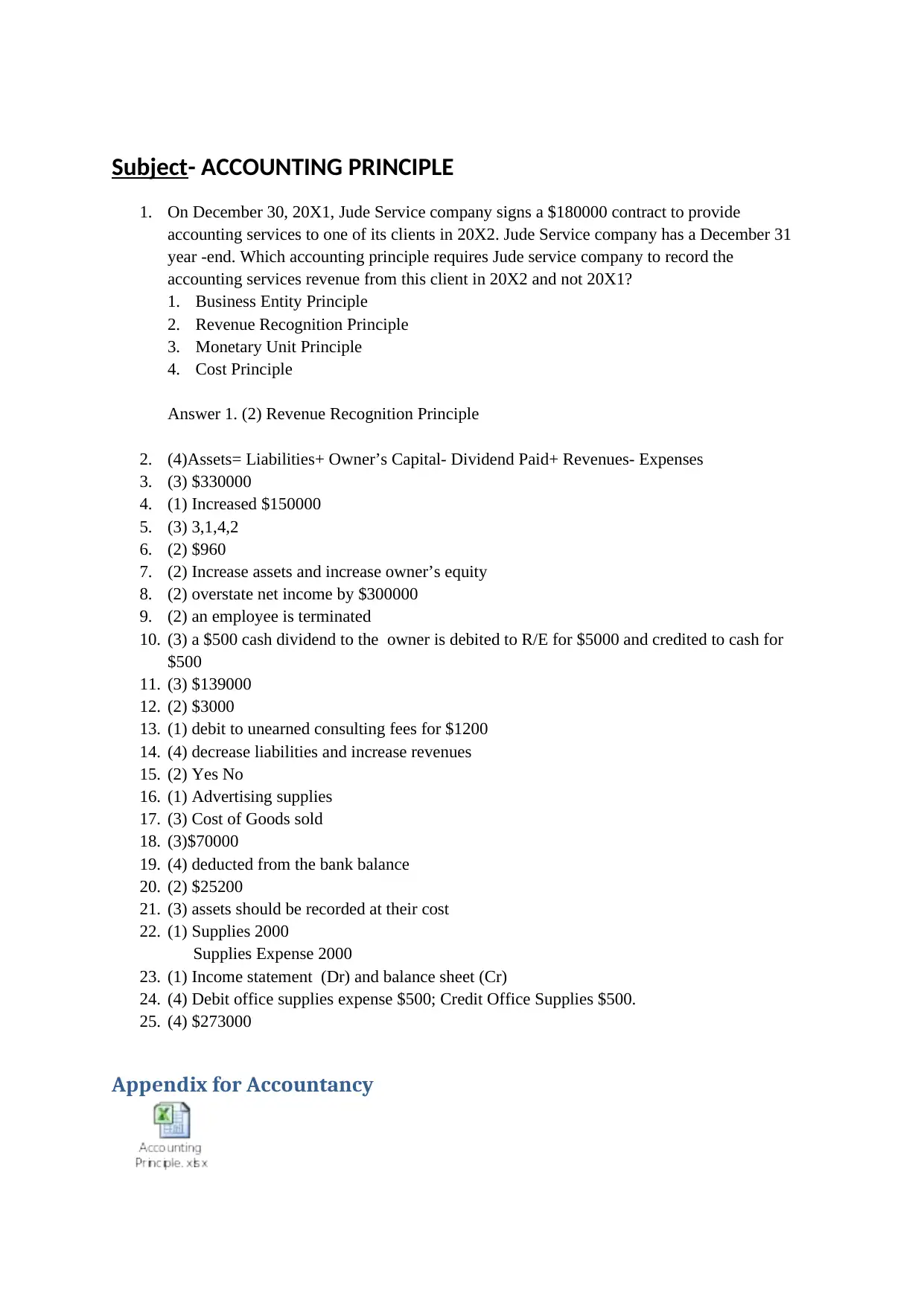
Subject- INCOME TAX
1. Mrs Irma Felton, by herself, maintains her home in which she and her dependent son
reside. Mrs Felton’s husband died in Year 1. What is Mrs Felton’s filing status for
Year 2?
Answer 1. (a) Single
2. (c) Three
3. (b)$2000
4. (d) $2250
5. (c) $1900
6. (b) A qualified personal service corporation
7. (b) $8000
8. (d) $146000
9. (b)$15000
10. Warehousing costs incurred by manufacturing company with 30 million in annual
gross receipts
11. (b) $59000
12. (c) $2000
13. (b) $5000
14. (b)$ 33000
15. (d)$175000
16. (b)$5500
17. (b) $5000
18. (c) $1000
19. (c) Earned income credit
20. (c) $1900
21. (c) 18500
22. (c) $24000
23. (d) $ 13900
24. (b) Include $1250 in income in the current year
25. (a) $17000
Appendix for Income Tax Questions
tabler-icon-diamond-filled.svg

Paraphrase This Document

Need a fresh take? Get an instant paraphrase of this document with our AI Paraphraser
Document Page
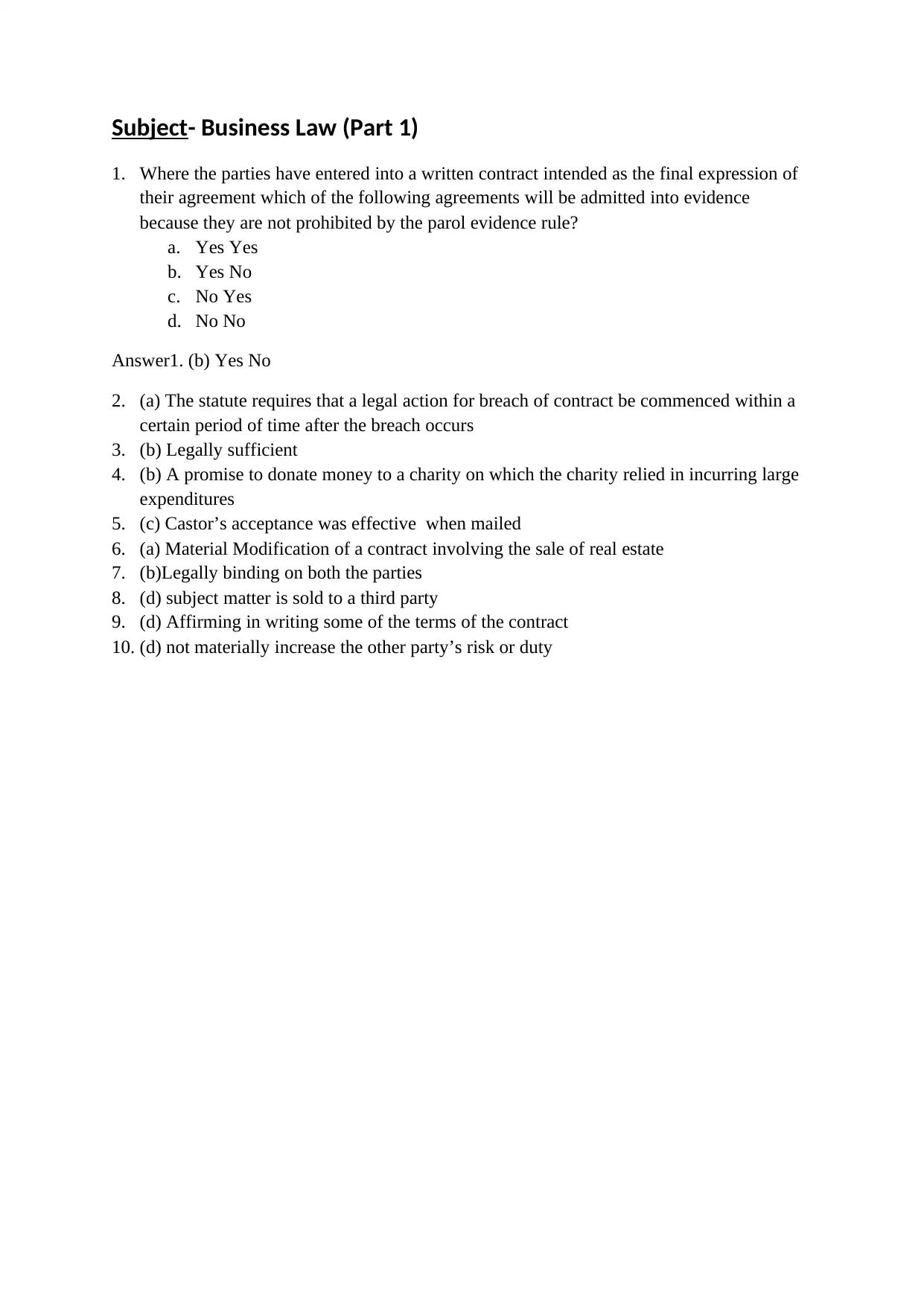
Subject- ACCOUNTING PRINCIPLE
1. On December 30, 20X1, Jude Service company signs a $180000 contract to provide
accounting services to one of its clients in 20X2. Jude Service company has a December 31
year -end. Which accounting principle requires Jude service company to record the
accounting services revenue from this client in 20X2 and not 20X1?
1. Business Entity Principle
2. Revenue Recognition Principle
3. Monetary Unit Principle
4. Cost Principle
Answer 1. (2) Revenue Recognition Principle
2. (4)Assets= Liabilities+ Owner’s Capital- Dividend Paid+ Revenues- Expenses
3. (3) $330000
4. (1) Increased $150000
5. (3) 3,1,4,2
6. (2) $960
7. (2) Increase assets and increase owner’s equity
8. (2) overstate net income by $300000
9. (2) an employee is terminated
10. (3) a $500 cash dividend to the owner is debited to R/E for $5000 and credited to cash for
$500
11. (3) $139000
12. (2) $3000
13. (1) debit to unearned consulting fees for $1200
14. (4) decrease liabilities and increase revenues
15. (2) Yes No
16. (1) Advertising supplies
17. (3) Cost of Goods sold
18. (3)$70000
19. (4) deducted from the bank balance
20. (2) $25200
21. (3) assets should be recorded at their cost
22. (1) Supplies 2000
Supplies Expense 2000
23. (1) Income statement (Dr) and balance sheet (Cr)
24. (4) Debit office supplies expense $500; Credit Office Supplies $500.
25. (4) $273000
Appendix for Accountancy
Document Page
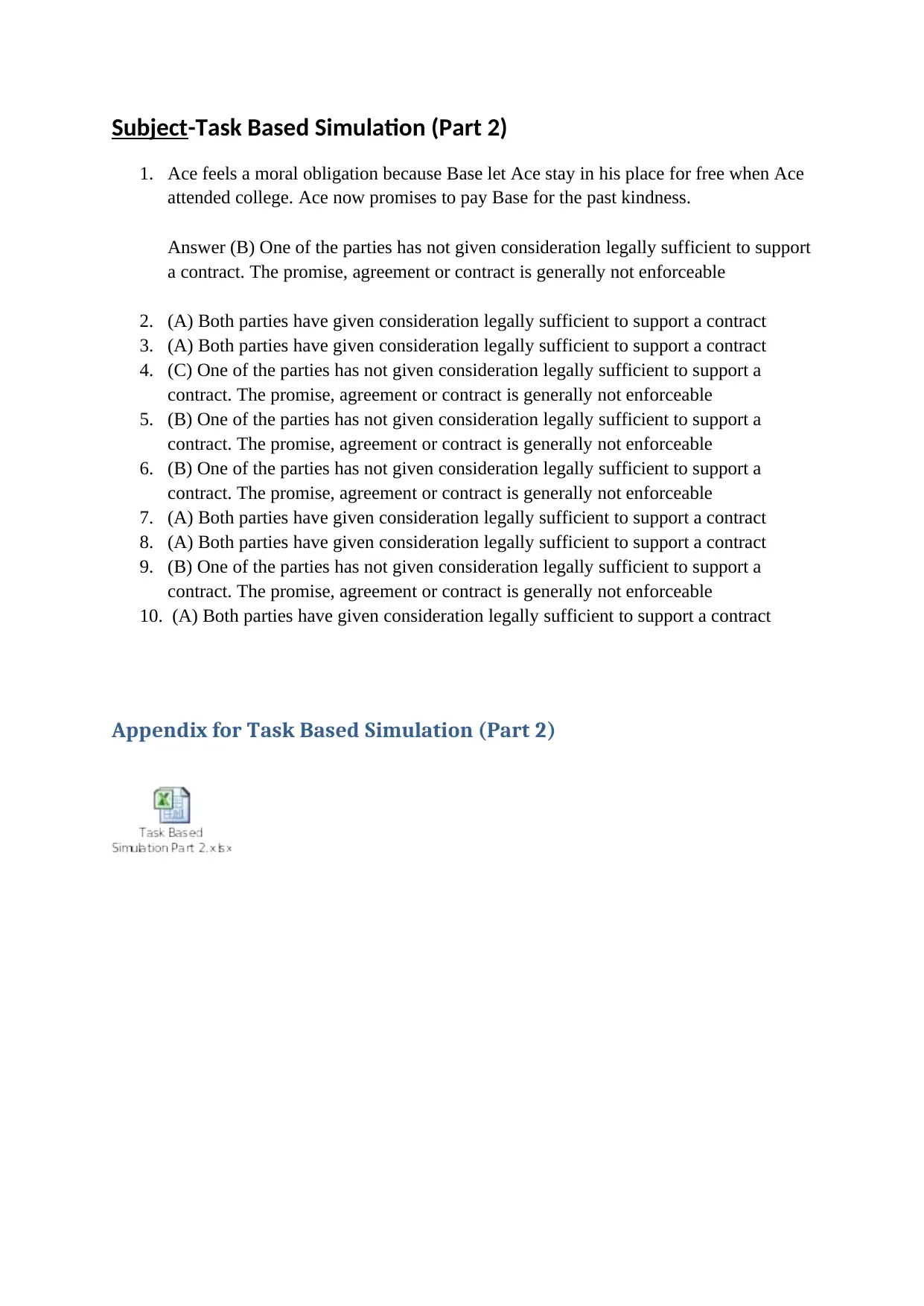
Subject- Business Law (Part 1)
1. Where the parties have entered into a written contract intended as the final expression of
their agreement which of the following agreements will be admitted into evidence
because they are not prohibited by the parol evidence rule?
a. Yes Yes
b. Yes No
c. No Yes
d. No No
Answer1. (b) Yes No
2. (a) The statute requires that a legal action for breach of contract be commenced within a
certain period of time after the breach occurs
3. (b) Legally sufficient
4. (b) A promise to donate money to a charity on which the charity relied in incurring large
expenditures
5. (c) Castor’s acceptance was effective when mailed
6. (a) Material Modification of a contract involving the sale of real estate
7. (b)Legally binding on both the parties
8. (d) subject matter is sold to a third party
9. (d) Affirming in writing some of the terms of the contract
10. (d) not materially increase the other party’s risk or duty
Document Page
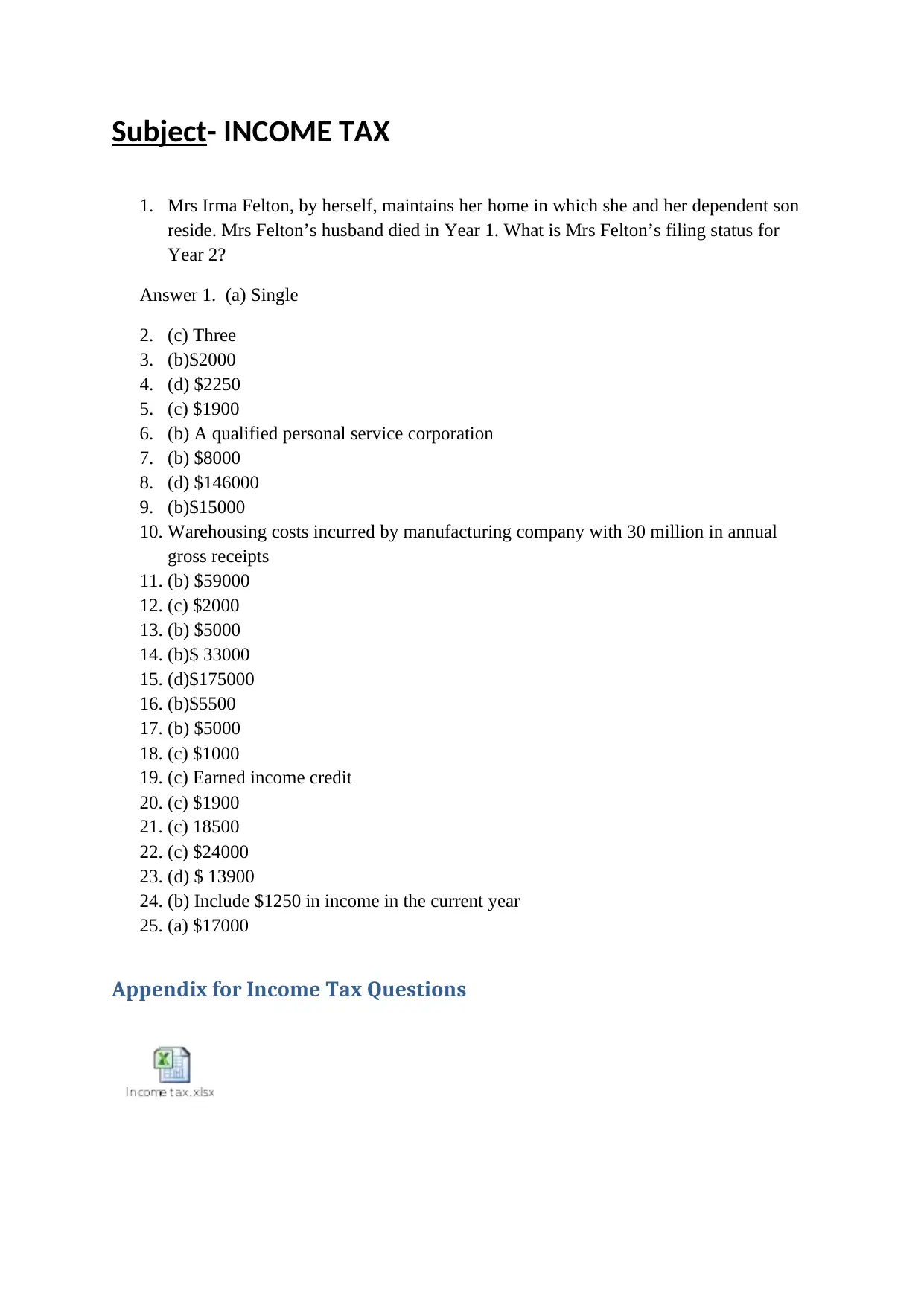
Subject-Task Based Simulation (Part 2)
1. Ace feels a moral obligation because Base let Ace stay in his place for free when Ace
attended college. Ace now promises to pay Base for the past kindness.
Answer (B) One of the parties has not given consideration legally sufficient to support
a contract. The promise, agreement or contract is generally not enforceable
2. (A) Both parties have given consideration legally sufficient to support a contract
3. (A) Both parties have given consideration legally sufficient to support a contract
4. (C) One of the parties has not given consideration legally sufficient to support a
contract. The promise, agreement or contract is generally not enforceable
5. (B) One of the parties has not given consideration legally sufficient to support a
contract. The promise, agreement or contract is generally not enforceable
6. (B) One of the parties has not given consideration legally sufficient to support a
contract. The promise, agreement or contract is generally not enforceable
7. (A) Both parties have given consideration legally sufficient to support a contract
8. (A) Both parties have given consideration legally sufficient to support a contract
9. (B) One of the parties has not given consideration legally sufficient to support a
contract. The promise, agreement or contract is generally not enforceable
10. (A) Both parties have given consideration legally sufficient to support a contract
Appendix for Task Based Simulation (Part 2)
chevron_up_icon
1 out of 4
circle_padding
hide_on_mobile
zoom_out_icon
[object Object]