Case Study Report: ACCT6007 Financial Accounting Theory and Practice
VerifiedAdded on 2022/09/26
|9
|1864
|21
Report
AI Summary
This report provides a comprehensive analysis of ACCT6007 Financial Accounting Theory and Practice, focusing on the Australian Accounting Standards Board (AASB) conceptual framework and accounting theories. It begins by outlining the qualitative characteristics of accounting information, differentiating between fundamental (relevance and faithful representation) and enhancing characteristics (verifiability, timeliness, understandability, and comparability). The report then delves into a case study concerning a company facing financial difficulties, applying positive accounting theory and the debt covenant hypothesis to suggest strategies for managing profitability and debt. Finally, it examines government decisions regarding corporate social responsibility, analyzing the situation through the lenses of public interest theory and capture theory to understand the interplay between regulation and corporate behavior. The report concludes by summarizing the key findings and referencing relevant academic sources.

ACCT6007 Financial Accounting Theory and Practice
1
1
Paraphrase This Document
Need a fresh take? Get an instant paraphrase of this document with our AI Paraphraser

Contents
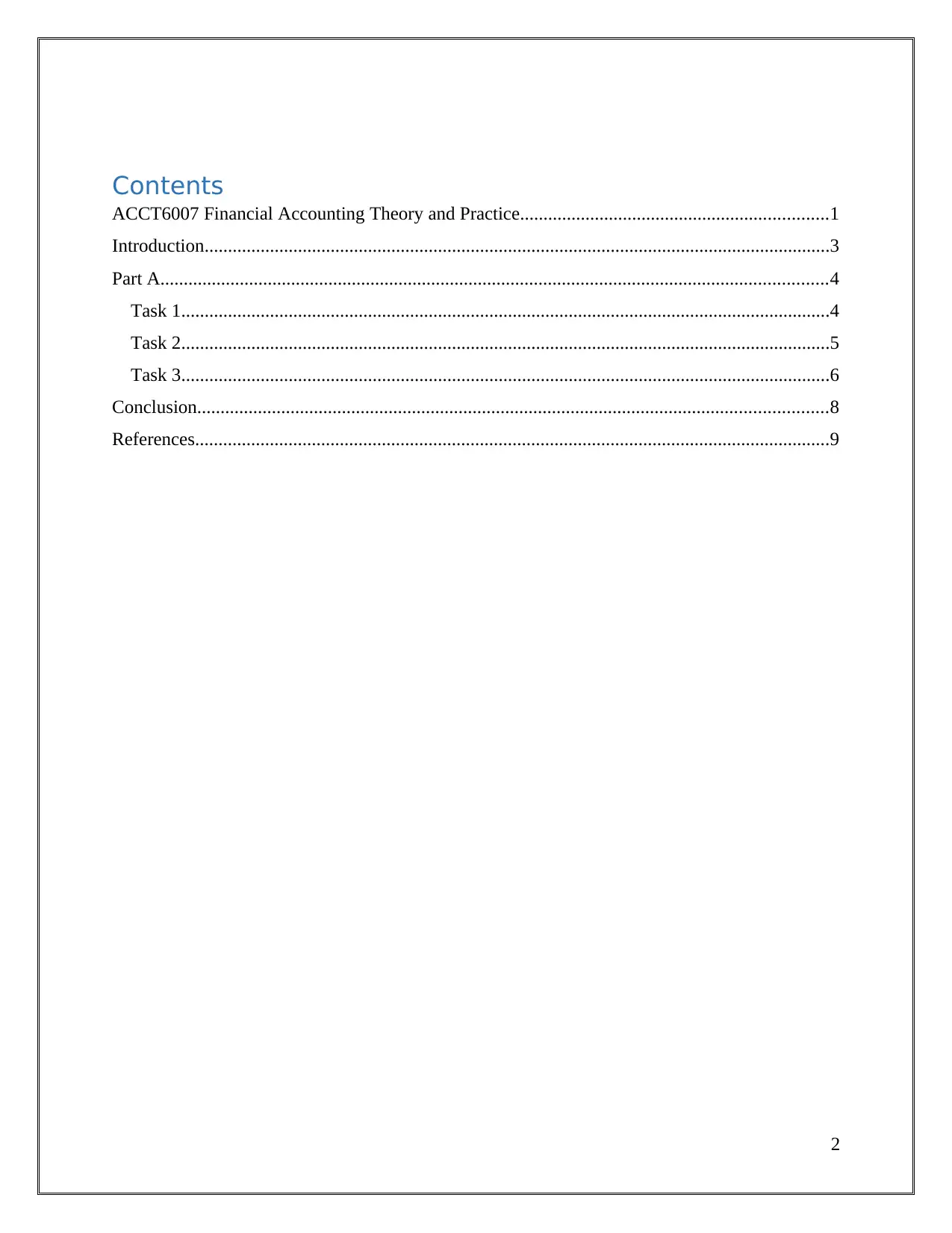
ACCT6007 Financial Accounting Theory and Practice..................................................................1
Introduction......................................................................................................................................3
Part A...............................................................................................................................................4
Task 1...........................................................................................................................................4
Task 2...........................................................................................................................................5
Task 3...........................................................................................................................................6
Conclusion.......................................................................................................................................8
References........................................................................................................................................9
2
ACCT6007 Financial Accounting Theory and Practice..................................................................1
Introduction......................................................................................................................................3
Part A...............................................................................................................................................4
Task 1...........................................................................................................................................4
Task 2...........................................................................................................................................5
Task 3...........................................................................................................................................6
Conclusion.......................................................................................................................................8
References........................................................................................................................................9
2

Introduction
The accounting theories and practice are identified as the guidelines that helps in identifying the
different guidelines that are related to the company financial information. The AASB is
considered to be one of the most reliable board that defines the accounting standards for the
companies that are working in the country. There are various qualitative characteristic that the
accounting standard board holds which helps in making the accounting information more
reliable. The current report is based on the analysis of the different task that are provided.
3
The accounting theories and practice are identified as the guidelines that helps in identifying the
different guidelines that are related to the company financial information. The AASB is
considered to be one of the most reliable board that defines the accounting standards for the
companies that are working in the country. There are various qualitative characteristic that the
accounting standard board holds which helps in making the accounting information more
reliable. The current report is based on the analysis of the different task that are provided.
3
⊘ This is a preview!⊘
Do you want full access?
Subscribe today to unlock all pages.

Trusted by 1+ million students worldwide

Part A
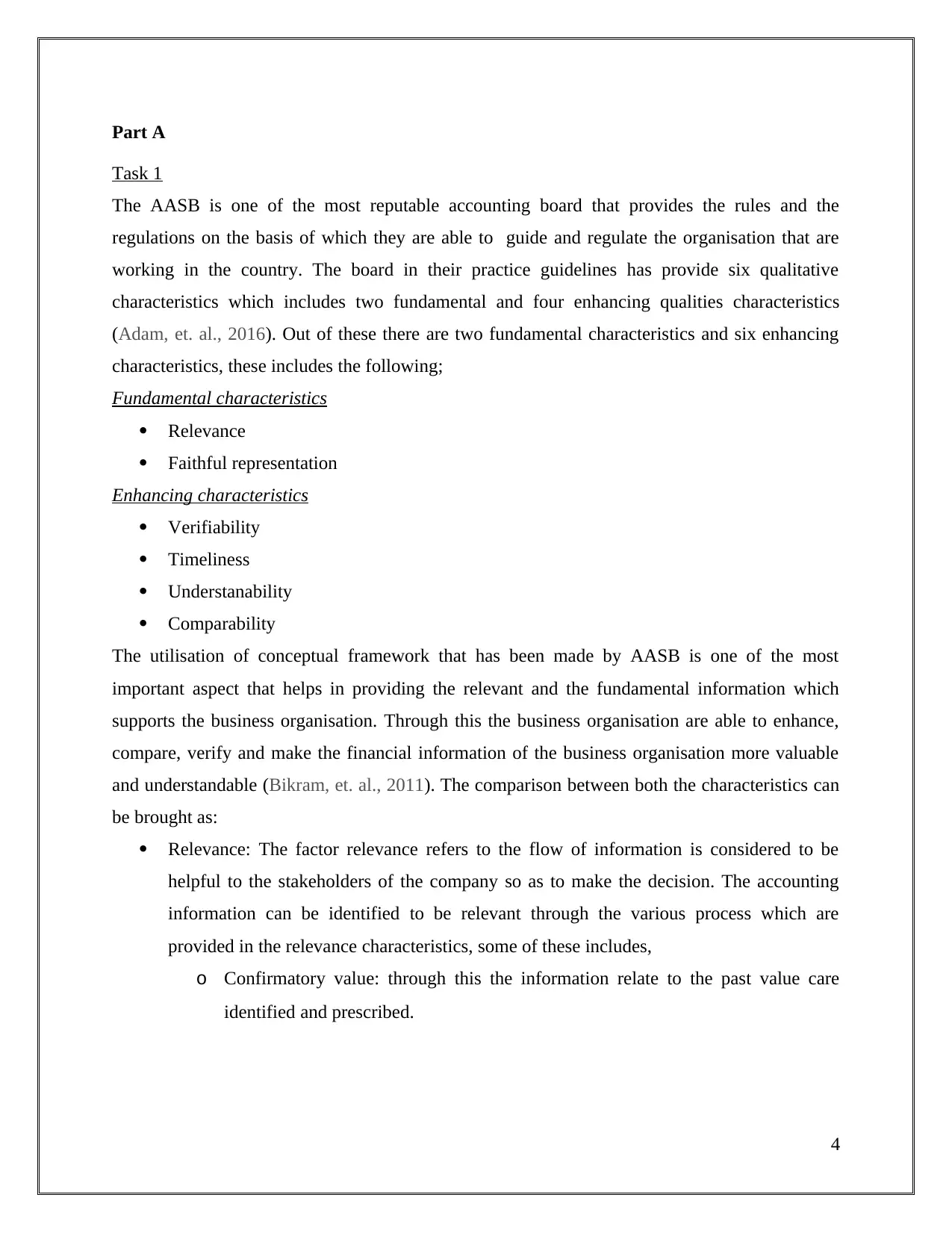
Task 1
The AASB is one of the most reputable accounting board that provides the rules and the
regulations on the basis of which they are able to guide and regulate the organisation that are
working in the country. The board in their practice guidelines has provide six qualitative
characteristics which includes two fundamental and four enhancing qualities characteristics
(Adam, et. al., 2016). Out of these there are two fundamental characteristics and six enhancing
characteristics, these includes the following;
Fundamental characteristics
Relevance
Faithful representation
Enhancing characteristics
Verifiability
Timeliness
Understanability
Comparability
The utilisation of conceptual framework that has been made by AASB is one of the most
important aspect that helps in providing the relevant and the fundamental information which
supports the business organisation. Through this the business organisation are able to enhance,
compare, verify and make the financial information of the business organisation more valuable
and understandable (Bikram, et. al., 2011). The comparison between both the characteristics can
be brought as:
Relevance: The factor relevance refers to the flow of information is considered to be
helpful to the stakeholders of the company so as to make the decision. The accounting
information can be identified to be relevant through the various process which are
provided in the relevance characteristics, some of these includes,
o Confirmatory value: through this the information relate to the past value care
identified and prescribed.
4
Task 1
The AASB is one of the most reputable accounting board that provides the rules and the
regulations on the basis of which they are able to guide and regulate the organisation that are
working in the country. The board in their practice guidelines has provide six qualitative
characteristics which includes two fundamental and four enhancing qualities characteristics
(Adam, et. al., 2016). Out of these there are two fundamental characteristics and six enhancing
characteristics, these includes the following;
Fundamental characteristics
Relevance
Faithful representation
Enhancing characteristics
Verifiability
Timeliness
Understanability
Comparability
The utilisation of conceptual framework that has been made by AASB is one of the most
important aspect that helps in providing the relevant and the fundamental information which
supports the business organisation. Through this the business organisation are able to enhance,
compare, verify and make the financial information of the business organisation more valuable
and understandable (Bikram, et. al., 2011). The comparison between both the characteristics can
be brought as:
Relevance: The factor relevance refers to the flow of information is considered to be
helpful to the stakeholders of the company so as to make the decision. The accounting
information can be identified to be relevant through the various process which are
provided in the relevance characteristics, some of these includes,
o Confirmatory value: through this the information relate to the past value care
identified and prescribed.
4
Paraphrase This Document
Need a fresh take? Get an instant paraphrase of this document with our AI Paraphraser

o Predictive value: The use of predictive value helps in providing the predictive
power through which they are able to take decision regarding possible future
events
Hence through this the information that is provided regarding the fundamental accounting
aspects of the company can be provided in this manner which includes making the accounting
information more useful to the past events and through which they are able to predict about the
future events of the company (Kyriakou, et. al., 2019). Here it is considered that where the
company is having the best quarter and presenting the information in the financial report would
help the creditors to make the decision so as to extend the credit available to the company at
large.
Faithful representation: This is related to providing the reliability in the information that
is provided to the stakeholders. The information must reflect the accurate information
around the company which includes information about the company resources,
obligation, claims and transactions at large. There are various elements of the same which
includes,
o Complete information: the information provided in the statements must be
complete
o Neutral: the information must be considered to be free from the biasness and there
should not be any of estimation which is involved in financial statement which
must be true and neutral.
o Free from errors: the information must be free from any of the error that is filed
by the company.
Hence the main difference that can be bought from this includes that relevance fundamental
characteristic helps in providing the relevant information that is related to the financial decision.
On the other hand faithful representation is related to providing the correct and the accurate
information that is related to the company’s financial position (Sasho, et. al., 2015).
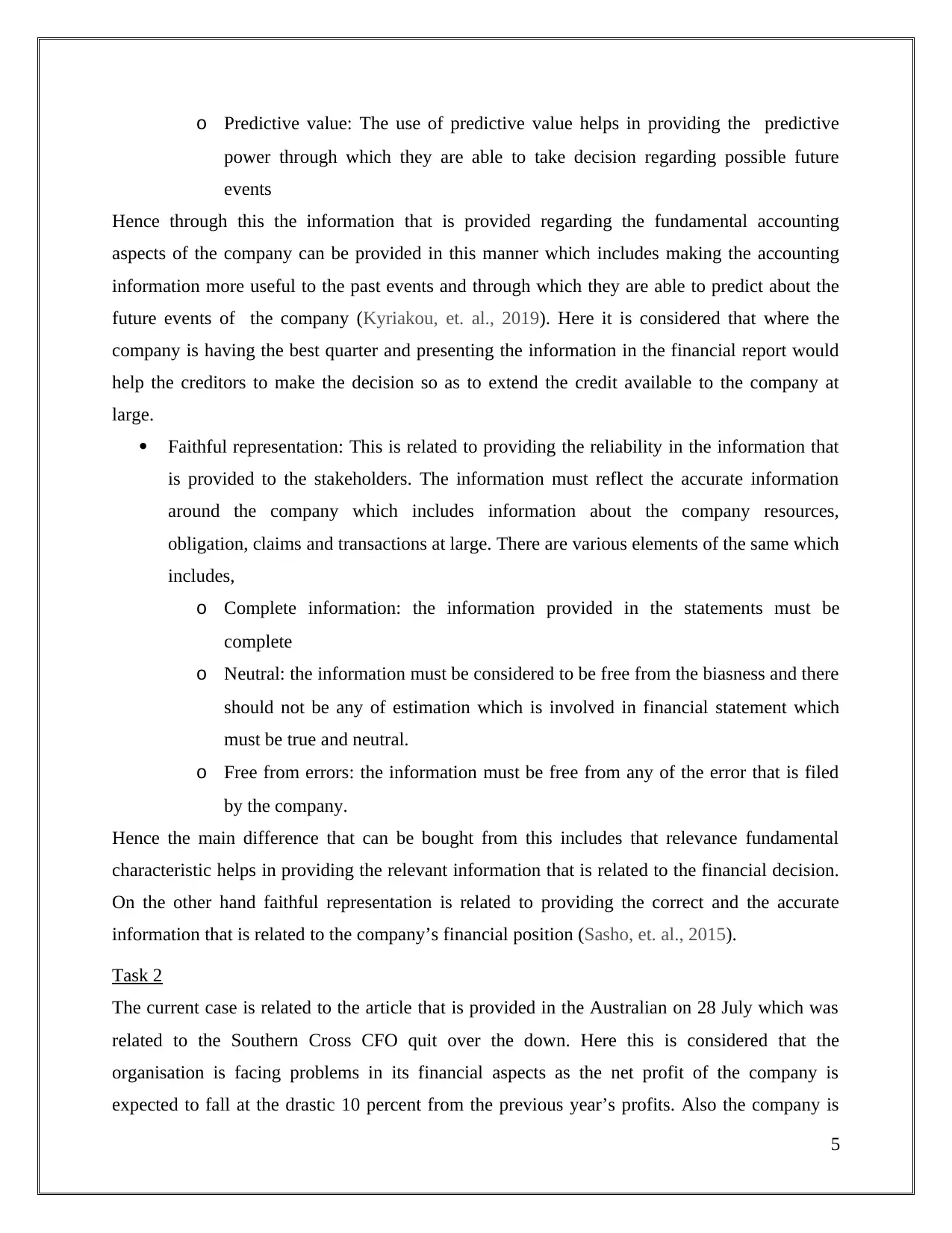
Task 2
The current case is related to the article that is provided in the Australian on 28 July which was
related to the Southern Cross CFO quit over the down. Here this is considered that the
organisation is facing problems in its financial aspects as the net profit of the company is
expected to fall at the drastic 10 percent from the previous year’s profits. Also the company is
5
power through which they are able to take decision regarding possible future
events
Hence through this the information that is provided regarding the fundamental accounting
aspects of the company can be provided in this manner which includes making the accounting
information more useful to the past events and through which they are able to predict about the
future events of the company (Kyriakou, et. al., 2019). Here it is considered that where the
company is having the best quarter and presenting the information in the financial report would
help the creditors to make the decision so as to extend the credit available to the company at
large.
Faithful representation: This is related to providing the reliability in the information that
is provided to the stakeholders. The information must reflect the accurate information
around the company which includes information about the company resources,
obligation, claims and transactions at large. There are various elements of the same which
includes,
o Complete information: the information provided in the statements must be
complete
o Neutral: the information must be considered to be free from the biasness and there
should not be any of estimation which is involved in financial statement which
must be true and neutral.
o Free from errors: the information must be free from any of the error that is filed
by the company.
Hence the main difference that can be bought from this includes that relevance fundamental
characteristic helps in providing the relevant information that is related to the financial decision.
On the other hand faithful representation is related to providing the correct and the accurate
information that is related to the company’s financial position (Sasho, et. al., 2015).
Task 2
The current case is related to the article that is provided in the Australian on 28 July which was
related to the Southern Cross CFO quit over the down. Here this is considered that the
organisation is facing problems in its financial aspects as the net profit of the company is
expected to fall at the drastic 10 percent from the previous year’s profits. Also the company is
5

slipping into the danger zone and hence this has been identified that companies current situation
would lead to breach of banking covenants. By using positive accounting theory the use of debt
covenant hypothesis must be considered through which the company would be able to shift the
accounting procedures which would help the company to earn the profits for the future periods
(Xiang, et. al., 2017). As in the current case the company is having the problem in the
profitability due to which they are not able to cover its cost, therefore the company must apply
this in the manner that they are able to minimise the constraints which is affecting the company’s
profits. If the company would not change the current marketing situation then the company
would be not able to work with the banking debts and then the organisation have to pay to the
bank for the debts taken. The company would not be able to function as per requirements. The
suggestion for the company is to change accounting policies and managing the discretionary
accruals which would lead to reduction in the company’s current debt position. To manage the
companies’ profits the company must use the cash available with them so as to pay the debt off
slowly which would enhance the gearing ratio of the company to a large extent, which would
help that gearing of the company remains within the banking covenants (Alex, et. al., 2016).
Task 3
The decision of the government of the Australia to inquire about the corporate social
responsibility is within the aim so as to decide about the changes that are required to be made in
the corporations acts was taken back by the government of the country considering the public
theories. Here the decision was taken by the government while understanding the situation, here
this was analysed that if the company would not follow the social responsibility then the
products of the company would not be accepted by the different companies and this would lead
to closure of the company. the situation can be understood through the public interest theory
where the regulations puts the emphasis on the general terms which are related to identification
of the regulations so as to protect the benefits of the public at a large scale. Here the regulations
means proving the guidelines where the activity of the public cannot be regulated through the
other source. Hence due to this the government of the country does not identify the need for
regulating any of the consideration on the basis of which the actions can be taken (Michelangelo,
et. al., 2016).
On the other hand capture theory informs that the result of the same does not needs to be
considered which are related to the acting of the companies in the public interests. Here the
6
would lead to breach of banking covenants. By using positive accounting theory the use of debt
covenant hypothesis must be considered through which the company would be able to shift the
accounting procedures which would help the company to earn the profits for the future periods
(Xiang, et. al., 2017). As in the current case the company is having the problem in the
profitability due to which they are not able to cover its cost, therefore the company must apply
this in the manner that they are able to minimise the constraints which is affecting the company’s
profits. If the company would not change the current marketing situation then the company
would be not able to work with the banking debts and then the organisation have to pay to the
bank for the debts taken. The company would not be able to function as per requirements. The
suggestion for the company is to change accounting policies and managing the discretionary
accruals which would lead to reduction in the company’s current debt position. To manage the
companies’ profits the company must use the cash available with them so as to pay the debt off
slowly which would enhance the gearing ratio of the company to a large extent, which would
help that gearing of the company remains within the banking covenants (Alex, et. al., 2016).
Task 3
The decision of the government of the Australia to inquire about the corporate social
responsibility is within the aim so as to decide about the changes that are required to be made in
the corporations acts was taken back by the government of the country considering the public
theories. Here the decision was taken by the government while understanding the situation, here
this was analysed that if the company would not follow the social responsibility then the
products of the company would not be accepted by the different companies and this would lead
to closure of the company. the situation can be understood through the public interest theory
where the regulations puts the emphasis on the general terms which are related to identification
of the regulations so as to protect the benefits of the public at a large scale. Here the regulations
means proving the guidelines where the activity of the public cannot be regulated through the
other source. Hence due to this the government of the country does not identify the need for
regulating any of the consideration on the basis of which the actions can be taken (Michelangelo,
et. al., 2016).
On the other hand capture theory informs that the result of the same does not needs to be
considered which are related to the acting of the companies in the public interests. Here the
6
⊘ This is a preview!⊘
Do you want full access?
Subscribe today to unlock all pages.

Trusted by 1+ million students worldwide

dominance of the public interest is identified where the industry does not focus on the regulation
that are made by the government. Hence this has been identified in the current case of bringing
regulation for social responsibility that the government does not need to make the amendments
as the companies would themselves understand and capture the scope for which the regulations is
made and if these are not fulfilled then this would affect the company itself (Valentin & Robert,
2019).
7
that are made by the government. Hence this has been identified in the current case of bringing
regulation for social responsibility that the government does not need to make the amendments
as the companies would themselves understand and capture the scope for which the regulations is
made and if these are not fulfilled then this would affect the company itself (Valentin & Robert,
2019).
7
Paraphrase This Document
Need a fresh take? Get an instant paraphrase of this document with our AI Paraphraser

Conclusion
From the above report the analysis has been identified where there are six qualitative
characteristics that are defined as per the AASB. This has been recognised that PAT includes
different theories that are related to accounting policies. Also the public interest theory and the
capture theory are identified through which they are able to make the decision about amending
the regulations in the country.
8
From the above report the analysis has been identified where there are six qualitative
characteristics that are defined as per the AASB. This has been recognised that PAT includes
different theories that are related to accounting policies. Also the public interest theory and the
capture theory are identified through which they are able to make the decision about amending
the regulations in the country.
8

References
Adam, S., Dianne, M., & Alfred, W. (2016). Market failure, regulation and education of financial
advisors. Australasian Accounting, Business and Finance Journal, 10(1). (2016). Retrieved
April 16, 2020. https://lesa.on.worldcat.org/oclc/8253825096
Alex, A., Verônica, D., Isabel, M., & Flávia, Z. (2016). International financial reporting
standards and earnings management in latin america. Rac: Revista De Administração
Contemporânea, 20(3), 368-388. (2016). Retrieved April 16, 2020.
Bikram, C., Stuart, T., Vic, F., & Alistair, B. (2011). An analysis of the qualitative characteristics
of management commentary reporting by new zealand companies. Australasian Accounting,
Business and Finance Journal, 5(4). (2011). Retrieved April 16, 2020,
https://lesa.on.worldcat.org/oclc/8091033766
Kyriakou, I., Pantelous, A., Sermpinis, G., & Zenios, S. (2019). Preface: Application of
operations research to financial markets. Annals of Operations Research, 282(1-2), 1-2.
doi:10.1007/s10479-019-03400-1
Michelangelo, P., Andrea, F., Giuseppe, P., Alessandro, C., & Fabio, P. (2016). The accounting
network: How financial institutions react to systemic crisis. Plos One, 11(10).
doi:10.1371/journal.pone.0162855
Sasho, K., Natasha, R., & Daliborka, B. (2015). International standards for financial reporting:
Harmonization in macedonia. Utms Journal of Economics, 6(2), 233-240. (2015). Retrieved
April 16, 2020.
Valentin, B., & Robert, A. (2019). Analysis of the impact of changes to international financial
reporting standards, on the national accounts dashboard. Acta Universitatis Danubius:
Oeconomica, 15(6), 115-135. (2019). Retrieved April 16, 2020.
Xiang, G., Ming, Z., & Hongbing, O. (2017). A regulation model for the solvency of banking
system: Based on the pinning control theory of complex network. Discrete Dynamics in
Nature and Society, 2017. doi:10.1155/2017/9732678
9
Adam, S., Dianne, M., & Alfred, W. (2016). Market failure, regulation and education of financial
advisors. Australasian Accounting, Business and Finance Journal, 10(1). (2016). Retrieved
April 16, 2020. https://lesa.on.worldcat.org/oclc/8253825096
Alex, A., Verônica, D., Isabel, M., & Flávia, Z. (2016). International financial reporting
standards and earnings management in latin america. Rac: Revista De Administração
Contemporânea, 20(3), 368-388. (2016). Retrieved April 16, 2020.
Bikram, C., Stuart, T., Vic, F., & Alistair, B. (2011). An analysis of the qualitative characteristics
of management commentary reporting by new zealand companies. Australasian Accounting,
Business and Finance Journal, 5(4). (2011). Retrieved April 16, 2020,
https://lesa.on.worldcat.org/oclc/8091033766
Kyriakou, I., Pantelous, A., Sermpinis, G., & Zenios, S. (2019). Preface: Application of
operations research to financial markets. Annals of Operations Research, 282(1-2), 1-2.
doi:10.1007/s10479-019-03400-1
Michelangelo, P., Andrea, F., Giuseppe, P., Alessandro, C., & Fabio, P. (2016). The accounting
network: How financial institutions react to systemic crisis. Plos One, 11(10).
doi:10.1371/journal.pone.0162855
Sasho, K., Natasha, R., & Daliborka, B. (2015). International standards for financial reporting:
Harmonization in macedonia. Utms Journal of Economics, 6(2), 233-240. (2015). Retrieved
April 16, 2020.
Valentin, B., & Robert, A. (2019). Analysis of the impact of changes to international financial
reporting standards, on the national accounts dashboard. Acta Universitatis Danubius:
Oeconomica, 15(6), 115-135. (2019). Retrieved April 16, 2020.
Xiang, G., Ming, Z., & Hongbing, O. (2017). A regulation model for the solvency of banking
system: Based on the pinning control theory of complex network. Discrete Dynamics in
Nature and Society, 2017. doi:10.1155/2017/9732678
9
⊘ This is a preview!⊘
Do you want full access?
Subscribe today to unlock all pages.

Trusted by 1+ million students worldwide
1 out of 9
Related Documents
Your All-in-One AI-Powered Toolkit for Academic Success.
+13062052269
info@desklib.com
Available 24*7 on WhatsApp / Email
Unlock your academic potential
Copyright © 2020–2026 A2Z Services. All Rights Reserved. Developed and managed by ZUCOL.