Acculturation Report: Exploring Theories, Processes, and Challenges

Verified

Added on  2023/01/18

|9
|414
|79
Report
AI Summary
This report delves into the concept of acculturation, a process where individuals adopt aspects of a different culture while retaining elements of their original culture. The report explores the sociological perspectives on acculturation, including the works of theorists and the relationship between political, economic, and social aspects. It defines acculturation, differentiates between group and individual levels of acculturation, and discusses the experiences of immigrants and refugees. The report also highlights challenges like xenophobia and examines the advantages and disadvantages of acculturation, such as the integration into a new lifestyle versus the potential loss of the original culture. References to relevant sources are included, providing a comprehensive overview of the topic.

Document Page
ACCULTURATION
Name
Institution
Date
tabler-icon-diamond-filled.svg

Paraphrase This Document

Need a fresh take? Get an instant paraphrase of this document with our AI Paraphraser
Document Page
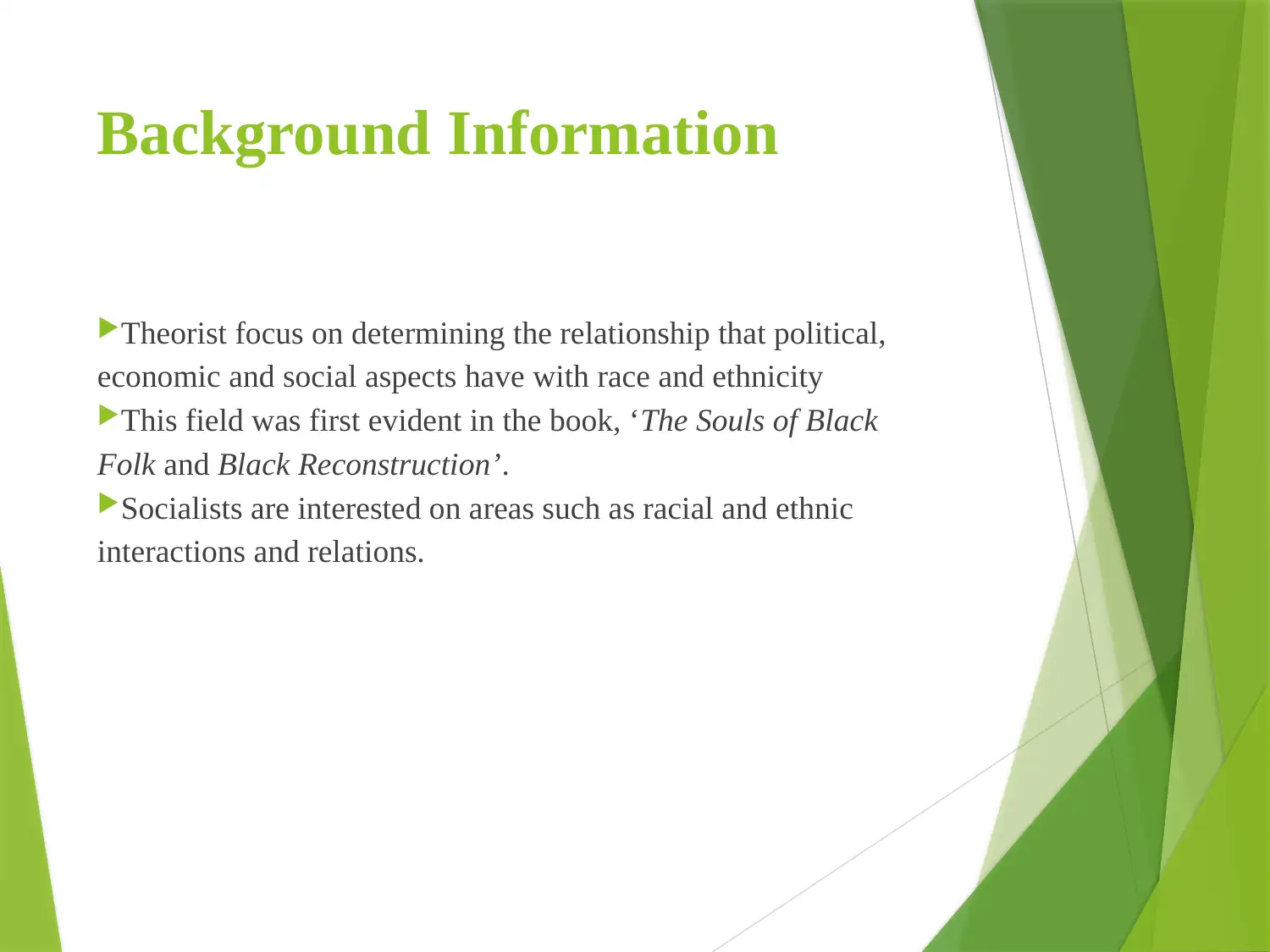
Background Information
Theorist focus on determining the relationship that political,
economic and social aspects have with race and ethnicity
This field was first evident in the book, ‘The Souls of Black
Folk and Black Reconstruction’.
Socialists are interested on areas such as racial and ethnic
interactions and relations.
Document Page
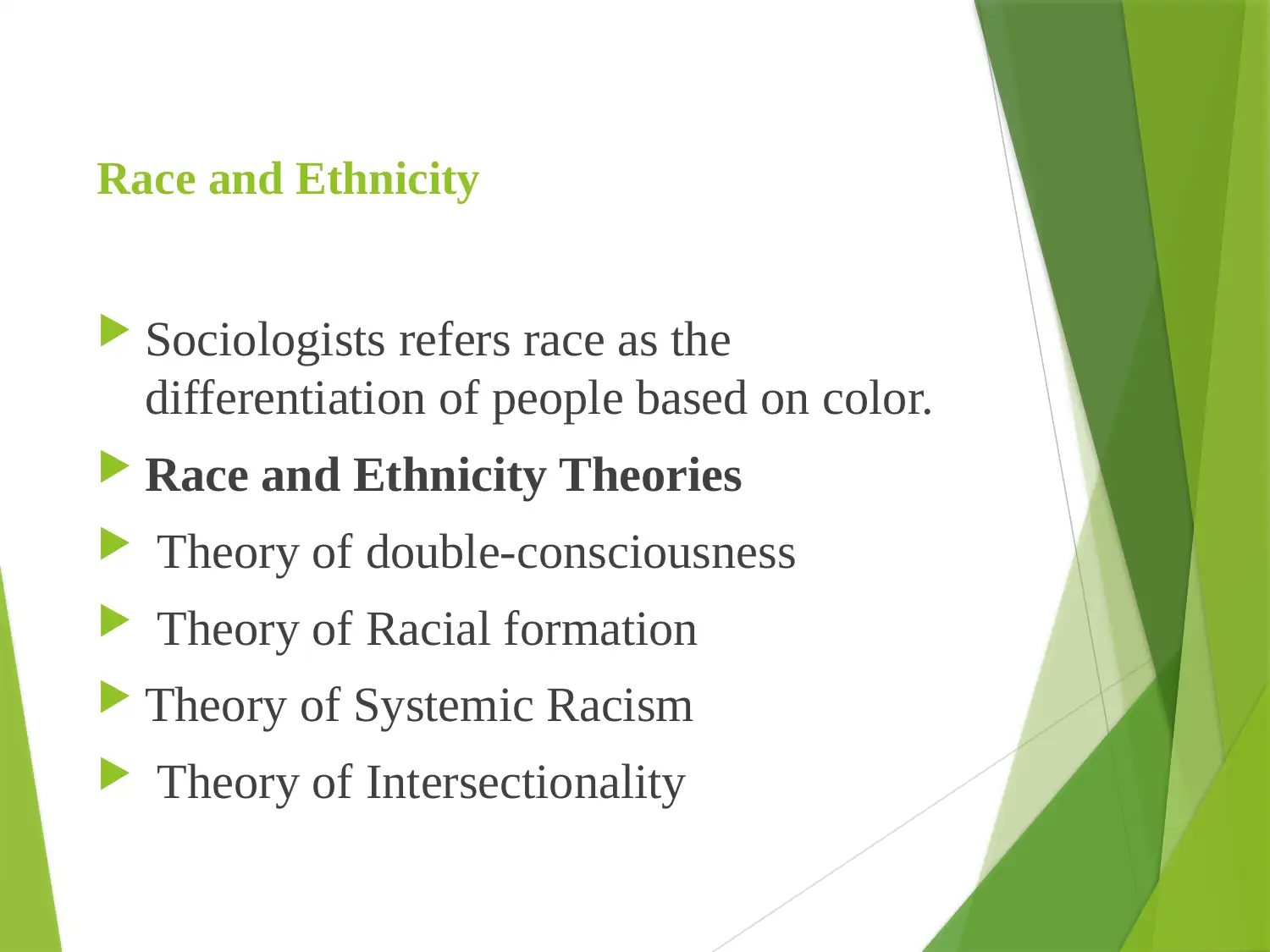
Race and Ethnicity
Sociologists refers race as the
differentiation of people based on color.
Race and Ethnicity Theories
Theory of double-consciousness
Theory of Racial formation
Theory of Systemic Racism
Theory of Intersectionality
Document Page
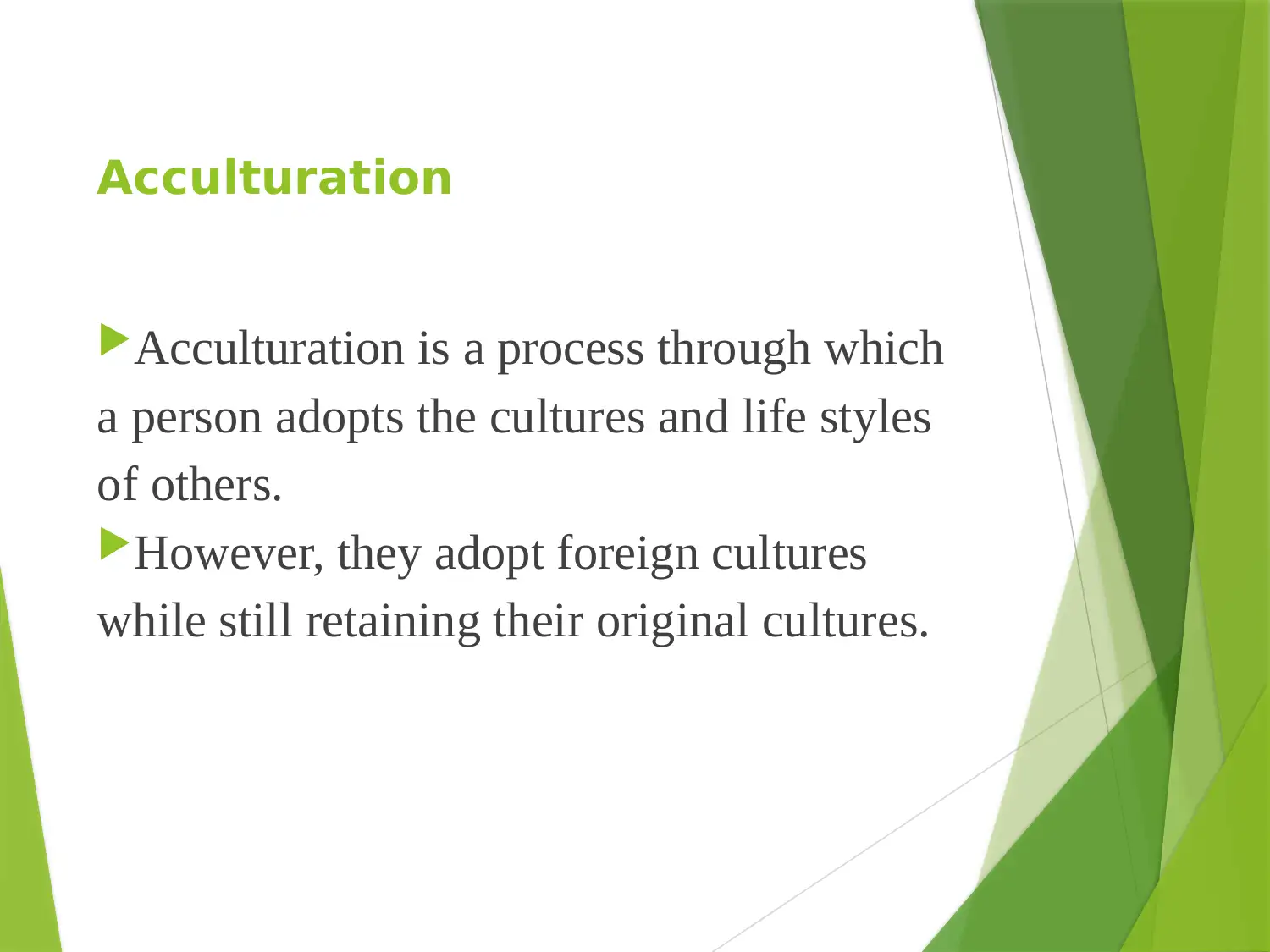
Acculturation
Acculturation is a process through which
a person adopts the cultures and life styles
of others.
However, they adopt foreign cultures
while still retaining their original cultures.
tabler-icon-diamond-filled.svg

Paraphrase This Document

Need a fresh take? Get an instant paraphrase of this document with our AI Paraphraser
Document Page
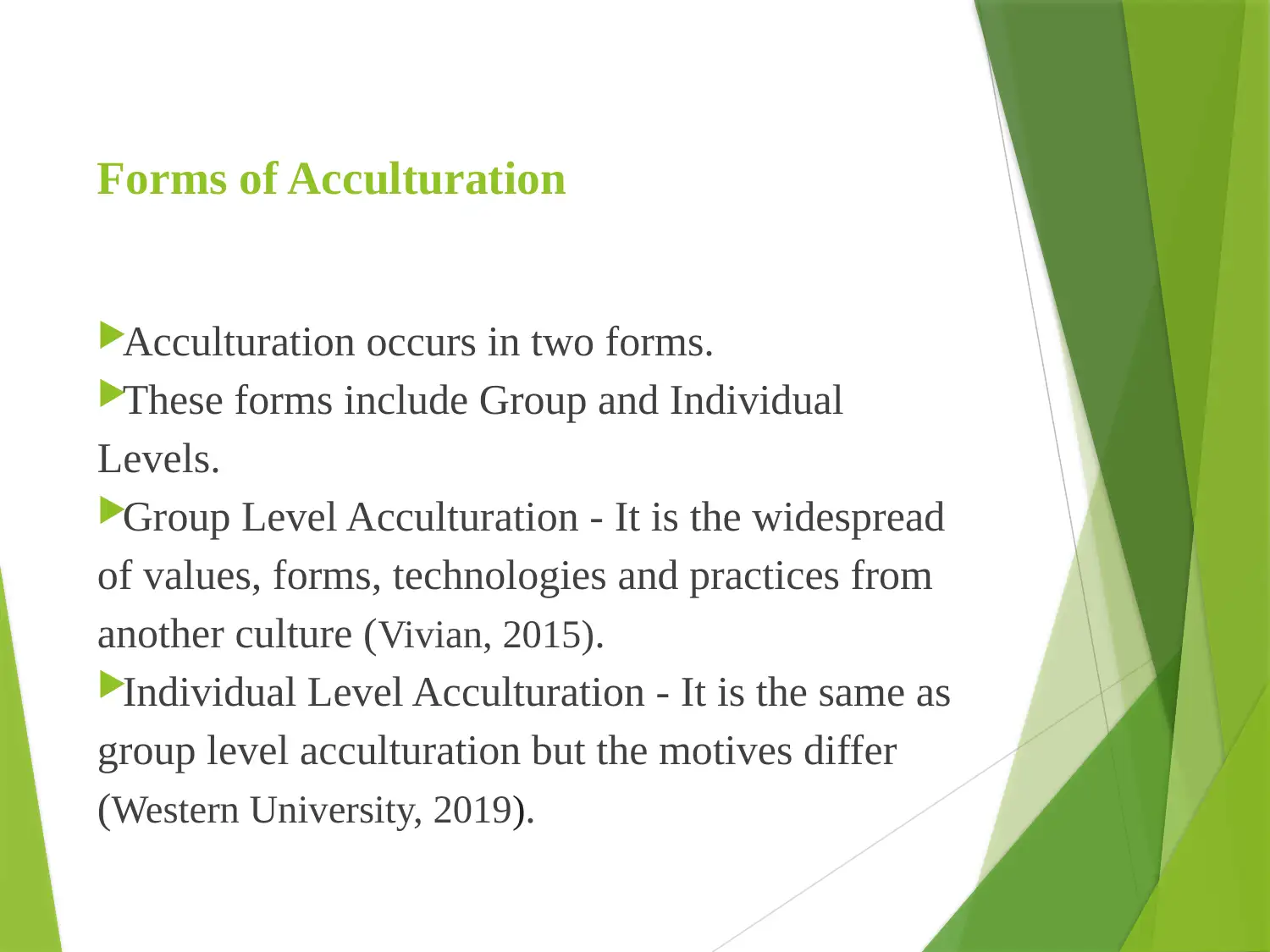
Forms of Acculturation
Acculturation occurs in two forms.
These forms include Group and Individual
Levels.
Group Level Acculturation - It is the widespread
of values, forms, technologies and practices from
another culture (Vivian, 2015).
Individual Level Acculturation - It is the same as
group level acculturation but the motives differ
(Western University, 2019).
Document Page
Forms of Acculturation
Cont.
Majority of people who get acculturated
are immigrants and refugees
Refugees leave their home countries due to
natural disasters, political differences, war,
and religious differences.
On the other hand, Immigrants leave their
countries to visit their relatives or for
business reasons.
Document Page
Challenge to Acculturation
The main challenge to Acculturation is
xenophobia.
Acculturation is the hatred towards
foreigners as well as their culture.
tabler-icon-diamond-filled.svg

Paraphrase This Document

Need a fresh take? Get an instant paraphrase of this document with our AI Paraphraser
Document Page
Advantages and Disadvantages of Acculturation
Advantages of Acculturation
Foreigners can learn and adopt the American lifestyle
(Ashley, 2019).
Foreigners can be transformed to new groups that can
thrive in the community.
Disadvantages of Acculturation
The new culture may overtake the original one (Jowa
Pathways, 2019).
Majority groups may forcefully overtake minority
ones.
Document Page
References
Ashley, C. (2019). The Sociology of Race and
Ethnicity. ThoughCo. Retrieved from:
https://www.thoughtco.com/sociology-of-rac
e-and-ethnicity-3026285
Jowa Pathways. (2019). What is the
Difference between Immigrants and
Refugees? Retrieved from:
http://www.iptv.org/iowapathways/mypath/w
hat-difference-between-immigrants-and-refu
gees
Vivian, C. (2015). Culture and humility.
Retrieved from:
https://www.youtube.com/watch?v=SaSHLb
S1V4w&feature=youtu.be
chevron_up_icon
1 out of 9
circle_padding
hide_on_mobile
zoom_out_icon
[object Object]