AET108 - Aesthetic Electrotherapy Presentation: Clinical Applications

Verified

Added on  2023/01/12

|11
|908
|36
Presentation
AI Summary
This presentation delves into the application of electrotherapy in clinical treatments, focusing on how electrical devices are used to address various medical conditions. It begins with an introduction to electrotherapy, explaining its use in treating neurological diseases and altering cell structures. The presentation then explores the characteristics of electrotherapy and its involvement in clinical settings, providing examples of its use in pain management, improving heart circulation, repairing muscles, and promoting bone growth. The core of the presentation discusses how electrotherapy alters cell structure, with examples of ultrasonic and short-wave diathermy, EST therapy for wound healing, and skin tightening. The presentation also includes case studies of patients with shoulder impingement syndrome and a diabetic patient with a wound, illustrating the practical implementation of different electrotherapy devices such as ultrasound, interferential current, TENS, and bioelectric devices to improve patient outcomes. The presentation concludes by summarizing the various electrotherapy devices used in clinical treatments and emphasizing the changes electrotherapy brings to cell structure.
Document Page
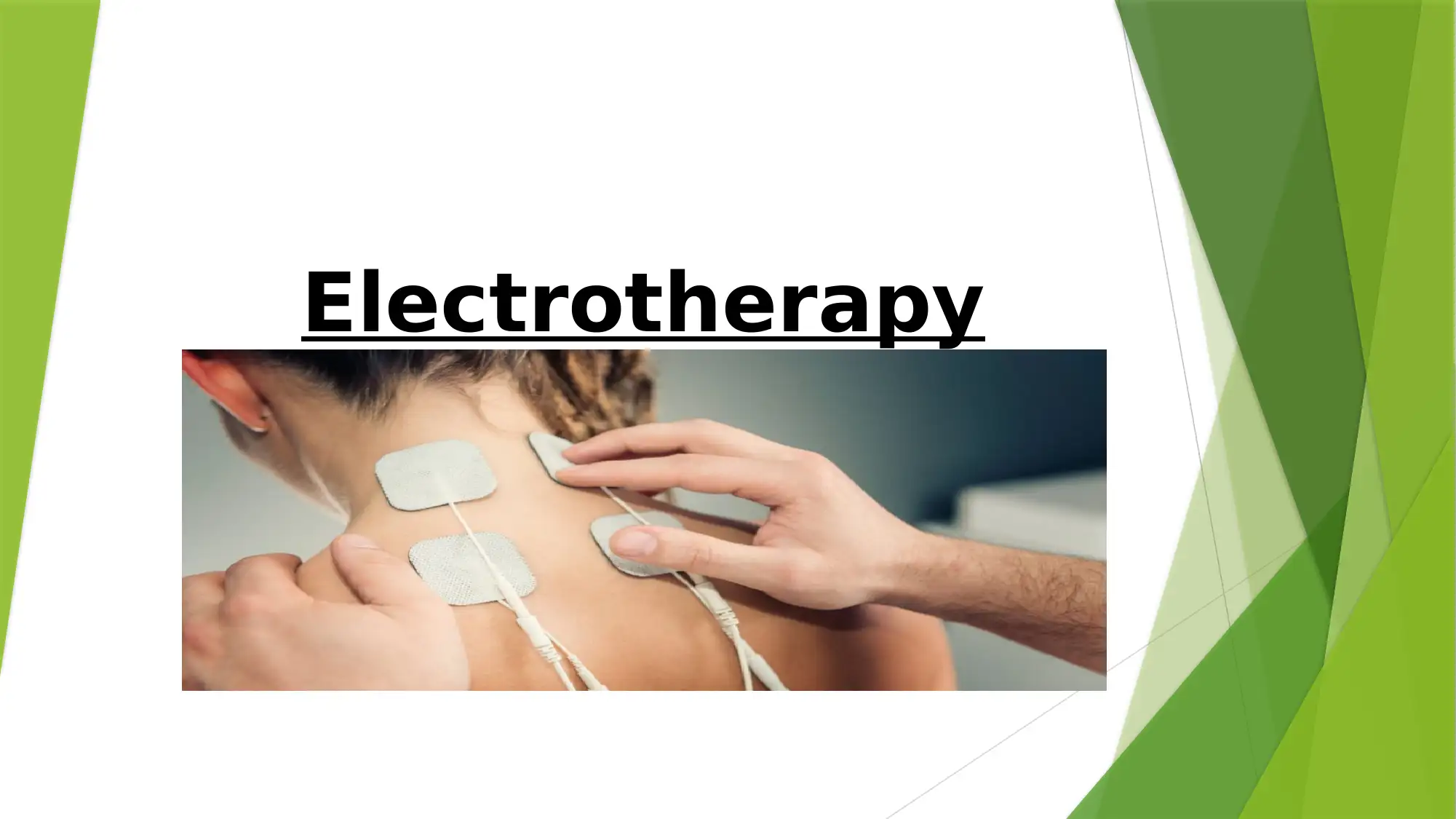
Electrotherapy
tabler-icon-diamond-filled.svg

Paraphrase This Document

Need a fresh take? Get an instant paraphrase of this document with our AI Paraphraser
Document Page
Table Of Content
INTRODUCTION
Characteristics
Involvement of Electrotherapy in the clinical
Change electrotherapy alter cell structure
A case study to implement different electrotherapy devices
CONCLUSION
REFERENCES
Document Page
INTRODUCTION
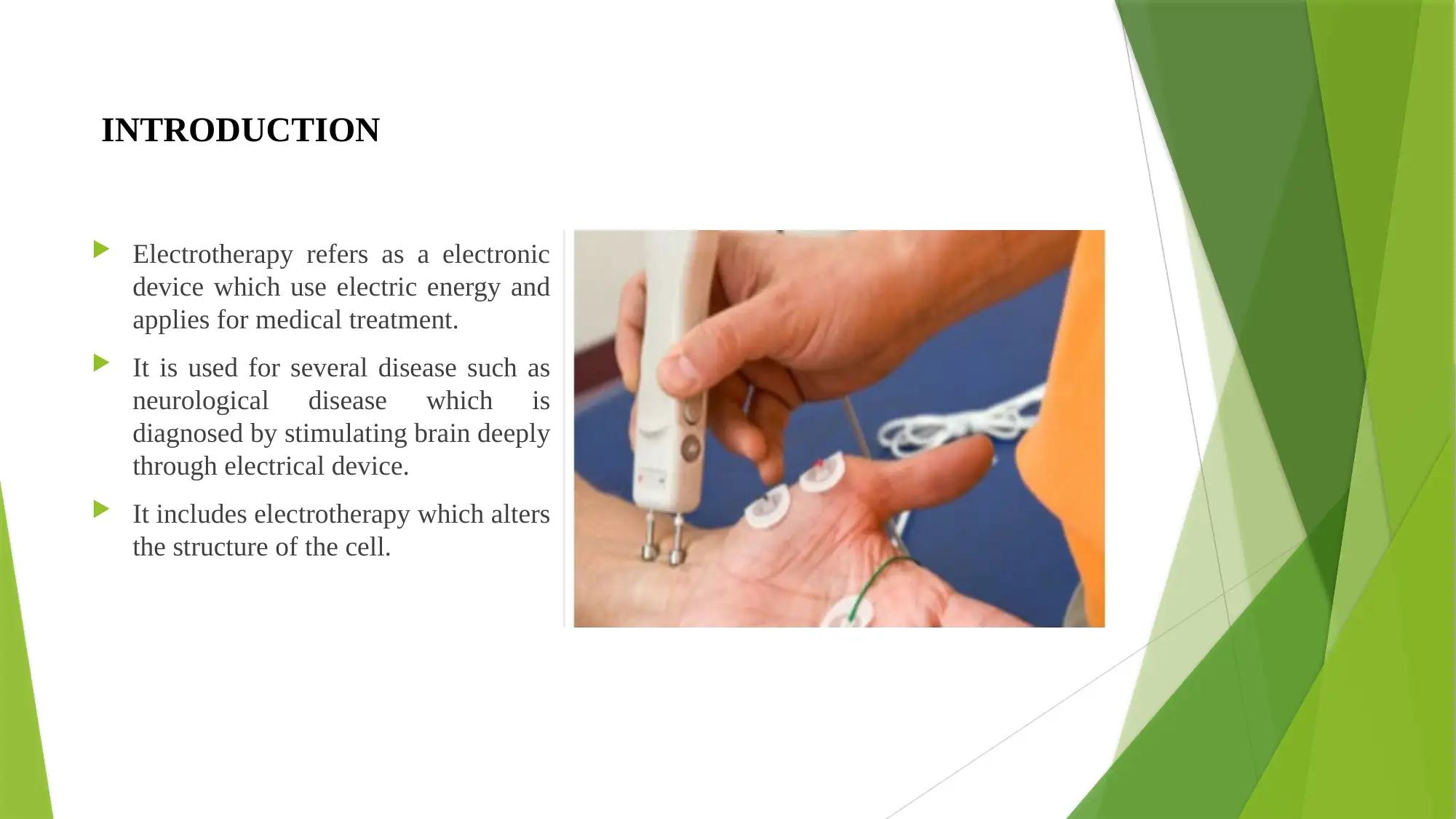
Electrotherapy refers as a electronic
device which use electric energy and
applies for medical treatment.
It is used for several disease such as
neurological disease which is
diagnosed by stimulating brain deeply
through electrical device.
It includes electrotherapy which alters
the structure of the cell.
Document Page
Characteristics
Involvement of Electrotherapy in the clinical
Electrotherapy is electric device which is used in
medical on wide scale (Azambuja& et.al., 2018).
It involves in wide range of clinical treatment by
applying electricity.
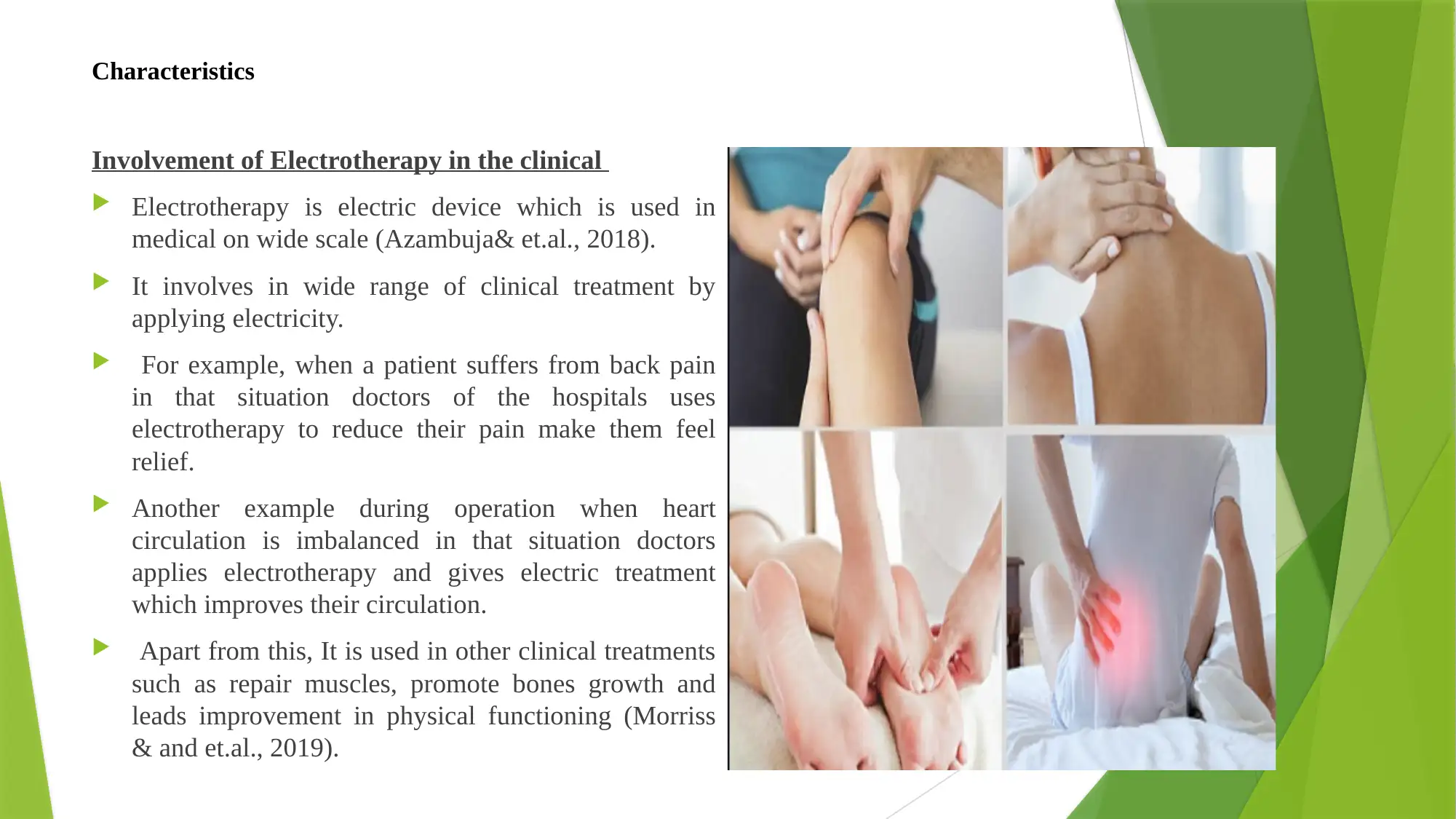
For example, when a patient suffers from back pain
in that situation doctors of the hospitals uses
electrotherapy to reduce their pain make them feel
relief.
Another example during operation when heart
circulation is imbalanced in that situation doctors
applies electrotherapy and gives electric treatment
which improves their circulation.
Apart from this, It is used in other clinical treatments
such as repair muscles, promote bones growth and
leads improvement in physical functioning (Morriss
& and et.al., 2019).
tabler-icon-diamond-filled.svg

Paraphrase This Document

Need a fresh take? Get an instant paraphrase of this document with our AI Paraphraser
Document Page
Cont.
Change electrotherapy alter cell structure
The major aim of the electrotherapy to
give electric treatment as per situation
and diagnosed disease. Currently there
are various trends has come in
electrotherapy which leads change in cell
structure as well (Ardehjan, 2017).
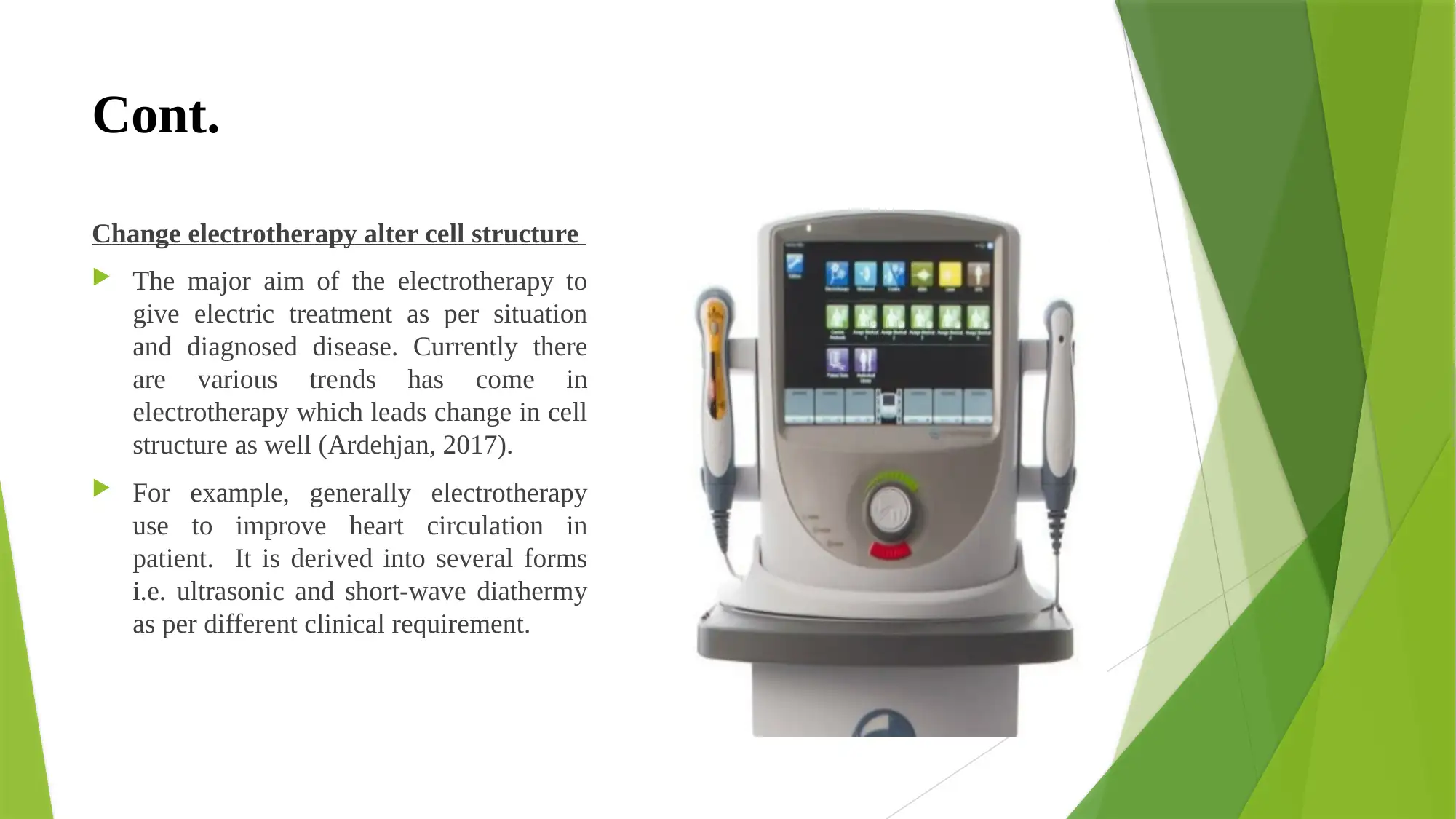
For example, generally electrotherapy
use to improve heart circulation in
patient. It is derived into several forms
i.e. ultrasonic and short-wave diathermy
as per different clinical requirement.
Document Page
Cont.
Chronic wound healing which is treated by EST therapy. Electrostimulation therapy is
the form of electrotherapy which is relatively cost-effective, safe, easy to use and
painless. EST uses electric current for injury so that can accelerate healing process.
As same in other case ultrasonic therapy uses to show internal issues in the body where
electric energy is given in small dose (Salian& Singh, 2016).
In addition, it is used to tightening skin as well by flowing current on skin through the
electric device.
So, it can understand changes in electrotherapy leads change in structure cell.
Document Page
Cont.
A case study to implement different electrotherapy devices
There is three patient who suffers with shoulder impingement syndrome in the
hospital who takes in different clinical department where gives hot packs, exercises
and interferential current.
While second patient is treated by hot packs, exercise and TENS (Nodehi
Moghadam, Abdi & Kashfi ).
Third patient gives hot packs, exercise and ultrasound three times a week for four
weeks. In the third month assessment gets improvement in order of pain.
Ultrasounds, interferential current and TENS which are applied to exercise therapy
in shoulder impingement syndrome.
These devises are used to improve in term of pain and improves quality (Wexler,
(2017).
tabler-icon-diamond-filled.svg

Paraphrase This Document

Need a fresh take? Get an instant paraphrase of this document with our AI Paraphraser
Document Page
Cont.
There is another case study of lady who fall from
stairs and injure. She is taken in hospital where
doctor finds blood is flew continually then finds
lady is diabetic.
Due to continuous flow pulse rate become law. In
that situation doctor uses different electrotherapy
devices such as ultrasound to finds out internal
injury.
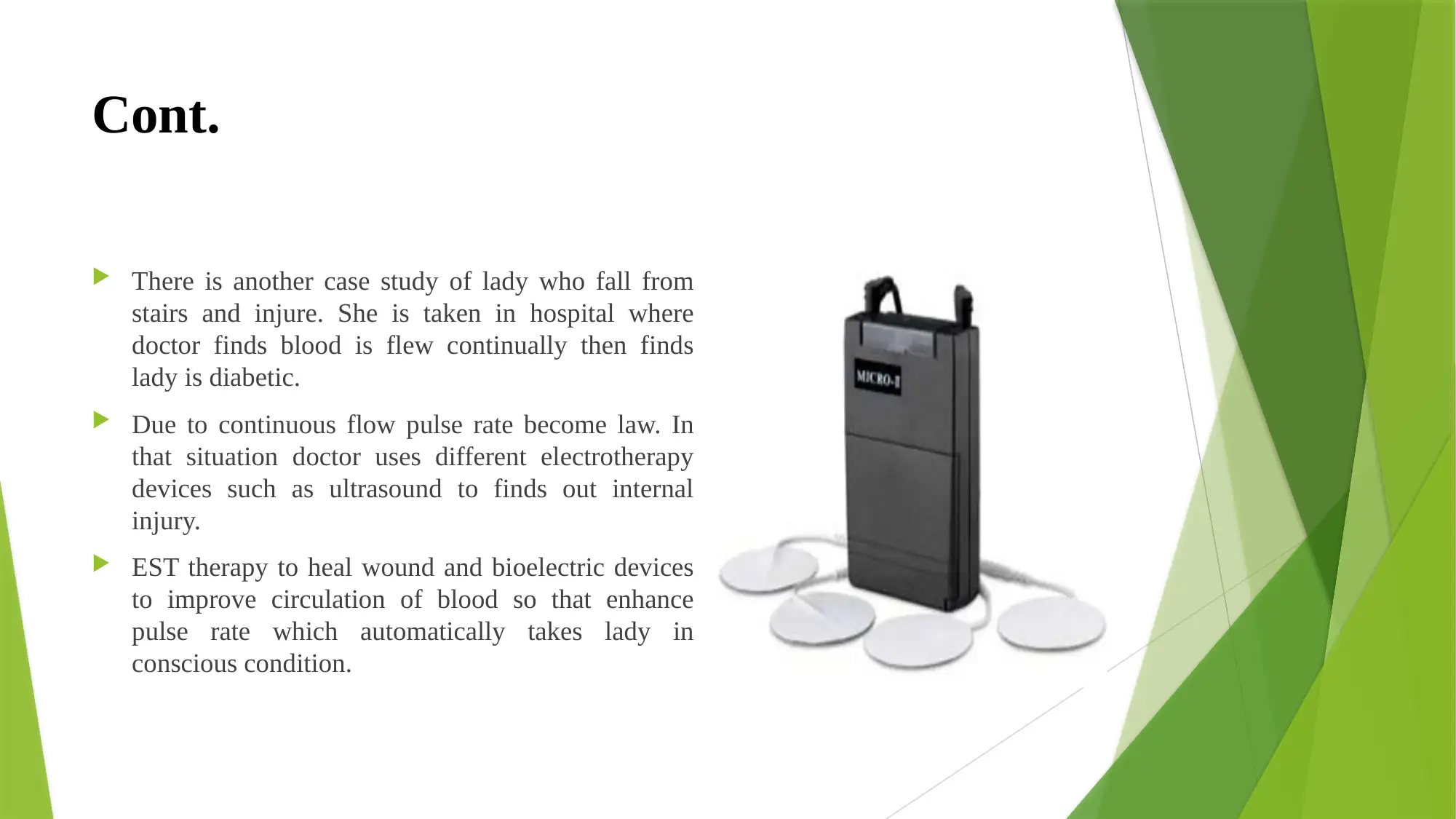
EST therapy to heal wound and bioelectric devices
to improve circulation of blood so that enhance
pulse rate which automatically takes lady in
conscious condition.
Document Page
CONCLUSION
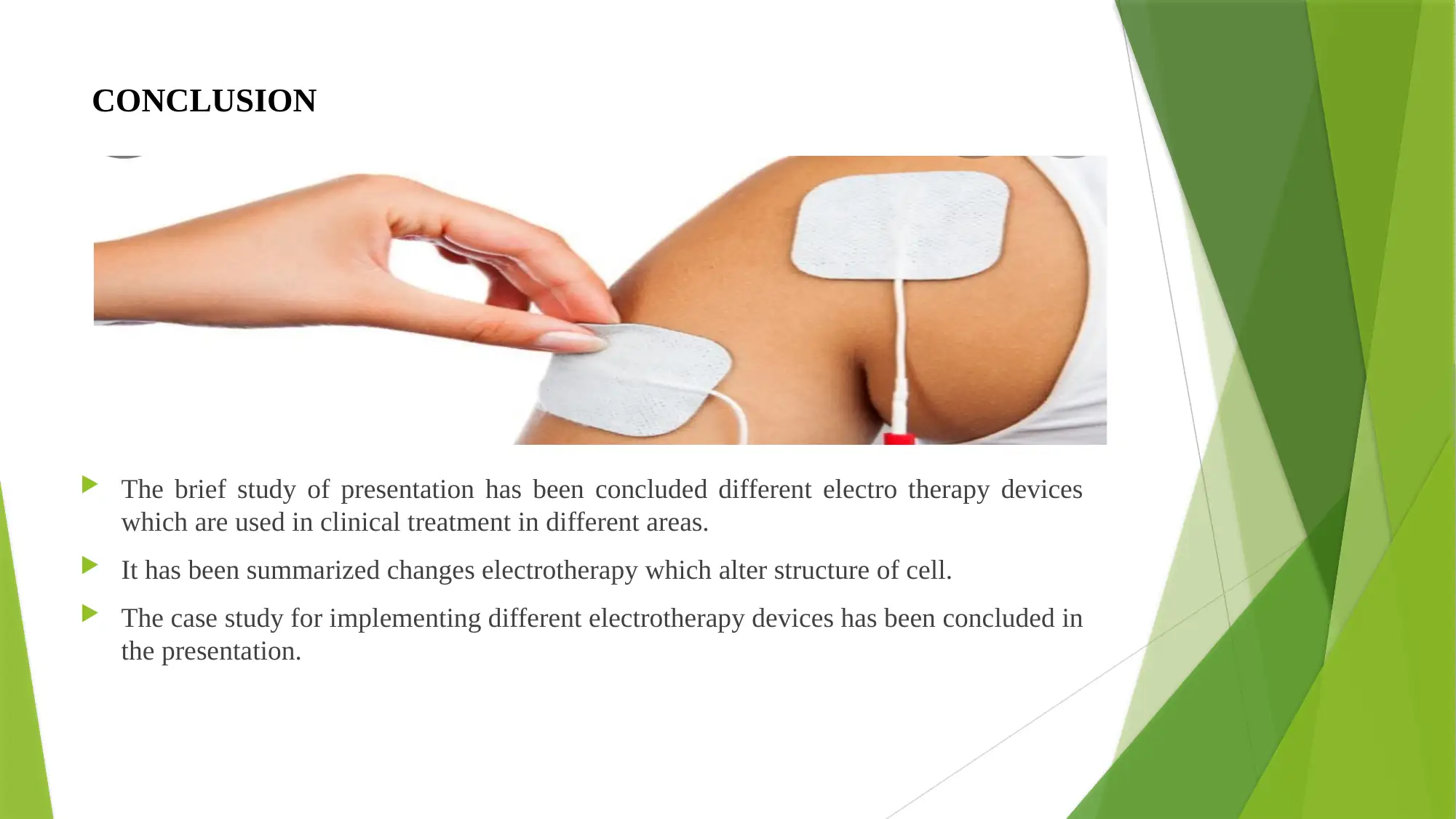
The brief study of presentation has been concluded different electro therapy devices
which are used in clinical treatment in different areas.
It has been summarized changes electrotherapy which alter structure of cell.
The case study for implementing different electrotherapy devices has been concluded in
the presentation.
Document Page
REFERENCES
Morriss, R & and et.al., (2019). Clinical effectiveness and cost minimisation model of Alpha-Stim
cranial electrotherapy stimulation in treatment seeking patients with moderate to severe generalised
anxiety disorder. Journal of affective disorders. 253. 426-437.
Salian, S. C., & Singh, J. (2016). PERCEPTION OF RECENT PHYSIOTHERAPY GRADUATES
REGARD-ING ELECTROTHERAPY IN UNDERGRADUATE CURRICULUM CONTENT. Int J
Physiother Res. 4(2). 1468-75.
Wexler, A. (2017). Recurrent themes in the history of the home use of electrical stimulation:
transcranial direct current stimulation (tDCS) and the medical battery (1870–1920). Brain
stimulation. 10(2),. 187-195.
Nodehi Moghadam, A., Abdi, K., & Kashfi Ardehjan, P. (2017). Exploring the challenges of
physiotherapy clinical education: A qualitative study. Iranian Rehabilitation Journal. 15(3). 207-214.
Azambuja, A. D. C. M & et.al., (2018). Neuromuscular Electrical Stimulation And Transcutaneous
Electrical Diaphragmatic Stimulation In Hospitalized Patients With Chronic Cardiorespiratory
Diseases: A Randomized Clinical Trial. Journal of Respiratory and CardioVascular Physical
Therapy. 7(2). 3-12.
tabler-icon-diamond-filled.svg

Paraphrase This Document

Need a fresh take? Get an instant paraphrase of this document with our AI Paraphraser
Document Page
chevron_up_icon
1 out of 11
circle_padding
hide_on_mobile
zoom_out_icon
[object Object]