MOD008036 Undergraduate Project: Ageing & Health and Social Care
VerifiedAdded on 2023/06/04
|12
|4140
|168
Report
AI Summary
This undergraduate project report examines the challenges associated with an ageing population, including health issues, financial insecurity, and workforce shortages. It analyses the responses of health and social care systems to these challenges, focusing on strategies to minimize their impact. The report reviews literature on the effects of ageing populations on economies and healthcare systems, including increased healthcare expenditure and shifting disease burdens. It also explores ways in which health and social care can maintain the health of the ageing population through improved lifestyle interventions and access to quality healthcare. The research uses qualitative methods and secondary data analysis to understand the complexities of ageing and inform effective interventions, providing valuable insights for students. Desklib provides access to this and similar solved assignments.
Undergraduate Major
Project
Project

Paraphrase This Document
Need a fresh take? Get an instant paraphrase of this document with our AI Paraphraser
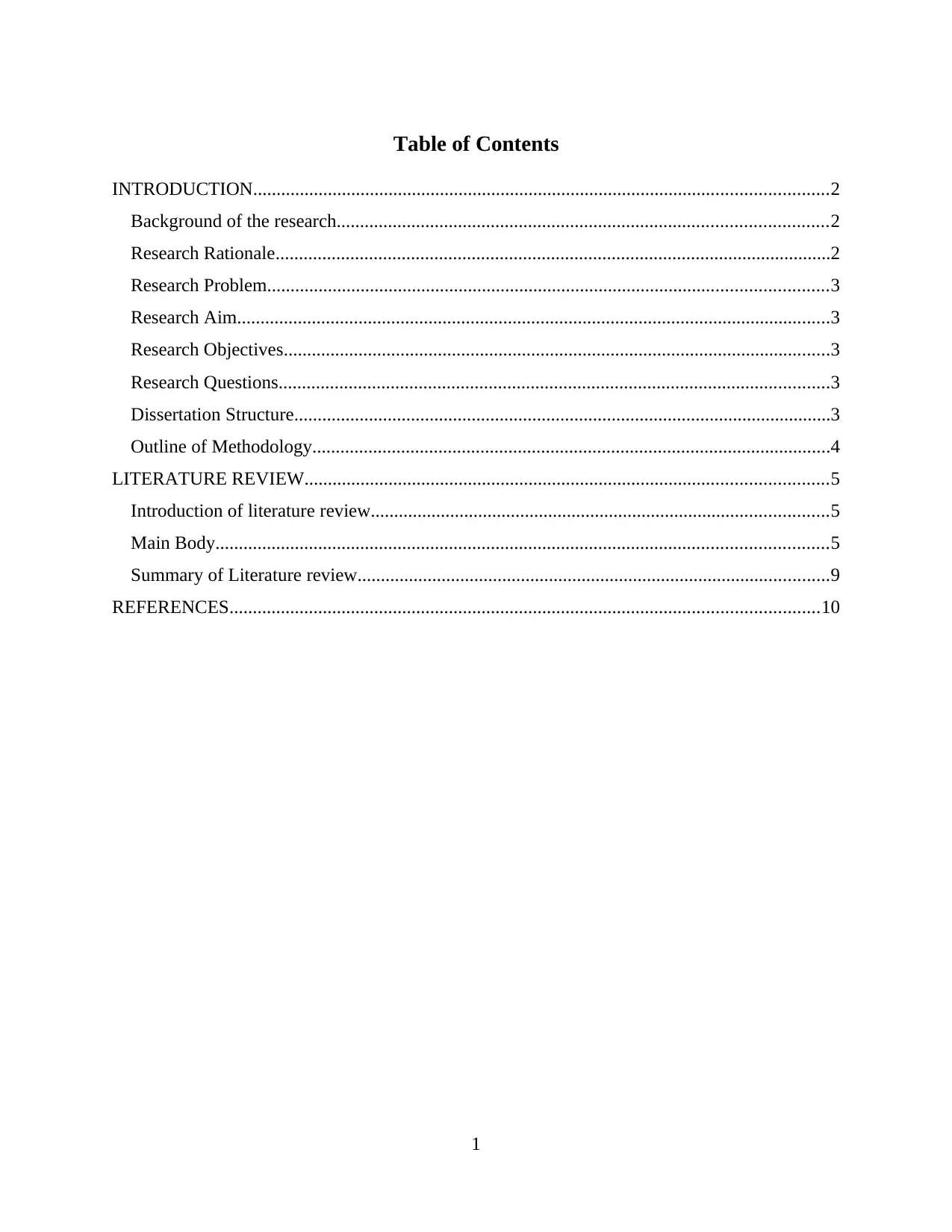
Table of Contents
INTRODUCTION...........................................................................................................................2
Background of the research.........................................................................................................2
Research Rationale.......................................................................................................................2
Research Problem........................................................................................................................3
Research Aim...............................................................................................................................3
Research Objectives.....................................................................................................................3
Research Questions......................................................................................................................3
Dissertation Structure...................................................................................................................3
Outline of Methodology...............................................................................................................4
LITERATURE REVIEW................................................................................................................5
Introduction of literature review..................................................................................................5
Main Body...................................................................................................................................5
Summary of Literature review.....................................................................................................9
REFERENCES..............................................................................................................................10
1
INTRODUCTION...........................................................................................................................2
Background of the research.........................................................................................................2
Research Rationale.......................................................................................................................2
Research Problem........................................................................................................................3
Research Aim...............................................................................................................................3
Research Objectives.....................................................................................................................3
Research Questions......................................................................................................................3
Dissertation Structure...................................................................................................................3
Outline of Methodology...............................................................................................................4
LITERATURE REVIEW................................................................................................................5
Introduction of literature review..................................................................................................5
Main Body...................................................................................................................................5
Summary of Literature review.....................................................................................................9
REFERENCES..............................................................................................................................10
1
INTRODUCTION
Background of the research
Population ageing refers to an increasing median age in a population due to decline in
fertility rate as well as rising the life expectancy. This demographic change has leads rising in
number and proportions of people who are more than that age of 60. There are many effects of
an ageing population which include patterns of work and retirement, economic growth, the
ability of communities and governments for providing the adequate resources for older adults,
economic growth as well as the prevalence of chronic disease and disability (Windsor and
Kaplan, 2019). A rapidly ageing population affects the economy as it decrease working people in
the economy. It decreases the supply of qualified workers and make it more challenging for
companies to fill in-demand roles. An economy who is unable to fill in demand occupation can
face many negative consequences which includes higher labour costs, declining productivity,
reduced international competitiveness, delayed business expansion and many more. Rapidly
ageing population in all over the world provides an unprecedented set of challenges which
includes labour-force shortages, increased expenditure on health and long-tern care, shifting
disease burden, dissaving as well as potential problems with old age income and security. It also
leads problems related to shortage of workers and it cause wage inflation in the economy. When
there is less working people in the country, they ask higher wages to perform a job in the
economy. Thus, current research is conducted in order to understand the challenges associated
with an ageing population as well as analyse the response of health and social care.
Research Rationale
The reason behind for the selection of this research topic is to gain knowledge about the
challenges that associate with the ageing population and how health and social care response to
these challenges in order to decreases its impact on the people. This research collects information
about the impact of challenges that are associated with the ageing population along with the
ways and strategies used by the health and social care to minimise these challenges. There are
two main objectives of researcher to conduct research in this topic (Moharir and Kumar, 2019).
These are personal objective and professional objectives. Personal objective of researchers is to
increase knowledge and understanding related to the research topic. The researcher wants make
2
Background of the research
Population ageing refers to an increasing median age in a population due to decline in
fertility rate as well as rising the life expectancy. This demographic change has leads rising in
number and proportions of people who are more than that age of 60. There are many effects of
an ageing population which include patterns of work and retirement, economic growth, the
ability of communities and governments for providing the adequate resources for older adults,
economic growth as well as the prevalence of chronic disease and disability (Windsor and
Kaplan, 2019). A rapidly ageing population affects the economy as it decrease working people in
the economy. It decreases the supply of qualified workers and make it more challenging for
companies to fill in-demand roles. An economy who is unable to fill in demand occupation can
face many negative consequences which includes higher labour costs, declining productivity,
reduced international competitiveness, delayed business expansion and many more. Rapidly
ageing population in all over the world provides an unprecedented set of challenges which
includes labour-force shortages, increased expenditure on health and long-tern care, shifting
disease burden, dissaving as well as potential problems with old age income and security. It also
leads problems related to shortage of workers and it cause wage inflation in the economy. When
there is less working people in the country, they ask higher wages to perform a job in the
economy. Thus, current research is conducted in order to understand the challenges associated
with an ageing population as well as analyse the response of health and social care.
Research Rationale
The reason behind for the selection of this research topic is to gain knowledge about the
challenges that associate with the ageing population and how health and social care response to
these challenges in order to decreases its impact on the people. This research collects information
about the impact of challenges that are associated with the ageing population along with the
ways and strategies used by the health and social care to minimise these challenges. There are
two main objectives of researcher to conduct research in this topic (Moharir and Kumar, 2019).
These are personal objective and professional objectives. Personal objective of researchers is to
increase knowledge and understanding related to the research topic. The researcher wants make
2
⊘ This is a preview!⊘
Do you want full access?
Subscribe today to unlock all pages.

Trusted by 1+ million students worldwide
their career in field of health and social care, therefore this knowledge and understanding will
help researcher to apply it in their professional career in order to get effective outcomes.
Research Problem
The problem which has been identified in this research topic is shortage in supply of
qualified workers within the economy. Due to rapidly increase in ageing population in the
economy there are fewer people who works in the country. It create problems for the companies
in fill their different job roles with highly qualified and talented employees (Polyzos and
Margioris, 2018). Filling the demand of job roles in time is important for the company and
economy also as without them the different operations of their business are not performed that
affects the growth of business and economy too. Thus, it makes important in order to find
effective ways and strategies that decrease the problem of ageing population in the country.
Research Aim
To understand the challenges associated with an ageing population and analyse response
of health and social care.
Research Objectives
To analyse the impact of challenge that is associated with ageing population
To examine the ways and strategies used by health and social care to minimise the
challenge that associated with an ageing population.
Research Questions
What is the impact of challenge that is associated with ageing population?
What are the ways and strategies used by health and social care to minimise the challenge
that associated with an ageing population?
Dissertation Structure
There are many chapters involved in this dissertation in order to make easier for the
researcher to in order to conduct the research in systematic manner. These chapters are arranged
systematically to make whole research well organised. These chapters are described below:
Chapter 1: Introduction: The first chapter of dissertation is introduction that provide
overview or background information of research topic. This chapter also includes aim and
objectives of research, research questions, rationale and problems statement.
3
help researcher to apply it in their professional career in order to get effective outcomes.
Research Problem
The problem which has been identified in this research topic is shortage in supply of
qualified workers within the economy. Due to rapidly increase in ageing population in the
economy there are fewer people who works in the country. It create problems for the companies
in fill their different job roles with highly qualified and talented employees (Polyzos and
Margioris, 2018). Filling the demand of job roles in time is important for the company and
economy also as without them the different operations of their business are not performed that
affects the growth of business and economy too. Thus, it makes important in order to find
effective ways and strategies that decrease the problem of ageing population in the country.
Research Aim
To understand the challenges associated with an ageing population and analyse response
of health and social care.
Research Objectives
To analyse the impact of challenge that is associated with ageing population
To examine the ways and strategies used by health and social care to minimise the
challenge that associated with an ageing population.
Research Questions
What is the impact of challenge that is associated with ageing population?
What are the ways and strategies used by health and social care to minimise the challenge
that associated with an ageing population?
Dissertation Structure
There are many chapters involved in this dissertation in order to make easier for the
researcher to in order to conduct the research in systematic manner. These chapters are arranged
systematically to make whole research well organised. These chapters are described below:
Chapter 1: Introduction: The first chapter of dissertation is introduction that provide
overview or background information of research topic. This chapter also includes aim and
objectives of research, research questions, rationale and problems statement.
3
Paraphrase This Document
Need a fresh take? Get an instant paraphrase of this document with our AI Paraphraser
Chapter 2: Literature review: The second chapter of dissertation is literature review.
This chapter uses published sources for answering the research questions (Sarhadi and Hoseini,
2022). There are many sources which can used by the researcher in order to collect relevant
information for this chapter such as journals, books, scholarly articles and many more.
Chapter 3: Research Methodology- The third and most important chapter of
dissertation is research methodology. It covers information about the methods and techniques
used by the researcher in order to conduct this research. In this research, qualitative research
method is used for collecting in-depth information about the research.
Chapter 4: Data Analysis- The fourth and important chapter of research is data analysis.
This chapter analyse all the collected information of research in order to reach to the findings. In
the current research, researcher used thematic analysis for analysing the qualitative data (Forgas,
2022).
Chapter 5: Conclusion and recommendation: The last or fifth chapter of research is
conclusion and recommendation. This chapter provides overall summary and findings of the
research. It also provides recommendations that helps researcher to solve research problem.
Outline of Methodology
The present research is conducted by using qualitative methods that helps research to
gain more detail and in-depth information about the research topic. It is a cost effective and
efficient method that help researcher to collect relevant and important information in limited
cost. In the current research, researcher used case study and systematic literature review strategy
for collecting relevant information for the research (Ndlovu-Gatsheni, 2019). Secondary data
collection methods are used by the researcher in order to collect relevant information for the
research. For analysing the data, researcher used thematic analysis as a data analysis technique in
the present research.
4
This chapter uses published sources for answering the research questions (Sarhadi and Hoseini,
2022). There are many sources which can used by the researcher in order to collect relevant
information for this chapter such as journals, books, scholarly articles and many more.
Chapter 3: Research Methodology- The third and most important chapter of
dissertation is research methodology. It covers information about the methods and techniques
used by the researcher in order to conduct this research. In this research, qualitative research
method is used for collecting in-depth information about the research.
Chapter 4: Data Analysis- The fourth and important chapter of research is data analysis.
This chapter analyse all the collected information of research in order to reach to the findings. In
the current research, researcher used thematic analysis for analysing the qualitative data (Forgas,
2022).
Chapter 5: Conclusion and recommendation: The last or fifth chapter of research is
conclusion and recommendation. This chapter provides overall summary and findings of the
research. It also provides recommendations that helps researcher to solve research problem.
Outline of Methodology
The present research is conducted by using qualitative methods that helps research to
gain more detail and in-depth information about the research topic. It is a cost effective and
efficient method that help researcher to collect relevant and important information in limited
cost. In the current research, researcher used case study and systematic literature review strategy
for collecting relevant information for the research (Ndlovu-Gatsheni, 2019). Secondary data
collection methods are used by the researcher in order to collect relevant information for the
research. For analysing the data, researcher used thematic analysis as a data analysis technique in
the present research.
4
LITERATURE REVIEW
Introduction of literature review
A literature review is considered as an overview of the previously published works on a
specific topic. It help researcher to familiarise themselves with the current state of knowledge on
current research topic. It collects secondary information from different published sources which
name as books, journals, articles and many more.
Main Body
The impact of challenge that is associated with ageing population
As per the view of Hunsaker and Hargittai (2018) ageing population is the portion of that
people who are over the age of 60. There are many challenges that ageing population faced such
as health issues, mental illness, financial insecurity, difficulty in performing everyday tasks and
mobility and so on. These challenges create negative impacts on ageing population. Due to their
health issues, they faces many difficulty in order to perform their daily tasks in better manner.
Hearing loss is one of the problem faced by the ageing population. Due to this, making
conversation with these people are difficult, some of the people experience feeling of isolation.
Some of the older people experience feeling of depression due to their loss of hearing problem.
Another problem faced by ageing population is loss of vision. When the people come at the age
their eyesights become low day-by-day due to which their ability to perform many activities is
also decreased and even cause of risk of depression in among them Kivipelto, Mangialasche and
Ngandu, 2018). These people find difficulty to recognised their loved ones and always feels
worry, fear and anxiety. Due to vision loss, chances of serious injuries among older people
increases that also a most challenging issues for the ageing population. Another issues associated
with ageing population is memory loss. Some of the older people faces problems like forget to
take their medicines on time, daily exercising, recognised their family and friends and many
more because of memory loss. It directly affects their overall health because they are not able to
take their proper medicine and foods on time. Obesity is another challenges that associated with
the ageing population. It increases the risk of heart disease, high blood pressure, type 2 diabetes,
stroke and some types of cancer among older people. These disease are very risky for older
people and losing weight is not easy for ageing population (Wardlaw, Smith and Dichgans,
2019). They faced many difficulties in performing better exercises and eat healthy food.
5
Introduction of literature review
A literature review is considered as an overview of the previously published works on a
specific topic. It help researcher to familiarise themselves with the current state of knowledge on
current research topic. It collects secondary information from different published sources which
name as books, journals, articles and many more.
Main Body
The impact of challenge that is associated with ageing population
As per the view of Hunsaker and Hargittai (2018) ageing population is the portion of that
people who are over the age of 60. There are many challenges that ageing population faced such
as health issues, mental illness, financial insecurity, difficulty in performing everyday tasks and
mobility and so on. These challenges create negative impacts on ageing population. Due to their
health issues, they faces many difficulty in order to perform their daily tasks in better manner.
Hearing loss is one of the problem faced by the ageing population. Due to this, making
conversation with these people are difficult, some of the people experience feeling of isolation.
Some of the older people experience feeling of depression due to their loss of hearing problem.
Another problem faced by ageing population is loss of vision. When the people come at the age
their eyesights become low day-by-day due to which their ability to perform many activities is
also decreased and even cause of risk of depression in among them Kivipelto, Mangialasche and
Ngandu, 2018). These people find difficulty to recognised their loved ones and always feels
worry, fear and anxiety. Due to vision loss, chances of serious injuries among older people
increases that also a most challenging issues for the ageing population. Another issues associated
with ageing population is memory loss. Some of the older people faces problems like forget to
take their medicines on time, daily exercising, recognised their family and friends and many
more because of memory loss. It directly affects their overall health because they are not able to
take their proper medicine and foods on time. Obesity is another challenges that associated with
the ageing population. It increases the risk of heart disease, high blood pressure, type 2 diabetes,
stroke and some types of cancer among older people. These disease are very risky for older
people and losing weight is not easy for ageing population (Wardlaw, Smith and Dichgans,
2019). They faced many difficulties in performing better exercises and eat healthy food.
5
⊘ This is a preview!⊘
Do you want full access?
Subscribe today to unlock all pages.
Trusted by 1+ million students worldwide
Financial insecurity is another challenge for ageing population that makes them unable to avail
medical facilities and many other facilities. Ageing population involves those people who are
physically unfit to earn for themselves for their daily living. They are fully dependent on their
children or other family members for their daily livings. Some of the older people uses their
savings for filings their medical bills and other services. But some people from ageing
population are financially insecure and they not afford proper medicines and health care facility
for themselves. It also a one of the challenge that affects the health of ageing population. Due to
these challenges and health issues, ageing population need extra support and care along with the
proper help in performing their daily activities (Wenger, 2021). Ageing population wants extra
love and care from their family member or friends because at this age they are able to perform
many activities and go any where which leads increases increase in feeling of loneliness and
worries.
According to the view of Gulia and Kumar (2018) ageing population is considered as the
results of continuously decrease in the fertility rates as well as increased in life expectancy rate.
This demographic change increases the numbers and proportions of the people who are more
than the age of 60. There are many reason that cause ageing population is all over the world. Due
to the improvement in lifestyle such as diet, not-smoking, exercise, etc. and easy access to
quality health care like expertise, drugs, surgical, treatments, procedures and technology, the life
expectancy rate increases in all over the world that also cause ageing population. Decline in birth
rate in the country, the ageing population increases. There are many factors that decline the birth
rate such as changing social attitudes, increase in number of women working, rise in costs of
living that affects people's decision related to having children and how many, rise of
individualism and so on. The main challenge that associated with ageing population is decrease
in working population. The people who are more than age of 60 are not that capable to work in
order to earn for their daily living. In this age, most of the people faces several diseases such as
obesity, cardiovascular diseases, mental illness, diabetes, chronological disease and so on.
Because of these diseases, they are physically unfit for performing several jobs (Ray, Bernard
and Phillips, 2018). Thus, rapidly ageing population directly affects the growth of a economy
adversely. GDP of the country in decline and that directly affects growth and development of
economy. Rapid ageing population rises the prevalence of frailty, disability and chronic diseases
6
medical facilities and many other facilities. Ageing population involves those people who are
physically unfit to earn for themselves for their daily living. They are fully dependent on their
children or other family members for their daily livings. Some of the older people uses their
savings for filings their medical bills and other services. But some people from ageing
population are financially insecure and they not afford proper medicines and health care facility
for themselves. It also a one of the challenge that affects the health of ageing population. Due to
these challenges and health issues, ageing population need extra support and care along with the
proper help in performing their daily activities (Wenger, 2021). Ageing population wants extra
love and care from their family member or friends because at this age they are able to perform
many activities and go any where which leads increases increase in feeling of loneliness and
worries.
According to the view of Gulia and Kumar (2018) ageing population is considered as the
results of continuously decrease in the fertility rates as well as increased in life expectancy rate.
This demographic change increases the numbers and proportions of the people who are more
than the age of 60. There are many reason that cause ageing population is all over the world. Due
to the improvement in lifestyle such as diet, not-smoking, exercise, etc. and easy access to
quality health care like expertise, drugs, surgical, treatments, procedures and technology, the life
expectancy rate increases in all over the world that also cause ageing population. Decline in birth
rate in the country, the ageing population increases. There are many factors that decline the birth
rate such as changing social attitudes, increase in number of women working, rise in costs of
living that affects people's decision related to having children and how many, rise of
individualism and so on. The main challenge that associated with ageing population is decrease
in working population. The people who are more than age of 60 are not that capable to work in
order to earn for their daily living. In this age, most of the people faces several diseases such as
obesity, cardiovascular diseases, mental illness, diabetes, chronological disease and so on.
Because of these diseases, they are physically unfit for performing several jobs (Ray, Bernard
and Phillips, 2018). Thus, rapidly ageing population directly affects the growth of a economy
adversely. GDP of the country in decline and that directly affects growth and development of
economy. Rapid ageing population rises the prevalence of frailty, disability and chronic diseases
6
Paraphrase This Document
Need a fresh take? Get an instant paraphrase of this document with our AI Paraphraser
that leads in more people need health care. Due to increase in demand of health care, services are
strained, compromised care, longer waiting lists, readmissions and global health costs increases.
Ways and strategies used by health and social care to minimise the challenge that associated
with an ageing population.
As per the view of Gardiner, Geldenhuys and Gott (2018), maintaining the health of
ageing population is important for reducing the challenges of health and social care. With the
increasing age, an individual becomes weak and becomes lethargic in performing the daily
activities of their life which affects their overall health life. For taking proper care of aged
people, the healthy and social care institutions take initiative to engage them in interesting
activities so that they deal with the life happenings and challenge in a proper manner. Old age
people needs more care and concern so that that they live a stable life in the long run and for
minimising the risk of diseases. There are several strategies that health and social care use for
meeting the challenges faced by ageing population in a more precise manner and are defined as
follows:
Be active and eat healthy – Maintaining and following an active and healthy lifestyle is
helpful in increasing and building metabolism in an individual with he growing life span.
Exercising regularly mainly includes gardening, walking, stretching, strength training and
taking the stairs instead of lift are some of the healthy activities that every person can
consider for living a long life (Willner and et. al., 2020). People who exercise regularly
and tale care of themselves tends to live more and better in their life so that they achieve
growth in their life also. Increasing the intake of fruits and vegetables and decreasing the
quantity of junk food helps in following a healthy lifestyle so that they deal with the life
challenges in a more effective manner.
Build happy relation with people – Staying connected with people who actually matters
in their life. It is very important for an individual in having support system and increased
social network in order to motivate and inspire in living a happy life in the long run. This
helps in dealing with the life in a more healthy and fruitful way and for better
productivity in overall life (Holmes and et. al., 2020). Staying engaged with people
socially is an effective practice that keeps people happy and guided in the long life that
are helpful for providing suggesting ways for mitigation of growth.
7
strained, compromised care, longer waiting lists, readmissions and global health costs increases.
Ways and strategies used by health and social care to minimise the challenge that associated
with an ageing population.
As per the view of Gardiner, Geldenhuys and Gott (2018), maintaining the health of
ageing population is important for reducing the challenges of health and social care. With the
increasing age, an individual becomes weak and becomes lethargic in performing the daily
activities of their life which affects their overall health life. For taking proper care of aged
people, the healthy and social care institutions take initiative to engage them in interesting
activities so that they deal with the life happenings and challenge in a proper manner. Old age
people needs more care and concern so that that they live a stable life in the long run and for
minimising the risk of diseases. There are several strategies that health and social care use for
meeting the challenges faced by ageing population in a more precise manner and are defined as
follows:
Be active and eat healthy – Maintaining and following an active and healthy lifestyle is
helpful in increasing and building metabolism in an individual with he growing life span.
Exercising regularly mainly includes gardening, walking, stretching, strength training and
taking the stairs instead of lift are some of the healthy activities that every person can
consider for living a long life (Willner and et. al., 2020). People who exercise regularly
and tale care of themselves tends to live more and better in their life so that they achieve
growth in their life also. Increasing the intake of fruits and vegetables and decreasing the
quantity of junk food helps in following a healthy lifestyle so that they deal with the life
challenges in a more effective manner.
Build happy relation with people – Staying connected with people who actually matters
in their life. It is very important for an individual in having support system and increased
social network in order to motivate and inspire in living a happy life in the long run. This
helps in dealing with the life in a more healthy and fruitful way and for better
productivity in overall life (Holmes and et. al., 2020). Staying engaged with people
socially is an effective practice that keeps people happy and guided in the long life that
are helpful for providing suggesting ways for mitigation of growth.
7
Using time in productive manner - Making time for productive actions like investing
time in things that old people enjoy and having meeting with friends so that they develop
high knowledge. It is important for the people to engage in activities that gives better
objectivity to live a healthy and sustained life. This helps in keeping the soul and mind
happy in engaging in activities that achieve high growth and premium objectives
properly. Going on walk with friends, listening to friends stories livelong so that they feel
better and live a heathy life after the retirement (Jennings and Bamkole, 2019). It is also
important for old age people to stay in touch with the people so that they deal with the
their children in giving advices to their children.
In the opinion of Andersen, Ottesen and Thing (2019) ageing population faces many
challenges that directly affects their health. When people come at the age of 60, their eyesights
become, hearing power is also declined along with that their body also become weak due to
which they face many difficulties in performing their daily activity and exercise. Many other
health diseases such as cardiovascular diseases, mental illness, diabetes, chronological disease
and so on are also creating problems for ageing population. It is important for health and social
care to find effective ways that helps in minimising the challenges faced by the ageing
population. Some of these are mentioned below:
Monitoring health performance- The first and effective way for health and social care
to minimise the challenges that associated with the ageing population is to regular monitor the
performance and activity of these people. It helps them to know about them and also get updated
if they take their proper medicine, doing daily exercises and many other tasks (Montenegro, da
Costa and da Rosa Righi, 2019). It will also help them to know about the problems or issues that
affects their health in order to take proper action on time to overcome this problem in better
manner.
Providing healthy diet- Another important way that help health and social care to
minimise the challenges that associated with the ageing population is providing healthy diet.
Eating healthy food is important for every people to stay away from the several diseases. The
digestive system of older people is weaker than other people and eating unhealthy food can cause
several problems to them and it directly affects their health (Skinner, Joensen and Parkin, 2020).
Thus, it makes important for health and social care to focus on providing or recommending
people to eat healthy food because it helps them to deal with several diseases.
8
time in things that old people enjoy and having meeting with friends so that they develop
high knowledge. It is important for the people to engage in activities that gives better
objectivity to live a healthy and sustained life. This helps in keeping the soul and mind
happy in engaging in activities that achieve high growth and premium objectives
properly. Going on walk with friends, listening to friends stories livelong so that they feel
better and live a heathy life after the retirement (Jennings and Bamkole, 2019). It is also
important for old age people to stay in touch with the people so that they deal with the
their children in giving advices to their children.
In the opinion of Andersen, Ottesen and Thing (2019) ageing population faces many
challenges that directly affects their health. When people come at the age of 60, their eyesights
become, hearing power is also declined along with that their body also become weak due to
which they face many difficulties in performing their daily activity and exercise. Many other
health diseases such as cardiovascular diseases, mental illness, diabetes, chronological disease
and so on are also creating problems for ageing population. It is important for health and social
care to find effective ways that helps in minimising the challenges faced by the ageing
population. Some of these are mentioned below:
Monitoring health performance- The first and effective way for health and social care
to minimise the challenges that associated with the ageing population is to regular monitor the
performance and activity of these people. It helps them to know about them and also get updated
if they take their proper medicine, doing daily exercises and many other tasks (Montenegro, da
Costa and da Rosa Righi, 2019). It will also help them to know about the problems or issues that
affects their health in order to take proper action on time to overcome this problem in better
manner.
Providing healthy diet- Another important way that help health and social care to
minimise the challenges that associated with the ageing population is providing healthy diet.
Eating healthy food is important for every people to stay away from the several diseases. The
digestive system of older people is weaker than other people and eating unhealthy food can cause
several problems to them and it directly affects their health (Skinner, Joensen and Parkin, 2020).
Thus, it makes important for health and social care to focus on providing or recommending
people to eat healthy food because it helps them to deal with several diseases.
8
⊘ This is a preview!⊘
Do you want full access?
Subscribe today to unlock all pages.
Trusted by 1+ million students worldwide
Encourage open communication- The other way that helps health and social care to
minimise the challenges faced by ageing population is to encourage open communication. When
the people comes in the age of 60 or more they feel more lonely and even get more stressed.
Encouraging open communication with ageing population can help in making them stress free
and happy (Mahmoudi and Gould, 2020). Open communication with ageing population is also
important for health and social care to knows about what health problems they are facing in order
to give them proper medicines or health care to them.
Providing mental exercise- In older age, many people faces issues related to their
mental health or memory loss. To minimise this challenge in ageing population, the health and
social care need to provide the proper mental exercise to these people so, they effectively deal
with their mental health issues. It helps them to remember to take their medicines on time and
even sharpen their brain to remember important things and events (Stone, Cox and Gavin, 2020).
Problem related to memory loss makes people frustrated and depressed therefore providing
mental exercise to ageing people can help health and social care to deal with the challenge of
memory loss in effective manners.
Summary of Literature review
From the above literature review, it has been analysed that there are many challenges that
ageing population faced such as hearing loss, memory loss, loss of vision and many health
issues. Obesity is also a problem for ageing population that involves risk of heart disease, high
blood pressure, type 2 diabetes, stroke and some types of cancer among older people. These
issues and challenges provides negative impact on the health of ageing population and these
health issues creates difficulties to them in order to perform their daily exercises and activities.
There are many ways and strategies which are used by health and social care to minimise these
challenges among older people. These are be active and eat healthy, build happy relation with
people, using time in productive manner, monitoring health performance, providing healthy
diet,encourage open communication as well as providing mental exercise.
9
minimise the challenges faced by ageing population is to encourage open communication. When
the people comes in the age of 60 or more they feel more lonely and even get more stressed.
Encouraging open communication with ageing population can help in making them stress free
and happy (Mahmoudi and Gould, 2020). Open communication with ageing population is also
important for health and social care to knows about what health problems they are facing in order
to give them proper medicines or health care to them.
Providing mental exercise- In older age, many people faces issues related to their
mental health or memory loss. To minimise this challenge in ageing population, the health and
social care need to provide the proper mental exercise to these people so, they effectively deal
with their mental health issues. It helps them to remember to take their medicines on time and
even sharpen their brain to remember important things and events (Stone, Cox and Gavin, 2020).
Problem related to memory loss makes people frustrated and depressed therefore providing
mental exercise to ageing people can help health and social care to deal with the challenge of
memory loss in effective manners.
Summary of Literature review
From the above literature review, it has been analysed that there are many challenges that
ageing population faced such as hearing loss, memory loss, loss of vision and many health
issues. Obesity is also a problem for ageing population that involves risk of heart disease, high
blood pressure, type 2 diabetes, stroke and some types of cancer among older people. These
issues and challenges provides negative impact on the health of ageing population and these
health issues creates difficulties to them in order to perform their daily exercises and activities.
There are many ways and strategies which are used by health and social care to minimise these
challenges among older people. These are be active and eat healthy, build happy relation with
people, using time in productive manner, monitoring health performance, providing healthy
diet,encourage open communication as well as providing mental exercise.
9
Paraphrase This Document
Need a fresh take? Get an instant paraphrase of this document with our AI Paraphraser
REFERENCES
Books and Journals:
Windsor, J.W. and Kaplan, G.G., 2019. Evolving epidemiology of IBD. Current
Gastroenterology Reports, 21(8), pp.1-9.
Moharir, R.V. and Kumar, S., 2019. Challenges associated with plastic waste disposal and allied
microbial routes for its effective degradation: a comprehensive review. Journal of
Cleaner Production, 208, pp.65-76.
Polyzos, S.A. and Margioris, A.N., 2018. Sarcopenic obesity. Hormones, 17(3), pp.321-331.
Sarhadi, M. and Hoseini, S.H., 2022. Paradigmatic change of dissertation research pattern: a
qualitative assessment of project management education. International Journal of
Project Organisation and Management, 14(3), pp.351-376.
Forgas, R.C., 2022. TEXT SIMILITUDE ANALYSIS OF MASTER DISSERTATION: A
DIRECT APPROACH TO UNDERCOVER PLAGIARISM IN POSTGRADUATE
PROGRAMS. In INTED2022 Proceedings (pp. 8503-8503). IATED.
Ndlovu-Gatsheni, S.J., 2019. Provisional notes on decolonizing research methodology and
undoing its dirty history. Journal of Developing Societies, 35(4), pp.481-492.
Gardiner, C., Geldenhuys, G. and Gott, M., 2018. Interventions to reduce social isolation and
loneliness among older people: an integrative review. Health & social care in the
community, 26(2), pp.147-157.
Willner, P., and et. al., 2020. Effect of the COVID‐19 pandemic on the mental health of carers of
people with intellectual disabilities. Journal of Applied Research in Intellectual
Disabilities, 33(6), pp.1523-1533.
Holmes, E.A., and et. al., 2020. Multidisciplinary research priorities for the COVID-19
pandemic: a call for action for mental health science. The Lancet Psychiatry, 7(6),
pp.547-560.
Jennings, V. and Bamkole, O., 2019. The relationship between social cohesion and urban green
space: An avenue for health promotion. International journal of environmental research
and public health, 16(3), p.452.
Hunsaker, A. and Hargittai, E., 2018. A review of Internet use among older adults. New Media &
Society, 20(10), pp.3937-3954.
Kivipelto, M., Mangialasche, F. and Ngandu, T., 2018. Lifestyle interventions to prevent
cognitive impairment, dementia and Alzheimer disease. Nature Reviews
Neurology, 14(11), pp.653-666.
Wardlaw, J.M., Smith, C. and Dichgans, M., 2019. Small vessel disease: mechanisms and
clinical implications. The Lancet Neurology, 18(7), pp.684-696.
Wenger, G.C., 2021. The supportive network: Coping with old age. Routledge.
Ray, M.G., Bernard, M. and Phillips, J., 2018. Critical issues in social work with older people.
Bloomsbury Publishing.
Gulia, K.K. and Kumar, V.M., 2018. Sleep disorders in the elderly: a growing
challenge. Psychogeriatrics, 18(3), pp.155-165.
Andersen, M.H., Ottesen, L. and Thing, L.F., 2019. The social and psychological health
outcomes of team sport participation in adults: An integrative review of
research. Scandinavian journal of public health, 47(8), pp.832-850.
Montenegro, J.L.Z., da Costa, C.A. and da Rosa Righi, R., 2019. Survey of conversational agents
in health. Expert Systems with Applications, 129, pp.56-67.
10
Books and Journals:
Windsor, J.W. and Kaplan, G.G., 2019. Evolving epidemiology of IBD. Current
Gastroenterology Reports, 21(8), pp.1-9.
Moharir, R.V. and Kumar, S., 2019. Challenges associated with plastic waste disposal and allied
microbial routes for its effective degradation: a comprehensive review. Journal of
Cleaner Production, 208, pp.65-76.
Polyzos, S.A. and Margioris, A.N., 2018. Sarcopenic obesity. Hormones, 17(3), pp.321-331.
Sarhadi, M. and Hoseini, S.H., 2022. Paradigmatic change of dissertation research pattern: a
qualitative assessment of project management education. International Journal of
Project Organisation and Management, 14(3), pp.351-376.
Forgas, R.C., 2022. TEXT SIMILITUDE ANALYSIS OF MASTER DISSERTATION: A
DIRECT APPROACH TO UNDERCOVER PLAGIARISM IN POSTGRADUATE
PROGRAMS. In INTED2022 Proceedings (pp. 8503-8503). IATED.
Ndlovu-Gatsheni, S.J., 2019. Provisional notes on decolonizing research methodology and
undoing its dirty history. Journal of Developing Societies, 35(4), pp.481-492.
Gardiner, C., Geldenhuys, G. and Gott, M., 2018. Interventions to reduce social isolation and
loneliness among older people: an integrative review. Health & social care in the
community, 26(2), pp.147-157.
Willner, P., and et. al., 2020. Effect of the COVID‐19 pandemic on the mental health of carers of
people with intellectual disabilities. Journal of Applied Research in Intellectual
Disabilities, 33(6), pp.1523-1533.
Holmes, E.A., and et. al., 2020. Multidisciplinary research priorities for the COVID-19
pandemic: a call for action for mental health science. The Lancet Psychiatry, 7(6),
pp.547-560.
Jennings, V. and Bamkole, O., 2019. The relationship between social cohesion and urban green
space: An avenue for health promotion. International journal of environmental research
and public health, 16(3), p.452.
Hunsaker, A. and Hargittai, E., 2018. A review of Internet use among older adults. New Media &
Society, 20(10), pp.3937-3954.
Kivipelto, M., Mangialasche, F. and Ngandu, T., 2018. Lifestyle interventions to prevent
cognitive impairment, dementia and Alzheimer disease. Nature Reviews
Neurology, 14(11), pp.653-666.
Wardlaw, J.M., Smith, C. and Dichgans, M., 2019. Small vessel disease: mechanisms and
clinical implications. The Lancet Neurology, 18(7), pp.684-696.
Wenger, G.C., 2021. The supportive network: Coping with old age. Routledge.
Ray, M.G., Bernard, M. and Phillips, J., 2018. Critical issues in social work with older people.
Bloomsbury Publishing.
Gulia, K.K. and Kumar, V.M., 2018. Sleep disorders in the elderly: a growing
challenge. Psychogeriatrics, 18(3), pp.155-165.
Andersen, M.H., Ottesen, L. and Thing, L.F., 2019. The social and psychological health
outcomes of team sport participation in adults: An integrative review of
research. Scandinavian journal of public health, 47(8), pp.832-850.
Montenegro, J.L.Z., da Costa, C.A. and da Rosa Righi, R., 2019. Survey of conversational agents
in health. Expert Systems with Applications, 129, pp.56-67.
10
Skinner, T.C., Joensen, L. and Parkin, T., 2020. Twenty‐five years of diabetes distress
research. Diabetic Medicine, 37(3), pp.393-400.
Mahmoudi, M. and Gould, L.J., 2020. Opportunities and challenges of the management of
chronic wounds: A multidisciplinary viewpoint. Chronic Wound Care Management and
Research, 7, p.27.
Stone, R.J., Cox, A. and Gavin, M., 2020. Human resource management. John Wiley & Sons.
11
research. Diabetic Medicine, 37(3), pp.393-400.
Mahmoudi, M. and Gould, L.J., 2020. Opportunities and challenges of the management of
chronic wounds: A multidisciplinary viewpoint. Chronic Wound Care Management and
Research, 7, p.27.
Stone, R.J., Cox, A. and Gavin, M., 2020. Human resource management. John Wiley & Sons.
11
⊘ This is a preview!⊘
Do you want full access?
Subscribe today to unlock all pages.
Trusted by 1+ million students worldwide

1 out of 12


Related Documents


Your All-in-One AI-Powered Toolkit for Academic Success.
+13062052269
info@desklib.com
Available 24*7 on WhatsApp / Email
![[object Object]](/_next/static/media/star-bottom.7253800d.svg)
Unlock your academic potential
Copyright © 2020–2026 A2Z Services. All Rights Reserved. Developed and managed by ZUCOL.