Agile BA: Wine Selectors Application Development & Analysis Project
VerifiedAdded on 2023/04/03
|11
|1711
|310
Project
AI Summary
This project presents an agile business analysis approach for developing a Wine Selectors application. It details customer focus using the Kano model, product visioning with a Product Canvas, and the creation of user stories and a product backlog. The project also covers relative estimation and story mapping techniques. Furthermore, it addresses team roles, tracking processes using RFID, and concludes with a review of the development process, emphasizing the successful implementation of decorative designs and thorough testing to ensure scalability and security. This document provides a comprehensive overview of the methodologies and tools employed to meet client requirements and enhance the customer experience.

Agile Business Analysis
BA Supplementary
Project: Name of project
Name of Client
Authors: Name Number
Workshop: Day, Time, Instructor
BA Supplementary
Project: Name of project
Name of Client
Authors: Name Number
Workshop: Day, Time, Instructor

Paraphrase This Document
Need a fresh take? Get an instant paraphrase of this document with our AI Paraphraser

Table of Contents
1 Introduction..............................................................................1
2 Customer Focus......................................................................1
3 Product Vision.........................................................................3
4 Stories.......................................................................................4
4.1 Product backlog:.................................................................................4
4.2 Relative Estimation:............................................................................4
4.3 Story Mapping:....................................................................................5
4.4 Releasable Product.............................................................................6
5 Team.........................................................................................7
5.1 Tracking process.................................................................................7
6 Review......................................................................................8
1 Introduction..............................................................................1
2 Customer Focus......................................................................1
3 Product Vision.........................................................................3
4 Stories.......................................................................................4
4.1 Product backlog:.................................................................................4
4.2 Relative Estimation:............................................................................4
4.3 Story Mapping:....................................................................................5
4.4 Releasable Product.............................................................................6
5 Team.........................................................................................7
5.1 Tracking process.................................................................................7
6 Review......................................................................................8

1 Introduction
Wine Selectors is the founding company of Margaret Wine region situated
in north sub region of Wilyabrup in Western Australia. The organization plans
to deliver their product smartly by using software where the customers can
buy the product by placing order in the application and can get the product
delivered to their doorstep quickly.
The application keeps the track of the customer product by using RFID
technology. The Customer and the officials can keep the track of the ordered
product in the application which will help them to check the delivery progress
of the product.
Various tools are used to develop the application like user product
backlog, user story and requirement analysis matrix.
2 Customer Focus
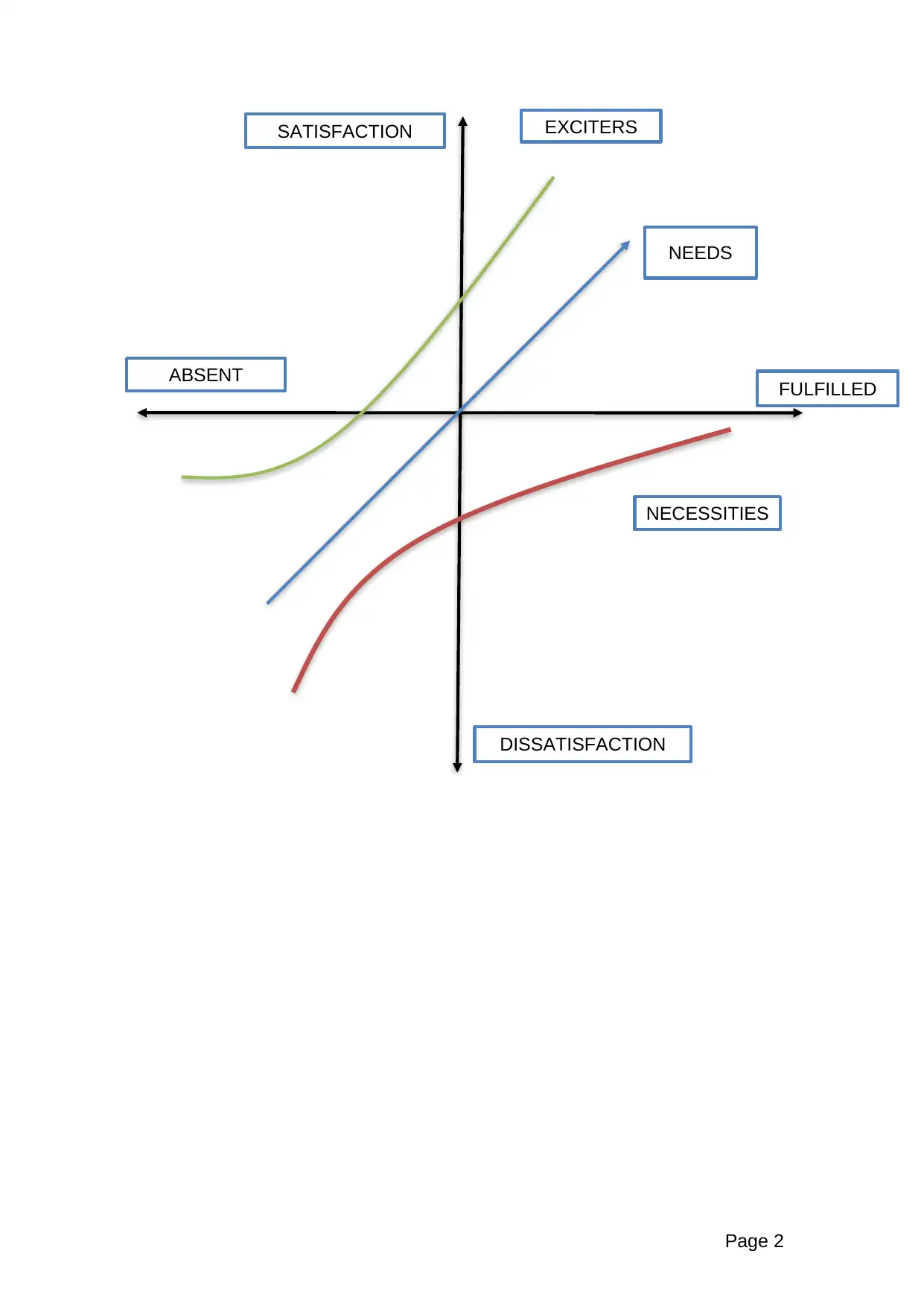
The agile tool that can be used is Kano which is used to identify the customer
requirements, determine the functional requirements of the project,
developing the concept of the project and also used to analyse the
competitive products (Saxena and Chakraborty 2014). The kano model
divides the product attributes of Wine Selectors in three different kinds like
performance, excitement and threshold. The Kano model helps the
organization to manage their customers and offer them better deals. The
customers are like the common people and the bar owners of Australia who
are unaware of the stock availability and pricing of wine. Wine Selectors
implement this tool or used this tool to identify their customers, gathering the
data for their customers and also helps to analysis the outcome (Ashmore and
Runyan 2014). The Kano model used in this case study is shown below.
Page 1
Wine Selectors is the founding company of Margaret Wine region situated
in north sub region of Wilyabrup in Western Australia. The organization plans
to deliver their product smartly by using software where the customers can
buy the product by placing order in the application and can get the product
delivered to their doorstep quickly.
The application keeps the track of the customer product by using RFID
technology. The Customer and the officials can keep the track of the ordered
product in the application which will help them to check the delivery progress
of the product.
Various tools are used to develop the application like user product
backlog, user story and requirement analysis matrix.
2 Customer Focus
The agile tool that can be used is Kano which is used to identify the customer
requirements, determine the functional requirements of the project,
developing the concept of the project and also used to analyse the
competitive products (Saxena and Chakraborty 2014). The kano model
divides the product attributes of Wine Selectors in three different kinds like
performance, excitement and threshold. The Kano model helps the
organization to manage their customers and offer them better deals. The
customers are like the common people and the bar owners of Australia who
are unaware of the stock availability and pricing of wine. Wine Selectors
implement this tool or used this tool to identify their customers, gathering the
data for their customers and also helps to analysis the outcome (Ashmore and
Runyan 2014). The Kano model used in this case study is shown below.
Page 1
⊘ This is a preview!⊘
Do you want full access?
Subscribe today to unlock all pages.

Trusted by 1+ million students worldwide
Page 2
NECESSITIES
NEEDS
EXCITERSSATISFACTION
DISSATISFACTION
FULFILLED
ABSENT
NECESSITIES
NEEDS
EXCITERSSATISFACTION
DISSATISFACTION
FULFILLED
ABSENT
Paraphrase This Document
Need a fresh take? Get an instant paraphrase of this document with our AI Paraphraser

3 Product Vision
Visioning is the important process of the Agile projects. The product vision
is defined in four steps:
Developing agile product objective (Customers, Need, Competition,
Primary differentiation and key product goals)
Generating the draft agile vision
Validating as well as revising agile vision statement
Finalizing the agile vision
The tool used for visioning the proposed agile project is Product Canvas
tool which integrates with GreenHopper and Jira. It captures the assumptions
of the users as well as the customers of the application, the value of the
products, the features of the products and so on (Selamat, Fujita and Haron
2014). Vision define the overarching goal that is the primary reason behind
the creation of the Agile project. The target group demonstrates present
market scenarios for the Agile product. The needs demonstrates product
value proposition. The features of the products are also displayed in the board
which helps to deliver information of the product to the customers. The
Business goals section defines the purpose of the Agile product.
The Product Canvas can be used to deliver information to the customer
regarding the products (Link and Lewrick 2014). The product vision which is
used by the Wine Selectors is shown below:
Page 3
PRODUCT
CANVAS OF
WINE
SELECTORS
Name
Name of the
Wine
Goal
Goal of the Wine
Selectors
Metrics
Analysis of the data to
determine if the goal is
achieved or not
Target
Group
Clarification
regarding
the Wine
Big Picture
User Reviews regarding
the Wine
Details of the Product
The details of the Wine
including the specification
and price
Visioning is the important process of the Agile projects. The product vision
is defined in four steps:
Developing agile product objective (Customers, Need, Competition,
Primary differentiation and key product goals)
Generating the draft agile vision
Validating as well as revising agile vision statement
Finalizing the agile vision
The tool used for visioning the proposed agile project is Product Canvas
tool which integrates with GreenHopper and Jira. It captures the assumptions
of the users as well as the customers of the application, the value of the
products, the features of the products and so on (Selamat, Fujita and Haron
2014). Vision define the overarching goal that is the primary reason behind
the creation of the Agile project. The target group demonstrates present
market scenarios for the Agile product. The needs demonstrates product
value proposition. The features of the products are also displayed in the board
which helps to deliver information of the product to the customers. The
Business goals section defines the purpose of the Agile product.
The Product Canvas can be used to deliver information to the customer
regarding the products (Link and Lewrick 2014). The product vision which is
used by the Wine Selectors is shown below:
Page 3
PRODUCT
CANVAS OF
WINE
SELECTORS
Name
Name of the
Wine
Goal
Goal of the Wine
Selectors
Metrics
Analysis of the data to
determine if the goal is
achieved or not
Target
Group
Clarification
regarding
the Wine
Big Picture
User Reviews regarding
the Wine
Details of the Product
The details of the Wine
including the specification
and price

Vision Problem Statement:
The issue Lack of information regarding the stock availability, rice
of wine
Impacts People face many problems like cash unavailability,
address of the bars, failed to identify the best deals for
them
Solution of the
issue
The proposed mobile application will demonstrate the
stock availability, accept the order of the customers and
deliver the ordered products to the respective
customers in an affordable price.
4 Stories
The two agile methods that are used to develop the proposed project
are:
4.1 Product backlog:
A product backlog comprises of various user stories that are utilized for
drafting the performance that are needed to complete the elements of system
(Matharu et al. 2015). The purpose of product backlog is to differentiate the
requirements and expectations of various kinds of customers of the Wine
Selectors (Larman and Vodde 2013). The product backlog helps the
organization to sort out the lack in the customer services.
Product backlog:
ID no. User Story
1 Being a customer of the application my all requirements are
fulfilled by this application
2 Being a manager, I would recommend every people to install the
proposed application for buying wines from our organization
3 Being an administrator I will add all the reviews of the application
in the dashboard to keep the application updated
4 Being an administrator I will look after the customer friendly factor
for the customers of the organization.
5 Being a customer I would like to see some exciting offers in the
application which might increase the sales for the organization.
6 Being a Customer I would like to gather all the information
regarding the wine that are available and also want to know the
information regarding the organization.
Page 4
The issue Lack of information regarding the stock availability, rice
of wine
Impacts People face many problems like cash unavailability,
address of the bars, failed to identify the best deals for
them
Solution of the
issue
The proposed mobile application will demonstrate the
stock availability, accept the order of the customers and
deliver the ordered products to the respective
customers in an affordable price.
4 Stories
The two agile methods that are used to develop the proposed project
are:
4.1 Product backlog:
A product backlog comprises of various user stories that are utilized for
drafting the performance that are needed to complete the elements of system
(Matharu et al. 2015). The purpose of product backlog is to differentiate the
requirements and expectations of various kinds of customers of the Wine
Selectors (Larman and Vodde 2013). The product backlog helps the
organization to sort out the lack in the customer services.
Product backlog:
ID no. User Story
1 Being a customer of the application my all requirements are
fulfilled by this application
2 Being a manager, I would recommend every people to install the
proposed application for buying wines from our organization
3 Being an administrator I will add all the reviews of the application
in the dashboard to keep the application updated
4 Being an administrator I will look after the customer friendly factor
for the customers of the organization.
5 Being a customer I would like to see some exciting offers in the
application which might increase the sales for the organization.
6 Being a Customer I would like to gather all the information
regarding the wine that are available and also want to know the
information regarding the organization.
Page 4
⊘ This is a preview!⊘
Do you want full access?
Subscribe today to unlock all pages.
Trusted by 1+ million students worldwide

4.2 Relative Estimation:
While this method is carried out the customers should have knowledge about
the application such that they can operate the application happily and also
they can feel free to register their issue regarding the application to us. The
stability of the application is measured which ensure the security and user
convenience factor (Goldstein 2013). Wine Selectors focus on customer
satisfaction level and thus relative estimation is most appropriate agile tool to
make the application user friendly for the customers. The tutorial of the
functionality of the tool is shown to the customers in their first visit. The
application compares various product to help the customer to make an
appropriate and justified choice.
4.3 Story Mapping:
It comprises of ordering the user stories along two different independent
dimensions. The user activities are arranged in the horizontal axis and
sophistication of implementation is arranged in the vertical axis. It delivers
priority levels of the requirements (Canty 2015). It also helps in segmenting
the large requirements into smaller one. It helps to enhance the
communication process with customers. The story mapping for Wine
Selectors is shown below:
Page 5
User search
for the desired
Wine
User
subscription
User compare
with other
Wines
Wine details
are displayed
Ordered is
placed by the
customer
Order is
accepted by
the company
Transaction
process
User review
about the
Wine
User validation A list of available Wine
products are displayed
to the customers
User log out
While this method is carried out the customers should have knowledge about
the application such that they can operate the application happily and also
they can feel free to register their issue regarding the application to us. The
stability of the application is measured which ensure the security and user
convenience factor (Goldstein 2013). Wine Selectors focus on customer
satisfaction level and thus relative estimation is most appropriate agile tool to
make the application user friendly for the customers. The tutorial of the
functionality of the tool is shown to the customers in their first visit. The
application compares various product to help the customer to make an
appropriate and justified choice.
4.3 Story Mapping:
It comprises of ordering the user stories along two different independent
dimensions. The user activities are arranged in the horizontal axis and
sophistication of implementation is arranged in the vertical axis. It delivers
priority levels of the requirements (Canty 2015). It also helps in segmenting
the large requirements into smaller one. It helps to enhance the
communication process with customers. The story mapping for Wine
Selectors is shown below:
Page 5
User search
for the desired
Wine
User
subscription
User compare
with other
Wines
Wine details
are displayed
Ordered is
placed by the
customer
Order is
accepted by
the company
Transaction
process
User review
about the
Wine
User validation A list of available Wine
products are displayed
to the customers
User log out
Paraphrase This Document
Need a fresh take? Get an instant paraphrase of this document with our AI Paraphraser

4.4 Releasable Product
Requirement Traceability Matrix:
BR# Module Name Applicable
Roles
Description
B1 Login and
Logout
Manager and
the Customer
The Customers can login and
logout from the page
The manager can login using
the customer’s loginID to track
the order status of the product
B2 Enquiry Customer Customer can encounter their
query in this section
Manager can view the enquiry
and he or she will take
immediate action for such type
of enquiry
B3 Transaction
Process
Manager and
Customer
The transaction process is
carried out from this section
which involves payment done
by the customers and the
payment acceptance by the
manager.
Non Functional Requirements:
Performance
Usability
Modifiability
Security
Scalability
Maintainability and testability
Functional Requirements:
Checking the wine availability status that includes the availability status
of the product in the stock
Checking the market price of the product
Getting the advertisement for huge sales of their product.
Page 6
Requirement Traceability Matrix:
BR# Module Name Applicable
Roles
Description
B1 Login and
Logout
Manager and
the Customer
The Customers can login and
logout from the page
The manager can login using
the customer’s loginID to track
the order status of the product
B2 Enquiry Customer Customer can encounter their
query in this section
Manager can view the enquiry
and he or she will take
immediate action for such type
of enquiry
B3 Transaction
Process
Manager and
Customer
The transaction process is
carried out from this section
which involves payment done
by the customers and the
payment acceptance by the
manager.
Non Functional Requirements:
Performance
Usability
Modifiability
Security
Scalability
Maintainability and testability
Functional Requirements:
Checking the wine availability status that includes the availability status
of the product in the stock
Checking the market price of the product
Getting the advertisement for huge sales of their product.
Page 6
5 Team
The team expresses various technical, practical and conceptual knowledge
during the application development method. The agile methodologies are
adopted perfectly during the development process. The team is divided in
various groups allocating separate tasks for separate group members like
designing process, functionalities of the application, user interface and the
user experience tasks. A great business analysis is carried out to study the
present scenario of the organization. Constant and Smooth communication
was carried out between the development team and the manager of the
organization such that all the requirements of the manager are fulfilled by the
application (Crawford 2014). After the completion of the development process
the application is tested.
5.1 Tracking process
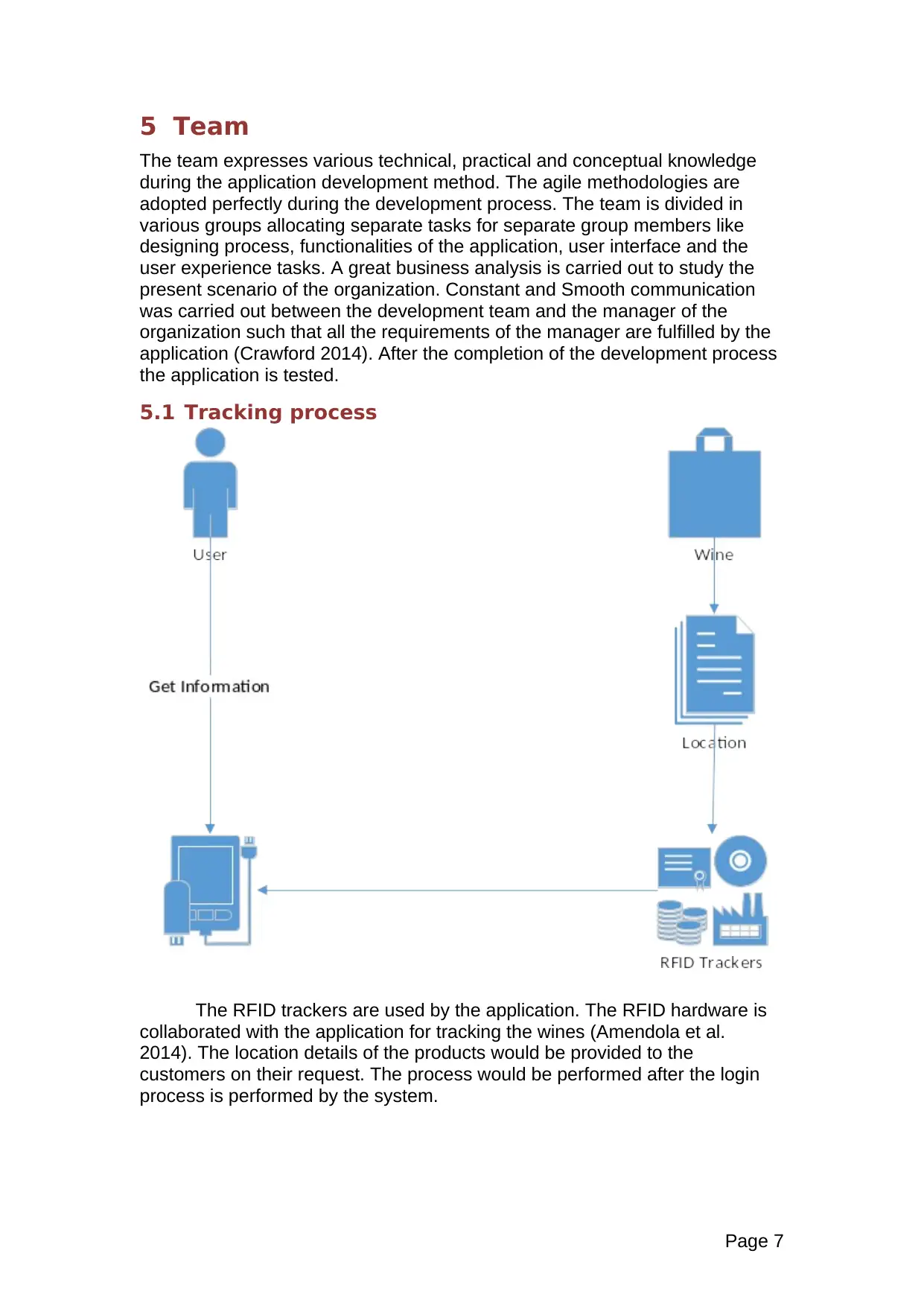
The RFID trackers are used by the application. The RFID hardware is
collaborated with the application for tracking the wines (Amendola et al.
2014). The location details of the products would be provided to the
customers on their request. The process would be performed after the login
process is performed by the system.
Page 7
The team expresses various technical, practical and conceptual knowledge
during the application development method. The agile methodologies are
adopted perfectly during the development process. The team is divided in
various groups allocating separate tasks for separate group members like
designing process, functionalities of the application, user interface and the
user experience tasks. A great business analysis is carried out to study the
present scenario of the organization. Constant and Smooth communication
was carried out between the development team and the manager of the
organization such that all the requirements of the manager are fulfilled by the
application (Crawford 2014). After the completion of the development process
the application is tested.
5.1 Tracking process
The RFID trackers are used by the application. The RFID hardware is
collaborated with the application for tracking the wines (Amendola et al.
2014). The location details of the products would be provided to the
customers on their request. The process would be performed after the login
process is performed by the system.
Page 7
⊘ This is a preview!⊘
Do you want full access?
Subscribe today to unlock all pages.
Trusted by 1+ million students worldwide

6 Review
The Development process was successfully completed with implementing
decorative designs to attract the customers. The advertisement of the
application is carried out such that the application become famous around
Australia and the organization can gain a huge profit from this project. The
Project was then tested using the unit testing and integration testing technique
which guarantees the scalability and security of the application. The project
was developed according to the client’s requirements.
Page 8
The Development process was successfully completed with implementing
decorative designs to attract the customers. The advertisement of the
application is carried out such that the application become famous around
Australia and the organization can gain a huge profit from this project. The
Project was then tested using the unit testing and integration testing technique
which guarantees the scalability and security of the application. The project
was developed according to the client’s requirements.
Page 8
Paraphrase This Document
Need a fresh take? Get an instant paraphrase of this document with our AI Paraphraser

7 References
Amendola, S., Lodato, R., Manzari, S., Occhiuzzi, C. and Marrocco, G., 2014.
RFID technology for IoT-based personal healthcare in smart spaces. IEEE
Internet of things journal, 1(2), pp.144-152.
Ashmore, S. and Runyan, K., 2014. Introduction to agile methods. Addison-
Wesley Professional.
Canty, D., 2015. Agile for project managers. Auerbach Publications.
Crawford, J.K., 2014. Project management maturity model. Auerbach
Publications.
Goldstein, I., 2013. Scrum shortcuts without cutting corners: agile tactics,
tools, & tips. Addison-Wesley.
Larman, C. and Vodde, B., 2013. Scaling agile development. CrossTalk, 9,
pp.8-12.
Link, P. and Lewrick, M., 2014, June. Agile methods in a new area of
innovation management. In Science-to-Business Marketing Conference (pp.
3-4).
Matharu, G.S., Mishra, A., Singh, H. and Upadhyay, P., 2015. Empirical study
of agile software development methodologies: A comparative analysis. ACM
SIGSOFT Software Engineering Notes, 40(1), pp.1-6.
Saxena, S.K. and Chakraborty, R., 2014, August. Decisively: Application of
quantitative analysis and decision science in agile requirements engineering.
In 2014 IEEE 22nd International Requirements Engineering Conference (RE)
(pp. 323-324). IEEE.
Selamat, A., Fujita, H. and Haron, H. eds., 2014. New Trends in Software
Methodologies, Tools and Techniques: Proceedings of the Thirteenth
SoMeT_14 (Vol. 265). Ios Press.
Page 9
Amendola, S., Lodato, R., Manzari, S., Occhiuzzi, C. and Marrocco, G., 2014.
RFID technology for IoT-based personal healthcare in smart spaces. IEEE
Internet of things journal, 1(2), pp.144-152.
Ashmore, S. and Runyan, K., 2014. Introduction to agile methods. Addison-
Wesley Professional.
Canty, D., 2015. Agile for project managers. Auerbach Publications.
Crawford, J.K., 2014. Project management maturity model. Auerbach
Publications.
Goldstein, I., 2013. Scrum shortcuts without cutting corners: agile tactics,
tools, & tips. Addison-Wesley.
Larman, C. and Vodde, B., 2013. Scaling agile development. CrossTalk, 9,
pp.8-12.
Link, P. and Lewrick, M., 2014, June. Agile methods in a new area of
innovation management. In Science-to-Business Marketing Conference (pp.
3-4).
Matharu, G.S., Mishra, A., Singh, H. and Upadhyay, P., 2015. Empirical study
of agile software development methodologies: A comparative analysis. ACM
SIGSOFT Software Engineering Notes, 40(1), pp.1-6.
Saxena, S.K. and Chakraborty, R., 2014, August. Decisively: Application of
quantitative analysis and decision science in agile requirements engineering.
In 2014 IEEE 22nd International Requirements Engineering Conference (RE)
(pp. 323-324). IEEE.
Selamat, A., Fujita, H. and Haron, H. eds., 2014. New Trends in Software
Methodologies, Tools and Techniques: Proceedings of the Thirteenth
SoMeT_14 (Vol. 265). Ios Press.
Page 9

1 out of 11


Related Documents


Your All-in-One AI-Powered Toolkit for Academic Success.
+13062052269
info@desklib.com
Available 24*7 on WhatsApp / Email
![[object Object]](/_next/static/media/star-bottom.7253800d.svg)
Unlock your academic potential
Copyright © 2020–2026 A2Z Services. All Rights Reserved. Developed and managed by ZUCOL.