Research on AI and IoT Applications in Smart Farming (Week 1)
VerifiedAdded on 2022/08/21
|75
|15942
|15
Homework Assignment
AI Summary
This assignment delves into the application of Artificial Intelligence (AI) in smart farming, examining various techniques, methods, and algorithms used to improve agricultural practices. The assignment analyzes journal papers, focusing on the challenges and opportunities presented by AI and IoT integration in areas such as decision-making, water management, and security. The analysis includes the identification of current solutions, their components, and the mathematical equations involved. It also explores the processes, advantages, and limitations of different techniques, along with evaluation criteria. The assignment emphasizes the importance of these technologies in enhancing operational efficiency and addresses the future work suggested by the authors. The provided papers cover a range of topics, including smart decision systems, AI-based recommendation models, water management, and security concerns in smart farming, offering a comprehensive overview of the subject. The solutions for this assignment are available on Desklib, a platform offering AI based study tools for students.
Version 1.0 _ Week 1 ( Journal Papers)
1
Reference in APA format that will be
in 'Reference List'
(This give the Reference of the
Journal Paper you are working on it)
Cambra Baseca, C., Sendra, S., Lloret, J., & Tomas, J. (2019). A Smart Decision System for Digital
Farming. Agronomy, 9(5), 216.
Citation that will be in the content (Cambra Baseca et al., 2019)
URL of the Reference Level of Journal (Q1, Q2, …Qn) Keywords in this Reference
https://www.mdpi.com/2073-
4395/9/5/216
Q1 Smart farming, IoT enabled farming, WSN agriculture,
digital farming, agriculture smart system.
The Name of the Current Solution
(Technique/ Method/ Scheme/
Algorithm/ Model/ Tool/ Framework/
... etc )
The Goal (Objective) of this Solution &
What is the Problem that need to be
solved
What are the components of it?
What is the Mathematical Equation that has
Proposed in this work?
Technique/Algorithm name:
AI algorithm, database pruning
algorithm, rule learning algorithm, rete
pattern matching algorithm,
Tools:
Problem:
In this paper the researcher has primarily
identified that problems present in
agriculture industry are due to less
operations however, adoption technologies
has also increased several conflicts into
Major Research components-
Business Process management
Data preparation.
Association ruler learner
Rule Section
Rule Editor
1
1
Reference in APA format that will be
in 'Reference List'
(This give the Reference of the
Journal Paper you are working on it)
Cambra Baseca, C., Sendra, S., Lloret, J., & Tomas, J. (2019). A Smart Decision System for Digital
Farming. Agronomy, 9(5), 216.
Citation that will be in the content (Cambra Baseca et al., 2019)
URL of the Reference Level of Journal (Q1, Q2, …Qn) Keywords in this Reference
https://www.mdpi.com/2073-
4395/9/5/216
Q1 Smart farming, IoT enabled farming, WSN agriculture,
digital farming, agriculture smart system.
The Name of the Current Solution
(Technique/ Method/ Scheme/
Algorithm/ Model/ Tool/ Framework/
... etc )
The Goal (Objective) of this Solution &
What is the Problem that need to be
solved
What are the components of it?
What is the Mathematical Equation that has
Proposed in this work?
Technique/Algorithm name:
AI algorithm, database pruning
algorithm, rule learning algorithm, rete
pattern matching algorithm,
Tools:
Problem:
In this paper the researcher has primarily
identified that problems present in
agriculture industry are due to less
operations however, adoption technologies
has also increased several conflicts into
Major Research components-
Business Process management
Data preparation.
Association ruler learner
Rule Section
Rule Editor
1
Paraphrase This Document
Need a fresh take? Get an instant paraphrase of this document with our AI Paraphraser

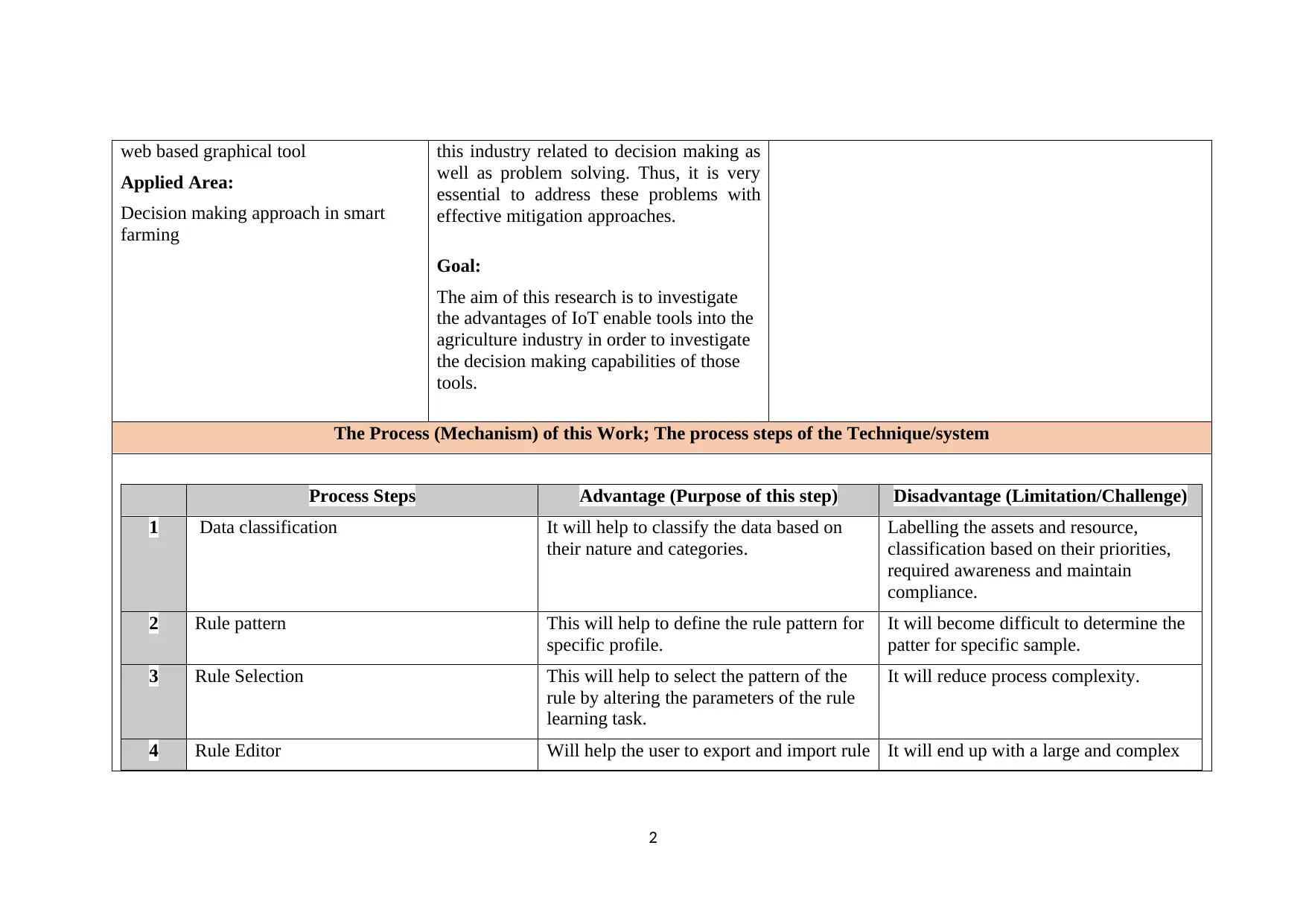
web based graphical tool
Applied Area:
Decision making approach in smart
farming
this industry related to decision making as
well as problem solving. Thus, it is very
essential to address these problems with
effective mitigation approaches.
Goal:
The aim of this research is to investigate
the advantages of IoT enable tools into the
agriculture industry in order to investigate
the decision making capabilities of those
tools.
The Process (Mechanism) of this Work; The process steps of the Technique/system
Process Steps Advantage (Purpose of this step) Disadvantage (Limitation/Challenge)
1 Data classification It will help to classify the data based on
their nature and categories.
Labelling the assets and resource,
classification based on their priorities,
required awareness and maintain
compliance.
2 Rule pattern This will help to define the rule pattern for
specific profile.
It will become difficult to determine the
patter for specific sample.
3 Rule Selection This will help to select the pattern of the
rule by altering the parameters of the rule
learning task.
It will reduce process complexity.
4 Rule Editor Will help the user to export and import rule It will end up with a large and complex
2
Applied Area:
Decision making approach in smart
farming
this industry related to decision making as
well as problem solving. Thus, it is very
essential to address these problems with
effective mitigation approaches.
Goal:
The aim of this research is to investigate
the advantages of IoT enable tools into the
agriculture industry in order to investigate
the decision making capabilities of those
tools.
The Process (Mechanism) of this Work; The process steps of the Technique/system
Process Steps Advantage (Purpose of this step) Disadvantage (Limitation/Challenge)
1 Data classification It will help to classify the data based on
their nature and categories.
Labelling the assets and resource,
classification based on their priorities,
required awareness and maintain
compliance.
2 Rule pattern This will help to define the rule pattern for
specific profile.
It will become difficult to determine the
patter for specific sample.
3 Rule Selection This will help to select the pattern of the
rule by altering the parameters of the rule
learning task.
It will reduce process complexity.
4 Rule Editor Will help the user to export and import rule It will end up with a large and complex
2

for investigation purpose. procedure.
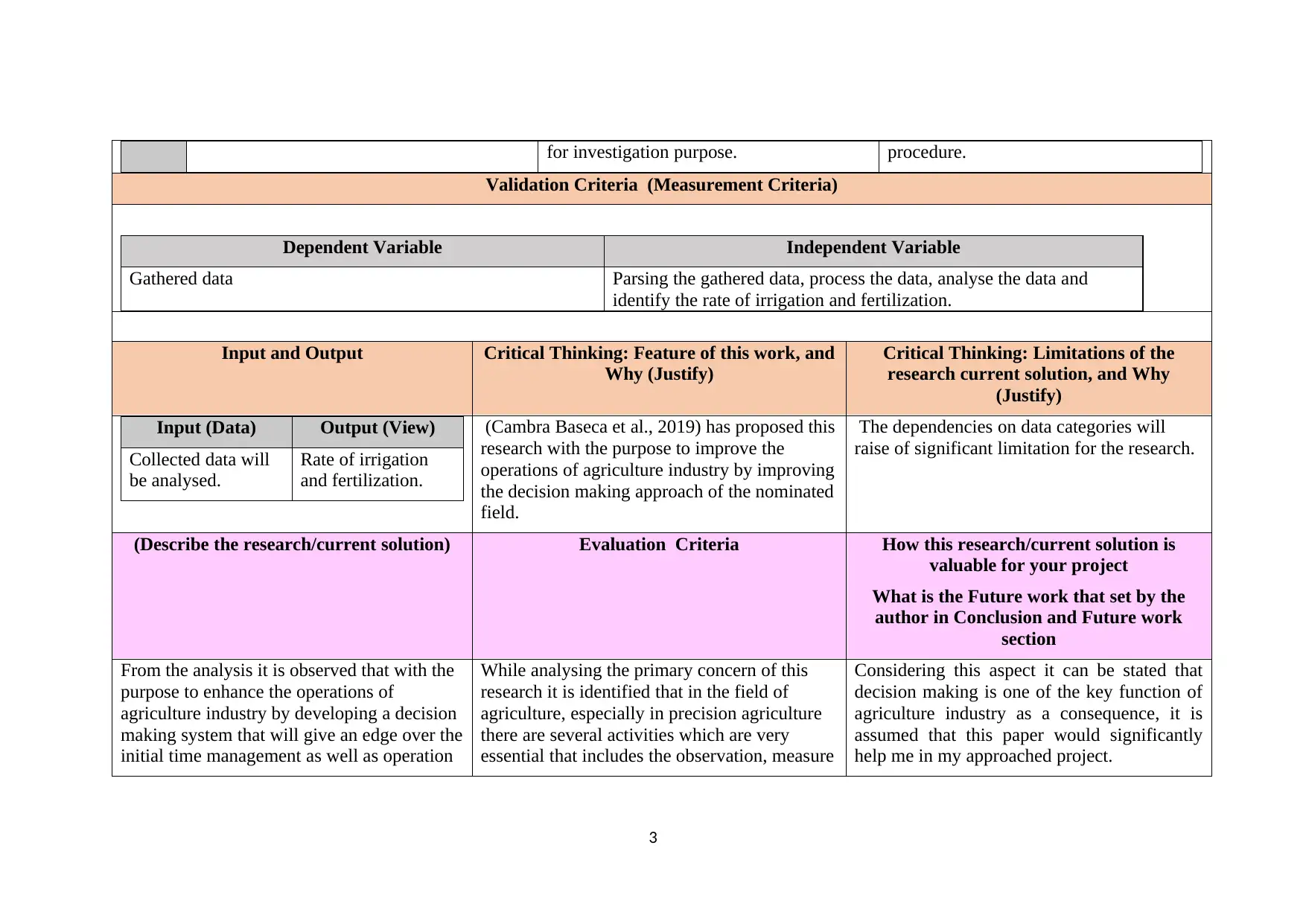
Validation Criteria (Measurement Criteria)
Dependent Variable Independent Variable
Gathered data Parsing the gathered data, process the data, analyse the data and
identify the rate of irrigation and fertilization.
Input and Output Critical Thinking: Feature of this work, and
Why (Justify)
Critical Thinking: Limitations of the
research current solution, and Why
(Justify)
Input (Data) Output (View)
Collected data will
be analysed.
Rate of irrigation
and fertilization.
(Cambra Baseca et al., 2019) has proposed this
research with the purpose to improve the
operations of agriculture industry by improving
the decision making approach of the nominated
field.
The dependencies on data categories will
raise of significant limitation for the research.
(Describe the research/current solution) Evaluation Criteria How this research/current solution is
valuable for your project
What is the Future work that set by the
author in Conclusion and Future work
section
From the analysis it is observed that with the
purpose to enhance the operations of
agriculture industry by developing a decision
making system that will give an edge over the
initial time management as well as operation
While analysing the primary concern of this
research it is identified that in the field of
agriculture, especially in precision agriculture
there are several activities which are very
essential that includes the observation, measure
Considering this aspect it can be stated that
decision making is one of the key function of
agriculture industry as a consequence, it is
assumed that this paper would significantly
help me in my approached project.
3
Validation Criteria (Measurement Criteria)
Dependent Variable Independent Variable
Gathered data Parsing the gathered data, process the data, analyse the data and
identify the rate of irrigation and fertilization.
Input and Output Critical Thinking: Feature of this work, and
Why (Justify)
Critical Thinking: Limitations of the
research current solution, and Why
(Justify)
Input (Data) Output (View)
Collected data will
be analysed.
Rate of irrigation
and fertilization.
(Cambra Baseca et al., 2019) has proposed this
research with the purpose to improve the
operations of agriculture industry by improving
the decision making approach of the nominated
field.
The dependencies on data categories will
raise of significant limitation for the research.
(Describe the research/current solution) Evaluation Criteria How this research/current solution is
valuable for your project
What is the Future work that set by the
author in Conclusion and Future work
section
From the analysis it is observed that with the
purpose to enhance the operations of
agriculture industry by developing a decision
making system that will give an edge over the
initial time management as well as operation
While analysing the primary concern of this
research it is identified that in the field of
agriculture, especially in precision agriculture
there are several activities which are very
essential that includes the observation, measure
Considering this aspect it can be stated that
decision making is one of the key function of
agriculture industry as a consequence, it is
assumed that this paper would significantly
help me in my approached project.
3
⊘ This is a preview!⊘
Do you want full access?
Subscribe today to unlock all pages.

Trusted by 1+ million students worldwide

management as well as effective mitigation to address the
identified problems. Considering this aspect it
is identified that the technologies has majorly
influenced the services of Precision Agriculture
hence, it can be stated that analysing the
effectiveness as well as the optimality of the
technologies are very essential.
Diagram/Flowchart
4
identified problems. Considering this aspect it
is identified that the technologies has majorly
influenced the services of Precision Agriculture
hence, it can be stated that analysing the
effectiveness as well as the optimality of the
technologies are very essential.
Diagram/Flowchart
4
Paraphrase This Document
Need a fresh take? Get an instant paraphrase of this document with our AI Paraphraser

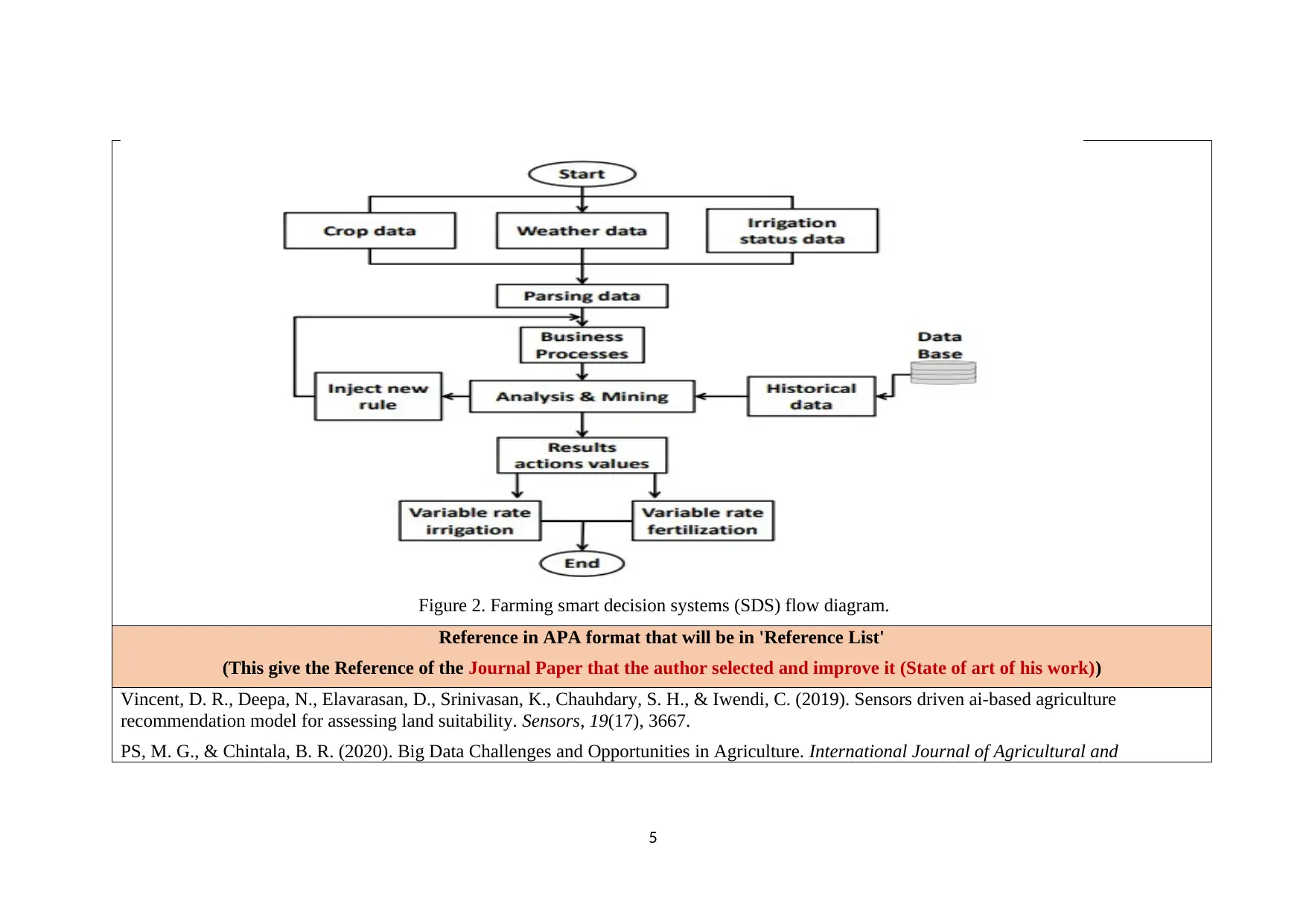
Figure 2. Farming smart decision systems (SDS) flow diagram.
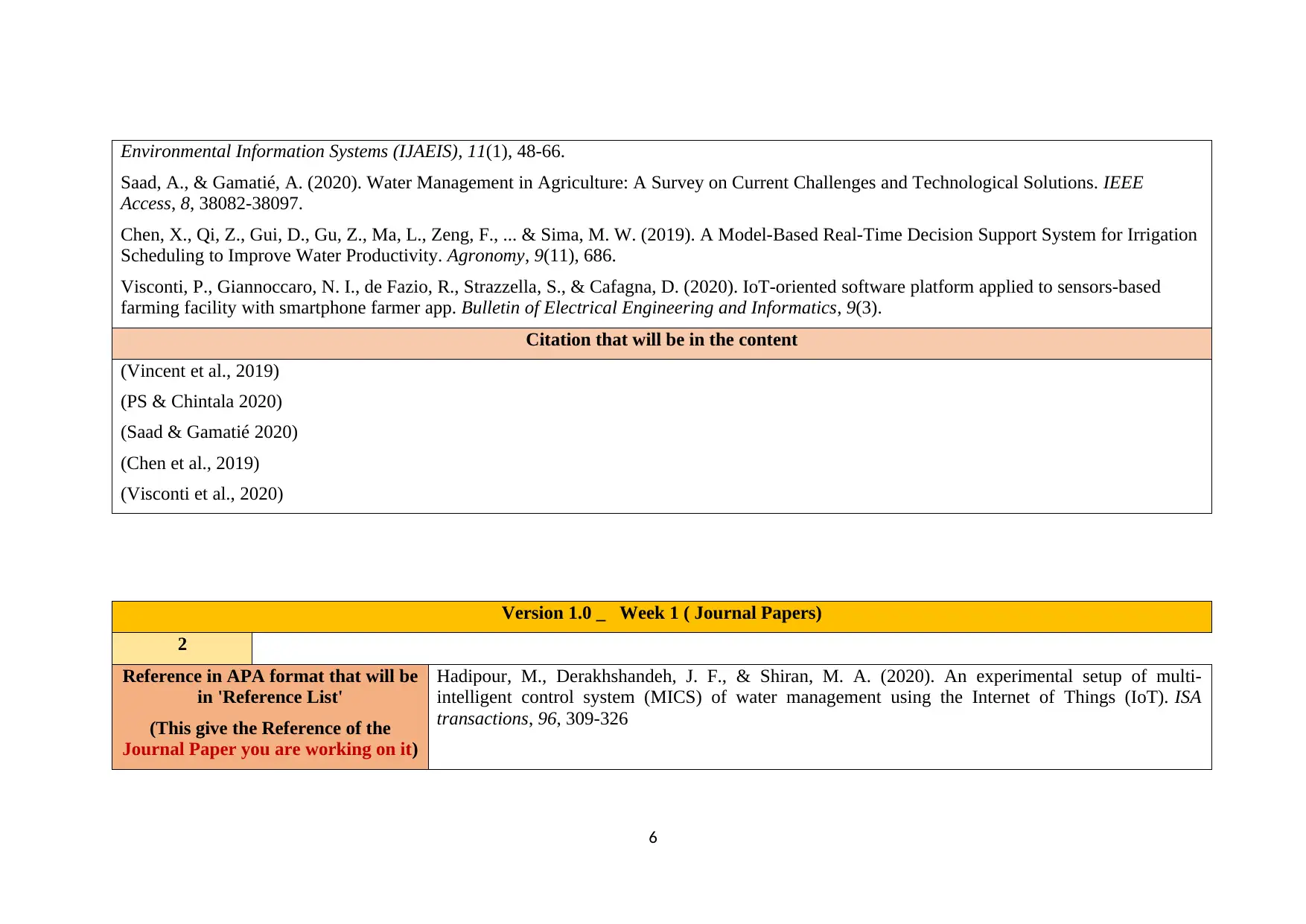
Reference in APA format that will be in 'Reference List'
(This give the Reference of the Journal Paper that the author selected and improve it (State of art of his work))
Vincent, D. R., Deepa, N., Elavarasan, D., Srinivasan, K., Chauhdary, S. H., & Iwendi, C. (2019). Sensors driven ai-based agriculture
recommendation model for assessing land suitability. Sensors, 19(17), 3667.
PS, M. G., & Chintala, B. R. (2020). Big Data Challenges and Opportunities in Agriculture. International Journal of Agricultural and
5
Reference in APA format that will be in 'Reference List'
(This give the Reference of the Journal Paper that the author selected and improve it (State of art of his work))
Vincent, D. R., Deepa, N., Elavarasan, D., Srinivasan, K., Chauhdary, S. H., & Iwendi, C. (2019). Sensors driven ai-based agriculture
recommendation model for assessing land suitability. Sensors, 19(17), 3667.
PS, M. G., & Chintala, B. R. (2020). Big Data Challenges and Opportunities in Agriculture. International Journal of Agricultural and
5

Environmental Information Systems (IJAEIS), 11(1), 48-66.
Saad, A., & Gamatié, A. (2020). Water Management in Agriculture: A Survey on Current Challenges and Technological Solutions. IEEE
Access, 8, 38082-38097.
Chen, X., Qi, Z., Gui, D., Gu, Z., Ma, L., Zeng, F., ... & Sima, M. W. (2019). A Model-Based Real-Time Decision Support System for Irrigation
Scheduling to Improve Water Productivity. Agronomy, 9(11), 686.
Visconti, P., Giannoccaro, N. I., de Fazio, R., Strazzella, S., & Cafagna, D. (2020). IoT-oriented software platform applied to sensors-based
farming facility with smartphone farmer app. Bulletin of Electrical Engineering and Informatics, 9(3).
Citation that will be in the content
(Vincent et al., 2019)
(PS & Chintala 2020)
(Saad & Gamatié 2020)
(Chen et al., 2019)
(Visconti et al., 2020)
Version 1.0 _ Week 1 ( Journal Papers)
2
Reference in APA format that will be
in 'Reference List'
(This give the Reference of the
Journal Paper you are working on it)
Hadipour, M., Derakhshandeh, J. F., & Shiran, M. A. (2020). An experimental setup of multi-
intelligent control system (MICS) of water management using the Internet of Things (IoT). ISA
transactions, 96, 309-326
6
Saad, A., & Gamatié, A. (2020). Water Management in Agriculture: A Survey on Current Challenges and Technological Solutions. IEEE
Access, 8, 38082-38097.
Chen, X., Qi, Z., Gui, D., Gu, Z., Ma, L., Zeng, F., ... & Sima, M. W. (2019). A Model-Based Real-Time Decision Support System for Irrigation
Scheduling to Improve Water Productivity. Agronomy, 9(11), 686.
Visconti, P., Giannoccaro, N. I., de Fazio, R., Strazzella, S., & Cafagna, D. (2020). IoT-oriented software platform applied to sensors-based
farming facility with smartphone farmer app. Bulletin of Electrical Engineering and Informatics, 9(3).
Citation that will be in the content
(Vincent et al., 2019)
(PS & Chintala 2020)
(Saad & Gamatié 2020)
(Chen et al., 2019)
(Visconti et al., 2020)
Version 1.0 _ Week 1 ( Journal Papers)
2
Reference in APA format that will be
in 'Reference List'
(This give the Reference of the
Journal Paper you are working on it)
Hadipour, M., Derakhshandeh, J. F., & Shiran, M. A. (2020). An experimental setup of multi-
intelligent control system (MICS) of water management using the Internet of Things (IoT). ISA
transactions, 96, 309-326
6
⊘ This is a preview!⊘
Do you want full access?
Subscribe today to unlock all pages.

Trusted by 1+ million students worldwide

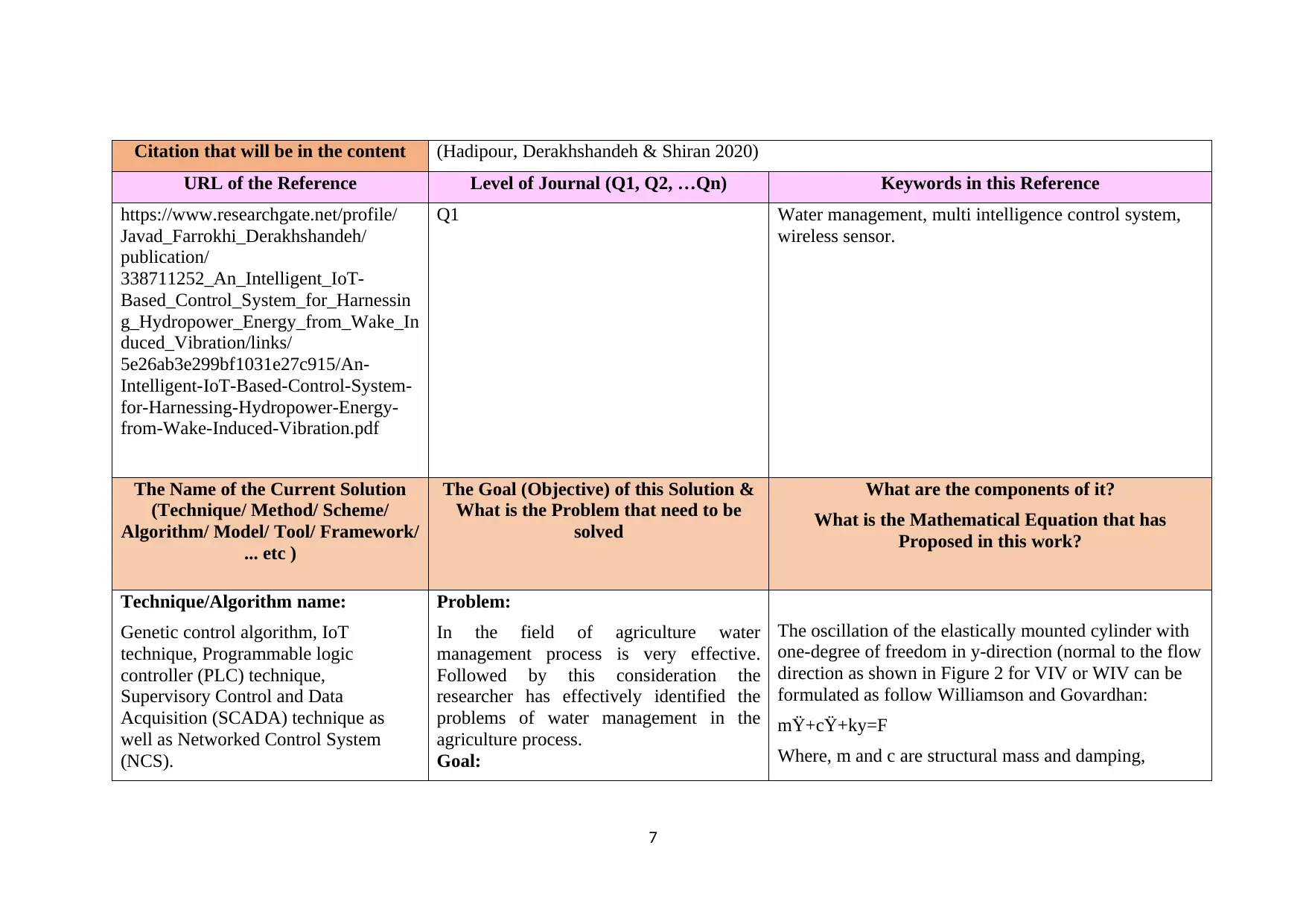
Citation that will be in the content (Hadipour, Derakhshandeh & Shiran 2020)
URL of the Reference Level of Journal (Q1, Q2, …Qn) Keywords in this Reference
https://www.researchgate.net/profile/
Javad_Farrokhi_Derakhshandeh/
publication/
338711252_An_Intelligent_IoT-
Based_Control_System_for_Harnessin
g_Hydropower_Energy_from_Wake_In
duced_Vibration/links/
5e26ab3e299bf1031e27c915/An-
Intelligent-IoT-Based-Control-System-
for-Harnessing-Hydropower-Energy-
from-Wake-Induced-Vibration.pdf
Q1 Water management, multi intelligence control system,
wireless sensor.
The Name of the Current Solution
(Technique/ Method/ Scheme/
Algorithm/ Model/ Tool/ Framework/
... etc )
The Goal (Objective) of this Solution &
What is the Problem that need to be
solved
What are the components of it?
What is the Mathematical Equation that has
Proposed in this work?
Technique/Algorithm name:
Genetic control algorithm, IoT
technique, Programmable logic
controller (PLC) technique,
Supervisory Control and Data
Acquisition (SCADA) technique as
well as Networked Control System
(NCS).
Problem:
In the field of agriculture water
management process is very effective.
Followed by this consideration the
researcher has effectively identified the
problems of water management in the
agriculture process.
Goal:
The oscillation of the elastically mounted cylinder with
one-degree of freedom in y-direction (normal to the flow
direction as shown in Figure 2 for VIV or WIV can be
formulated as follow Williamson and Govardhan:
mŸ+cŸ+ky=F
Where, m and c are structural mass and damping,
7
URL of the Reference Level of Journal (Q1, Q2, …Qn) Keywords in this Reference
https://www.researchgate.net/profile/
Javad_Farrokhi_Derakhshandeh/
publication/
338711252_An_Intelligent_IoT-
Based_Control_System_for_Harnessin
g_Hydropower_Energy_from_Wake_In
duced_Vibration/links/
5e26ab3e299bf1031e27c915/An-
Intelligent-IoT-Based-Control-System-
for-Harnessing-Hydropower-Energy-
from-Wake-Induced-Vibration.pdf
Q1 Water management, multi intelligence control system,
wireless sensor.
The Name of the Current Solution
(Technique/ Method/ Scheme/
Algorithm/ Model/ Tool/ Framework/
... etc )
The Goal (Objective) of this Solution &
What is the Problem that need to be
solved
What are the components of it?
What is the Mathematical Equation that has
Proposed in this work?
Technique/Algorithm name:
Genetic control algorithm, IoT
technique, Programmable logic
controller (PLC) technique,
Supervisory Control and Data
Acquisition (SCADA) technique as
well as Networked Control System
(NCS).
Problem:
In the field of agriculture water
management process is very effective.
Followed by this consideration the
researcher has effectively identified the
problems of water management in the
agriculture process.
Goal:
The oscillation of the elastically mounted cylinder with
one-degree of freedom in y-direction (normal to the flow
direction as shown in Figure 2 for VIV or WIV can be
formulated as follow Williamson and Govardhan:
mŸ+cŸ+ky=F
Where, m and c are structural mass and damping,
7
Paraphrase This Document
Need a fresh take? Get an instant paraphrase of this document with our AI Paraphraser

Tools:
Applied Area:
Agriculture industry, water
management
The primary goal of this project is to
identify the use and impact of advance
technologies in the field of agriculture and
its water management process
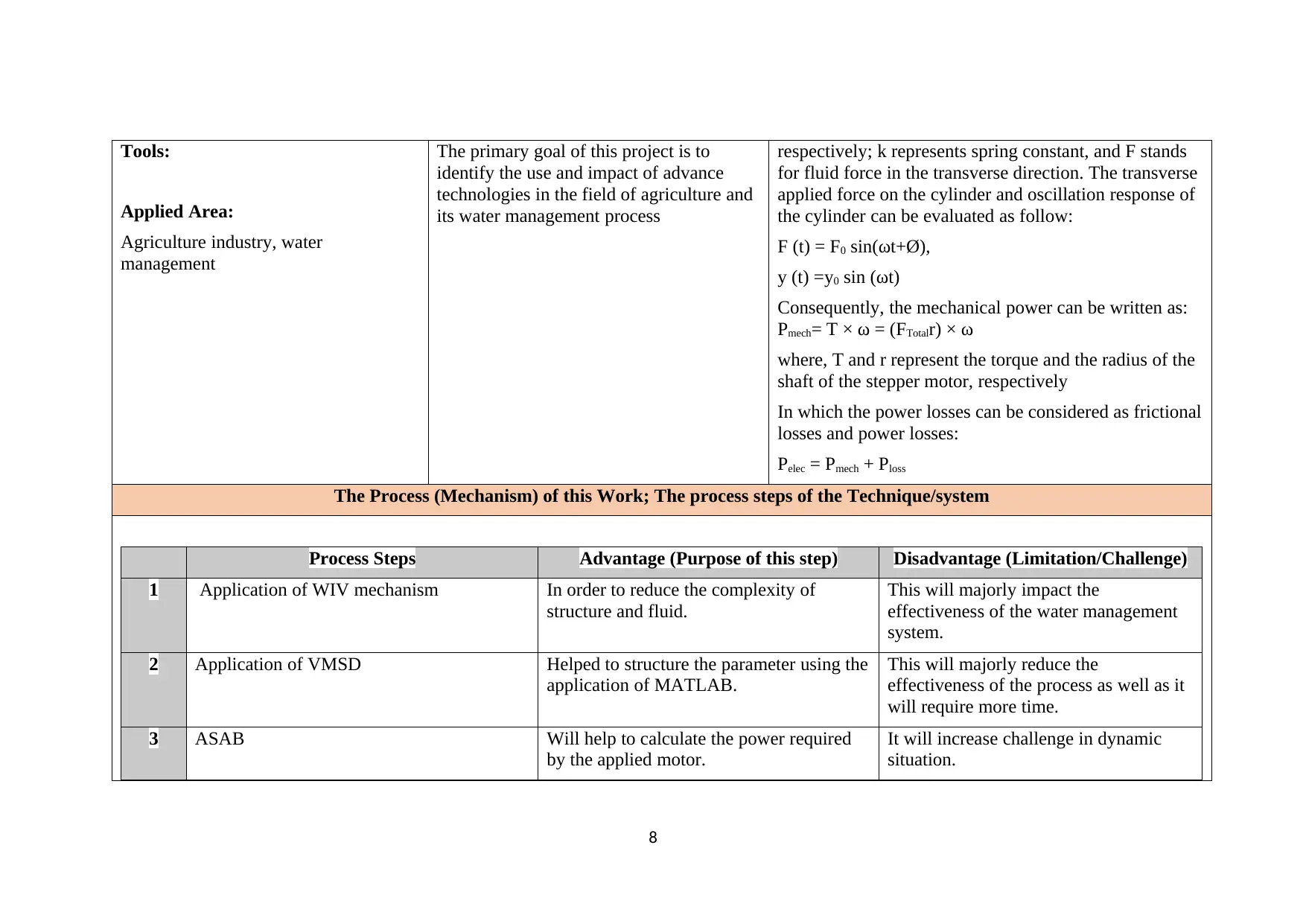
respectively; k represents spring constant, and F stands
for fluid force in the transverse direction. The transverse
applied force on the cylinder and oscillation response of
the cylinder can be evaluated as follow:
F (t) = F0 sin(ωt+Ø),
y (t) =y0 sin (ωt)
Consequently, the mechanical power can be written as:
Pmech= T × ω = (FTotalr) × ω
where, T and r represent the torque and the radius of the
shaft of the stepper motor, respectively
In which the power losses can be considered as frictional
losses and power losses:
Pelec = Pmech + Ploss
The Process (Mechanism) of this Work; The process steps of the Technique/system
Process Steps Advantage (Purpose of this step) Disadvantage (Limitation/Challenge)
1 Application of WIV mechanism In order to reduce the complexity of
structure and fluid.
This will majorly impact the
effectiveness of the water management
system.
2 Application of VMSD Helped to structure the parameter using the
application of MATLAB.
This will majorly reduce the
effectiveness of the process as well as it
will require more time.
3 ASAB Will help to calculate the power required
by the applied motor.
It will increase challenge in dynamic
situation.
8
Applied Area:
Agriculture industry, water
management
The primary goal of this project is to
identify the use and impact of advance
technologies in the field of agriculture and
its water management process
respectively; k represents spring constant, and F stands
for fluid force in the transverse direction. The transverse
applied force on the cylinder and oscillation response of
the cylinder can be evaluated as follow:
F (t) = F0 sin(ωt+Ø),
y (t) =y0 sin (ωt)
Consequently, the mechanical power can be written as:
Pmech= T × ω = (FTotalr) × ω
where, T and r represent the torque and the radius of the
shaft of the stepper motor, respectively
In which the power losses can be considered as frictional
losses and power losses:
Pelec = Pmech + Ploss
The Process (Mechanism) of this Work; The process steps of the Technique/system
Process Steps Advantage (Purpose of this step) Disadvantage (Limitation/Challenge)
1 Application of WIV mechanism In order to reduce the complexity of
structure and fluid.
This will majorly impact the
effectiveness of the water management
system.
2 Application of VMSD Helped to structure the parameter using the
application of MATLAB.
This will majorly reduce the
effectiveness of the process as well as it
will require more time.
3 ASAB Will help to calculate the power required
by the applied motor.
It will increase challenge in dynamic
situation.
8

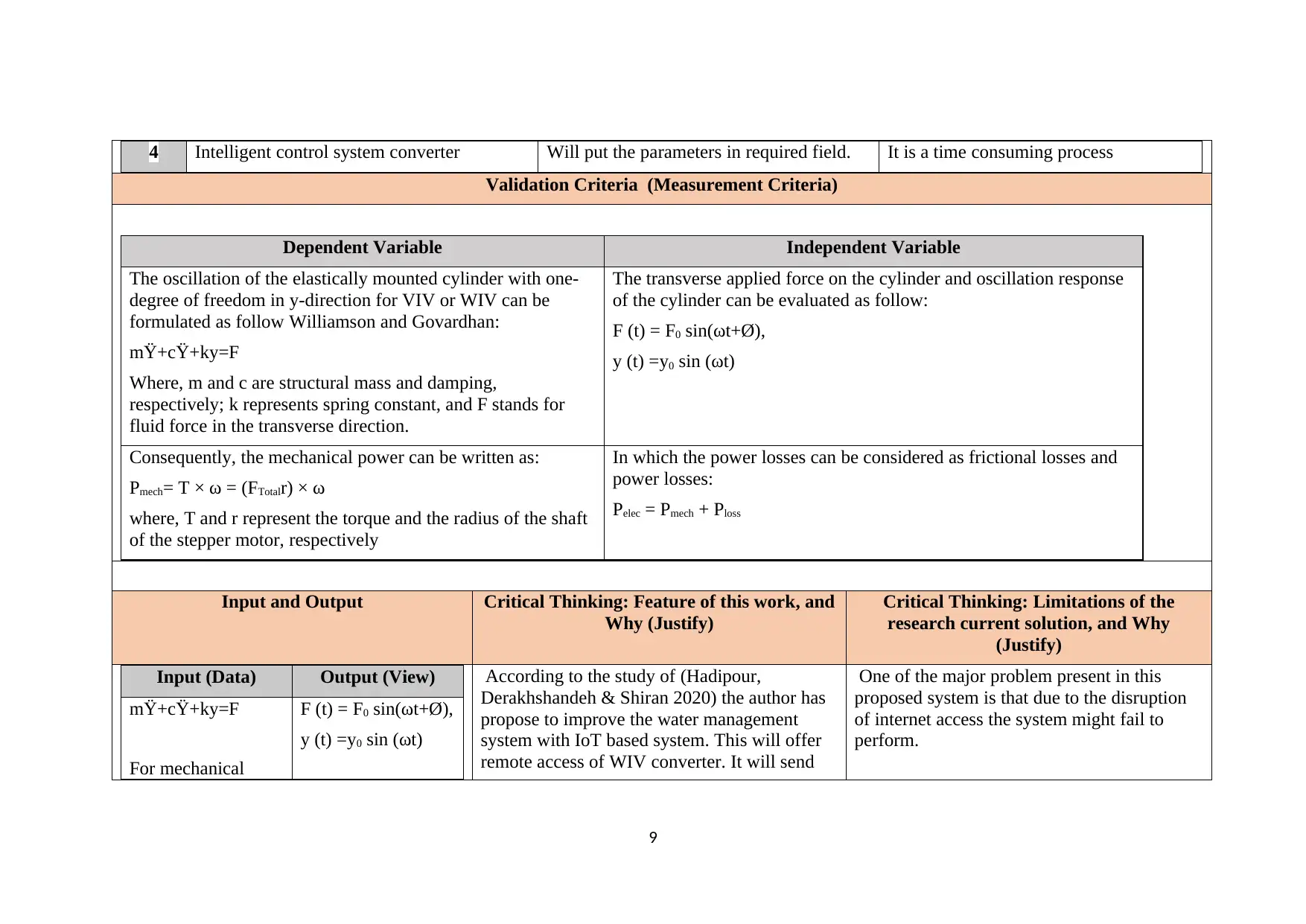
4 Intelligent control system converter Will put the parameters in required field. It is a time consuming process
Validation Criteria (Measurement Criteria)
Dependent Variable Independent Variable
The oscillation of the elastically mounted cylinder with one-
degree of freedom in y-direction for VIV or WIV can be
formulated as follow Williamson and Govardhan:
mŸ+cŸ+ky=F
Where, m and c are structural mass and damping,
respectively; k represents spring constant, and F stands for
fluid force in the transverse direction.
The transverse applied force on the cylinder and oscillation response
of the cylinder can be evaluated as follow:
F (t) = F0 sin(ωt+Ø),
y (t) =y0 sin (ωt)
Consequently, the mechanical power can be written as:
Pmech= T × ω = (FTotalr) × ω
where, T and r represent the torque and the radius of the shaft
of the stepper motor, respectively
In which the power losses can be considered as frictional losses and
power losses:
Pelec = Pmech + Ploss
Input and Output Critical Thinking: Feature of this work, and
Why (Justify)
Critical Thinking: Limitations of the
research current solution, and Why
(Justify)
Input (Data) Output (View)
mŸ+cŸ+ky=F
For mechanical
F (t) = F0 sin(ωt+Ø),
y (t) =y0 sin (ωt)
According to the study of (Hadipour,
Derakhshandeh & Shiran 2020) the author has
propose to improve the water management
system with IoT based system. This will offer
remote access of WIV converter. It will send
One of the major problem present in this
proposed system is that due to the disruption
of internet access the system might fail to
perform.
9
Validation Criteria (Measurement Criteria)
Dependent Variable Independent Variable
The oscillation of the elastically mounted cylinder with one-
degree of freedom in y-direction for VIV or WIV can be
formulated as follow Williamson and Govardhan:
mŸ+cŸ+ky=F
Where, m and c are structural mass and damping,
respectively; k represents spring constant, and F stands for
fluid force in the transverse direction.
The transverse applied force on the cylinder and oscillation response
of the cylinder can be evaluated as follow:
F (t) = F0 sin(ωt+Ø),
y (t) =y0 sin (ωt)
Consequently, the mechanical power can be written as:
Pmech= T × ω = (FTotalr) × ω
where, T and r represent the torque and the radius of the shaft
of the stepper motor, respectively
In which the power losses can be considered as frictional losses and
power losses:
Pelec = Pmech + Ploss
Input and Output Critical Thinking: Feature of this work, and
Why (Justify)
Critical Thinking: Limitations of the
research current solution, and Why
(Justify)
Input (Data) Output (View)
mŸ+cŸ+ky=F
For mechanical
F (t) = F0 sin(ωt+Ø),
y (t) =y0 sin (ωt)
According to the study of (Hadipour,
Derakhshandeh & Shiran 2020) the author has
propose to improve the water management
system with IoT based system. This will offer
remote access of WIV converter. It will send
One of the major problem present in this
proposed system is that due to the disruption
of internet access the system might fail to
perform.
9
⊘ This is a preview!⊘
Do you want full access?
Subscribe today to unlock all pages.

Trusted by 1+ million students worldwide

power:
Pmech= T × ω =
(FTotalr) × ω
where, T and r
represent the torque
and the radius of the
shaft of the stepper
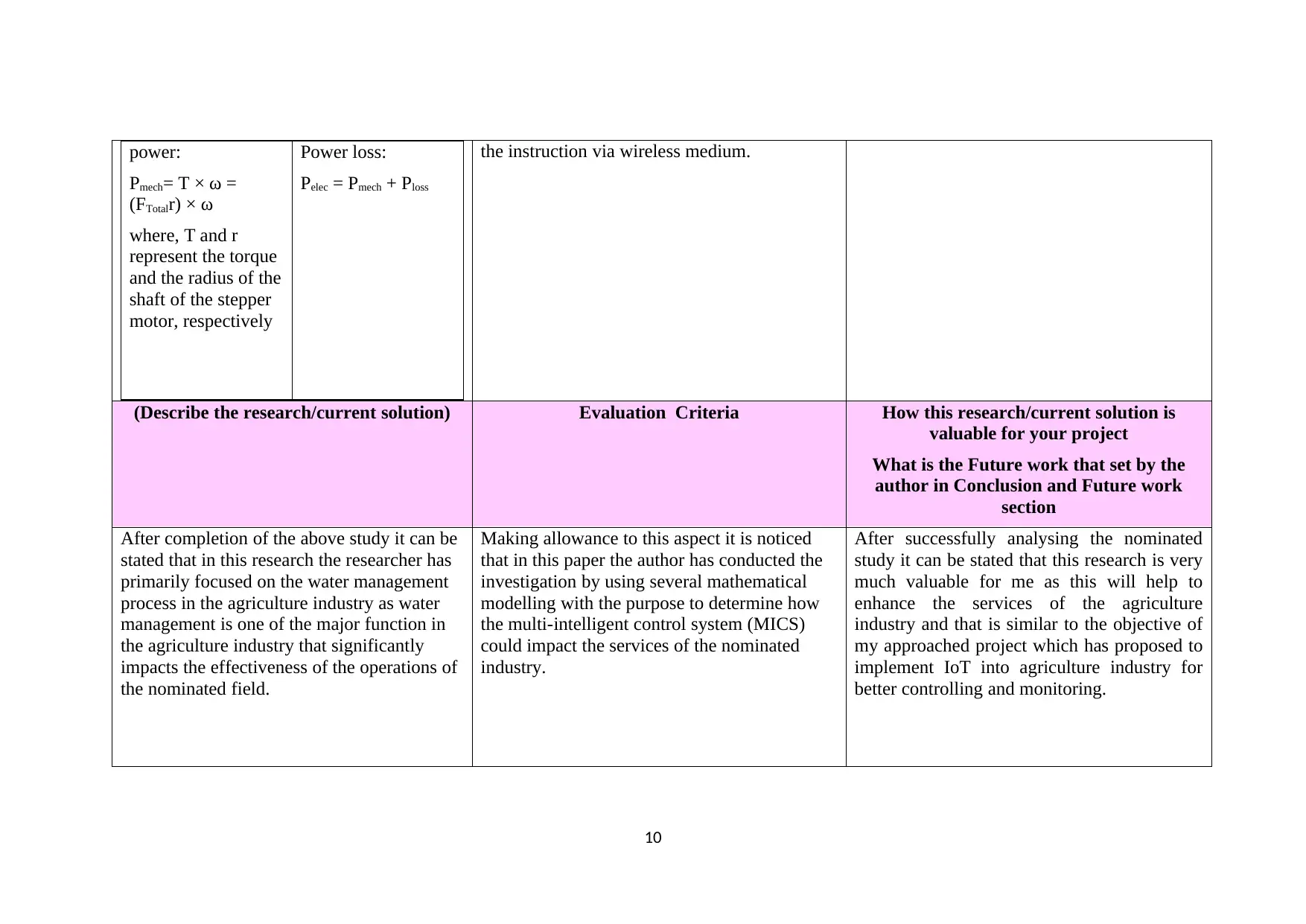
motor, respectively
Power loss:
Pelec = Pmech + Ploss
the instruction via wireless medium.
(Describe the research/current solution) Evaluation Criteria How this research/current solution is
valuable for your project
What is the Future work that set by the
author in Conclusion and Future work
section
After completion of the above study it can be
stated that in this research the researcher has
primarily focused on the water management
process in the agriculture industry as water
management is one of the major function in
the agriculture industry that significantly
impacts the effectiveness of the operations of
the nominated field.
Making allowance to this aspect it is noticed
that in this paper the author has conducted the
investigation by using several mathematical
modelling with the purpose to determine how
the multi-intelligent control system (MICS)
could impact the services of the nominated
industry.
After successfully analysing the nominated
study it can be stated that this research is very
much valuable for me as this will help to
enhance the services of the agriculture
industry and that is similar to the objective of
my approached project which has proposed to
implement IoT into agriculture industry for
better controlling and monitoring.
10
Pmech= T × ω =
(FTotalr) × ω
where, T and r
represent the torque
and the radius of the
shaft of the stepper
motor, respectively
Power loss:
Pelec = Pmech + Ploss
the instruction via wireless medium.
(Describe the research/current solution) Evaluation Criteria How this research/current solution is
valuable for your project
What is the Future work that set by the
author in Conclusion and Future work
section
After completion of the above study it can be
stated that in this research the researcher has
primarily focused on the water management
process in the agriculture industry as water
management is one of the major function in
the agriculture industry that significantly
impacts the effectiveness of the operations of
the nominated field.
Making allowance to this aspect it is noticed
that in this paper the author has conducted the
investigation by using several mathematical
modelling with the purpose to determine how
the multi-intelligent control system (MICS)
could impact the services of the nominated
industry.
After successfully analysing the nominated
study it can be stated that this research is very
much valuable for me as this will help to
enhance the services of the agriculture
industry and that is similar to the objective of
my approached project which has proposed to
implement IoT into agriculture industry for
better controlling and monitoring.
10
Paraphrase This Document
Need a fresh take? Get an instant paraphrase of this document with our AI Paraphraser

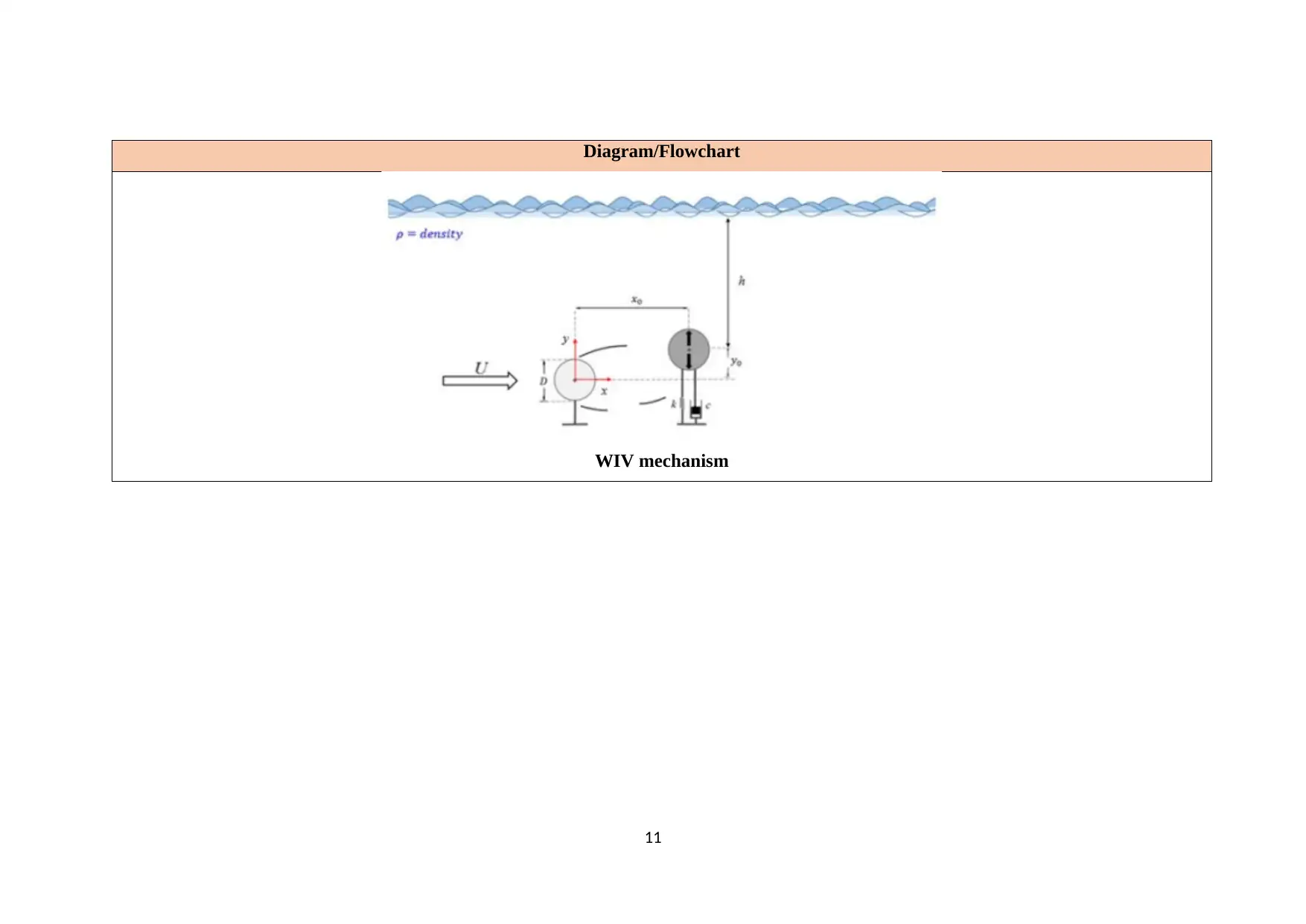
Diagram/Flowchart
WIV mechanism
11
WIV mechanism
11

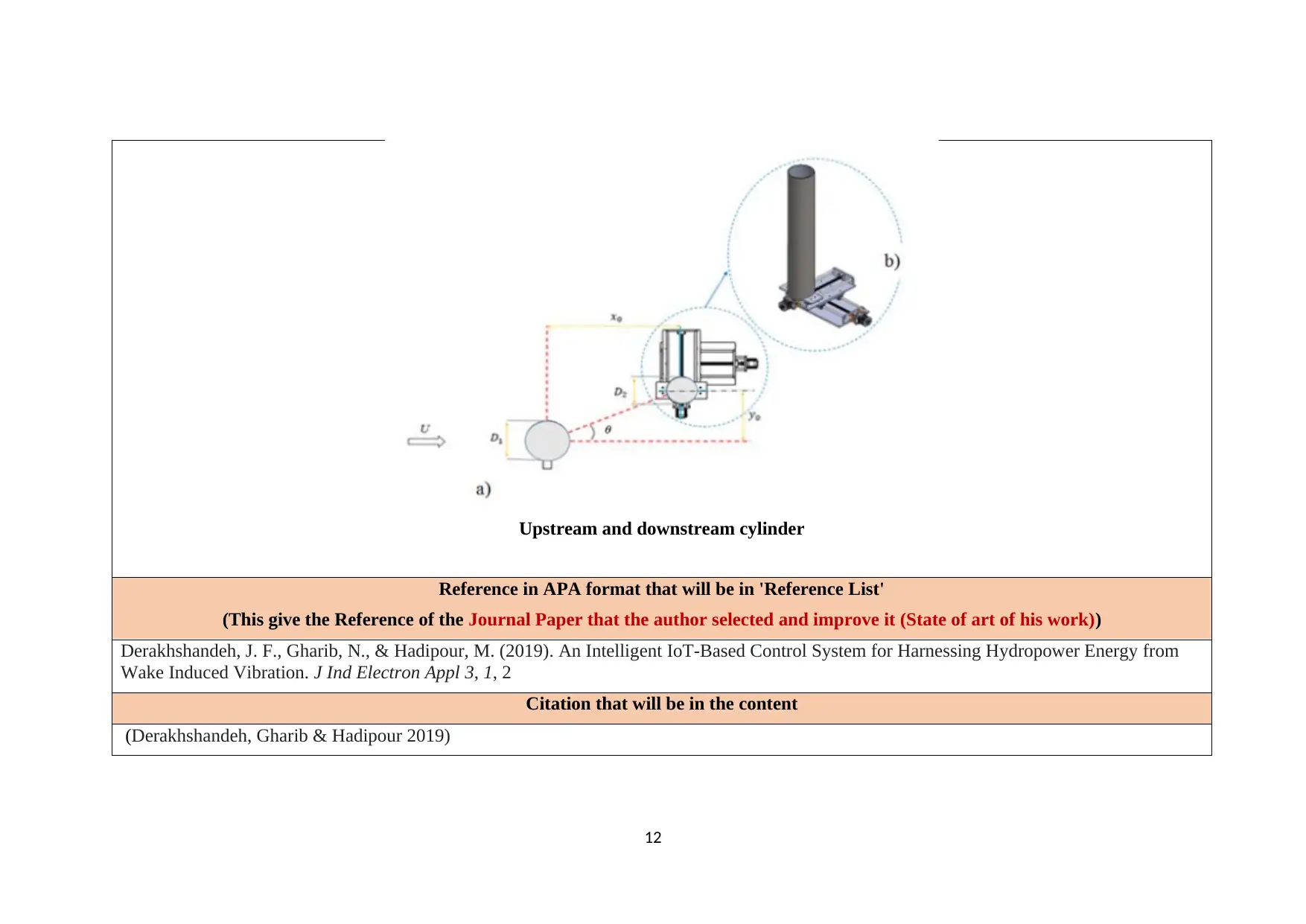
Upstream and downstream cylinder
Reference in APA format that will be in 'Reference List'
(This give the Reference of the Journal Paper that the author selected and improve it (State of art of his work))
Derakhshandeh, J. F., Gharib, N., & Hadipour, M. (2019). An Intelligent IoT-Based Control System for Harnessing Hydropower Energy from
Wake Induced Vibration. J Ind Electron Appl 3, 1, 2
Citation that will be in the content
(Derakhshandeh, Gharib & Hadipour 2019)
12
Reference in APA format that will be in 'Reference List'
(This give the Reference of the Journal Paper that the author selected and improve it (State of art of his work))
Derakhshandeh, J. F., Gharib, N., & Hadipour, M. (2019). An Intelligent IoT-Based Control System for Harnessing Hydropower Energy from
Wake Induced Vibration. J Ind Electron Appl 3, 1, 2
Citation that will be in the content
(Derakhshandeh, Gharib & Hadipour 2019)
12
⊘ This is a preview!⊘
Do you want full access?
Subscribe today to unlock all pages.

Trusted by 1+ million students worldwide
1 out of 75
Related Documents
Your All-in-One AI-Powered Toolkit for Academic Success.
+13062052269
info@desklib.com
Available 24*7 on WhatsApp / Email
Unlock your academic potential
Copyright © 2020–2025 A2Z Services. All Rights Reserved. Developed and managed by ZUCOL.