Comprehensive Report: Aircraft Design and Manufacturing
VerifiedAdded on 2022/09/06
|16
|2843
|14
Report
AI Summary
This report provides a conceptual framework for the design and manufacturing of a business-grade aircraft, focusing on accommodating approximately 40 passengers. It explores design methods, including aerodynamic considerations for fuel efficiency and passenger comfort, and details the manufacturing and assembly process, emphasizing material selection (aluminum, steel, titanium, and nickel alloys) and wing design choices. The report also covers regulatory requirements such as ventilation, ozone control, depressurization, and medical emergency provisions, alongside social, ethical, and environmental considerations. It addresses social issues like accessibility, ethical dilemmas in the aviation industry, and environmental concerns related to manufacturing and operation, culminating in a discussion of the design's overall impact and feasibility.
Aircraft Design and manufacturing 1
Aircraft Design and Manufacturing
My Name
Course Title
Professor name
Date
Aircraft Design and Manufacturing
My Name
Course Title
Professor name
Date

Paraphrase This Document
Need a fresh take? Get an instant paraphrase of this document with our AI Paraphraser
Aircraft Design and manufacturing 2
Introduction 3
Body 5
Design Methods 5
Manufacturing and Assembly Process 8
Metal Required 8
Aluminium 8
Steel 8
Titanium 9
Nickel alloys 9
Aerofoil Selection 10
Wings Selections 11
Cranked Trailing Wings 11
Regulatory Requirements 11
Ventilation 12
Ozone 12
Depressurization 12
Medical emergencies 13
Social, Ethica and Environmental Considerations 13
Social Issues 13
Ethical Considerations 14
Environmental Considerations 14
Conclusion 15
References 16
Introduction
The main aim of this report os to design and provide a conceptual framework for the business-
grade aircraft manufacturing and assembly process which can be used by a range of business
Introduction 3
Body 5
Design Methods 5
Manufacturing and Assembly Process 8
Metal Required 8
Aluminium 8
Steel 8
Titanium 9
Nickel alloys 9
Aerofoil Selection 10
Wings Selections 11
Cranked Trailing Wings 11
Regulatory Requirements 11
Ventilation 12
Ozone 12
Depressurization 12
Medical emergencies 13
Social, Ethica and Environmental Considerations 13
Social Issues 13
Ethical Considerations 14
Environmental Considerations 14
Conclusion 15
References 16
Introduction
The main aim of this report os to design and provide a conceptual framework for the business-
grade aircraft manufacturing and assembly process which can be used by a range of business
Aircraft Design and manufacturing 3
requirements ranging from the private sector to the individual needs. The business jet is a term
usually used to refer to a jet aircraft which is generally a smaller size in design compared to other
aircraft. The main purpose of this design is to come up with a method and procedure that can be
utilised to come up with an aircraft that can accommodate about 40 passengers for business
purposes. The report proposes the best methods in the aerospace and aeronautical engineering
that can be utilised to provides the best specifications and gain better performance level for long
haul flights. The aircraft design method focuses on better efficiency and reliability in terms of
fuels consumption and acceptable noise levels. This is achieved in the report through the
ridiculously designed parts and well-grounded manufacturing process.
Most modern aircraft are a complex combination of well designed aerodynamic, durable
structures that are ridiculously lightweight and advance systems engineering. Most air passengers
normally demand a little more comfort and generally environment-friendly aircraft (1). This
normally brings with it many technical challenges as the engineers seek to achieve a balance
between the aircraft being economical and able to achieve its design goals and specifications.
The design of aircraft thus is a much complex and labour intensive process which must keep in
check many factors and design details from the onset of the projects and the initial calculations
made, planning of logistics, planning of designs and even the real world consideration are critical
for the success of the projects. Every aircraft assembly designer normally goes through an array
of changes in their design considerations before even making the decision to put the design
through the assembly process (2). The design process thus is considered to be the time between
the ideation of the aircraft and the time the aircraft is actually flown. In the design process, the
following key engineering principles are always kept in mind; aerodynamics, stability and
control, propulsion and the structure and materials to be used.
requirements ranging from the private sector to the individual needs. The business jet is a term
usually used to refer to a jet aircraft which is generally a smaller size in design compared to other
aircraft. The main purpose of this design is to come up with a method and procedure that can be
utilised to come up with an aircraft that can accommodate about 40 passengers for business
purposes. The report proposes the best methods in the aerospace and aeronautical engineering
that can be utilised to provides the best specifications and gain better performance level for long
haul flights. The aircraft design method focuses on better efficiency and reliability in terms of
fuels consumption and acceptable noise levels. This is achieved in the report through the
ridiculously designed parts and well-grounded manufacturing process.
Most modern aircraft are a complex combination of well designed aerodynamic, durable
structures that are ridiculously lightweight and advance systems engineering. Most air passengers
normally demand a little more comfort and generally environment-friendly aircraft (1). This
normally brings with it many technical challenges as the engineers seek to achieve a balance
between the aircraft being economical and able to achieve its design goals and specifications.
The design of aircraft thus is a much complex and labour intensive process which must keep in
check many factors and design details from the onset of the projects and the initial calculations
made, planning of logistics, planning of designs and even the real world consideration are critical
for the success of the projects. Every aircraft assembly designer normally goes through an array
of changes in their design considerations before even making the decision to put the design
through the assembly process (2). The design process thus is considered to be the time between
the ideation of the aircraft and the time the aircraft is actually flown. In the design process, the
following key engineering principles are always kept in mind; aerodynamics, stability and
control, propulsion and the structure and materials to be used.
⊘ This is a preview!⊘
Do you want full access?
Subscribe today to unlock all pages.

Trusted by 1+ million students worldwide
Aircraft Design and manufacturing 4
Most aircraft normally have some common features which include but not limited to wings, the
tail which has vertical and horizontal sections for the wing, the engines which do the propulsion
and the fuselage which normally carries passengers and or the cargo. When more detail looks in
undertaken beyond gross features then subtle and sometimes none subtle difference in design.
The difference in design comes into play at this level. Each and every aircraft is general build to
undertake a specific task and the design consideration undertaken around the specific
requirements and the specific needs of the aircraft (3).
This report is divided into the following sections. The first section details the design method of
choice for building the aircraft bearing in mind the design requirements and specific needs of the
aircraft. The second section details the manufacturing and the general assembly process which
shall be used to manufacture the designed aircraft for production use. The third section covers
the critical regulatory requirements that the designed aircraft shall meet in order to be certified
for aviation use. The fourth sections summarise the social, ethical and environmental
consideration that the designer took into consideration for the design method, manufacturing and
assembly process choice.
Body
This section covers the main content of the report that covers the design method methods,
manufacturing and assembly process, regulatory and ethical considerations together with the
social and environmental consideration that is addressed during the design
Most aircraft normally have some common features which include but not limited to wings, the
tail which has vertical and horizontal sections for the wing, the engines which do the propulsion
and the fuselage which normally carries passengers and or the cargo. When more detail looks in
undertaken beyond gross features then subtle and sometimes none subtle difference in design.
The difference in design comes into play at this level. Each and every aircraft is general build to
undertake a specific task and the design consideration undertaken around the specific
requirements and the specific needs of the aircraft (3).
This report is divided into the following sections. The first section details the design method of
choice for building the aircraft bearing in mind the design requirements and specific needs of the
aircraft. The second section details the manufacturing and the general assembly process which
shall be used to manufacture the designed aircraft for production use. The third section covers
the critical regulatory requirements that the designed aircraft shall meet in order to be certified
for aviation use. The fourth sections summarise the social, ethical and environmental
consideration that the designer took into consideration for the design method, manufacturing and
assembly process choice.
Body
This section covers the main content of the report that covers the design method methods,
manufacturing and assembly process, regulatory and ethical considerations together with the
social and environmental consideration that is addressed during the design
Paraphrase This Document
Need a fresh take? Get an instant paraphrase of this document with our AI Paraphraser
Aircraft Design and manufacturing 5
Design Methods
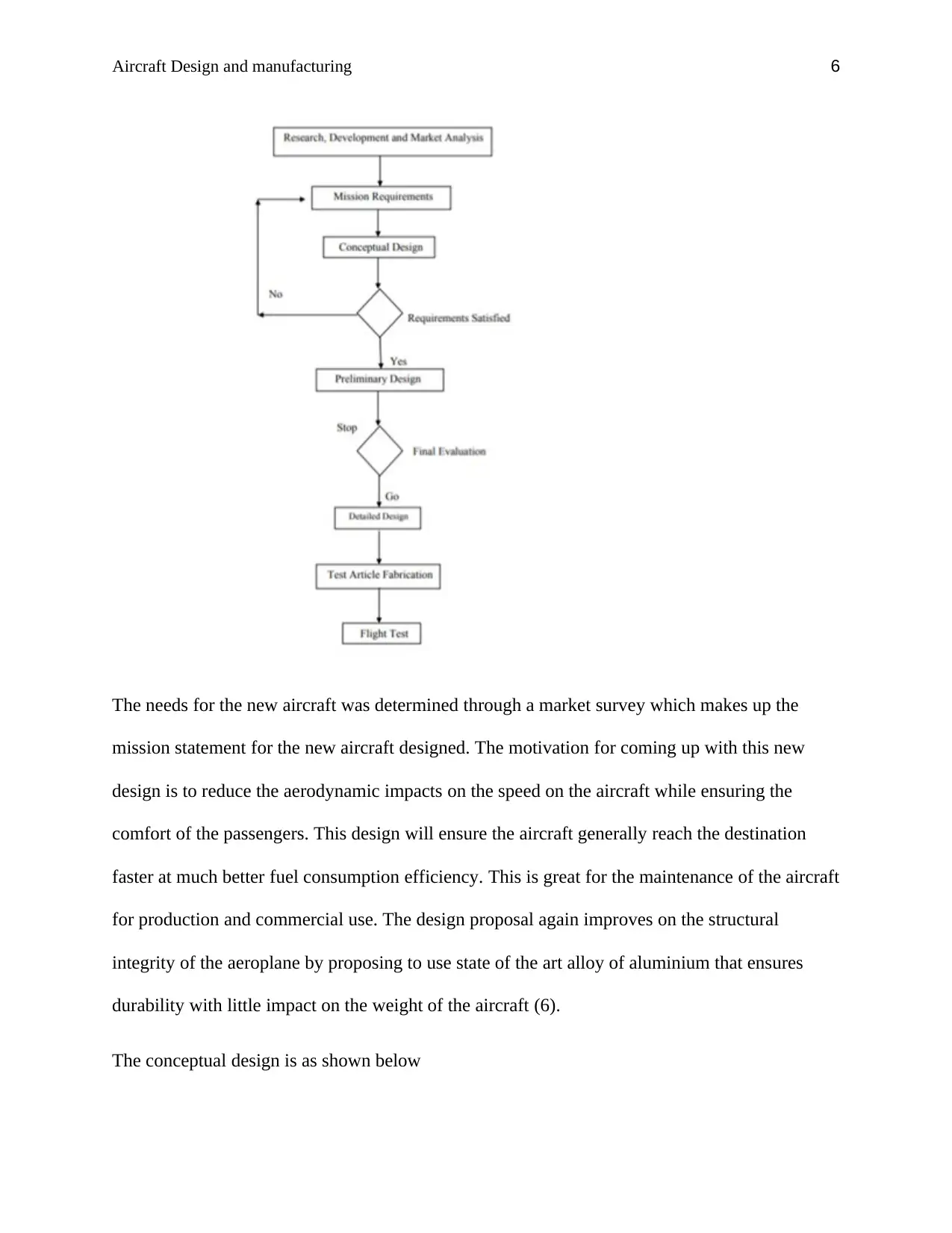
The design process of aircraft defines those process that the design is taken through up to the
point where the test flight is done. The process normally consists of distinct phases. The first step
in this aircraft design is the need identifications which details the need for the new design. The
second step is the detailing of the perceived market potential and the key technological advances
that have been made normally through some research and development (4). The research focus
on the perceived market share forecasting which attempts to examine what factors which may in
the future impact sales of the proposed design. Such factors include but not limited to new design
criteria for specific sizes and the general performances, the competitor’s design and the level of
feature commonality with the existing aircraft. The rule of thumb is that the proposed design will
offer a competitive advantage with better cost-effectiveness (5)
Design Methods
The design process of aircraft defines those process that the design is taken through up to the
point where the test flight is done. The process normally consists of distinct phases. The first step
in this aircraft design is the need identifications which details the need for the new design. The
second step is the detailing of the perceived market potential and the key technological advances
that have been made normally through some research and development (4). The research focus
on the perceived market share forecasting which attempts to examine what factors which may in
the future impact sales of the proposed design. Such factors include but not limited to new design
criteria for specific sizes and the general performances, the competitor’s design and the level of
feature commonality with the existing aircraft. The rule of thumb is that the proposed design will
offer a competitive advantage with better cost-effectiveness (5)
Aircraft Design and manufacturing 6
The needs for the new aircraft was determined through a market survey which makes up the
mission statement for the new aircraft designed. The motivation for coming up with this new
design is to reduce the aerodynamic impacts on the speed on the aircraft while ensuring the
comfort of the passengers. This design will ensure the aircraft generally reach the destination
faster at much better fuel consumption efficiency. This is great for the maintenance of the aircraft
for production and commercial use. The design proposal again improves on the structural
integrity of the aeroplane by proposing to use state of the art alloy of aluminium that ensures
durability with little impact on the weight of the aircraft (6).
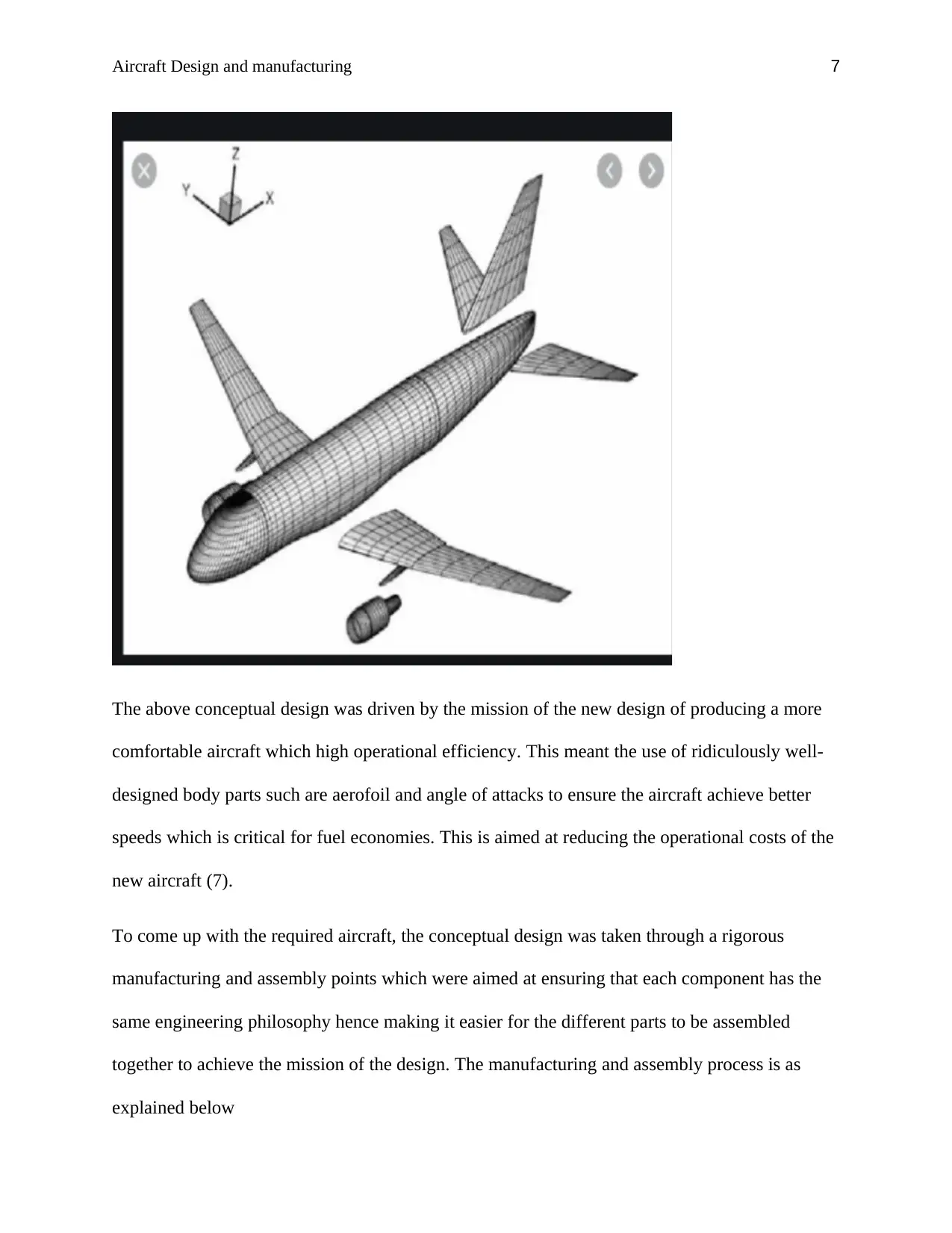
The conceptual design is as shown below
The needs for the new aircraft was determined through a market survey which makes up the
mission statement for the new aircraft designed. The motivation for coming up with this new
design is to reduce the aerodynamic impacts on the speed on the aircraft while ensuring the
comfort of the passengers. This design will ensure the aircraft generally reach the destination
faster at much better fuel consumption efficiency. This is great for the maintenance of the aircraft
for production and commercial use. The design proposal again improves on the structural
integrity of the aeroplane by proposing to use state of the art alloy of aluminium that ensures
durability with little impact on the weight of the aircraft (6).
The conceptual design is as shown below
⊘ This is a preview!⊘
Do you want full access?
Subscribe today to unlock all pages.
Trusted by 1+ million students worldwide
Aircraft Design and manufacturing 7
The above conceptual design was driven by the mission of the new design of producing a more
comfortable aircraft which high operational efficiency. This meant the use of ridiculously well-
designed body parts such are aerofoil and angle of attacks to ensure the aircraft achieve better
speeds which is critical for fuel economies. This is aimed at reducing the operational costs of the
new aircraft (7).
To come up with the required aircraft, the conceptual design was taken through a rigorous
manufacturing and assembly points which were aimed at ensuring that each component has the
same engineering philosophy hence making it easier for the different parts to be assembled
together to achieve the mission of the design. The manufacturing and assembly process is as
explained below
The above conceptual design was driven by the mission of the new design of producing a more
comfortable aircraft which high operational efficiency. This meant the use of ridiculously well-
designed body parts such are aerofoil and angle of attacks to ensure the aircraft achieve better
speeds which is critical for fuel economies. This is aimed at reducing the operational costs of the
new aircraft (7).
To come up with the required aircraft, the conceptual design was taken through a rigorous
manufacturing and assembly points which were aimed at ensuring that each component has the
same engineering philosophy hence making it easier for the different parts to be assembled
together to achieve the mission of the design. The manufacturing and assembly process is as
explained below
Paraphrase This Document
Need a fresh take? Get an instant paraphrase of this document with our AI Paraphraser
Aircraft Design and manufacturing 8
Manufacturing and Assembly Process
The manufacturing process for the new design took into account the right raw materials that
would achieve the required design mission. The following raw materials are critical for
assembling of the different parts of the aircraft.
Metal Required
Aluminium
Aluminium is chosen as the material for its low density and general high strength properties
which makes it the most ideal metal for the mass production of the aircraft. The design will use
the alloy 7075 which comprises of aluminium, magnesium and zine which are added to the metal
to ensure there is extra strength. The alloy will be composed of 80% of the aircraft unloaded
body (8).
Steel
Steal will be a key material for the manufacture of parts such as hinges, cables and even
fasteners. This is because of its strength, general hardness and high resistance to heat make it the
ideal metal of choice for the skin surface of the aircraft. The landing gear too will be made of the
steel for the same reason. Steel will comprise 10% of the materials that are used in the
manufacture of the aircraft
Manufacturing and Assembly Process
The manufacturing process for the new design took into account the right raw materials that
would achieve the required design mission. The following raw materials are critical for
assembling of the different parts of the aircraft.
Metal Required
Aluminium
Aluminium is chosen as the material for its low density and general high strength properties
which makes it the most ideal metal for the mass production of the aircraft. The design will use
the alloy 7075 which comprises of aluminium, magnesium and zine which are added to the metal
to ensure there is extra strength. The alloy will be composed of 80% of the aircraft unloaded
body (8).
Steel
Steal will be a key material for the manufacture of parts such as hinges, cables and even
fasteners. This is because of its strength, general hardness and high resistance to heat make it the
ideal metal of choice for the skin surface of the aircraft. The landing gear too will be made of the
steel for the same reason. Steel will comprise 10% of the materials that are used in the
manufacture of the aircraft
Aircraft Design and manufacturing 9
Titanium
The wings of the proposed design shall be made from titanium metal due to its high strength,
corrosion resistance and high-temperature resistance. The engine of the proposed design will also
be made from titanium to benefit from the inherent properties above
Nickel alloys
The turbines of the engines of this design shall be made from nickel alloys to benefit from the
properties of nickel that includes high temperature and corrosion resistance and better structural
integrity.
The above metal shall be key raw materials for the manufacture of the various aircraft parts.
Titanium
The wings of the proposed design shall be made from titanium metal due to its high strength,
corrosion resistance and high-temperature resistance. The engine of the proposed design will also
be made from titanium to benefit from the inherent properties above
Nickel alloys
The turbines of the engines of this design shall be made from nickel alloys to benefit from the
properties of nickel that includes high temperature and corrosion resistance and better structural
integrity.
The above metal shall be key raw materials for the manufacture of the various aircraft parts.
⊘ This is a preview!⊘
Do you want full access?
Subscribe today to unlock all pages.
Trusted by 1+ million students worldwide
Aircraft Design and manufacturing 10
Aerofoil Selection
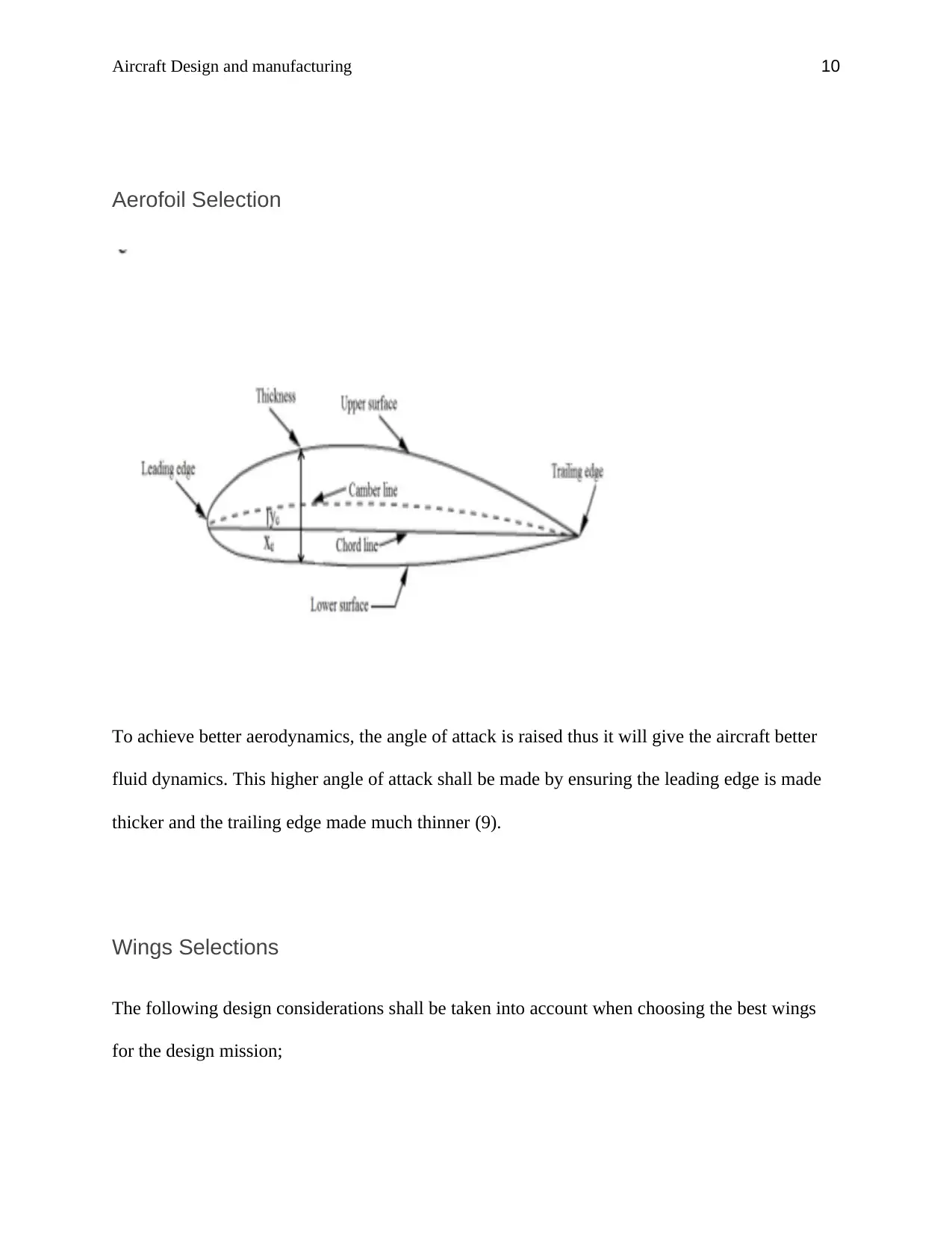
To achieve better aerodynamics, the angle of attack is raised thus it will give the aircraft better
fluid dynamics. This higher angle of attack shall be made by ensuring the leading edge is made
thicker and the trailing edge made much thinner (9).
Wings Selections
The following design considerations shall be taken into account when choosing the best wings
for the design mission;
Aerofoil Selection
To achieve better aerodynamics, the angle of attack is raised thus it will give the aircraft better
fluid dynamics. This higher angle of attack shall be made by ensuring the leading edge is made
thicker and the trailing edge made much thinner (9).
Wings Selections
The following design considerations shall be taken into account when choosing the best wings
for the design mission;
Paraphrase This Document
Need a fresh take? Get an instant paraphrase of this document with our AI Paraphraser
Aircraft Design and manufacturing 11
Cranked Trailing Wings
Instead of the traditional trapezoidal wings, the wings envisioned by the design shall have wings
unswept at the trailing edges to achieve subsonic speeds. The general effects of the unswept
wings includes
(a)it ensures higher thickness at the root of the aircraft
(b)The bending moment is reduces as compared to the trapezoidal wings types. This is is due to
reduced span-wise moments
The effects of this two properties is a reduces the weight of the wing. This creates more space for
the landing gear.
Regulatory Requirements
The aviation industry is a mission-critical industry which requires set up standards and
regulations to ensure compliance and safety of the passengers onboard the aircraft. This section
details some of the regulatory requirements that the design shall put into considerations;
Ventilation
The requirements in this regard are to ensure the both the cockpit and the cabin air be made free
from any hazardous and or harmful gases. The volume of carbon-based gases be set to below 3%
for this particular design
Cranked Trailing Wings
Instead of the traditional trapezoidal wings, the wings envisioned by the design shall have wings
unswept at the trailing edges to achieve subsonic speeds. The general effects of the unswept
wings includes
(a)it ensures higher thickness at the root of the aircraft
(b)The bending moment is reduces as compared to the trapezoidal wings types. This is is due to
reduced span-wise moments
The effects of this two properties is a reduces the weight of the wing. This creates more space for
the landing gear.
Regulatory Requirements
The aviation industry is a mission-critical industry which requires set up standards and
regulations to ensure compliance and safety of the passengers onboard the aircraft. This section
details some of the regulatory requirements that the design shall put into considerations;
Ventilation
The requirements in this regard are to ensure the both the cockpit and the cabin air be made free
from any hazardous and or harmful gases. The volume of carbon-based gases be set to below 3%
for this particular design
Aircraft Design and manufacturing 12
Ozone
The removal of the ozone gases In the cabin and cockpit is achieved via the usage of specially
designed materials that ensures the gases and fumes do not enter the cabin as this can easily
cause burns. The design is consistent with the safety requirements of the aviation industry.
Depressurization
Equipment must be available to deliver supplemental oxygen for crew and passengers whenever
the aeroplane is operated at an altitude of over 10,000 ft.18 For flight above 25,000 ft, an
automatic system to deploy supplemental oxygen equipment in the event of sudden
depressurization is required; and portable oxygen equipment with a 15-min supply must be
provided for cabin crew.
Depressurization of the cabin is key for the comfort level of the passengers during the flight. To
achieve this, the equipments shall be placed in the wings to provide constant supply of oxygen
for the crew and other onboard passengers whenever the aeroplane goes beyond the 10,000 feet
above sea level, the onboard equipment automatically deploy the systems to have the oxygen in
the event there is need to have sudden depressurization. The air supply must be able last for 15-
min to allow for the crew of the cabin in such events.
Ozone
The removal of the ozone gases In the cabin and cockpit is achieved via the usage of specially
designed materials that ensures the gases and fumes do not enter the cabin as this can easily
cause burns. The design is consistent with the safety requirements of the aviation industry.
Depressurization
Equipment must be available to deliver supplemental oxygen for crew and passengers whenever
the aeroplane is operated at an altitude of over 10,000 ft.18 For flight above 25,000 ft, an
automatic system to deploy supplemental oxygen equipment in the event of sudden
depressurization is required; and portable oxygen equipment with a 15-min supply must be
provided for cabin crew.
Depressurization of the cabin is key for the comfort level of the passengers during the flight. To
achieve this, the equipments shall be placed in the wings to provide constant supply of oxygen
for the crew and other onboard passengers whenever the aeroplane goes beyond the 10,000 feet
above sea level, the onboard equipment automatically deploy the systems to have the oxygen in
the event there is need to have sudden depressurization. The air supply must be able last for 15-
min to allow for the crew of the cabin in such events.
⊘ This is a preview!⊘
Do you want full access?
Subscribe today to unlock all pages.
Trusted by 1+ million students worldwide

1 out of 16


Related Documents


Your All-in-One AI-Powered Toolkit for Academic Success.
+13062052269
info@desklib.com
Available 24*7 on WhatsApp / Email
![[object Object]](/_next/static/media/star-bottom.7253800d.svg)
Unlock your academic potential
Copyright © 2020–2026 A2Z Services. All Rights Reserved. Developed and managed by ZUCOL.