Analysis of Marr's Three Levels in AI: A Comprehensive Report

Verified

Added on  2022/08/18

|4
|560
|48
Report
AI Summary
This report provides an analysis of Marr's three levels of analysis—computational, algorithmic, and implementational—and their application in artificial intelligence. The report begins by defining each level, explaining the computational level's focus on problem specification, the algorithmic level's role in bridging the gap between computational and implementational levels, and the implementational level's concern with physical implementation. The report uses the example of a waitress to illustrate these levels, detailing the computational goal of providing service, the algorithmic rules for the job (friendliness, attentiveness, menu knowledge), and the implementational aspects (cheerful nature and guest management). The report concludes by suggesting that this job can be automated in the future. This analysis provides a comprehensive understanding of how Marr's framework can be used to understand complex systems in AI and cognitive science.
Document Page
Running head: MARR’S THREE LEVELS OF ANALYSIS
MARR’S THREE LEVELS OF ANALYSIS
Name of the Student
Name of the University
Author note
tabler-icon-diamond-filled.svg

Paraphrase This Document

Need a fresh take? Get an instant paraphrase of this document with our AI Paraphraser
Document Page
1MARR’S THREE LEVELS OF ANALYSIS
Marr’s Levels
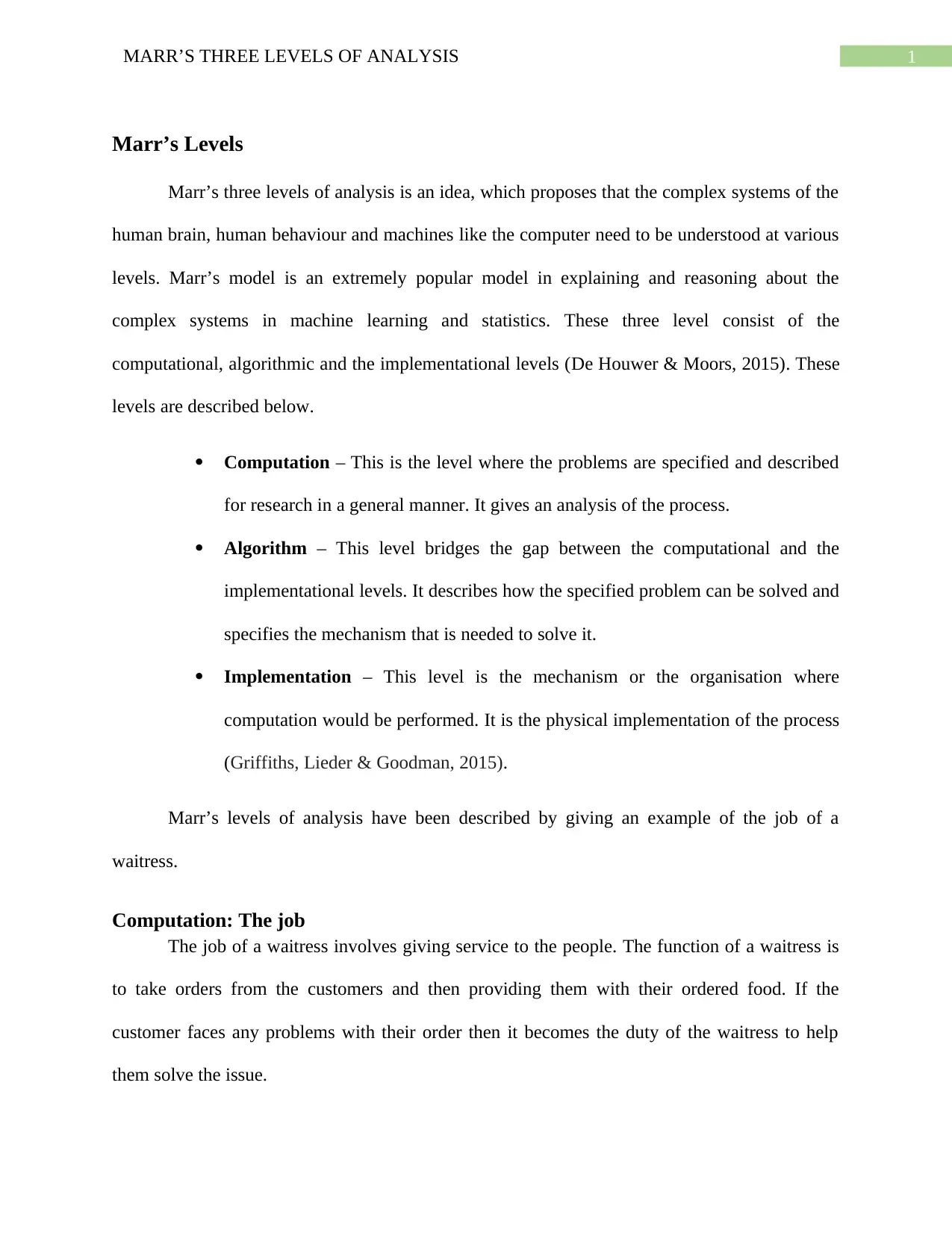
Marr’s three levels of analysis is an idea, which proposes that the complex systems of the
human brain, human behaviour and machines like the computer need to be understood at various
levels. Marr’s model is an extremely popular model in explaining and reasoning about the
complex systems in machine learning and statistics. These three level consist of the
computational, algorithmic and the implementational levels (De Houwer & Moors, 2015). These
levels are described below.
Computation – This is the level where the problems are specified and described
for research in a general manner. It gives an analysis of the process.
Algorithm – This level bridges the gap between the computational and the
implementational levels. It describes how the specified problem can be solved and
specifies the mechanism that is needed to solve it.
Implementation This level is the mechanism or the organisation where
computation would be performed. It is the physical implementation of the process
(Griffiths, Lieder & Goodman, 2015).
Marr’s levels of analysis have been described by giving an example of the job of a
waitress.
Computation: The job
The job of a waitress involves giving service to the people. The function of a waitress is
to take orders from the customers and then providing them with their ordered food. If the
customer faces any problems with their order then it becomes the duty of the waitress to help
them solve the issue.
Document Page
2MARR’S THREE LEVELS OF ANALYSIS
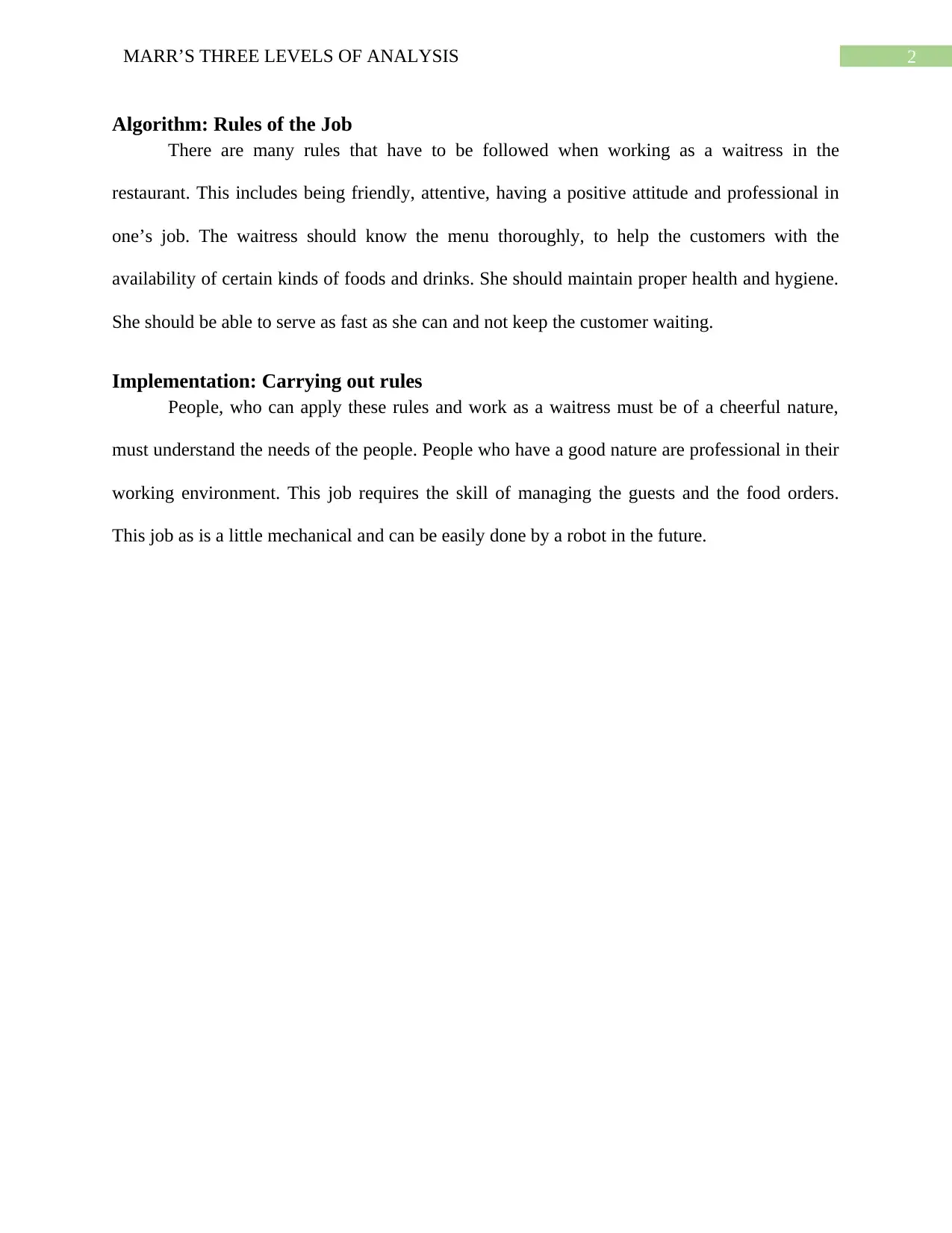
Algorithm: Rules of the Job
There are many rules that have to be followed when working as a waitress in the
restaurant. This includes being friendly, attentive, having a positive attitude and professional in
one’s job. The waitress should know the menu thoroughly, to help the customers with the
availability of certain kinds of foods and drinks. She should maintain proper health and hygiene.
She should be able to serve as fast as she can and not keep the customer waiting.
Implementation: Carrying out rules
People, who can apply these rules and work as a waitress must be of a cheerful nature,
must understand the needs of the people. People who have a good nature are professional in their
working environment. This job requires the skill of managing the guests and the food orders.
This job as is a little mechanical and can be easily done by a robot in the future.
Document Page
3MARR’S THREE LEVELS OF ANALYSIS
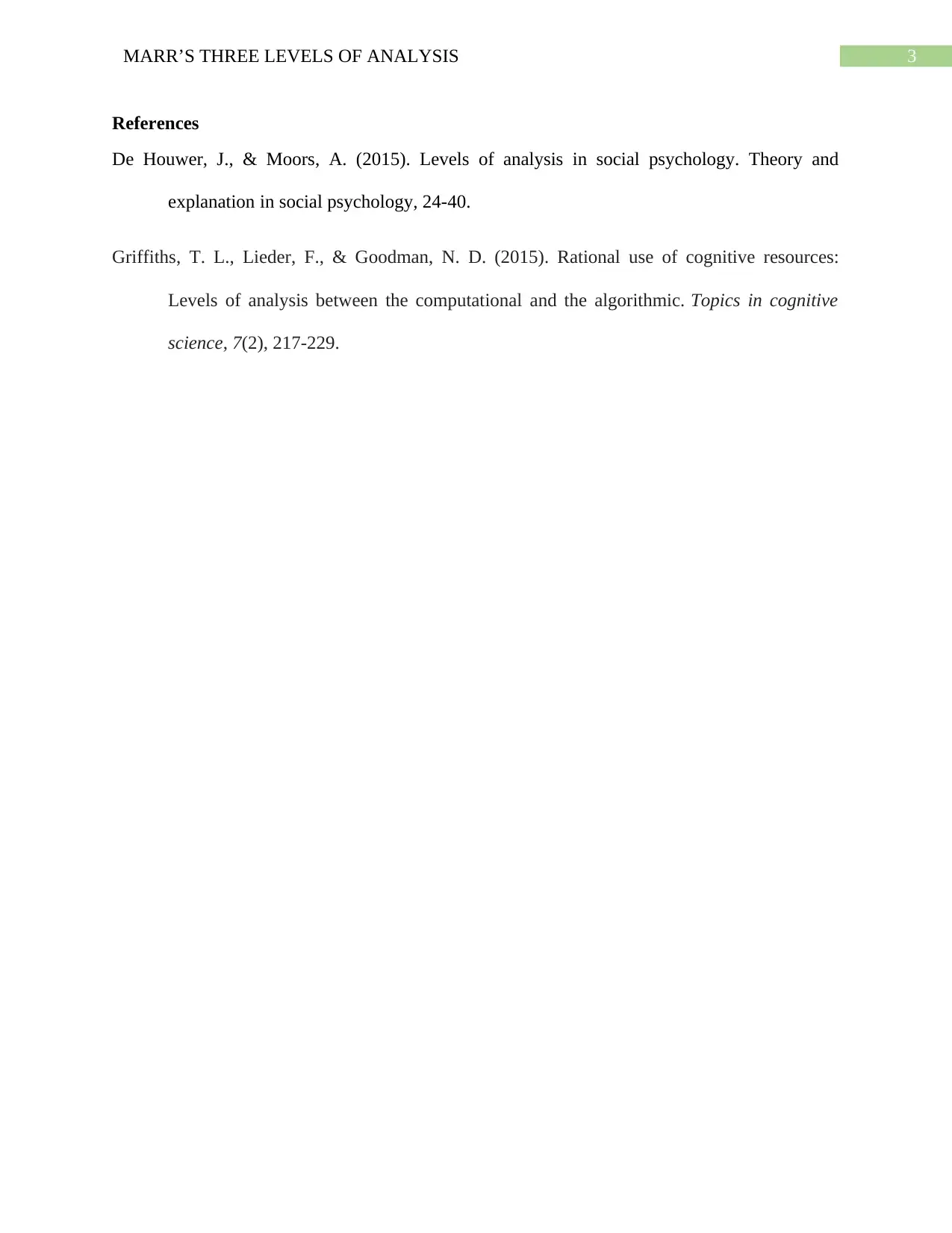
References
De Houwer, J., & Moors, A. (2015). Levels of analysis in social psychology. Theory and
explanation in social psychology, 24-40.
Griffiths, T. L., Lieder, F., & Goodman, N. D. (2015). Rational use of cognitive resources:
Levels of analysis between the computational and the algorithmic. Topics in cognitive
science, 7(2), 217-229.
chevron_up_icon
1 out of 4
circle_padding
hide_on_mobile
zoom_out_icon
[object Object]