Comprehensive Analysis of the Zulfiqar Ali Bhutto Era in Pakistan
VerifiedAdded on 2021/10/06
|23
|7771
|429
Report
AI Summary
This report provides a comprehensive analysis of the Zulfiqar Ali Bhutto era in Pakistan, spanning from 1971 to 1977. It delves into Bhutto's early life, political career, and the founding of the Pakistan Peoples Party. The report examines significant events like the Simla Accords and Lahore Summit, and critically assesses his economic, industrial, land, educational, and banking reforms. It also explores the labor policies and social security measures implemented during his tenure. The analysis further investigates the consequences of nationalization, the impact of reforms on various sectors, and the circumstances leading to Bhutto's downfall. The report highlights the key aspects of Bhutto's leadership, including his efforts to prevent further division of the country and his socialist economic policies. This assignment, contributed to Desklib, offers valuable insights into the complex and transformative period of Pakistan's history under Zulfiqar Ali Bhutto.
ANALYSIS OF ZULFIQAR ALI BHUTTO ERA (SIMLA ACCORDS,
LAHORE SUMMIT, REFORMS, AND FALL OF BHUTTO)
BY
GROUP- 4
SUBMITTED TO
GHULAM SHABIR
DEPARTMENT OF ENLISH
SESSION 2019-2023
LAHORE SUMMIT, REFORMS, AND FALL OF BHUTTO)
BY
GROUP- 4
SUBMITTED TO
GHULAM SHABIR
DEPARTMENT OF ENLISH
SESSION 2019-2023

Paraphrase This Document
Need a fresh take? Get an instant paraphrase of this document with our AI Paraphraser
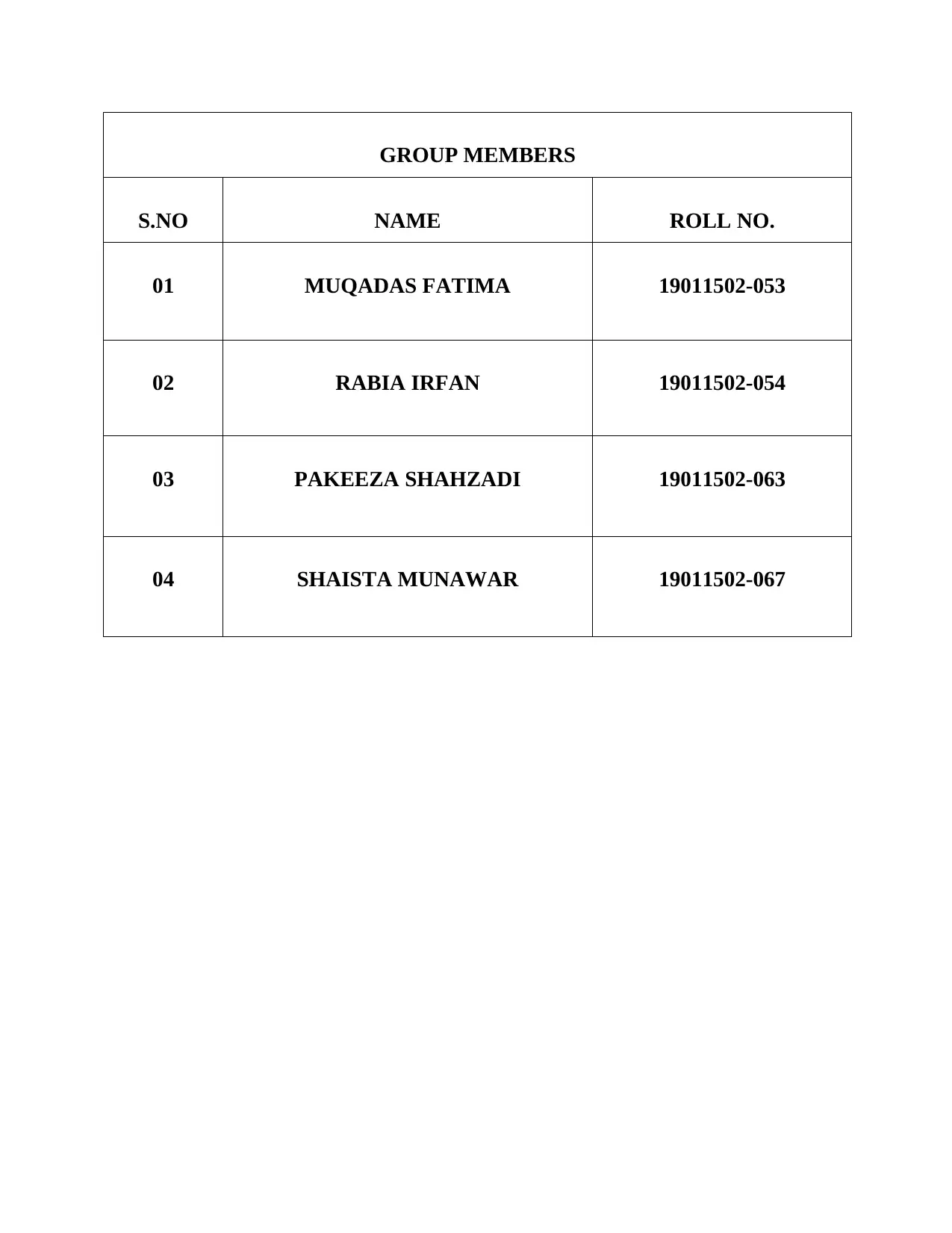
GROUP MEMBERS
S.NO NAME ROLL NO.
01 MUQADAS FATIMA 19011502-053
02 RABIA IRFAN 19011502-054
03 PAKEEZA SHAHZADI 19011502-063
04 SHAISTA MUNAWAR 19011502-067
S.NO NAME ROLL NO.
01 MUQADAS FATIMA 19011502-053
02 RABIA IRFAN 19011502-054
03 PAKEEZA SHAHZADI 19011502-063
04 SHAISTA MUNAWAR 19011502-067
ASSIGNMENT 1
Introduction
On 5 January 1928, Zulfiqar Ali Bhutto was born. He served as the president of Pakistan from
1971 to 1973 and as the prime minister of Pakistan from 1973 to 1977. He founded a political
party named Pakistan Peoples Party (PPP) on November 30, 1967 in Lahore.
Born into a rich and wealthy family, when Bhutto joined the government headed by President
Ayub Khan, he was one of Pakistan’s youngest politician. Zulfiqar Ali Bhutto was elected the
youngest member of Pakistan’s United Nation Delegation in 1957. Bhutto became the youngest
minister of cabinet in 1958 when President Field Marshal Ayub Khan, who had seized power
through military coup, gave him charge of Energy ministry and imposed martial law in country.
Eventually he was appointed to Ministry of Commerce and Ministry of Information and Industry
in 1960.
Early Life
Born to Sir Shah Nawaz and Khursheed Begum near Larkana, Zulfiqar was their third child.
Their first, Sikander Ali, died in 1914 from pneumonia at the age of seven and the second, Imdad
Ali, died in 1953 from liver failure at the age of 39. Zulfiqar Ali Bhutto belonged to family of
Sindhi Bhutto Muslim Rajput. His father was the dewan of Junagadh’s princely state, and
enjoyed a powerful relationship with British Raj officials. When a young boy, Bhutto moved to
Bombay’s Worli Seaface to study at both the Cathedral and John Connon School then he became
Pakistan Movement participant, as well. In 1943 his wedding with Shireen Amir Begum was
organized.
Bhutto was accepted to study political science at the University of Southern California in 1947.
In 1949, as an undergraduate, Bhutto was moved to University of California, Berkeley, where he
obtained BA.(Honors) Political Science degree in 1950. There, Bhutto took interest in socialism
ideas, presenting a series of lecture on their viability in Islamic countries. Bhutto’s father had
played a controversial role in Junagadh’s affairs during this period. Coming to power in a coup
d’état, he secured his state accession to Pakistan which was eventually failed in Dec 1947 by
Indian intrusion.
Introduction
On 5 January 1928, Zulfiqar Ali Bhutto was born. He served as the president of Pakistan from
1971 to 1973 and as the prime minister of Pakistan from 1973 to 1977. He founded a political
party named Pakistan Peoples Party (PPP) on November 30, 1967 in Lahore.
Born into a rich and wealthy family, when Bhutto joined the government headed by President
Ayub Khan, he was one of Pakistan’s youngest politician. Zulfiqar Ali Bhutto was elected the
youngest member of Pakistan’s United Nation Delegation in 1957. Bhutto became the youngest
minister of cabinet in 1958 when President Field Marshal Ayub Khan, who had seized power
through military coup, gave him charge of Energy ministry and imposed martial law in country.
Eventually he was appointed to Ministry of Commerce and Ministry of Information and Industry
in 1960.
Early Life
Born to Sir Shah Nawaz and Khursheed Begum near Larkana, Zulfiqar was their third child.
Their first, Sikander Ali, died in 1914 from pneumonia at the age of seven and the second, Imdad
Ali, died in 1953 from liver failure at the age of 39. Zulfiqar Ali Bhutto belonged to family of
Sindhi Bhutto Muslim Rajput. His father was the dewan of Junagadh’s princely state, and
enjoyed a powerful relationship with British Raj officials. When a young boy, Bhutto moved to
Bombay’s Worli Seaface to study at both the Cathedral and John Connon School then he became
Pakistan Movement participant, as well. In 1943 his wedding with Shireen Amir Begum was
organized.
Bhutto was accepted to study political science at the University of Southern California in 1947.
In 1949, as an undergraduate, Bhutto was moved to University of California, Berkeley, where he
obtained BA.(Honors) Political Science degree in 1950. There, Bhutto took interest in socialism
ideas, presenting a series of lecture on their viability in Islamic countries. Bhutto’s father had
played a controversial role in Junagadh’s affairs during this period. Coming to power in a coup
d’état, he secured his state accession to Pakistan which was eventually failed in Dec 1947 by
Indian intrusion.
⊘ This is a preview!⊘
Do you want full access?
Subscribe today to unlock all pages.

Trusted by 1+ million students worldwide
Bhutto moved to United Kingdom in June 1950, to attend law school at Christ Church, Oxford,
and obtained an LLB, followed by a degree and a M.Sc. (Honors) Degree in Political Science.
On completion of his studies, he was appointed to the bar of Lincoln’s Inn in 1953. He was a
fellow of Barrister Ijaz Hussain Batalvi who later appeared as prosecutor at his trial.
On 8 September 1951, Bhutto married second wife, an Iranian-Kurdish woman, Nusrat Ispahani
in Karachi. Benazir, their first child, was born in the year 1953. Murtaza accompanied her in
1954, Sanam in 1957 and Shahnawaz in 1958.
Political Career
Returning to Pakistan in 1953, Lincoln’s Inn Barrister Bhutto worked as a lawyer in Karachi
before leaving it for politics. Bhutto appointed his foreign minister shortly after the 1958 military
coup of Ayub Khan. He represented Pakistan in the UN Security Council during 1965 Indo-Pak
war as a foreign minister of Pakistan. After Ayub Khan’s Tashkent treaty with India in Russia,
Bhutto was enraged and went to the television and criticized Ayub Khan for selling nation’s
honor and pride which became the reason of his deposition.
He founded his own political Party named Pakistan Peoples Party Parliamentarians (PPPP) in
1967. General elections were held in Pakistan in 1970 and Bhutto’s PPP gained a lot of
appreciation in West Pakistan. Wherever he spoke in West Pakistan, he received popular
acclaim. Yet East Pakistanis had no interest in what Bhutto had say. Many Bengali’s didn’t
understand any of his Urdu or English Slogans. Sheikh Mujib ur Rehman, head of Awami
League was the only politician most Bengali’s endorsed. In Pakistan’s first national election in
1970, they overwhelmingly voted for him. Bhutto’s PPP won election in West Pakistan, but
there have been 10 million more people in East Pakistan, so that the Awami League of Mujib got
a majority of seats in the National Assembly. Mujib should have become the first constitutionally
elected head of state of Pakistan, but Bhutto refused to acknowledge him. In this battle to gain
power Yahya Khan then Army General imposed martial law on country and civil war broke out
which ended with the creation of Bangladesh.
After the fall of Dhaka on 16 Dec, 1971, Bhutto became the president and first civilian chief
martial law administrator on 20 Dec, 1971.
and obtained an LLB, followed by a degree and a M.Sc. (Honors) Degree in Political Science.
On completion of his studies, he was appointed to the bar of Lincoln’s Inn in 1953. He was a
fellow of Barrister Ijaz Hussain Batalvi who later appeared as prosecutor at his trial.
On 8 September 1951, Bhutto married second wife, an Iranian-Kurdish woman, Nusrat Ispahani
in Karachi. Benazir, their first child, was born in the year 1953. Murtaza accompanied her in
1954, Sanam in 1957 and Shahnawaz in 1958.
Political Career
Returning to Pakistan in 1953, Lincoln’s Inn Barrister Bhutto worked as a lawyer in Karachi
before leaving it for politics. Bhutto appointed his foreign minister shortly after the 1958 military
coup of Ayub Khan. He represented Pakistan in the UN Security Council during 1965 Indo-Pak
war as a foreign minister of Pakistan. After Ayub Khan’s Tashkent treaty with India in Russia,
Bhutto was enraged and went to the television and criticized Ayub Khan for selling nation’s
honor and pride which became the reason of his deposition.
He founded his own political Party named Pakistan Peoples Party Parliamentarians (PPPP) in
1967. General elections were held in Pakistan in 1970 and Bhutto’s PPP gained a lot of
appreciation in West Pakistan. Wherever he spoke in West Pakistan, he received popular
acclaim. Yet East Pakistanis had no interest in what Bhutto had say. Many Bengali’s didn’t
understand any of his Urdu or English Slogans. Sheikh Mujib ur Rehman, head of Awami
League was the only politician most Bengali’s endorsed. In Pakistan’s first national election in
1970, they overwhelmingly voted for him. Bhutto’s PPP won election in West Pakistan, but
there have been 10 million more people in East Pakistan, so that the Awami League of Mujib got
a majority of seats in the National Assembly. Mujib should have become the first constitutionally
elected head of state of Pakistan, but Bhutto refused to acknowledge him. In this battle to gain
power Yahya Khan then Army General imposed martial law on country and civil war broke out
which ended with the creation of Bangladesh.
After the fall of Dhaka on 16 Dec, 1971, Bhutto became the president and first civilian chief
martial law administrator on 20 Dec, 1971.
Paraphrase This Document
Need a fresh take? Get an instant paraphrase of this document with our AI Paraphraser
Here are the important reforms of Zulfiqar Ali Bhutto’s six and half year’s period.
1. Economic Reforms
While working to prevent any further division of the country, Bhutto implemented the
socialist economic policies. Bhutto effectively nationalized major heavy mechanical,
chemical and electrical engineering industries and all of the industries came under direct
state control. Industries, such as KESC, came under full government control in the KESC
decision without any private intervention. Bhutto rejected the state capitalism policies of
Ayub Khan and implemented egalitarian policies to reduce the wealthy becoming richer
and poor becoming poorer. The Port Qasim, Pakistan Steel Mills, Heavy Mechanical
Complex and several cement factories were also built by Bhutto.
Bhutto’s nationalization initiatives were implemented with the aim of putting employs in
charge of manufacturing resources and defending jobs and small businesses. Though,
economic historians concluded that the nationalization policy had dire consequences on
Pakistan’s economy, diminishing the credibility of Bhutto. Conservative analyst argued
that nationalization policies have weakened the trust of consumer and government
corruption raised but military government never proved any corruption charges against
Bhutto.
Bhutto established the National Development Finance Corporation (NDFC) as a part of
his investment policies. This financial entity started service in July 1973 with an initial
government fund of 100 million Rs. It was focused at funding public sectors business
project, but its framework was later modified to finance the corporate sector too. At
present, NFDC is the largest development finance institution conducting diversified
operations in the field of finance and investment banking. By the mid-1990s NDFC had a
capital pool of US$ 878 million and the Bhutto government boosted the amount of
private and public demand in the economy from less than Rs 7,000 million in 1971–72 to
more than Rs 17,000 million in 1974–75.
2. Land and Agricultural Reforms
During the period of Bhutto government many land reforms were introduced.
1. Economic Reforms
While working to prevent any further division of the country, Bhutto implemented the
socialist economic policies. Bhutto effectively nationalized major heavy mechanical,
chemical and electrical engineering industries and all of the industries came under direct
state control. Industries, such as KESC, came under full government control in the KESC
decision without any private intervention. Bhutto rejected the state capitalism policies of
Ayub Khan and implemented egalitarian policies to reduce the wealthy becoming richer
and poor becoming poorer. The Port Qasim, Pakistan Steel Mills, Heavy Mechanical
Complex and several cement factories were also built by Bhutto.
Bhutto’s nationalization initiatives were implemented with the aim of putting employs in
charge of manufacturing resources and defending jobs and small businesses. Though,
economic historians concluded that the nationalization policy had dire consequences on
Pakistan’s economy, diminishing the credibility of Bhutto. Conservative analyst argued
that nationalization policies have weakened the trust of consumer and government
corruption raised but military government never proved any corruption charges against
Bhutto.
Bhutto established the National Development Finance Corporation (NDFC) as a part of
his investment policies. This financial entity started service in July 1973 with an initial
government fund of 100 million Rs. It was focused at funding public sectors business
project, but its framework was later modified to finance the corporate sector too. At
present, NFDC is the largest development finance institution conducting diversified
operations in the field of finance and investment banking. By the mid-1990s NDFC had a
capital pool of US$ 878 million and the Bhutto government boosted the amount of
private and public demand in the economy from less than Rs 7,000 million in 1971–72 to
more than Rs 17,000 million in 1974–75.
2. Land and Agricultural Reforms
During the period of Bhutto government many land reforms were introduced.
The major land reforms included the decrease of land ceilings and the implementation of
lease security for contractor farmers. The land limit was set at 150 acres (0.61 km2) of
irrigated land and 300 acres (1.2 km2) of non-irrigated soil.
Bhutto was a keen supporter to help smallholder farmers. He claimed that if farmers were
vulnerable and dispirited then the agricultural power of Pakistan would be frail, claiming
that farmers would not feel mentally secure until the country achieved food self-
sufficiency. The Bhutto government therefore initiated programs to place the country on
the path to self-sufficiency in rice hulling, sugar puttering and wheat husking industries.
The State has implemented initiatives to tackle water pollution and turbidity. Tax
exemptions were also initiated to enable small-scale peasants to expand agriculture.
Bhutto's nationalization of Sindh-based manufacturing greatly helped the poor but
offended the dominant feudal rulers horribly.
3. Industrial Reforms
Bhutto also paid a great attention in industrials reforms and the development of industry
in Pakistan. Some of his reforms are:
Key sectors such as steel, chemical and cement were privatized in the first phase. This
was achieved in 1972. The next big step in privatization took place on 1 January 1974,
when Bhutto privatized all banks. The final step in the sequence was the privatization of
all flour, rice and cotton mills across the country. This privatization process was not as
successful as Bhutto expected. The majority of the privatized units were small enterprises
that could not be de-nationalized.
In the final analysis, nationalization caused significant damages not only to the national
economy but to the people of Pakistan as well.
4. Educational Reforms
Zulfiqar Ali Bhutto himself belongs to a literate and educational family and understands
the importance of modern education for the battered Pakistani nation that’s why he
played an important role in the history of Pakistan’s modern education.
The Bhutto government founded a large number of rural and urban schools, including
around 6,500 elementary schools, 900 middle schools, 407 high schools, 51 intermediate
colleges, and 21 community colleges. Bhutto also rejected the Western education system,
and much of the literature was sent back to the Western world; instead, his government
lease security for contractor farmers. The land limit was set at 150 acres (0.61 km2) of
irrigated land and 300 acres (1.2 km2) of non-irrigated soil.
Bhutto was a keen supporter to help smallholder farmers. He claimed that if farmers were
vulnerable and dispirited then the agricultural power of Pakistan would be frail, claiming
that farmers would not feel mentally secure until the country achieved food self-
sufficiency. The Bhutto government therefore initiated programs to place the country on
the path to self-sufficiency in rice hulling, sugar puttering and wheat husking industries.
The State has implemented initiatives to tackle water pollution and turbidity. Tax
exemptions were also initiated to enable small-scale peasants to expand agriculture.
Bhutto's nationalization of Sindh-based manufacturing greatly helped the poor but
offended the dominant feudal rulers horribly.
3. Industrial Reforms
Bhutto also paid a great attention in industrials reforms and the development of industry
in Pakistan. Some of his reforms are:
Key sectors such as steel, chemical and cement were privatized in the first phase. This
was achieved in 1972. The next big step in privatization took place on 1 January 1974,
when Bhutto privatized all banks. The final step in the sequence was the privatization of
all flour, rice and cotton mills across the country. This privatization process was not as
successful as Bhutto expected. The majority of the privatized units were small enterprises
that could not be de-nationalized.
In the final analysis, nationalization caused significant damages not only to the national
economy but to the people of Pakistan as well.
4. Educational Reforms
Zulfiqar Ali Bhutto himself belongs to a literate and educational family and understands
the importance of modern education for the battered Pakistani nation that’s why he
played an important role in the history of Pakistan’s modern education.
The Bhutto government founded a large number of rural and urban schools, including
around 6,500 elementary schools, 900 middle schools, 407 high schools, 51 intermediate
colleges, and 21 community colleges. Bhutto also rejected the Western education system,
and much of the literature was sent back to the Western world; instead, his government
⊘ This is a preview!⊘
Do you want full access?
Subscribe today to unlock all pages.
Trusted by 1+ million students worldwide
wanted local scholars to write books. While the local books were made accessible to the
public, the debate accompanied these amendments. His government announced schools
obligatory for study of Islam and Pakistan. Book banks were established in most
universities and the students were provided with over 400,000 copies of textbooks.
Bhutto is accredited with founding the world-class Quaid-e-Azam University and Allama
Iqbal Open University in Islamabad in 1974, and for founding Dera Ismail Khan
University in 1973. The Institute of Theoretical Physics was founded in his tenure as
Foreign Minister, and with the aid of Abdus Salam in 1967. Bhutto made groundbreaking
initiatives as prime minister to extend the educational network. In 1975, Bhutto founded
the Allama Iqbal Medical College.
Bhutto founded the Engineering Council, Institute of Theoretical Physics, Pakistan
Academy of Letters, and Razmak Cadet College in North Waziristan in 1976. Another
four new universities in Multan, Bahawalpur, and Khairpur were established. The
People's Open University is another groundbreaking initiative from Islamabad that has
started to operate. The Government's education policy calls for the remission of tuition
and the allocation of a variety of higher education scholarships to the children of tight-
paid employees. Following the 1977 election, seven thousand additional hostel seats were
scheduled for addition to the current accommodation. Bhutto said he was informed "of the
difficulties and deficiencies faced by college students in many of the existing hostels. Directions
have, therefore, been issued that fans, water-coolers and pay-telephones must be provided in
each and every hostel in as short a time as physically possible."
5. Banking Reforms
Banking reforms were adopted to include more resources for small-scale farmers and
companies, such as requiring banks to guarantee that 70% of retail credit would be for
12.5-acre or fewer small-scale landlords, a radical concept at a time when banks alone
were the wealthy classes. At the end of the Bhutto government accumulation of wealth
had diminished relative to the height of the Ayub Khan period when 22 families owned
66% of economic property, dominated banking and 97% of insurance.
6. Labour Policy and Social Security
Labor policy was one of Bhutto's most critical key elements of governance and a
thorough labour reform introduced by the Bhutto government. Soon after taking power,
Bhutto's government put certain limitations on employees ' termination.
public, the debate accompanied these amendments. His government announced schools
obligatory for study of Islam and Pakistan. Book banks were established in most
universities and the students were provided with over 400,000 copies of textbooks.
Bhutto is accredited with founding the world-class Quaid-e-Azam University and Allama
Iqbal Open University in Islamabad in 1974, and for founding Dera Ismail Khan
University in 1973. The Institute of Theoretical Physics was founded in his tenure as
Foreign Minister, and with the aid of Abdus Salam in 1967. Bhutto made groundbreaking
initiatives as prime minister to extend the educational network. In 1975, Bhutto founded
the Allama Iqbal Medical College.
Bhutto founded the Engineering Council, Institute of Theoretical Physics, Pakistan
Academy of Letters, and Razmak Cadet College in North Waziristan in 1976. Another
four new universities in Multan, Bahawalpur, and Khairpur were established. The
People's Open University is another groundbreaking initiative from Islamabad that has
started to operate. The Government's education policy calls for the remission of tuition
and the allocation of a variety of higher education scholarships to the children of tight-
paid employees. Following the 1977 election, seven thousand additional hostel seats were
scheduled for addition to the current accommodation. Bhutto said he was informed "of the
difficulties and deficiencies faced by college students in many of the existing hostels. Directions
have, therefore, been issued that fans, water-coolers and pay-telephones must be provided in
each and every hostel in as short a time as physically possible."
5. Banking Reforms
Banking reforms were adopted to include more resources for small-scale farmers and
companies, such as requiring banks to guarantee that 70% of retail credit would be for
12.5-acre or fewer small-scale landlords, a radical concept at a time when banks alone
were the wealthy classes. At the end of the Bhutto government accumulation of wealth
had diminished relative to the height of the Ayub Khan period when 22 families owned
66% of economic property, dominated banking and 97% of insurance.
6. Labour Policy and Social Security
Labor policy was one of Bhutto's most critical key elements of governance and a
thorough labour reform introduced by the Bhutto government. Soon after taking power,
Bhutto's government put certain limitations on employees ' termination.
Paraphrase This Document
Need a fresh take? Get an instant paraphrase of this document with our AI Paraphraser
In 1972 the Bhutto government first provided employees with certain old age benefits
through community pensions, increased pension levels and increased gratuity levels.
Nonetheless, the program would not profit instantly, and the government launched an
old-age pension plan that would provide workers with a salary of Rs.75 a month upon
retiring at the age of 55 for men and 50 for women, on condition that the worker had
accomplished a minimum of 15 years of insurable job. Bhutto didn't want to opt with the
western model where workers usually contribute to their old-age care together with the
employers. Considering the circumstances in Pakistan, the government of Bhutto did not
want the financial burden of this system to fall on the worker. It was proposed that the
scheme would be funded by employers ' contributions to the extent of 5% of the wage
bill.
In 1973, the government established labour courts for the timely resolution of workers '
complaints, and through the nationalization program, the government also launched a
system for workers ' inclusion in management. This system called for staff involvement
by 20 percent in manufacturing-level management committees. The government removed
the obligation of the workforce to the Social Security Fund; instead, employers were
needed to increase their contribution from 4% to 6%. Under the Worker's Compensation
Act, the Government improved insurance rates.
There are lots of reforms which were implemented in ZA Bhutto era and those reforms
had long lasting effects on the social and economic system of Pakistan.
CONSTITUTION OF 1973:
The constitution of 1973 also known as the constitution of Islamic Republic of Pakistan
was drafted by Zulfiqar Ali Bhutto’s government.
through community pensions, increased pension levels and increased gratuity levels.
Nonetheless, the program would not profit instantly, and the government launched an
old-age pension plan that would provide workers with a salary of Rs.75 a month upon
retiring at the age of 55 for men and 50 for women, on condition that the worker had
accomplished a minimum of 15 years of insurable job. Bhutto didn't want to opt with the
western model where workers usually contribute to their old-age care together with the
employers. Considering the circumstances in Pakistan, the government of Bhutto did not
want the financial burden of this system to fall on the worker. It was proposed that the
scheme would be funded by employers ' contributions to the extent of 5% of the wage
bill.
In 1973, the government established labour courts for the timely resolution of workers '
complaints, and through the nationalization program, the government also launched a
system for workers ' inclusion in management. This system called for staff involvement
by 20 percent in manufacturing-level management committees. The government removed
the obligation of the workforce to the Social Security Fund; instead, employers were
needed to increase their contribution from 4% to 6%. Under the Worker's Compensation
Act, the Government improved insurance rates.
There are lots of reforms which were implemented in ZA Bhutto era and those reforms
had long lasting effects on the social and economic system of Pakistan.
CONSTITUTION OF 1973:
The constitution of 1973 also known as the constitution of Islamic Republic of Pakistan
was drafted by Zulfiqar Ali Bhutto’s government.
As a result of the general elections held on 7 December 1970 and the split of East
Pakistan, the National Assembly conducted its first session at the State Bank of Pakistan
building in Islamabad no earlier than 14 April 1972. 144 leaders from West Pakistan and
two from former East Pakistan, Nurul Amin and Raja Tridev Roy, who have opted for
Pakistan, attended the first NA session.
The temporary constitution was enacted by the NA which, given the conditions that
existed at the time, provided for a Presidential system of government. Under this law the
National Assembly will not be disbanded before 14 August 1973. In fact, the National
Assembly had already introduced a proposal to draft a new constitution.
Correspondingly, on April 22, 1972, a Constitution Committee, headed by Mian
Mahmud Ali Kasuri and consisting of 24 members, held its first meeting. The Committee
was especially mindful of Pakistan's tragic political history and historical shortcomings
during its proceedings. It established the factors which had contributed to the collapse of
the country's institutional system on more than one occasion. It had paved the door for
the tyrants and fascists to seize power at the detriment of the poor people and the country.
The Committee leaders, as advocates of the people, tried to arrive at a legislative
structure that would eliminate the repetition of previous shortcomings. The draft
Constitution tried to do its best to break the duality between the administrative authority's
myth and fact. It also offered successful countermeasures against any effort to usurp the
Constitution by defining this offence as committing Acts of treason bearing a felony,
death sentence, punishment. There's also agreement among committee representatives
that Pakistan's future constitution would allow for a federal and legislative system of
government in which the National Assembly should be completely accountable to the
parliament.
In its second session, which began on May 18, 1972, the Committee held general
discussions on the Bill of rights, the initial rules, human freedoms, legal values, the
judiciary and Pakistan's services.
Important features of constitution of 1973 are:
Pakistan, the National Assembly conducted its first session at the State Bank of Pakistan
building in Islamabad no earlier than 14 April 1972. 144 leaders from West Pakistan and
two from former East Pakistan, Nurul Amin and Raja Tridev Roy, who have opted for
Pakistan, attended the first NA session.
The temporary constitution was enacted by the NA which, given the conditions that
existed at the time, provided for a Presidential system of government. Under this law the
National Assembly will not be disbanded before 14 August 1973. In fact, the National
Assembly had already introduced a proposal to draft a new constitution.
Correspondingly, on April 22, 1972, a Constitution Committee, headed by Mian
Mahmud Ali Kasuri and consisting of 24 members, held its first meeting. The Committee
was especially mindful of Pakistan's tragic political history and historical shortcomings
during its proceedings. It established the factors which had contributed to the collapse of
the country's institutional system on more than one occasion. It had paved the door for
the tyrants and fascists to seize power at the detriment of the poor people and the country.
The Committee leaders, as advocates of the people, tried to arrive at a legislative
structure that would eliminate the repetition of previous shortcomings. The draft
Constitution tried to do its best to break the duality between the administrative authority's
myth and fact. It also offered successful countermeasures against any effort to usurp the
Constitution by defining this offence as committing Acts of treason bearing a felony,
death sentence, punishment. There's also agreement among committee representatives
that Pakistan's future constitution would allow for a federal and legislative system of
government in which the National Assembly should be completely accountable to the
parliament.
In its second session, which began on May 18, 1972, the Committee held general
discussions on the Bill of rights, the initial rules, human freedoms, legal values, the
judiciary and Pakistan's services.
Important features of constitution of 1973 are:
⊘ This is a preview!⊘
Do you want full access?
Subscribe today to unlock all pages.
Trusted by 1+ million students worldwide
1. Written Form
Unlike the earlier 1956 and 1962 Constitutions, the 1973 Constitution is a written text.
This is rather detailed and consists of 12 sections of 280 papers.
2. Introductory and objective resolution
It begins with an introduction and asserts that the state religion is to be Islam. The
principles and provisions set out in the Priorities Resolution have been fully adopted into
the Constitution.
3. Islamic system
The introduction of Islamic laws has brought an exceptional Islamic dimension to the
Constitution of 1973. This means the country must have an Islamic structure.
4. Rigid Constitution
It's a strict Constitution. No government will change that at will. Making amendments to
it isn't easy. For this reason, a two-thirds majority of both Houses is required.
5. Federal System
The 1973 Constitution implemented a Federal structure in the state. Pakistan's union is
made up of one federal government, and four provincial governments. The Federal
Government shall be headed by a President chosen by Majlis-e-Shoora (Parliament)
members.
6. Method of Election
The 1973 constitution provides a straightforward system of voting. The Citizens directly
elect the representatives of the National Parliament, the Provincial Assemblies.
7. Fundamental Rights
The Constitution of 1973 grants the following basic rights to Pakistani citizens.
Human security Safeguards from arbitrary arrest and imprisonment Abolition against
slavery and forced labour, Freedom of expression, Freedom of assembly, Freedom of
association, Freedom of religion, Freedom of speech, Qualified right to keep land Dignity
before law. The right to maintain language, script and culture Safeguards against
discriminations in services.
Unlike the earlier 1956 and 1962 Constitutions, the 1973 Constitution is a written text.
This is rather detailed and consists of 12 sections of 280 papers.
2. Introductory and objective resolution
It begins with an introduction and asserts that the state religion is to be Islam. The
principles and provisions set out in the Priorities Resolution have been fully adopted into
the Constitution.
3. Islamic system
The introduction of Islamic laws has brought an exceptional Islamic dimension to the
Constitution of 1973. This means the country must have an Islamic structure.
4. Rigid Constitution
It's a strict Constitution. No government will change that at will. Making amendments to
it isn't easy. For this reason, a two-thirds majority of both Houses is required.
5. Federal System
The 1973 Constitution implemented a Federal structure in the state. Pakistan's union is
made up of one federal government, and four provincial governments. The Federal
Government shall be headed by a President chosen by Majlis-e-Shoora (Parliament)
members.
6. Method of Election
The 1973 constitution provides a straightforward system of voting. The Citizens directly
elect the representatives of the National Parliament, the Provincial Assemblies.
7. Fundamental Rights
The Constitution of 1973 grants the following basic rights to Pakistani citizens.
Human security Safeguards from arbitrary arrest and imprisonment Abolition against
slavery and forced labour, Freedom of expression, Freedom of assembly, Freedom of
association, Freedom of religion, Freedom of speech, Qualified right to keep land Dignity
before law. The right to maintain language, script and culture Safeguards against
discriminations in services.
Paraphrase This Document
Need a fresh take? Get an instant paraphrase of this document with our AI Paraphraser
8. Rule of law
In Pakistan the Constitution of 1973 defines the rule of law. Every citizen should be
deprived of his or her constitutional rights according to the rule of law. All Pakistani
people are equal before law.
9. National Language
The 1973 Constitution established Urdu as Pakistan's national language. However
English has been maintained for 15 years as the official language. Regional languages
have also been granted full security.
10. Parliamentary System
In the state, the Constitution of 1973 establishes a legislative system of government. The
Prime Minister is Parliamentary structure head. He is member of the (Parliamentary)
Majlis-e-Shoora. It is chosen on the basis of direct citizen mandate. The Prime Minister
chooses from the Members of Parliament a cabinet of federal ministers that oversees the
country's affairs. The Prime Minister holds specific powers according to the 1973
Constitution.
Simla Accords
This agreement was signed by Zulfiqar Ali Bhutto, Pakistan's Prime Minister, and Indira
Gandhi, India's Prime Minister, at Simla (also spelt "Shimla") in India. The Treaty also
opened the way for Pakistan to recognize Bangladesh diplomatically.
The treaty was the result of the two countries ' determination to "end the tension and
dispute that has hitherto interfered with their affairs." It proposed the steps to be taken to
further normalize bilateral relations and also set forth the principles which would guide
their future relationships.
Details of Simla Accords are given as follows:
Both countries must "settle their differences by bilateral agreements through
peacefully" India has, on several occasions, maintained that the Kashmir issue is
In Pakistan the Constitution of 1973 defines the rule of law. Every citizen should be
deprived of his or her constitutional rights according to the rule of law. All Pakistani
people are equal before law.
9. National Language
The 1973 Constitution established Urdu as Pakistan's national language. However
English has been maintained for 15 years as the official language. Regional languages
have also been granted full security.
10. Parliamentary System
In the state, the Constitution of 1973 establishes a legislative system of government. The
Prime Minister is Parliamentary structure head. He is member of the (Parliamentary)
Majlis-e-Shoora. It is chosen on the basis of direct citizen mandate. The Prime Minister
chooses from the Members of Parliament a cabinet of federal ministers that oversees the
country's affairs. The Prime Minister holds specific powers according to the 1973
Constitution.
Simla Accords
This agreement was signed by Zulfiqar Ali Bhutto, Pakistan's Prime Minister, and Indira
Gandhi, India's Prime Minister, at Simla (also spelt "Shimla") in India. The Treaty also
opened the way for Pakistan to recognize Bangladesh diplomatically.
The treaty was the result of the two countries ' determination to "end the tension and
dispute that has hitherto interfered with their affairs." It proposed the steps to be taken to
further normalize bilateral relations and also set forth the principles which would guide
their future relationships.
Details of Simla Accords are given as follows:
Both countries must "settle their differences by bilateral agreements through
peacefully" India has, on several occasions, maintained that the Kashmir issue is
a bilateral issue and must be resolved by bilateral agreements under the 1972
Simla Agreement. The deal turned the cease-fire line of 17 December 1971 into
the control line (LOC) between India and Pakistan, and it was agreed that' no
party should try to change it unilaterally, regardless of territorial discrepancies
and legal perceptions.'
The deal transformed the cease-of 17 December 1971 into the Line of Control
(LOC) between India and Pakistan, and it was decided that' neither party would
try to change it unilaterally, irrespective of bilateral disagreements and legal
interpretations. ‘Some Indian officials subsequently argued that a secret
compromise was made, to transform this LOC into an international boundary,
throughout an o' Pakistani officials, however, have rejected this at all. India has
argued this recognition of a new "cease-fire thread" by both states as rendering the
United Nations Military Observer Group irrelevant in India and Pakistan.
According to India, UNMOGIP's aim was to track the cease-fire line as defined in
the 1949 Karachi Agreement which no longer exists. Pakistan, however, has a
different solution to this topic and both countries still operate the UN mission.
The deal was the result of the two countries ' determination to "end the tension
and rivalry that has hitherto interfered with their affairs." It proposed the steps to
be taken to further normalize bilateral relations and also laid forth the principles
which would guide their future relationships.
Important points of Simla Accords:
i. The rules and aims of the United Nations Charter shall regulate relations between
the two countries.
ii. The two parties are committed to address their disagreements through diplomatic
means by bilateral agreements or by some other, mutually agreed diplomatic
means. Neither country shall arbitrarily alter the situation before the final
resolution of all of the problems between the two countries nor shall each prohibit
Simla Agreement. The deal turned the cease-fire line of 17 December 1971 into
the control line (LOC) between India and Pakistan, and it was agreed that' no
party should try to change it unilaterally, regardless of territorial discrepancies
and legal perceptions.'
The deal transformed the cease-of 17 December 1971 into the Line of Control
(LOC) between India and Pakistan, and it was decided that' neither party would
try to change it unilaterally, irrespective of bilateral disagreements and legal
interpretations. ‘Some Indian officials subsequently argued that a secret
compromise was made, to transform this LOC into an international boundary,
throughout an o' Pakistani officials, however, have rejected this at all. India has
argued this recognition of a new "cease-fire thread" by both states as rendering the
United Nations Military Observer Group irrelevant in India and Pakistan.
According to India, UNMOGIP's aim was to track the cease-fire line as defined in
the 1949 Karachi Agreement which no longer exists. Pakistan, however, has a
different solution to this topic and both countries still operate the UN mission.
The deal was the result of the two countries ' determination to "end the tension
and rivalry that has hitherto interfered with their affairs." It proposed the steps to
be taken to further normalize bilateral relations and also laid forth the principles
which would guide their future relationships.
Important points of Simla Accords:
i. The rules and aims of the United Nations Charter shall regulate relations between
the two countries.
ii. The two parties are committed to address their disagreements through diplomatic
means by bilateral agreements or by some other, mutually agreed diplomatic
means. Neither country shall arbitrarily alter the situation before the final
resolution of all of the problems between the two countries nor shall each prohibit
⊘ This is a preview!⊘
Do you want full access?
Subscribe today to unlock all pages.
Trusted by 1+ million students worldwide

1 out of 23


Your All-in-One AI-Powered Toolkit for Academic Success.
+13062052269
info@desklib.com
Available 24*7 on WhatsApp / Email
![[object Object]](/_next/static/media/star-bottom.7253800d.svg)
Unlock your academic potential
Copyright © 2020–2026 A2Z Services. All Rights Reserved. Developed and managed by ZUCOL.