Business Statistics Report: Analysis of Female Workforce in Iraq
VerifiedAdded on 2022/08/21
|13
|2790
|15
Report
AI Summary
This report provides a comprehensive analysis of the female workforce in Iraq, examining the male-to-female ratio, descriptive statistics, and hypothesis testing related to workforce participation. It delves into the factors behind low female participation, including education, skills, legal and social barriers, and societal perceptions. The report also explores the consequences of low female participation on economic growth and recommends government and social policies to address the issue, such as promoting women's empowerment, improving healthcare, encouraging gender equality, and providing security and better working conditions. Finally, it highlights the barriers to women's empowerment in Iraq, emphasizing the role of economic and social perceptions, and the need for awareness among men and boys regarding women's rights. The report concludes by emphasizing the importance of increasing female participation for economic and social progress in Iraq. The report uses data from various sources to support its findings.
Running head: BUSINESS STATISTICS
Business Statistics
Name of the Student
Name of the University
Course ID
Business Statistics
Name of the Student
Name of the University
Course ID

Paraphrase This Document
Need a fresh take? Get an instant paraphrase of this document with our AI Paraphraser
1BUSINESS STATISTICS
Table of Contents
Male to female ratios in the workforce............................................................................................2
Analysis of female to male ratio in world.......................................................................................2
Hypothesis testing............................................................................................................................4
Hypotheses...................................................................................................................................4
Level of significance....................................................................................................................4
Critical value................................................................................................................................4
Test statistics................................................................................................................................4
Statistical conclusion...................................................................................................................5
Analytical conclusion......................................................................................................................5
Factors behind low participation of females in the workforce....................................................6
Consequences of low female participation..................................................................................8
Recommended government or social policies.............................................................................9
Barriers in Iraq to women empowerment..................................................................................10
References......................................................................................................................................11
Table of Contents
Male to female ratios in the workforce............................................................................................2
Analysis of female to male ratio in world.......................................................................................2
Hypothesis testing............................................................................................................................4
Hypotheses...................................................................................................................................4
Level of significance....................................................................................................................4
Critical value................................................................................................................................4
Test statistics................................................................................................................................4
Statistical conclusion...................................................................................................................5
Analytical conclusion......................................................................................................................5
Factors behind low participation of females in the workforce....................................................6
Consequences of low female participation..................................................................................8
Recommended government or social policies.............................................................................9
Barriers in Iraq to women empowerment..................................................................................10
References......................................................................................................................................11
2BUSINESS STATISTICS
Male to female ratios in the workforce
The ratio of female to male in the workforce represents labor force participation rate of
female compared to that of male (Schaner and Das 2016). The United Nation Development
Program estimates ratio to female to male share in workforce in different countries by computing
proportion of female to male in the working age population (aged 15 years and above) of a
country engaged in the labor market either doing a paid work or actively looking for a job and
then express is as a percentage of total working age population (Hdr.undp.org. 2019). The ratio
of female to male in the workforce is now popularly use as a measure of human development of
nation. Higher the percentage of female participation more developed the nation is. Countries are
categorized of having very high human development, high human development, medium human
development and low human development. As per accounted data in 2012, country with very
high human development has a female to male ratio in the workforce as 0.758. Those who
considered to have high human development have female to male ratio of 0.740. Country with
medium human development have the ratio as 0.484.
Analysis of female to male ratio in world
The overall summary measures of a data series are obtained from the descriptive statistics
of the data set. The descriptive statistics include various measures if central tendency, dispersion
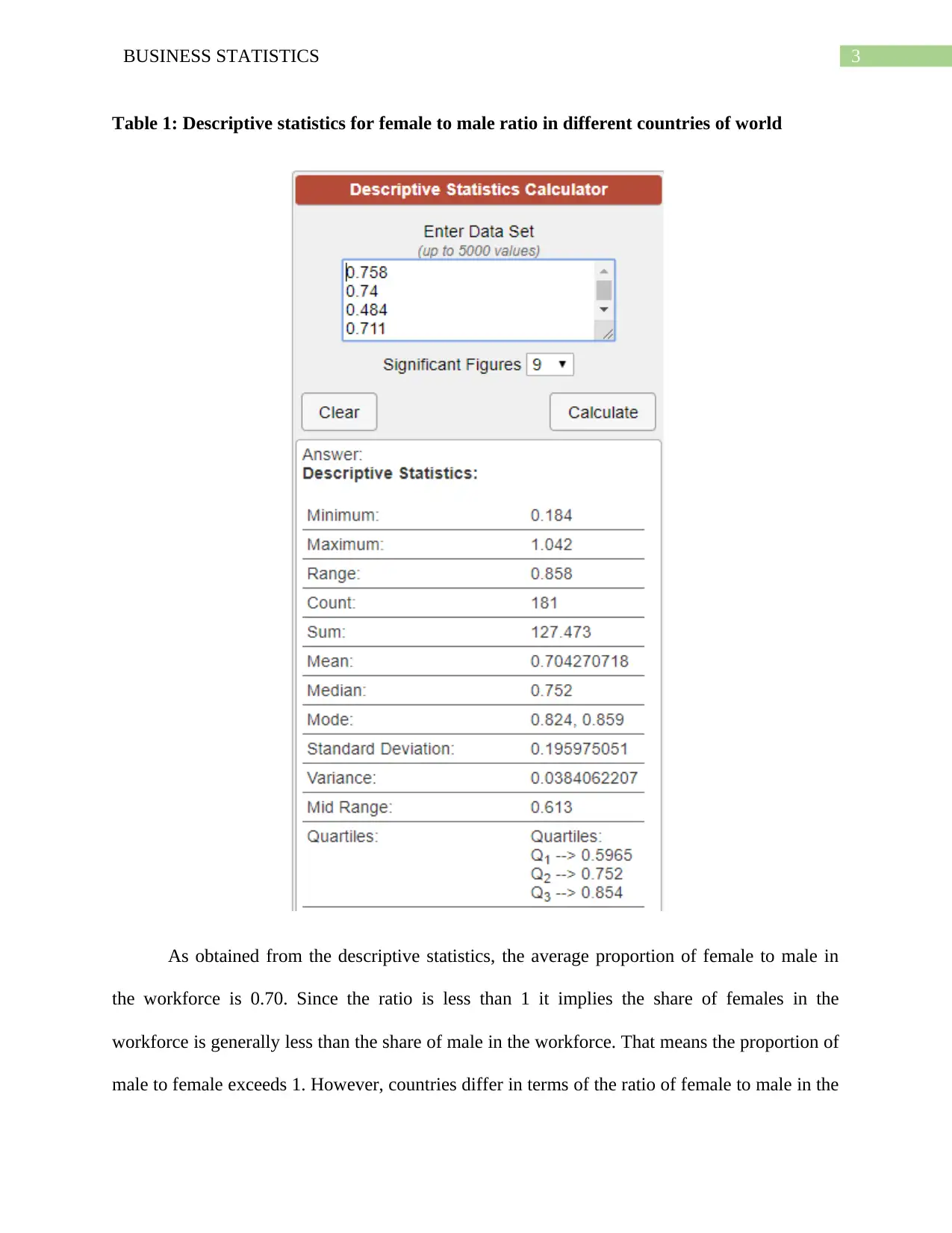
and other (Rees 2018). The descriptive statistics of female to male ratio in the labor force is
presented in table 1.
Male to female ratios in the workforce
The ratio of female to male in the workforce represents labor force participation rate of
female compared to that of male (Schaner and Das 2016). The United Nation Development
Program estimates ratio to female to male share in workforce in different countries by computing
proportion of female to male in the working age population (aged 15 years and above) of a
country engaged in the labor market either doing a paid work or actively looking for a job and
then express is as a percentage of total working age population (Hdr.undp.org. 2019). The ratio
of female to male in the workforce is now popularly use as a measure of human development of
nation. Higher the percentage of female participation more developed the nation is. Countries are
categorized of having very high human development, high human development, medium human
development and low human development. As per accounted data in 2012, country with very
high human development has a female to male ratio in the workforce as 0.758. Those who
considered to have high human development have female to male ratio of 0.740. Country with
medium human development have the ratio as 0.484.
Analysis of female to male ratio in world
The overall summary measures of a data series are obtained from the descriptive statistics
of the data set. The descriptive statistics include various measures if central tendency, dispersion
and other (Rees 2018). The descriptive statistics of female to male ratio in the labor force is
presented in table 1.
⊘ This is a preview!⊘
Do you want full access?
Subscribe today to unlock all pages.

Trusted by 1+ million students worldwide
3BUSINESS STATISTICS
Table 1: Descriptive statistics for female to male ratio in different countries of world
As obtained from the descriptive statistics, the average proportion of female to male in
the workforce is 0.70. Since the ratio is less than 1 it implies the share of females in the
workforce is generally less than the share of male in the workforce. That means the proportion of
male to female exceeds 1. However, countries differ in terms of the ratio of female to male in the
Table 1: Descriptive statistics for female to male ratio in different countries of world
As obtained from the descriptive statistics, the average proportion of female to male in
the workforce is 0.70. Since the ratio is less than 1 it implies the share of females in the
workforce is generally less than the share of male in the workforce. That means the proportion of
male to female exceeds 1. However, countries differ in terms of the ratio of female to male in the
Paraphrase This Document
Need a fresh take? Get an instant paraphrase of this document with our AI Paraphraser
4BUSINESS STATISTICS
labor force. In some countries the ratio of female to male is more than world average proportion
while in others the proportion is significantly less than the world average. In Iraq, the proportion
of female to male ratio in the workforce is only 0.21 indicating a highly dominating share of
males in the labor force compared to their female counterpart.
Hypothesis testing
Hypotheses
Null hypothesis (H0): The ratio of female to male in the workforce of Iraq is 0.70
P0=0.70
Alternative hypothesis (Ha): The ration of female to male in the workforce of Iraq is less than
0.70
P0 <0.70
Level of significance
The chosen level of significance for performing the hypothesis test is 5% or 0.05.
Critical value
This is a left tail test. Therefore, critical z value at 5% level of significance is -1.645.
Test statistics
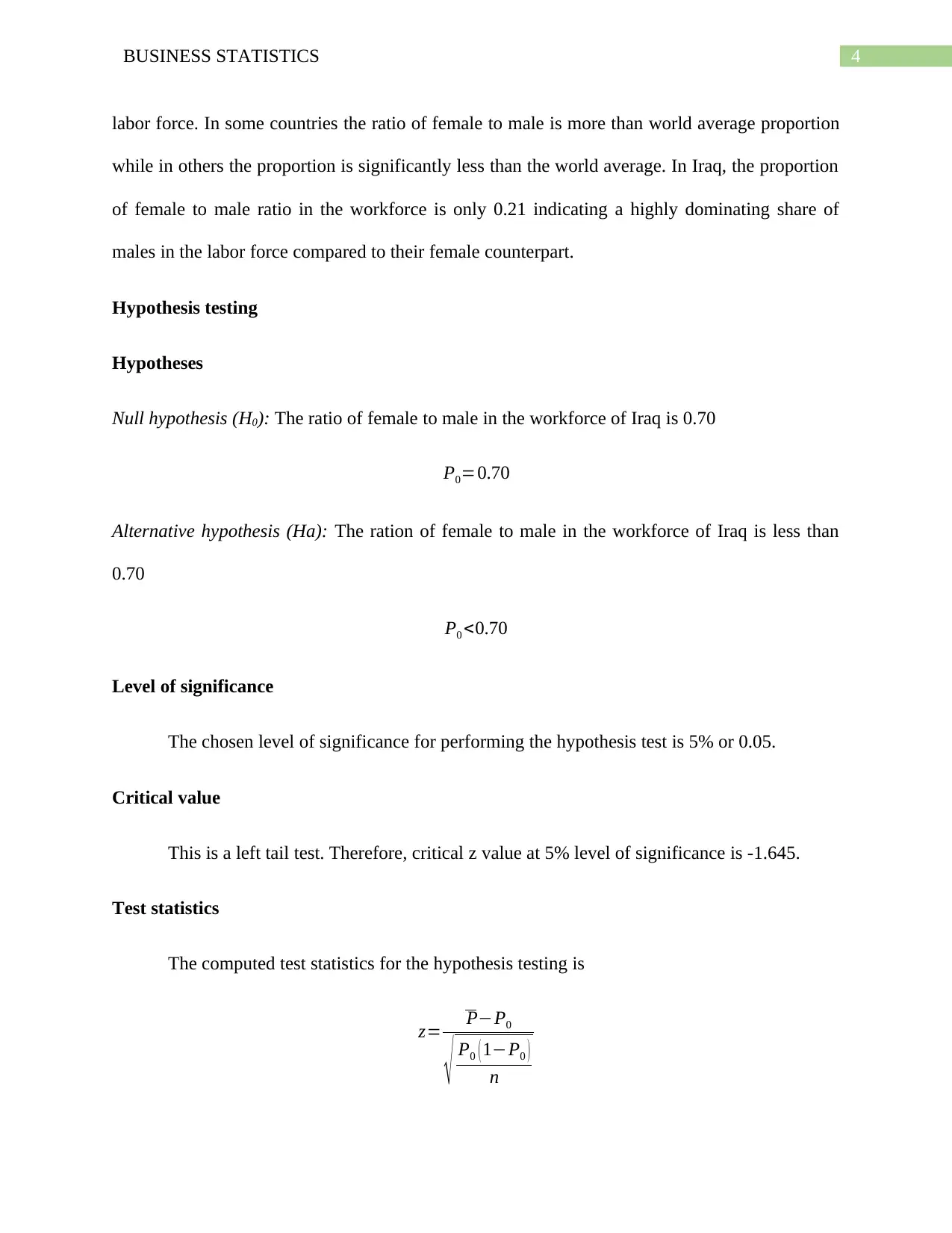
The computed test statistics for the hypothesis testing is
z= P−P0
√ P0 ( 1−P0 )
n
labor force. In some countries the ratio of female to male is more than world average proportion
while in others the proportion is significantly less than the world average. In Iraq, the proportion
of female to male ratio in the workforce is only 0.21 indicating a highly dominating share of
males in the labor force compared to their female counterpart.
Hypothesis testing
Hypotheses
Null hypothesis (H0): The ratio of female to male in the workforce of Iraq is 0.70
P0=0.70
Alternative hypothesis (Ha): The ration of female to male in the workforce of Iraq is less than
0.70
P0 <0.70
Level of significance
The chosen level of significance for performing the hypothesis test is 5% or 0.05.
Critical value
This is a left tail test. Therefore, critical z value at 5% level of significance is -1.645.
Test statistics
The computed test statistics for the hypothesis testing is
z= P−P0
√ P0 ( 1−P0 )
n
5BUSINESS STATISTICS
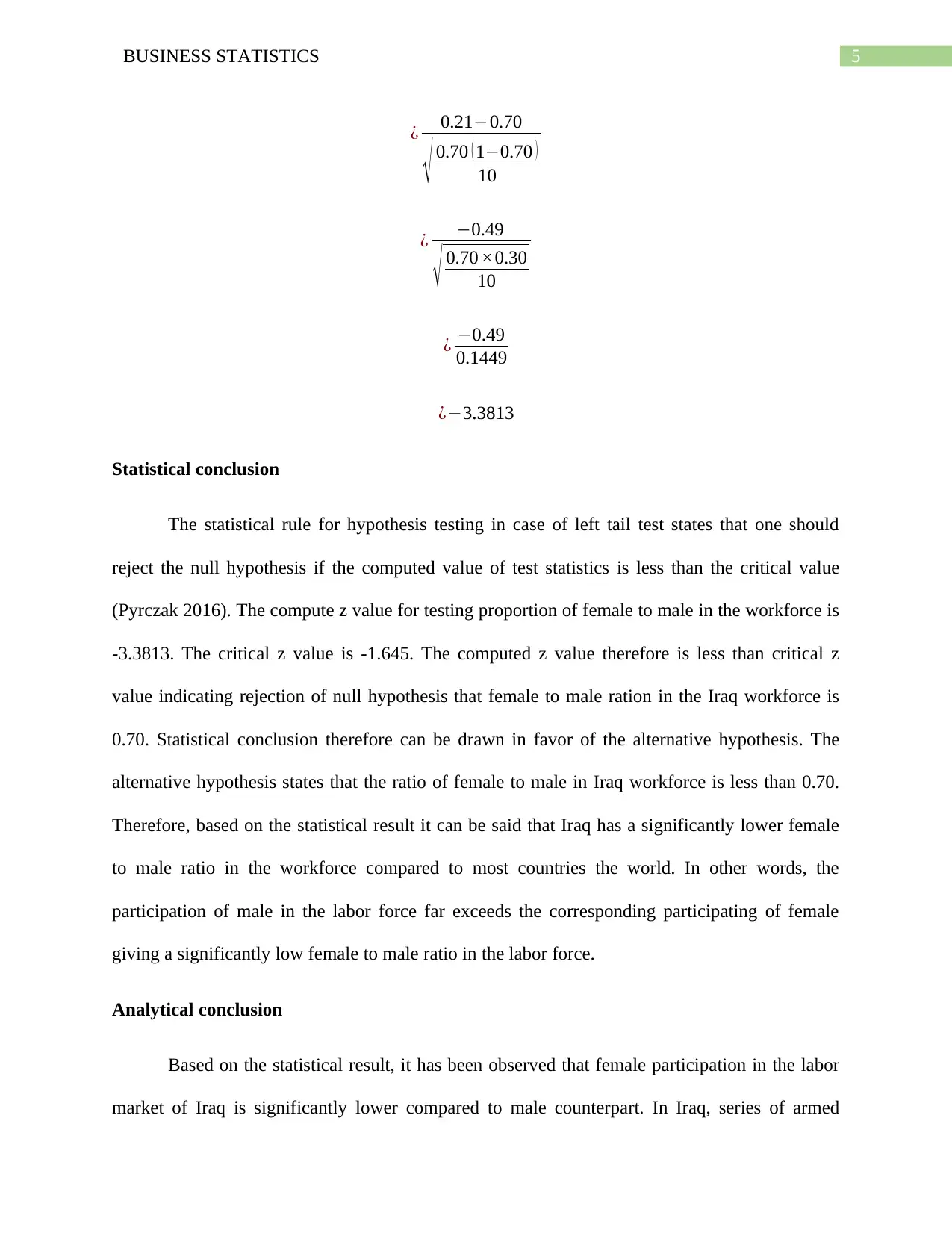
¿ 0.21−0.70
√ 0.70 ( 1−0.70 )
10
¿ −0.49
√ 0.70 ×0.30
10
¿ −0.49
0.1449
¿−3.3813
Statistical conclusion
The statistical rule for hypothesis testing in case of left tail test states that one should
reject the null hypothesis if the computed value of test statistics is less than the critical value
(Pyrczak 2016). The compute z value for testing proportion of female to male in the workforce is
-3.3813. The critical z value is -1.645. The computed z value therefore is less than critical z
value indicating rejection of null hypothesis that female to male ration in the Iraq workforce is
0.70. Statistical conclusion therefore can be drawn in favor of the alternative hypothesis. The
alternative hypothesis states that the ratio of female to male in Iraq workforce is less than 0.70.
Therefore, based on the statistical result it can be said that Iraq has a significantly lower female
to male ratio in the workforce compared to most countries the world. In other words, the
participation of male in the labor force far exceeds the corresponding participating of female
giving a significantly low female to male ratio in the labor force.
Analytical conclusion
Based on the statistical result, it has been observed that female participation in the labor
market of Iraq is significantly lower compared to male counterpart. In Iraq, series of armed
¿ 0.21−0.70
√ 0.70 ( 1−0.70 )
10
¿ −0.49
√ 0.70 ×0.30
10
¿ −0.49
0.1449
¿−3.3813
Statistical conclusion
The statistical rule for hypothesis testing in case of left tail test states that one should
reject the null hypothesis if the computed value of test statistics is less than the critical value
(Pyrczak 2016). The compute z value for testing proportion of female to male in the workforce is
-3.3813. The critical z value is -1.645. The computed z value therefore is less than critical z
value indicating rejection of null hypothesis that female to male ration in the Iraq workforce is
0.70. Statistical conclusion therefore can be drawn in favor of the alternative hypothesis. The
alternative hypothesis states that the ratio of female to male in Iraq workforce is less than 0.70.
Therefore, based on the statistical result it can be said that Iraq has a significantly lower female
to male ratio in the workforce compared to most countries the world. In other words, the
participation of male in the labor force far exceeds the corresponding participating of female
giving a significantly low female to male ratio in the labor force.
Analytical conclusion
Based on the statistical result, it has been observed that female participation in the labor
market of Iraq is significantly lower compared to male counterpart. In Iraq, series of armed
⊘ This is a preview!⊘
Do you want full access?
Subscribe today to unlock all pages.
Trusted by 1+ million students worldwide
6BUSINESS STATISTICS
conflict, economic sanctions and years of repression all contributed to a deterioration of women
status in the nation. Women in Iraq are marginalized and a significant proportion of women are
not able to make economic, political and social contribution (Joly and Bakawan 2016). Women
in Iraq today highly suffer from lack of access to educational opportunities, lack of facilities
related to health care and limited participation in the labor market.
Factors behind low participation of females in the workforce
There exists a huge difference between status of women and men in the Iraq labor
market. Only 14 percent women in Iraq has found to actively participate in the labor market
compared to male participation of 73%. 21% Iraq’s women are unemployed. The corresponding
percentage for men is 11%. Young women in urban areas found it difficult to find a job relative
to their counter-part in rural areas (Ali 2018). This is because women in Iraq are mostly engaged
in the agricultural sector in rural areas.
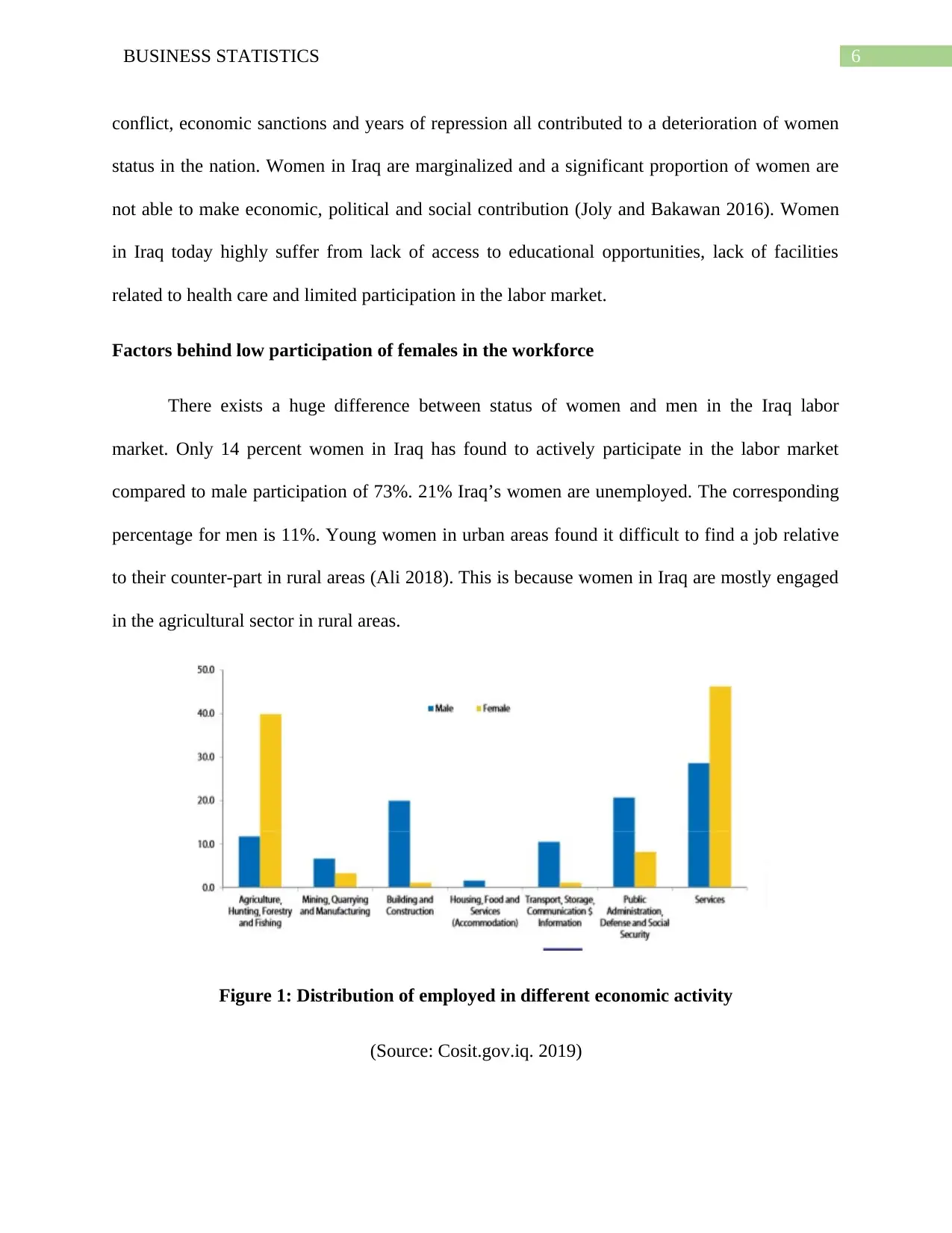
Figure 1: Distribution of employed in different economic activity
(Source: Cosit.gov.iq. 2019)
conflict, economic sanctions and years of repression all contributed to a deterioration of women
status in the nation. Women in Iraq are marginalized and a significant proportion of women are
not able to make economic, political and social contribution (Joly and Bakawan 2016). Women
in Iraq today highly suffer from lack of access to educational opportunities, lack of facilities
related to health care and limited participation in the labor market.
Factors behind low participation of females in the workforce
There exists a huge difference between status of women and men in the Iraq labor
market. Only 14 percent women in Iraq has found to actively participate in the labor market
compared to male participation of 73%. 21% Iraq’s women are unemployed. The corresponding
percentage for men is 11%. Young women in urban areas found it difficult to find a job relative
to their counter-part in rural areas (Ali 2018). This is because women in Iraq are mostly engaged
in the agricultural sector in rural areas.
Figure 1: Distribution of employed in different economic activity
(Source: Cosit.gov.iq. 2019)
Paraphrase This Document
Need a fresh take? Get an instant paraphrase of this document with our AI Paraphraser
7BUSINESS STATISTICS
As shown from the above figure, in most economic activities except agriculture and
service share of male dominate that of female. This indicates limited opportunities for female in
the labor market. Young women having high level of education face more difficulty in finding
job.
Low participation of female in the labor market of Iraq is results of a number of factors.
Low education levels, lack of skills, legal barriers as well as cultural and social obstacles limit
ability of Iraqi women to actively participate in the labor market. Various social and legal
barriers in Iraq significantly hamper ability of women to access different jobs in Iraq as well as
other middle east Asian countries (Chapman 2015). Example of these kind of barriers include
requiring a guardian to travel for job or need of permission from father or husband to work.
Despite act of constitution in 2005 giving equal opportunity of employment to Iraqi women,
there are certain elements of inequality restricting economic choices of women in Iraq. In reality,
some laws and their interpretation itself prevent opportunity of women to work in certain sectors
such as sectors requiring hard labor, having high risk or dangerous task, working at night and
others. The perception of society is another factor that is responsible for low participation of
female in the workforce. Women in Iraqi society is mostly perceived in their traditional of
housekeepers. Some changes though are occurring among the new generations the overall
perception still needs to be changed.
Economic participation of women in Iraq is further hampered by gender based violence
faced by them. Because of a complex mix of traditional and cultural beliefs woman and girl in
Iraq are subject to domestic violence, human trafficking and honor killing. Most women face
violence at their home (Lechman and Kaur 2015). 46% of girl and married women face violence
As shown from the above figure, in most economic activities except agriculture and
service share of male dominate that of female. This indicates limited opportunities for female in
the labor market. Young women having high level of education face more difficulty in finding
job.
Low participation of female in the labor market of Iraq is results of a number of factors.
Low education levels, lack of skills, legal barriers as well as cultural and social obstacles limit
ability of Iraqi women to actively participate in the labor market. Various social and legal
barriers in Iraq significantly hamper ability of women to access different jobs in Iraq as well as
other middle east Asian countries (Chapman 2015). Example of these kind of barriers include
requiring a guardian to travel for job or need of permission from father or husband to work.
Despite act of constitution in 2005 giving equal opportunity of employment to Iraqi women,
there are certain elements of inequality restricting economic choices of women in Iraq. In reality,
some laws and their interpretation itself prevent opportunity of women to work in certain sectors
such as sectors requiring hard labor, having high risk or dangerous task, working at night and
others. The perception of society is another factor that is responsible for low participation of
female in the workforce. Women in Iraqi society is mostly perceived in their traditional of
housekeepers. Some changes though are occurring among the new generations the overall
perception still needs to be changed.
Economic participation of women in Iraq is further hampered by gender based violence
faced by them. Because of a complex mix of traditional and cultural beliefs woman and girl in
Iraq are subject to domestic violence, human trafficking and honor killing. Most women face
violence at their home (Lechman and Kaur 2015). 46% of girl and married women face violence
8BUSINESS STATISTICS
at least by one member of the family. Limited knowledge and access to contraception is another
hurdle for woman to participate in the workforce.
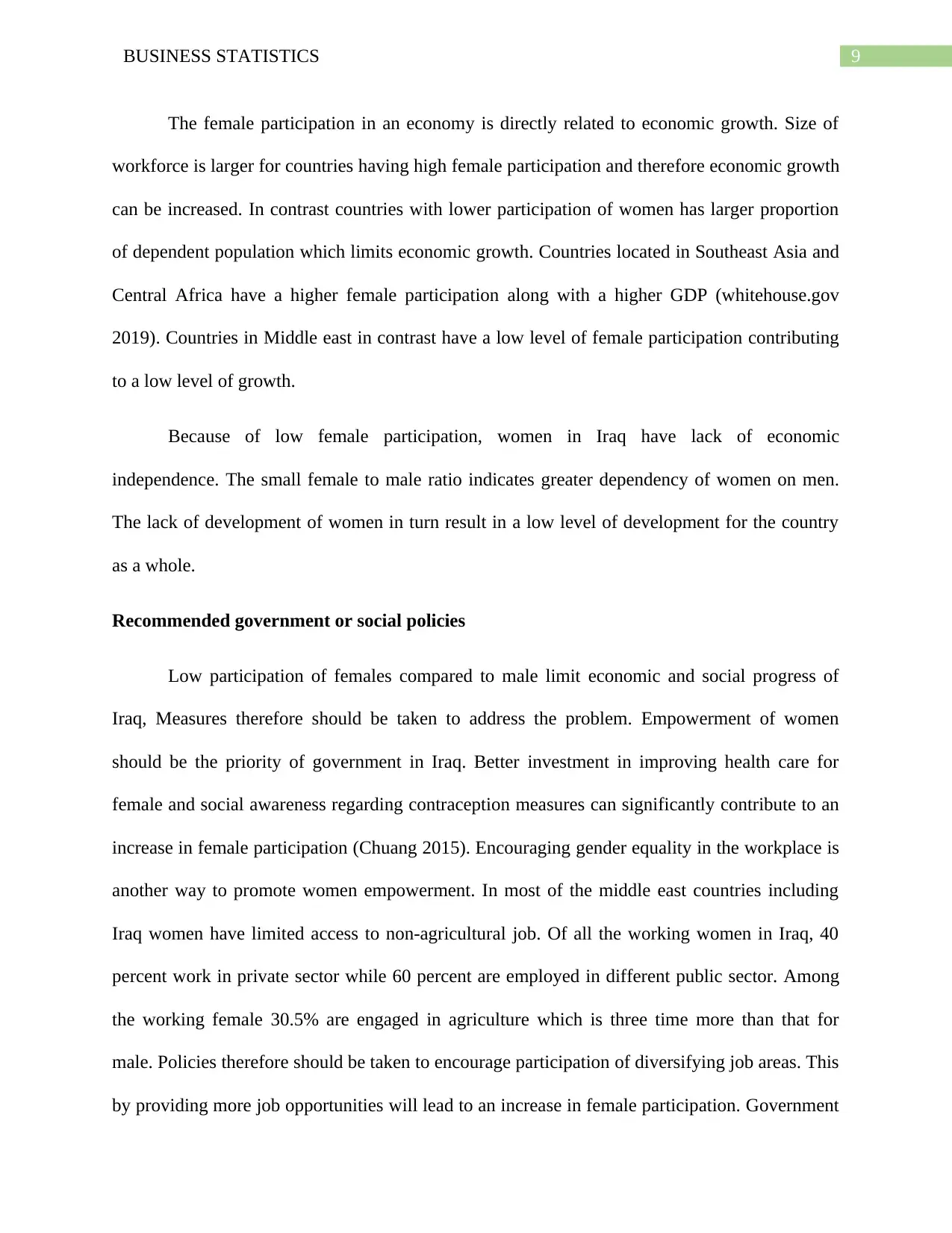
Because of political instability and years of conflict, 10 percent of the household in Iraq
are headed by females such as divorced, widowed, caring for sick spouse or separated. For this
households where female participation is mostly needed in the workforce, it found to be low
because difference sources of income other than salary.
Figure 2: Different sources of income to household headed by female
(Source: Cosit.gov.iq. 2019)
Consequences of low female participation
Low female participation in the labor force is one significant obstacle to economic
growth of the nation. Demographic dividend indicates acceleration of economic growth along
with an increase in working age population in relation to non-working age population.
Demographic dividend cannot be achieved without achieving gender parity (Majbouri 2016).
Because of significantly lower participation of female compared to male, the impact of
demographic dividend remains muted in Iraq.
at least by one member of the family. Limited knowledge and access to contraception is another
hurdle for woman to participate in the workforce.
Because of political instability and years of conflict, 10 percent of the household in Iraq
are headed by females such as divorced, widowed, caring for sick spouse or separated. For this
households where female participation is mostly needed in the workforce, it found to be low
because difference sources of income other than salary.
Figure 2: Different sources of income to household headed by female
(Source: Cosit.gov.iq. 2019)
Consequences of low female participation
Low female participation in the labor force is one significant obstacle to economic
growth of the nation. Demographic dividend indicates acceleration of economic growth along
with an increase in working age population in relation to non-working age population.
Demographic dividend cannot be achieved without achieving gender parity (Majbouri 2016).
Because of significantly lower participation of female compared to male, the impact of
demographic dividend remains muted in Iraq.
⊘ This is a preview!⊘
Do you want full access?
Subscribe today to unlock all pages.
Trusted by 1+ million students worldwide
9BUSINESS STATISTICS
The female participation in an economy is directly related to economic growth. Size of
workforce is larger for countries having high female participation and therefore economic growth
can be increased. In contrast countries with lower participation of women has larger proportion
of dependent population which limits economic growth. Countries located in Southeast Asia and
Central Africa have a higher female participation along with a higher GDP (whitehouse.gov
2019). Countries in Middle east in contrast have a low level of female participation contributing
to a low level of growth.
Because of low female participation, women in Iraq have lack of economic
independence. The small female to male ratio indicates greater dependency of women on men.
The lack of development of women in turn result in a low level of development for the country
as a whole.
Recommended government or social policies
Low participation of females compared to male limit economic and social progress of
Iraq, Measures therefore should be taken to address the problem. Empowerment of women
should be the priority of government in Iraq. Better investment in improving health care for
female and social awareness regarding contraception measures can significantly contribute to an
increase in female participation (Chuang 2015). Encouraging gender equality in the workplace is
another way to promote women empowerment. In most of the middle east countries including
Iraq women have limited access to non-agricultural job. Of all the working women in Iraq, 40
percent work in private sector while 60 percent are employed in different public sector. Among
the working female 30.5% are engaged in agriculture which is three time more than that for
male. Policies therefore should be taken to encourage participation of diversifying job areas. This
by providing more job opportunities will lead to an increase in female participation. Government
The female participation in an economy is directly related to economic growth. Size of
workforce is larger for countries having high female participation and therefore economic growth
can be increased. In contrast countries with lower participation of women has larger proportion
of dependent population which limits economic growth. Countries located in Southeast Asia and
Central Africa have a higher female participation along with a higher GDP (whitehouse.gov
2019). Countries in Middle east in contrast have a low level of female participation contributing
to a low level of growth.
Because of low female participation, women in Iraq have lack of economic
independence. The small female to male ratio indicates greater dependency of women on men.
The lack of development of women in turn result in a low level of development for the country
as a whole.
Recommended government or social policies
Low participation of females compared to male limit economic and social progress of
Iraq, Measures therefore should be taken to address the problem. Empowerment of women
should be the priority of government in Iraq. Better investment in improving health care for
female and social awareness regarding contraception measures can significantly contribute to an
increase in female participation (Chuang 2015). Encouraging gender equality in the workplace is
another way to promote women empowerment. In most of the middle east countries including
Iraq women have limited access to non-agricultural job. Of all the working women in Iraq, 40
percent work in private sector while 60 percent are employed in different public sector. Among
the working female 30.5% are engaged in agriculture which is three time more than that for
male. Policies therefore should be taken to encourage participation of diversifying job areas. This
by providing more job opportunities will lead to an increase in female participation. Government
Paraphrase This Document
Need a fresh take? Get an instant paraphrase of this document with our AI Paraphraser
10BUSINESS STATISTICS
should take strict measure to provide security to women. Women in Iraq are mostly subject to
domestic violence. Status of women should be improved in order increase their economic
participation. Empowerment of women especially in rural areas in terms of developing skill
related to non-agricultural skill, giving them access to adequate finance and opportunity to enter
the labor market can significantly improve participation of women (Korotayev, Issaev and
Shishkina 2015). Providing women, a better working condition in terms of wages, childcare
service, social security and other will enhance female participation moving the ratio of female to
male in the workforce closer to world average.
Barriers in Iraq to women empowerment
It is important to note that despite improvement in level of education among female for
Iraq and other middle east countries participation of female in the labor force still remain lower.
Although increase in number of universities degrees for females, those numbers are not
transformed into increased number of job among females hindering economic growth fueled
from demographic dividend. Several measures are already taken to improve women status in
Iraq. Women Freedom in Iraq is an organization that work to protest for violence against women.
Women Empowerment Organization works for promoting women empowerment in different
economic areas (Niblock 2015). Despite these measures, the reason for poor condition of female
in terms of their economic participation in Iraq is the economic and social perception. In
achieving gender equality, boys and men play a crucial role. For empowering women, it is first
necessary to aware men and boys about right of women. Most of the Iraqi men perceive women
as followers of them in political and public sphere. The role of women is thought to be limited to
managing household chore and child bearing. A large proportion of men justify violence acts
against women. Unless change in perception of male and the society as a whole the condition of
should take strict measure to provide security to women. Women in Iraq are mostly subject to
domestic violence. Status of women should be improved in order increase their economic
participation. Empowerment of women especially in rural areas in terms of developing skill
related to non-agricultural skill, giving them access to adequate finance and opportunity to enter
the labor market can significantly improve participation of women (Korotayev, Issaev and
Shishkina 2015). Providing women, a better working condition in terms of wages, childcare
service, social security and other will enhance female participation moving the ratio of female to
male in the workforce closer to world average.
Barriers in Iraq to women empowerment
It is important to note that despite improvement in level of education among female for
Iraq and other middle east countries participation of female in the labor force still remain lower.
Although increase in number of universities degrees for females, those numbers are not
transformed into increased number of job among females hindering economic growth fueled
from demographic dividend. Several measures are already taken to improve women status in
Iraq. Women Freedom in Iraq is an organization that work to protest for violence against women.
Women Empowerment Organization works for promoting women empowerment in different
economic areas (Niblock 2015). Despite these measures, the reason for poor condition of female
in terms of their economic participation in Iraq is the economic and social perception. In
achieving gender equality, boys and men play a crucial role. For empowering women, it is first
necessary to aware men and boys about right of women. Most of the Iraqi men perceive women
as followers of them in political and public sphere. The role of women is thought to be limited to
managing household chore and child bearing. A large proportion of men justify violence acts
against women. Unless change in perception of male and the society as a whole the condition of
11BUSINESS STATISTICS
women and their economic participation cannot be improved (Al-Haboby et al. 2016). Increase
in female participation not only improves condition of females but it also contribute to broader
economic growth.
References
Al-Haboby, A., Breisinger, C., Debowicz, D., El-Hakim, A.H., Ferguson, J., Telleria, R. and Van
Rheenen, T., 2016. The role of agriculture for economic development and gender in Iraq: a
computable general equilibrium model approach. The Journal of Developing Areas, 50(2),
pp.431-451.
Ali, Z., 2018. Women and Gender in Iraq: between Nation-building and Fragmentation (Vol.
51). Cambridge University Press.
Chapman, K.A., 2015. Economic development and female labor force participation in the Middle
East and North Africa: a test of the U-shape hypothesis. Gettysburg Economic Review, 8(1), p.3.
Chuang, S.F., 2015. Deterrents to women's participation in continuing professional
development. New Horizons in Adult Education and Human Resource Development, 27(2),
pp.28-37.
Cosit.gov.iq. 2019. Home - Central Statistical Organization. [online] Available at:
http://www.cosit.gov.iq/en/ [Accessed 23 Jan. 2020].
Hdr.undp.org. 2019. Labour force participation rate (female-male ratio) | Human Development
Reports. [online] Available at: http://hdr.undp.org/en/content/labour-force-participation-rate-
female-male-ratio [Accessed 23 Jan. 2020].
women and their economic participation cannot be improved (Al-Haboby et al. 2016). Increase
in female participation not only improves condition of females but it also contribute to broader
economic growth.
References
Al-Haboby, A., Breisinger, C., Debowicz, D., El-Hakim, A.H., Ferguson, J., Telleria, R. and Van
Rheenen, T., 2016. The role of agriculture for economic development and gender in Iraq: a
computable general equilibrium model approach. The Journal of Developing Areas, 50(2),
pp.431-451.
Ali, Z., 2018. Women and Gender in Iraq: between Nation-building and Fragmentation (Vol.
51). Cambridge University Press.
Chapman, K.A., 2015. Economic development and female labor force participation in the Middle
East and North Africa: a test of the U-shape hypothesis. Gettysburg Economic Review, 8(1), p.3.
Chuang, S.F., 2015. Deterrents to women's participation in continuing professional
development. New Horizons in Adult Education and Human Resource Development, 27(2),
pp.28-37.
Cosit.gov.iq. 2019. Home - Central Statistical Organization. [online] Available at:
http://www.cosit.gov.iq/en/ [Accessed 23 Jan. 2020].
Hdr.undp.org. 2019. Labour force participation rate (female-male ratio) | Human Development
Reports. [online] Available at: http://hdr.undp.org/en/content/labour-force-participation-rate-
female-male-ratio [Accessed 23 Jan. 2020].
⊘ This is a preview!⊘
Do you want full access?
Subscribe today to unlock all pages.
Trusted by 1+ million students worldwide

1 out of 13


Related Documents


Your All-in-One AI-Powered Toolkit for Academic Success.
+13062052269
info@desklib.com
Available 24*7 on WhatsApp / Email
![[object Object]](/_next/static/media/star-bottom.7253800d.svg)
Unlock your academic potential
Copyright © 2020–2026 A2Z Services. All Rights Reserved. Developed and managed by ZUCOL.