Photosynthesis Experiment: Analyzing Chloroplast Absorbance Rate

Verified

Added on  2023/06/05

|6
|526
|209
Practical Assignment
AI Summary
This assignment presents the results and conclusion of an experiment investigating the relationship between photosynthesis and absorbance in chloroplasts. The experiment measured absorbance in leaf samples with and without chloroplasts, as well as a dark control, over time. The results indicated that leaves with chloroplasts exhibited a higher rate of absorbance due to the presence of chlorophyll, which absorbs light for photosynthesis. The conclusion emphasizes that the availability of light and chloroplasts significantly increases the rate of absorbance in leaves, while the absence of electrons would hinder the process. The provided bibliography lists several sources used to support the findings and discussion.
Document Page
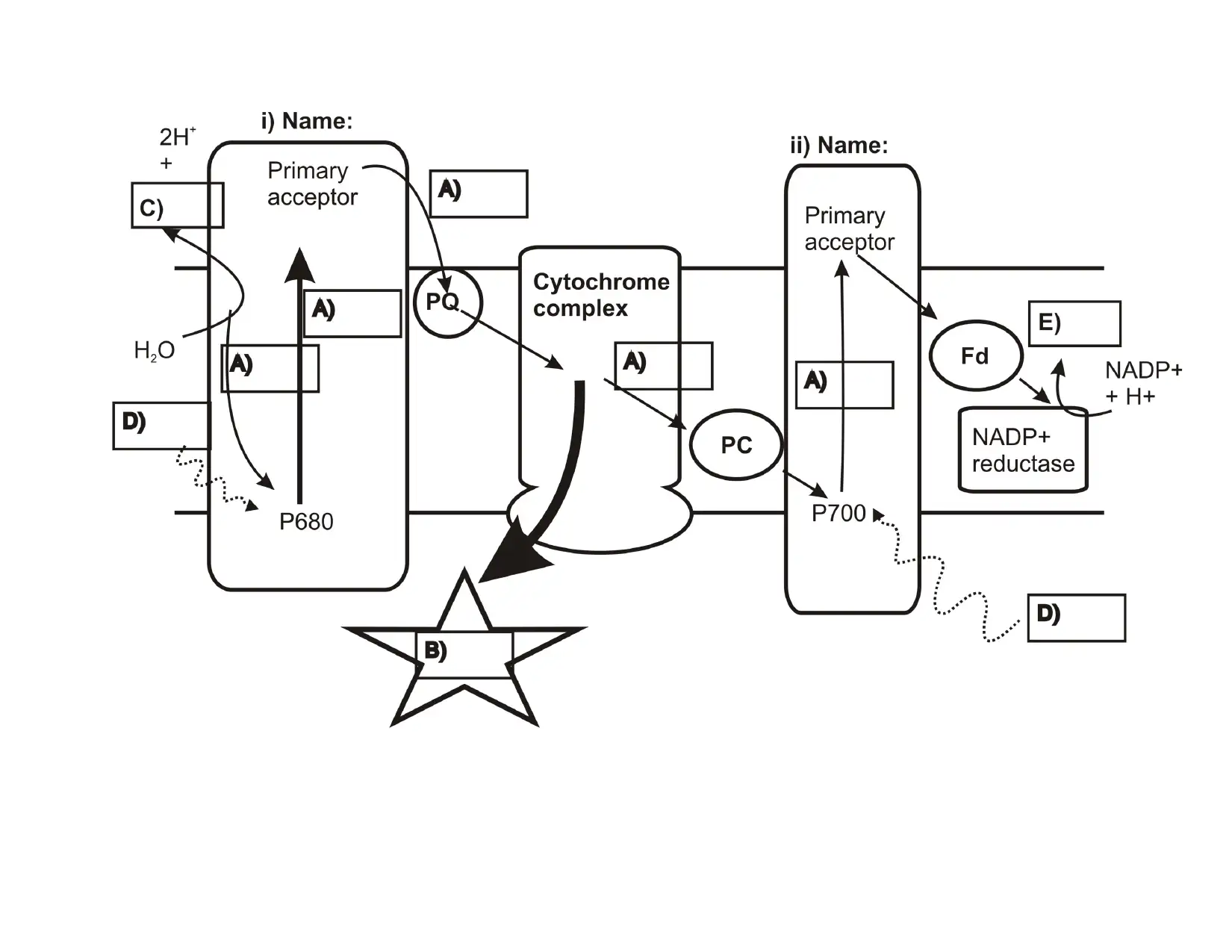
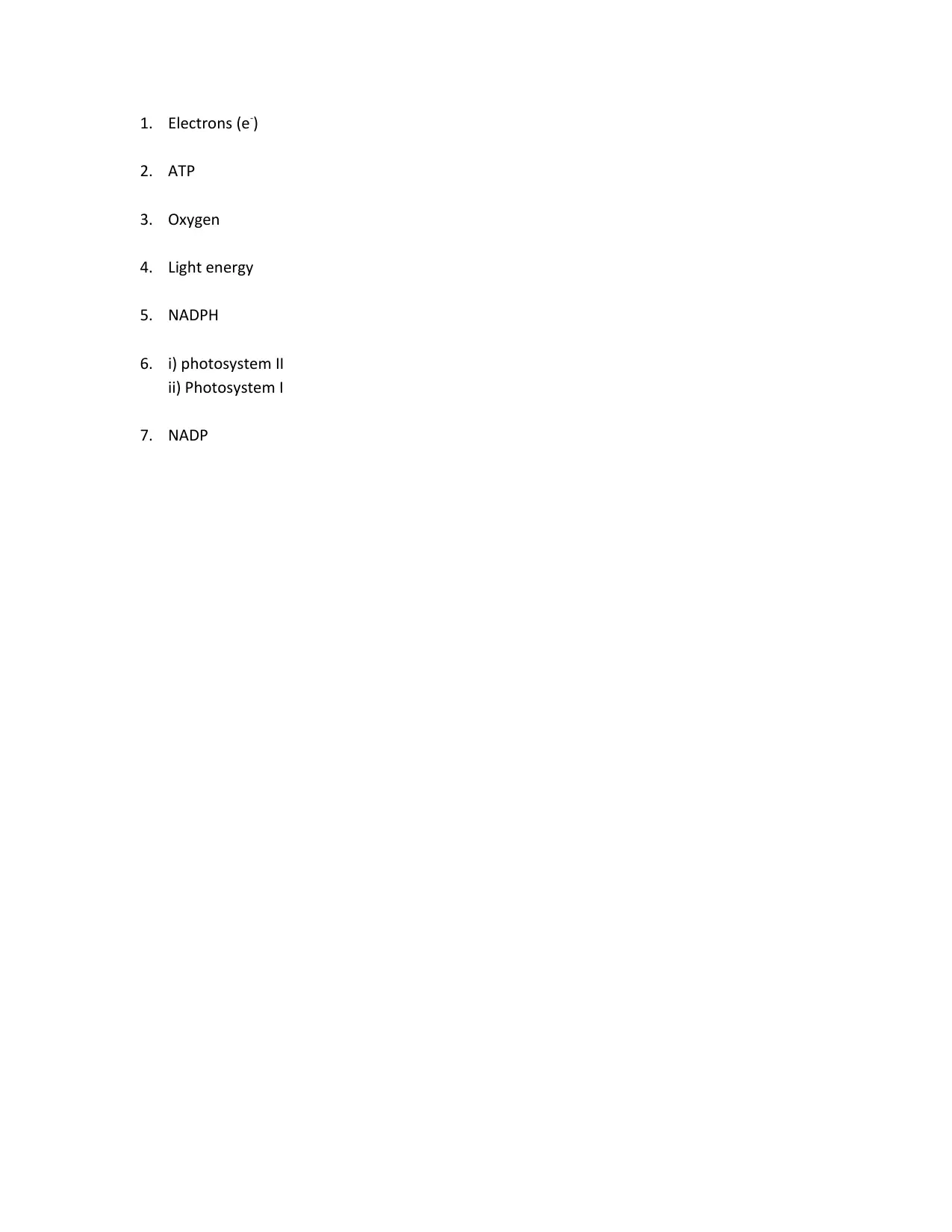
1. Electrons (e-)
2. ATP
3. Oxygen
4. Light energy
5. NADPH
6. i) photosystem II
ii) Photosystem I
7. NADP
tabler-icon-diamond-filled.svg

Paraphrase This Document

Need a fresh take? Get an instant paraphrase of this document with our AI Paraphraser
Document Page
Document Page
Results
Results 1.
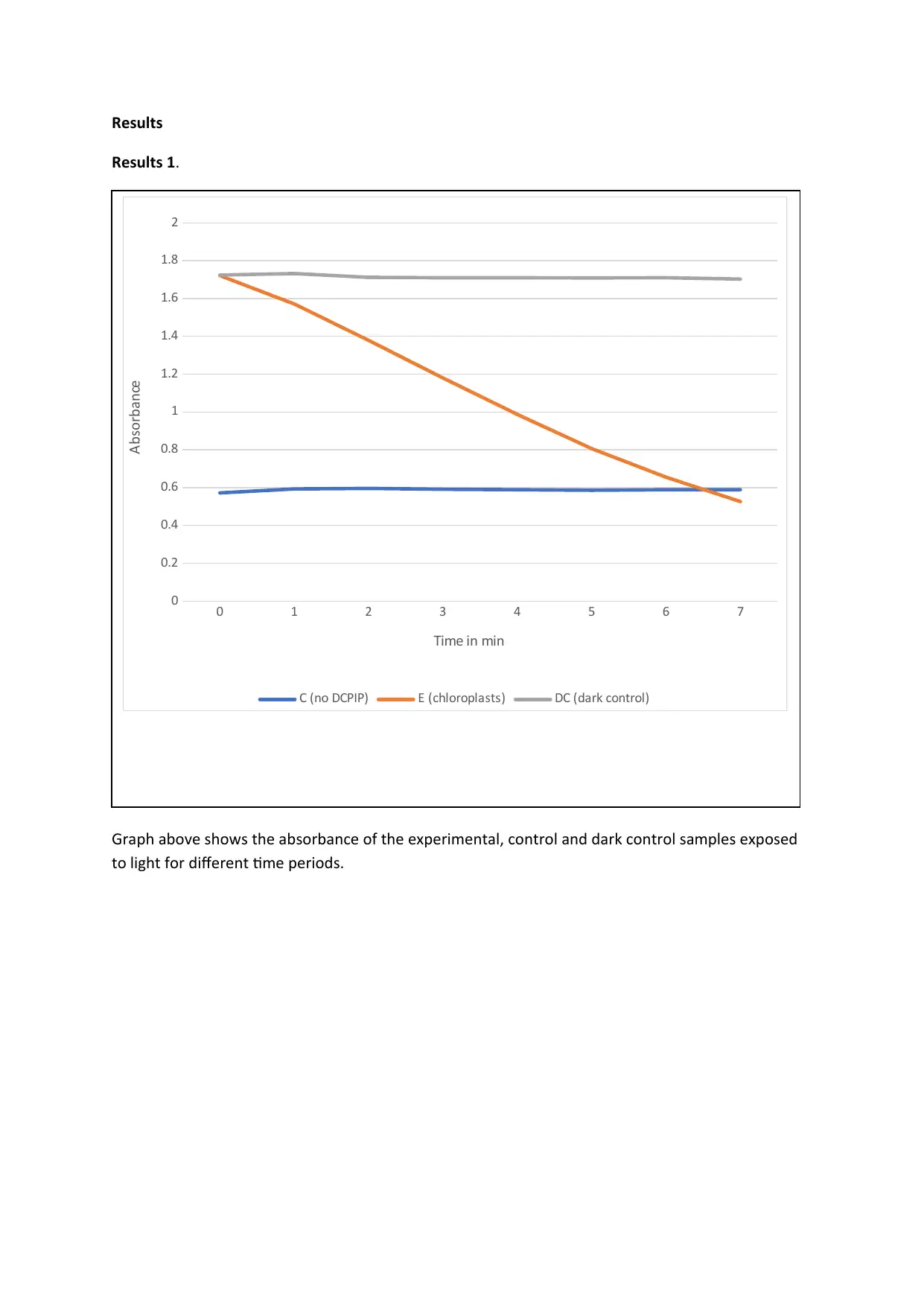
Graph above shows the absorbance of the experimental, control and dark control samples exposed
to light for different time periods.
0 1 2 3 4 5 6 7
0
0.2
0.4
0.6
0.8
1
1.2
1.4
1.6
1.8
2
C (no DCPIP) E (chloroplasts) DC (dark control)
Time in min
Absorbance
Document Page
Results 2.
Conclusion.
The rate of absorbance was high in the leaf with chloroplast. The absorbance in leaf with
chloroplast was high for all the time periods as compared to the one without chloroplast and
one in dark control. Absorbance in leaf with chloroplast reduced steeply with increase in time.
Absorbance recorded in leaf without chloroplast and dark control was relatively equal during
all time periods. Leaf with no chloroplast recorded the least rate of absorbance during all time
periods.
Chloroplasts contain chlorophyll which is responsible for absorption of light for
photosynthesis (Staub, 2003). This explains the high absorbance value as compared to the
leaf without chloroplast and dark control. Leaf without chloroplast lacks chlorophyll hence
the rate of absorbance is lower as compared to the leaf with chloroplast. Leaf kept in
darkness does not come into contact with light. This means that light is not absorbed by
chlorophyll and hence photosynthesis does not take place efficiently. It is therefore clear
that the higher the intensity of light, the higher the rate of absorption (Renger, 2008). We
can therefore conclude that availability of light and chloroplast increases the rate of
absorbance in leaves (Evert, 2006).
tabler-icon-diamond-filled.svg

Paraphrase This Document

Need a fresh take? Get an instant paraphrase of this document with our AI Paraphraser
Document Page
The rate of absorbance will highly reduce if the electrons are blocked (R. Larry Peterson, 2008).
Electrons carry the energy required to complete the process of photosynthesis hence their absence
means that there will be less or no photosynthesis taking place (Clayton, 1980).
Document Page
Bibliography
Clayton, R. K., 1980. Photosynthesis: Physical Mechanisms and Chemical Patterns. illustrated ed.
s.l.:Cambridge University Press.
Evert, R. F., 2006. Esau's Plant Anatomy: Meristems, Cells, and Tissues of the Plant Body: Their
Structure, Function, and Development. Third Edition ed. s.l.:John Wiley & Sons.
R. Larry Peterson, C. A. P. L. H. M., 2008. Teaching Plant Anatomy Through Creative Laboratory
Exercises. s.l.:NRC Research Press.
Raghavendra, A. S., 2000. Photosynthesis: A Comprehensive Treatise. Revised ed. s.l.:Cambridge
University Press.
Renger, G., 2008. Primary Processes of Photosynthesis. illustrated ed. s.l.:Royal Society of Chemistry.
Staub, F., 2003. Photosynthesis World of wonder. illustrated ed. s.l.:Creative Education.
chevron_up_icon
1 out of 6
circle_padding
hide_on_mobile
zoom_out_icon
[object Object]