Applied Business Finance: Analysis of Financial Statements Report
VerifiedAdded on 2022/12/16
|13
|2609
|67
Report
AI Summary
This report provides a comprehensive overview of financial management in a business context. It begins by defining financial management and highlighting its importance, emphasizing its role in strategic planning, resource allocation, and financial performance. The report then delves into the main financial statements, including the balance sheet, income statement, cash flow statement, and statement of shareholder's equity, explaining their purpose and how they reflect a company's financial position and performance. The application of financial ratios, such as return on assets, return on investment, current ratio, and quick ratio, is discussed to assess a company's profitability, liquidity, and efficiency. Furthermore, the report analyzes the financial performance of a hypothetical company based on ratio analysis and suggests several strategies to improve financial outcomes, including developing a business plan, monitoring financial status, ensuring timely payments, updating accounting records, managing inventory and funding, and maintaining error-free accounting practices. The report concludes by reiterating the significance of financial management for long-term planning and effective resource management.

Applied Business Finance

Paraphrase This Document
Need a fresh take? Get an instant paraphrase of this document with our AI Paraphraser
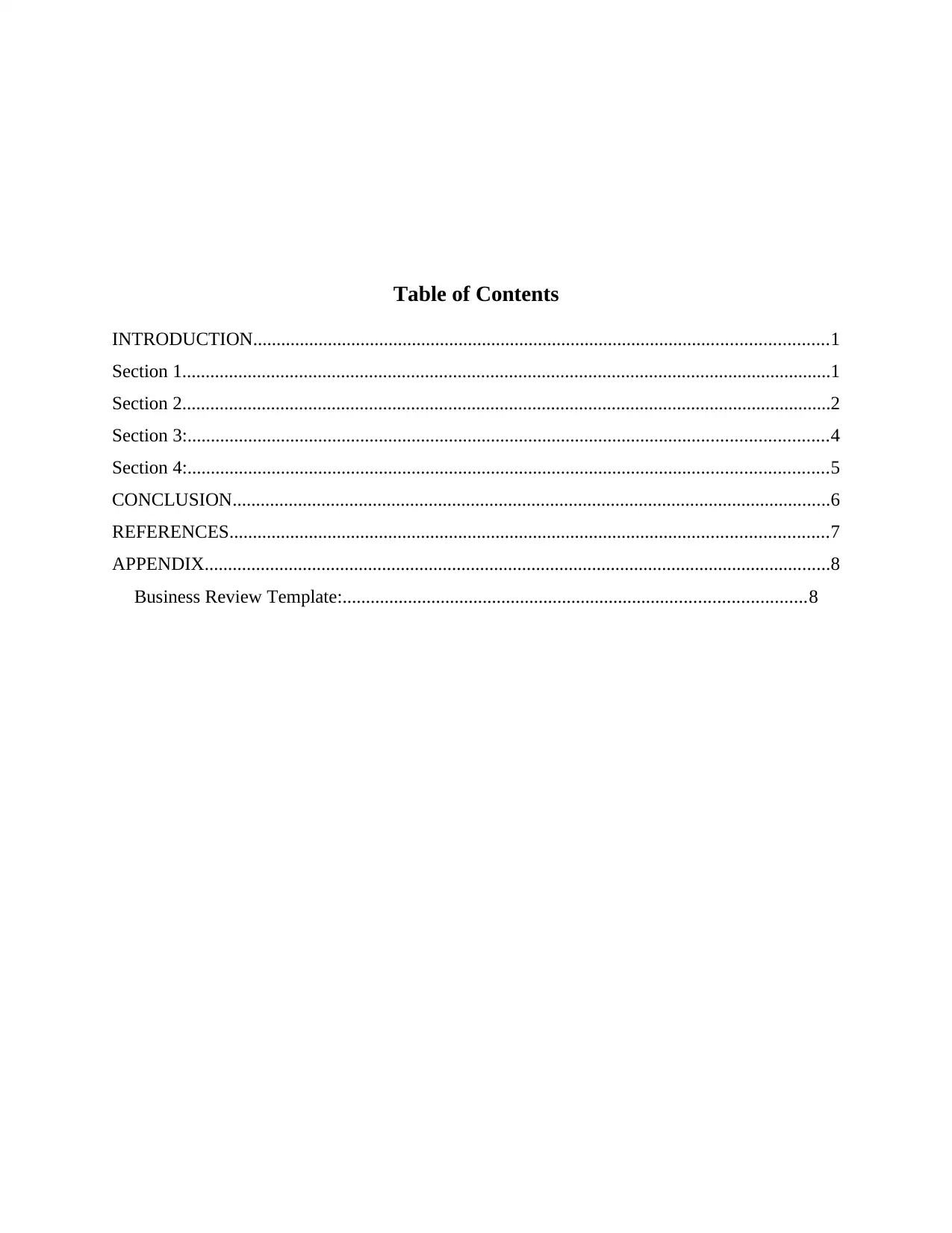
Table of Contents
INTRODUCTION...........................................................................................................................1
Section 1...........................................................................................................................................1
Section 2...........................................................................................................................................2
Section 3:.........................................................................................................................................4
Section 4:.........................................................................................................................................5
CONCLUSION................................................................................................................................6
REFERENCES................................................................................................................................7
APPENDIX......................................................................................................................................8
Business Review Template:...................................................................................................8
INTRODUCTION...........................................................................................................................1
Section 1...........................................................................................................................................1
Section 2...........................................................................................................................................2
Section 3:.........................................................................................................................................4
Section 4:.........................................................................................................................................5
CONCLUSION................................................................................................................................6
REFERENCES................................................................................................................................7
APPENDIX......................................................................................................................................8
Business Review Template:...................................................................................................8
INTRODUCTION
Financial management concept in business is key term for a corporation that is concerned
with successful strategic preparation as well as the proper coordination, direction, and regulation
of all of company's financial undertakings. Financial management practice is essential for an
organization to ensure that management principles are implemented successfully in attempt to
properly control funds as well as other financial tools (Brigham and Houston, 2021). The current
study entails a review of the theory and value of the financial management, as well as a summary
of the primary financial statement as well as the application of ratios. In addition, the market
analysis template is completed along with a description of the corporation 's profitability
liquidity and effectiveness. Finally, there is debate about how to boost a corporation 's
overall financial performance.
Section 1
Concept and importance of financial management
Financial management could be specified as the aspect of an organization ’s operations that
is concern with firm's overall profitability level. Financial management in context of business is
described as the process of arranging, organizing, and effectively managing and regulating all
financial activities within a company or institution. As a result, the framework of the financial
management encompasses all expenditure calculations as well as cash and credits transactions
conducted within a corporation (What is the importance of Financial Management).
Financial management also entails ensuring proper planning, organizing, directing, and
monitoring financial operations and transactions within a company for improved fund acquisition
and use. As a result, it could be inferred that financial accounting entails using management
criteria to ensure optimal preparation of financial assets including corporate transactions in order
to accomplish the firm's aim in most productive way possible.
Importance of financial management
Financial management is crucial component of any company, since it assists in the
smooth functioning of an entity and business by efficiently introducing management concepts to
better handle different financial assets. FM is essential and substantial for an organization
because it aids in the maintenance of a sufficient and appropriate availability of funding
1
Financial management concept in business is key term for a corporation that is concerned
with successful strategic preparation as well as the proper coordination, direction, and regulation
of all of company's financial undertakings. Financial management practice is essential for an
organization to ensure that management principles are implemented successfully in attempt to
properly control funds as well as other financial tools (Brigham and Houston, 2021). The current
study entails a review of the theory and value of the financial management, as well as a summary
of the primary financial statement as well as the application of ratios. In addition, the market
analysis template is completed along with a description of the corporation 's profitability
liquidity and effectiveness. Finally, there is debate about how to boost a corporation 's
overall financial performance.
Section 1
Concept and importance of financial management
Financial management could be specified as the aspect of an organization ’s operations that
is concern with firm's overall profitability level. Financial management in context of business is
described as the process of arranging, organizing, and effectively managing and regulating all
financial activities within a company or institution. As a result, the framework of the financial
management encompasses all expenditure calculations as well as cash and credits transactions
conducted within a corporation (What is the importance of Financial Management).
Financial management also entails ensuring proper planning, organizing, directing, and
monitoring financial operations and transactions within a company for improved fund acquisition
and use. As a result, it could be inferred that financial accounting entails using management
criteria to ensure optimal preparation of financial assets including corporate transactions in order
to accomplish the firm's aim in most productive way possible.
Importance of financial management
Financial management is crucial component of any company, since it assists in the
smooth functioning of an entity and business by efficiently introducing management concepts to
better handle different financial assets. FM is essential and substantial for an organization
because it aids in the maintenance of a sufficient and appropriate availability of funding
1
⊘ This is a preview!⊘
Do you want full access?
Subscribe today to unlock all pages.

Trusted by 1+ million students worldwide
for company, as well as ensuring better yield on capital by effective and optimal use of
business funds (Prihartono and Asandimitra, 2018).
But apart from that, financial management practices are critical for establishing and maintaining
real-time secure investing prospects by directing better preparation and organization of financial
as well as other budgetary funds. Furthermore, the value of financial accounting can be assessed
based on the following factors and purposes:
Financial management aids an organization's financial planning processes by supporting
better wealth and capital management as well as strengthened funding management.
Financial management further aids and supports a corporation's optimal use and
allocation of capital, as well as promoting and helping in more strategic and strategic
finance decision making for better financial performance.
Financial management often essential for improving economic growth by growing the
firm's net valuation and efficiency.
Section 2
Main financial statement
Financial statements include reports compiled by a corporation 's executives to display and
represent true financial situation and status of the corporation for specific time-frame The below
are the key financial statements that a company prepares during a financial period and how they
are presented and explored, here:
Balance Sheet- It is most crucial financial statement because it tracks and offers details
about a corporation 's assets, short and long-term liabilities, and total shareholder funds as
on given point of time. Compiling business's balance sheet is crucial in order to include an
comprehensive overview of a company's net assets and obligations at a given point in time, as
well as the foundation for measuring levels and returns, in order to accurately assess and display
a company’s actual financial status (Karadag, 2015).
Income statement- This aspect of financial statement shows a company's overall profit
earned over a defined period ending. Corporation's income statement, also regarded
as profits and loss statement, indicates sales minus costs and expenditures over a given period,
which thereby contains comprehensive information about a company's gross as well as net
profitability.
2
business funds (Prihartono and Asandimitra, 2018).
But apart from that, financial management practices are critical for establishing and maintaining
real-time secure investing prospects by directing better preparation and organization of financial
as well as other budgetary funds. Furthermore, the value of financial accounting can be assessed
based on the following factors and purposes:
Financial management aids an organization's financial planning processes by supporting
better wealth and capital management as well as strengthened funding management.
Financial management further aids and supports a corporation's optimal use and
allocation of capital, as well as promoting and helping in more strategic and strategic
finance decision making for better financial performance.
Financial management often essential for improving economic growth by growing the
firm's net valuation and efficiency.
Section 2
Main financial statement
Financial statements include reports compiled by a corporation 's executives to display and
represent true financial situation and status of the corporation for specific time-frame The below
are the key financial statements that a company prepares during a financial period and how they
are presented and explored, here:
Balance Sheet- It is most crucial financial statement because it tracks and offers details
about a corporation 's assets, short and long-term liabilities, and total shareholder funds as
on given point of time. Compiling business's balance sheet is crucial in order to include an
comprehensive overview of a company's net assets and obligations at a given point in time, as
well as the foundation for measuring levels and returns, in order to accurately assess and display
a company’s actual financial status (Karadag, 2015).
Income statement- This aspect of financial statement shows a company's overall profit
earned over a defined period ending. Corporation's income statement, also regarded
as profits and loss statement, indicates sales minus costs and expenditures over a given period,
which thereby contains comprehensive information about a company's gross as well as net
profitability.
2
Paraphrase This Document
Need a fresh take? Get an instant paraphrase of this document with our AI Paraphraser
Cash Flow statement- This is another pertinent financial statement that offers an
analyzation of flows of cash funds over a specific cycle of period by representing transactions of
the total of cash funds and cash equivalents that is arriving and departing form business.
Therefore, cash flows management is vital for an entity to maintain its cash situation by
monitoring its flow and analysing how effectively it is collecting cash to satisfy its debt
obligations in order to ensure adequate fund generation to cover its operational costs on a
consistent basis (Siminica, Motoi and Dumitru, 2017).
Statement of shareholder’s equity or retained earnings- It is form of financial statement
that is published by a corporation as consideration of balance sheet, highlighting the valuation of
stockholders including equity funds of shareholders, as well as representing the corporation's
controlling interest. The core purpose of this statement is to offer details on a corporation
's retained earnings, and new equity resources that can be recouped in the business.
Uses of ratios in financial management
Use of multiple financial ratio including returns on assets, returns on investment ratio, current
ratio, fast ratio, profitability ratio etc. are rendered which assures and delivers excellent
comparability of financial results alongside portraying true role of finance in company.
Therefore, application of different financial ratios is essential and crucial for business to ensure
effective evaluation of trends path alongside leading operating performance by improved
estimation and evaluation of corporation position (Ameliawati and Setiyani, 2018).
Return on asset ratio (ROA)- The return on asset ratio reflects percentage that indicates
how efficient a corporation in utilizing their asset for producing sales. The calculation for
measuring return on asset ratio is as follows:
Return to asset = Net income / average of total asset.
Return on asset level offer a clearer measure of a corporation's financial leverage, which
is largely measured by the high initial investment.
Return to investment- It simply shows statistics about net income-to-investment ratio, that is
determined by deducting the original value of investment from final value of investment (that
represents net return), dividing the figure of net return by cost of overall investment, and
ultimately multiplying resulting figure by 100.
3
analyzation of flows of cash funds over a specific cycle of period by representing transactions of
the total of cash funds and cash equivalents that is arriving and departing form business.
Therefore, cash flows management is vital for an entity to maintain its cash situation by
monitoring its flow and analysing how effectively it is collecting cash to satisfy its debt
obligations in order to ensure adequate fund generation to cover its operational costs on a
consistent basis (Siminica, Motoi and Dumitru, 2017).
Statement of shareholder’s equity or retained earnings- It is form of financial statement
that is published by a corporation as consideration of balance sheet, highlighting the valuation of
stockholders including equity funds of shareholders, as well as representing the corporation's
controlling interest. The core purpose of this statement is to offer details on a corporation
's retained earnings, and new equity resources that can be recouped in the business.
Uses of ratios in financial management
Use of multiple financial ratio including returns on assets, returns on investment ratio, current
ratio, fast ratio, profitability ratio etc. are rendered which assures and delivers excellent
comparability of financial results alongside portraying true role of finance in company.
Therefore, application of different financial ratios is essential and crucial for business to ensure
effective evaluation of trends path alongside leading operating performance by improved
estimation and evaluation of corporation position (Ameliawati and Setiyani, 2018).
Return on asset ratio (ROA)- The return on asset ratio reflects percentage that indicates
how efficient a corporation in utilizing their asset for producing sales. The calculation for
measuring return on asset ratio is as follows:
Return to asset = Net income / average of total asset.
Return on asset level offer a clearer measure of a corporation's financial leverage, which
is largely measured by the high initial investment.
Return to investment- It simply shows statistics about net income-to-investment ratio, that is
determined by deducting the original value of investment from final value of investment (that
represents net return), dividing the figure of net return by cost of overall investment, and
ultimately multiplying resulting figure by 100.
3
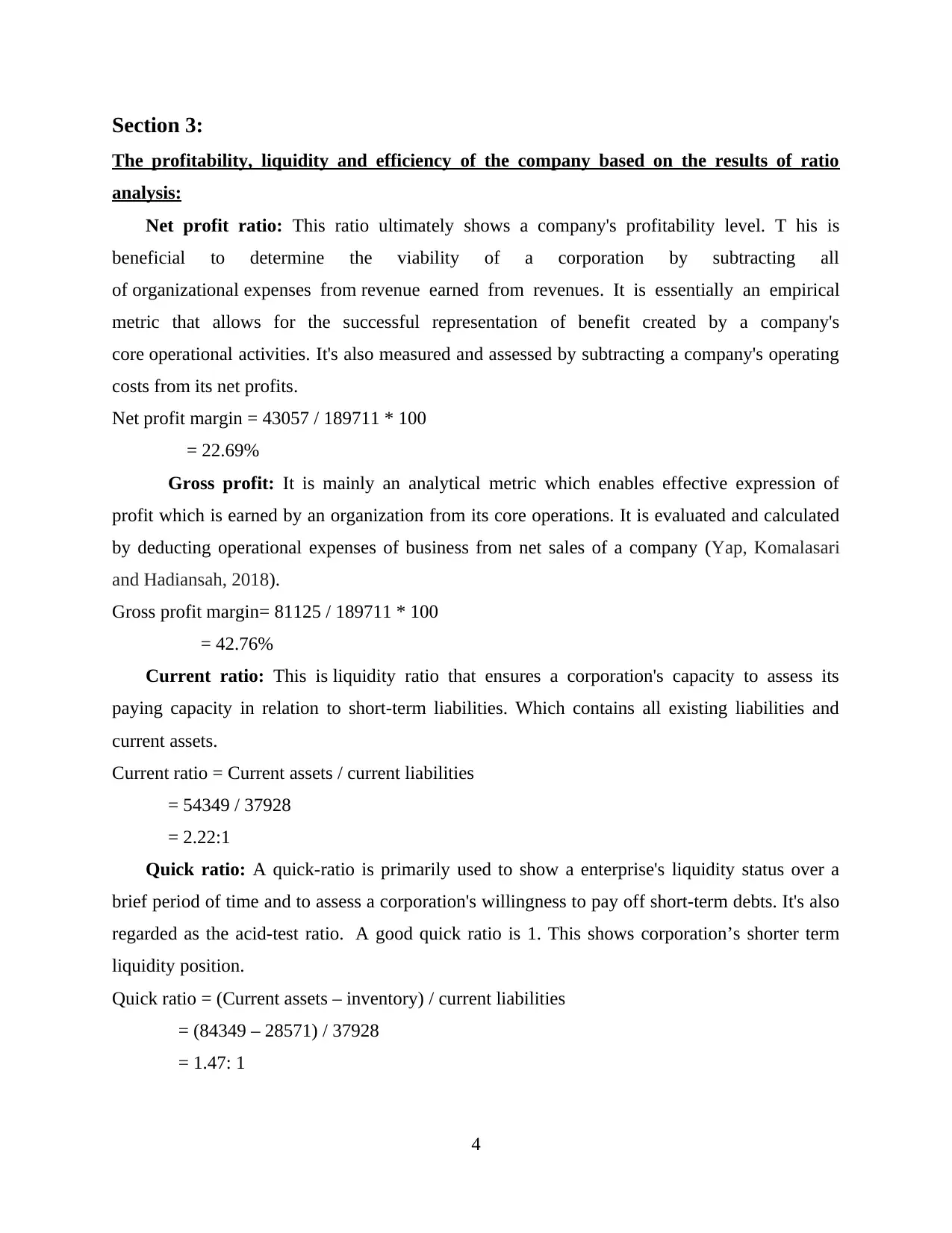
Section 3:
The profitability, liquidity and efficiency of the company based on the results of ratio
analysis:
Net profit ratio: This ratio ultimately shows a company's profitability level. T his is
beneficial to determine the viability of a corporation by subtracting all
of organizational expenses from revenue earned from revenues. It is essentially an empirical
metric that allows for the successful representation of benefit created by a company's
core operational activities. It's also measured and assessed by subtracting a company's operating
costs from its net profits.
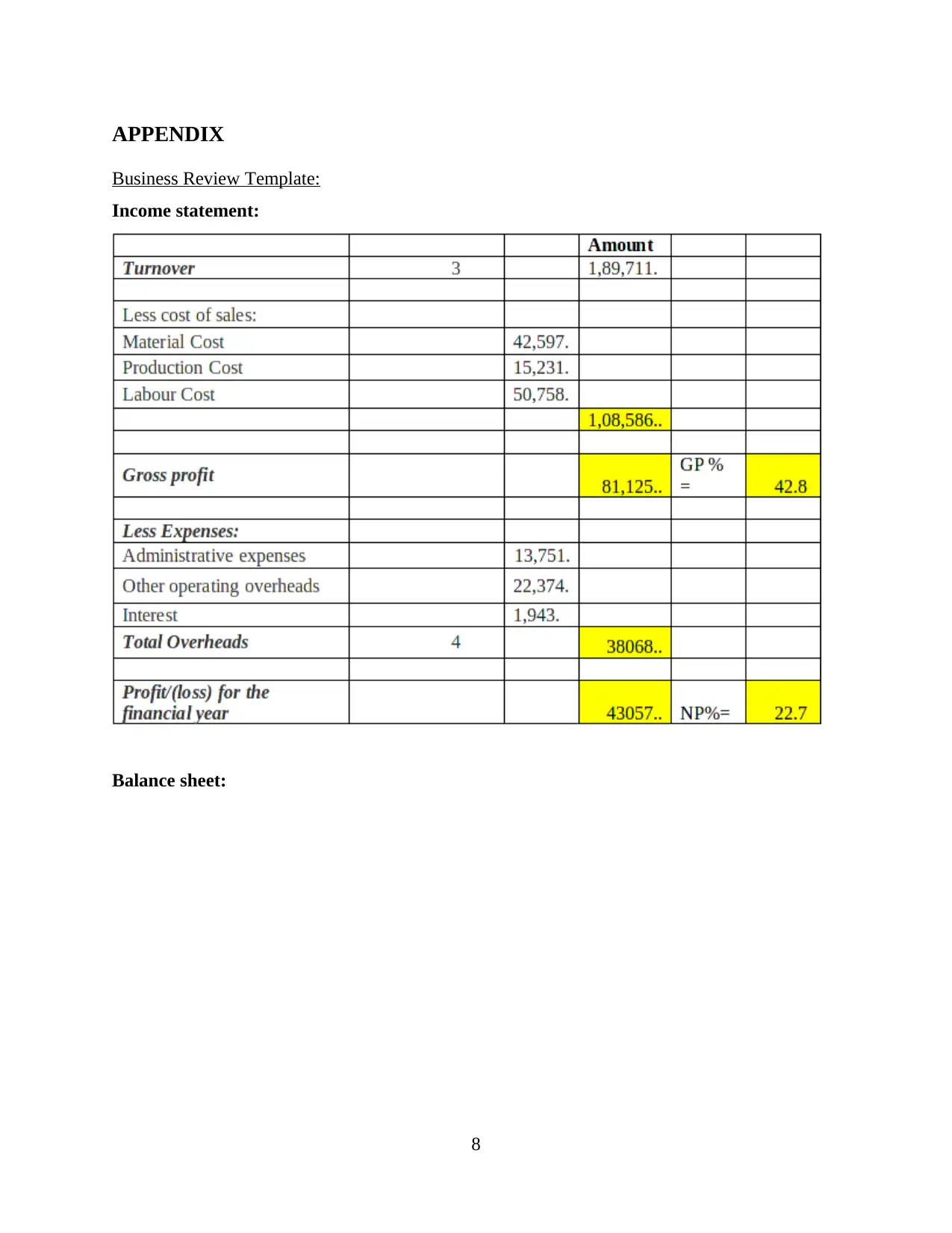
Net profit margin = 43057 / 189711 * 100
= 22.69%
Gross profit: It is mainly an analytical metric which enables effective expression of
profit which is earned by an organization from its core operations. It is evaluated and calculated
by deducting operational expenses of business from net sales of a company (Yap, Komalasari
and Hadiansah, 2018).
Gross profit margin= 81125 / 189711 * 100
= 42.76%
Current ratio: This is liquidity ratio that ensures a corporation's capacity to assess its
paying capacity in relation to short-term liabilities. Which contains all existing liabilities and
current assets.
Current ratio = Current assets / current liabilities
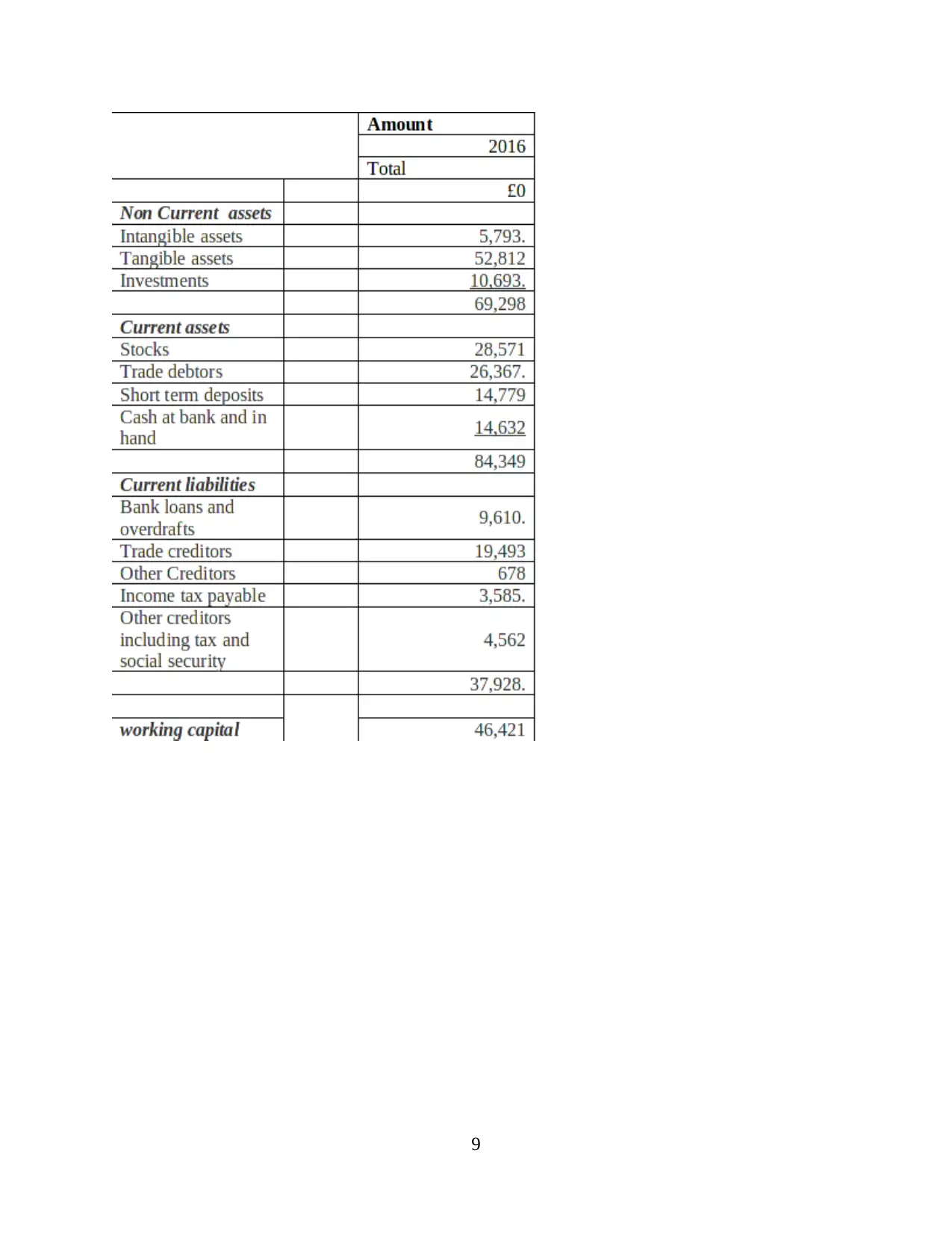
= 54349 / 37928
= 2.22:1
Quick ratio: A quick-ratio is primarily used to show a enterprise's liquidity status over a
brief period of time and to assess a corporation's willingness to pay off short-term debts. It's also
regarded as the acid-test ratio. A good quick ratio is 1. This shows corporation’s shorter term
liquidity position.
Quick ratio = (Current assets – inventory) / current liabilities
= (84349 – 28571) / 37928
= 1.47: 1
4
The profitability, liquidity and efficiency of the company based on the results of ratio
analysis:
Net profit ratio: This ratio ultimately shows a company's profitability level. T his is
beneficial to determine the viability of a corporation by subtracting all
of organizational expenses from revenue earned from revenues. It is essentially an empirical
metric that allows for the successful representation of benefit created by a company's
core operational activities. It's also measured and assessed by subtracting a company's operating
costs from its net profits.
Net profit margin = 43057 / 189711 * 100
= 22.69%
Gross profit: It is mainly an analytical metric which enables effective expression of
profit which is earned by an organization from its core operations. It is evaluated and calculated
by deducting operational expenses of business from net sales of a company (Yap, Komalasari
and Hadiansah, 2018).
Gross profit margin= 81125 / 189711 * 100
= 42.76%
Current ratio: This is liquidity ratio that ensures a corporation's capacity to assess its
paying capacity in relation to short-term liabilities. Which contains all existing liabilities and
current assets.
Current ratio = Current assets / current liabilities
= 54349 / 37928
= 2.22:1
Quick ratio: A quick-ratio is primarily used to show a enterprise's liquidity status over a
brief period of time and to assess a corporation's willingness to pay off short-term debts. It's also
regarded as the acid-test ratio. A good quick ratio is 1. This shows corporation’s shorter term
liquidity position.
Quick ratio = (Current assets – inventory) / current liabilities
= (84349 – 28571) / 37928
= 1.47: 1
4
⊘ This is a preview!⊘
Do you want full access?
Subscribe today to unlock all pages.
Trusted by 1+ million students worldwide
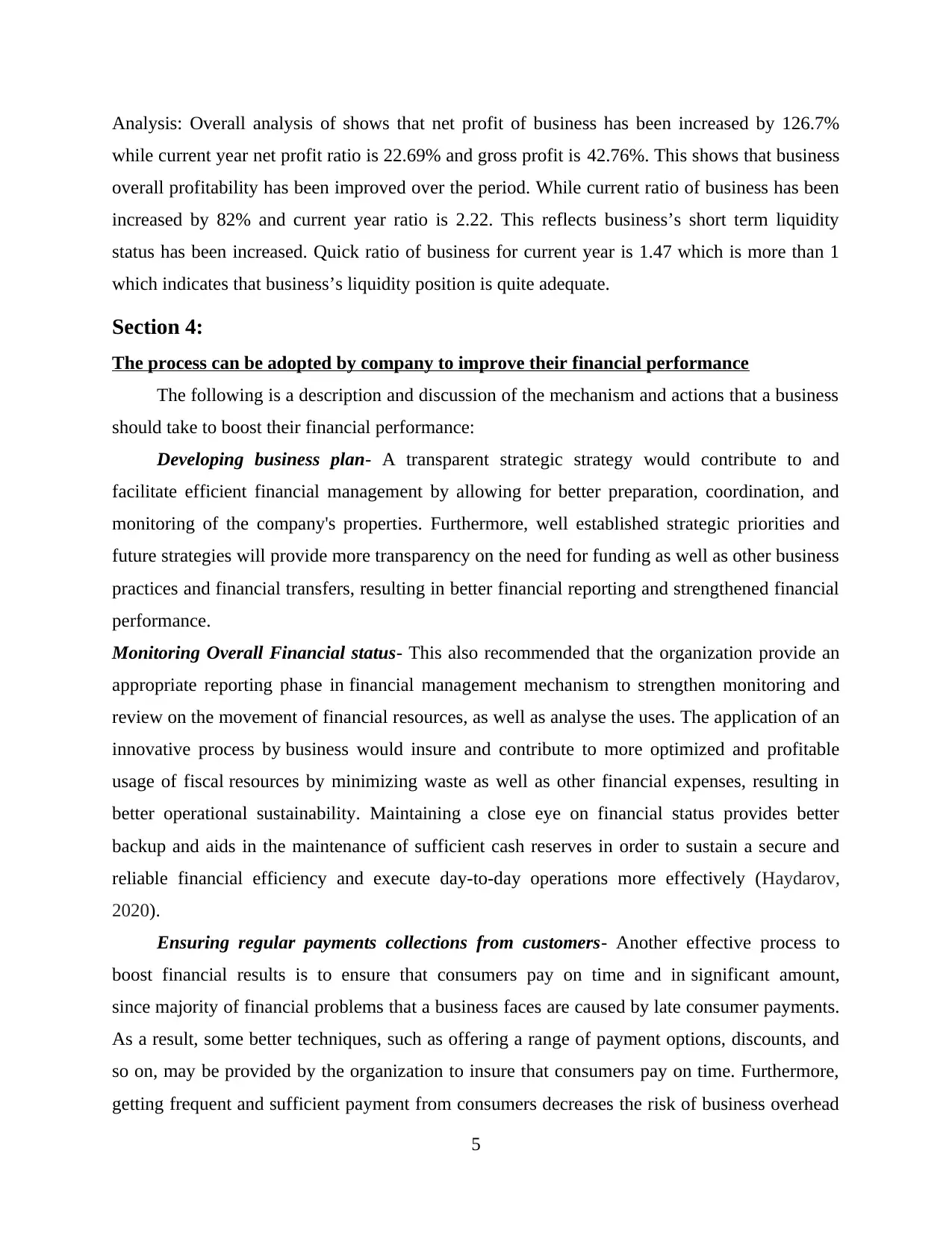
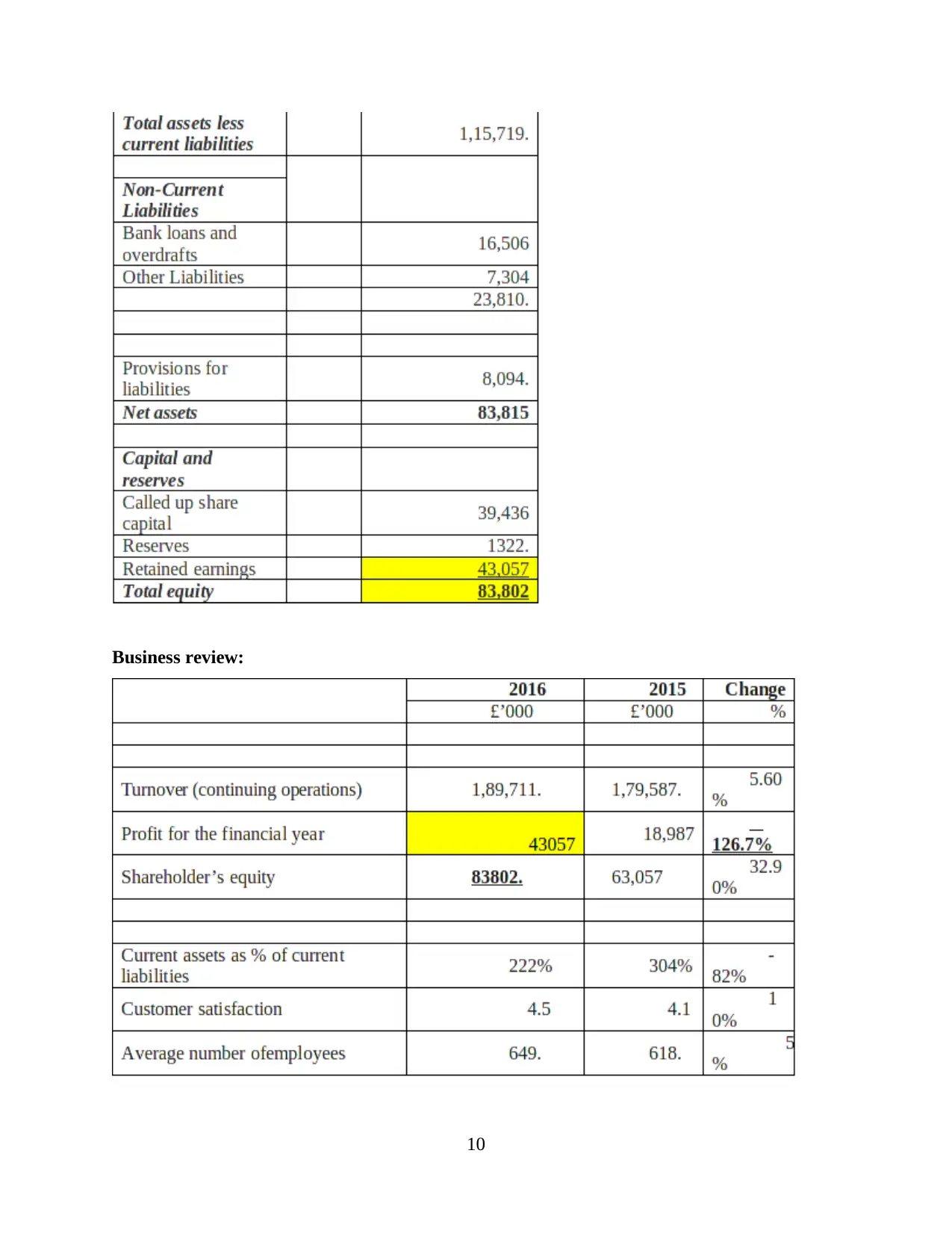
Analysis: Overall analysis of shows that net profit of business has been increased by 126.7%
while current year net profit ratio is 22.69% and gross profit is 42.76%. This shows that business
overall profitability has been improved over the period. While current ratio of business has been
increased by 82% and current year ratio is 2.22. This reflects business’s short term liquidity
status has been increased. Quick ratio of business for current year is 1.47 which is more than 1
which indicates that business’s liquidity position is quite adequate.
Section 4:
The process can be adopted by company to improve their financial performance
The following is a description and discussion of the mechanism and actions that a business
should take to boost their financial performance:
Developing business plan- A transparent strategic strategy would contribute to and
facilitate efficient financial management by allowing for better preparation, coordination, and
monitoring of the company's properties. Furthermore, well established strategic priorities and
future strategies will provide more transparency on the need for funding as well as other business
practices and financial transfers, resulting in better financial reporting and strengthened financial
performance.
Monitoring Overall Financial status- This also recommended that the organization provide an
appropriate reporting phase in financial management mechanism to strengthen monitoring and
review on the movement of financial resources, as well as analyse the uses. The application of an
innovative process by business would insure and contribute to more optimized and profitable
usage of fiscal resources by minimizing waste as well as other financial expenses, resulting in
better operational sustainability. Maintaining a close eye on financial status provides better
backup and aids in the maintenance of sufficient cash reserves in order to sustain a secure and
reliable financial efficiency and execute day-to-day operations more effectively (Haydarov,
2020).
Ensuring regular payments collections from customers- Another effective process to
boost financial results is to ensure that consumers pay on time and in significant amount,
since majority of financial problems that a business faces are caused by late consumer payments.
As a result, some better techniques, such as offering a range of payment options, discounts, and
so on, may be provided by the organization to insure that consumers pay on time. Furthermore,
getting frequent and sufficient payment from consumers decreases the risk of business overhead
5
while current year net profit ratio is 22.69% and gross profit is 42.76%. This shows that business
overall profitability has been improved over the period. While current ratio of business has been
increased by 82% and current year ratio is 2.22. This reflects business’s short term liquidity
status has been increased. Quick ratio of business for current year is 1.47 which is more than 1
which indicates that business’s liquidity position is quite adequate.
Section 4:
The process can be adopted by company to improve their financial performance
The following is a description and discussion of the mechanism and actions that a business
should take to boost their financial performance:
Developing business plan- A transparent strategic strategy would contribute to and
facilitate efficient financial management by allowing for better preparation, coordination, and
monitoring of the company's properties. Furthermore, well established strategic priorities and
future strategies will provide more transparency on the need for funding as well as other business
practices and financial transfers, resulting in better financial reporting and strengthened financial
performance.
Monitoring Overall Financial status- This also recommended that the organization provide an
appropriate reporting phase in financial management mechanism to strengthen monitoring and
review on the movement of financial resources, as well as analyse the uses. The application of an
innovative process by business would insure and contribute to more optimized and profitable
usage of fiscal resources by minimizing waste as well as other financial expenses, resulting in
better operational sustainability. Maintaining a close eye on financial status provides better
backup and aids in the maintenance of sufficient cash reserves in order to sustain a secure and
reliable financial efficiency and execute day-to-day operations more effectively (Haydarov,
2020).
Ensuring regular payments collections from customers- Another effective process to
boost financial results is to ensure that consumers pay on time and in significant amount,
since majority of financial problems that a business faces are caused by late consumer payments.
As a result, some better techniques, such as offering a range of payment options, discounts, and
so on, may be provided by the organization to insure that consumers pay on time. Furthermore,
getting frequent and sufficient payment from consumers decreases the risk of business overhead
5
Paraphrase This Document
Need a fresh take? Get an instant paraphrase of this document with our AI Paraphraser
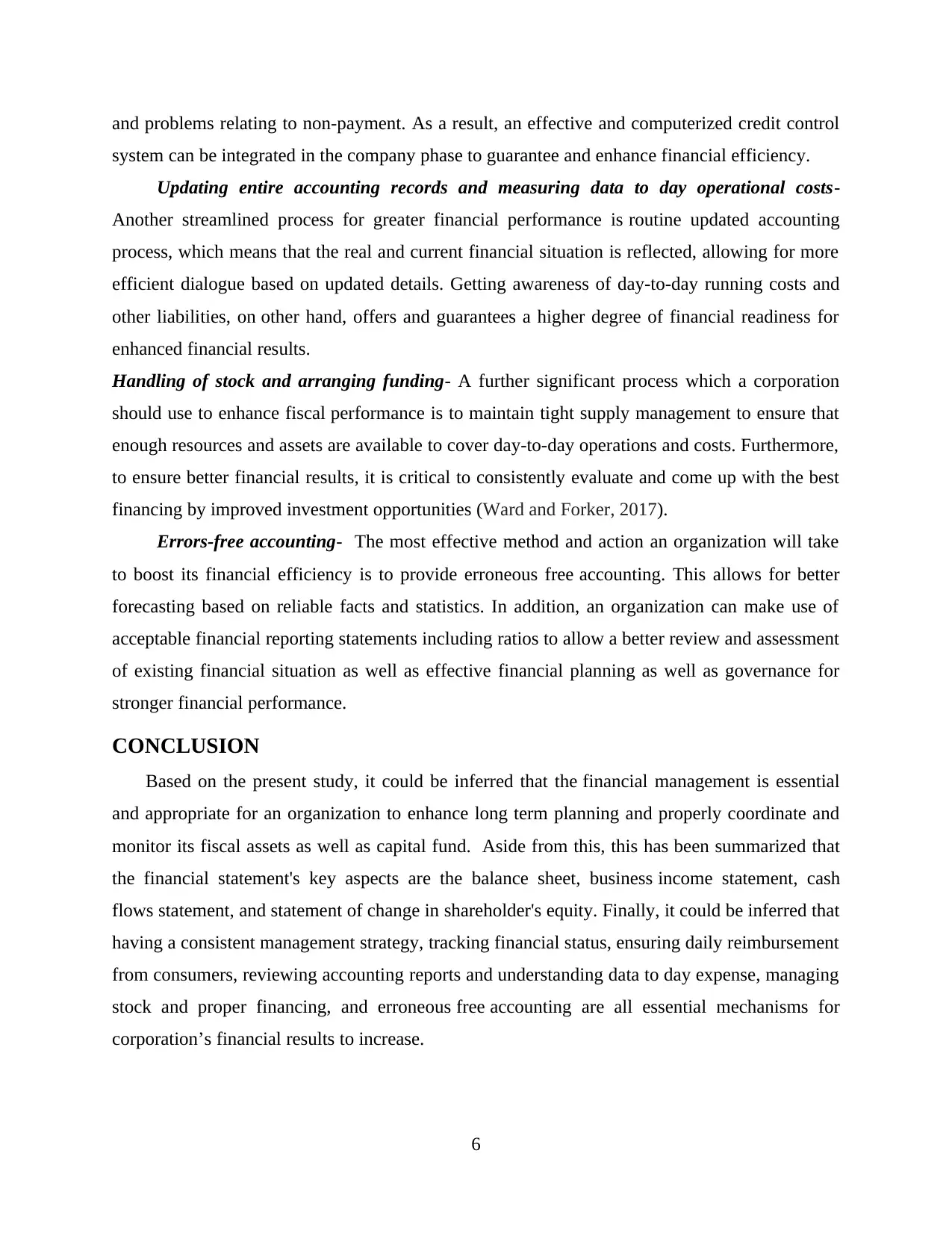
and problems relating to non-payment. As a result, an effective and computerized credit control
system can be integrated in the company phase to guarantee and enhance financial efficiency.
Updating entire accounting records and measuring data to day operational costs-
Another streamlined process for greater financial performance is routine updated accounting
process, which means that the real and current financial situation is reflected, allowing for more
efficient dialogue based on updated details. Getting awareness of day-to-day running costs and
other liabilities, on other hand, offers and guarantees a higher degree of financial readiness for
enhanced financial results.
Handling of stock and arranging funding- A further significant process which a corporation
should use to enhance fiscal performance is to maintain tight supply management to ensure that
enough resources and assets are available to cover day-to-day operations and costs. Furthermore,
to ensure better financial results, it is critical to consistently evaluate and come up with the best
financing by improved investment opportunities (Ward and Forker, 2017).
Errors-free accounting- The most effective method and action an organization will take
to boost its financial efficiency is to provide erroneous free accounting. This allows for better
forecasting based on reliable facts and statistics. In addition, an organization can make use of
acceptable financial reporting statements including ratios to allow a better review and assessment
of existing financial situation as well as effective financial planning as well as governance for
stronger financial performance.
CONCLUSION
Based on the present study, it could be inferred that the financial management is essential
and appropriate for an organization to enhance long term planning and properly coordinate and
monitor its fiscal assets as well as capital fund. Aside from this, this has been summarized that
the financial statement's key aspects are the balance sheet, business income statement, cash
flows statement, and statement of change in shareholder's equity. Finally, it could be inferred that
having a consistent management strategy, tracking financial status, ensuring daily reimbursement
from consumers, reviewing accounting reports and understanding data to day expense, managing
stock and proper financing, and erroneous free accounting are all essential mechanisms for
corporation’s financial results to increase.
6
system can be integrated in the company phase to guarantee and enhance financial efficiency.
Updating entire accounting records and measuring data to day operational costs-
Another streamlined process for greater financial performance is routine updated accounting
process, which means that the real and current financial situation is reflected, allowing for more
efficient dialogue based on updated details. Getting awareness of day-to-day running costs and
other liabilities, on other hand, offers and guarantees a higher degree of financial readiness for
enhanced financial results.
Handling of stock and arranging funding- A further significant process which a corporation
should use to enhance fiscal performance is to maintain tight supply management to ensure that
enough resources and assets are available to cover day-to-day operations and costs. Furthermore,
to ensure better financial results, it is critical to consistently evaluate and come up with the best
financing by improved investment opportunities (Ward and Forker, 2017).
Errors-free accounting- The most effective method and action an organization will take
to boost its financial efficiency is to provide erroneous free accounting. This allows for better
forecasting based on reliable facts and statistics. In addition, an organization can make use of
acceptable financial reporting statements including ratios to allow a better review and assessment
of existing financial situation as well as effective financial planning as well as governance for
stronger financial performance.
CONCLUSION
Based on the present study, it could be inferred that the financial management is essential
and appropriate for an organization to enhance long term planning and properly coordinate and
monitor its fiscal assets as well as capital fund. Aside from this, this has been summarized that
the financial statement's key aspects are the balance sheet, business income statement, cash
flows statement, and statement of change in shareholder's equity. Finally, it could be inferred that
having a consistent management strategy, tracking financial status, ensuring daily reimbursement
from consumers, reviewing accounting reports and understanding data to day expense, managing
stock and proper financing, and erroneous free accounting are all essential mechanisms for
corporation’s financial results to increase.
6
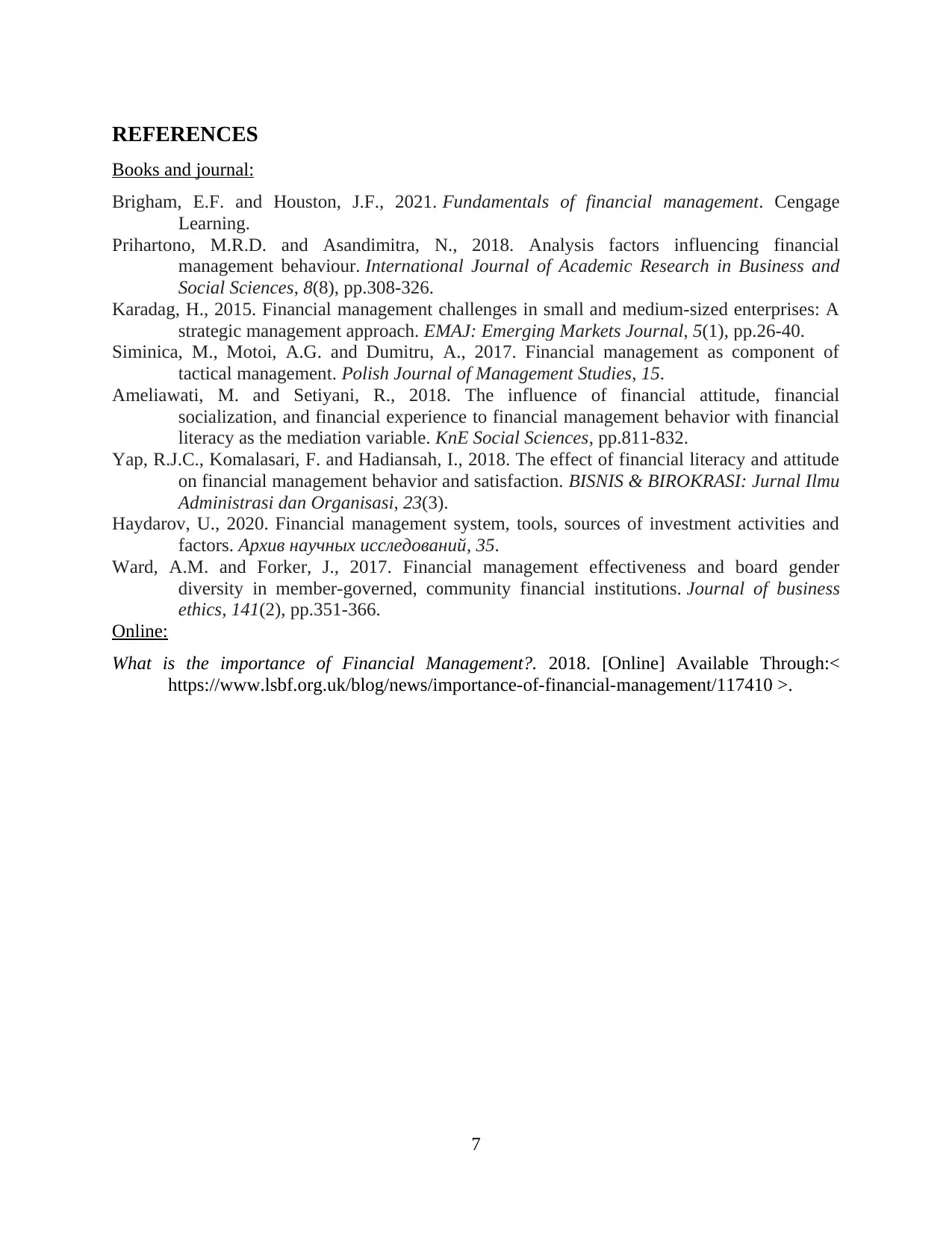
REFERENCES
Books and journal:
Brigham, E.F. and Houston, J.F., 2021. Fundamentals of financial management. Cengage
Learning.
Prihartono, M.R.D. and Asandimitra, N., 2018. Analysis factors influencing financial
management behaviour. International Journal of Academic Research in Business and
Social Sciences, 8(8), pp.308-326.
Karadag, H., 2015. Financial management challenges in small and medium-sized enterprises: A
strategic management approach. EMAJ: Emerging Markets Journal, 5(1), pp.26-40.
Siminica, M., Motoi, A.G. and Dumitru, A., 2017. Financial management as component of
tactical management. Polish Journal of Management Studies, 15.
Ameliawati, M. and Setiyani, R., 2018. The influence of financial attitude, financial
socialization, and financial experience to financial management behavior with financial
literacy as the mediation variable. KnE Social Sciences, pp.811-832.
Yap, R.J.C., Komalasari, F. and Hadiansah, I., 2018. The effect of financial literacy and attitude
on financial management behavior and satisfaction. BISNIS & BIROKRASI: Jurnal Ilmu
Administrasi dan Organisasi, 23(3).
Haydarov, U., 2020. Financial management system, tools, sources of investment activities and
factors. Архив научных исследований, 35.
Ward, A.M. and Forker, J., 2017. Financial management effectiveness and board gender
diversity in member-governed, community financial institutions. Journal of business
ethics, 141(2), pp.351-366.
Online:
What is the importance of Financial Management?. 2018. [Online] Available Through:<
https://www.lsbf.org.uk/blog/news/importance-of-financial-management/117410 >.
7
Books and journal:
Brigham, E.F. and Houston, J.F., 2021. Fundamentals of financial management. Cengage
Learning.
Prihartono, M.R.D. and Asandimitra, N., 2018. Analysis factors influencing financial
management behaviour. International Journal of Academic Research in Business and
Social Sciences, 8(8), pp.308-326.
Karadag, H., 2015. Financial management challenges in small and medium-sized enterprises: A
strategic management approach. EMAJ: Emerging Markets Journal, 5(1), pp.26-40.
Siminica, M., Motoi, A.G. and Dumitru, A., 2017. Financial management as component of
tactical management. Polish Journal of Management Studies, 15.
Ameliawati, M. and Setiyani, R., 2018. The influence of financial attitude, financial
socialization, and financial experience to financial management behavior with financial
literacy as the mediation variable. KnE Social Sciences, pp.811-832.
Yap, R.J.C., Komalasari, F. and Hadiansah, I., 2018. The effect of financial literacy and attitude
on financial management behavior and satisfaction. BISNIS & BIROKRASI: Jurnal Ilmu
Administrasi dan Organisasi, 23(3).
Haydarov, U., 2020. Financial management system, tools, sources of investment activities and
factors. Архив научных исследований, 35.
Ward, A.M. and Forker, J., 2017. Financial management effectiveness and board gender
diversity in member-governed, community financial institutions. Journal of business
ethics, 141(2), pp.351-366.
Online:
What is the importance of Financial Management?. 2018. [Online] Available Through:<
https://www.lsbf.org.uk/blog/news/importance-of-financial-management/117410 >.
7
⊘ This is a preview!⊘
Do you want full access?
Subscribe today to unlock all pages.
Trusted by 1+ million students worldwide
APPENDIX
Business Review Template:
Income statement:
Balance sheet:
8
Business Review Template:
Income statement:
Balance sheet:
8
Paraphrase This Document
Need a fresh take? Get an instant paraphrase of this document with our AI Paraphraser
9
Business review:
10
10
⊘ This is a preview!⊘
Do you want full access?
Subscribe today to unlock all pages.
Trusted by 1+ million students worldwide

1 out of 13


Related Documents


Your All-in-One AI-Powered Toolkit for Academic Success.
+13062052269
info@desklib.com
Available 24*7 on WhatsApp / Email
![[object Object]](/_next/static/media/star-bottom.7253800d.svg)
Unlock your academic potential
Copyright © 2020–2026 A2Z Services. All Rights Reserved. Developed and managed by ZUCOL.