Applied Business Finance: Fiscal Success & Financial Analysis
VerifiedAdded on 2023/06/10
|13
|2310
|200
Report
AI Summary
This report provides an in-depth analysis of applied business finance, examining the principles of monetary administration and its significance in ensuring a company's fiscal stability. It delves into key fiscal accounts, including the balance sheet, income statement, and cash flow report, and demonstrates how to apply financial ratios for effective monetary control. The report assesses a hypothetical company's financial performance using provided templates and worksheets, highlighting areas for improvement such as cost containment and capital investment. Furthermore, it evaluates strategies the company could employ to enhance its fiscal success, such as NPV and IRR methodologies, stock administration, and expense cuts, drawing on relevant research studies to support its recommendations. The analysis concludes with practical suggestions for strengthening the firm's financial strategy and addressing identified weaknesses.

Applied business
finance
finance

Paraphrase This Document
Need a fresh take? Get an instant paraphrase of this document with our AI Paraphraser
Contents
Contents...........................................................................................................................................2
INTRODUCTION...........................................................................................................................1
MAIN BODY..................................................................................................................................1
Section 1: The principle of monetary administration and its significance..................................1
Section 2: The most important fiscal accounts, as well as how to apply ratios in monetary
control..........................................................................................................................................2
Section 3: The most important fiscal accounts, as well as how to apply ratios in fiscal
administration..............................................................................................................................6
Section 4: Describe and evaluate the methods this company could employ to enhance their
fiscal success citing instances from the research studies.............................................................7
CONCLUSION................................................................................................................................8
REFERENCES................................................................................................................................9
Appendices....................................................................................................................................10
Contents...........................................................................................................................................2
INTRODUCTION...........................................................................................................................1
MAIN BODY..................................................................................................................................1
Section 1: The principle of monetary administration and its significance..................................1
Section 2: The most important fiscal accounts, as well as how to apply ratios in monetary
control..........................................................................................................................................2
Section 3: The most important fiscal accounts, as well as how to apply ratios in fiscal
administration..............................................................................................................................6
Section 4: Describe and evaluate the methods this company could employ to enhance their
fiscal success citing instances from the research studies.............................................................7
CONCLUSION................................................................................................................................8
REFERENCES................................................................................................................................9
Appendices....................................................................................................................................10

⊘ This is a preview!⊘
Do you want full access?
Subscribe today to unlock all pages.

Trusted by 1+ million students worldwide
INTRODUCTION
Finance administration is the activity of methodically organising, organizing, managing, and
analyzing a company's finance area to ensure that it works effectively and sans disruption (Eka,
2018). This research looks into the fundamental determinants of finance administration and the
crucial function it plays in a company's fiscal stability. It also discusses the significance of the
four key productivity measures: taxable returns, aggregate borrowing, business financing, and
profitability ratios. It combines the Enterprise assessment report and income statements from the
practical method to perform a comparative assessment and provide a comprehensive view of the
firm's corporate sector.
MAIN BODY
Section 1: The principle of monetary administration and its significance
Finance effectiveness refers to the reliability of a company's fiscal features, which helps
with strategy, administration, and reporting. Finance administration aids in the achievement of
the company's finance goals established at the beginning of the fiscal term. The business's
finance department plans the right distribution of cash to meet the firm's client requirements. It
success of the company in receiving and correctly managing cash from a range of resources.
Efficient working capital administration aids the company in boosting revenue and meeting its
obligations. Finance administration plays a significant function in the organisation by directing
the firm's assets to a certain area of expertise. It aids a business in cutting costs and improving
profits. Finance manager is in charge of a company's long-term finance viability. The financial
manager looks to be in charge of cost-cutting. It also aids in the administration of longer-term
investments and income accumulation. The group's production depends on the right utilization of
budget from various divisions of the company (Henager and Cude, 2016).
The financial administration of the multiple companies which contribute to the company's
income is similarly essential to the development of its investors. Money planning is essential for
increasing a firm's production. Effective finance manager is essential to forecast the company's
new exploration chances. The money planning of a corporation has an influence on subsequent
possibilities. The financial unit's governance is essential to the firm's trade and business
performance. Another key aspect of finance administration is the presenting of a full income
report to investors. The corporate finance section of a corporation supervises its staff in order to
Finance administration is the activity of methodically organising, organizing, managing, and
analyzing a company's finance area to ensure that it works effectively and sans disruption (Eka,
2018). This research looks into the fundamental determinants of finance administration and the
crucial function it plays in a company's fiscal stability. It also discusses the significance of the
four key productivity measures: taxable returns, aggregate borrowing, business financing, and
profitability ratios. It combines the Enterprise assessment report and income statements from the
practical method to perform a comparative assessment and provide a comprehensive view of the
firm's corporate sector.
MAIN BODY
Section 1: The principle of monetary administration and its significance
Finance effectiveness refers to the reliability of a company's fiscal features, which helps
with strategy, administration, and reporting. Finance administration aids in the achievement of
the company's finance goals established at the beginning of the fiscal term. The business's
finance department plans the right distribution of cash to meet the firm's client requirements. It
success of the company in receiving and correctly managing cash from a range of resources.
Efficient working capital administration aids the company in boosting revenue and meeting its
obligations. Finance administration plays a significant function in the organisation by directing
the firm's assets to a certain area of expertise. It aids a business in cutting costs and improving
profits. Finance manager is in charge of a company's long-term finance viability. The financial
manager looks to be in charge of cost-cutting. It also aids in the administration of longer-term
investments and income accumulation. The group's production depends on the right utilization of
budget from various divisions of the company (Henager and Cude, 2016).
The financial administration of the multiple companies which contribute to the company's
income is similarly essential to the development of its investors. Money planning is essential for
increasing a firm's production. Effective finance manager is essential to forecast the company's
new exploration chances. The money planning of a corporation has an influence on subsequent
possibilities. The financial unit's governance is essential to the firm's trade and business
performance. Another key aspect of finance administration is the presenting of a full income
report to investors. The corporate finance section of a corporation supervises its staff in order to
Paraphrase This Document
Need a fresh take? Get an instant paraphrase of this document with our AI Paraphraser
achieve specific investment objectives. Personal monetary achievement is mirrored in the firm's
long-term plan that helps the firm maintain its current sales development. In contrast to basic
inventory control, completed products inventories, and commodities sales, the corporate finance
department takes actions. The finance executive board generally decides on operational expense
reductions. The corporate finance section frequently distributes assets wisely for the company's
effectiveness and communication. The major mission of the business is to raise revenue while
spending little. As a result, it ensures that the firm's expansion is economically safe. The
financial manager appears to be in control of the company's long-term development and also
compensation and benefits. The financial division is in charge of improving the firm's national
reputation by paying state and governmental taxation. Lastly, the finance leadership group
assesses the industry's earnings in view of the achievement of previously set objectives
(Kwilinskyi, Shteingauz and Maslov, 2020).
Section 2: The most important fiscal accounts, as well as how to apply ratios in monetary control
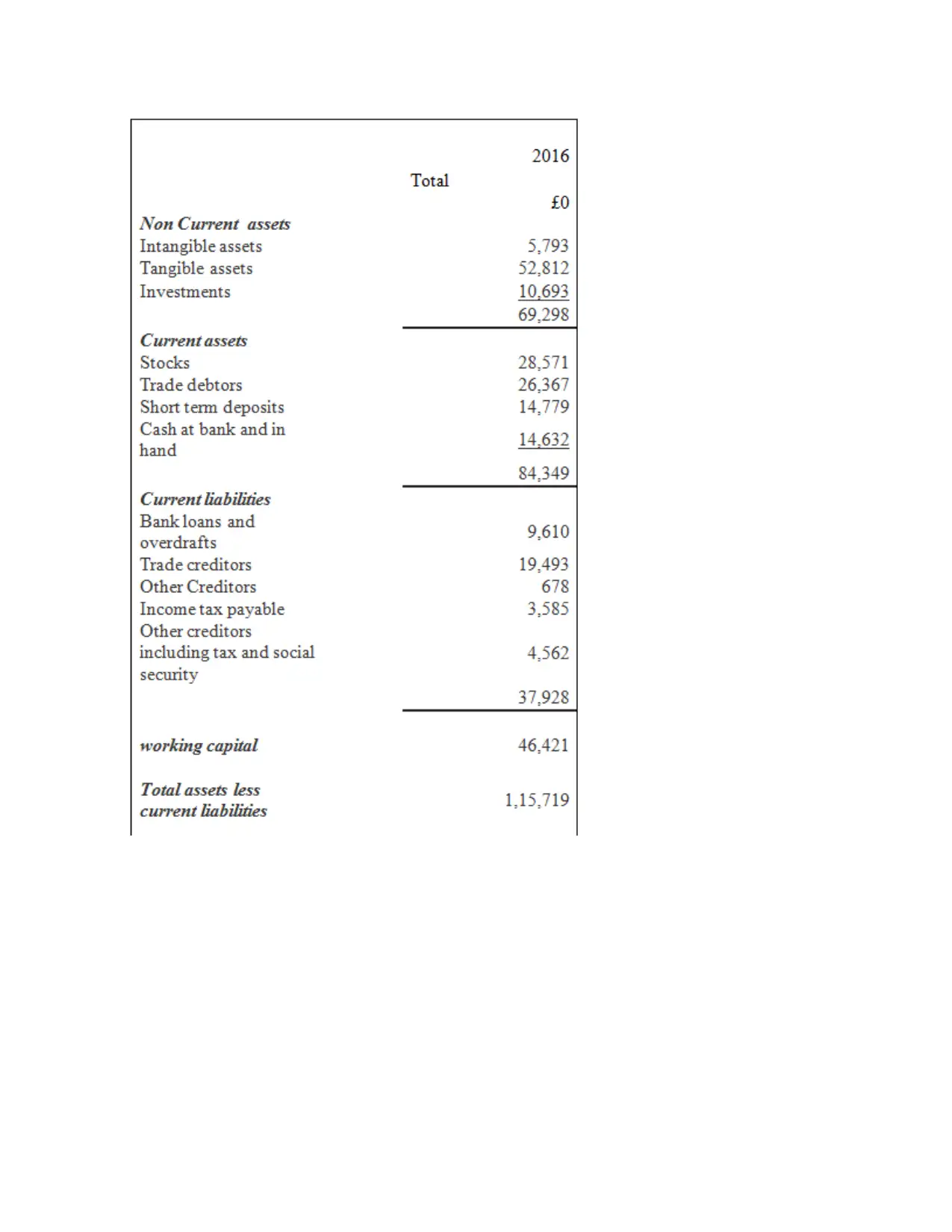
Balance sheet:
long-term plan that helps the firm maintain its current sales development. In contrast to basic
inventory control, completed products inventories, and commodities sales, the corporate finance
department takes actions. The finance executive board generally decides on operational expense
reductions. The corporate finance section frequently distributes assets wisely for the company's
effectiveness and communication. The major mission of the business is to raise revenue while
spending little. As a result, it ensures that the firm's expansion is economically safe. The
financial manager appears to be in control of the company's long-term development and also
compensation and benefits. The financial division is in charge of improving the firm's national
reputation by paying state and governmental taxation. Lastly, the finance leadership group
assesses the industry's earnings in view of the achievement of previously set objectives
(Kwilinskyi, Shteingauz and Maslov, 2020).
Section 2: The most important fiscal accounts, as well as how to apply ratios in monetary control
Balance sheet:
⊘ This is a preview!⊘
Do you want full access?
Subscribe today to unlock all pages.
Trusted by 1+ million students worldwide
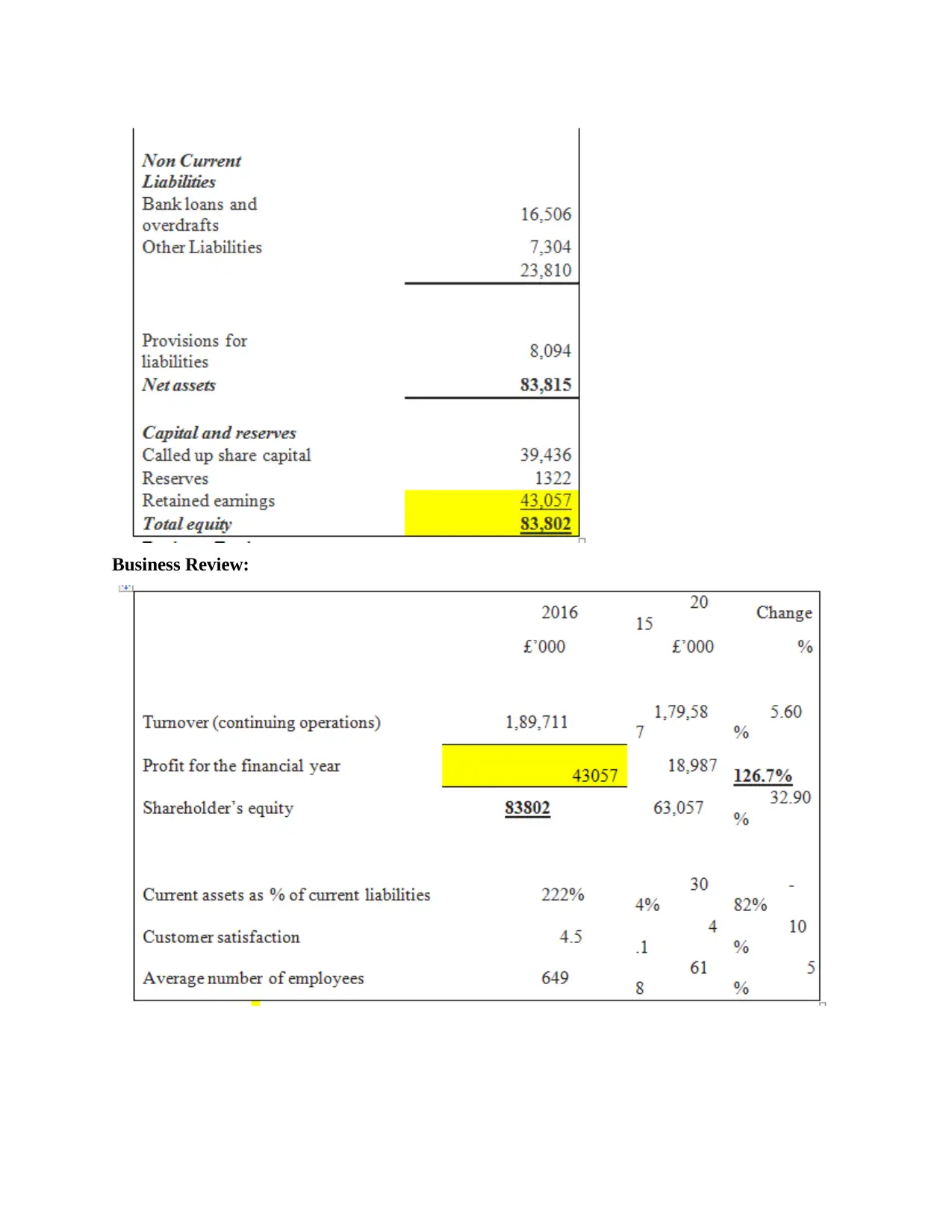
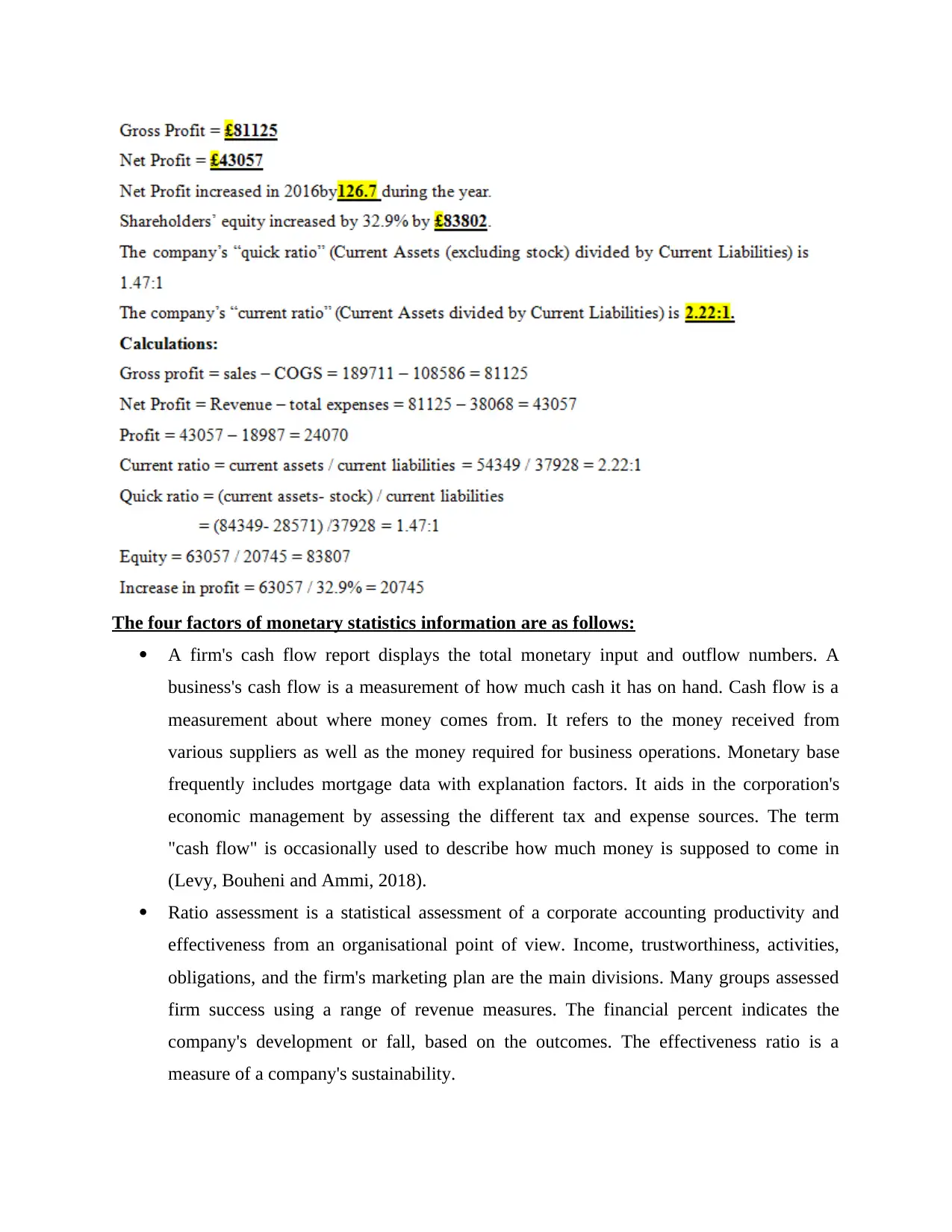
Business Review:
Paraphrase This Document
Need a fresh take? Get an instant paraphrase of this document with our AI Paraphraser
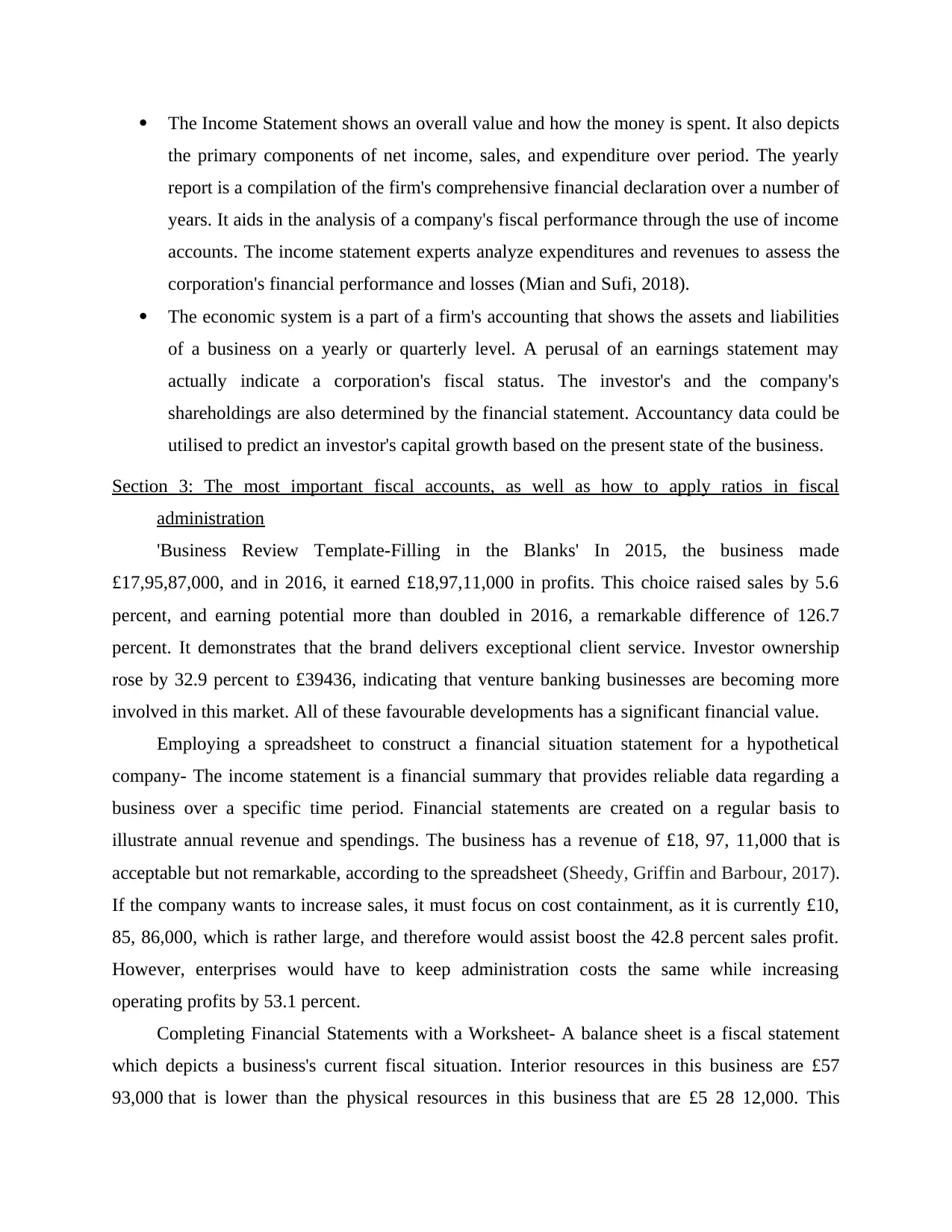
The four factors of monetary statistics information are as follows:
A firm's cash flow report displays the total monetary input and outflow numbers. A
business's cash flow is a measurement of how much cash it has on hand. Cash flow is a
measurement about where money comes from. It refers to the money received from
various suppliers as well as the money required for business operations. Monetary base
frequently includes mortgage data with explanation factors. It aids in the corporation's
economic management by assessing the different tax and expense sources. The term
"cash flow" is occasionally used to describe how much money is supposed to come in
(Levy, Bouheni and Ammi, 2018).
Ratio assessment is a statistical assessment of a corporate accounting productivity and
effectiveness from an organisational point of view. Income, trustworthiness, activities,
obligations, and the firm's marketing plan are the main divisions. Many groups assessed
firm success using a range of revenue measures. The financial percent indicates the
company's development or fall, based on the outcomes. The effectiveness ratio is a
measure of a company's sustainability.
A firm's cash flow report displays the total monetary input and outflow numbers. A
business's cash flow is a measurement of how much cash it has on hand. Cash flow is a
measurement about where money comes from. It refers to the money received from
various suppliers as well as the money required for business operations. Monetary base
frequently includes mortgage data with explanation factors. It aids in the corporation's
economic management by assessing the different tax and expense sources. The term
"cash flow" is occasionally used to describe how much money is supposed to come in
(Levy, Bouheni and Ammi, 2018).
Ratio assessment is a statistical assessment of a corporate accounting productivity and
effectiveness from an organisational point of view. Income, trustworthiness, activities,
obligations, and the firm's marketing plan are the main divisions. Many groups assessed
firm success using a range of revenue measures. The financial percent indicates the
company's development or fall, based on the outcomes. The effectiveness ratio is a
measure of a company's sustainability.
The Income Statement shows an overall value and how the money is spent. It also depicts
the primary components of net income, sales, and expenditure over period. The yearly
report is a compilation of the firm's comprehensive financial declaration over a number of
years. It aids in the analysis of a company's fiscal performance through the use of income
accounts. The income statement experts analyze expenditures and revenues to assess the
corporation's financial performance and losses (Mian and Sufi, 2018).
The economic system is a part of a firm's accounting that shows the assets and liabilities
of a business on a yearly or quarterly level. A perusal of an earnings statement may
actually indicate a corporation's fiscal status. The investor's and the company's
shareholdings are also determined by the financial statement. Accountancy data could be
utilised to predict an investor's capital growth based on the present state of the business.
Section 3: The most important fiscal accounts, as well as how to apply ratios in fiscal
administration
'Business Review Template-Filling in the Blanks' In 2015, the business made
£17,95,87,000, and in 2016, it earned £18,97,11,000 in profits. This choice raised sales by 5.6
percent, and earning potential more than doubled in 2016, a remarkable difference of 126.7
percent. It demonstrates that the brand delivers exceptional client service. Investor ownership
rose by 32.9 percent to £39436, indicating that venture banking businesses are becoming more
involved in this market. All of these favourable developments has a significant financial value.
Employing a spreadsheet to construct a financial situation statement for a hypothetical
company- The income statement is a financial summary that provides reliable data regarding a
business over a specific time period. Financial statements are created on a regular basis to
illustrate annual revenue and spendings. The business has a revenue of £18, 97, 11,000 that is
acceptable but not remarkable, according to the spreadsheet (Sheedy, Griffin and Barbour, 2017).
If the company wants to increase sales, it must focus on cost containment, as it is currently £10,
85, 86,000, which is rather large, and therefore would assist boost the 42.8 percent sales profit.
However, enterprises would have to keep administration costs the same while increasing
operating profits by 53.1 percent.
Completing Financial Statements with a Worksheet- A balance sheet is a fiscal statement
which depicts a business's current fiscal situation. Interior resources in this business are £57
93,000 that is lower than the physical resources in this business that are £5 28 12,000. This
the primary components of net income, sales, and expenditure over period. The yearly
report is a compilation of the firm's comprehensive financial declaration over a number of
years. It aids in the analysis of a company's fiscal performance through the use of income
accounts. The income statement experts analyze expenditures and revenues to assess the
corporation's financial performance and losses (Mian and Sufi, 2018).
The economic system is a part of a firm's accounting that shows the assets and liabilities
of a business on a yearly or quarterly level. A perusal of an earnings statement may
actually indicate a corporation's fiscal status. The investor's and the company's
shareholdings are also determined by the financial statement. Accountancy data could be
utilised to predict an investor's capital growth based on the present state of the business.
Section 3: The most important fiscal accounts, as well as how to apply ratios in fiscal
administration
'Business Review Template-Filling in the Blanks' In 2015, the business made
£17,95,87,000, and in 2016, it earned £18,97,11,000 in profits. This choice raised sales by 5.6
percent, and earning potential more than doubled in 2016, a remarkable difference of 126.7
percent. It demonstrates that the brand delivers exceptional client service. Investor ownership
rose by 32.9 percent to £39436, indicating that venture banking businesses are becoming more
involved in this market. All of these favourable developments has a significant financial value.
Employing a spreadsheet to construct a financial situation statement for a hypothetical
company- The income statement is a financial summary that provides reliable data regarding a
business over a specific time period. Financial statements are created on a regular basis to
illustrate annual revenue and spendings. The business has a revenue of £18, 97, 11,000 that is
acceptable but not remarkable, according to the spreadsheet (Sheedy, Griffin and Barbour, 2017).
If the company wants to increase sales, it must focus on cost containment, as it is currently £10,
85, 86,000, which is rather large, and therefore would assist boost the 42.8 percent sales profit.
However, enterprises would have to keep administration costs the same while increasing
operating profits by 53.1 percent.
Completing Financial Statements with a Worksheet- A balance sheet is a fiscal statement
which depicts a business's current fiscal situation. Interior resources in this business are £57
93,000 that is lower than the physical resources in this business that are £5 28 12,000. This
⊘ This is a preview!⊘
Do you want full access?
Subscribe today to unlock all pages.
Trusted by 1+ million students worldwide
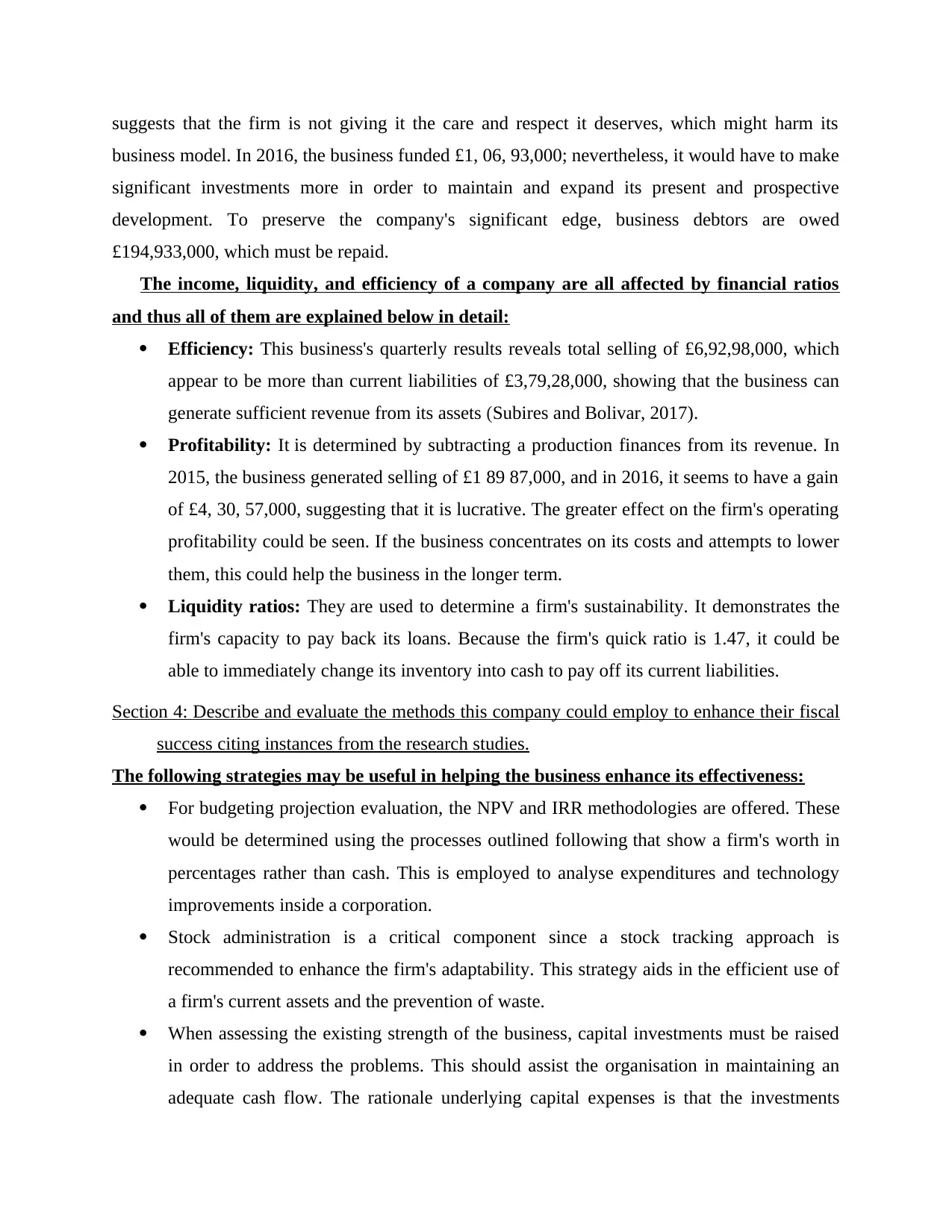
suggests that the firm is not giving it the care and respect it deserves, which might harm its
business model. In 2016, the business funded £1, 06, 93,000; nevertheless, it would have to make
significant investments more in order to maintain and expand its present and prospective
development. To preserve the company's significant edge, business debtors are owed
£194,933,000, which must be repaid.
The income, liquidity, and efficiency of a company are all affected by financial ratios
and thus all of them are explained below in detail:
Efficiency: This business's quarterly results reveals total selling of £6,92,98,000, which
appear to be more than current liabilities of £3,79,28,000, showing that the business can
generate sufficient revenue from its assets (Subires and Bolivar, 2017).
Profitability: It is determined by subtracting a production finances from its revenue. In
2015, the business generated selling of £1 89 87,000, and in 2016, it seems to have a gain
of £4, 30, 57,000, suggesting that it is lucrative. The greater effect on the firm's operating
profitability could be seen. If the business concentrates on its costs and attempts to lower
them, this could help the business in the longer term.
Liquidity ratios: They are used to determine a firm's sustainability. It demonstrates the
firm's capacity to pay back its loans. Because the firm's quick ratio is 1.47, it could be
able to immediately change its inventory into cash to pay off its current liabilities.
Section 4: Describe and evaluate the methods this company could employ to enhance their fiscal
success citing instances from the research studies.
The following strategies may be useful in helping the business enhance its effectiveness:
For budgeting projection evaluation, the NPV and IRR methodologies are offered. These
would be determined using the processes outlined following that show a firm's worth in
percentages rather than cash. This is employed to analyse expenditures and technology
improvements inside a corporation.
Stock administration is a critical component since a stock tracking approach is
recommended to enhance the firm's adaptability. This strategy aids in the efficient use of
a firm's current assets and the prevention of waste.
When assessing the existing strength of the business, capital investments must be raised
in order to address the problems. This should assist the organisation in maintaining an
adequate cash flow. The rationale underlying capital expenses is that the investments
business model. In 2016, the business funded £1, 06, 93,000; nevertheless, it would have to make
significant investments more in order to maintain and expand its present and prospective
development. To preserve the company's significant edge, business debtors are owed
£194,933,000, which must be repaid.
The income, liquidity, and efficiency of a company are all affected by financial ratios
and thus all of them are explained below in detail:
Efficiency: This business's quarterly results reveals total selling of £6,92,98,000, which
appear to be more than current liabilities of £3,79,28,000, showing that the business can
generate sufficient revenue from its assets (Subires and Bolivar, 2017).
Profitability: It is determined by subtracting a production finances from its revenue. In
2015, the business generated selling of £1 89 87,000, and in 2016, it seems to have a gain
of £4, 30, 57,000, suggesting that it is lucrative. The greater effect on the firm's operating
profitability could be seen. If the business concentrates on its costs and attempts to lower
them, this could help the business in the longer term.
Liquidity ratios: They are used to determine a firm's sustainability. It demonstrates the
firm's capacity to pay back its loans. Because the firm's quick ratio is 1.47, it could be
able to immediately change its inventory into cash to pay off its current liabilities.
Section 4: Describe and evaluate the methods this company could employ to enhance their fiscal
success citing instances from the research studies.
The following strategies may be useful in helping the business enhance its effectiveness:
For budgeting projection evaluation, the NPV and IRR methodologies are offered. These
would be determined using the processes outlined following that show a firm's worth in
percentages rather than cash. This is employed to analyse expenditures and technology
improvements inside a corporation.
Stock administration is a critical component since a stock tracking approach is
recommended to enhance the firm's adaptability. This strategy aids in the efficient use of
a firm's current assets and the prevention of waste.
When assessing the existing strength of the business, capital investments must be raised
in order to address the problems. This should assist the organisation in maintaining an
adequate cash flow. The rationale underlying capital expenses is that the investments
Paraphrase This Document
Need a fresh take? Get an instant paraphrase of this document with our AI Paraphraser
made on products would bring in revenue and rise in worth over time, allowing
businesses to expand its assets (Wang, Dou and Jia, 2016).
Expense cuts are one way to improve a corporation's fiscal situation. Companies which
are successful engage in research and development to find more cost-effective
manufacturing techniques which produce high-quality goods.
CONCLUSION
The repercussions of money planning, as well as its significance in a firm, were explored in
this research. It also carried out a cash flow study. The firm's productivity, net profit, and
management have all been examined using the management assessment instrument, balance
sheet, and create revenues, as well as real-world examples. Ratio studies are frequently used to
aid understanding of the subject. Following the completion of the realistic situation, strategies for
improving the firm's fiscal strategy, and also suggestions for fixing the discovered weaknesses,
are presented.
businesses to expand its assets (Wang, Dou and Jia, 2016).
Expense cuts are one way to improve a corporation's fiscal situation. Companies which
are successful engage in research and development to find more cost-effective
manufacturing techniques which produce high-quality goods.
CONCLUSION
The repercussions of money planning, as well as its significance in a firm, were explored in
this research. It also carried out a cash flow study. The firm's productivity, net profit, and
management have all been examined using the management assessment instrument, balance
sheet, and create revenues, as well as real-world examples. Ratio studies are frequently used to
aid understanding of the subject. Following the completion of the realistic situation, strategies for
improving the firm's fiscal strategy, and also suggestions for fixing the discovered weaknesses,
are presented.
REFERENCES
Books and journals
Eka, H., 2018. Corporate finance and firm value in the Indonesian manufacturing
companies. BUSINESS STUDIES. 11(2). pp.113-127.
Henager, R. and Cude, B.J., 2016. Financial Literacy and Long-and Short-Term Financial
Behavior in Different Age Groups. Journal of Financial Counseling and Planning,
27(1), pp.3-19.
Kwilinskyi, O., Shteingauz, D. and Maslov, V., 2020. Financial and credit instruments for
ensuring effective functioning of the residential real estate market.
Levy, A., Bouheni, F.B. and Ammi, C., 2018. Financial management: USGAAP and IFRS
Standards. John Wiley & Sons.
Mian, A. and Sufi, A., 2018. Finance and business cycles: the credit-driven household demand
channel. Journal of Economic Perspectives. 32(3). pp.31-58.
Sheedy, E.A., Griffin, B. and Barbour, J.P., 2017. A framework and measure for examining risk
climate in financial institutions. Journal of Business and Psychology. 32(1). pp.101-116.
Subires, M.D.L. and Bolivar, M.P.R., 2017. Financial Sustainability in Governments. A New
Concept and Measure for Meeting New Information Needs. In Financial Sustainability
in Public Administration (pp. 3-20). Palgrave Macmillan, Cham.
Wang, Q., Dou, J. and Jia, S., 2016. A meta-analytic review of corporate social responsibility
and corporate financial performance: The moderating effect of contextual
factors. Business & Society. 55(8). pp.1083-1121.
Books and journals
Eka, H., 2018. Corporate finance and firm value in the Indonesian manufacturing
companies. BUSINESS STUDIES. 11(2). pp.113-127.
Henager, R. and Cude, B.J., 2016. Financial Literacy and Long-and Short-Term Financial
Behavior in Different Age Groups. Journal of Financial Counseling and Planning,
27(1), pp.3-19.
Kwilinskyi, O., Shteingauz, D. and Maslov, V., 2020. Financial and credit instruments for
ensuring effective functioning of the residential real estate market.
Levy, A., Bouheni, F.B. and Ammi, C., 2018. Financial management: USGAAP and IFRS
Standards. John Wiley & Sons.
Mian, A. and Sufi, A., 2018. Finance and business cycles: the credit-driven household demand
channel. Journal of Economic Perspectives. 32(3). pp.31-58.
Sheedy, E.A., Griffin, B. and Barbour, J.P., 2017. A framework and measure for examining risk
climate in financial institutions. Journal of Business and Psychology. 32(1). pp.101-116.
Subires, M.D.L. and Bolivar, M.P.R., 2017. Financial Sustainability in Governments. A New
Concept and Measure for Meeting New Information Needs. In Financial Sustainability
in Public Administration (pp. 3-20). Palgrave Macmillan, Cham.
Wang, Q., Dou, J. and Jia, S., 2016. A meta-analytic review of corporate social responsibility
and corporate financial performance: The moderating effect of contextual
factors. Business & Society. 55(8). pp.1083-1121.
⊘ This is a preview!⊘
Do you want full access?
Subscribe today to unlock all pages.
Trusted by 1+ million students worldwide

1 out of 13


Related Documents


Your All-in-One AI-Powered Toolkit for Academic Success.
+13062052269
info@desklib.com
Available 24*7 on WhatsApp / Email
![[object Object]](/_next/static/media/star-bottom.7253800d.svg)
Unlock your academic potential
Copyright © 2020–2026 A2Z Services. All Rights Reserved. Developed and managed by ZUCOL.