A Philosophical Interpretation of Architectural Meaning and History
VerifiedAdded on 2023/06/11
|12
|2596
|141
Essay
AI Summary
This essay delves into the philosophical interpretation of architecture, focusing on the meaning and artistic value of buildings, particularly Gothic architecture, through the lens of German philosopher Gadamer's hermeneutics. It examines how historical consciousness and cultural conditioning influence the understanding of architectural works. The essay discusses Gadamer's concept of aesthetic consciousness and its impact on interpreting architectural meaning, arguing that true artistic meaning is revealed by avoiding subjective interpretations. It explores the role of aesthetics, occasionality, and self-knowledge in shaping the interpretation of sacred buildings and monuments, emphasizing that the meaning derived from architectural works is never complete without interpretive treatment. The essay concludes by highlighting the importance of understanding the cultural context and conventions of architectural pieces, advocating for a holistic approach to interpreting art that considers the intentions of the architect, the conventions, and the materials used.

Essay
1
1

Paraphrase This Document
Need a fresh take? Get an instant paraphrase of this document with our AI Paraphraser
Contents
INTRODUCTION...........................................................................................................................3
MAIN BODY...................................................................................................................................3
CONCLUSION................................................................................................................................8
REFRENCES...................................................................................................................................9
2
INTRODUCTION...........................................................................................................................3
MAIN BODY...................................................................................................................................3
CONCLUSION................................................................................................................................8
REFRENCES...................................................................................................................................9
2
INTRODUCTION
The title of this essay is Architectural meaning and history: philosophical interpretation
of Architecture. Buildings and other works of architecture are also considered meaningful artistic
expressions beyond their functionality as living space. This essay draws from the work of
German philosopher Gadamer in order to expand on the theme of art and representation in
context of historical and modeller architecture. The focus of this essay is to understand the theme
of representation and artistic value of architecture by drawing on philosophy of art as written by
Gadamer. Philosophical concepts such as hermeneutics are explained and applied in this essay in
order to develop better understanding of architectural meaning and answer the question of ways
in which architecture has been interpreted in the past to determine its artistic value. The object
selected for applying philosophical theories and answering this question of interpreting meaning
of architecture is Gothic architecture.
MAIN BODY
The philosophy of architecture revolves around the aesthetical value of architecture,
semantics and connection with social and cultural elements. The idea proposed by Gadamer in
context of interpreting architectural work is that understanding of specific work is dependent on
the cultural horizon of the individual (Caputo, 2018). The philosophical works of Gadamer focus
on the area Hermeneutics, which emphasizes the role of cultural conditioning and historical
consciousness in understanding the meaning behind a work of art. The primary objective of
this essay is to answer the question about interpretation and meaning of architecture in
terms of aesthetics. The essay focuses on the area of aesthetic consciousness and utilizes the
philosophy of art provided by Gadmer to understand the meaning of artistic elements in
architecture. This is completed by looking at objects such as Gothic architecture. The
theme of this essay is art and representation while the object is Gothic building from
medieval period.
3
The title of this essay is Architectural meaning and history: philosophical interpretation
of Architecture. Buildings and other works of architecture are also considered meaningful artistic
expressions beyond their functionality as living space. This essay draws from the work of
German philosopher Gadamer in order to expand on the theme of art and representation in
context of historical and modeller architecture. The focus of this essay is to understand the theme
of representation and artistic value of architecture by drawing on philosophy of art as written by
Gadamer. Philosophical concepts such as hermeneutics are explained and applied in this essay in
order to develop better understanding of architectural meaning and answer the question of ways
in which architecture has been interpreted in the past to determine its artistic value. The object
selected for applying philosophical theories and answering this question of interpreting meaning
of architecture is Gothic architecture.
MAIN BODY
The philosophy of architecture revolves around the aesthetical value of architecture,
semantics and connection with social and cultural elements. The idea proposed by Gadamer in
context of interpreting architectural work is that understanding of specific work is dependent on
the cultural horizon of the individual (Caputo, 2018). The philosophical works of Gadamer focus
on the area Hermeneutics, which emphasizes the role of cultural conditioning and historical
consciousness in understanding the meaning behind a work of art. The primary objective of
this essay is to answer the question about interpretation and meaning of architecture in
terms of aesthetics. The essay focuses on the area of aesthetic consciousness and utilizes the
philosophy of art provided by Gadmer to understand the meaning of artistic elements in
architecture. This is completed by looking at objects such as Gothic architecture. The
theme of this essay is art and representation while the object is Gothic building from
medieval period.
3
⊘ This is a preview!⊘
Do you want full access?
Subscribe today to unlock all pages.

Trusted by 1+ million students worldwide
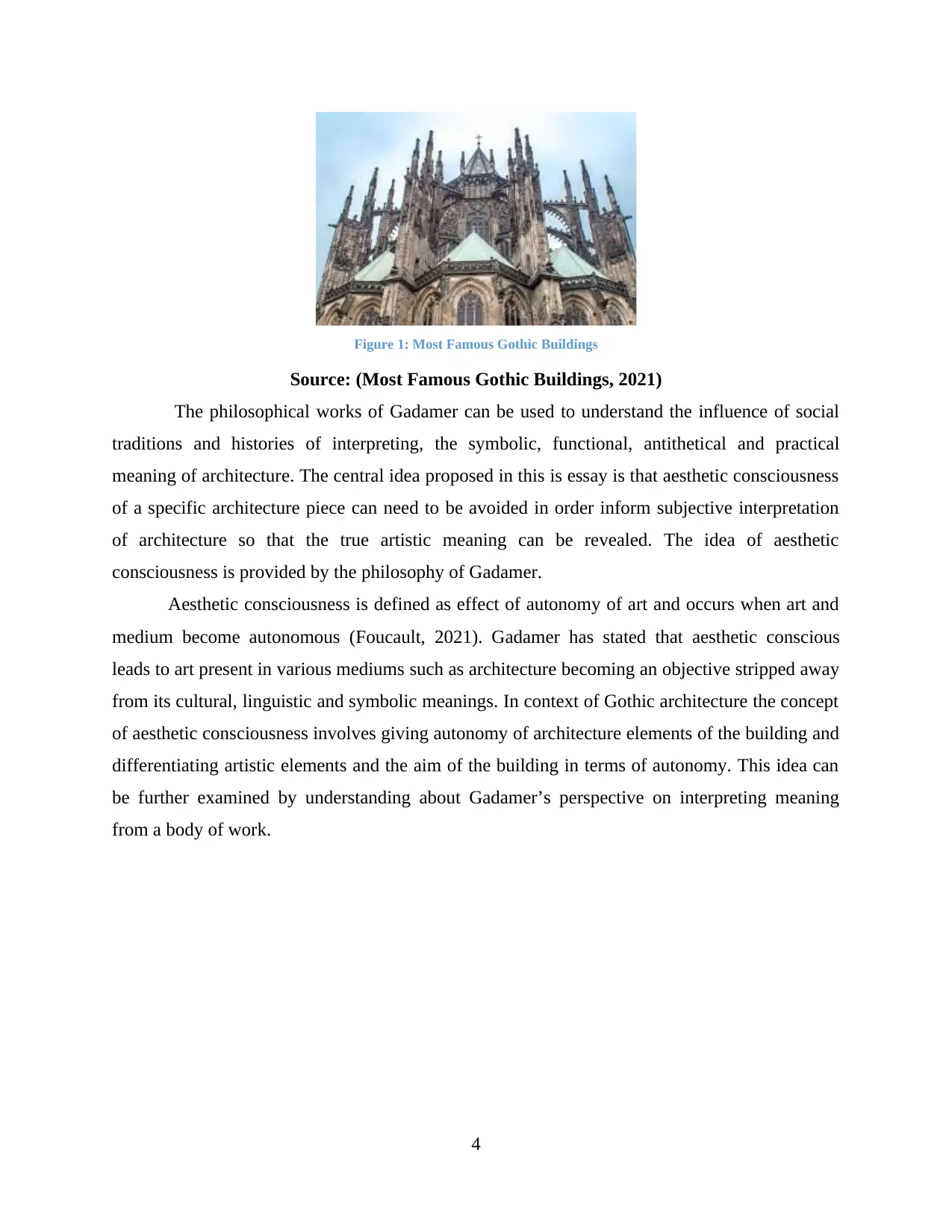
Figure 1: Most Famous Gothic Buildings
Source: (Most Famous Gothic Buildings, 2021)
The philosophical works of Gadamer can be used to understand the influence of social
traditions and histories of interpreting, the symbolic, functional, antithetical and practical
meaning of architecture. The central idea proposed in this is essay is that aesthetic consciousness
of a specific architecture piece can need to be avoided in order inform subjective interpretation
of architecture so that the true artistic meaning can be revealed. The idea of aesthetic
consciousness is provided by the philosophy of Gadamer.
Aesthetic consciousness is defined as effect of autonomy of art and occurs when art and
medium become autonomous (Foucault, 2021). Gadamer has stated that aesthetic conscious
leads to art present in various mediums such as architecture becoming an objective stripped away
from its cultural, linguistic and symbolic meanings. In context of Gothic architecture the concept
of aesthetic consciousness involves giving autonomy of architecture elements of the building and
differentiating artistic elements and the aim of the building in terms of autonomy. This idea can
be further examined by understanding about Gadamer’s perspective on interpreting meaning
from a body of work.
4
Source: (Most Famous Gothic Buildings, 2021)
The philosophical works of Gadamer can be used to understand the influence of social
traditions and histories of interpreting, the symbolic, functional, antithetical and practical
meaning of architecture. The central idea proposed in this is essay is that aesthetic consciousness
of a specific architecture piece can need to be avoided in order inform subjective interpretation
of architecture so that the true artistic meaning can be revealed. The idea of aesthetic
consciousness is provided by the philosophy of Gadamer.
Aesthetic consciousness is defined as effect of autonomy of art and occurs when art and
medium become autonomous (Foucault, 2021). Gadamer has stated that aesthetic conscious
leads to art present in various mediums such as architecture becoming an objective stripped away
from its cultural, linguistic and symbolic meanings. In context of Gothic architecture the concept
of aesthetic consciousness involves giving autonomy of architecture elements of the building and
differentiating artistic elements and the aim of the building in terms of autonomy. This idea can
be further examined by understanding about Gadamer’s perspective on interpreting meaning
from a body of work.
4
Paraphrase This Document
Need a fresh take? Get an instant paraphrase of this document with our AI Paraphraser
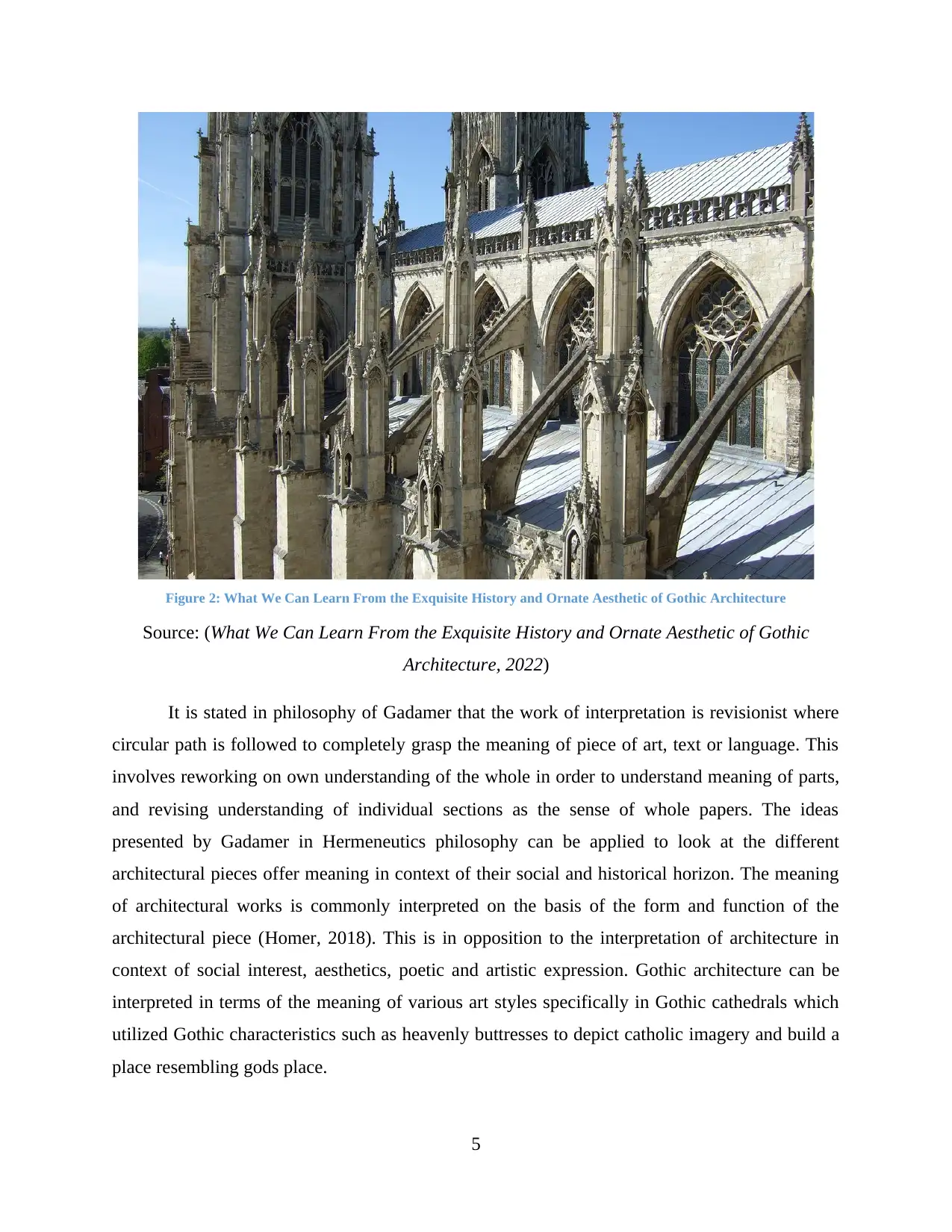
Figure 2: What We Can Learn From the Exquisite History and Ornate Aesthetic of Gothic Architecture
Source: (What We Can Learn From the Exquisite History and Ornate Aesthetic of Gothic
Architecture, 2022)
It is stated in philosophy of Gadamer that the work of interpretation is revisionist where
circular path is followed to completely grasp the meaning of piece of art, text or language. This
involves reworking on own understanding of the whole in order to understand meaning of parts,
and revising understanding of individual sections as the sense of whole papers. The ideas
presented by Gadamer in Hermeneutics philosophy can be applied to look at the different
architectural pieces offer meaning in context of their social and historical horizon. The meaning
of architectural works is commonly interpreted on the basis of the form and function of the
architectural piece (Homer, 2018). This is in opposition to the interpretation of architecture in
context of social interest, aesthetics, poetic and artistic expression. Gothic architecture can be
interpreted in terms of the meaning of various art styles specifically in Gothic cathedrals which
utilized Gothic characteristics such as heavenly buttresses to depict catholic imagery and build a
place resembling gods place.
5
Source: (What We Can Learn From the Exquisite History and Ornate Aesthetic of Gothic
Architecture, 2022)
It is stated in philosophy of Gadamer that the work of interpretation is revisionist where
circular path is followed to completely grasp the meaning of piece of art, text or language. This
involves reworking on own understanding of the whole in order to understand meaning of parts,
and revising understanding of individual sections as the sense of whole papers. The ideas
presented by Gadamer in Hermeneutics philosophy can be applied to look at the different
architectural pieces offer meaning in context of their social and historical horizon. The meaning
of architectural works is commonly interpreted on the basis of the form and function of the
architectural piece (Homer, 2018). This is in opposition to the interpretation of architecture in
context of social interest, aesthetics, poetic and artistic expression. Gothic architecture can be
interpreted in terms of the meaning of various art styles specifically in Gothic cathedrals which
utilized Gothic characteristics such as heavenly buttresses to depict catholic imagery and build a
place resembling gods place.
5
Hermeneutics can be used to understand the role of aesthetic consciousness in
representation of art in architecture. Aesthetic consciousness cultivates various concepts of the
art piece. In case of architecture the concepts such as domes, rooftop finales, decorative
windows, eaves and elements of modern architecture such as clean lines and lack of
ornamentation are cultivated in understanding meaning of the architectural piece because of
aesthetic consciousness. The common factor between various concepts cultivated by aesthetic
consciousness during understanding an architectural piece is the occasionally affecting the
understanding of various concepts and meaning of the architectural work as a whole.
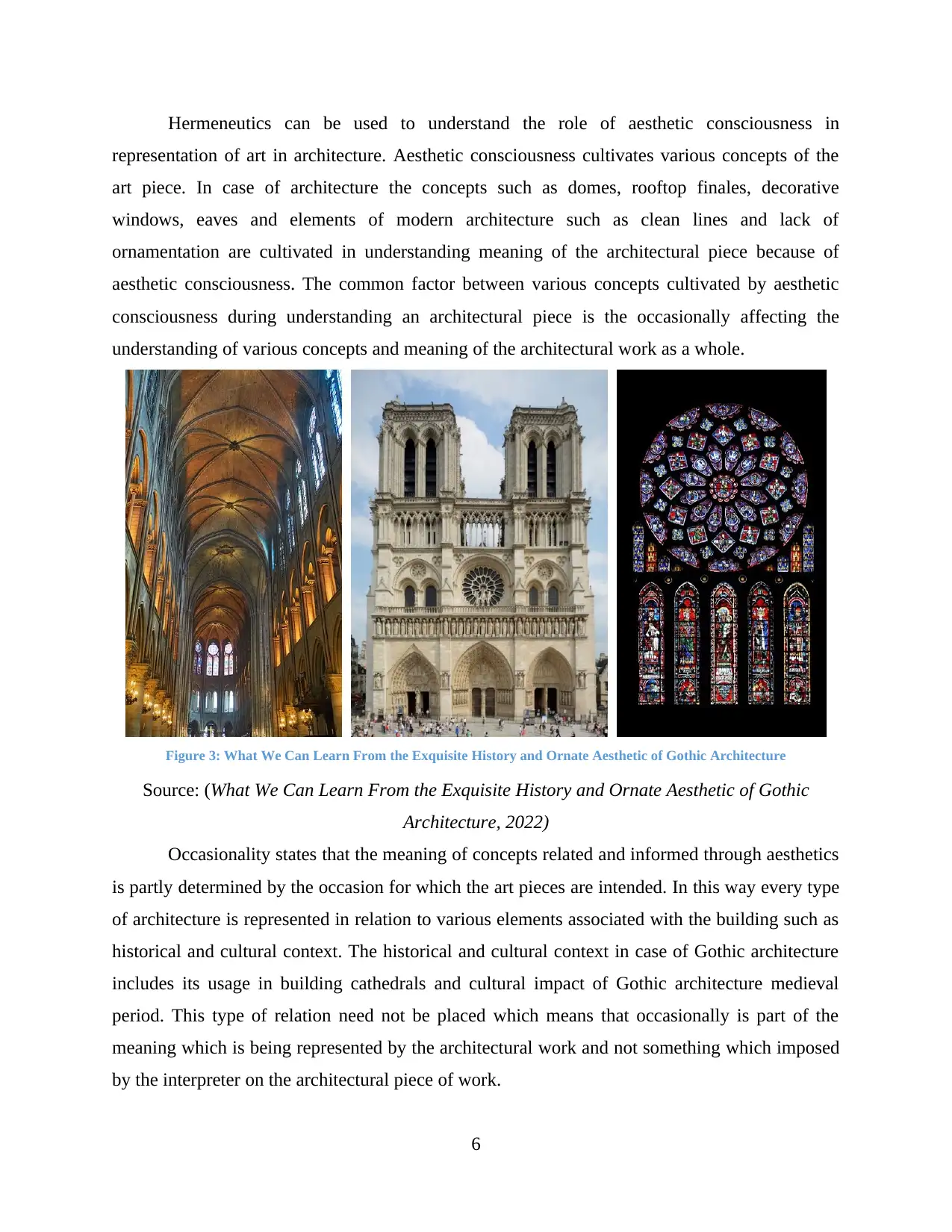
Figure 3: What We Can Learn From the Exquisite History and Ornate Aesthetic of Gothic Architecture
Source: (What We Can Learn From the Exquisite History and Ornate Aesthetic of Gothic
Architecture, 2022)
Occasionality states that the meaning of concepts related and informed through aesthetics
is partly determined by the occasion for which the art pieces are intended. In this way every type
of architecture is represented in relation to various elements associated with the building such as
historical and cultural context. The historical and cultural context in case of Gothic architecture
includes its usage in building cathedrals and cultural impact of Gothic architecture medieval
period. This type of relation need not be placed which means that occasionally is part of the
meaning which is being represented by the architectural work and not something which imposed
by the interpreter on the architectural piece of work.
6
representation of art in architecture. Aesthetic consciousness cultivates various concepts of the
art piece. In case of architecture the concepts such as domes, rooftop finales, decorative
windows, eaves and elements of modern architecture such as clean lines and lack of
ornamentation are cultivated in understanding meaning of the architectural piece because of
aesthetic consciousness. The common factor between various concepts cultivated by aesthetic
consciousness during understanding an architectural piece is the occasionally affecting the
understanding of various concepts and meaning of the architectural work as a whole.
Figure 3: What We Can Learn From the Exquisite History and Ornate Aesthetic of Gothic Architecture
Source: (What We Can Learn From the Exquisite History and Ornate Aesthetic of Gothic
Architecture, 2022)
Occasionality states that the meaning of concepts related and informed through aesthetics
is partly determined by the occasion for which the art pieces are intended. In this way every type
of architecture is represented in relation to various elements associated with the building such as
historical and cultural context. The historical and cultural context in case of Gothic architecture
includes its usage in building cathedrals and cultural impact of Gothic architecture medieval
period. This type of relation need not be placed which means that occasionally is part of the
meaning which is being represented by the architectural work and not something which imposed
by the interpreter on the architectural piece of work.
6
⊘ This is a preview!⊘
Do you want full access?
Subscribe today to unlock all pages.
Trusted by 1+ million students worldwide
This showcases the common idea in Gadamer philosophical woks which is the self-
knowledge is arises from pre given historical substances because underlies all subjective
intentions and actions, and hence both prescribes and limits every possibility for understanding
any tradition whatsoever in its historical alterity. It can be understood from the concept of
ocasionality and idea of self-knowledge in hermeneutics that aesthetic consciousness influences
the ability of an interpreter to derive true meaning by experiencing an architectural piece of work
(Howard, 2020).
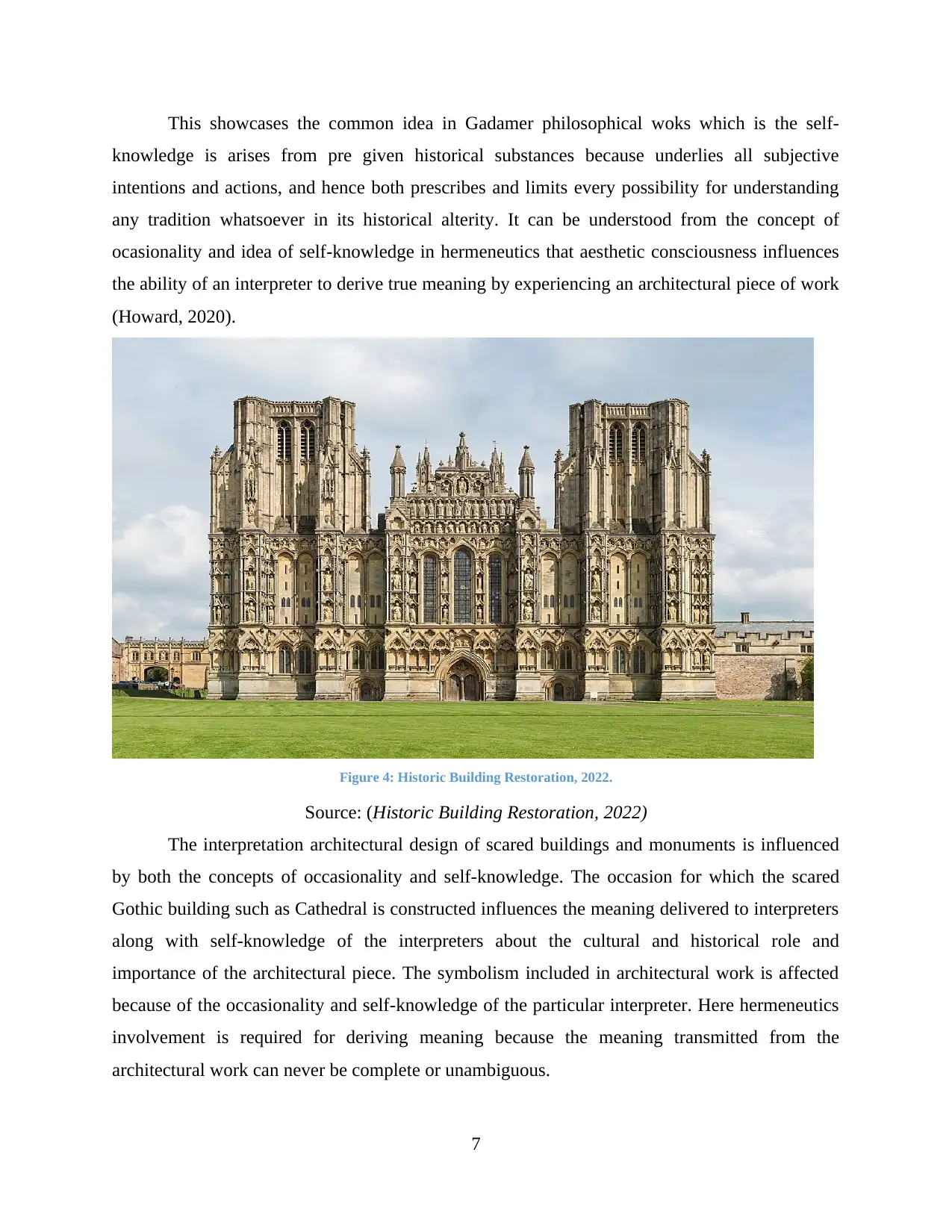
Figure 4: Historic Building Restoration, 2022.
Source: (Historic Building Restoration, 2022)
The interpretation architectural design of scared buildings and monuments is influenced
by both the concepts of occasionality and self-knowledge. The occasion for which the scared
Gothic building such as Cathedral is constructed influences the meaning delivered to interpreters
along with self-knowledge of the interpreters about the cultural and historical role and
importance of the architectural piece. The symbolism included in architectural work is affected
because of the occasionality and self-knowledge of the particular interpreter. Here hermeneutics
involvement is required for deriving meaning because the meaning transmitted from the
architectural work can never be complete or unambiguous.
7
knowledge is arises from pre given historical substances because underlies all subjective
intentions and actions, and hence both prescribes and limits every possibility for understanding
any tradition whatsoever in its historical alterity. It can be understood from the concept of
ocasionality and idea of self-knowledge in hermeneutics that aesthetic consciousness influences
the ability of an interpreter to derive true meaning by experiencing an architectural piece of work
(Howard, 2020).
Figure 4: Historic Building Restoration, 2022.
Source: (Historic Building Restoration, 2022)
The interpretation architectural design of scared buildings and monuments is influenced
by both the concepts of occasionality and self-knowledge. The occasion for which the scared
Gothic building such as Cathedral is constructed influences the meaning delivered to interpreters
along with self-knowledge of the interpreters about the cultural and historical role and
importance of the architectural piece. The symbolism included in architectural work is affected
because of the occasionality and self-knowledge of the particular interpreter. Here hermeneutics
involvement is required for deriving meaning because the meaning transmitted from the
architectural work can never be complete or unambiguous.
7
Paraphrase This Document
Need a fresh take? Get an instant paraphrase of this document with our AI Paraphraser
Understanding meaning of the text requires interpretive treatment because of restricted
transposition of thought so that possible meaning of the work can be determined within a specific
experience of work (HUSNI and SETIAWAN, 2018). This supports drawing assumptions on the
work to bring greater completeness. This helps represent architecture with accurate interpretation
which helps reach the closest completeness. The primary objective of this essay is to answer the
question about interpretation and meaning of architecture in terms of aesthetics.
Hermeneutics argues that aesthetics is the study of concepts which objectively informs
subjective interpretation of art. This view is in opposition to the previous understandings of
aesthetics philosophy which solely focused on the area as study of specific type of pleasures
derived from art. This means that aesthetically pleasing aspects of architecture also provide the
building meaning and support its subjective understanding by different individuals. The role of
aesthetics in developing meaning of architectural pieces can be seen in Gothic architecture.
In Gothic architecture, the classical elements of stained glass, large windows, pointed
arches, flying buttresses and ornament decoration provide aesthetical pleasure, supports
functionality in its structure. In addition to this it also opens areas for subjective interpretation of
the architecture in context of significance, glory and influence of God, Church and Christianity
in society. This showcases that architecture does not provide purely pleasing aesthetics similarly
to an jewellery piece (Panjwani and Revell, 2018). This is because there is aesthetics of
architecture also provides individuals subjective interpretation possibility on the basis of their
social horizon.
In this case Hermeneutics aesthetics can be applied to breakdown the pleasurable
elements of aesthetic consciousness in order to develop an understanding about cultural and
linguistic reality associated with specific architectural work (Nel, 2018). The meaning behind
objective aesthetic characteristics of Gothic architecture such as flying buttresses and ornament
decoration can be used as a vehicle to understand the meaning of specific architecture pieces.
The Gothic architecture pieces present in different countries can be interpreted in terms of their
cultural, historical and linguistic realities that manifest themselves within it.
The application of Hermeneutics aesthetics can be used to improve the experience of
encountering art in architectural pieces because it helps interpret the meaning behind artistic
aspects of architecture to gain immediate effect (Redding, 2019). As stated by Gadamer, artistic
experience leads to immediate effect on individuals and an artistic experience can be bought by
8
transposition of thought so that possible meaning of the work can be determined within a specific
experience of work (HUSNI and SETIAWAN, 2018). This supports drawing assumptions on the
work to bring greater completeness. This helps represent architecture with accurate interpretation
which helps reach the closest completeness. The primary objective of this essay is to answer the
question about interpretation and meaning of architecture in terms of aesthetics.
Hermeneutics argues that aesthetics is the study of concepts which objectively informs
subjective interpretation of art. This view is in opposition to the previous understandings of
aesthetics philosophy which solely focused on the area as study of specific type of pleasures
derived from art. This means that aesthetically pleasing aspects of architecture also provide the
building meaning and support its subjective understanding by different individuals. The role of
aesthetics in developing meaning of architectural pieces can be seen in Gothic architecture.
In Gothic architecture, the classical elements of stained glass, large windows, pointed
arches, flying buttresses and ornament decoration provide aesthetical pleasure, supports
functionality in its structure. In addition to this it also opens areas for subjective interpretation of
the architecture in context of significance, glory and influence of God, Church and Christianity
in society. This showcases that architecture does not provide purely pleasing aesthetics similarly
to an jewellery piece (Panjwani and Revell, 2018). This is because there is aesthetics of
architecture also provides individuals subjective interpretation possibility on the basis of their
social horizon.
In this case Hermeneutics aesthetics can be applied to breakdown the pleasurable
elements of aesthetic consciousness in order to develop an understanding about cultural and
linguistic reality associated with specific architectural work (Nel, 2018). The meaning behind
objective aesthetic characteristics of Gothic architecture such as flying buttresses and ornament
decoration can be used as a vehicle to understand the meaning of specific architecture pieces.
The Gothic architecture pieces present in different countries can be interpreted in terms of their
cultural, historical and linguistic realities that manifest themselves within it.
The application of Hermeneutics aesthetics can be used to improve the experience of
encountering art in architectural pieces because it helps interpret the meaning behind artistic
aspects of architecture to gain immediate effect (Redding, 2019). As stated by Gadamer, artistic
experience leads to immediate effect on individuals and an artistic experience can be bought by
8
understanding. It can be determined that to an extent aesthetics is embodies into Hermeneutics.
The work of Hermeneutics aesthetics provides a philosophical view to understand and interpret
architectural pieces in context of their artistic representations so that meaning can be derived in
terms of their social, historical and linguistic reality.
The representation and interpretation of art and play can be understood by looking at the
concept of art and play as stated in the Hermeneutics. The underlying motif of art and play is that
aesthetic consciousness is not self-contained and instead drawn into play instead of something
much larger than what is evident to subjective consciousness. It can be seen in interpretation of
architectural work as they are heavily dependent on personal experiences of each individual. The
three statements provided in the concept of art and play in Gadmar’s work, include avoiding
taking the subjectivity of artist as starting point of interpretation. Comparing this statement to
Gothic architecture, the buildings need t be studied and interpreted in their cultural context rather
than solely basing interpretation of artistic elements on the intention of the architect. This means
that the interpretation the background of the architecture needs to be avoided while interpreting
the meaning of its artistic aspects. This is because it introduces prejudice into meaningful
interpretation of the experience,
The second statement is that art should not be referenced on the basis of its tools and
equipment alone. It is important to examine architectural pieces beyond its functionality as a
living space in order to clearly understand the meaning of the architectural work. In case of
Gothic architecture the interpretation needs to be based in relation to Christianity and medieval
cathedrals because Gothic architecture was primarily used in such buildings. It is important to
look beyond functional aspects of architectural pieces as per hermeneutics because artistic
perspective associated with an architectural piece requires understanding about the cultural
associations with the specific concept (Romele, 2019).
` The third statement which helps represent and derive meaning of from the artistic aspects
of the architectural piece focuses on comprehending artwork by appreciating rules and
conventions. The final element plays an important role in breaking aesthetic consciousness so
that proper meaning of the architectural meaning can be understood. This is because it helps
understand the specific technique behind developing the architecture. Learning about complexity
of Gothic architectural artwork an also hep understanding menacing behind each of element as it
will improve knowledge about challenges faced in building such structures.
9
The work of Hermeneutics aesthetics provides a philosophical view to understand and interpret
architectural pieces in context of their artistic representations so that meaning can be derived in
terms of their social, historical and linguistic reality.
The representation and interpretation of art and play can be understood by looking at the
concept of art and play as stated in the Hermeneutics. The underlying motif of art and play is that
aesthetic consciousness is not self-contained and instead drawn into play instead of something
much larger than what is evident to subjective consciousness. It can be seen in interpretation of
architectural work as they are heavily dependent on personal experiences of each individual. The
three statements provided in the concept of art and play in Gadmar’s work, include avoiding
taking the subjectivity of artist as starting point of interpretation. Comparing this statement to
Gothic architecture, the buildings need t be studied and interpreted in their cultural context rather
than solely basing interpretation of artistic elements on the intention of the architect. This means
that the interpretation the background of the architecture needs to be avoided while interpreting
the meaning of its artistic aspects. This is because it introduces prejudice into meaningful
interpretation of the experience,
The second statement is that art should not be referenced on the basis of its tools and
equipment alone. It is important to examine architectural pieces beyond its functionality as a
living space in order to clearly understand the meaning of the architectural work. In case of
Gothic architecture the interpretation needs to be based in relation to Christianity and medieval
cathedrals because Gothic architecture was primarily used in such buildings. It is important to
look beyond functional aspects of architectural pieces as per hermeneutics because artistic
perspective associated with an architectural piece requires understanding about the cultural
associations with the specific concept (Romele, 2019).
` The third statement which helps represent and derive meaning of from the artistic aspects
of the architectural piece focuses on comprehending artwork by appreciating rules and
conventions. The final element plays an important role in breaking aesthetic consciousness so
that proper meaning of the architectural meaning can be understood. This is because it helps
understand the specific technique behind developing the architecture. Learning about complexity
of Gothic architectural artwork an also hep understanding menacing behind each of element as it
will improve knowledge about challenges faced in building such structures.
9
⊘ This is a preview!⊘
Do you want full access?
Subscribe today to unlock all pages.
Trusted by 1+ million students worldwide
The overall argument proposed in Hermeneutics is that the company is that interpretation
of artistic value cannot be limited intention of the architect, convention or material instead all the
elements come into their own when interpreting and experience art. In this way the artistic values
of architectural piece need to be viewed by applying the hermeneutic cycle so that the
architectural work can be viewed and examined in parts and as part of the whole. This is
effective way of understanding artistic value of the art because it provides a dialogical dimension
to the interpretation and makes it communicative process so that the closest complete
interpretation of artistic value can be completed. Finally it is understood that the three statements
of provided by Gadamer can be used for participating in playful practice for experiencing artistic
aspects of Gothic architectural works so that meaning of the art can be derived while distancing
from aesthetic consciousness.
10
of artistic value cannot be limited intention of the architect, convention or material instead all the
elements come into their own when interpreting and experience art. In this way the artistic values
of architectural piece need to be viewed by applying the hermeneutic cycle so that the
architectural work can be viewed and examined in parts and as part of the whole. This is
effective way of understanding artistic value of the art because it provides a dialogical dimension
to the interpretation and makes it communicative process so that the closest complete
interpretation of artistic value can be completed. Finally it is understood that the three statements
of provided by Gadamer can be used for participating in playful practice for experiencing artistic
aspects of Gothic architectural works so that meaning of the art can be derived while distancing
from aesthetic consciousness.
10
Paraphrase This Document
Need a fresh take? Get an instant paraphrase of this document with our AI Paraphraser
CONCLUSION
From the above discussion it is determined that interpretation of artistic elements of
architecture can be completed by hermeneutics philosophy and applying the hermeneutics cycle.
In addition to this, the application of hermeneutics philosophy helps disconnect the aesthetic
consciousness from the artistic values of the architectural piece so that the true meaning of the
architectural property can be determined. This is important because divorcing aesthetic conscious
while interpreting meaning from architecture because it helps understand the meaning of the
artistic value of the architecture piece in context of cultural, linguistic and symbolic meanings of
the work. There is also concept of play provided in hermeneutics which can help derive artistic
meaning and representation through application of philosophy.
11
From the above discussion it is determined that interpretation of artistic elements of
architecture can be completed by hermeneutics philosophy and applying the hermeneutics cycle.
In addition to this, the application of hermeneutics philosophy helps disconnect the aesthetic
consciousness from the artistic values of the architectural piece so that the true meaning of the
architectural property can be determined. This is important because divorcing aesthetic conscious
while interpreting meaning from architecture because it helps understand the meaning of the
artistic value of the architecture piece in context of cultural, linguistic and symbolic meanings of
the work. There is also concept of play provided in hermeneutics which can help derive artistic
meaning and representation through application of philosophy.
11
REFRENCES
Books and Journal
Caputo, J. D., 2018. Hermeneutics: Facts and interpretation in the age of information. Penguin
UK.
Foucault, M., 2021. About the Beginning of the Hermeneutics of the Self. University of Chicago
Press.
Homer, S., 2018. Fredric Jameson: Marxism, Hermeneutics, Postmodernism. Routledge.
Howard, R. J., 2020. Three faces of hermeneutics. University of California Press.
HUSNI, H. and SETIAWAN, I., 2018. Hermeneutics paradigm in religious research. Religious
Studies: An International Journal, 6(2).
Nel, M., 2018. An African Pentecostal hermeneutics: A distinctive contribution to hermeneutics.
Wipf and Stock Publishers.
Panjwani, F. and Revell, L., 2018. Religious education and hermeneutics: the case of teaching
about Islam. British Journal of Religious Education, 40(3). pp.268-276.
Redding, P., 2019. Hegel's hermeneutics. Cornell University Press.
Romele, A., 2019. Digital hermeneutics: philosophical investigations in new media and
technologies. Routledge.
12
Books and Journal
Caputo, J. D., 2018. Hermeneutics: Facts and interpretation in the age of information. Penguin
UK.
Foucault, M., 2021. About the Beginning of the Hermeneutics of the Self. University of Chicago
Press.
Homer, S., 2018. Fredric Jameson: Marxism, Hermeneutics, Postmodernism. Routledge.
Howard, R. J., 2020. Three faces of hermeneutics. University of California Press.
HUSNI, H. and SETIAWAN, I., 2018. Hermeneutics paradigm in religious research. Religious
Studies: An International Journal, 6(2).
Nel, M., 2018. An African Pentecostal hermeneutics: A distinctive contribution to hermeneutics.
Wipf and Stock Publishers.
Panjwani, F. and Revell, L., 2018. Religious education and hermeneutics: the case of teaching
about Islam. British Journal of Religious Education, 40(3). pp.268-276.
Redding, P., 2019. Hegel's hermeneutics. Cornell University Press.
Romele, A., 2019. Digital hermeneutics: philosophical investigations in new media and
technologies. Routledge.
12
⊘ This is a preview!⊘
Do you want full access?
Subscribe today to unlock all pages.
Trusted by 1+ million students worldwide

1 out of 12


Related Documents


Your All-in-One AI-Powered Toolkit for Academic Success.
+13062052269
info@desklib.com
Available 24*7 on WhatsApp / Email
![[object Object]](/_next/static/media/star-bottom.7253800d.svg)
Unlock your academic potential
Copyright © 2020–2026 A2Z Services. All Rights Reserved. Developed and managed by ZUCOL.