University Ethics and Moral Reasoning: Virtue and Teleology Discussion

Verified

Added on  2022/12/03

|4
|594
|474
Discussion Board Post
AI Summary
This discussion post delves into the relationship between virtue and living well, drawing on Aristotle's philosophy. The student explains how Aristotle believes that virtues, cultivated through practice and imitation, are essential for a fulfilling life, emphasizing that happiness stems from virtuous activities and leads to a good life. The post highlights key virtues like courage, temperance, and friendliness, and explores how these virtues apply to the student's professional life. The student identifies the 'telos' or purpose of incorporating virtues in the workplace as achieving better results and fostering positive relationships. The discussion concludes by emphasizing the importance of virtues for professional success and overall well-being, highlighting the potential negative consequences of lacking such virtues. The student provides references supporting their arguments.
Document Page
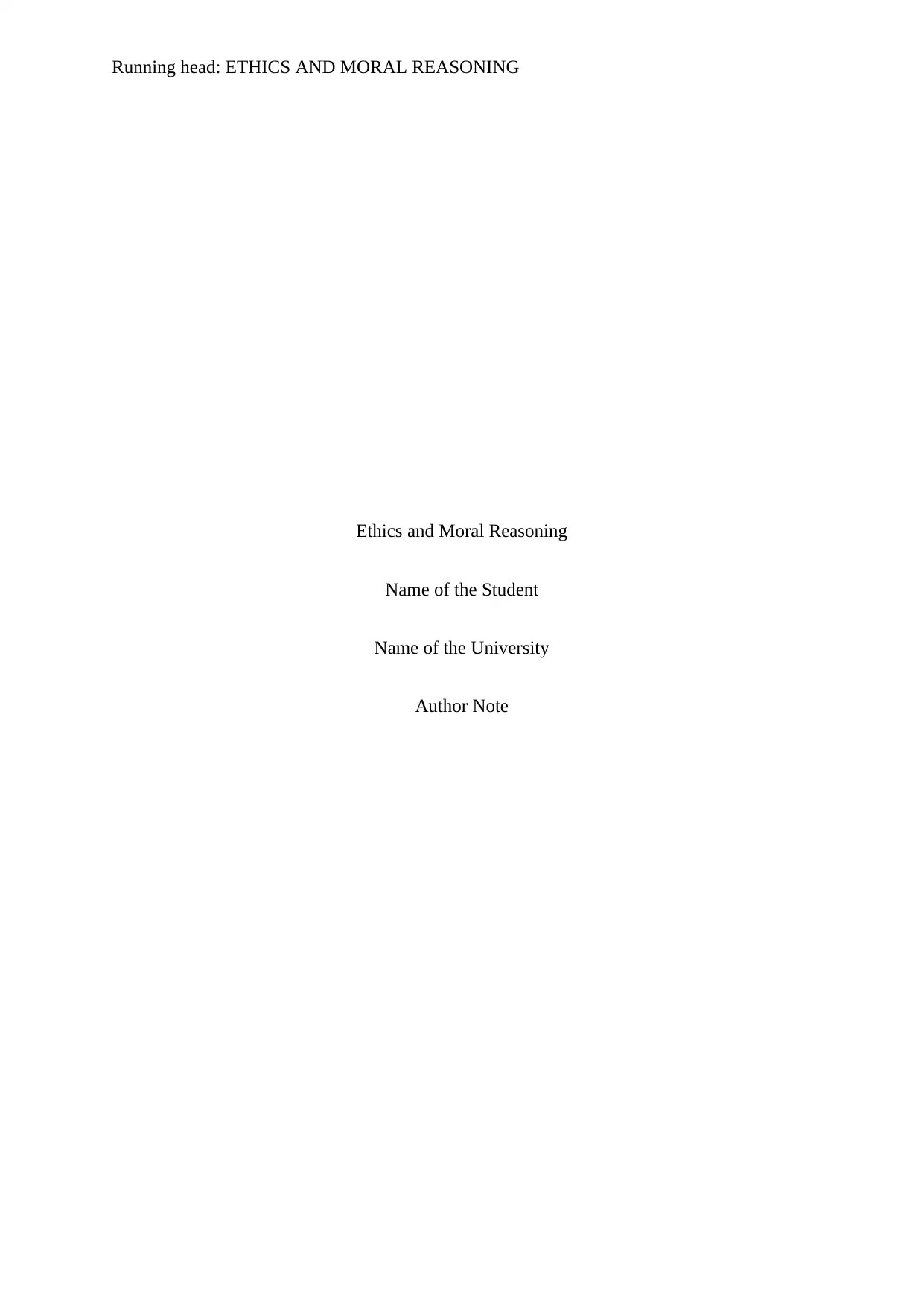
Running head: ETHICS AND MORAL REASONING
Ethics and Moral Reasoning
Name of the Student
Name of the University
Author Note
tabler-icon-diamond-filled.svg

Paraphrase This Document

Need a fresh take? Get an instant paraphrase of this document with our AI Paraphraser
Document Page
1
ETHICS AND MORAL REASONING
Relation between virtue and living well by Aristotle
Happiness is an activity of soul which follows or implies a rational principle”,
according to Aristotle the virtue is a necessary trait to receive recognition and act in a certain
way (Thames, 2018). They are cultivated into the human character when they are practiced in
a regular basis. Sometimes they are inculcated into the human nature when they imitate the
actions of others. After a certain period the virtues are included in the daily activities of the
individuals turning as habits. Habits are the ways in which the individuals behave and act in
their lives. He advocated that happiness is an inner virtue that generates positive feelings.
These positive feelings in turn will lead to having good virtues that will help in maintaining a
good standard of living. The relationship between virtues and living well can be understood
by the fact that good morals shape the life of an individual and that in turn will lead to good
life. Good virtues are also helpful for the society as it will tell the individuals will help in the
growth of the society. The recognition that they receive for their work will be beneficial for
the society.
Some of the key virtues proposed by Aristotle are:
Courage: It defines the capability of the individuals to take risks that will help them to avail
better prospects in life.
Temperance: It is the virtue of indulging in the activities that provide pleasure to the
individuals. In this process he can turn insensitive towards the need of others.
Liberality: This is the virtue where the individuals have the freedom to act according to their
will.
Patience: This is an important virtue that helps the individuals to control their temperament.
Truthfulness: It is the virtue that promotes honesty into the individuals.
Document Page
2
ETHICS AND MORAL REASONING
Friendliness: This type of virtue is important for the survival of the individual life. Some
individuals can be friendly while others cannot be that friendly.
Role of virtue in my life
In my personal life, the part where I require to include virtue is my professional life as
there I need to deal with numerous people. The Telos or purpose of applying virtues to my
professional life is to understand the utility of the certain qualities to achieve better results in
life. I need to apply the virtues of friendliness and courage in my workplace. Courage will
help me to take better decisions at my workplace that will help me achieve better results.
Whereas the virtue of being friendly will help me to bond better with the people around. Both
these virtues will help to increase efficiency and create a balance in my professional life.
Balancing the professional life will be helpful because it will lead to living a life well. If these
virtues are not included in the professional life, success cannot be achieved. This will
eventually lead to the loss on the professional front affecting the personal life.
Document Page
3
ETHICS AND MORAL REASONING
References
Thames, B. (2018). "How Shoul One Live?" An Introduction to Ethics and Moral Reasoning"
(3rd ed.).
chevron_up_icon
1 out of 4
circle_padding
hide_on_mobile
zoom_out_icon
[object Object]