Business Psychology: Leadership Development Programme, Aspire, London
VerifiedAdded on 2022/08/17
|18
|2753
|10
Report
AI Summary
This report provides an in-depth analysis of a leadership development program designed for Aspire, a copywriting and marketing organization based in London. It begins by identifying personality profiles of the management team using the Myers-Briggs Personality Type Indicator, highlighting the prevalence of introversion and perceiving traits and their impact on communication and teamwork. The report then examines the leadership styles present, differentiating between transactional and transformational leadership, and identifying the author's own transformational leadership characteristics. It further explores the challenges faced by Aspire, including cultural diversity and conflict management issues, and proposes a five-step project plan to address these challenges through leadership training and intervention. The plan includes understanding the issues, setting objectives, implementation, evaluation, and re-addressing existing issues to foster a more effective and cohesive work environment. The report emphasizes the importance of open communication, cultural competency, and effective conflict resolution for the organization's growth and survival.
Running head: BUSINESS PSYCHOLOGY
BUSINESS PSYCHOLOGY: LEADERSHIP DEVELOPMENT PROGRAMME FOR
ASPIRE, LONDON
Name of the Student
Name of the University
Author note
BUSINESS PSYCHOLOGY: LEADERSHIP DEVELOPMENT PROGRAMME FOR
ASPIRE, LONDON
Name of the Student
Name of the University
Author note

Paraphrase This Document
Need a fresh take? Get an instant paraphrase of this document with our AI Paraphraser
1BUSINESS PSYCHOLOGY
Identification of personality profiles.
The organisation in context is named Aspire, a writing based organization based in
London. The organisation specialises in fields of copywriting and proofreading, advertising,
digital media marketing and other forms of full time and freelance writing / marketing
opportunities. In the office there are approximately 170 full time employees who work from
Monday to Friday in an 8 hour day shift. The organisation’s primary clientele is formed of
other organisations and companies who are either established and opening a new branch / sub
– brand of products and services, or are start – up companies looking for a push. This section
gives an overview of the personality profiles of the management team who work within the
office, identifies their general areas of strengths and weaknesses scopes out areas for
development.
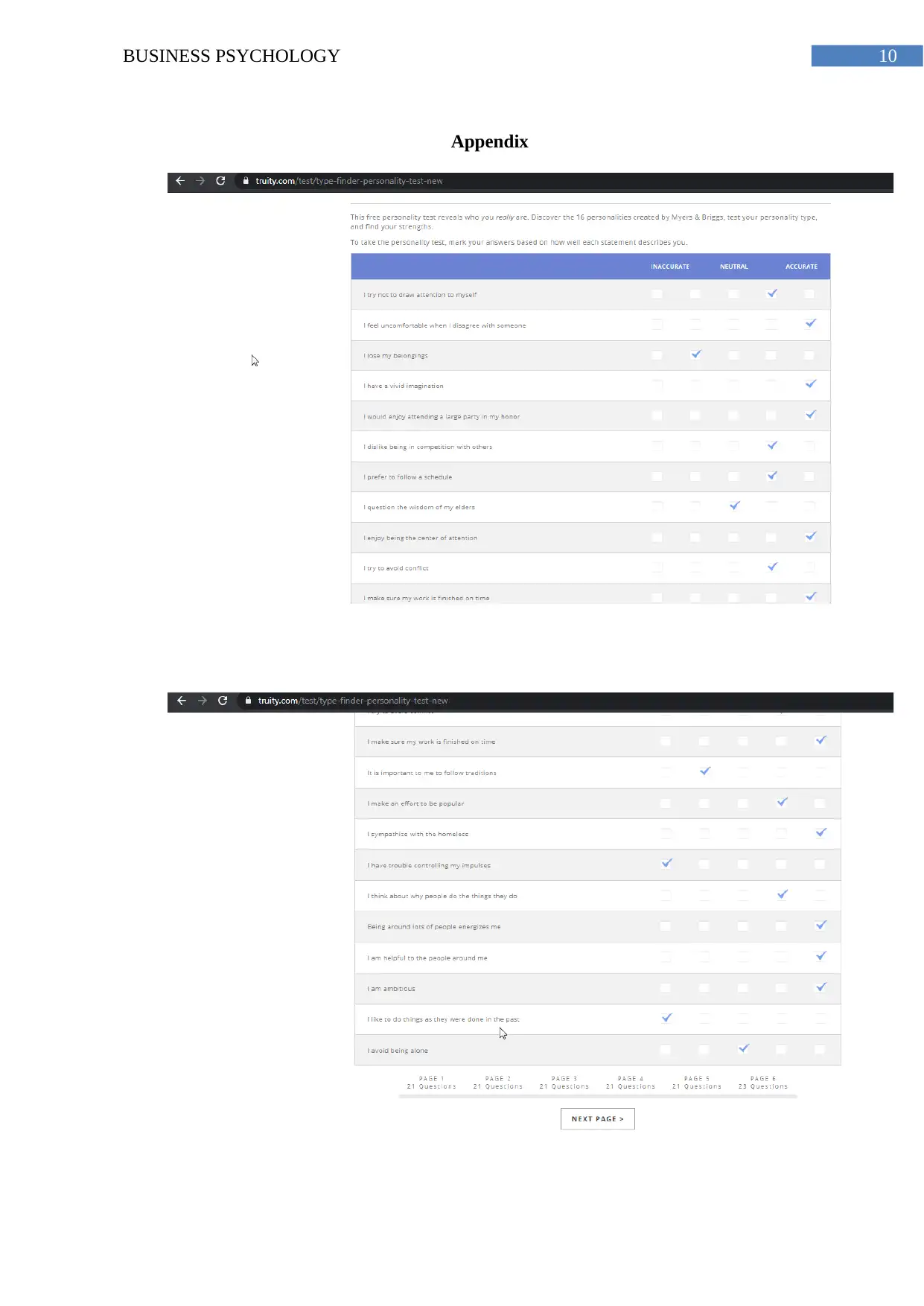
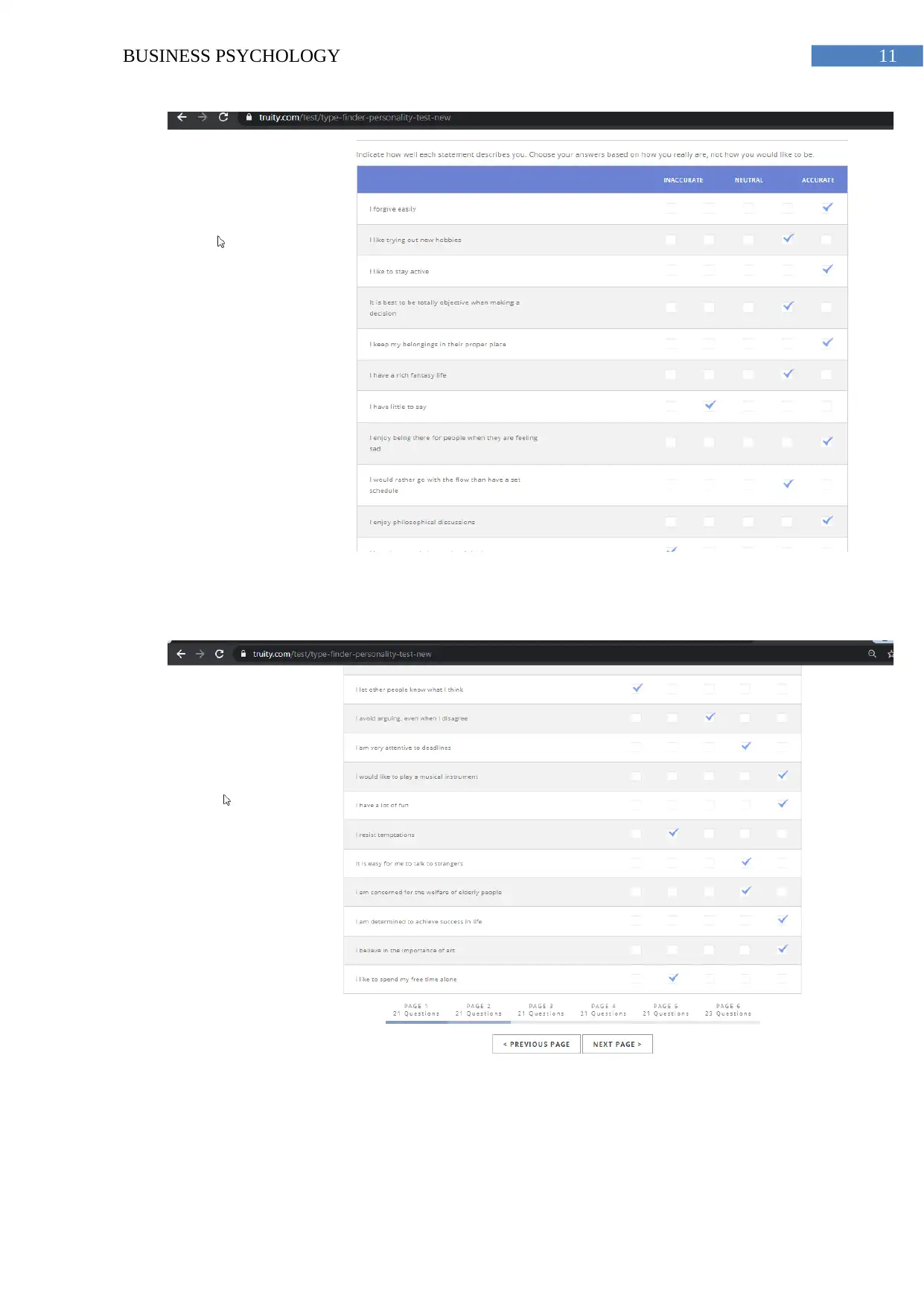
The personality types of each members of the management team were determined
using the Myers – Briggs Personality Type Indicator (Lloyd 2012), which gave a general
overview of their differential behavioural and attitudinal perspectives.
One of the key problems that the organisation has faced for a significant amount of
time is the lack of communication between the employees and their group leaders. The
quality of work has seen many crests and troughs in the past because the number of
employees that the organisation hires to work full time in the office with them, have a wide
range of personality types which can be seen as a barrier to effective team work and
communication.
The Myers Briggs Personality Types indicate a series of eight types of personality
traits, namely extraversion and introversion, sensing and intuition (Lloyd 2012; Fretwell,
Lewis & Hannay 2013), Thinking and feeling, and Judging and perceiving. Each of these sets
of two types, four sets in total, pertain to a category of personality nature that they belong to.
Identification of personality profiles.
The organisation in context is named Aspire, a writing based organization based in
London. The organisation specialises in fields of copywriting and proofreading, advertising,
digital media marketing and other forms of full time and freelance writing / marketing
opportunities. In the office there are approximately 170 full time employees who work from
Monday to Friday in an 8 hour day shift. The organisation’s primary clientele is formed of
other organisations and companies who are either established and opening a new branch / sub
– brand of products and services, or are start – up companies looking for a push. This section
gives an overview of the personality profiles of the management team who work within the
office, identifies their general areas of strengths and weaknesses scopes out areas for
development.
The personality types of each members of the management team were determined
using the Myers – Briggs Personality Type Indicator (Lloyd 2012), which gave a general
overview of their differential behavioural and attitudinal perspectives.
One of the key problems that the organisation has faced for a significant amount of
time is the lack of communication between the employees and their group leaders. The
quality of work has seen many crests and troughs in the past because the number of
employees that the organisation hires to work full time in the office with them, have a wide
range of personality types which can be seen as a barrier to effective team work and
communication.
The Myers Briggs Personality Types indicate a series of eight types of personality
traits, namely extraversion and introversion, sensing and intuition (Lloyd 2012; Fretwell,
Lewis & Hannay 2013), Thinking and feeling, and Judging and perceiving. Each of these sets
of two types, four sets in total, pertain to a category of personality nature that they belong to.
2BUSINESS PSYCHOLOGY
After the Personality test results were checked, it was found out that the management team
has a predominance of introversion and perceiving as a personality types (Lloyd 2012). While
the other members of the team showed a balance between sensing and thinking as attributes,
there were still a significant number of people from the management team in different
departments and offices whose traits do not comply with those required for effective
leadership.
One of the primary areas of development of personality types can be considered the
domain of introversion and feeling. Being introverted is one of the reasons why a number of
employees tend to not communicate their thoughts and feelings with their peers as well as
their team leaders. This results in a loss of efficient workflow in the office for the employees
as well as the leaders who are unable to comprehend the issue on time and efficiently deal
with it. While judging as a personality type dictates that consistency in work as well as
meeting deadlines are important, the number of members who do not belong to this category
show that they tend to work at their own pace with limited resources and instructions. This
has resulted in the clients’ discord with the organisation in a few cases as well. At the same
time, a number of members being intuitive in nature, it indicates that they work based on
what they feel is right, instead of actually perceiving the reality,
Based on this information and the context of the work, it can be stated that an ideal
spread of personality type should have a higher number of individuals belonging to the
Extraverted, Sensing, Thinking and Judging attributes. These four traits help an individual to
perceive a situation appropriately and act according to the requirement and meeting the
criteria for appropriate judgement.
After the Personality test results were checked, it was found out that the management team
has a predominance of introversion and perceiving as a personality types (Lloyd 2012). While
the other members of the team showed a balance between sensing and thinking as attributes,
there were still a significant number of people from the management team in different
departments and offices whose traits do not comply with those required for effective
leadership.
One of the primary areas of development of personality types can be considered the
domain of introversion and feeling. Being introverted is one of the reasons why a number of
employees tend to not communicate their thoughts and feelings with their peers as well as
their team leaders. This results in a loss of efficient workflow in the office for the employees
as well as the leaders who are unable to comprehend the issue on time and efficiently deal
with it. While judging as a personality type dictates that consistency in work as well as
meeting deadlines are important, the number of members who do not belong to this category
show that they tend to work at their own pace with limited resources and instructions. This
has resulted in the clients’ discord with the organisation in a few cases as well. At the same
time, a number of members being intuitive in nature, it indicates that they work based on
what they feel is right, instead of actually perceiving the reality,
Based on this information and the context of the work, it can be stated that an ideal
spread of personality type should have a higher number of individuals belonging to the
Extraverted, Sensing, Thinking and Judging attributes. These four traits help an individual to
perceive a situation appropriately and act according to the requirement and meeting the
criteria for appropriate judgement.
⊘ This is a preview!⊘
Do you want full access?
Subscribe today to unlock all pages.

Trusted by 1+ million students worldwide
3BUSINESS PSYCHOLOGY
Leadership Styles.
The two types of leadership that is present in the management team are transactional
and transformational. A transactional leadership style refers to how the leaders are able to
prove themselves as reliable with their performance in the work context being appropriate,
dependable and within the operational standards (McCleskey 2014). In contrast,
transformational leaders are more in tune with the team they are leading (McCleskey 2014).
They promote a proactive nature in the people and organisation while pushing them to meet
the specific objectives appropriately, on time and move beyond expectations. Both these
styles of leadership are quite important in an organizational context when it comes to team
management and compliance with workplace standards regarding tasks and timelines
(Odumery & Ogbonna 2013). A transactional style of leadership is more in the referential
frame of how the leader is able to prove himself or his work worthy of being considered
exemplary. This puts the organisation on the frontline and strives towards how to establish a
reputation and image for the organisation that can be perceived positively by the clientele.
Alternately, a transformational leadership looks at how people within the working
environment are functioning so that the work can be completed efficiently (Odumery &
Ogbonna 2013).
From the understanding of the tests undertaken, it can be seen that my leadership style
includes the characteristic of that of a teacher, a counselor and a champion. A teacher has the
characteristics of being a caring, enthusiastic, responsible, organized and diplomatic. The
teacher engages in skilled communication which aids in building up of the relationship with
the other people in the organization.
A counsellor has the defining features of being an idealistic, organized, insightful,
gentle, dependable and compassionate individual. They seek harmony and compassion and
enjoy intellectual conversation with their fellow employees.
Leadership Styles.
The two types of leadership that is present in the management team are transactional
and transformational. A transactional leadership style refers to how the leaders are able to
prove themselves as reliable with their performance in the work context being appropriate,
dependable and within the operational standards (McCleskey 2014). In contrast,
transformational leaders are more in tune with the team they are leading (McCleskey 2014).
They promote a proactive nature in the people and organisation while pushing them to meet
the specific objectives appropriately, on time and move beyond expectations. Both these
styles of leadership are quite important in an organizational context when it comes to team
management and compliance with workplace standards regarding tasks and timelines
(Odumery & Ogbonna 2013). A transactional style of leadership is more in the referential
frame of how the leader is able to prove himself or his work worthy of being considered
exemplary. This puts the organisation on the frontline and strives towards how to establish a
reputation and image for the organisation that can be perceived positively by the clientele.
Alternately, a transformational leadership looks at how people within the working
environment are functioning so that the work can be completed efficiently (Odumery &
Ogbonna 2013).
From the understanding of the tests undertaken, it can be seen that my leadership style
includes the characteristic of that of a teacher, a counselor and a champion. A teacher has the
characteristics of being a caring, enthusiastic, responsible, organized and diplomatic. The
teacher engages in skilled communication which aids in building up of the relationship with
the other people in the organization.
A counsellor has the defining features of being an idealistic, organized, insightful,
gentle, dependable and compassionate individual. They seek harmony and compassion and
enjoy intellectual conversation with their fellow employees.
Paraphrase This Document
Need a fresh take? Get an instant paraphrase of this document with our AI Paraphraser
4BUSINESS PSYCHOLOGY
Furthermore, the champion personality has the traits of being creative, enthusiastic,
spontaneous, playful, optimistic and supportive. They engage in the starting of new projects
and see potential in the other employees of the firm.
In this respect it can be seen that my personality type is that of a transformational
leader. In terms of the organization’s internal working, a transformational leadership is highly
effective in determining the quality of work that will take place in the organization. In doing
so, transformational leadership ensures that the work that is being delivered is exemplary in
nature itself and not only strengthens the client base but also brings in more clients for the
business growth (Odumery & Ogbonna 2013).
The senior leaders adapt their approach to leading across different situations in their
own ways. It does not always lead to positive results. One key instance that can be
highlighted in the current context is the aspect of cultural diversity within the office. There is
a wide range of diversity amongst the employees in the office and it often leads to low to
moderate instances of inappropriate cultural discrimination. In those instances, appropriate
leadership is of utmost importance, however the management is unable to deal with this
particular issue without hurting the sentiment of one party or the other (Angus-Leppan,
Metcalf & Benn 2010). Similarly, conflict management is another holistic aspect where
different members of the management show different behavioral traits. While some members
try to manage the issue within the organizational best practices guidelines, others tend to
disregard the conflict by either referring to the HR department or through sending cautionary
memorandums to the employees. This is not a healthy leadership practice and can generate
employee hostility (Angus-Leppan, Metcalf & Benn 2010).
Flexibility in the management can be introduced by intervention and leadership
training programmes where the members can be made to understand the differences in their
Furthermore, the champion personality has the traits of being creative, enthusiastic,
spontaneous, playful, optimistic and supportive. They engage in the starting of new projects
and see potential in the other employees of the firm.
In this respect it can be seen that my personality type is that of a transformational
leader. In terms of the organization’s internal working, a transformational leadership is highly
effective in determining the quality of work that will take place in the organization. In doing
so, transformational leadership ensures that the work that is being delivered is exemplary in
nature itself and not only strengthens the client base but also brings in more clients for the
business growth (Odumery & Ogbonna 2013).
The senior leaders adapt their approach to leading across different situations in their
own ways. It does not always lead to positive results. One key instance that can be
highlighted in the current context is the aspect of cultural diversity within the office. There is
a wide range of diversity amongst the employees in the office and it often leads to low to
moderate instances of inappropriate cultural discrimination. In those instances, appropriate
leadership is of utmost importance, however the management is unable to deal with this
particular issue without hurting the sentiment of one party or the other (Angus-Leppan,
Metcalf & Benn 2010). Similarly, conflict management is another holistic aspect where
different members of the management show different behavioral traits. While some members
try to manage the issue within the organizational best practices guidelines, others tend to
disregard the conflict by either referring to the HR department or through sending cautionary
memorandums to the employees. This is not a healthy leadership practice and can generate
employee hostility (Angus-Leppan, Metcalf & Benn 2010).
Flexibility in the management can be introduced by intervention and leadership
training programmes where the members can be made to understand the differences in their
5BUSINESS PSYCHOLOGY
individual aspects of display of leadership and based on exemplary actions, they can be made
to modify their practices (Ainscow & Sandill 2010). Correlating their behavior and attitudes
with the theoretical aspects of transactional and transformational leadership can help them
understand the limitations in their current leadership practices and work accordingly.
The prevailing leadership practices will not help the organisation survive and grow.
The current practices of leadership that are displayed within the organisation are not in line
with the appropriate organizational leadership principles. The aspects of disregard for the
employees’ personal choices and rights are clearly evident in the action of some of the
management members. At the same time, the inefficiency of the team to work as a cohesive
unit is also an after effect of poor management and leadership skills being displayed (Yawson
2015). In such a context, it becomes quite difficult for any organisation to survive and grow.
First of all, the impact on the work practices are clearly defined as the quality as well of
quantity of work being produced are declining. Secondly the employees’ motivational levels
in the office are also low and they tend to not follow the instructions provided to them
appropriately. At the same time, many of the employees also do not consider talking about
their issues to the management because of the management’s lack of efficiency in dealing
with these issues. Based on these aspects, it can be asserted that the current leadership traits
that are being displayed by the management is not appropriate for the organisation for its
growth and development (Yawson 2015).
Project Plan.
In order to implement an appropriate project plan that addresses the issues with
respect to leadership that the organisation is currently facing, it becomes important to
strategically plan each step and test it through an appropriate testing model (Yawson 2015).
For this project there are five steps involved in the process as follows:
individual aspects of display of leadership and based on exemplary actions, they can be made
to modify their practices (Ainscow & Sandill 2010). Correlating their behavior and attitudes
with the theoretical aspects of transactional and transformational leadership can help them
understand the limitations in their current leadership practices and work accordingly.
The prevailing leadership practices will not help the organisation survive and grow.
The current practices of leadership that are displayed within the organisation are not in line
with the appropriate organizational leadership principles. The aspects of disregard for the
employees’ personal choices and rights are clearly evident in the action of some of the
management members. At the same time, the inefficiency of the team to work as a cohesive
unit is also an after effect of poor management and leadership skills being displayed (Yawson
2015). In such a context, it becomes quite difficult for any organisation to survive and grow.
First of all, the impact on the work practices are clearly defined as the quality as well of
quantity of work being produced are declining. Secondly the employees’ motivational levels
in the office are also low and they tend to not follow the instructions provided to them
appropriately. At the same time, many of the employees also do not consider talking about
their issues to the management because of the management’s lack of efficiency in dealing
with these issues. Based on these aspects, it can be asserted that the current leadership traits
that are being displayed by the management is not appropriate for the organisation for its
growth and development (Yawson 2015).
Project Plan.
In order to implement an appropriate project plan that addresses the issues with
respect to leadership that the organisation is currently facing, it becomes important to
strategically plan each step and test it through an appropriate testing model (Yawson 2015).
For this project there are five steps involved in the process as follows:
⊘ This is a preview!⊘
Do you want full access?
Subscribe today to unlock all pages.
Trusted by 1+ million students worldwide
6BUSINESS PSYCHOLOGY
Understanding the issue if the first step of the project where the leader will look at the
issue in hand and appropriately analyse it in order to understand the core entailments behind
the issue. In the current context, the issue is the management’s poor leadership skills in terms
of addressing diversity and conflict management.
The second step is to strategise aims, objectives and learning outcomes. The objective
of the programme is to amend the current leadership practices present in the management in
order to provide them with the necessary skill set to uplift the employees’ mindset regarding
the work as well as the management.
The third step in this context is to facilitate the implementation of this project in the
office premise. It is an important step as the entire success of the project is dependent upon
how it has been implemented in real life. At the same time, real estate and logistical
requirements are also needed to be kept in consideration. The implementation of the project
will ensure that the appropriate messages with respect to proper leadership styles and their
theoretical underpinnings are met. Each of the traits of transactional and transformational
leadership needs to be clearly outlined, through which the current management team will
understand their specific roles in specific situations.
The fourth step is evaluation and assessment where the leader will test the gathered
knowledge and understanding of the management team through a quiz. The final step
involves re – addressing existing issues. For that the activities of the management team will
be monitored over a period of six to eight weeks and the decision will be taken as to whether
further intervention is required.
In addition to this, a session will also be held for the employees where they will be
talked to about the importance of opening up about the issues and addressing the right person.
Open communication is an important trait when it comes to working in an organisation (Drew
Understanding the issue if the first step of the project where the leader will look at the
issue in hand and appropriately analyse it in order to understand the core entailments behind
the issue. In the current context, the issue is the management’s poor leadership skills in terms
of addressing diversity and conflict management.
The second step is to strategise aims, objectives and learning outcomes. The objective
of the programme is to amend the current leadership practices present in the management in
order to provide them with the necessary skill set to uplift the employees’ mindset regarding
the work as well as the management.
The third step in this context is to facilitate the implementation of this project in the
office premise. It is an important step as the entire success of the project is dependent upon
how it has been implemented in real life. At the same time, real estate and logistical
requirements are also needed to be kept in consideration. The implementation of the project
will ensure that the appropriate messages with respect to proper leadership styles and their
theoretical underpinnings are met. Each of the traits of transactional and transformational
leadership needs to be clearly outlined, through which the current management team will
understand their specific roles in specific situations.
The fourth step is evaluation and assessment where the leader will test the gathered
knowledge and understanding of the management team through a quiz. The final step
involves re – addressing existing issues. For that the activities of the management team will
be monitored over a period of six to eight weeks and the decision will be taken as to whether
further intervention is required.
In addition to this, a session will also be held for the employees where they will be
talked to about the importance of opening up about the issues and addressing the right person.
Open communication is an important trait when it comes to working in an organisation (Drew
Paraphrase This Document
Need a fresh take? Get an instant paraphrase of this document with our AI Paraphraser
7BUSINESS PSYCHOLOGY
& Ehrich 2010). It is beneficial not only for the worker but also provides opportunities for
development to the organisation as well.
These steps can highlight how the team can benefit by following the appropriate
leadership styles and help in the growth and survivability of the organisation as well. The key
ideas with respect to cultural competency and conflict management needs to be appropriately
established (Mansouri, Singh & Khan 2018). Given that these are the two most prominent
problem areas it becomes important that the team understands these problem areas in great
detail so that they can understand how to deal with issues pertaining to these areas
appropriately. At the same time a reference to the Myers Briggs Personality Type Indicator
also becomes an important resource in this aspect. The project is not just about helping the
team members understand and solve problems, but also about changing their approaches and
attitudes towards these issues. The Myers Briggs Personality Type Indicator results can help
the leader understand which of the team members will require the most scaffolding in order
to achieve the desired outcome. Given that introversion and perception are highly personal in
nature, they do not capture the entirety of the problem in detail. The team members need to
look at how to incorporate extraversion in their on – premise attitude so that they can actively
seek out the problems and issues. At the same time, actively thinking and judging the issue
also needs to be given adequate thought as they promote positive leadership traits in the
concerned individuals.
The project implementation will help identify the aspects of leadership abilities that
are missing in the team currently (Mansouri, Singh & Khan 2018). This way the problem
areas will be highlighted and appropriately addressed. The project also serves as a beneficial
prospect for the organisation in itself by promoting positive leadership abilities and traits to
the management.
& Ehrich 2010). It is beneficial not only for the worker but also provides opportunities for
development to the organisation as well.
These steps can highlight how the team can benefit by following the appropriate
leadership styles and help in the growth and survivability of the organisation as well. The key
ideas with respect to cultural competency and conflict management needs to be appropriately
established (Mansouri, Singh & Khan 2018). Given that these are the two most prominent
problem areas it becomes important that the team understands these problem areas in great
detail so that they can understand how to deal with issues pertaining to these areas
appropriately. At the same time a reference to the Myers Briggs Personality Type Indicator
also becomes an important resource in this aspect. The project is not just about helping the
team members understand and solve problems, but also about changing their approaches and
attitudes towards these issues. The Myers Briggs Personality Type Indicator results can help
the leader understand which of the team members will require the most scaffolding in order
to achieve the desired outcome. Given that introversion and perception are highly personal in
nature, they do not capture the entirety of the problem in detail. The team members need to
look at how to incorporate extraversion in their on – premise attitude so that they can actively
seek out the problems and issues. At the same time, actively thinking and judging the issue
also needs to be given adequate thought as they promote positive leadership traits in the
concerned individuals.
The project implementation will help identify the aspects of leadership abilities that
are missing in the team currently (Mansouri, Singh & Khan 2018). This way the problem
areas will be highlighted and appropriately addressed. The project also serves as a beneficial
prospect for the organisation in itself by promoting positive leadership abilities and traits to
the management.

8BUSINESS PSYCHOLOGY
⊘ This is a preview!⊘
Do you want full access?
Subscribe today to unlock all pages.
Trusted by 1+ million students worldwide
9BUSINESS PSYCHOLOGY
References.
Ainscow, M. and Sandill, A., 2010. Developing inclusive education systems: the role of
organisational cultures and leadership. International journal of inclusive education, 14(4),
pp.401-416.
Angus-Leppan, T., Metcalf, L. and Benn, S., 2010. Leadership styles and CSR practice: An
examination of sensemaking, institutional drivers and CSR leadership. Journal of Business
Ethics, 93(2), pp.189-213.
Drew, G. and Ehrich, L., 2010. A model of organisational leadership development informing
succession development: Elements and practices. Academic Leadership: The Online
Journal, 8(4), p.3.
Fretwell, C.E., Lewis, C.C. and Hannay, M., 2013. Myers-Briggs type indicator, A/B
personality types, and locus of control: where do they intersect?. American Journal of
Management, 13(3), pp.57-66.
Lloyd, J.B., 2012. The Myers-Briggs Type Indicator® and mainstream psychology: analysis
and evaluation of an unresolved hostility. Journal of Beliefs & Values, 33(1), pp.23-34.
Mansouri, A.A.A., Singh, S.K. and Khan, M., 2018. Role of organisational culture,
leadership and organisational citizenship behaviour on knowledge
management. International Journal of Knowledge Management Studies, 9(2), pp.129-143.
McCleskey, J.A., 2014. Situational, transformational, and transactional leadership and
leadership development. Journal of Business Studies Quarterly, 5(4), p.117.
Odumeru, J.A. and Ogbonna, I.G., 2013. Transformational vs. transactional leadership
theories: Evidence in literature. International Review of Management and Business
Research, 2(2), p.355.
Yawson, R.M., 2015. The'wicked problem construct'for organisational leadership and
development. International Journal of Business and Systems Research, 9(1), pp.67-85.
References.
Ainscow, M. and Sandill, A., 2010. Developing inclusive education systems: the role of
organisational cultures and leadership. International journal of inclusive education, 14(4),
pp.401-416.
Angus-Leppan, T., Metcalf, L. and Benn, S., 2010. Leadership styles and CSR practice: An
examination of sensemaking, institutional drivers and CSR leadership. Journal of Business
Ethics, 93(2), pp.189-213.
Drew, G. and Ehrich, L., 2010. A model of organisational leadership development informing
succession development: Elements and practices. Academic Leadership: The Online
Journal, 8(4), p.3.
Fretwell, C.E., Lewis, C.C. and Hannay, M., 2013. Myers-Briggs type indicator, A/B
personality types, and locus of control: where do they intersect?. American Journal of
Management, 13(3), pp.57-66.
Lloyd, J.B., 2012. The Myers-Briggs Type Indicator® and mainstream psychology: analysis
and evaluation of an unresolved hostility. Journal of Beliefs & Values, 33(1), pp.23-34.
Mansouri, A.A.A., Singh, S.K. and Khan, M., 2018. Role of organisational culture,
leadership and organisational citizenship behaviour on knowledge
management. International Journal of Knowledge Management Studies, 9(2), pp.129-143.
McCleskey, J.A., 2014. Situational, transformational, and transactional leadership and
leadership development. Journal of Business Studies Quarterly, 5(4), p.117.
Odumeru, J.A. and Ogbonna, I.G., 2013. Transformational vs. transactional leadership
theories: Evidence in literature. International Review of Management and Business
Research, 2(2), p.355.
Yawson, R.M., 2015. The'wicked problem construct'for organisational leadership and
development. International Journal of Business and Systems Research, 9(1), pp.67-85.
Paraphrase This Document
Need a fresh take? Get an instant paraphrase of this document with our AI Paraphraser
10BUSINESS PSYCHOLOGY
Appendix
Appendix
11BUSINESS PSYCHOLOGY
⊘ This is a preview!⊘
Do you want full access?
Subscribe today to unlock all pages.
Trusted by 1+ million students worldwide

1 out of 18


Related Documents


Your All-in-One AI-Powered Toolkit for Academic Success.
+13062052269
info@desklib.com
Available 24*7 on WhatsApp / Email
![[object Object]](/_next/static/media/star-bottom.7253800d.svg)
Unlock your academic potential
Copyright © 2020–2026 A2Z Services. All Rights Reserved. Developed and managed by ZUCOL.