Detailed Analysis of Australian Minerals and Rocks: Mt. Leyshon
VerifiedAdded on 2022/10/04
|16
|3408
|13
Report
AI Summary
This report provides a comprehensive analysis of Australian minerals and rocks, with a specific focus on the alunite-jarosite group found at Mt. Leyshon in Queensland. The study utilizes electron microprobe and textural data to determine the origin and composition of these minerals, exploring whether their formation is related to weathering or hydrothermal processes. The report details the occurrence of various mineral groups, including potassium-rich, sodium-rich, and lead-rich alunites, as well as the jarosite family. It examines the methods used for sample analysis, including X-ray diffractometry and chemical analysis, and presents findings on mineral compositions and distributions. The discussion section explores the relationships between alunite, gold, and other minerals, and the impact of weathering on mineral assemblages. The report concludes with recommendations based on the findings. The report also includes detailed figures and tables illustrating mineral compositions and distributions.
AUSTRALIAN MINERALS AND ROCKS
[Author Name(s), First M. Last, Omit Titles and Degrees]
[Institutional Affiliation(s)]
[Author Name(s), First M. Last, Omit Titles and Degrees]
[Institutional Affiliation(s)]

Paraphrase This Document
Need a fresh take? Get an instant paraphrase of this document with our AI Paraphraser
Contents
EXECUTIVE SUMMARY.................................................................................................................................2
List of figures...........................................................................................................................................3
List of Tables............................................................................................................................................3
INTRODUCTION...........................................................................................................................................4
SAMPLES AND METHODS............................................................................................................................5
Occurrence of Group Minerals of Alunite................................................................................................7
Occurrence of Minerals of Jarosite Family.............................................................................................10
DISCUSSION...............................................................................................................................................11
RECOMMENDATIONS................................................................................................................................13
CONCLUSION.............................................................................................................................................13
REFERENCES..............................................................................................................................................14
EXECUTIVE SUMMARY
Australia is known to be one of the regions in the world endowed with plenty of rocks and
minerals. The discovery of origin of alutite mineral within the family of jarosite, situated as
EXECUTIVE SUMMARY.................................................................................................................................2
List of figures...........................................................................................................................................3
List of Tables............................................................................................................................................3
INTRODUCTION...........................................................................................................................................4
SAMPLES AND METHODS............................................................................................................................5
Occurrence of Group Minerals of Alunite................................................................................................7
Occurrence of Minerals of Jarosite Family.............................................................................................10
DISCUSSION...............................................................................................................................................11
RECOMMENDATIONS................................................................................................................................13
CONCLUSION.............................................................................................................................................13
REFERENCES..............................................................................................................................................14
EXECUTIVE SUMMARY
Australia is known to be one of the regions in the world endowed with plenty of rocks and
minerals. The discovery of origin of alutite mineral within the family of jarosite, situated as
sample deposits at northeast of Queensland at Mountain Leyshon was done by use of electron
microprobe and textural data. The general metal compositions for alunite minerals avails an extra
important information which will assist in evaluating if in any case the processes of formation of
such minerals are either during weathering or hypogene. Formation of Alunite group minerals
that are rich in potassium and sodium assume the form of hydrothermal minerals that occurs at
mount Leyshon in a system of acid-sulfate epithermal. Such minerals are likely to be influenced
by subsequent weathering, by which, in the process, may include sulfides derivatives such as
lead, copper, argentum and bitumen following the high level of formation. Alunite group
minerals that are rich in lead contents (hinsdalite, PbAI3 (PO4 (SO4) (OH) 6 and plumbogummite,
PbAI3H (PO4)2, (OH) 6) and are formed as a result of weathering processes usually obtain the
components from apatite and sulfides as well. Although the contribution or impact of rocks and
minerals on human life can be discussed on very many aspects, the study focused on the
discussion on specific minerals on Mt. Leyshon in Australia and other regions.
List of figures
Figure 1:……………………………….. Diagram of alteration span and outcrop brecciation at
Leyshon Mountain and analyzed sample sites,
microprobe and textural data. The general metal compositions for alunite minerals avails an extra
important information which will assist in evaluating if in any case the processes of formation of
such minerals are either during weathering or hypogene. Formation of Alunite group minerals
that are rich in potassium and sodium assume the form of hydrothermal minerals that occurs at
mount Leyshon in a system of acid-sulfate epithermal. Such minerals are likely to be influenced
by subsequent weathering, by which, in the process, may include sulfides derivatives such as
lead, copper, argentum and bitumen following the high level of formation. Alunite group
minerals that are rich in lead contents (hinsdalite, PbAI3 (PO4 (SO4) (OH) 6 and plumbogummite,
PbAI3H (PO4)2, (OH) 6) and are formed as a result of weathering processes usually obtain the
components from apatite and sulfides as well. Although the contribution or impact of rocks and
minerals on human life can be discussed on very many aspects, the study focused on the
discussion on specific minerals on Mt. Leyshon in Australia and other regions.
List of figures
Figure 1:……………………………….. Diagram of alteration span and outcrop brecciation at
Leyshon Mountain and analyzed sample sites,
⊘ This is a preview!⊘
Do you want full access?
Subscribe today to unlock all pages.

Trusted by 1+ million students worldwide
Figure 2:…………………………………. Diagram showing the distribution of alunite mineral
at Leyshon Mountain.
Figure 3:…………………………….. showing pyrite weathering resulting into creation of voids
and alunite replacement of farosite.
List of Tables
Table 1:………………………………….. Table of mineral compositions of alunite family at
Leyshon Mountain.
INTRODUCTION
The Australian geology includes nearly all the known types of rocks from the entire geological
time which spans over 3.8 billion years. The oldest mineral is dated to be between 4.0 and 4.2
billion years. They are actually very tiny Zircon crystals that are found in the western Australian
within the sedimentary rocks. There is great scale mining of the valuable minerals in Australia.
at Leyshon Mountain.
Figure 3:…………………………….. showing pyrite weathering resulting into creation of voids
and alunite replacement of farosite.
List of Tables
Table 1:………………………………….. Table of mineral compositions of alunite family at
Leyshon Mountain.
INTRODUCTION
The Australian geology includes nearly all the known types of rocks from the entire geological
time which spans over 3.8 billion years. The oldest mineral is dated to be between 4.0 and 4.2
billion years. They are actually very tiny Zircon crystals that are found in the western Australian
within the sedimentary rocks. There is great scale mining of the valuable minerals in Australia.
Paraphrase This Document
Need a fresh take? Get an instant paraphrase of this document with our AI Paraphraser
Also huge deposits of coal are transported by the train and shipped to Japan. Other mining sites
in Australia produces gold, bauxite, uranium and iron ore. One of the most famous rocks which
is found in Australia is called opals in outback(Kontonika et al.2018).
The general formula of alunite-jarosite group minerals is AB3(XO4)2(OH)6 in which A represent
large cation such as Ca2+, NH4+, Na+, Pb2+ and K+, held within the coordination of 12-fold. The
main occupants of B sites for the jarosite and alunite group minerals are the trivalent states of
iron and aluminum in that order. Other components of B sites which are minor though regarded
to be of importance are copper and zinc. The major components for (XO4) sites are, AsO3-4, PO3-
4, or SO2-4.
An experimental study was conducted to determine the extensive solution of solid present in the
above mentioned sites alongside the one between natroalunite, NaAl3(SO4)2(OH)6 and n alunite,
KAl3 (SO4)2 (OH)6 together with their analogues of iron, that is, natrojarosite, NaFe3 (SO4)2
(OH)6 and jarosite, KFe3 (SO4)2 (OH)6. For the case of some alunite-jarosite group minerals that
are rich in lead contents, the sites of (XO4) are occupied by some trivalent anions to bring to
equilibrium divalent cation actions in site A, for example, , hinsdalite, PbAl3 (PO4)(SO4)(OH)6.
The development of alunite –jarosite family minerals are quite well in outcropping volcanic
breccias found at Leyshon Mountain Au deposit, located towards northeast of Queensland and
110 km to the southwestern parts of Townsville(Krneta et al.2017). The occurrence of such
breccias assumes the form of a circle of diameter 2km in volcanic complex of Permian between
Ordovician-Devonian Ravenswood Grano-diorite and Carboniferous Ordovician Puddler Creek
Formation metasediments boundaries. .
in Australia produces gold, bauxite, uranium and iron ore. One of the most famous rocks which
is found in Australia is called opals in outback(Kontonika et al.2018).
The general formula of alunite-jarosite group minerals is AB3(XO4)2(OH)6 in which A represent
large cation such as Ca2+, NH4+, Na+, Pb2+ and K+, held within the coordination of 12-fold. The
main occupants of B sites for the jarosite and alunite group minerals are the trivalent states of
iron and aluminum in that order. Other components of B sites which are minor though regarded
to be of importance are copper and zinc. The major components for (XO4) sites are, AsO3-4, PO3-
4, or SO2-4.
An experimental study was conducted to determine the extensive solution of solid present in the
above mentioned sites alongside the one between natroalunite, NaAl3(SO4)2(OH)6 and n alunite,
KAl3 (SO4)2 (OH)6 together with their analogues of iron, that is, natrojarosite, NaFe3 (SO4)2
(OH)6 and jarosite, KFe3 (SO4)2 (OH)6. For the case of some alunite-jarosite group minerals that
are rich in lead contents, the sites of (XO4) are occupied by some trivalent anions to bring to
equilibrium divalent cation actions in site A, for example, , hinsdalite, PbAl3 (PO4)(SO4)(OH)6.
The development of alunite –jarosite family minerals are quite well in outcropping volcanic
breccias found at Leyshon Mountain Au deposit, located towards northeast of Queensland and
110 km to the southwestern parts of Townsville(Krneta et al.2017). The occurrence of such
breccias assumes the form of a circle of diameter 2km in volcanic complex of Permian between
Ordovician-Devonian Ravenswood Grano-diorite and Carboniferous Ordovician Puddler Creek
Formation metasediments boundaries. .
The mineral family of alunite and jarosite are regarded as products of weathering as they have
only been identified on the depositions of weathered materials. K-Ar surficial alunite dating
allude the occurrence of mineral formation to 2-3 Ma. But distribution study of family minerals
of jarosite and alunite at Leyshon Mountain alongside their compositional and textural
characteristics alludes that most of alunites formation was as a result of initial hydrothermal
origin.
SAMPLES AND METHODS
The number of samples that were gathered from the deposit surface before the process of mining
stars in the year 1986 was 316 in total. 126 samples of the total were compost of the minerals
family of alunite and jarosite. An X-ray diffractometry was applied to differentiate the groups of
jarosite and alunite from other minerals since discoloration of alunite minerals was by either
goethite or jarosite admix or in some cases both admixed jarosite and goethite. Chemical analysis
was conducted on 59 samples consisting of the 24 bearing alunite-jarosite groups. 184 analysis
on electron microprobe were done on 15 bearing samples of alunite-jarosite minerals from the
volcanic changes as shown in the figure below based on chemical and mineralogical
data(Skirrow et al.2018).
only been identified on the depositions of weathered materials. K-Ar surficial alunite dating
allude the occurrence of mineral formation to 2-3 Ma. But distribution study of family minerals
of jarosite and alunite at Leyshon Mountain alongside their compositional and textural
characteristics alludes that most of alunites formation was as a result of initial hydrothermal
origin.
SAMPLES AND METHODS
The number of samples that were gathered from the deposit surface before the process of mining
stars in the year 1986 was 316 in total. 126 samples of the total were compost of the minerals
family of alunite and jarosite. An X-ray diffractometry was applied to differentiate the groups of
jarosite and alunite from other minerals since discoloration of alunite minerals was by either
goethite or jarosite admix or in some cases both admixed jarosite and goethite. Chemical analysis
was conducted on 59 samples consisting of the 24 bearing alunite-jarosite groups. 184 analysis
on electron microprobe were done on 15 bearing samples of alunite-jarosite minerals from the
volcanic changes as shown in the figure below based on chemical and mineralogical
data(Skirrow et al.2018).
⊘ This is a preview!⊘
Do you want full access?
Subscribe today to unlock all pages.
Trusted by 1+ million students worldwide
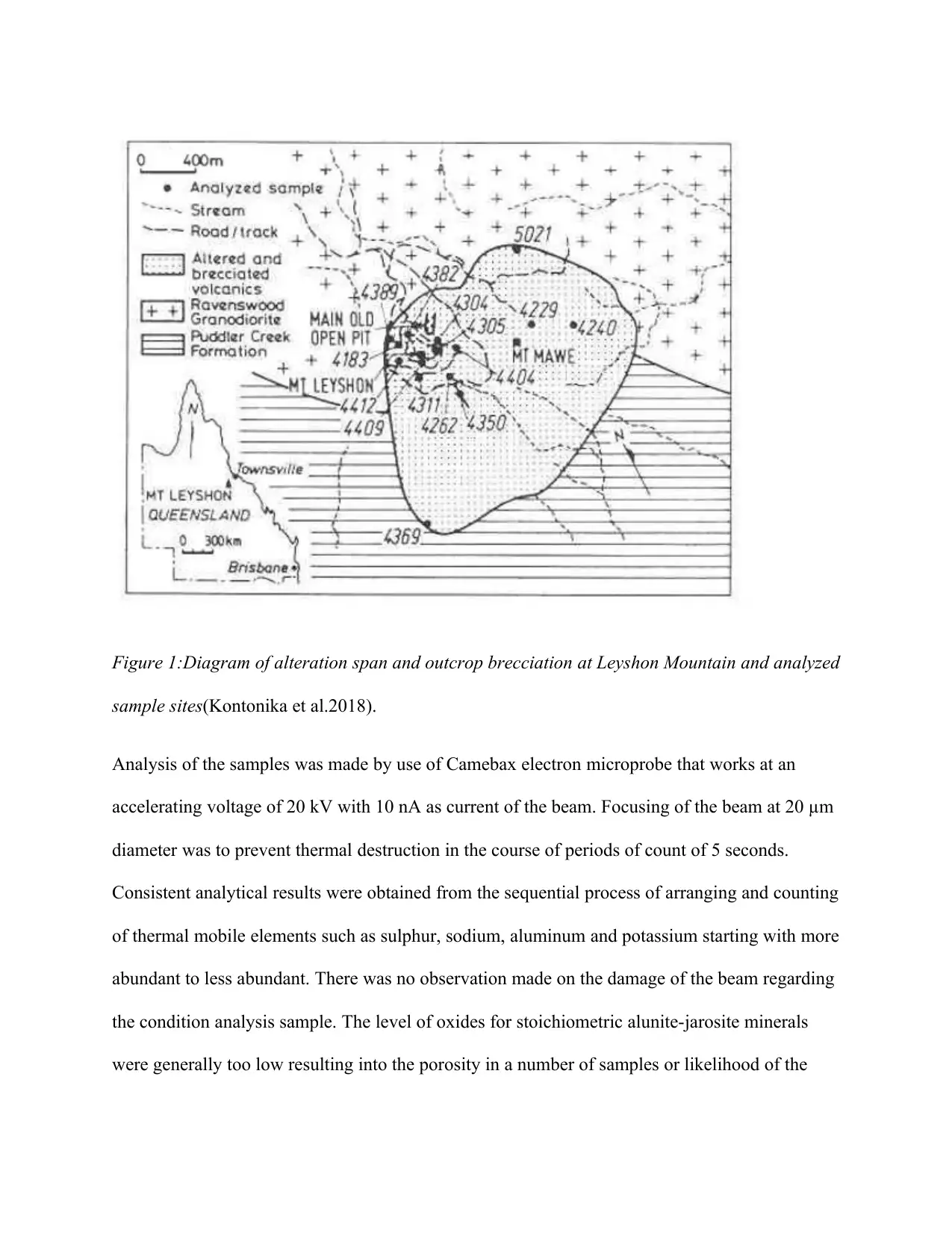
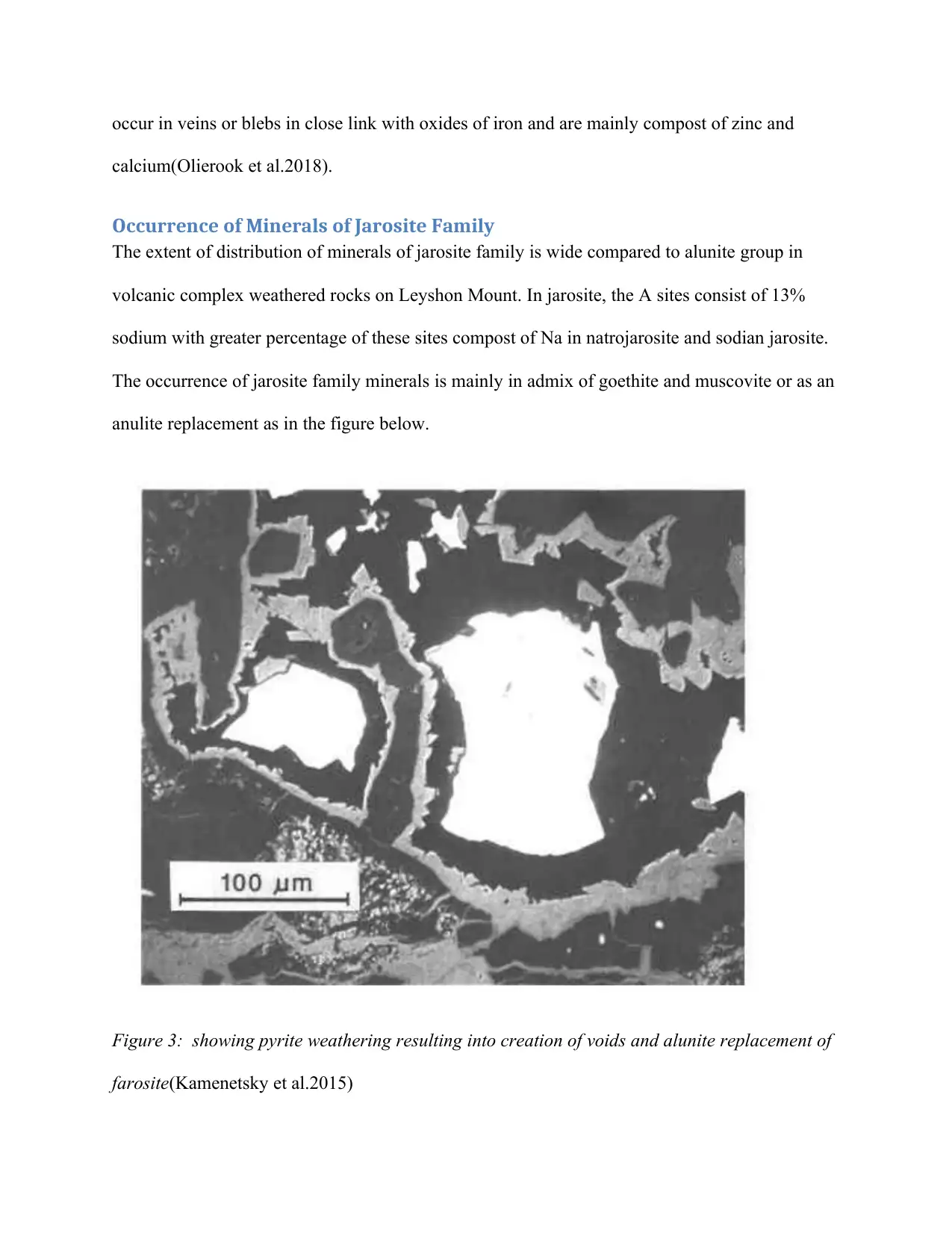
Figure 1:Diagram of alteration span and outcrop brecciation at Leyshon Mountain and analyzed
sample sites(Kontonika et al.2018).
Analysis of the samples was made by use of Camebax electron microprobe that works at an
accelerating voltage of 20 kV with 10 nA as current of the beam. Focusing of the beam at 20 μm
diameter was to prevent thermal destruction in the course of periods of count of 5 seconds.
Consistent analytical results were obtained from the sequential process of arranging and counting
of thermal mobile elements such as sulphur, sodium, aluminum and potassium starting with more
abundant to less abundant. There was no observation made on the damage of the beam regarding
the condition analysis sample. The level of oxides for stoichiometric alunite-jarosite minerals
were generally too low resulting into the porosity in a number of samples or likelihood of the
sample sites(Kontonika et al.2018).
Analysis of the samples was made by use of Camebax electron microprobe that works at an
accelerating voltage of 20 kV with 10 nA as current of the beam. Focusing of the beam at 20 μm
diameter was to prevent thermal destruction in the course of periods of count of 5 seconds.
Consistent analytical results were obtained from the sequential process of arranging and counting
of thermal mobile elements such as sulphur, sodium, aluminum and potassium starting with more
abundant to less abundant. There was no observation made on the damage of the beam regarding
the condition analysis sample. The level of oxides for stoichiometric alunite-jarosite minerals
were generally too low resulting into the porosity in a number of samples or likelihood of the
Paraphrase This Document
Need a fresh take? Get an instant paraphrase of this document with our AI Paraphraser
evaluated components in A sites like , NH+4, H3O+. Thus, calculations for the compositions of the
minerals was done as per the suggestions of Scott based on 2 mole (XO4) (Kontonika et al.2018).
Occurrence of Group Minerals of Alunite
The family of alunite minerals that found in outcrop at Leyshon Mountain can be separated into
varieties of rich contents of lead, sodium and potassium. The development of alunites comprised
of approximate compositions to KAl3 (SO4)2 (OH)6 are efficient at Leyshone Mountain and bears
the futures of Na in A sites and iron components of about 12% in B sites as shown in the table
below. In particular samples, the occurrence of alunite is in the form of 100 μm blebs that
substitutes potassium feldspar. 4409 alunite sample is compost of significant argentum and
bitumen and at the same time bear the coatings of iron. In 4305 and 4389 alunite sample, it
assumes the form of veins of thickness 5mm with the latter sample alunite veins consisting of
pyrite grains of diameter size 100 μm(Marshall et al.2018).
In 4305 sample, the alunite is green and has high content of copper as in the table below and
goethite spherules of size 30 μm which is also rich in content of copper. Though minerals of
jasorite family also occur in some samples of alunite bearing, none of such minerals occur in
4305, 4389 and 4409 samples.
minerals was done as per the suggestions of Scott based on 2 mole (XO4) (Kontonika et al.2018).
Occurrence of Group Minerals of Alunite
The family of alunite minerals that found in outcrop at Leyshon Mountain can be separated into
varieties of rich contents of lead, sodium and potassium. The development of alunites comprised
of approximate compositions to KAl3 (SO4)2 (OH)6 are efficient at Leyshone Mountain and bears
the futures of Na in A sites and iron components of about 12% in B sites as shown in the table
below. In particular samples, the occurrence of alunite is in the form of 100 μm blebs that
substitutes potassium feldspar. 4409 alunite sample is compost of significant argentum and
bitumen and at the same time bear the coatings of iron. In 4305 and 4389 alunite sample, it
assumes the form of veins of thickness 5mm with the latter sample alunite veins consisting of
pyrite grains of diameter size 100 μm(Marshall et al.2018).
In 4305 sample, the alunite is green and has high content of copper as in the table below and
goethite spherules of size 30 μm which is also rich in content of copper. Though minerals of
jasorite family also occur in some samples of alunite bearing, none of such minerals occur in
4305, 4389 and 4409 samples.
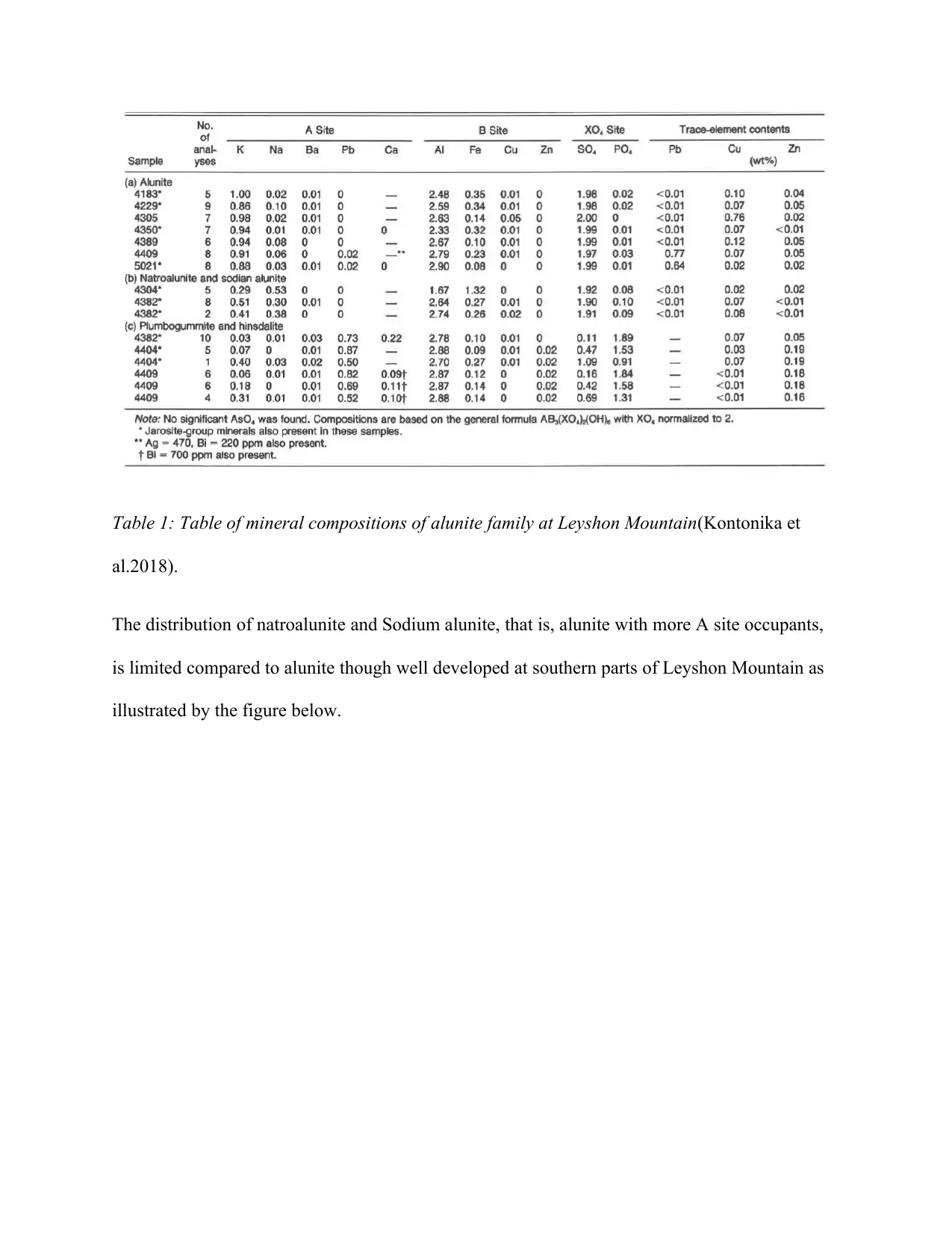
Table 1: Table of mineral compositions of alunite family at Leyshon Mountain(Kontonika et
al.2018).
The distribution of natroalunite and Sodium alunite, that is, alunite with more A site occupants,
is limited compared to alunite though well developed at southern parts of Leyshon Mountain as
illustrated by the figure below.
al.2018).
The distribution of natroalunite and Sodium alunite, that is, alunite with more A site occupants,
is limited compared to alunite though well developed at southern parts of Leyshon Mountain as
illustrated by the figure below.
⊘ This is a preview!⊘
Do you want full access?
Subscribe today to unlock all pages.
Trusted by 1+ million students worldwide
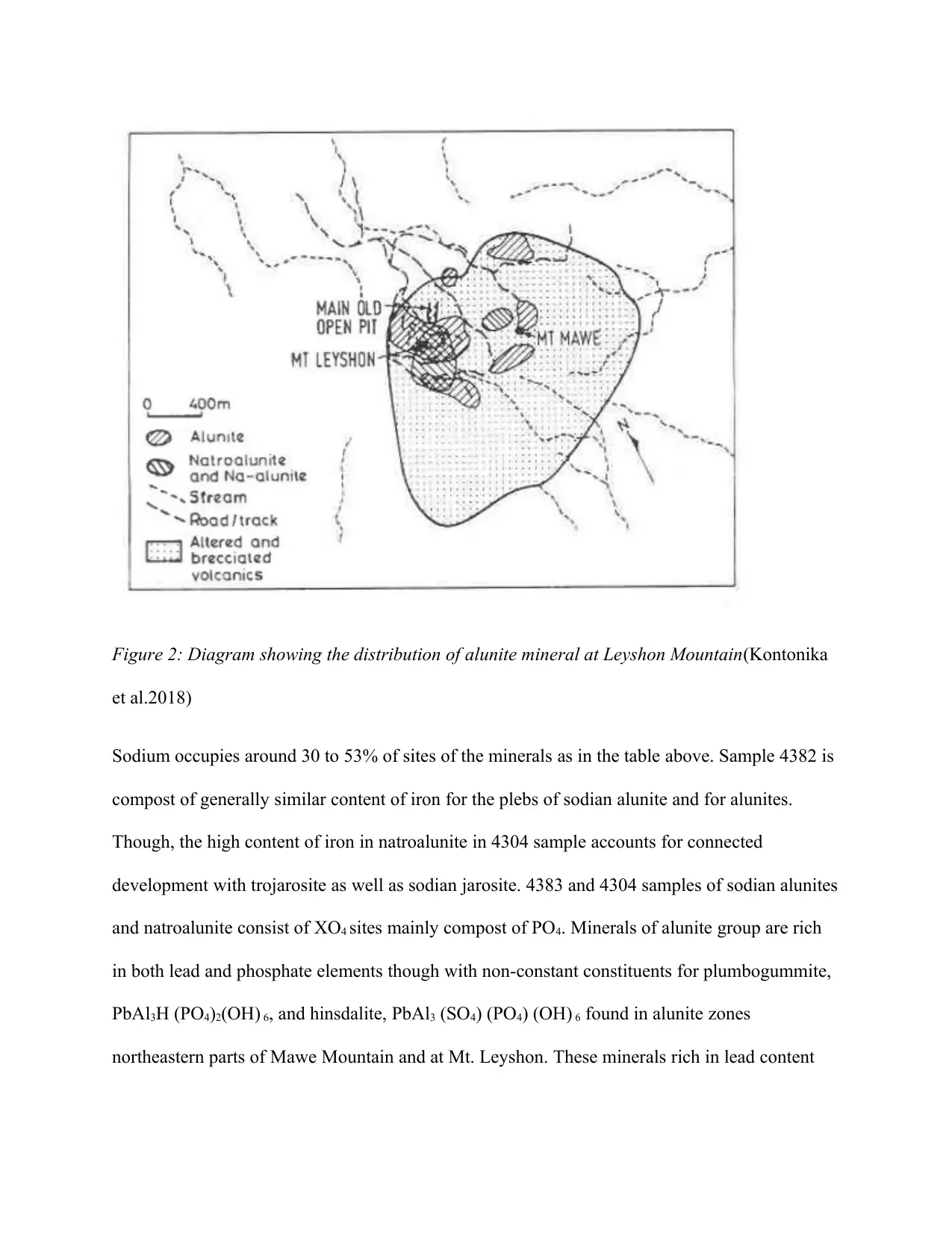
Figure 2: Diagram showing the distribution of alunite mineral at Leyshon Mountain(Kontonika
et al.2018)
Sodium occupies around 30 to 53% of sites of the minerals as in the table above. Sample 4382 is
compost of generally similar content of iron for the plebs of sodian alunite and for alunites.
Though, the high content of iron in natroalunite in 4304 sample accounts for connected
development with trojarosite as well as sodian jarosite. 4383 and 4304 samples of sodian alunites
and natroalunite consist of XO4 sites mainly compost of PO4. Minerals of alunite group are rich
in both lead and phosphate elements though with non-constant constituents for plumbogummite,
PbAl3H (PO4)2(OH) 6, and hinsdalite, PbAl3 (SO4) (PO4) (OH) 6 found in alunite zones
northeastern parts of Mawe Mountain and at Mt. Leyshon. These minerals rich in lead content
et al.2018)
Sodium occupies around 30 to 53% of sites of the minerals as in the table above. Sample 4382 is
compost of generally similar content of iron for the plebs of sodian alunite and for alunites.
Though, the high content of iron in natroalunite in 4304 sample accounts for connected
development with trojarosite as well as sodian jarosite. 4383 and 4304 samples of sodian alunites
and natroalunite consist of XO4 sites mainly compost of PO4. Minerals of alunite group are rich
in both lead and phosphate elements though with non-constant constituents for plumbogummite,
PbAl3H (PO4)2(OH) 6, and hinsdalite, PbAl3 (SO4) (PO4) (OH) 6 found in alunite zones
northeastern parts of Mawe Mountain and at Mt. Leyshon. These minerals rich in lead content
Paraphrase This Document
Need a fresh take? Get an instant paraphrase of this document with our AI Paraphraser
occur in veins or blebs in close link with oxides of iron and are mainly compost of zinc and
calcium(Olierook et al.2018).
Occurrence of Minerals of Jarosite Family
The extent of distribution of minerals of jarosite family is wide compared to alunite group in
volcanic complex weathered rocks on Leyshon Mount. In jarosite, the A sites consist of 13%
sodium with greater percentage of these sites compost of Na in natrojarosite and sodian jarosite.
The occurrence of jarosite family minerals is mainly in admix of goethite and muscovite or as an
anulite replacement as in the figure below.
Figure 3: showing pyrite weathering resulting into creation of voids and alunite replacement of
farosite(Kamenetsky et al.2015)
calcium(Olierook et al.2018).
Occurrence of Minerals of Jarosite Family
The extent of distribution of minerals of jarosite family is wide compared to alunite group in
volcanic complex weathered rocks on Leyshon Mount. In jarosite, the A sites consist of 13%
sodium with greater percentage of these sites compost of Na in natrojarosite and sodian jarosite.
The occurrence of jarosite family minerals is mainly in admix of goethite and muscovite or as an
anulite replacement as in the figure below.
Figure 3: showing pyrite weathering resulting into creation of voids and alunite replacement of
farosite(Kamenetsky et al.2015)
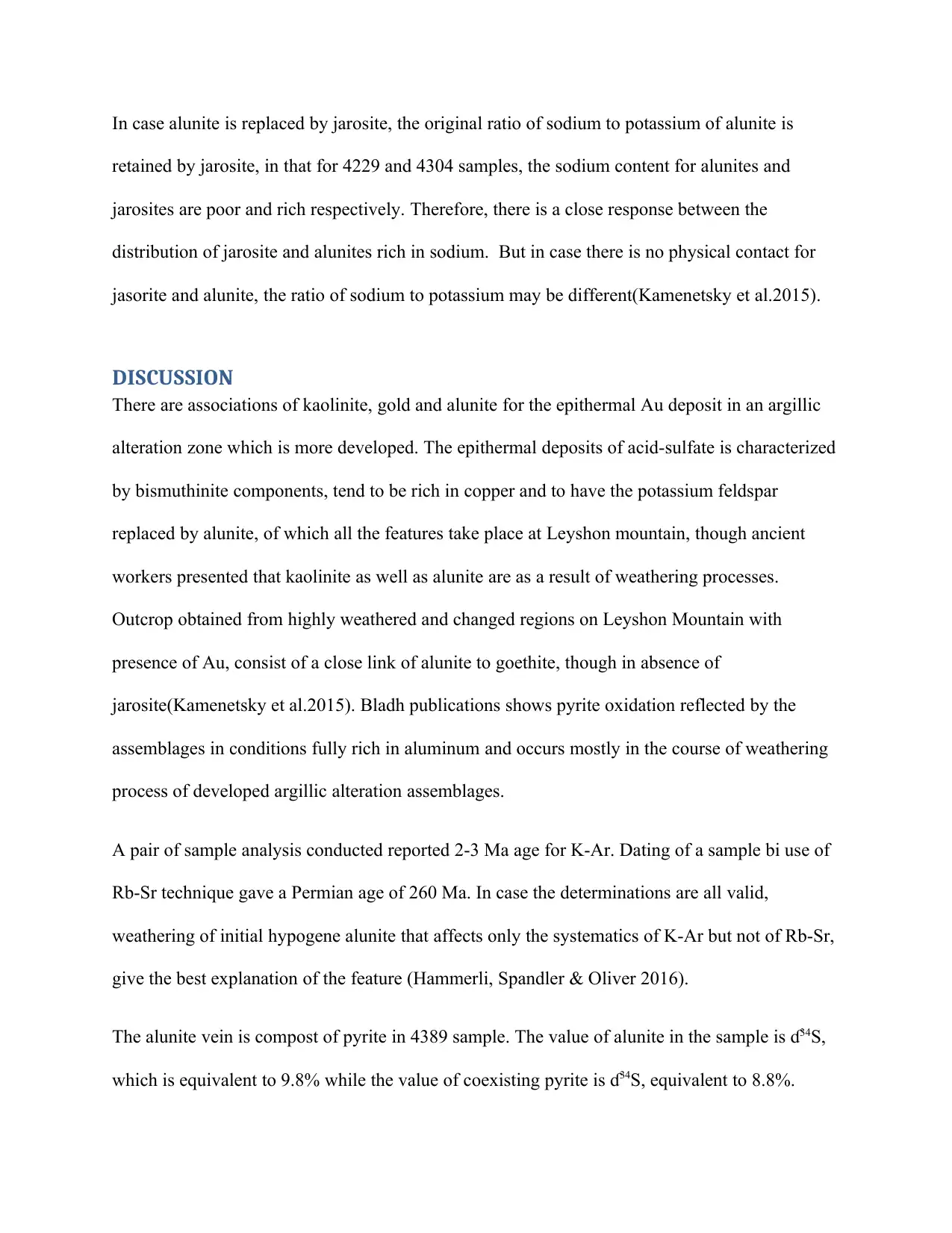
In case alunite is replaced by jarosite, the original ratio of sodium to potassium of alunite is
retained by jarosite, in that for 4229 and 4304 samples, the sodium content for alunites and
jarosites are poor and rich respectively. Therefore, there is a close response between the
distribution of jarosite and alunites rich in sodium. But in case there is no physical contact for
jasorite and alunite, the ratio of sodium to potassium may be different(Kamenetsky et al.2015).
DISCUSSION
There are associations of kaolinite, gold and alunite for the epithermal Au deposit in an argillic
alteration zone which is more developed. The epithermal deposits of acid-sulfate is characterized
by bismuthinite components, tend to be rich in copper and to have the potassium feldspar
replaced by alunite, of which all the features take place at Leyshon mountain, though ancient
workers presented that kaolinite as well as alunite are as a result of weathering processes.
Outcrop obtained from highly weathered and changed regions on Leyshon Mountain with
presence of Au, consist of a close link of alunite to goethite, though in absence of
jarosite(Kamenetsky et al.2015). Bladh publications shows pyrite oxidation reflected by the
assemblages in conditions fully rich in aluminum and occurs mostly in the course of weathering
process of developed argillic alteration assemblages.
A pair of sample analysis conducted reported 2-3 Ma age for K-Ar. Dating of a sample bi use of
Rb-Sr technique gave a Permian age of 260 Ma. In case the determinations are all valid,
weathering of initial hypogene alunite that affects only the systematics of K-Ar but not of Rb-Sr,
give the best explanation of the feature (Hammerli, Spandler & Oliver 2016).
The alunite vein is compost of pyrite in 4389 sample. The value of alunite in the sample is ɗ34S,
which is equivalent to 9.8% while the value of coexisting pyrite is ɗ34S, equivalent to 8.8%.
retained by jarosite, in that for 4229 and 4304 samples, the sodium content for alunites and
jarosites are poor and rich respectively. Therefore, there is a close response between the
distribution of jarosite and alunites rich in sodium. But in case there is no physical contact for
jasorite and alunite, the ratio of sodium to potassium may be different(Kamenetsky et al.2015).
DISCUSSION
There are associations of kaolinite, gold and alunite for the epithermal Au deposit in an argillic
alteration zone which is more developed. The epithermal deposits of acid-sulfate is characterized
by bismuthinite components, tend to be rich in copper and to have the potassium feldspar
replaced by alunite, of which all the features take place at Leyshon mountain, though ancient
workers presented that kaolinite as well as alunite are as a result of weathering processes.
Outcrop obtained from highly weathered and changed regions on Leyshon Mountain with
presence of Au, consist of a close link of alunite to goethite, though in absence of
jarosite(Kamenetsky et al.2015). Bladh publications shows pyrite oxidation reflected by the
assemblages in conditions fully rich in aluminum and occurs mostly in the course of weathering
process of developed argillic alteration assemblages.
A pair of sample analysis conducted reported 2-3 Ma age for K-Ar. Dating of a sample bi use of
Rb-Sr technique gave a Permian age of 260 Ma. In case the determinations are all valid,
weathering of initial hypogene alunite that affects only the systematics of K-Ar but not of Rb-Sr,
give the best explanation of the feature (Hammerli, Spandler & Oliver 2016).
The alunite vein is compost of pyrite in 4389 sample. The value of alunite in the sample is ɗ34S,
which is equivalent to 9.8% while the value of coexisting pyrite is ɗ34S, equivalent to 8.8%.
⊘ This is a preview!⊘
Do you want full access?
Subscribe today to unlock all pages.
Trusted by 1+ million students worldwide

1 out of 16


Your All-in-One AI-Powered Toolkit for Academic Success.
+13062052269
info@desklib.com
Available 24*7 on WhatsApp / Email
![[object Object]](/_next/static/media/star-bottom.7253800d.svg)
Unlock your academic potential
Copyright © 2020–2026 A2Z Services. All Rights Reserved. Developed and managed by ZUCOL.