Exploring Non-Pharmacological Interventions for Chronic Back Pain

Verified

Added on  2023/06/10

|4
|876
|143
Report
AI Summary
This report focuses on non-pharmacological nursing interventions for a 40-year-old female patient with a 5-year history of chronic lower back pain. It emphasizes the importance of a therapeutic relationship between the nurse and patient, including building trust and confidence through competent clinical evaluation and positive communication. Key interventions discussed include patient education on back care, individualized exercise programs, and passive physical therapies such as hydrotherapy and TENS. The report highlights the role of nurses in developing patient health literacy, providing reassurance, and advising on optimal daily activities, posture, and aggravating factors. Ultimately, the goal is to improve the patient's quality of life by managing pain effectively and promoting mental and emotional well-being. Desklib offers additional resources and solved assignments for students.
Document Page
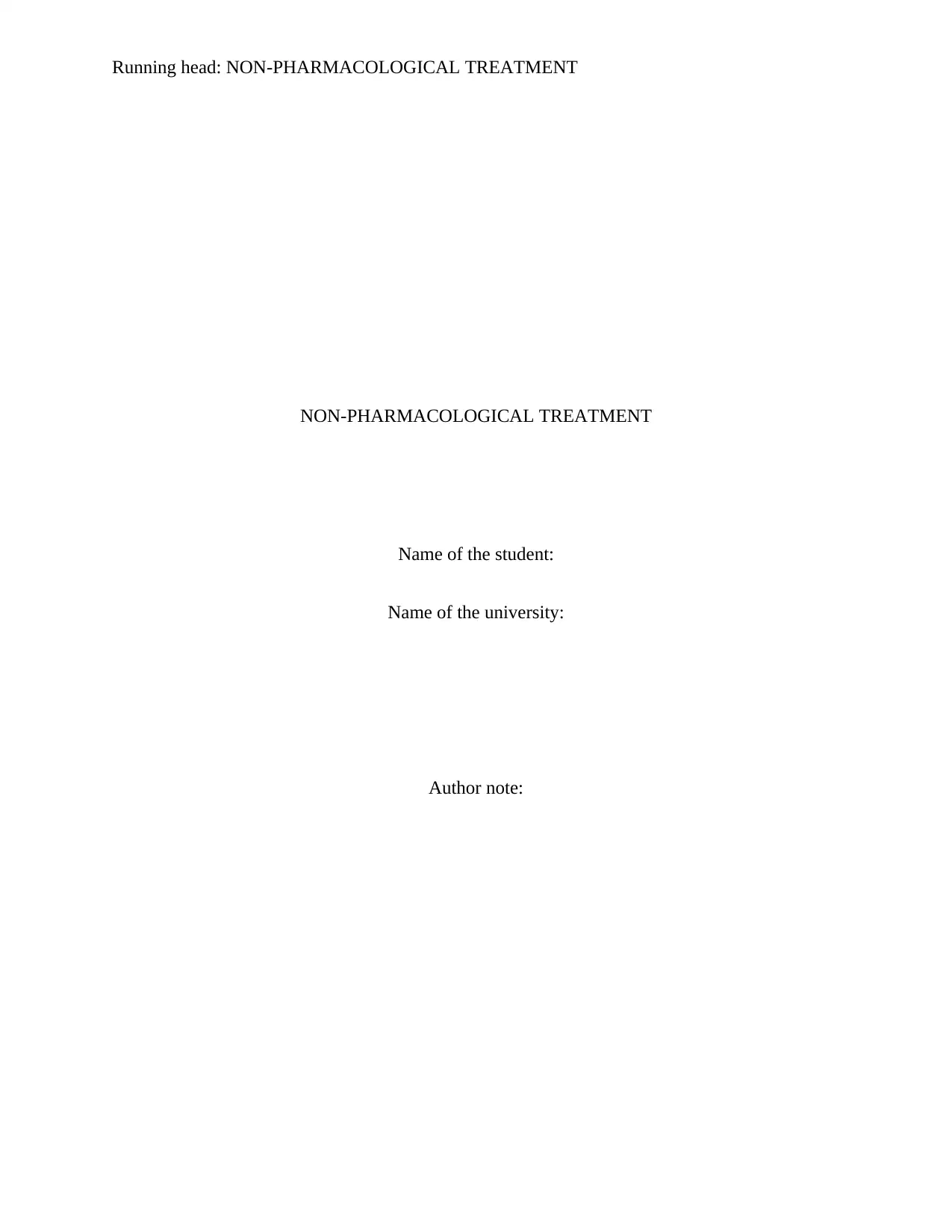
Running head: NON-PHARMACOLOGICAL TREATMENT
NON-PHARMACOLOGICAL TREATMENT
Name of the student:
Name of the university:
Author note:
tabler-icon-diamond-filled.svg

Paraphrase This Document

Need a fresh take? Get an instant paraphrase of this document with our AI Paraphraser
Document Page
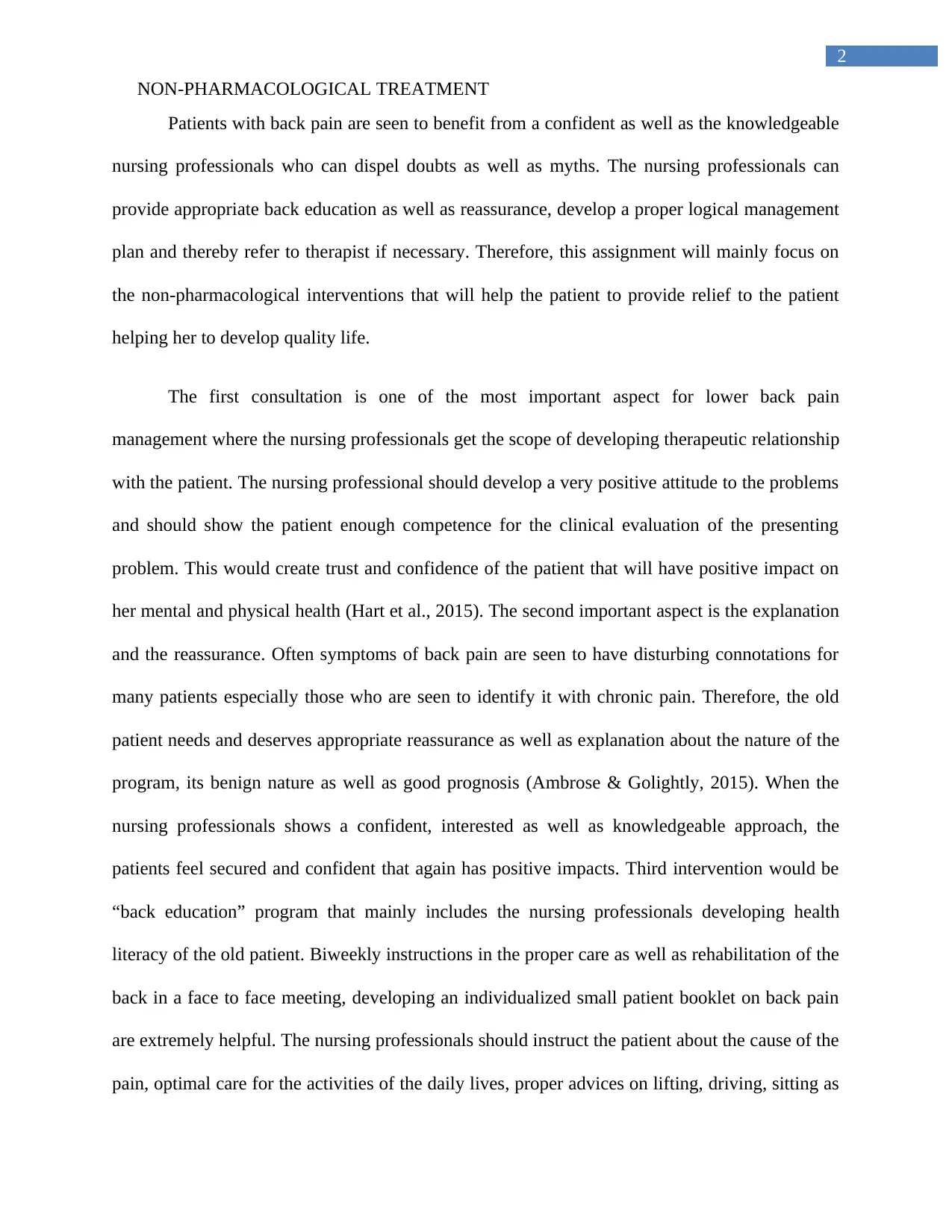
2
NON-PHARMACOLOGICAL TREATMENT
Patients with back pain are seen to benefit from a confident as well as the knowledgeable
nursing professionals who can dispel doubts as well as myths. The nursing professionals can
provide appropriate back education as well as reassurance, develop a proper logical management
plan and thereby refer to therapist if necessary. Therefore, this assignment will mainly focus on
the non-pharmacological interventions that will help the patient to provide relief to the patient
helping her to develop quality life.
The first consultation is one of the most important aspect for lower back pain
management where the nursing professionals get the scope of developing therapeutic relationship
with the patient. The nursing professional should develop a very positive attitude to the problems
and should show the patient enough competence for the clinical evaluation of the presenting
problem. This would create trust and confidence of the patient that will have positive impact on
her mental and physical health (Hart et al., 2015). The second important aspect is the explanation
and the reassurance. Often symptoms of back pain are seen to have disturbing connotations for
many patients especially those who are seen to identify it with chronic pain. Therefore, the old
patient needs and deserves appropriate reassurance as well as explanation about the nature of the
program, its benign nature as well as good prognosis (Ambrose & Golightly, 2015). When the
nursing professionals shows a confident, interested as well as knowledgeable approach, the
patients feel secured and confident that again has positive impacts. Third intervention would be
“back education” program that mainly includes the nursing professionals developing health
literacy of the old patient. Biweekly instructions in the proper care as well as rehabilitation of the
back in a face to face meeting, developing an individualized small patient booklet on back pain
are extremely helpful. The nursing professionals should instruct the patient about the cause of the
pain, optimal care for the activities of the daily lives, proper advices on lifting, driving, sitting as
Document Page
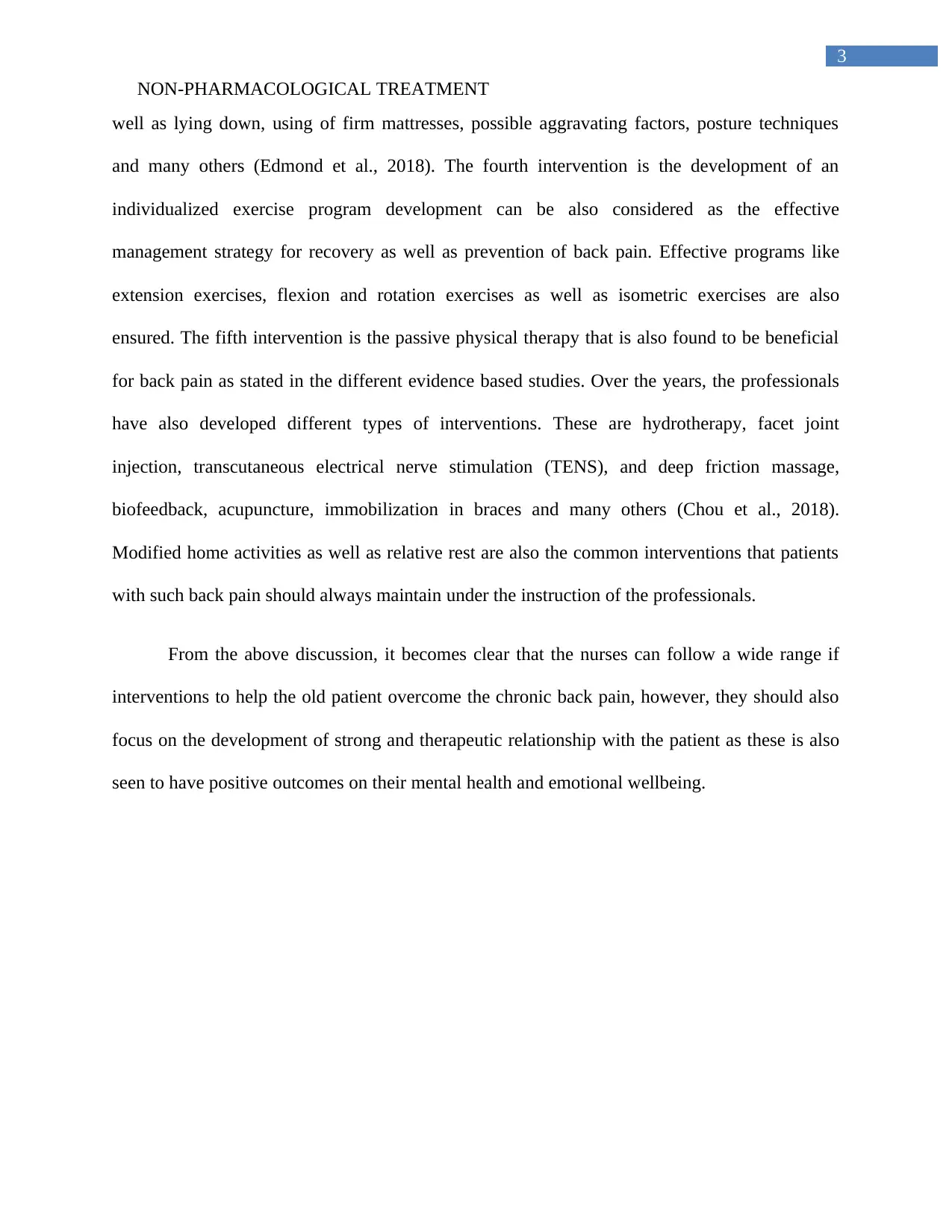
3
NON-PHARMACOLOGICAL TREATMENT
well as lying down, using of firm mattresses, possible aggravating factors, posture techniques
and many others (Edmond et al., 2018). The fourth intervention is the development of an
individualized exercise program development can be also considered as the effective
management strategy for recovery as well as prevention of back pain. Effective programs like
extension exercises, flexion and rotation exercises as well as isometric exercises are also
ensured. The fifth intervention is the passive physical therapy that is also found to be beneficial
for back pain as stated in the different evidence based studies. Over the years, the professionals
have also developed different types of interventions. These are hydrotherapy, facet joint
injection, transcutaneous electrical nerve stimulation (TENS), and deep friction massage,
biofeedback, acupuncture, immobilization in braces and many others (Chou et al., 2018).
Modified home activities as well as relative rest are also the common interventions that patients
with such back pain should always maintain under the instruction of the professionals.
From the above discussion, it becomes clear that the nurses can follow a wide range if
interventions to help the old patient overcome the chronic back pain, however, they should also
focus on the development of strong and therapeutic relationship with the patient as these is also
seen to have positive outcomes on their mental health and emotional wellbeing.
Document Page
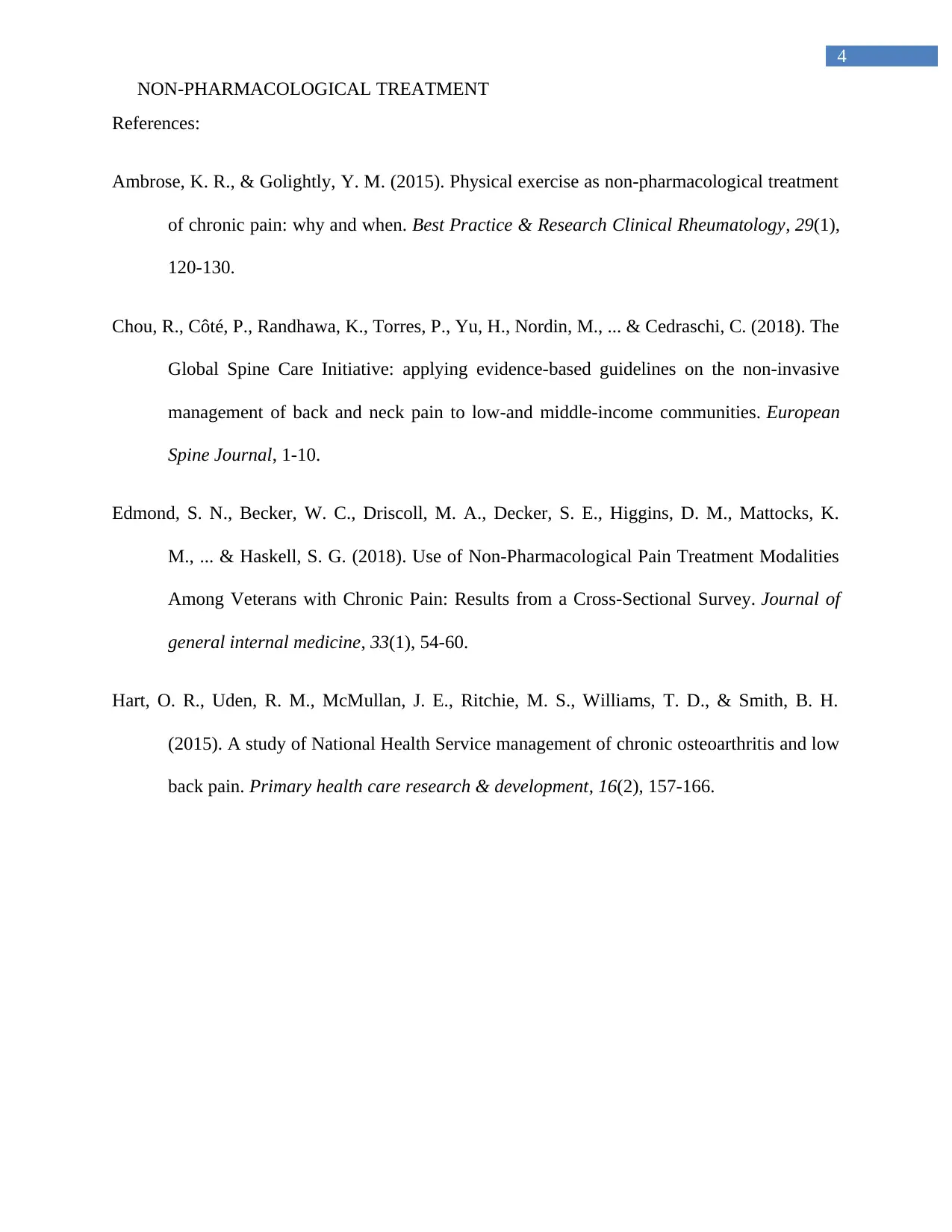
4
NON-PHARMACOLOGICAL TREATMENT
References:
Ambrose, K. R., & Golightly, Y. M. (2015). Physical exercise as non-pharmacological treatment
of chronic pain: why and when. Best Practice & Research Clinical Rheumatology, 29(1),
120-130.
Chou, R., Côté, P., Randhawa, K., Torres, P., Yu, H., Nordin, M., ... & Cedraschi, C. (2018). The
Global Spine Care Initiative: applying evidence-based guidelines on the non-invasive
management of back and neck pain to low-and middle-income communities. European
Spine Journal, 1-10.
Edmond, S. N., Becker, W. C., Driscoll, M. A., Decker, S. E., Higgins, D. M., Mattocks, K.
M., ... & Haskell, S. G. (2018). Use of Non-Pharmacological Pain Treatment Modalities
Among Veterans with Chronic Pain: Results from a Cross-Sectional Survey. Journal of
general internal medicine, 33(1), 54-60.
Hart, O. R., Uden, R. M., McMullan, J. E., Ritchie, M. S., Williams, T. D., & Smith, B. H.
(2015). A study of National Health Service management of chronic osteoarthritis and low
back pain. Primary health care research & development, 16(2), 157-166.
chevron_up_icon
1 out of 4
circle_padding
hide_on_mobile
zoom_out_icon
[object Object]