Enhancing Project Management through BIM for Building Maintenance
VerifiedAdded on 2020/04/21
|27
|5765
|60
AI Summary
The growing complexity of building projects necessitates advanced solutions like Building Information Modelling (BIM) to streamline maintenance and management tasks. This research paper delves into how BIM systems enhance project management practices in building maintenance, emphasizing the integration of data-driven approaches, quality assurance, and efficiency improvements. By leveraging international software engineering standards, the study showcases the benefits of a systematic approach to managing maintenance activities, focusing on sustainability and performance optimization.

Running head: PROJECT MANAGEMENT
Topic- Project Management
Name of the Student
Name of the University
Author’s Note
Topic- Project Management
Name of the Student
Name of the University
Author’s Note

Paraphrase This Document
Need a fresh take? Get an instant paraphrase of this document with our AI Paraphraser
1
PROJECT MANAGEMENT
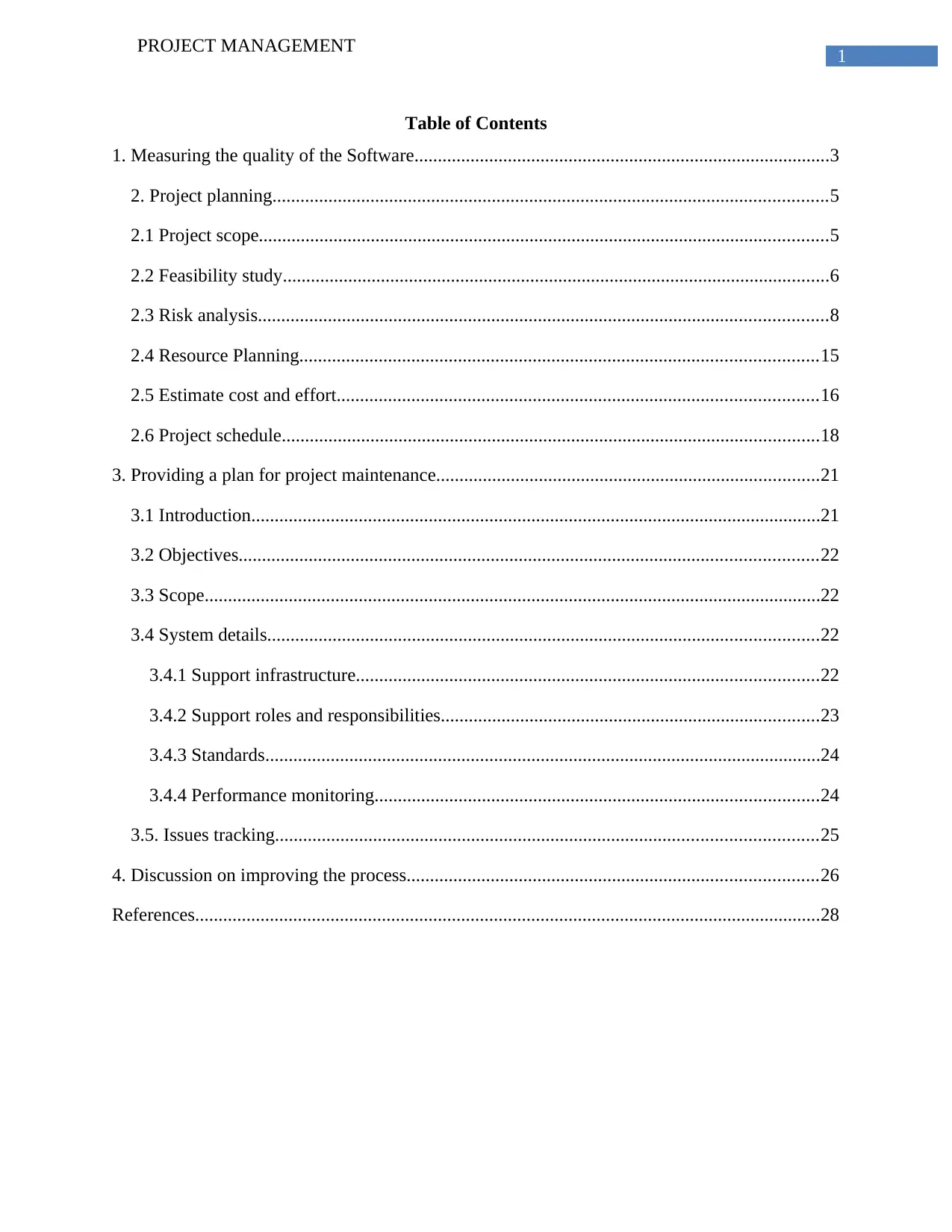
Table of Contents
1. Measuring the quality of the Software.........................................................................................3
2. Project planning.......................................................................................................................5
2.1 Project scope..........................................................................................................................5
2.2 Feasibility study.....................................................................................................................6
2.3 Risk analysis..........................................................................................................................8
2.4 Resource Planning...............................................................................................................15
2.5 Estimate cost and effort.......................................................................................................16
2.6 Project schedule...................................................................................................................18
3. Providing a plan for project maintenance..................................................................................21
3.1 Introduction..........................................................................................................................21
3.2 Objectives............................................................................................................................22
3.3 Scope....................................................................................................................................22
3.4 System details......................................................................................................................22
3.4.1 Support infrastructure...................................................................................................22
3.4.2 Support roles and responsibilities.................................................................................23
3.4.3 Standards.......................................................................................................................24
3.4.4 Performance monitoring...............................................................................................24
3.5. Issues tracking....................................................................................................................25
4. Discussion on improving the process........................................................................................26
References......................................................................................................................................28
PROJECT MANAGEMENT
Table of Contents
1. Measuring the quality of the Software.........................................................................................3
2. Project planning.......................................................................................................................5
2.1 Project scope..........................................................................................................................5
2.2 Feasibility study.....................................................................................................................6
2.3 Risk analysis..........................................................................................................................8
2.4 Resource Planning...............................................................................................................15
2.5 Estimate cost and effort.......................................................................................................16
2.6 Project schedule...................................................................................................................18
3. Providing a plan for project maintenance..................................................................................21
3.1 Introduction..........................................................................................................................21
3.2 Objectives............................................................................................................................22
3.3 Scope....................................................................................................................................22
3.4 System details......................................................................................................................22
3.4.1 Support infrastructure...................................................................................................22
3.4.2 Support roles and responsibilities.................................................................................23
3.4.3 Standards.......................................................................................................................24
3.4.4 Performance monitoring...............................................................................................24
3.5. Issues tracking....................................................................................................................25
4. Discussion on improving the process........................................................................................26
References......................................................................................................................................28
2
PROJECT MANAGEMENT
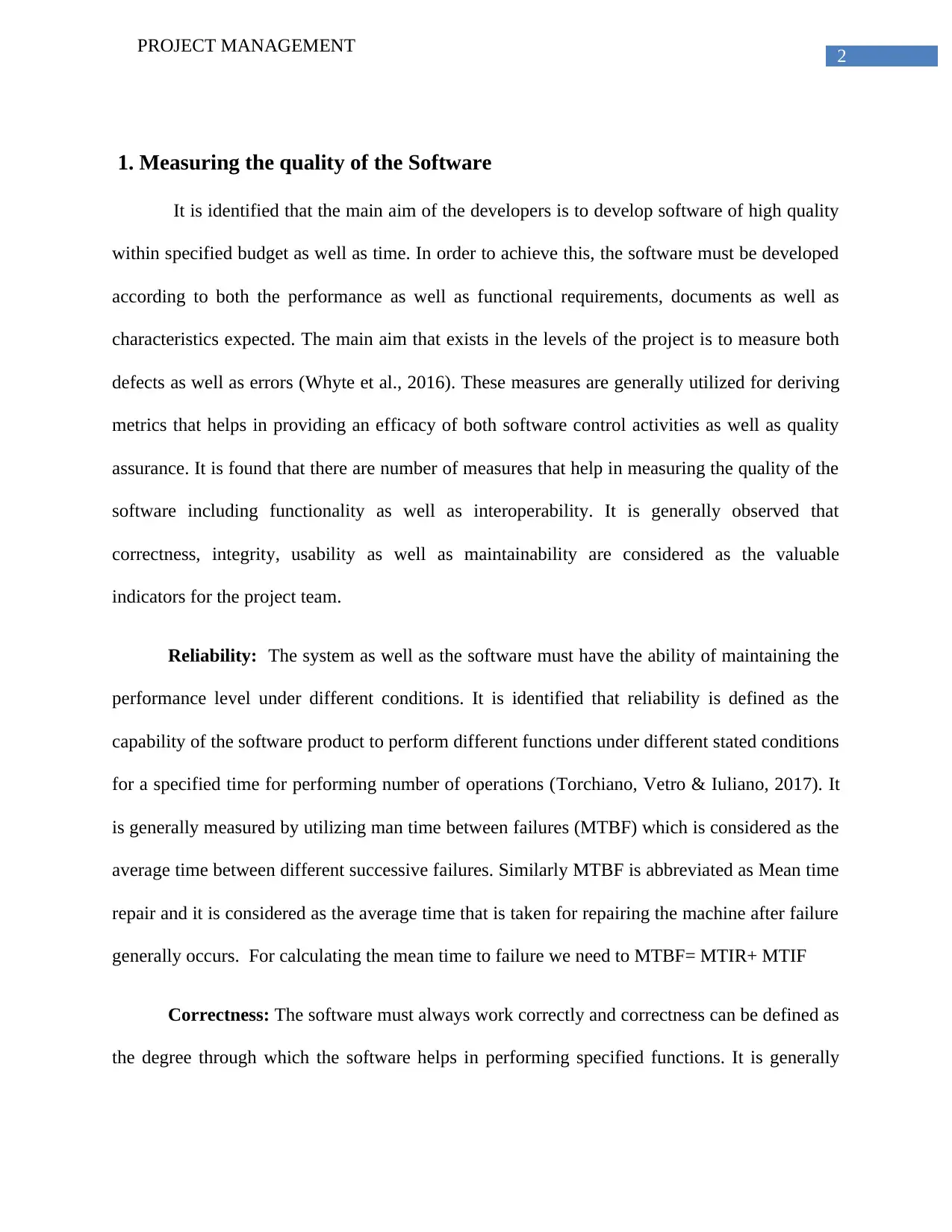
1. Measuring the quality of the Software
It is identified that the main aim of the developers is to develop software of high quality
within specified budget as well as time. In order to achieve this, the software must be developed
according to both the performance as well as functional requirements, documents as well as
characteristics expected. The main aim that exists in the levels of the project is to measure both
defects as well as errors (Whyte et al., 2016). These measures are generally utilized for deriving
metrics that helps in providing an efficacy of both software control activities as well as quality
assurance. It is found that there are number of measures that help in measuring the quality of the
software including functionality as well as interoperability. It is generally observed that
correctness, integrity, usability as well as maintainability are considered as the valuable
indicators for the project team.
Reliability: The system as well as the software must have the ability of maintaining the
performance level under different conditions. It is identified that reliability is defined as the
capability of the software product to perform different functions under different stated conditions
for a specified time for performing number of operations (Torchiano, Vetro & Iuliano, 2017). It
is generally measured by utilizing man time between failures (MTBF) which is considered as the
average time between different successive failures. Similarly MTBF is abbreviated as Mean time
repair and it is considered as the average time that is taken for repairing the machine after failure
generally occurs. For calculating the mean time to failure we need to MTBF= MTIR+ MTIF
Correctness: The software must always work correctly and correctness can be defined as
the degree through which the software helps in performing specified functions. It is generally
PROJECT MANAGEMENT
1. Measuring the quality of the Software
It is identified that the main aim of the developers is to develop software of high quality
within specified budget as well as time. In order to achieve this, the software must be developed
according to both the performance as well as functional requirements, documents as well as
characteristics expected. The main aim that exists in the levels of the project is to measure both
defects as well as errors (Whyte et al., 2016). These measures are generally utilized for deriving
metrics that helps in providing an efficacy of both software control activities as well as quality
assurance. It is found that there are number of measures that help in measuring the quality of the
software including functionality as well as interoperability. It is generally observed that
correctness, integrity, usability as well as maintainability are considered as the valuable
indicators for the project team.
Reliability: The system as well as the software must have the ability of maintaining the
performance level under different conditions. It is identified that reliability is defined as the
capability of the software product to perform different functions under different stated conditions
for a specified time for performing number of operations (Torchiano, Vetro & Iuliano, 2017). It
is generally measured by utilizing man time between failures (MTBF) which is considered as the
average time between different successive failures. Similarly MTBF is abbreviated as Mean time
repair and it is considered as the average time that is taken for repairing the machine after failure
generally occurs. For calculating the mean time to failure we need to MTBF= MTIR+ MTIF
Correctness: The software must always work correctly and correctness can be defined as
the degree through which the software helps in performing specified functions. It is generally
⊘ This is a preview!⊘
Do you want full access?
Subscribe today to unlock all pages.

Trusted by 1+ million students worldwide
3
PROJECT MANAGEMENT
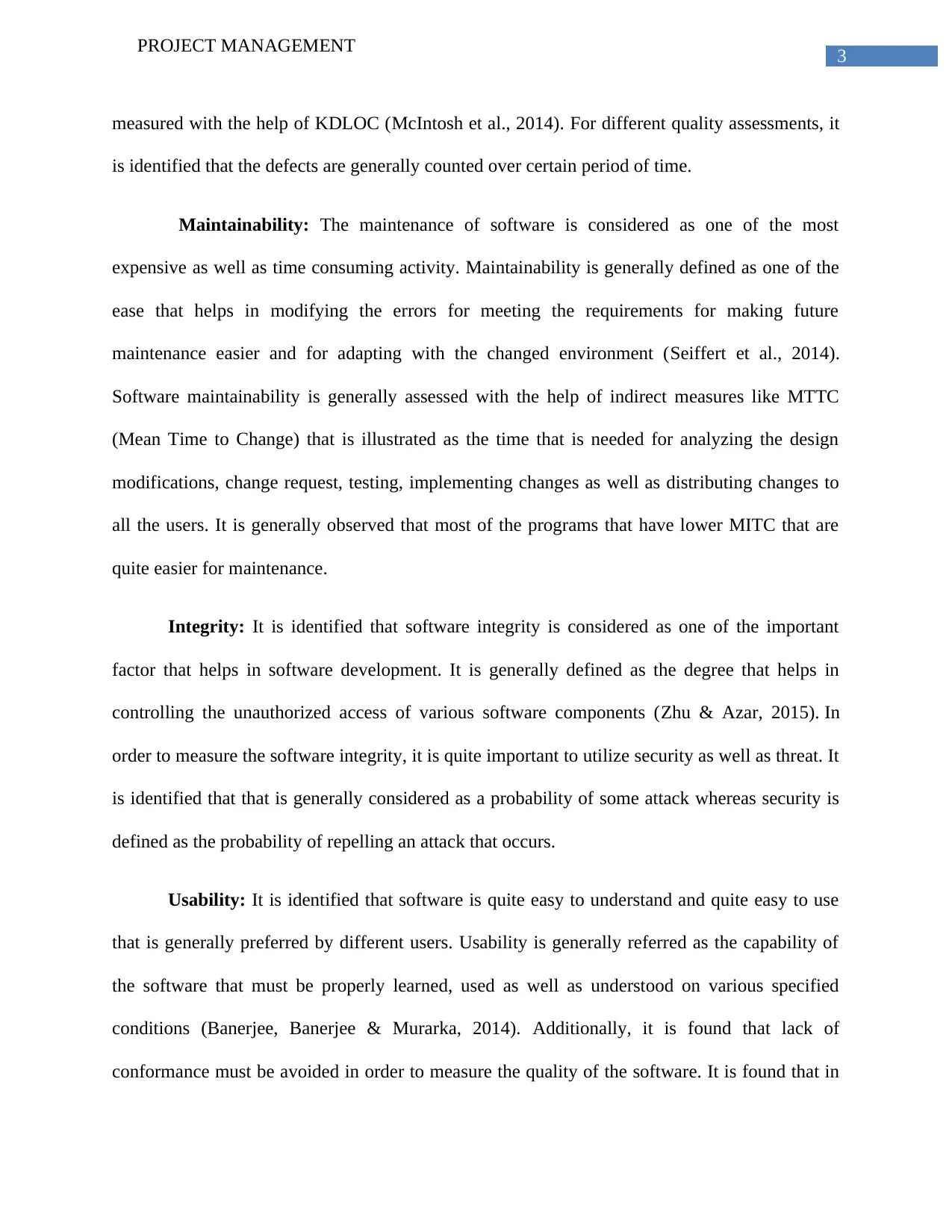
measured with the help of KDLOC (McIntosh et al., 2014). For different quality assessments, it
is identified that the defects are generally counted over certain period of time.
Maintainability: The maintenance of software is considered as one of the most
expensive as well as time consuming activity. Maintainability is generally defined as one of the
ease that helps in modifying the errors for meeting the requirements for making future
maintenance easier and for adapting with the changed environment (Seiffert et al., 2014).
Software maintainability is generally assessed with the help of indirect measures like MTTC
(Mean Time to Change) that is illustrated as the time that is needed for analyzing the design
modifications, change request, testing, implementing changes as well as distributing changes to
all the users. It is generally observed that most of the programs that have lower MITC that are
quite easier for maintenance.
Integrity: It is identified that software integrity is considered as one of the important
factor that helps in software development. It is generally defined as the degree that helps in
controlling the unauthorized access of various software components (Zhu & Azar, 2015). In
order to measure the software integrity, it is quite important to utilize security as well as threat. It
is identified that that is generally considered as a probability of some attack whereas security is
defined as the probability of repelling an attack that occurs.
Usability: It is identified that software is quite easy to understand and quite easy to use
that is generally preferred by different users. Usability is generally referred as the capability of
the software that must be properly learned, used as well as understood on various specified
conditions (Banerjee, Banerjee & Murarka, 2014). Additionally, it is found that lack of
conformance must be avoided in order to measure the quality of the software. It is found that in
PROJECT MANAGEMENT
measured with the help of KDLOC (McIntosh et al., 2014). For different quality assessments, it
is identified that the defects are generally counted over certain period of time.
Maintainability: The maintenance of software is considered as one of the most
expensive as well as time consuming activity. Maintainability is generally defined as one of the
ease that helps in modifying the errors for meeting the requirements for making future
maintenance easier and for adapting with the changed environment (Seiffert et al., 2014).
Software maintainability is generally assessed with the help of indirect measures like MTTC
(Mean Time to Change) that is illustrated as the time that is needed for analyzing the design
modifications, change request, testing, implementing changes as well as distributing changes to
all the users. It is generally observed that most of the programs that have lower MITC that are
quite easier for maintenance.
Integrity: It is identified that software integrity is considered as one of the important
factor that helps in software development. It is generally defined as the degree that helps in
controlling the unauthorized access of various software components (Zhu & Azar, 2015). In
order to measure the software integrity, it is quite important to utilize security as well as threat. It
is identified that that is generally considered as a probability of some attack whereas security is
defined as the probability of repelling an attack that occurs.
Usability: It is identified that software is quite easy to understand and quite easy to use
that is generally preferred by different users. Usability is generally referred as the capability of
the software that must be properly learned, used as well as understood on various specified
conditions (Banerjee, Banerjee & Murarka, 2014). Additionally, it is found that lack of
conformance must be avoided in order to measure the quality of the software. It is found that in
Paraphrase This Document
Need a fresh take? Get an instant paraphrase of this document with our AI Paraphraser
4
PROJECT MANAGEMENT
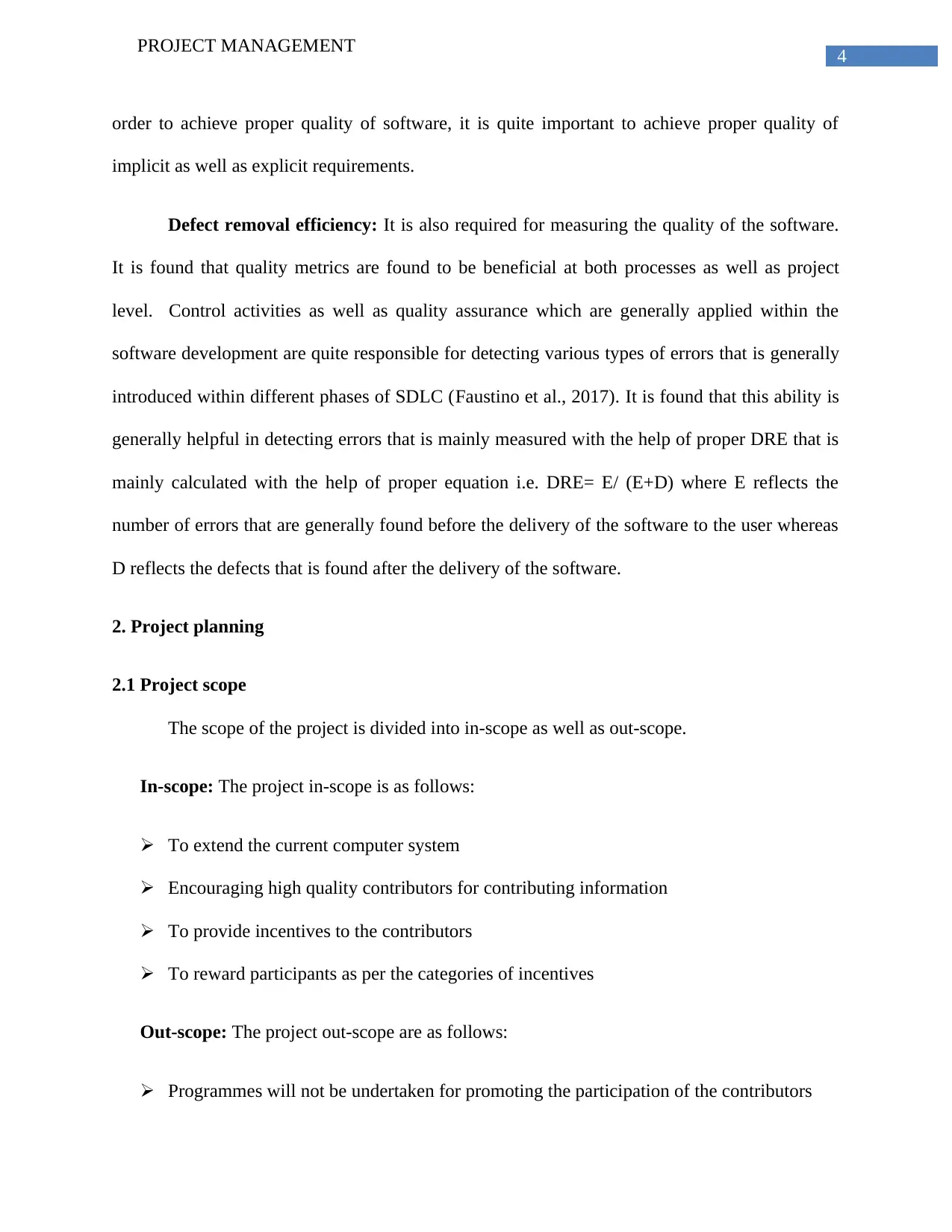
order to achieve proper quality of software, it is quite important to achieve proper quality of
implicit as well as explicit requirements.
Defect removal efficiency: It is also required for measuring the quality of the software.
It is found that quality metrics are found to be beneficial at both processes as well as project
level. Control activities as well as quality assurance which are generally applied within the
software development are quite responsible for detecting various types of errors that is generally
introduced within different phases of SDLC (Faustino et al., 2017). It is found that this ability is
generally helpful in detecting errors that is mainly measured with the help of proper DRE that is
mainly calculated with the help of proper equation i.e. DRE= E/ (E+D) where E reflects the
number of errors that are generally found before the delivery of the software to the user whereas
D reflects the defects that is found after the delivery of the software.
2. Project planning
2.1 Project scope
The scope of the project is divided into in-scope as well as out-scope.
In-scope: The project in-scope is as follows:
To extend the current computer system
Encouraging high quality contributors for contributing information
To provide incentives to the contributors
To reward participants as per the categories of incentives
Out-scope: The project out-scope are as follows:
Programmes will not be undertaken for promoting the participation of the contributors
PROJECT MANAGEMENT
order to achieve proper quality of software, it is quite important to achieve proper quality of
implicit as well as explicit requirements.
Defect removal efficiency: It is also required for measuring the quality of the software.
It is found that quality metrics are found to be beneficial at both processes as well as project
level. Control activities as well as quality assurance which are generally applied within the
software development are quite responsible for detecting various types of errors that is generally
introduced within different phases of SDLC (Faustino et al., 2017). It is found that this ability is
generally helpful in detecting errors that is mainly measured with the help of proper DRE that is
mainly calculated with the help of proper equation i.e. DRE= E/ (E+D) where E reflects the
number of errors that are generally found before the delivery of the software to the user whereas
D reflects the defects that is found after the delivery of the software.
2. Project planning
2.1 Project scope
The scope of the project is divided into in-scope as well as out-scope.
In-scope: The project in-scope is as follows:
To extend the current computer system
Encouraging high quality contributors for contributing information
To provide incentives to the contributors
To reward participants as per the categories of incentives
Out-scope: The project out-scope are as follows:
Programmes will not be undertaken for promoting the participation of the contributors
5
PROJECT MANAGEMENT
Qualification of the contributors are not analyzed
2.2 Feasibility study
The feasibility study generally helps in determining whether the project is worth doing or
not. This procedure is mainly followed in order to make proper determination about the
feasibility study. Once the feasibility of the project is determined then the analyst can easily
precede with the project specifications. In this project, numbers of feasibility studies are
undertaken.
Technical feasibility: It is identified that the equipments as well as software that is used
for extending the computer system is appropriate and thus they can easily satisfy the various
needs of the company. The technical feasibility generally helps in centering existing hardware,
software for supporting the extension of the computer system (Kerzner, 2013). While measuring
the technical feasibility of the system, the configuration of the system is generally provided
much more importance than the actual hardware. It is identified that the configuration of the
computer system helps in giving complete picture about the various requirements for the
extension of the computer system.
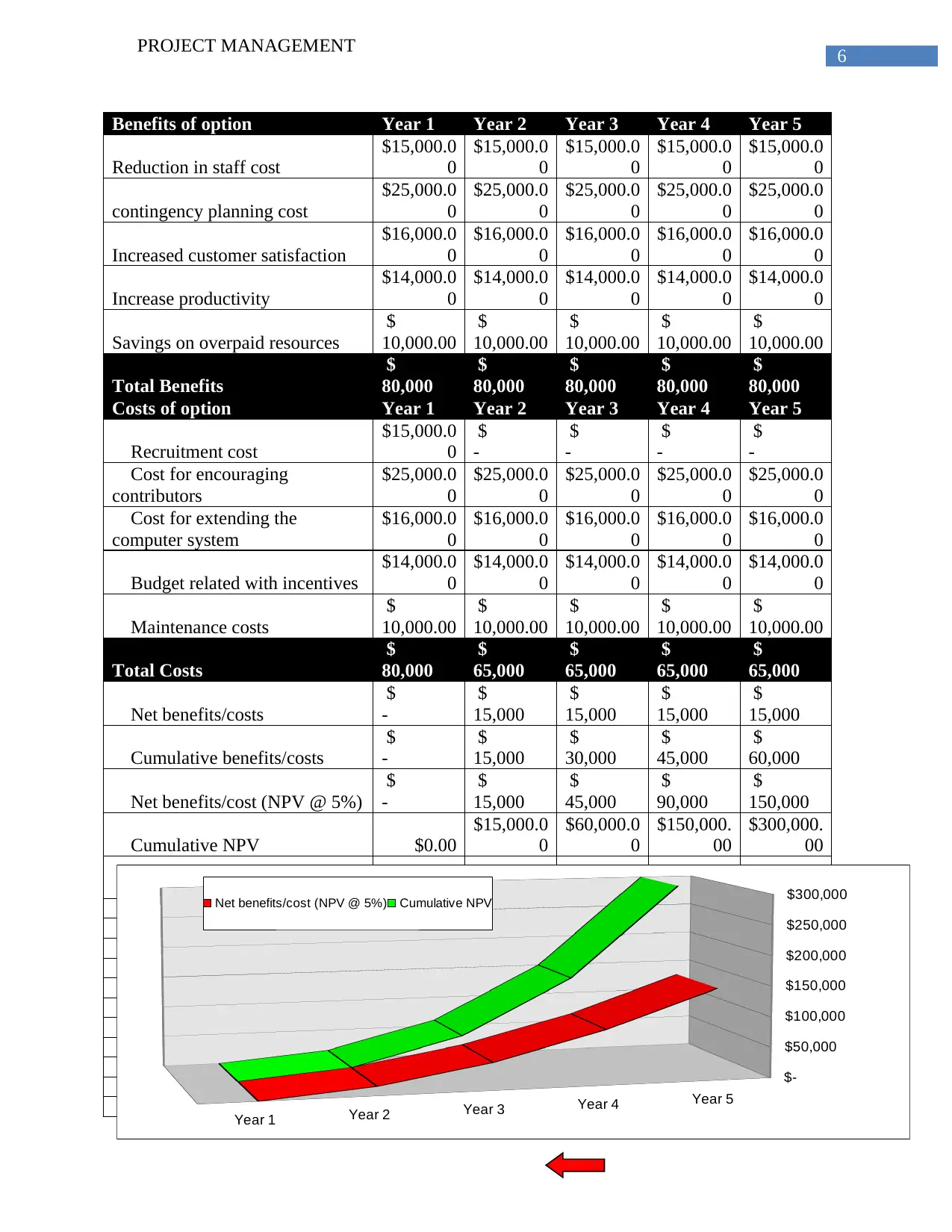
Economic feasibility: Economic analysis is considered as one of the most effective
method for evaluating the effectiveness of the project. It is identified that cost benefit analysis is
mainly utilized in order to determine the savings as well as benefits that are mainly expected as
outcome from the project (Burke, 2013). If the benefit that is gained from the project helps in
overweighing the cost then proper decision about implementation as well as design is required to
be made in order to implement the system. The cost benefit analysis is provided below:-
Cost Benefit Analysis
PROJECT MANAGEMENT
Qualification of the contributors are not analyzed
2.2 Feasibility study
The feasibility study generally helps in determining whether the project is worth doing or
not. This procedure is mainly followed in order to make proper determination about the
feasibility study. Once the feasibility of the project is determined then the analyst can easily
precede with the project specifications. In this project, numbers of feasibility studies are
undertaken.
Technical feasibility: It is identified that the equipments as well as software that is used
for extending the computer system is appropriate and thus they can easily satisfy the various
needs of the company. The technical feasibility generally helps in centering existing hardware,
software for supporting the extension of the computer system (Kerzner, 2013). While measuring
the technical feasibility of the system, the configuration of the system is generally provided
much more importance than the actual hardware. It is identified that the configuration of the
computer system helps in giving complete picture about the various requirements for the
extension of the computer system.
Economic feasibility: Economic analysis is considered as one of the most effective
method for evaluating the effectiveness of the project. It is identified that cost benefit analysis is
mainly utilized in order to determine the savings as well as benefits that are mainly expected as
outcome from the project (Burke, 2013). If the benefit that is gained from the project helps in
overweighing the cost then proper decision about implementation as well as design is required to
be made in order to implement the system. The cost benefit analysis is provided below:-
Cost Benefit Analysis
⊘ This is a preview!⊘
Do you want full access?
Subscribe today to unlock all pages.
Trusted by 1+ million students worldwide
6
PROJECT MANAGEMENT
Benefits of option Year 1 Year 2 Year 3 Year 4 Year 5
Reduction in staff cost
$15,000.0
0
$15,000.0
0
$15,000.0
0
$15,000.0
0
$15,000.0
0
contingency planning cost
$25,000.0
0
$25,000.0
0
$25,000.0
0
$25,000.0
0
$25,000.0
0
Increased customer satisfaction
$16,000.0
0
$16,000.0
0
$16,000.0
0
$16,000.0
0
$16,000.0
0
Increase productivity
$14,000.0
0
$14,000.0
0
$14,000.0
0
$14,000.0
0
$14,000.0
0
Savings on overpaid resources
$
10,000.00
$
10,000.00
$
10,000.00
$
10,000.00
$
10,000.00
Total Benefits
$
80,000
$
80,000
$
80,000
$
80,000
$
80,000
Costs of option Year 1 Year 2 Year 3 Year 4 Year 5
Recruitment cost
$15,000.0
0
$
-
$
-
$
-
$
-
Cost for encouraging
contributors
$25,000.0
0
$25,000.0
0
$25,000.0
0
$25,000.0
0
$25,000.0
0
Cost for extending the
computer system
$16,000.0
0
$16,000.0
0
$16,000.0
0
$16,000.0
0
$16,000.0
0
Budget related with incentives
$14,000.0
0
$14,000.0
0
$14,000.0
0
$14,000.0
0
$14,000.0
0
Maintenance costs
$
10,000.00
$
10,000.00
$
10,000.00
$
10,000.00
$
10,000.00
Total Costs
$
80,000
$
65,000
$
65,000
$
65,000
$
65,000
Net benefits/costs
$
-
$
15,000
$
15,000
$
15,000
$
15,000
Cumulative benefits/costs
$
-
$
15,000
$
30,000
$
45,000
$
60,000
Net benefits/cost (NPV @ 5%)
$
-
$
15,000
$
45,000
$
90,000
$
150,000
Cumulative NPV $0.00
$15,000.0
0
$60,000.0
0
$150,000.
00
$300,000.
00
Year 1 Year 2 Year 3 Year 4 Year 5
$-
$50,000
$100,000
$150,000
$200,000
$250,000
$300,000
Net benefits/cost (NPV @ 5%) Cumulative NPV
PROJECT MANAGEMENT
Benefits of option Year 1 Year 2 Year 3 Year 4 Year 5
Reduction in staff cost
$15,000.0
0
$15,000.0
0
$15,000.0
0
$15,000.0
0
$15,000.0
0
contingency planning cost
$25,000.0
0
$25,000.0
0
$25,000.0
0
$25,000.0
0
$25,000.0
0
Increased customer satisfaction
$16,000.0
0
$16,000.0
0
$16,000.0
0
$16,000.0
0
$16,000.0
0
Increase productivity
$14,000.0
0
$14,000.0
0
$14,000.0
0
$14,000.0
0
$14,000.0
0
Savings on overpaid resources
$
10,000.00
$
10,000.00
$
10,000.00
$
10,000.00
$
10,000.00
Total Benefits
$
80,000
$
80,000
$
80,000
$
80,000
$
80,000
Costs of option Year 1 Year 2 Year 3 Year 4 Year 5
Recruitment cost
$15,000.0
0
$
-
$
-
$
-
$
-
Cost for encouraging
contributors
$25,000.0
0
$25,000.0
0
$25,000.0
0
$25,000.0
0
$25,000.0
0
Cost for extending the
computer system
$16,000.0
0
$16,000.0
0
$16,000.0
0
$16,000.0
0
$16,000.0
0
Budget related with incentives
$14,000.0
0
$14,000.0
0
$14,000.0
0
$14,000.0
0
$14,000.0
0
Maintenance costs
$
10,000.00
$
10,000.00
$
10,000.00
$
10,000.00
$
10,000.00
Total Costs
$
80,000
$
65,000
$
65,000
$
65,000
$
65,000
Net benefits/costs
$
-
$
15,000
$
15,000
$
15,000
$
15,000
Cumulative benefits/costs
$
-
$
15,000
$
30,000
$
45,000
$
60,000
Net benefits/cost (NPV @ 5%)
$
-
$
15,000
$
45,000
$
90,000
$
150,000
Cumulative NPV $0.00
$15,000.0
0
$60,000.0
0
$150,000.
00
$300,000.
00
Year 1 Year 2 Year 3 Year 4 Year 5
$-
$50,000
$100,000
$150,000
$200,000
$250,000
$300,000
Net benefits/cost (NPV @ 5%) Cumulative NPV
Paraphrase This Document
Need a fresh take? Get an instant paraphrase of this document with our AI Paraphraser
7
PROJECT MANAGEMENT
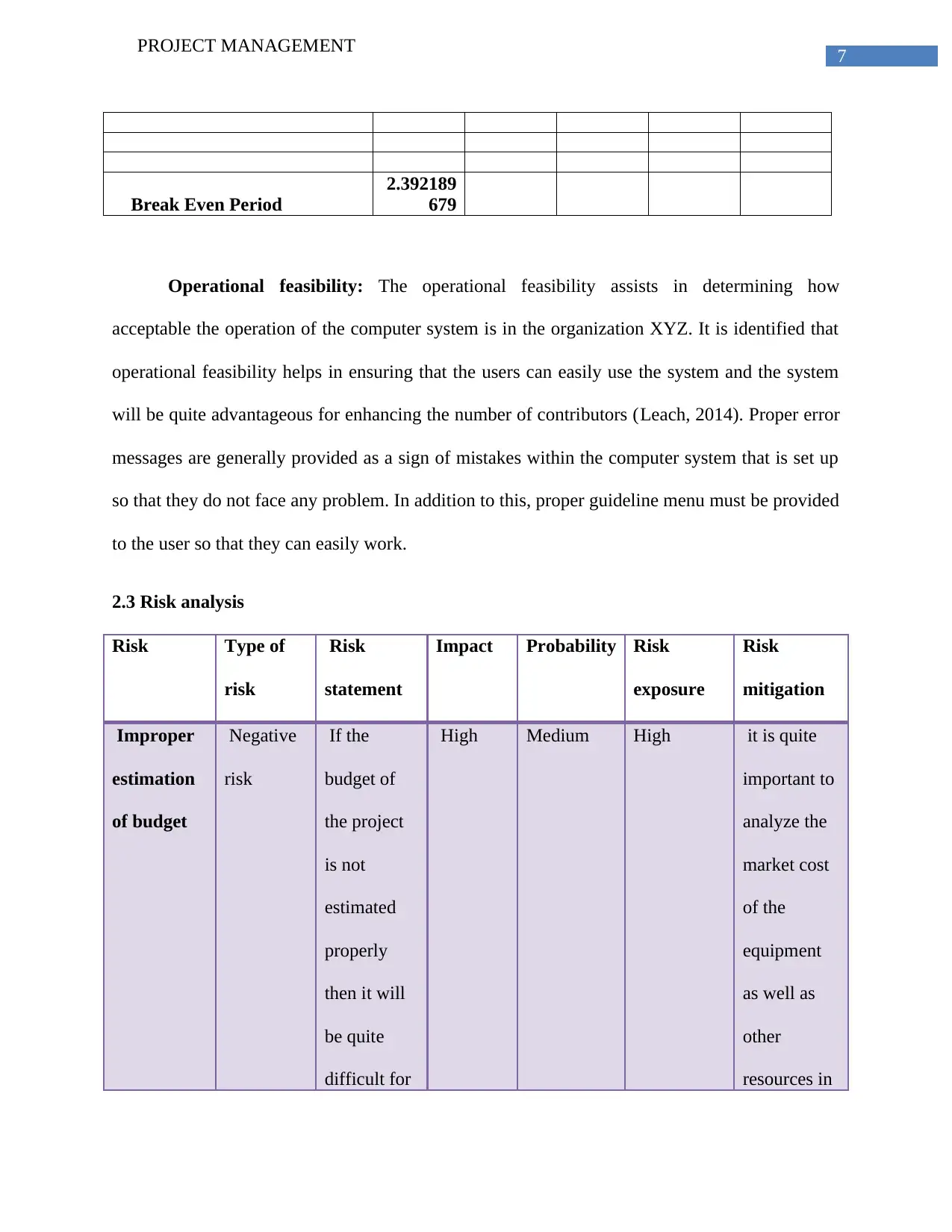
Break Even Period
2.392189
679
Operational feasibility: The operational feasibility assists in determining how
acceptable the operation of the computer system is in the organization XYZ. It is identified that
operational feasibility helps in ensuring that the users can easily use the system and the system
will be quite advantageous for enhancing the number of contributors (Leach, 2014). Proper error
messages are generally provided as a sign of mistakes within the computer system that is set up
so that they do not face any problem. In addition to this, proper guideline menu must be provided
to the user so that they can easily work.
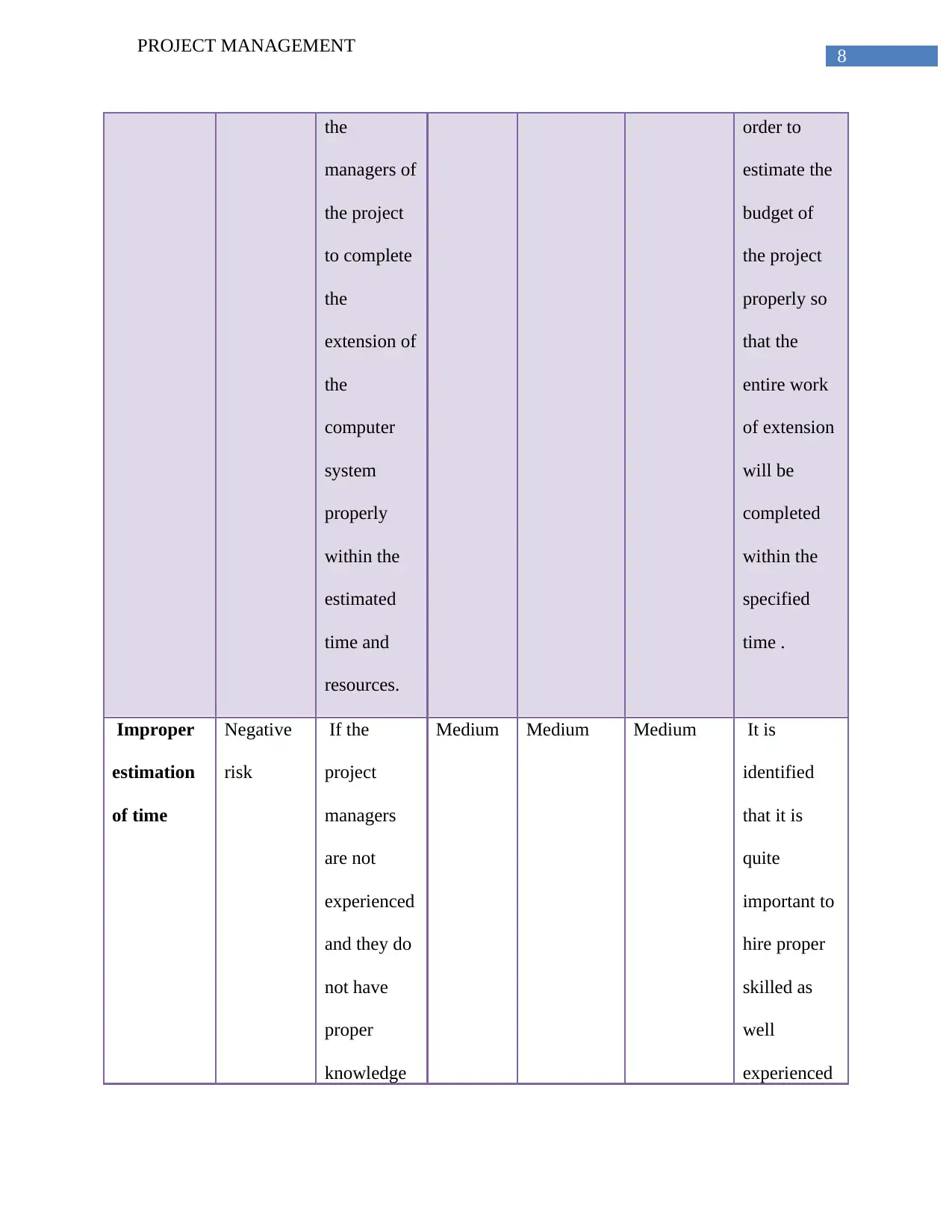
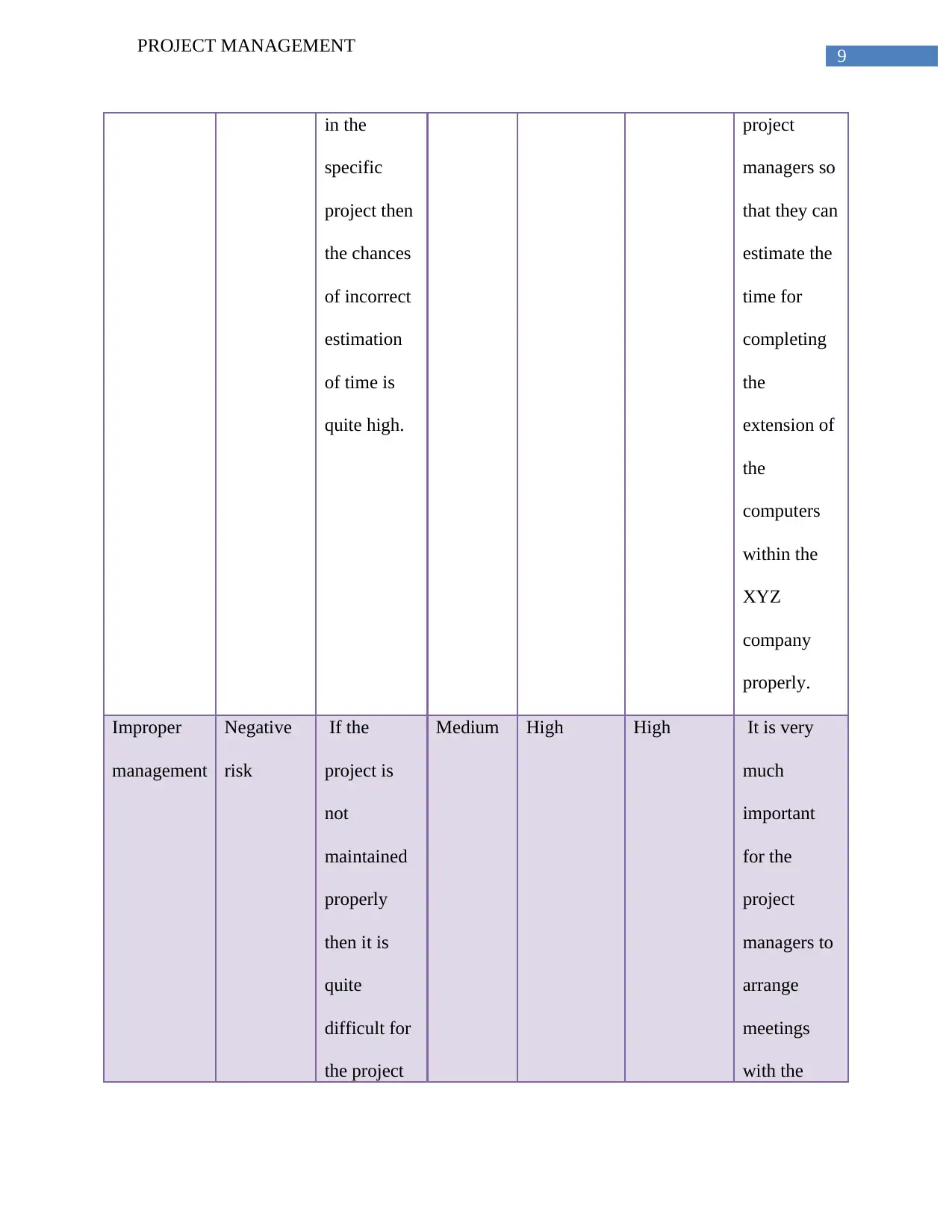
2.3 Risk analysis
Risk Type of
risk
Risk
statement
Impact Probability Risk
exposure
Risk
mitigation
Improper
estimation
of budget
Negative
risk
If the
budget of
the project
is not
estimated
properly
then it will
be quite
difficult for
High Medium High it is quite
important to
analyze the
market cost
of the
equipment
as well as
other
resources in
PROJECT MANAGEMENT
Break Even Period
2.392189
679
Operational feasibility: The operational feasibility assists in determining how
acceptable the operation of the computer system is in the organization XYZ. It is identified that
operational feasibility helps in ensuring that the users can easily use the system and the system
will be quite advantageous for enhancing the number of contributors (Leach, 2014). Proper error
messages are generally provided as a sign of mistakes within the computer system that is set up
so that they do not face any problem. In addition to this, proper guideline menu must be provided
to the user so that they can easily work.
2.3 Risk analysis
Risk Type of
risk
Risk
statement
Impact Probability Risk
exposure
Risk
mitigation
Improper
estimation
of budget
Negative
risk
If the
budget of
the project
is not
estimated
properly
then it will
be quite
difficult for
High Medium High it is quite
important to
analyze the
market cost
of the
equipment
as well as
other
resources in
8
PROJECT MANAGEMENT
the
managers of
the project
to complete
the
extension of
the
computer
system
properly
within the
estimated
time and
resources.
order to
estimate the
budget of
the project
properly so
that the
entire work
of extension
will be
completed
within the
specified
time .
Improper
estimation
of time
Negative
risk
If the
project
managers
are not
experienced
and they do
not have
proper
knowledge
Medium Medium Medium It is
identified
that it is
quite
important to
hire proper
skilled as
well
experienced
PROJECT MANAGEMENT
the
managers of
the project
to complete
the
extension of
the
computer
system
properly
within the
estimated
time and
resources.
order to
estimate the
budget of
the project
properly so
that the
entire work
of extension
will be
completed
within the
specified
time .
Improper
estimation
of time
Negative
risk
If the
project
managers
are not
experienced
and they do
not have
proper
knowledge
Medium Medium Medium It is
identified
that it is
quite
important to
hire proper
skilled as
well
experienced
⊘ This is a preview!⊘
Do you want full access?
Subscribe today to unlock all pages.
Trusted by 1+ million students worldwide
9
PROJECT MANAGEMENT
in the
specific
project then
the chances
of incorrect
estimation
of time is
quite high.
project
managers so
that they can
estimate the
time for
completing
the
extension of
the
computers
within the
XYZ
company
properly.
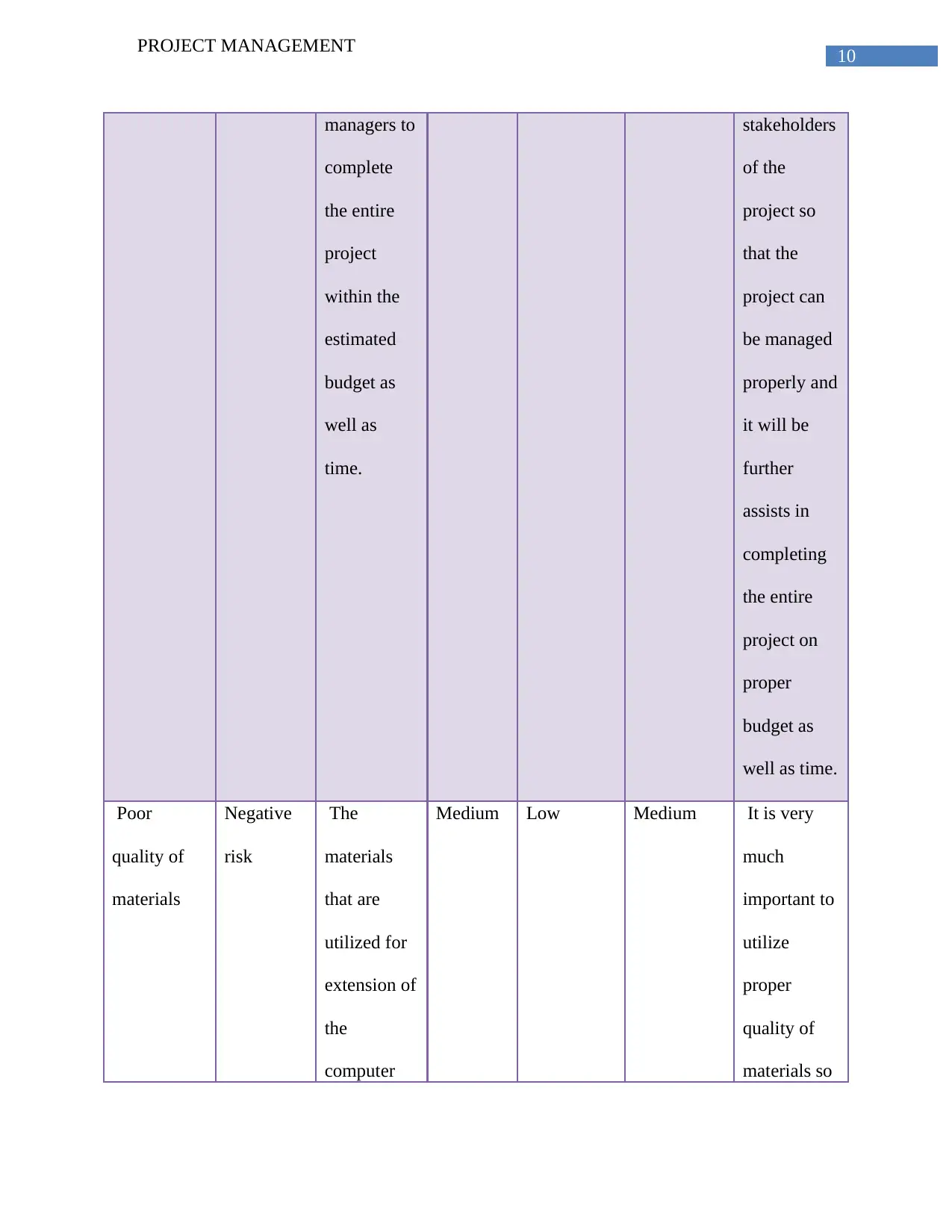
Improper
management
Negative
risk
If the
project is
not
maintained
properly
then it is
quite
difficult for
the project
Medium High High It is very
much
important
for the
project
managers to
arrange
meetings
with the
PROJECT MANAGEMENT
in the
specific
project then
the chances
of incorrect
estimation
of time is
quite high.
project
managers so
that they can
estimate the
time for
completing
the
extension of
the
computers
within the
XYZ
company
properly.
Improper
management
Negative
risk
If the
project is
not
maintained
properly
then it is
quite
difficult for
the project
Medium High High It is very
much
important
for the
project
managers to
arrange
meetings
with the
Paraphrase This Document
Need a fresh take? Get an instant paraphrase of this document with our AI Paraphraser
10
PROJECT MANAGEMENT
managers to
complete
the entire
project
within the
estimated
budget as
well as
time.
stakeholders
of the
project so
that the
project can
be managed
properly and
it will be
further
assists in
completing
the entire
project on
proper
budget as
well as time.
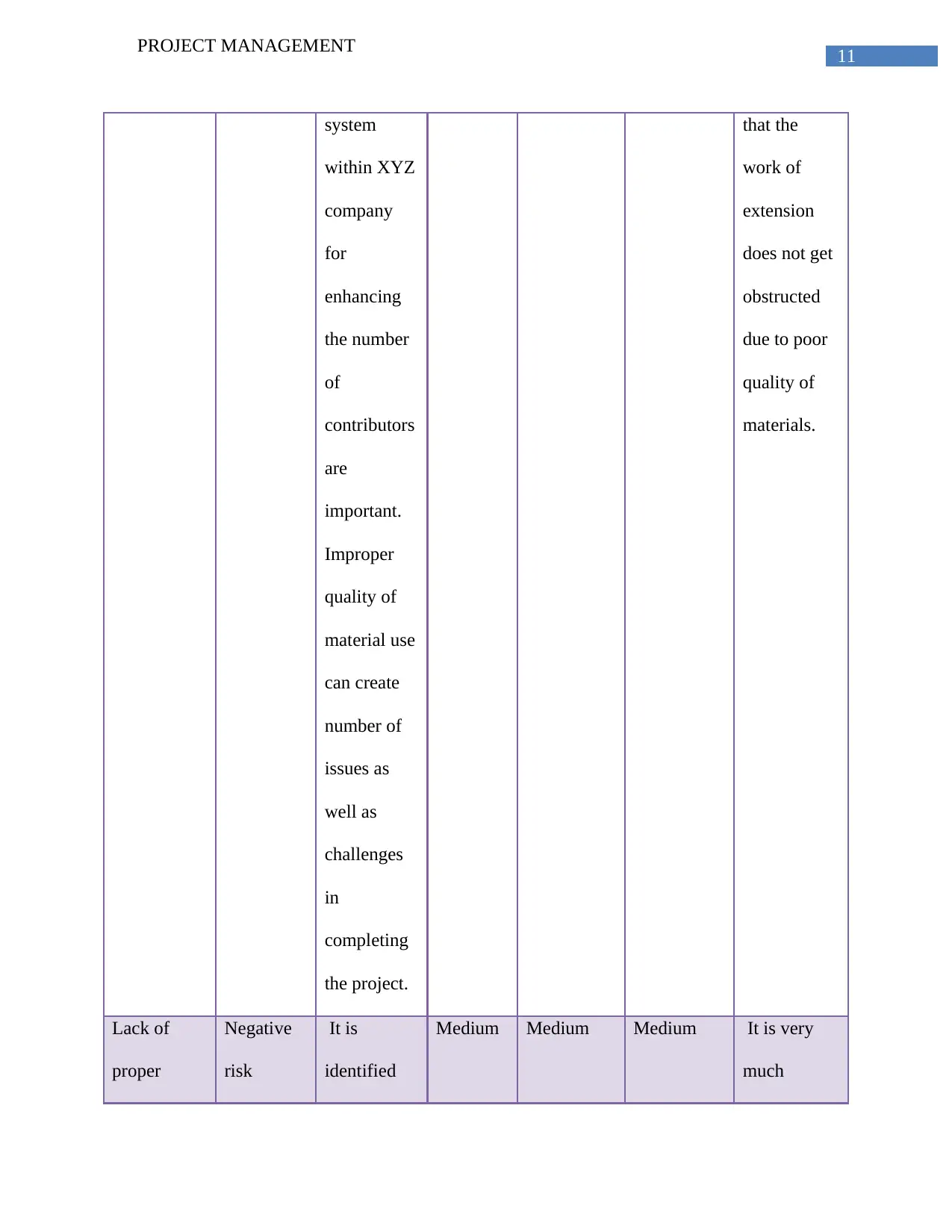
Poor
quality of
materials
Negative
risk
The
materials
that are
utilized for
extension of
the
computer
Medium Low Medium It is very
much
important to
utilize
proper
quality of
materials so
PROJECT MANAGEMENT
managers to
complete
the entire
project
within the
estimated
budget as
well as
time.
stakeholders
of the
project so
that the
project can
be managed
properly and
it will be
further
assists in
completing
the entire
project on
proper
budget as
well as time.
Poor
quality of
materials
Negative
risk
The
materials
that are
utilized for
extension of
the
computer
Medium Low Medium It is very
much
important to
utilize
proper
quality of
materials so
11
PROJECT MANAGEMENT
system
within XYZ
company
for
enhancing
the number
of
contributors
are
important.
Improper
quality of
material use
can create
number of
issues as
well as
challenges
in
completing
the project.
that the
work of
extension
does not get
obstructed
due to poor
quality of
materials.
Lack of
proper
Negative
risk
It is
identified
Medium Medium Medium It is very
much
PROJECT MANAGEMENT
system
within XYZ
company
for
enhancing
the number
of
contributors
are
important.
Improper
quality of
material use
can create
number of
issues as
well as
challenges
in
completing
the project.
that the
work of
extension
does not get
obstructed
due to poor
quality of
materials.
Lack of
proper
Negative
risk
It is
identified
Medium Medium Medium It is very
much
⊘ This is a preview!⊘
Do you want full access?
Subscribe today to unlock all pages.
Trusted by 1+ million students worldwide

1 out of 27


Related Documents


Your All-in-One AI-Powered Toolkit for Academic Success.
+13062052269
info@desklib.com
Available 24*7 on WhatsApp / Email
![[object Object]](/_next/static/media/star-bottom.7253800d.svg)
Unlock your academic potential
Copyright © 2020–2026 A2Z Services. All Rights Reserved. Developed and managed by ZUCOL.