BM631 Research Methods: Ethical Issues in Amazon Turnover Study
VerifiedAdded on  2023/06/09
|6
|1583
|484
Report
AI Summary
This report critically reflects on the ethical considerations involved in researching employee turnover at Amazon. It outlines the research aim to determine reasons for high turnover and strategies for talent retention, along with research objectives to examine influencing factors, challenges faced, and strategies adopted by Amazon. The methodology employs quantitative research, utilizing primary and secondary data collection methods, a survey strategy with questionnaires, and probability sampling. Ethical considerations discussed include respect for autonomy, privacy, and dignity; scientific integrity; social responsibility; and maximizing benefits while minimizing harm. The report concludes by emphasizing the importance of ethical issues in research and highlighting the ethical considerations covered in the study.

Written report
Paraphrase This Document
Need a fresh take? Get an instant paraphrase of this document with our AI Paraphraser

Contents
Contents...........................................................................................................................................2
INTRODUCTION...........................................................................................................................1
Research Aim...................................................................................................................................1
Research Objectives.........................................................................................................................1
Research Methodology....................................................................................................................1
Ethical Considerations.....................................................................................................................2
CONCLUSION................................................................................................................................3
REFERENCES................................................................................................................................4
Contents...........................................................................................................................................2
INTRODUCTION...........................................................................................................................1
Research Aim...................................................................................................................................1
Research Objectives.........................................................................................................................1
Research Methodology....................................................................................................................1
Ethical Considerations.....................................................................................................................2
CONCLUSION................................................................................................................................3
REFERENCES................................................................................................................................4

INTRODUCTION
Ethical issues are usually occurs when a given scenario, decision or activity creates a
conflict with moral principle of a society (Jasvi and Rehman, 2019). While conducting a
research, researcher faces various ethical issues due to which moral of society get harm. This
makes important for the researcher to follow ethical consideration while conducting a research.
The following report described about ethical issues which may face by the researcher while
conducting research. The following report covers aim, objectives, methodology and ethical
consideration.
Research Aim
To determine the reasons that increase high employee turnover along with strategies adopted
by an organisation to retain talent: A study on Amazon
Research Objectives
ï‚· To examine the reasons that influence high employee turnover within Amazon
ï‚· To analyse the challenges faced by Amazon due to high employee turnover
ï‚· To discern the strategies adopted by Amazon to decrease high employee turnover and
retain talent
Research Methodology
In the following research various research methods has been selected in order to collect,
examine as well as evaluate information (Patterson, 2019). This research is based on quantitative
methods in order to assemble statistical data in order to understand the problem of the research.
The various methods which have been selected in this research are described below:
Quantitative research choice- This describe as a methods which is used to collect and
analyse the numerical data and information of a research topic (Mertler, 2019). The researcher
selects quantitative research choice as it helps in collecting numerical information about the
identified issues of the research. This will help in making the research focused, scientific,
relatable and fast.
Primary and Secondary data collection- This refers to a methods which help in
collecting the important information about the research. In the following research, the researcher
used both the methods in order to collect the information about the research (McCall, 2018).
1
Ethical issues are usually occurs when a given scenario, decision or activity creates a
conflict with moral principle of a society (Jasvi and Rehman, 2019). While conducting a
research, researcher faces various ethical issues due to which moral of society get harm. This
makes important for the researcher to follow ethical consideration while conducting a research.
The following report described about ethical issues which may face by the researcher while
conducting research. The following report covers aim, objectives, methodology and ethical
consideration.
Research Aim
To determine the reasons that increase high employee turnover along with strategies adopted
by an organisation to retain talent: A study on Amazon
Research Objectives
ï‚· To examine the reasons that influence high employee turnover within Amazon
ï‚· To analyse the challenges faced by Amazon due to high employee turnover
ï‚· To discern the strategies adopted by Amazon to decrease high employee turnover and
retain talent
Research Methodology
In the following research various research methods has been selected in order to collect,
examine as well as evaluate information (Patterson, 2019). This research is based on quantitative
methods in order to assemble statistical data in order to understand the problem of the research.
The various methods which have been selected in this research are described below:
Quantitative research choice- This describe as a methods which is used to collect and
analyse the numerical data and information of a research topic (Mertler, 2019). The researcher
selects quantitative research choice as it helps in collecting numerical information about the
identified issues of the research. This will help in making the research focused, scientific,
relatable and fast.
Primary and Secondary data collection- This refers to a methods which help in
collecting the important information about the research. In the following research, the researcher
used both the methods in order to collect the information about the research (McCall, 2018).
1
⊘ This is a preview!⊘
Do you want full access?
Subscribe today to unlock all pages.

Trusted by 1+ million students worldwide

Primary collection method helps in collecting raw information about the research by asking
through participants. On the other hand, secondary data collection helps in taking information
from the other researcher which also helps in saving the cost and time of the research.
Research strategy and instrument- This will help in collecting the information cording
to the need of people. In the following researcher, selects survey strategy as helps in collecting
the numerical information about the research topic (Boeren, 2019). For doing the research,
research used questionnaire as an instrument in order to collect the raw information about the
research.
Sampling- There are two types of sampling in research methodology that re probability
and non-probability. In this research, researcher selects probability sampling as it helps in
collecting information from large number of respondents without forming and criteria for their
selection. In this research 50 managers of respondents has been selected (Velte, 2020).
Short Plan B- While conducting researcher may face some limitation like lack of time,
unavailability of reliable source to collect information, shortage of funds and many more. A shot
back up plan, help researcher to collect information from secondary sources (Jansson-Boyd,
2018).
Ethical Considerations
Ethical consideration in the research is described as collection of various principles which
provide guidance in deigning and practising the research (Lee, 2018). The principles involve
informed consent, voluntary participation, confidentiality, anonymity, potential for harm and
results communication. In the following conducted research, the ethical consideration which is
required to be focused while conducting this research is described below:
Respect for the autonomy, privacy and dignity of individuals and community- This
describes as ethical principle makes researcher to give independence to the respondents in their
decision and actions due to which their rights are violated or they does not harm (Schamp,
Heitmann and Katzenstein, 2019). While conducting the research, the researcher should maintain
the privacy and dignity of the respondents from which data or information has been collected for
the research. This will help in making the research ethical and valuable.
Scientific integrity- This described as condition which result from adherence to
professional practices and values when reporting, applying and conducting the results of
scientific activities which helps in ensuring clarity, objectivity and reproducibility as well as that
2
through participants. On the other hand, secondary data collection helps in taking information
from the other researcher which also helps in saving the cost and time of the research.
Research strategy and instrument- This will help in collecting the information cording
to the need of people. In the following researcher, selects survey strategy as helps in collecting
the numerical information about the research topic (Boeren, 2019). For doing the research,
research used questionnaire as an instrument in order to collect the raw information about the
research.
Sampling- There are two types of sampling in research methodology that re probability
and non-probability. In this research, researcher selects probability sampling as it helps in
collecting information from large number of respondents without forming and criteria for their
selection. In this research 50 managers of respondents has been selected (Velte, 2020).
Short Plan B- While conducting researcher may face some limitation like lack of time,
unavailability of reliable source to collect information, shortage of funds and many more. A shot
back up plan, help researcher to collect information from secondary sources (Jansson-Boyd,
2018).
Ethical Considerations
Ethical consideration in the research is described as collection of various principles which
provide guidance in deigning and practising the research (Lee, 2018). The principles involve
informed consent, voluntary participation, confidentiality, anonymity, potential for harm and
results communication. In the following conducted research, the ethical consideration which is
required to be focused while conducting this research is described below:
Respect for the autonomy, privacy and dignity of individuals and community- This
describes as ethical principle makes researcher to give independence to the respondents in their
decision and actions due to which their rights are violated or they does not harm (Schamp,
Heitmann and Katzenstein, 2019). While conducting the research, the researcher should maintain
the privacy and dignity of the respondents from which data or information has been collected for
the research. This will help in making the research ethical and valuable.
Scientific integrity- This described as condition which result from adherence to
professional practices and values when reporting, applying and conducting the results of
scientific activities which helps in ensuring clarity, objectivity and reproducibility as well as that
2
Paraphrase This Document
Need a fresh take? Get an instant paraphrase of this document with our AI Paraphraser

provides insulation from fabrication, bias, falsification, plagiarism and many more (Fiasse,
2020). This is important in research as it helps in creating the trust. This makes researcher able in
order to trust each other’s work as well as they are also be trusted by the society as they render
scientific expertise that may influence the lives of people.
Social responsibility- This described as examination of relationship of the researchers with
the common good to the large society in which the research is conducted, funded as well as
applied. While conducting the research, researcher is responsible for ensuring that research
involving human meets high ethical and scientific standards which helps in respecting and
protecting the participants (Grant, 2019). This makes important for the researcher in order to
provide certain responsibility towards the society or the participants from whom the raw data is
collected in order to conduct their research in ethical manner.
Maximising benefit and minimising harm- This describes as ethical scrutiny which is
attempted in order to balance the risk of harm in against the probable for the benefits which can
accumulate to groups, communities, individuals, organisation and even societies (Sipes, Mullan
and Roberts, 2020). This means that the researcher should focus on maximising the benefits of
the society or individuals from which the research conducted as well as minimise the harm so,
they research should be valuable and useful for them. This will also help researcher to conduct
the research in ethical manner by focusing on maximising the benefit and minimising the harm
of the society.
CONCLUSION
From the above mentioned report, it has been concluded ethical issues in research are vital
to consider for the researcher in order to conduct the research in ethical manner. Various ethical
issues faced by the researcher while collecting the information or data for the research. The
research methodology includes quantitative research choice, primary and secondary data
collection, survey research strategy and questionnaire instrument as well as probability along
with the back-up plan. Respect for the autonomy, privacy and dignity of individuals and
community, scientific integrity, social responsibility as well as maximising benefit and
minimising harm are covers in ethical consideration of the research.
3
2020). This is important in research as it helps in creating the trust. This makes researcher able in
order to trust each other’s work as well as they are also be trusted by the society as they render
scientific expertise that may influence the lives of people.
Social responsibility- This described as examination of relationship of the researchers with
the common good to the large society in which the research is conducted, funded as well as
applied. While conducting the research, researcher is responsible for ensuring that research
involving human meets high ethical and scientific standards which helps in respecting and
protecting the participants (Grant, 2019). This makes important for the researcher in order to
provide certain responsibility towards the society or the participants from whom the raw data is
collected in order to conduct their research in ethical manner.
Maximising benefit and minimising harm- This describes as ethical scrutiny which is
attempted in order to balance the risk of harm in against the probable for the benefits which can
accumulate to groups, communities, individuals, organisation and even societies (Sipes, Mullan
and Roberts, 2020). This means that the researcher should focus on maximising the benefits of
the society or individuals from which the research conducted as well as minimise the harm so,
they research should be valuable and useful for them. This will also help researcher to conduct
the research in ethical manner by focusing on maximising the benefit and minimising the harm
of the society.
CONCLUSION
From the above mentioned report, it has been concluded ethical issues in research are vital
to consider for the researcher in order to conduct the research in ethical manner. Various ethical
issues faced by the researcher while collecting the information or data for the research. The
research methodology includes quantitative research choice, primary and secondary data
collection, survey research strategy and questionnaire instrument as well as probability along
with the back-up plan. Respect for the autonomy, privacy and dignity of individuals and
community, scientific integrity, social responsibility as well as maximising benefit and
minimising harm are covers in ethical consideration of the research.
3

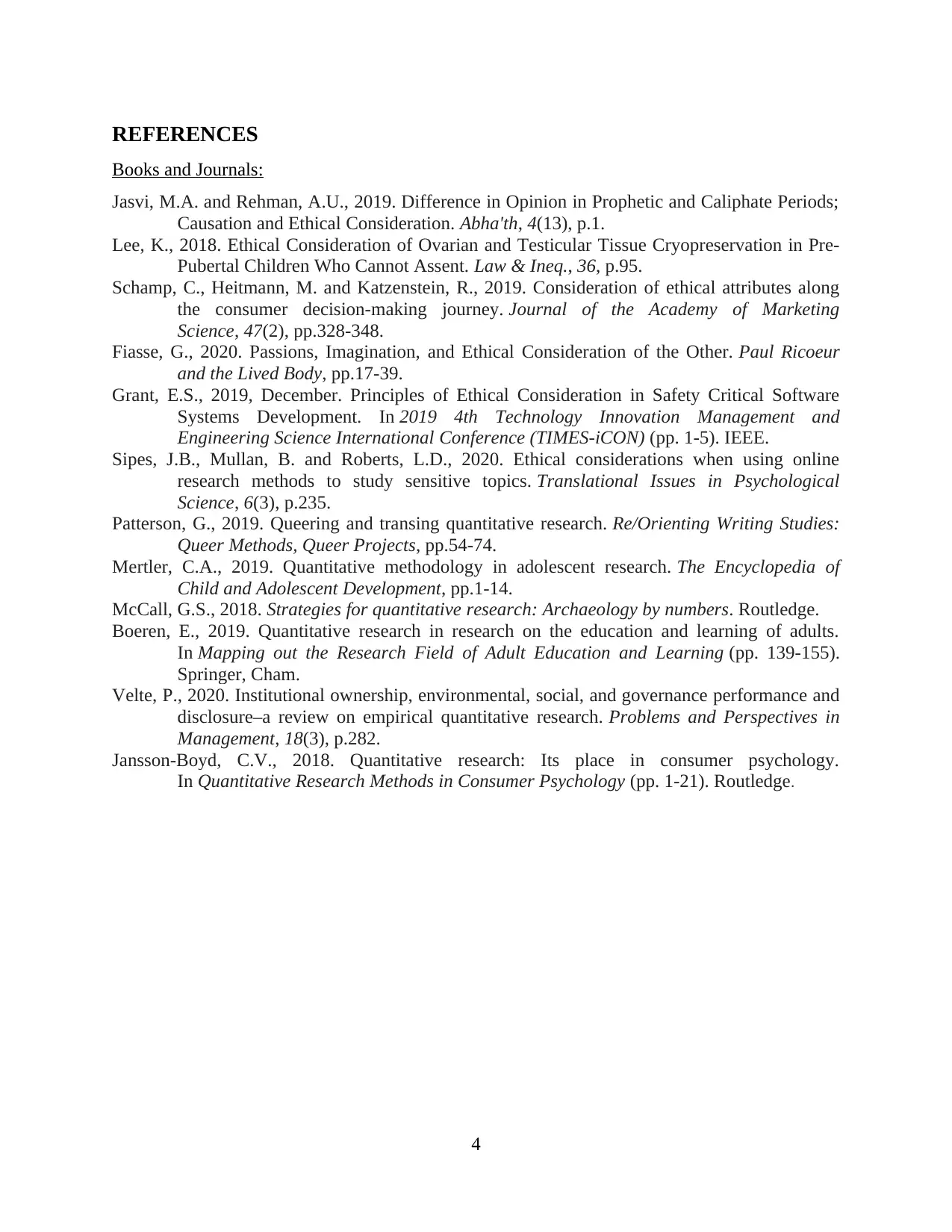
REFERENCES
Books and Journals:
Jasvi, M.A. and Rehman, A.U., 2019. Difference in Opinion in Prophetic and Caliphate Periods;
Causation and Ethical Consideration. Abha'th, 4(13), p.1.
Lee, K., 2018. Ethical Consideration of Ovarian and Testicular Tissue Cryopreservation in Pre-
Pubertal Children Who Cannot Assent. Law & Ineq., 36, p.95.
Schamp, C., Heitmann, M. and Katzenstein, R., 2019. Consideration of ethical attributes along
the consumer decision-making journey. Journal of the Academy of Marketing
Science, 47(2), pp.328-348.
Fiasse, G., 2020. Passions, Imagination, and Ethical Consideration of the Other. Paul Ricoeur
and the Lived Body, pp.17-39.
Grant, E.S., 2019, December. Principles of Ethical Consideration in Safety Critical Software
Systems Development. In 2019 4th Technology Innovation Management and
Engineering Science International Conference (TIMES-iCON) (pp. 1-5). IEEE.
Sipes, J.B., Mullan, B. and Roberts, L.D., 2020. Ethical considerations when using online
research methods to study sensitive topics. Translational Issues in Psychological
Science, 6(3), p.235.
Patterson, G., 2019. Queering and transing quantitative research. Re/Orienting Writing Studies:
Queer Methods, Queer Projects, pp.54-74.
Mertler, C.A., 2019. Quantitative methodology in adolescent research. The Encyclopedia of
Child and Adolescent Development, pp.1-14.
McCall, G.S., 2018. Strategies for quantitative research: Archaeology by numbers. Routledge.
Boeren, E., 2019. Quantitative research in research on the education and learning of adults.
In Mapping out the Research Field of Adult Education and Learning (pp. 139-155).
Springer, Cham.
Velte, P., 2020. Institutional ownership, environmental, social, and governance performance and
disclosure–a review on empirical quantitative research. Problems and Perspectives in
Management, 18(3), p.282.
Jansson-Boyd, C.V., 2018. Quantitative research: Its place in consumer psychology.
In Quantitative Research Methods in Consumer Psychology (pp. 1-21). Routledge.
4
Books and Journals:
Jasvi, M.A. and Rehman, A.U., 2019. Difference in Opinion in Prophetic and Caliphate Periods;
Causation and Ethical Consideration. Abha'th, 4(13), p.1.
Lee, K., 2018. Ethical Consideration of Ovarian and Testicular Tissue Cryopreservation in Pre-
Pubertal Children Who Cannot Assent. Law & Ineq., 36, p.95.
Schamp, C., Heitmann, M. and Katzenstein, R., 2019. Consideration of ethical attributes along
the consumer decision-making journey. Journal of the Academy of Marketing
Science, 47(2), pp.328-348.
Fiasse, G., 2020. Passions, Imagination, and Ethical Consideration of the Other. Paul Ricoeur
and the Lived Body, pp.17-39.
Grant, E.S., 2019, December. Principles of Ethical Consideration in Safety Critical Software
Systems Development. In 2019 4th Technology Innovation Management and
Engineering Science International Conference (TIMES-iCON) (pp. 1-5). IEEE.
Sipes, J.B., Mullan, B. and Roberts, L.D., 2020. Ethical considerations when using online
research methods to study sensitive topics. Translational Issues in Psychological
Science, 6(3), p.235.
Patterson, G., 2019. Queering and transing quantitative research. Re/Orienting Writing Studies:
Queer Methods, Queer Projects, pp.54-74.
Mertler, C.A., 2019. Quantitative methodology in adolescent research. The Encyclopedia of
Child and Adolescent Development, pp.1-14.
McCall, G.S., 2018. Strategies for quantitative research: Archaeology by numbers. Routledge.
Boeren, E., 2019. Quantitative research in research on the education and learning of adults.
In Mapping out the Research Field of Adult Education and Learning (pp. 139-155).
Springer, Cham.
Velte, P., 2020. Institutional ownership, environmental, social, and governance performance and
disclosure–a review on empirical quantitative research. Problems and Perspectives in
Management, 18(3), p.282.
Jansson-Boyd, C.V., 2018. Quantitative research: Its place in consumer psychology.
In Quantitative Research Methods in Consumer Psychology (pp. 1-21). Routledge.
4
⊘ This is a preview!⊘
Do you want full access?
Subscribe today to unlock all pages.

Trusted by 1+ million students worldwide
1 out of 6
Related Documents
Your All-in-One AI-Powered Toolkit for Academic Success.
 +13062052269
info@desklib.com
Available 24*7 on WhatsApp / Email
Unlock your academic potential
Copyright © 2020–2026 A2Z Services. All Rights Reserved. Developed and managed by ZUCOL.