Is Bone Marrow Transplantation a Cure for Sickle Cell Anaemia? Report
VerifiedAdded on 2023/01/19
|34
|8625
|78
Report
AI Summary
This report investigates the effectiveness of bone marrow transplantation (BMT) as a cure for Sickle Cell Disease (SCD). It begins with an introduction to SCD, differentiating it from Sickle Cell Trait, and outlines various treatment options. The report presents a literature review of reliable sources, analyzing the results of BMT as a cure for SCD and discussing the associated findings. A systematic review was performed to identify qualitative and quantitative factors relevant to the research question. The study analyzes ten peer-reviewed journal articles, exploring the underlying concepts of SCD, ethnic vulnerabilities, and available treatments, including hydroxyurea therapy and hematopoietic stem cell transplant. The report also addresses the differences between SCD and sickle cell traits, along with the genetic mechanisms of inheritance. The report includes tables and figures that summarize the risks associated with BMT, postoperative symptoms, and the effectiveness of different treatments. The study aims to determine whether BMT is an effective cure for SCD, and concludes with recommendations and suggestions for future research. Tables of contents, lists of tables, and lists of figures have been added in the report.
IS BONE MARROW TRANSPLANTATION THE CURE FOR
SICKLE CELL ANAEMIA?
1
SICKLE CELL ANAEMIA?
1

Paraphrase This Document
Need a fresh take? Get an instant paraphrase of this document with our AI Paraphraser
Abstract
The study analyzes whether the Bone Marrow Transplantation is an effective cure for Sickle
Cell Disease. The study involves a dissertation with a literature review of reliable sources of
information for the research question and investigates vast data sources to assess the effective
answer to the question. The study starts with an introduction to the Sickle Cell Diseases and
differentiates it with the Sickle Cell Trait, specifying the different treatment options available
for the SCD. It also highlights the different results that were obtained from the different
articles related to the Bone marrow Transplant as an effective cure for sickle cell disease. It
also discusses the obtained results and highlights the findings associated with it. A
systematic review was performed to identify the qualitative and quantitative factors which
fall under the criteria to explore the answer of the research question. The study analyzed ten
peers reviewed journal articles.
Keywords: Bone Marrow Transplant; Sickle Cell Diseases; Sickle Cell Anaemia;
2
The study analyzes whether the Bone Marrow Transplantation is an effective cure for Sickle
Cell Disease. The study involves a dissertation with a literature review of reliable sources of
information for the research question and investigates vast data sources to assess the effective
answer to the question. The study starts with an introduction to the Sickle Cell Diseases and
differentiates it with the Sickle Cell Trait, specifying the different treatment options available
for the SCD. It also highlights the different results that were obtained from the different
articles related to the Bone marrow Transplant as an effective cure for sickle cell disease. It
also discusses the obtained results and highlights the findings associated with it. A
systematic review was performed to identify the qualitative and quantitative factors which
fall under the criteria to explore the answer of the research question. The study analyzed ten
peers reviewed journal articles.
Keywords: Bone Marrow Transplant; Sickle Cell Diseases; Sickle Cell Anaemia;
2
Acknowledgement
I would like to thank each and everyone who has aided me in this research project. Firstly, I
would like to express my gratitude to my professor, who has guided me throughout the
conduction of the research. Secondly, I would like to thank my family and friends who have
provided all kinds of help to be.
Thanking You,
_________________.
3
I would like to thank each and everyone who has aided me in this research project. Firstly, I
would like to express my gratitude to my professor, who has guided me throughout the
conduction of the research. Secondly, I would like to thank my family and friends who have
provided all kinds of help to be.
Thanking You,
_________________.
3
⊘ This is a preview!⊘
Do you want full access?
Subscribe today to unlock all pages.

Trusted by 1+ million students worldwide
Table of Contents
CHAPTER 1: INTRODUCTION..............................................................................................8
1.1 Background.......................................................................................................................8
1.2 Rationale...........................................................................................................................8
1.3 Aim...................................................................................................................................8
1.4 Objectives.........................................................................................................................8
1.5 Research Question............................................................................................................9
1.6 Hypothesis........................................................................................................................9
1.7 Significance of the Study..................................................................................................9
CHAPTER 2: REVIEW OF LITERATURE...........................................................................10
2.1 Discussing the underlying concept of sickle cell anemia...............................................10
2.2 Critically highlighting the differences between Sickle cell disease and sickle cell traits
..............................................................................................................................................10
2.3 Ethnic vulnerability in sickle cell anemia.......................................................................11
2.4 Treatments for sickle cell anemia...................................................................................12
2.5 Therapies for sickle cell anemia.....................................................................................12
2.6 Bone marrow transplantation as cure for sickle cell anaemia........................................13
2.7 Bone marrow transplantation in sickle cell aneamia......................................................13
2.8 Conceptual Framework...................................................................................................14
CHAPTER 3: METHODOLOGY OF RESEARCH...............................................................15
CHAPTER 4: RESULTS AND DISCUSSIONS.....................................................................18
4.1 Results............................................................................................................................18
4.2 Discussion.......................................................................................................................24
CHAPTER 5: CONCLUSION.................................................................................................28
5.1 Conclusion......................................................................................................................28
4
CHAPTER 1: INTRODUCTION..............................................................................................8
1.1 Background.......................................................................................................................8
1.2 Rationale...........................................................................................................................8
1.3 Aim...................................................................................................................................8
1.4 Objectives.........................................................................................................................8
1.5 Research Question............................................................................................................9
1.6 Hypothesis........................................................................................................................9
1.7 Significance of the Study..................................................................................................9
CHAPTER 2: REVIEW OF LITERATURE...........................................................................10
2.1 Discussing the underlying concept of sickle cell anemia...............................................10
2.2 Critically highlighting the differences between Sickle cell disease and sickle cell traits
..............................................................................................................................................10
2.3 Ethnic vulnerability in sickle cell anemia.......................................................................11
2.4 Treatments for sickle cell anemia...................................................................................12
2.5 Therapies for sickle cell anemia.....................................................................................12
2.6 Bone marrow transplantation as cure for sickle cell anaemia........................................13
2.7 Bone marrow transplantation in sickle cell aneamia......................................................13
2.8 Conceptual Framework...................................................................................................14
CHAPTER 3: METHODOLOGY OF RESEARCH...............................................................15
CHAPTER 4: RESULTS AND DISCUSSIONS.....................................................................18
4.1 Results............................................................................................................................18
4.2 Discussion.......................................................................................................................24
CHAPTER 5: CONCLUSION.................................................................................................28
5.1 Conclusion......................................................................................................................28
4
Paraphrase This Document
Need a fresh take? Get an instant paraphrase of this document with our AI Paraphraser

5.2 Recommendations..........................................................................................................28
5.3 Future Scope...................................................................................................................29
Reference list............................................................................................................................30
5
5.3 Future Scope...................................................................................................................29
Reference list............................................................................................................................30
5
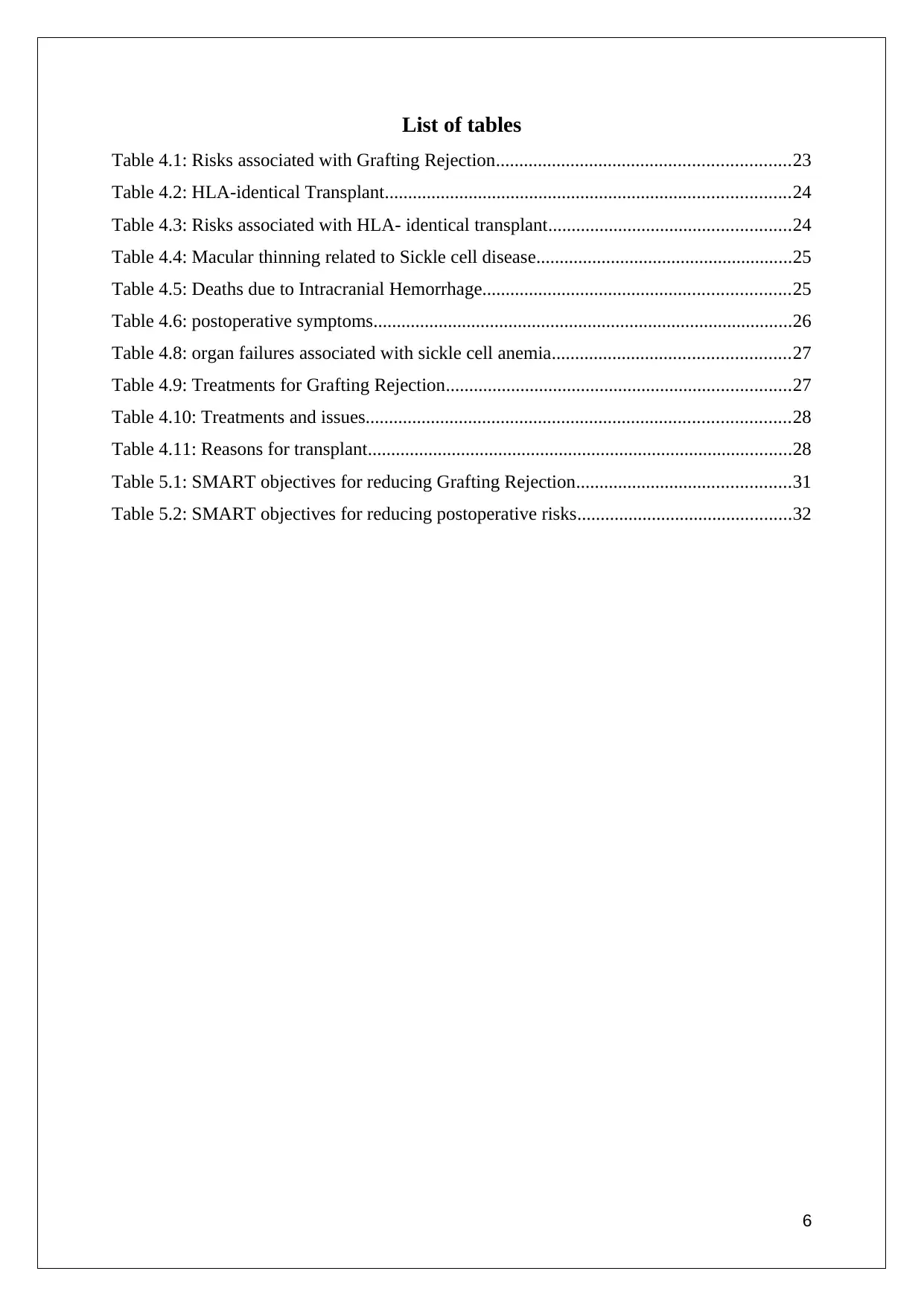
List of tables
Table 4.1: Risks associated with Grafting Rejection...............................................................23
Table 4.2: HLA-identical Transplant.......................................................................................24
Table 4.3: Risks associated with HLA- identical transplant....................................................24
Table 4.4: Macular thinning related to Sickle cell disease.......................................................25
Table 4.5: Deaths due to Intracranial Hemorrhage..................................................................25
Table 4.6: postoperative symptoms..........................................................................................26
Table 4.8: organ failures associated with sickle cell anemia...................................................27
Table 4.9: Treatments for Grafting Rejection..........................................................................27
Table 4.10: Treatments and issues...........................................................................................28
Table 4.11: Reasons for transplant...........................................................................................28
Table 5.1: SMART objectives for reducing Grafting Rejection..............................................31
Table 5.2: SMART objectives for reducing postoperative risks..............................................32
6
Table 4.1: Risks associated with Grafting Rejection...............................................................23
Table 4.2: HLA-identical Transplant.......................................................................................24
Table 4.3: Risks associated with HLA- identical transplant....................................................24
Table 4.4: Macular thinning related to Sickle cell disease.......................................................25
Table 4.5: Deaths due to Intracranial Hemorrhage..................................................................25
Table 4.6: postoperative symptoms..........................................................................................26
Table 4.8: organ failures associated with sickle cell anemia...................................................27
Table 4.9: Treatments for Grafting Rejection..........................................................................27
Table 4.10: Treatments and issues...........................................................................................28
Table 4.11: Reasons for transplant...........................................................................................28
Table 5.1: SMART objectives for reducing Grafting Rejection..............................................31
Table 5.2: SMART objectives for reducing postoperative risks..............................................32
6
⊘ This is a preview!⊘
Do you want full access?
Subscribe today to unlock all pages.
Trusted by 1+ million students worldwide
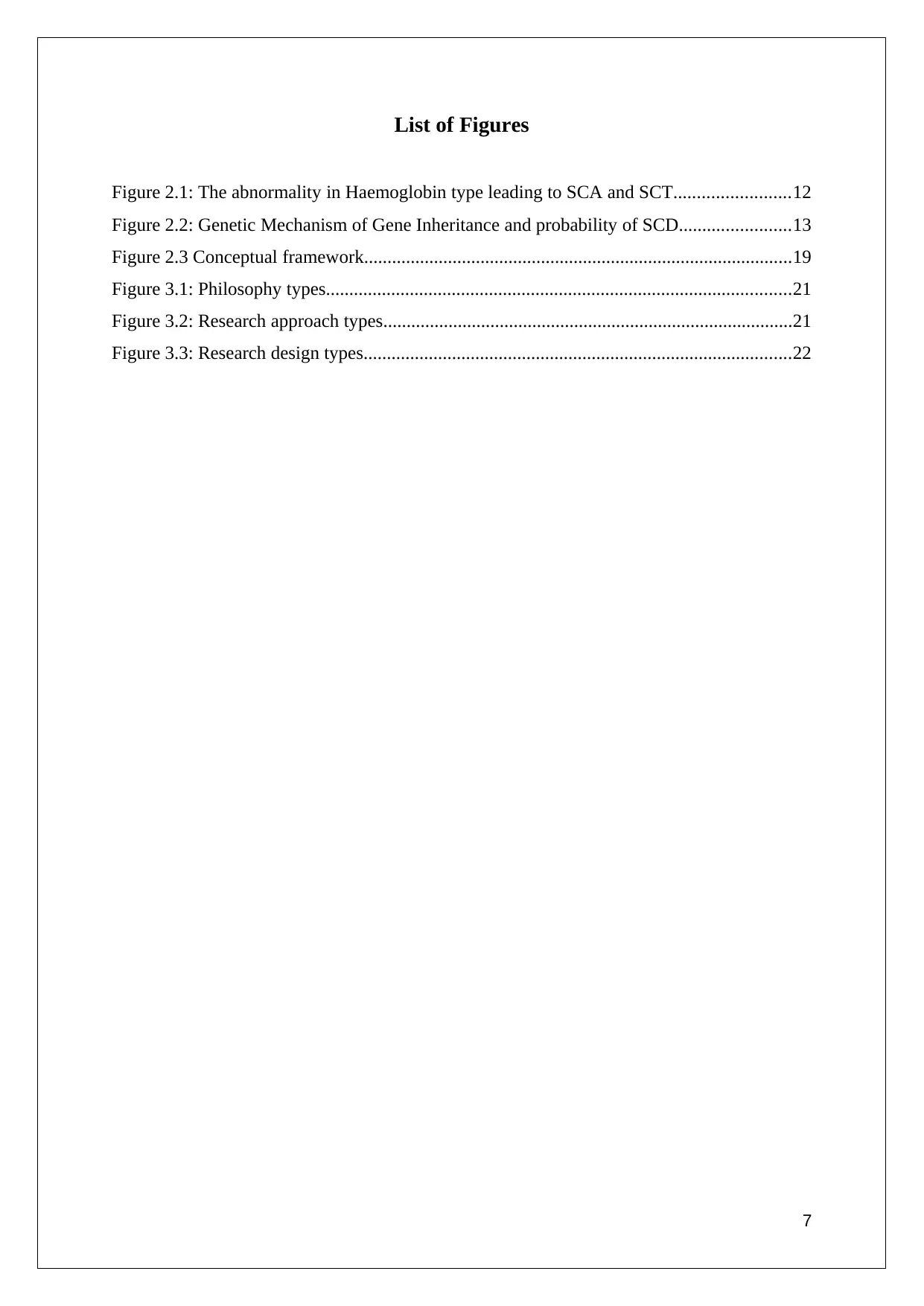
List of Figures
Figure 2.1: The abnormality in Haemoglobin type leading to SCA and SCT.........................12
Figure 2.2: Genetic Mechanism of Gene Inheritance and probability of SCD........................13
Figure 2.3 Conceptual framework............................................................................................19
Figure 3.1: Philosophy types....................................................................................................21
Figure 3.2: Research approach types........................................................................................21
Figure 3.3: Research design types............................................................................................22
7
Figure 2.1: The abnormality in Haemoglobin type leading to SCA and SCT.........................12
Figure 2.2: Genetic Mechanism of Gene Inheritance and probability of SCD........................13
Figure 2.3 Conceptual framework............................................................................................19
Figure 3.1: Philosophy types....................................................................................................21
Figure 3.2: Research approach types........................................................................................21
Figure 3.3: Research design types............................................................................................22
7
Paraphrase This Document
Need a fresh take? Get an instant paraphrase of this document with our AI Paraphraser
CHAPTER 1: INTRODUCTION
1.1 Background
Sickle Cell Anaemia is a group of the genetic disorder occurring due to inherited abnormal
haemoglobin which makes the RBCs distorted, broken down and sickle-shaped (National
Institute for Health and Care Excellence [NICE], 2014). Also, known as Sickle Cell Disease,
the illness exhibits an autosomal recessive pattern of inheritance. The patients of Sickle Cell
Disease (SCD) have a molecule of haemoglobin S, which changes the shape of RBCs into a
crescent shape. The signs and symptoms of the disease start in early childhood. The features
of SCD include low RBC count (anaemia), periodic painful episodes and recurrent infections.
According to data collected from National Databases, there are around 14000 people in the
UK living with SCD (Milne, 2018). The prevalence of SCD is consistently increasing in the
UK due to new births and immigration.
1.2 Rationale
A major cause of Sickle cell disease is considered to be a defect in genetic mutation known as
HBB that is considered to be the carrier of cell blueprint to construct a section of a particular
protein that is known as haemoglobin. 5% of the total world population is affected by
haemoglobinopathies, that leads to sickle cell disease (afro.who.int, 2019). This disease is
most prevalent in the African regions and also affects people belonging from Afro-Caribbean
Descent. The percentage of occurrence among this group of people is estimated to be 8%
(afro.who.int, 2019). The mentioned disease is significantly prevalent in parts of Uganda,
with an estimated 45% (afro.who.int, 2019).
1.3 Aim
This research aims to analyze whether bone marrow transplantation is a cure for SCD.
1.4 Objectives
● To critically analyze the concept of sickle cell diseases
● To critically evaluate different treatments available for sickle cell disease
● To critically discuss the difference between sickle cell diseases and traits
● To critically analyze the effectiveness of bone marrow transplantation to cure SCD
8
1.1 Background
Sickle Cell Anaemia is a group of the genetic disorder occurring due to inherited abnormal
haemoglobin which makes the RBCs distorted, broken down and sickle-shaped (National
Institute for Health and Care Excellence [NICE], 2014). Also, known as Sickle Cell Disease,
the illness exhibits an autosomal recessive pattern of inheritance. The patients of Sickle Cell
Disease (SCD) have a molecule of haemoglobin S, which changes the shape of RBCs into a
crescent shape. The signs and symptoms of the disease start in early childhood. The features
of SCD include low RBC count (anaemia), periodic painful episodes and recurrent infections.
According to data collected from National Databases, there are around 14000 people in the
UK living with SCD (Milne, 2018). The prevalence of SCD is consistently increasing in the
UK due to new births and immigration.
1.2 Rationale
A major cause of Sickle cell disease is considered to be a defect in genetic mutation known as
HBB that is considered to be the carrier of cell blueprint to construct a section of a particular
protein that is known as haemoglobin. 5% of the total world population is affected by
haemoglobinopathies, that leads to sickle cell disease (afro.who.int, 2019). This disease is
most prevalent in the African regions and also affects people belonging from Afro-Caribbean
Descent. The percentage of occurrence among this group of people is estimated to be 8%
(afro.who.int, 2019). The mentioned disease is significantly prevalent in parts of Uganda,
with an estimated 45% (afro.who.int, 2019).
1.3 Aim
This research aims to analyze whether bone marrow transplantation is a cure for SCD.
1.4 Objectives
● To critically analyze the concept of sickle cell diseases
● To critically evaluate different treatments available for sickle cell disease
● To critically discuss the difference between sickle cell diseases and traits
● To critically analyze the effectiveness of bone marrow transplantation to cure SCD
8
1.5 Research Question
Q1. What are sickle cell diseases?
Q3. What are the treatments that can be used to cure SCD?
Q4. What is the difference between sickle cell diseases and sickle cell traits?
Q2. How does bone marrow transplant influence SCD treatment?
1.6 Hypothesis
Hypothesis 1
H1: Bone marrow transplantation is an effective treatment for sickle cell diseases
H0: Bone marrow transplantation is not enough effective treatment for sickle cell diseases
1.7 Significance of the Study
The study highlights the different factors that cause SCD and critically evaluate the impact of
SCD on human health. It will also analyse the importance of bone marrow transplantation in
SCD and preventive measures adopted by an international organisation as well as government
bodies.
9
Q1. What are sickle cell diseases?
Q3. What are the treatments that can be used to cure SCD?
Q4. What is the difference between sickle cell diseases and sickle cell traits?
Q2. How does bone marrow transplant influence SCD treatment?
1.6 Hypothesis
Hypothesis 1
H1: Bone marrow transplantation is an effective treatment for sickle cell diseases
H0: Bone marrow transplantation is not enough effective treatment for sickle cell diseases
1.7 Significance of the Study
The study highlights the different factors that cause SCD and critically evaluate the impact of
SCD on human health. It will also analyse the importance of bone marrow transplantation in
SCD and preventive measures adopted by an international organisation as well as government
bodies.
9
⊘ This is a preview!⊘
Do you want full access?
Subscribe today to unlock all pages.
Trusted by 1+ million students worldwide
CHAPTER 2: REVIEW OF LITERATURE
2.1 Discussing the underlying concept of sickle cell anaemia
This disease is inherited from anaemia, which can be seen in patients who possess less
amount of RBC count in their blood. As opined by Jiang et al. (2016, 143), normally red
blood cells are round and flexible cells and can move freely through the blood vessels. On the
other hand, Kwok et al. (2016, p.611) commented that affected persons of sickle cell anaemia
are prone to get sickle celled red blood cells which possess the huge chance of getting
blocked in the blood vessels. As opined by Gupta et al. (2016, p.434) this leads to low
oxygen flow to the various parts of the body. According to Kwok et al. (2016, p.617)
treatment of Sickle Cell Anemia (SCA) is greatly problematic as there is no proper treatment
for this disease. On the other hand, De Amicis et al. (582) argued that though there is no
proper cure for this disease.
2.2 Critically highlighting the differences between Sickle cell disease and sickle cell
traits
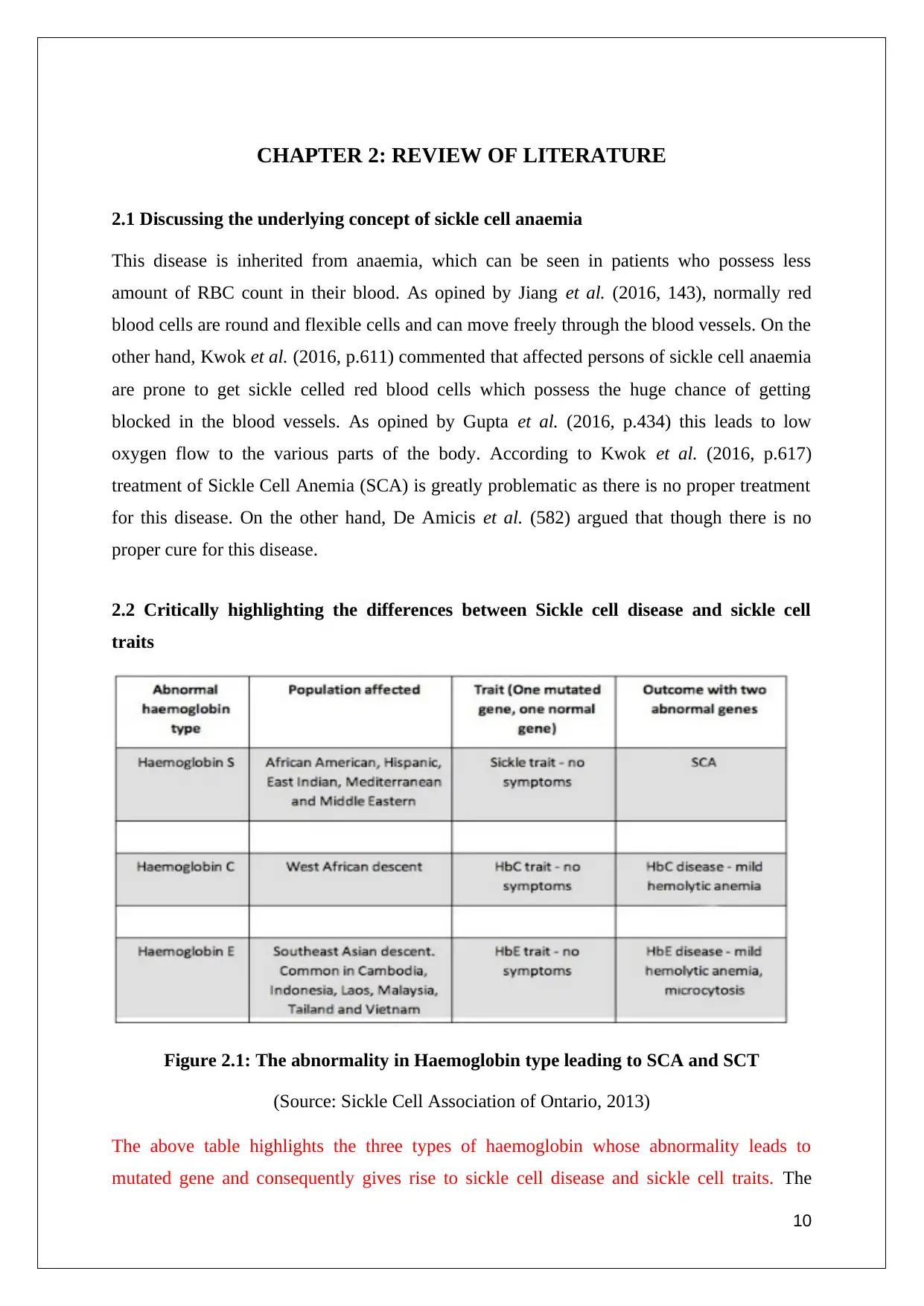
Figure 2.1: The abnormality in Haemoglobin type leading to SCA and SCT
(Source: Sickle Cell Association of Ontario, 2013)
The above table highlights the three types of haemoglobin whose abnormality leads to
mutated gene and consequently gives rise to sickle cell disease and sickle cell traits. The
10
2.1 Discussing the underlying concept of sickle cell anaemia
This disease is inherited from anaemia, which can be seen in patients who possess less
amount of RBC count in their blood. As opined by Jiang et al. (2016, 143), normally red
blood cells are round and flexible cells and can move freely through the blood vessels. On the
other hand, Kwok et al. (2016, p.611) commented that affected persons of sickle cell anaemia
are prone to get sickle celled red blood cells which possess the huge chance of getting
blocked in the blood vessels. As opined by Gupta et al. (2016, p.434) this leads to low
oxygen flow to the various parts of the body. According to Kwok et al. (2016, p.617)
treatment of Sickle Cell Anemia (SCA) is greatly problematic as there is no proper treatment
for this disease. On the other hand, De Amicis et al. (582) argued that though there is no
proper cure for this disease.
2.2 Critically highlighting the differences between Sickle cell disease and sickle cell
traits
Figure 2.1: The abnormality in Haemoglobin type leading to SCA and SCT
(Source: Sickle Cell Association of Ontario, 2013)
The above table highlights the three types of haemoglobin whose abnormality leads to
mutated gene and consequently gives rise to sickle cell disease and sickle cell traits. The
10
Paraphrase This Document
Need a fresh take? Get an instant paraphrase of this document with our AI Paraphraser
people having sickle cell trait show no clinical symptoms or any complications. However, in
very limited cases, the people having sickle cell trait may develop complications during
intense physical work. The people having sickle cell trait need to be careful during family
planning as they can pass on the altered gene to their offsprings (National Heart Lung and
Blood Institute, 2010).
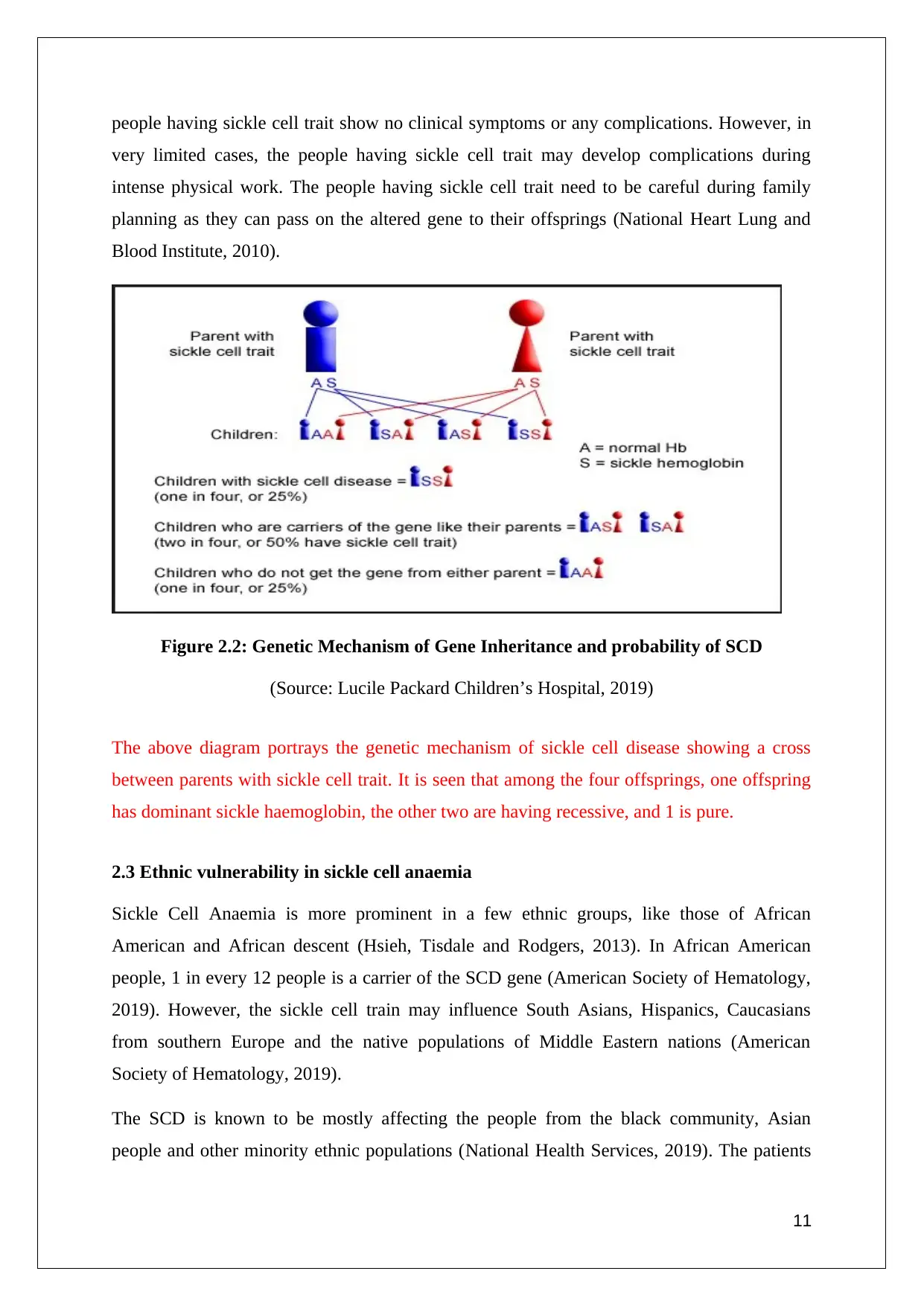
Figure 2.2: Genetic Mechanism of Gene Inheritance and probability of SCD
(Source: Lucile Packard Children’s Hospital, 2019)
The above diagram portrays the genetic mechanism of sickle cell disease showing a cross
between parents with sickle cell trait. It is seen that among the four offsprings, one offspring
has dominant sickle haemoglobin, the other two are having recessive, and 1 is pure.
2.3 Ethnic vulnerability in sickle cell anaemia
Sickle Cell Anaemia is more prominent in a few ethnic groups, like those of African
American and African descent (Hsieh, Tisdale and Rodgers, 2013). In African American
people, 1 in every 12 people is a carrier of the SCD gene (American Society of Hematology,
2019). However, the sickle cell train may influence South Asians, Hispanics, Caucasians
from southern Europe and the native populations of Middle Eastern nations (American
Society of Hematology, 2019).
The SCD is known to be mostly affecting the people from the black community, Asian
people and other minority ethnic populations (National Health Services, 2019). The patients
11
very limited cases, the people having sickle cell trait may develop complications during
intense physical work. The people having sickle cell trait need to be careful during family
planning as they can pass on the altered gene to their offsprings (National Heart Lung and
Blood Institute, 2010).
Figure 2.2: Genetic Mechanism of Gene Inheritance and probability of SCD
(Source: Lucile Packard Children’s Hospital, 2019)
The above diagram portrays the genetic mechanism of sickle cell disease showing a cross
between parents with sickle cell trait. It is seen that among the four offsprings, one offspring
has dominant sickle haemoglobin, the other two are having recessive, and 1 is pure.
2.3 Ethnic vulnerability in sickle cell anaemia
Sickle Cell Anaemia is more prominent in a few ethnic groups, like those of African
American and African descent (Hsieh, Tisdale and Rodgers, 2013). In African American
people, 1 in every 12 people is a carrier of the SCD gene (American Society of Hematology,
2019). However, the sickle cell train may influence South Asians, Hispanics, Caucasians
from southern Europe and the native populations of Middle Eastern nations (American
Society of Hematology, 2019).
The SCD is known to be mostly affecting the people from the black community, Asian
people and other minority ethnic populations (National Health Services, 2019). The patients
11
of SCD require regular transfusion of blood to retain life. The blood donated for these
patients should be from the donors of similar ethnic backgrounds.
The infants suffering from SCD may become more vulnerable to the disease on returning or
immigrating to their native country in Africa (Delicou and Maragkos, 2013). Secondly, most
of the region in Sub Saharan Africa have high cases of malaria, and the patients of SCD are
more vulnerable to deaths due to malaria (Cheesman, 2019).
2.4 Treatments for sickle cell anaemia
According to the National Heart Lung and Blood Institute (2019), the blood and bone marrow
transplant is only considered as a reliable treatment for SCD. After the initial diagnosis and
confirmation of SCD, the aim of the treatment is the maintenance of health to eliminate and
manage the complications. The care providers can assist the people in reducing the symptoms
by examining the patient, educating the patient and his family, conducting tests, immunizing
the patient, and giving medications (Hsieh, Tisdale and Rodgers, 2013).
The study by Burnett, Anele, Trueheart, Strouss and Casella (2014) suggests that the patients
having acute pain are recommended to take non-steroidal anti-inflammatory pain medicine.
According to Ashorobi and Bhatt (2019), medicine Hydroxyurea is also known to reduce the
complications of SCD. They may cause infection, hemolysis, iron overload, and
alloimmunization (Steinberg, 2016).
2.5 Therapies for sickle cell anaemia
1. Hydroxyurea therapy (HU) is identified as an approved cytotoxic agent used in the
treatment of SCD for the patients greater than two years of age (Nwogoh, Adewoyin,
Bazuaye and Nwannadi, 2014). The drug may trigger a high level of fetal
haemoglobin production in sickle cells, further reducing the tendencies for sickling of
cells (Bhatia and Sheth, 2015). HU therapy is prescribed in patients exhibiting
recurrent episodes of VOC (Volatile Organic Compounds), frequent ACS, recurrent
priapism and symptomatic anaemia( Nwogoh et al., 2014).
2. Haemopoietic Stem Cell Transplant (HSCT). The patients less than 17 years of age,
having any one of the complications among ischaemia, glomerular dysfunction,
aseptic necrosis, chronic lung disease or cerebral vasculopathy is eligible for the
HSCT therapy (Adewoyin, 2015).
12
patients should be from the donors of similar ethnic backgrounds.
The infants suffering from SCD may become more vulnerable to the disease on returning or
immigrating to their native country in Africa (Delicou and Maragkos, 2013). Secondly, most
of the region in Sub Saharan Africa have high cases of malaria, and the patients of SCD are
more vulnerable to deaths due to malaria (Cheesman, 2019).
2.4 Treatments for sickle cell anaemia
According to the National Heart Lung and Blood Institute (2019), the blood and bone marrow
transplant is only considered as a reliable treatment for SCD. After the initial diagnosis and
confirmation of SCD, the aim of the treatment is the maintenance of health to eliminate and
manage the complications. The care providers can assist the people in reducing the symptoms
by examining the patient, educating the patient and his family, conducting tests, immunizing
the patient, and giving medications (Hsieh, Tisdale and Rodgers, 2013).
The study by Burnett, Anele, Trueheart, Strouss and Casella (2014) suggests that the patients
having acute pain are recommended to take non-steroidal anti-inflammatory pain medicine.
According to Ashorobi and Bhatt (2019), medicine Hydroxyurea is also known to reduce the
complications of SCD. They may cause infection, hemolysis, iron overload, and
alloimmunization (Steinberg, 2016).
2.5 Therapies for sickle cell anaemia
1. Hydroxyurea therapy (HU) is identified as an approved cytotoxic agent used in the
treatment of SCD for the patients greater than two years of age (Nwogoh, Adewoyin,
Bazuaye and Nwannadi, 2014). The drug may trigger a high level of fetal
haemoglobin production in sickle cells, further reducing the tendencies for sickling of
cells (Bhatia and Sheth, 2015). HU therapy is prescribed in patients exhibiting
recurrent episodes of VOC (Volatile Organic Compounds), frequent ACS, recurrent
priapism and symptomatic anaemia( Nwogoh et al., 2014).
2. Haemopoietic Stem Cell Transplant (HSCT). The patients less than 17 years of age,
having any one of the complications among ischaemia, glomerular dysfunction,
aseptic necrosis, chronic lung disease or cerebral vasculopathy is eligible for the
HSCT therapy (Adewoyin, 2015).
12
⊘ This is a preview!⊘
Do you want full access?
Subscribe today to unlock all pages.
Trusted by 1+ million students worldwide

1 out of 34


Your All-in-One AI-Powered Toolkit for Academic Success.
+13062052269
info@desklib.com
Available 24*7 on WhatsApp / Email
![[object Object]](/_next/static/media/star-bottom.7253800d.svg)
Unlock your academic potential
Copyright © 2020–2025 A2Z Services. All Rights Reserved. Developed and managed by ZUCOL.