PROJ6009: Business Process Improvement Case Study Best Practices

Verified

Added on  2022/09/12

|12
|636
|12
Case Study
AI Summary
This case study analyzes Business Process Improvement (BPI) best practices, focusing on sustainable innovation for business firms. It explores the combination of technology and innovative business models, emphasizing the Cambridge Business Model Innovation Process (CBMIP) and its eight phases. The study examines design-implementation gaps in sustainable business models, highlighting the need for robust frameworks to achieve goals. It uses Favalley, a social start-up, as a case to illustrate the application of CBMIP, including the limitations and potential for improvement. The research methodology includes literature reviews, interviews, and surveys to develop and refine the CBMIP framework. The analysis covers various stages, from ideation to adjustment and diversification, providing insights into business model innovation and the importance of addressing gaps for effective implementation.

Document Page
BPI Case Study
Best Practices
tabler-icon-diamond-filled.svg

Paraphrase This Document

Need a fresh take? Get an instant paraphrase of this document with our AI Paraphraser
Document Page
Sustainable innovation for the business firms
Combination of technology and innovation of
the business models
Presence of numerous tools and frameworks
Gaps in the existing tools
Development of the Cambridge Business
Model Innovation Process
CBMIP
Eight steps/phases
Introduction
Document Page
Several aspects associated with innovation
Amalgamation of all the aspects
Sustainable business models
SBM
Representation of numerous elements
Relationship between the elements
Obtaining sustainable value from the
combination of the elements and the
relationships
Sustainable Business
Models
Document Page
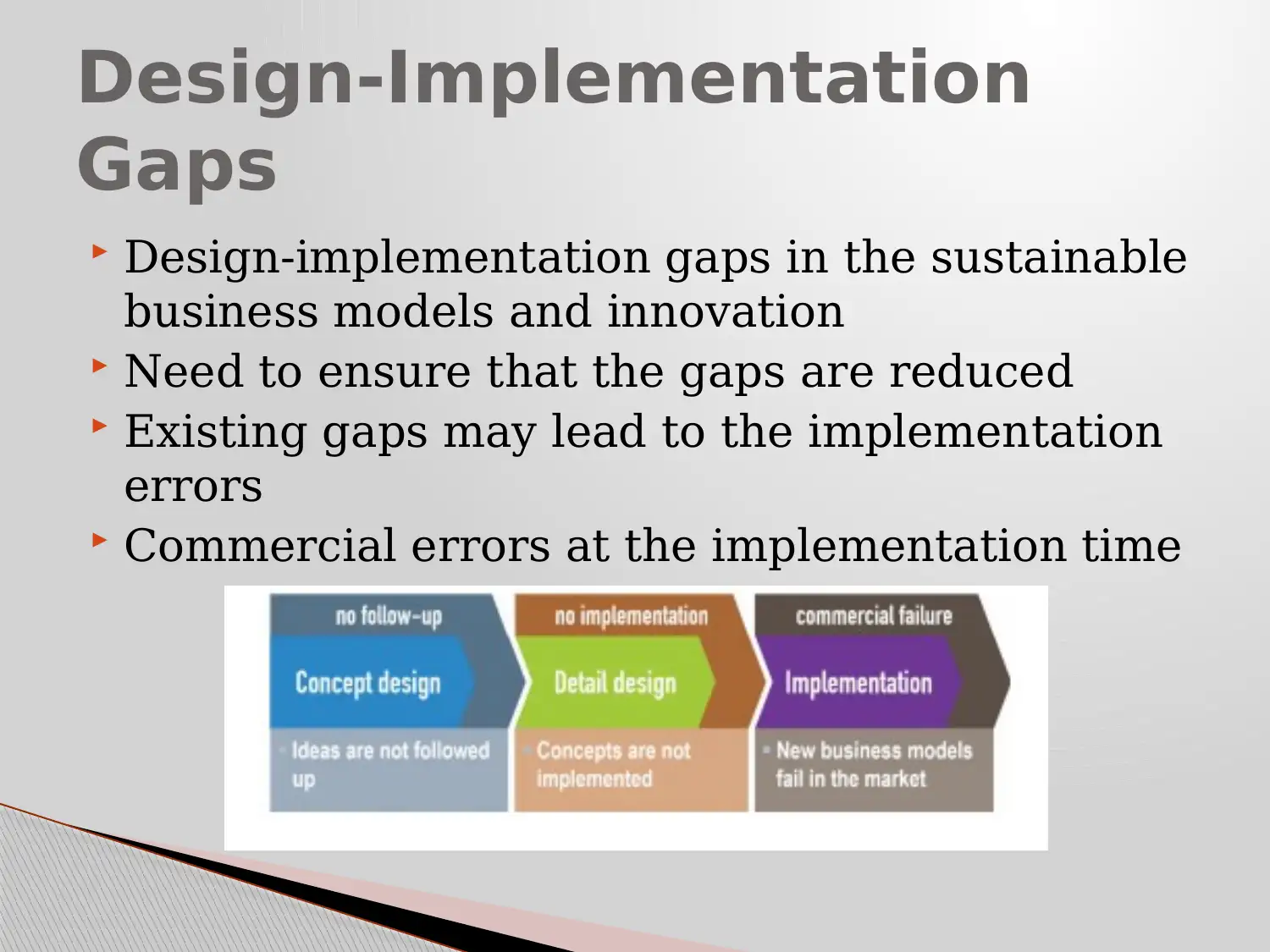
Design-implementation gaps in the sustainable
business models and innovation
Need to ensure that the gaps are reduced
Existing gaps may lead to the implementation
errors
Commercial errors at the implementation time
Design-Implementation
Gaps
tabler-icon-diamond-filled.svg

Paraphrase This Document

Need a fresh take? Get an instant paraphrase of this document with our AI Paraphraser
Document Page
Design-implementation gaps led to the
development of CBMIP framework
Several stages included in the framework
Covers conceptualization to implementation
Targets and resolves the existing
challenges and issues
Effective understand of the best practices
Ability to achieve the goals and outcomes
Robust framework
Need for CBMIP
Framework
Document Page
Literature review and analysis to determine
the gaps and the improvements that shall
be made
Data collected through interviews and one-
on-one discussions
Use of surveys for the collection of the data
sets
Compilation of the entire data to develop
the CBMIP framework
Based on the best practices and concepts
Research Methodology
Document Page
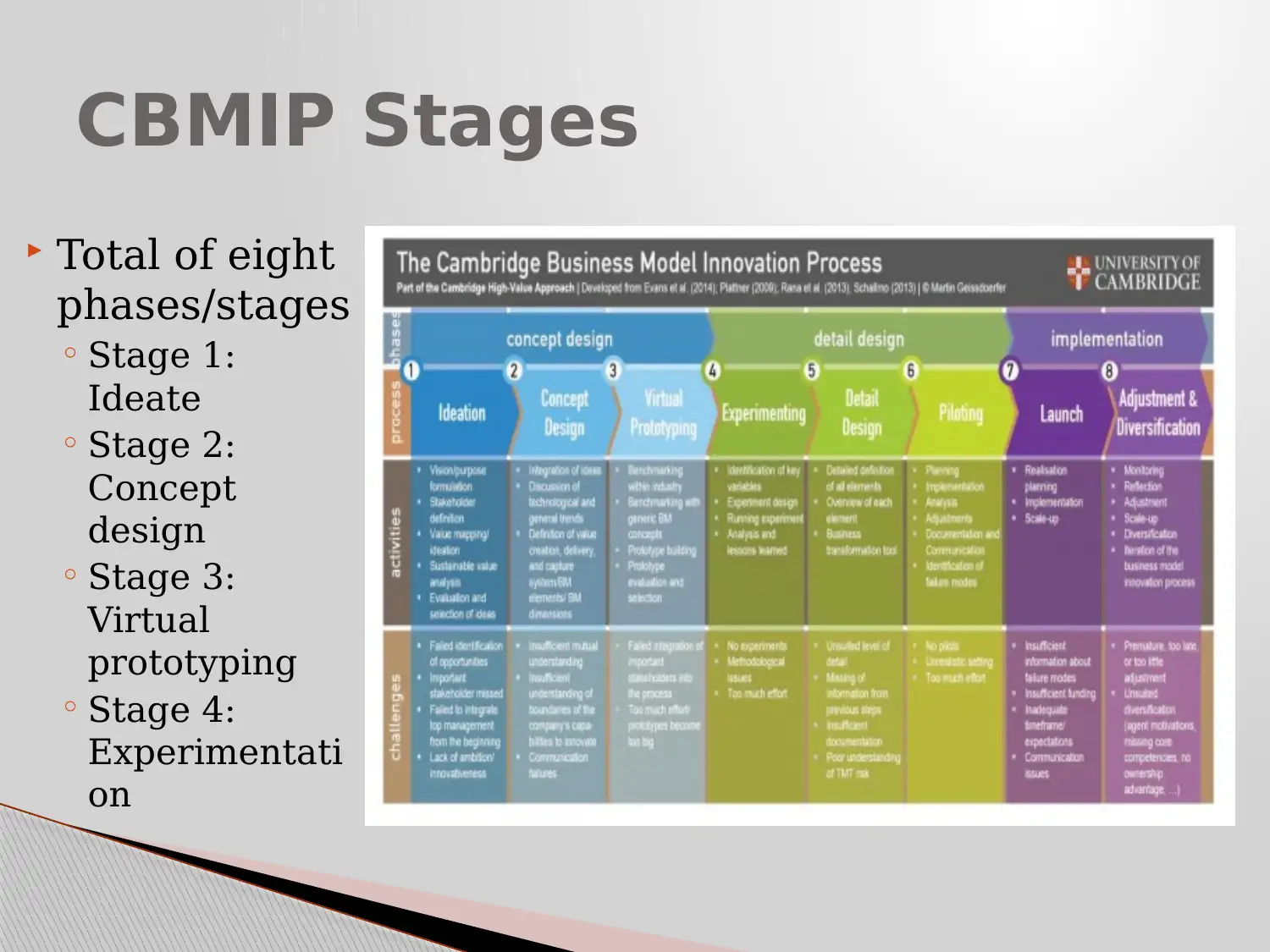
Total of eight
phases/stages
Stage 1:
Ideate
Stage 2:
Concept
design
Stage 3:
Virtual
prototyping
Stage 4:
Experimentati
on
CBMIP Stages
tabler-icon-diamond-filled.svg

Paraphrase This Document

Need a fresh take? Get an instant paraphrase of this document with our AI Paraphraser
Document Page
Combination of all the eight stages to
achieve the intended purpose and goals
Total of eight phases/stages
Stage 5: Detail Design
Stage 6: Piloting
Stage 7: Launch
Stage 8: Adjustment and Diversification
CBMIP Stages
Document Page
Favalley
Social start-up
Provides free of cost tutoring services to the
youth living in slums
Connects the youth with the organizations hiring
for jobs
Generation of sustainable value through
the business processes and mechanisms
Implementation of CBMIP for Favalley
Application of CBMIP -
Favalley
Document Page
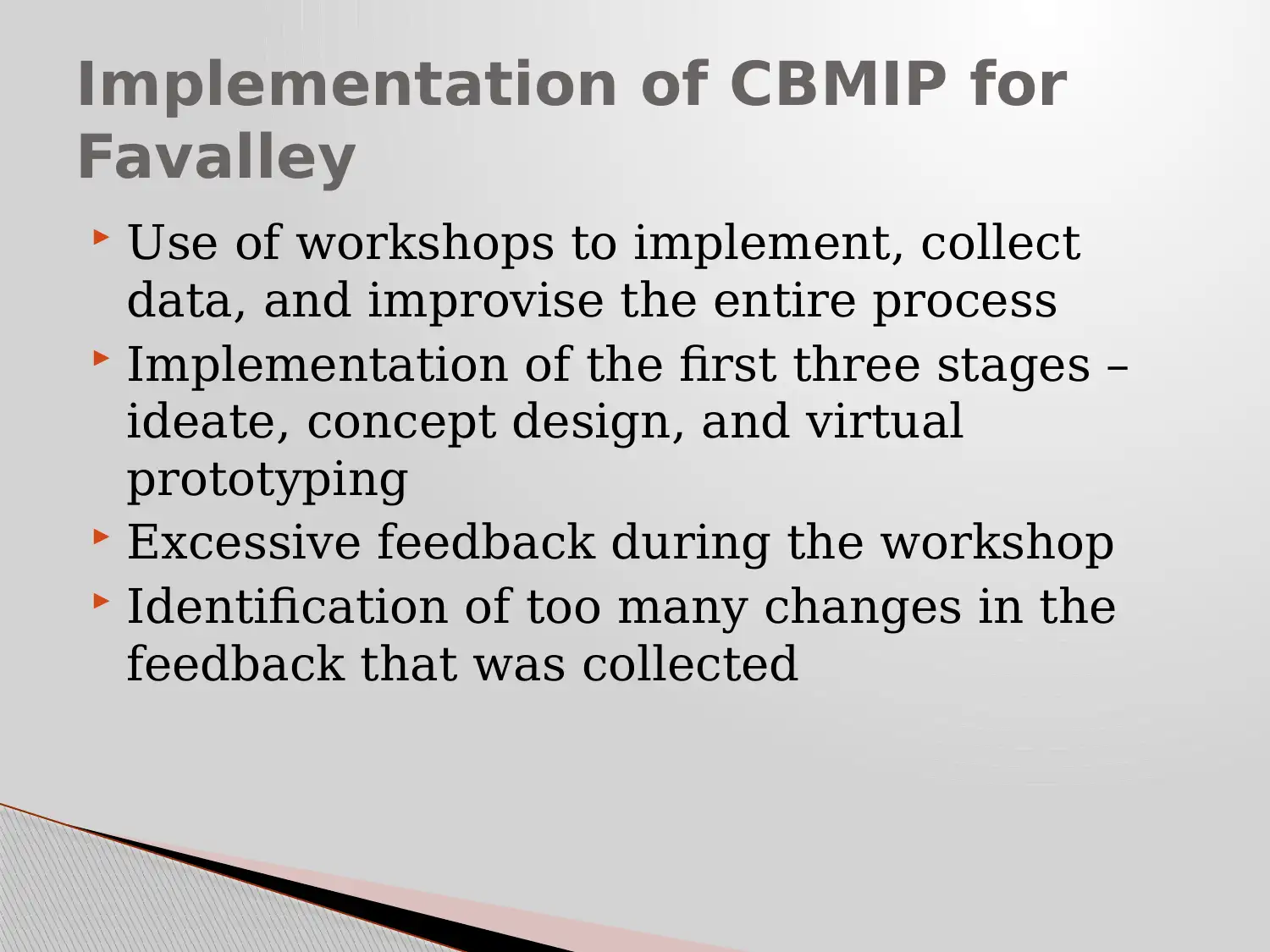
Use of workshops to implement, collect
data, and improvise the entire process
Implementation of the first three stages –
ideate, concept design, and virtual
prototyping
Excessive feedback during the workshop
Identification of too many changes in the
feedback that was collected
Implementation of CBMIP for
Favalley
tabler-icon-diamond-filled.svg

Paraphrase This Document

Need a fresh take? Get an instant paraphrase of this document with our AI Paraphraser
Document Page
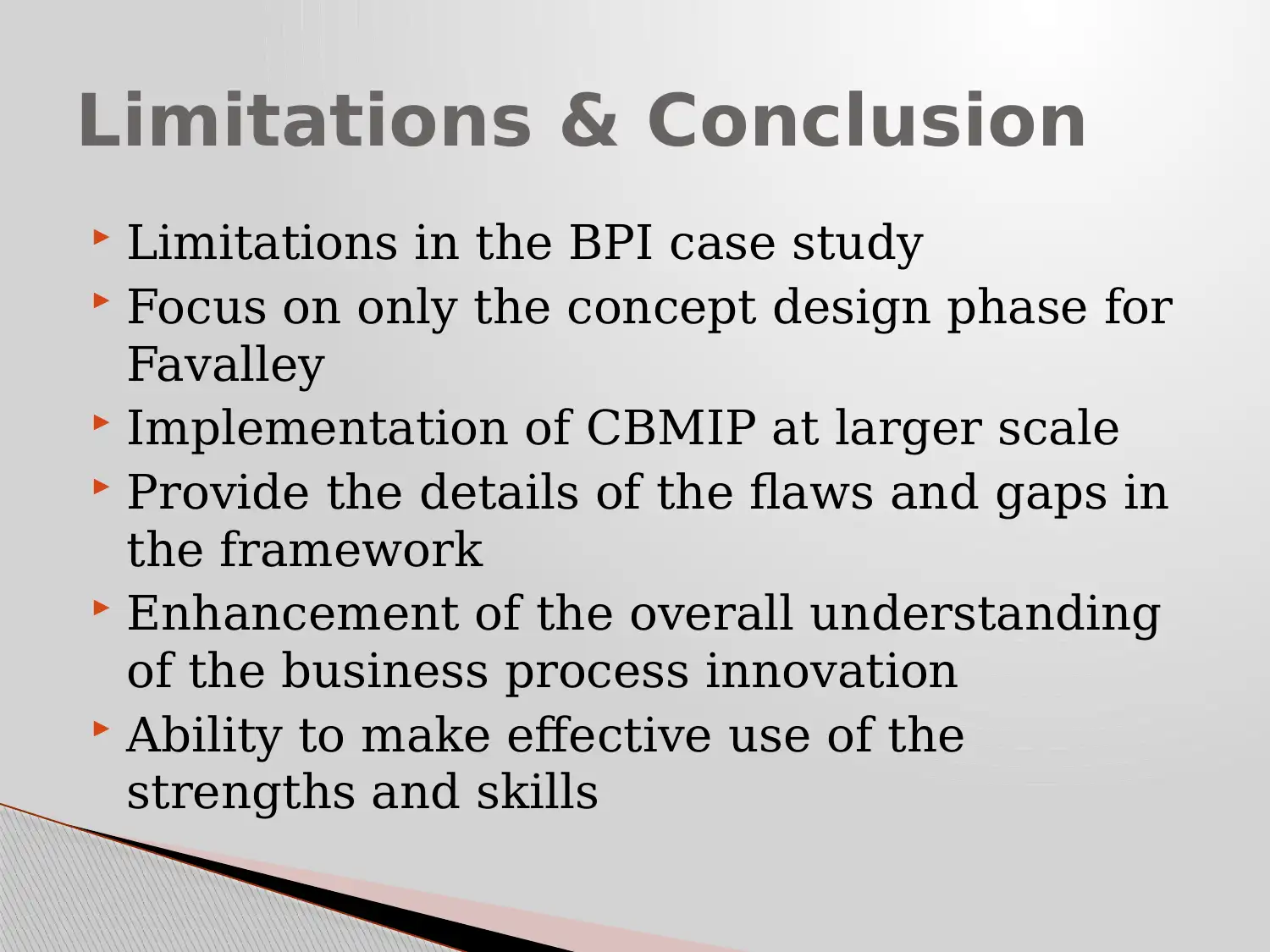
Limitations in the BPI case study
Focus on only the concept design phase for
Favalley
Implementation of CBMIP at larger scale
Provide the details of the flaws and gaps in
the framework
Enhancement of the overall understanding
of the business process innovation
Ability to make effective use of the
strengths and skills
Limitations & Conclusion
Document Page
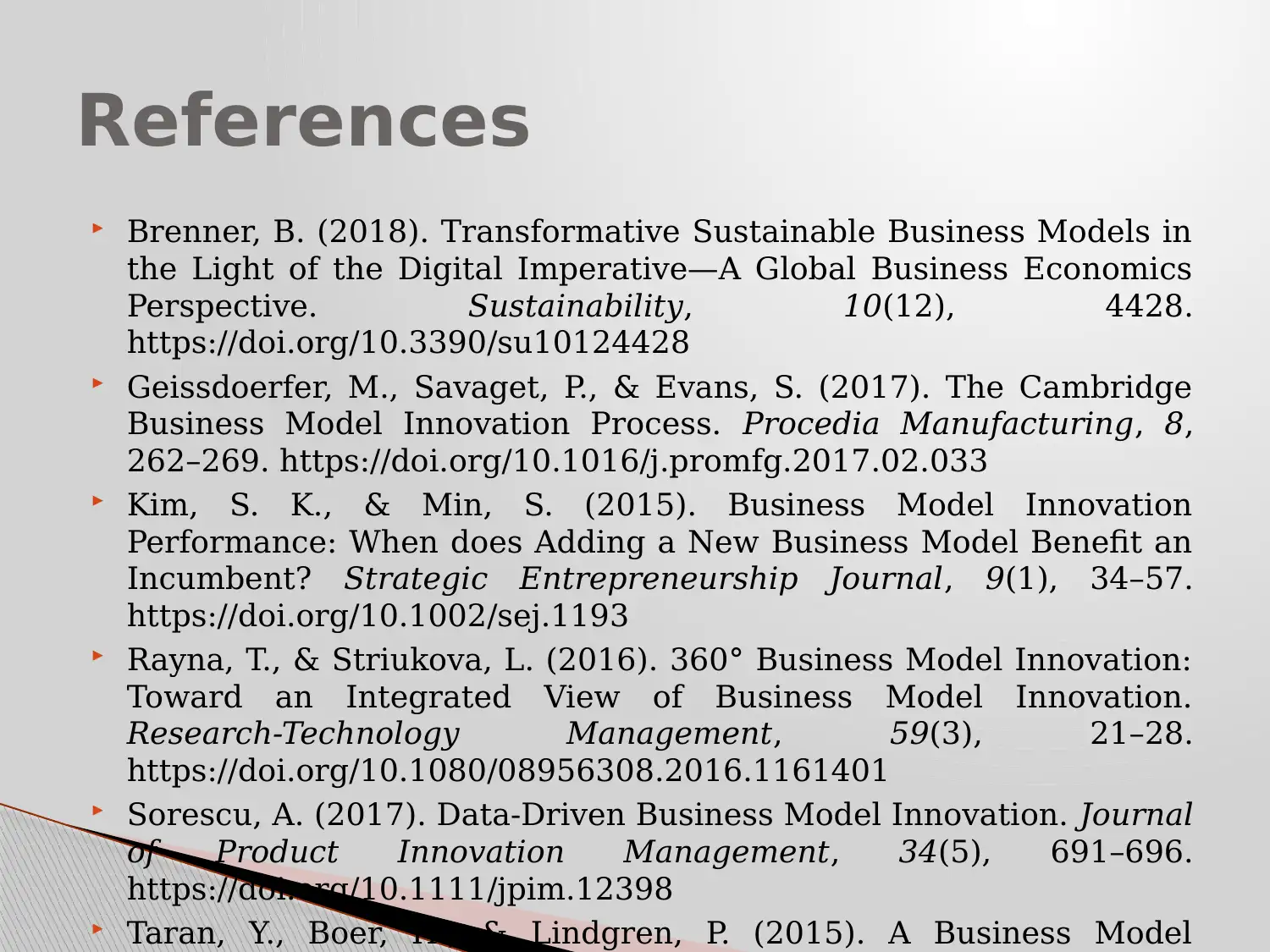
Brenner, B. (2018). Transformative Sustainable Business Models in
the Light of the Digital Imperative—A Global Business Economics
Perspective. Sustainability, 10(12), 4428.
https://doi.org/10.3390/su10124428
Geissdoerfer, M., Savaget, P., & Evans, S. (2017). The Cambridge
Business Model Innovation Process. Procedia Manufacturing, 8,
262–269. https://doi.org/10.1016/j.promfg.2017.02.033
Kim, S. K., & Min, S. (2015). Business Model Innovation
Performance: When does Adding a New Business Model Benefit an
Incumbent? Strategic Entrepreneurship Journal, 9(1), 34–57.
https://doi.org/10.1002/sej.1193
Rayna, T., & Striukova, L. (2016). 360° Business Model Innovation:
Toward an Integrated View of Business Model Innovation.
Research-Technology Management, 59(3), 21–28.
https://doi.org/10.1080/08956308.2016.1161401
Sorescu, A. (2017). Data-Driven Business Model Innovation. Journal
of Product Innovation Management, 34(5), 691–696.
https://doi.org/10.1111/jpim.12398
Taran, Y., Boer, H., & Lindgren, P. (2015). A Business Model
References
chevron_up_icon
1 out of 12
circle_padding
hide_on_mobile
zoom_out_icon
[object Object]