Climate Change Assessment in Brampton: Natural Systems and Strategies
VerifiedAdded on 2022/08/23
|19
|3179
|12
Report
AI Summary
This report presents a climate change assessment conducted in Brampton, Canada, focusing on the city's natural systems and their vulnerability to climate change impacts. The assessment investigates the effects of urbanization, temperature fluctuations, and precipitation patterns on local ecosystems. The methodology employed involves secondary data collection and analysis from various sources, including government publications and previous research. The study examines historical climate trends, future projections, and the implementation of environmental strategies. It highlights the potential effects of climate change, such as rising temperatures, sea levels, and health risks, while also discussing the city's environmental master plan and actions to mitigate the impacts. The report concludes with an analysis of the challenges and ethical considerations encountered during the research, offering insights into the city's preparedness and adaptation strategies.

Climate Change Assessment In Brampton, 1
Climate change assessment in Brampton, Canada
Name of student
Institution
Date
Climate change assessment in Brampton, Canada
Name of student
Institution
Date

Paraphrase This Document
Need a fresh take? Get an instant paraphrase of this document with our AI Paraphraser
Climate Change Assessment In Brampton, 2
Introduction
Brampton is referred to as the flower city in Canada and is popular for its quality open,
natural and built spaces involving innovative programs. It is among the rapidly growing
communities in Canada, within the greater Toronto region, it is third largest. This city gains from
a wealthiest, diverse multicultural population representing distinct ethnicities. Increased
population growth alongside quick urbanization, has brought environmental effects and threats to
the remaining natural regions and ecosystems. Getting a balance between controlling growth and
resources together with safeguarding the natural heritage system is a crucial element of forming
whole, healthy and liveable communities (Ashmore & Dodson, 2017).
Rainfall patterns along with temperature generally follow a north-south trend within the
peel locality; and it is seen that human activities, elevation of the area together with the
topography affects the pattern. Brampton region is seen to be hotter throughout the year, because
of the adjustments to seasonal precipitation trends, increased rainstorms alongside intense heat
waves. Urbanization tend to be the primary aggressive agent on natural environment in
Brampton, though mass extraction together with agricultural production are as well key. Climate
change will hence mingle with these agents to raise and worsen effects on natural environment.
The natural water bodies and terrestrial settings reviewed in this paper are firmly connected, and
change in climate will have complicated impacts on them.
Problem statement: This paper reviews the natural systems within Brampton and how
they respond to climate change. It also addresses strategies and plans placed to curb climate
change within this region. This assessment was conducted to identify and prioritize action in
reducing vulnerability and in turn increase resiliency of natural systems within Brampton. The
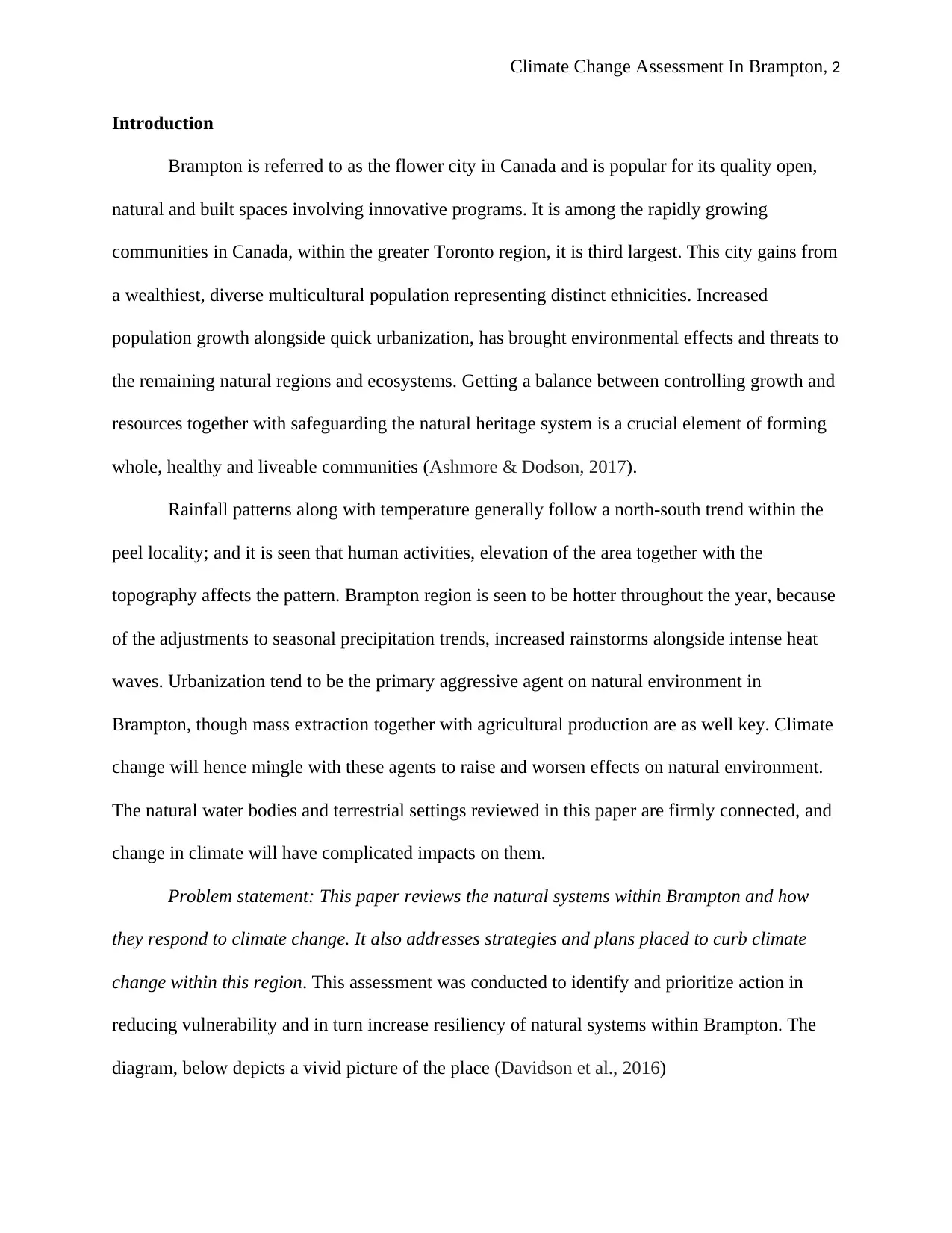
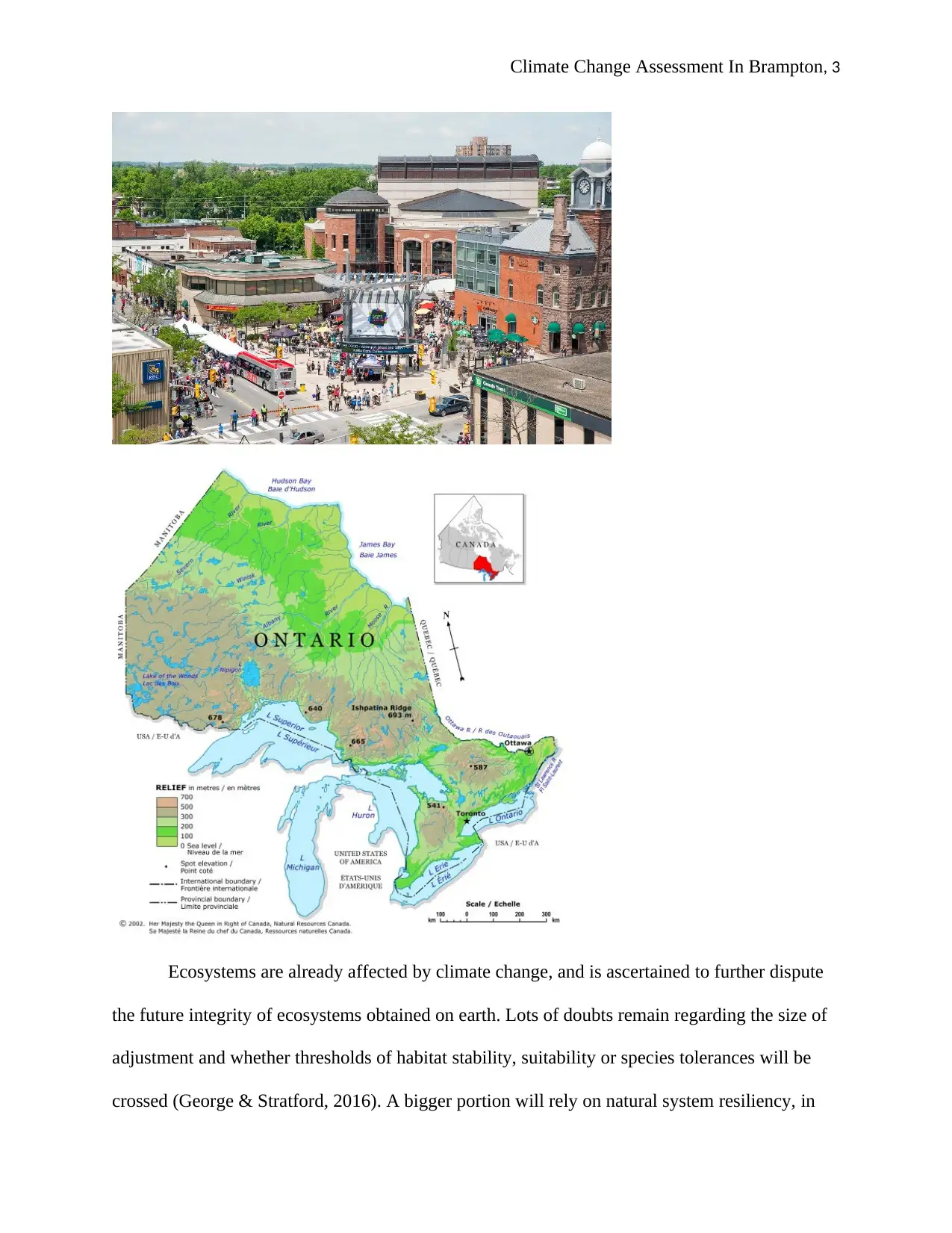
diagram, below depicts a vivid picture of the place (Davidson et al., 2016)
Introduction
Brampton is referred to as the flower city in Canada and is popular for its quality open,
natural and built spaces involving innovative programs. It is among the rapidly growing
communities in Canada, within the greater Toronto region, it is third largest. This city gains from
a wealthiest, diverse multicultural population representing distinct ethnicities. Increased
population growth alongside quick urbanization, has brought environmental effects and threats to
the remaining natural regions and ecosystems. Getting a balance between controlling growth and
resources together with safeguarding the natural heritage system is a crucial element of forming
whole, healthy and liveable communities (Ashmore & Dodson, 2017).
Rainfall patterns along with temperature generally follow a north-south trend within the
peel locality; and it is seen that human activities, elevation of the area together with the
topography affects the pattern. Brampton region is seen to be hotter throughout the year, because
of the adjustments to seasonal precipitation trends, increased rainstorms alongside intense heat
waves. Urbanization tend to be the primary aggressive agent on natural environment in
Brampton, though mass extraction together with agricultural production are as well key. Climate
change will hence mingle with these agents to raise and worsen effects on natural environment.
The natural water bodies and terrestrial settings reviewed in this paper are firmly connected, and
change in climate will have complicated impacts on them.
Problem statement: This paper reviews the natural systems within Brampton and how
they respond to climate change. It also addresses strategies and plans placed to curb climate
change within this region. This assessment was conducted to identify and prioritize action in
reducing vulnerability and in turn increase resiliency of natural systems within Brampton. The
diagram, below depicts a vivid picture of the place (Davidson et al., 2016)
Climate Change Assessment In Brampton, 3
Ecosystems are already affected by climate change, and is ascertained to further dispute
the future integrity of ecosystems obtained on earth. Lots of doubts remain regarding the size of
adjustment and whether thresholds of habitat stability, suitability or species tolerances will be
crossed (George & Stratford, 2016). A bigger portion will rely on natural system resiliency, in
Ecosystems are already affected by climate change, and is ascertained to further dispute
the future integrity of ecosystems obtained on earth. Lots of doubts remain regarding the size of
adjustment and whether thresholds of habitat stability, suitability or species tolerances will be
crossed (George & Stratford, 2016). A bigger portion will rely on natural system resiliency, in
⊘ This is a preview!⊘
Do you want full access?
Subscribe today to unlock all pages.

Trusted by 1+ million students worldwide
Climate Change Assessment In Brampton, 4
other words, the adaptive capability to adjust with climate aggressors which are anticipated to
influence fundamental physical; and chemical processes which controls ecological dynamics as
well as biological limits (Ashmore & Dodson, 2017). Even in an unchanged condition, it is
crucial to know that the band width of adaptive capability varies amongst and within natural
settings. Such creates a point of diminished ecological structure as well as duty, thus reduced
inseparable resilience of natural environment, because of sequential impacts of land use
alteration and man based effects (McGregor, 2012).
Main areas of interest according to the purpose of this examination are aquatic,
groundwater along with terrestrial ecosystems obtained in temperate ecoregions of the lake
basin. Greater seasonal air temperatures alongside intense heat connected with climate change
are anticipated to raise rates of vaporisation, especially during months of summer. Conformably,
the quantity of water penetrating in the earth surface will possibly be decreased during summer,
and change through the whole year as future precipitation patterns shifts, which are briefed in the
succeeding sections.
Methodology:
An overall approach was seen as an iterative and evidence-based method for understanding the
meteorological, biophysical as well as human factors which affect the impacts of climate change.
This approach also helps in determining effects alongside opportunities for natural systems in
Brampton. The project was managed by a Core Advisory Team (CAT) which represent the
technical personnel, having greater skills in vulnerability assessment. A number of organizations
were indulged in CAT like the ministry of natural resources and forestry, peel region, Ontario
centre for climate impact and adaptation research and the University of Waterloo.
other words, the adaptive capability to adjust with climate aggressors which are anticipated to
influence fundamental physical; and chemical processes which controls ecological dynamics as
well as biological limits (Ashmore & Dodson, 2017). Even in an unchanged condition, it is
crucial to know that the band width of adaptive capability varies amongst and within natural
settings. Such creates a point of diminished ecological structure as well as duty, thus reduced
inseparable resilience of natural environment, because of sequential impacts of land use
alteration and man based effects (McGregor, 2012).
Main areas of interest according to the purpose of this examination are aquatic,
groundwater along with terrestrial ecosystems obtained in temperate ecoregions of the lake
basin. Greater seasonal air temperatures alongside intense heat connected with climate change
are anticipated to raise rates of vaporisation, especially during months of summer. Conformably,
the quantity of water penetrating in the earth surface will possibly be decreased during summer,
and change through the whole year as future precipitation patterns shifts, which are briefed in the
succeeding sections.
Methodology:
An overall approach was seen as an iterative and evidence-based method for understanding the
meteorological, biophysical as well as human factors which affect the impacts of climate change.
This approach also helps in determining effects alongside opportunities for natural systems in
Brampton. The project was managed by a Core Advisory Team (CAT) which represent the
technical personnel, having greater skills in vulnerability assessment. A number of organizations
were indulged in CAT like the ministry of natural resources and forestry, peel region, Ontario
centre for climate impact and adaptation research and the University of Waterloo.
Paraphrase This Document
Need a fresh take? Get an instant paraphrase of this document with our AI Paraphraser
Climate Change Assessment In Brampton, 5
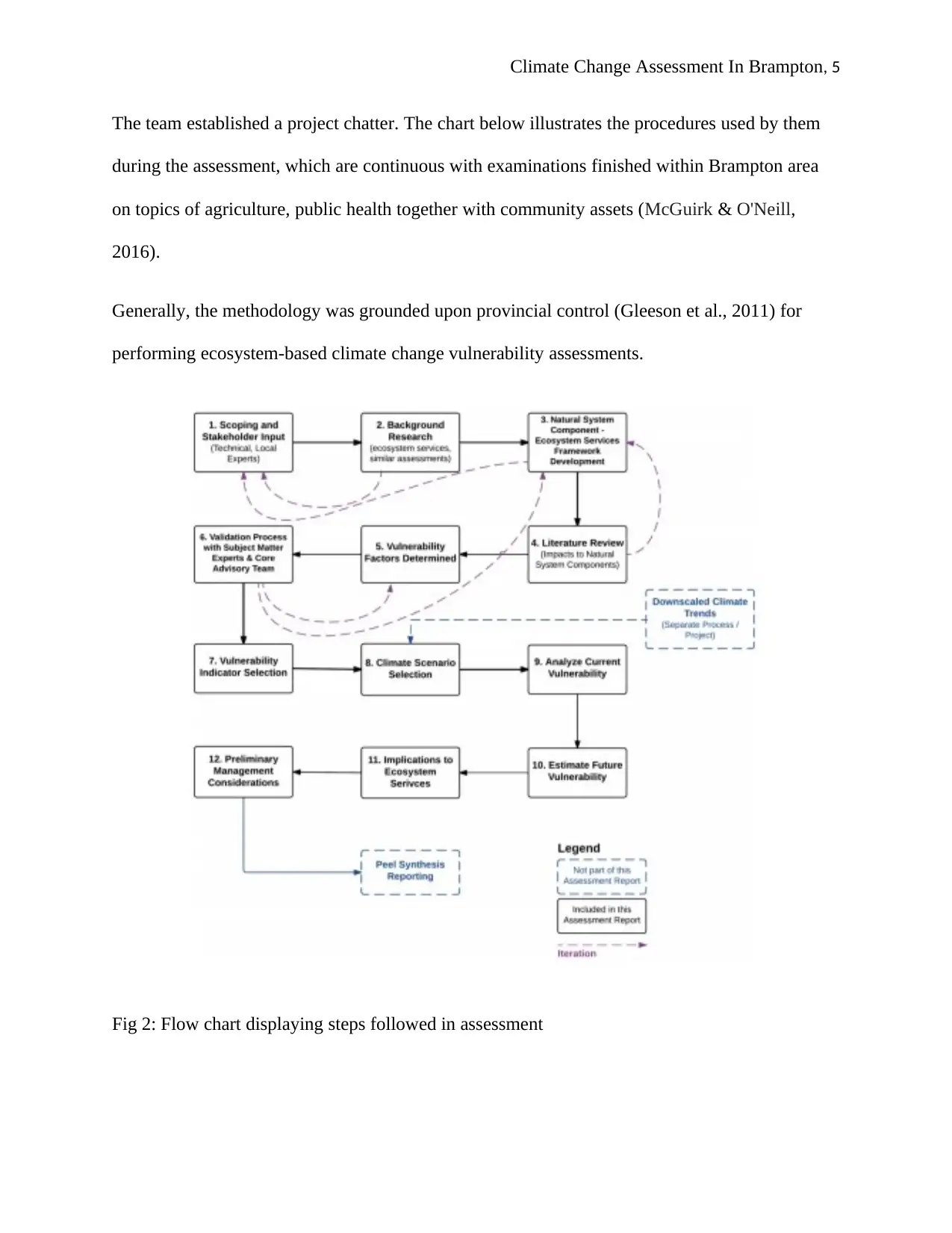
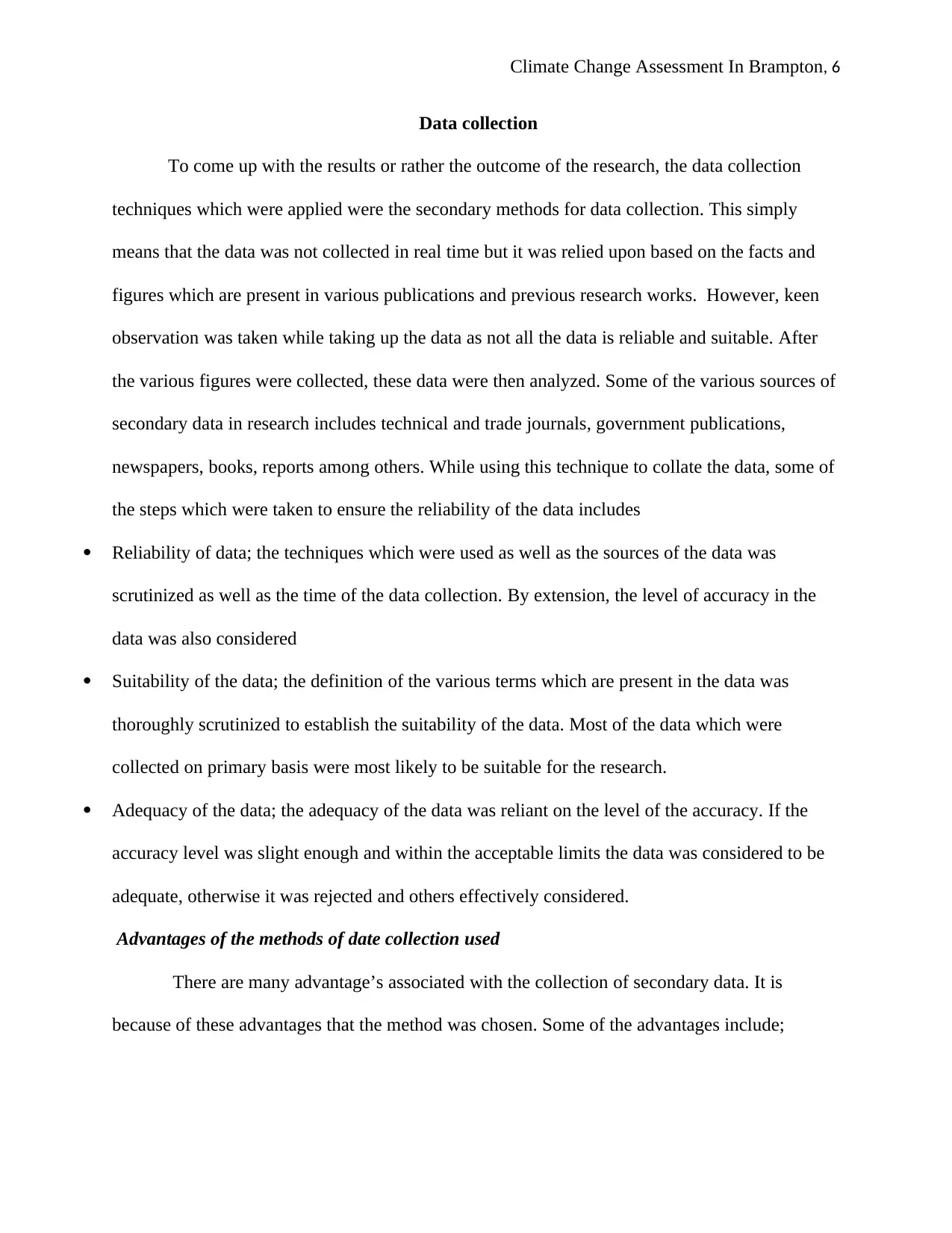
The team established a project chatter. The chart below illustrates the procedures used by them
during the assessment, which are continuous with examinations finished within Brampton area
on topics of agriculture, public health together with community assets (McGuirk & O'Neill,
2016).
Generally, the methodology was grounded upon provincial control (Gleeson et al., 2011) for
performing ecosystem-based climate change vulnerability assessments.
Fig 2: Flow chart displaying steps followed in assessment
The team established a project chatter. The chart below illustrates the procedures used by them
during the assessment, which are continuous with examinations finished within Brampton area
on topics of agriculture, public health together with community assets (McGuirk & O'Neill,
2016).
Generally, the methodology was grounded upon provincial control (Gleeson et al., 2011) for
performing ecosystem-based climate change vulnerability assessments.
Fig 2: Flow chart displaying steps followed in assessment
Climate Change Assessment In Brampton, 6
Data collection
To come up with the results or rather the outcome of the research, the data collection
techniques which were applied were the secondary methods for data collection. This simply
means that the data was not collected in real time but it was relied upon based on the facts and
figures which are present in various publications and previous research works. However, keen
observation was taken while taking up the data as not all the data is reliable and suitable. After
the various figures were collected, these data were then analyzed. Some of the various sources of
secondary data in research includes technical and trade journals, government publications,
newspapers, books, reports among others. While using this technique to collate the data, some of
the steps which were taken to ensure the reliability of the data includes
Reliability of data; the techniques which were used as well as the sources of the data was
scrutinized as well as the time of the data collection. By extension, the level of accuracy in the
data was also considered
Suitability of the data; the definition of the various terms which are present in the data was
thoroughly scrutinized to establish the suitability of the data. Most of the data which were
collected on primary basis were most likely to be suitable for the research.
Adequacy of the data; the adequacy of the data was reliant on the level of the accuracy. If the
accuracy level was slight enough and within the acceptable limits the data was considered to be
adequate, otherwise it was rejected and others effectively considered.
Advantages of the methods of date collection used
There are many advantage’s associated with the collection of secondary data. It is
because of these advantages that the method was chosen. Some of the advantages include;
Data collection
To come up with the results or rather the outcome of the research, the data collection
techniques which were applied were the secondary methods for data collection. This simply
means that the data was not collected in real time but it was relied upon based on the facts and
figures which are present in various publications and previous research works. However, keen
observation was taken while taking up the data as not all the data is reliable and suitable. After
the various figures were collected, these data were then analyzed. Some of the various sources of
secondary data in research includes technical and trade journals, government publications,
newspapers, books, reports among others. While using this technique to collate the data, some of
the steps which were taken to ensure the reliability of the data includes
Reliability of data; the techniques which were used as well as the sources of the data was
scrutinized as well as the time of the data collection. By extension, the level of accuracy in the
data was also considered
Suitability of the data; the definition of the various terms which are present in the data was
thoroughly scrutinized to establish the suitability of the data. Most of the data which were
collected on primary basis were most likely to be suitable for the research.
Adequacy of the data; the adequacy of the data was reliant on the level of the accuracy. If the
accuracy level was slight enough and within the acceptable limits the data was considered to be
adequate, otherwise it was rejected and others effectively considered.
Advantages of the methods of date collection used
There are many advantage’s associated with the collection of secondary data. It is
because of these advantages that the method was chosen. Some of the advantages include;
⊘ This is a preview!⊘
Do you want full access?
Subscribe today to unlock all pages.
Trusted by 1+ million students worldwide

Climate Change Assessment In Brampton, 7
1. The technique is economical as it does not involve going to the place physical to conduct the
research
2. The technique helps in saving the time for the research
3. It helps in the validation of the primary data, as it mostly relies on the data which was primarily
collected
4. It also enhances the understanding of the problem in question
5. Finally, it enables comparison of data which has been collected by various researchers.
Limitations of the research methodology
On the contrary, the technique which was applied also faces some challenges. For instance,
the data which is available may be biased as it might reflect the opinions of the researcher
There is variation of things and the data might no longer be reliable
The documents which are used may not be authentic hence affecting the authentic of our
research
The documents used for conducting the research might not have a clear reflection of the
wider population or area under investigation and hence might give biased information.
Ethical challenges of the methodology
Some of the challenges which were experienced while conducting the research includes
ethical issues such as patenting of information. Some of the authors locked their research and
would require to be paid so as to enable accessibility (McHenry, 2018). This hindered the
exploitation of the research as it the cash was limited to purchase the books. While conducting
the research, there is the issue of data privacy, as some of the resources required the enabling of
cookies which potentially puts once privacy in a limbo.
1. The technique is economical as it does not involve going to the place physical to conduct the
research
2. The technique helps in saving the time for the research
3. It helps in the validation of the primary data, as it mostly relies on the data which was primarily
collected
4. It also enhances the understanding of the problem in question
5. Finally, it enables comparison of data which has been collected by various researchers.
Limitations of the research methodology
On the contrary, the technique which was applied also faces some challenges. For instance,
the data which is available may be biased as it might reflect the opinions of the researcher
There is variation of things and the data might no longer be reliable
The documents which are used may not be authentic hence affecting the authentic of our
research
The documents used for conducting the research might not have a clear reflection of the
wider population or area under investigation and hence might give biased information.
Ethical challenges of the methodology
Some of the challenges which were experienced while conducting the research includes
ethical issues such as patenting of information. Some of the authors locked their research and
would require to be paid so as to enable accessibility (McHenry, 2018). This hindered the
exploitation of the research as it the cash was limited to purchase the books. While conducting
the research, there is the issue of data privacy, as some of the resources required the enabling of
cookies which potentially puts once privacy in a limbo.
Paraphrase This Document
Need a fresh take? Get an instant paraphrase of this document with our AI Paraphraser
Climate Change Assessment In Brampton, 8
Theory: Climate trends in Brampton city
Historical climate
i. Temperature
On a yearly basis, greater average temperature is obtained in the southern part of Brampton
region. Similar trend as well remains when temperatures are taken into account on a seasonal
basis. Such tendency is ascribed chiefly to the impacts of elevation which increases to the north,
the presence of Lake Ontario (Mount & Andrée, 2013), and highly urbanized land use.
Moreover, the land use involves farming, natural forests and grasslands, which seem to store
limited heat energy. Lake Ontario does give a moderating impact at specific periods of the year,
this pattern, however, is possibly overturned by some elements earlier mentioned like land use,
elevation together with geographic factors (Cadieux et al., 2013). Such elements impose
influence on the geographic trends in every temperature related variable during the historical
period.
ii. Precipitation
Brampton being within the Peel region historically is noted that, north-western part is the wettest
region on seasonal as well as yearly bases, as the southern region having the less precipitation.
The north- south tendency in precipitation is chiefly triggered by the influence of elevation
alongside topographic features of the ORM, and Niagara escarpment (Auld et al., 2015).. These
factors bring a slight rain shadow impact, a decrease in precipitation, delivered to Brampton
compared to the neighbouring regions.
Climate change in future
Theory: Climate trends in Brampton city
Historical climate
i. Temperature
On a yearly basis, greater average temperature is obtained in the southern part of Brampton
region. Similar trend as well remains when temperatures are taken into account on a seasonal
basis. Such tendency is ascribed chiefly to the impacts of elevation which increases to the north,
the presence of Lake Ontario (Mount & Andrée, 2013), and highly urbanized land use.
Moreover, the land use involves farming, natural forests and grasslands, which seem to store
limited heat energy. Lake Ontario does give a moderating impact at specific periods of the year,
this pattern, however, is possibly overturned by some elements earlier mentioned like land use,
elevation together with geographic factors (Cadieux et al., 2013). Such elements impose
influence on the geographic trends in every temperature related variable during the historical
period.
ii. Precipitation
Brampton being within the Peel region historically is noted that, north-western part is the wettest
region on seasonal as well as yearly bases, as the southern region having the less precipitation.
The north- south tendency in precipitation is chiefly triggered by the influence of elevation
alongside topographic features of the ORM, and Niagara escarpment (Auld et al., 2015).. These
factors bring a slight rain shadow impact, a decrease in precipitation, delivered to Brampton
compared to the neighbouring regions.
Climate change in future
Climate Change Assessment In Brampton, 9
The overall scientific agreement is that the change in climate is probably to bring raised
temperatures internationally however, a certain way in which that pattern will influence the
regional climate within Brampton is complicated (Van Patter & Hovorka, 2018). For specific
factors, especially monthly precipitations, humidity, winds as well as indices reliable on daily
sequences, certain adjustments are predicted in wide ranges of uncertainty. Specifically, the area
will probably experience raised temperatures throughout all seasons, and seasonal adjustments in
precipitation distribution, together with larger probability of intense temperature as well as
precipitation events (Daley et al., 2015). During winters, precipitation is more, while slightly
greater in spring. On an average basis, summer is probably to be drier, though punctuated by
greater rainfall events. As the growing season is forecasted to rise approximately between
thirteen and 34 days on average, due to the difficulty of predicting daily variability in climate
models (Deser et al., 2012), unseasonal frost is yet a crucial climate risk (Holland 2010). In
addition, the raised occurrences of intense heat events during the periods of summer may bring
matters of insufficient moisture.
Results
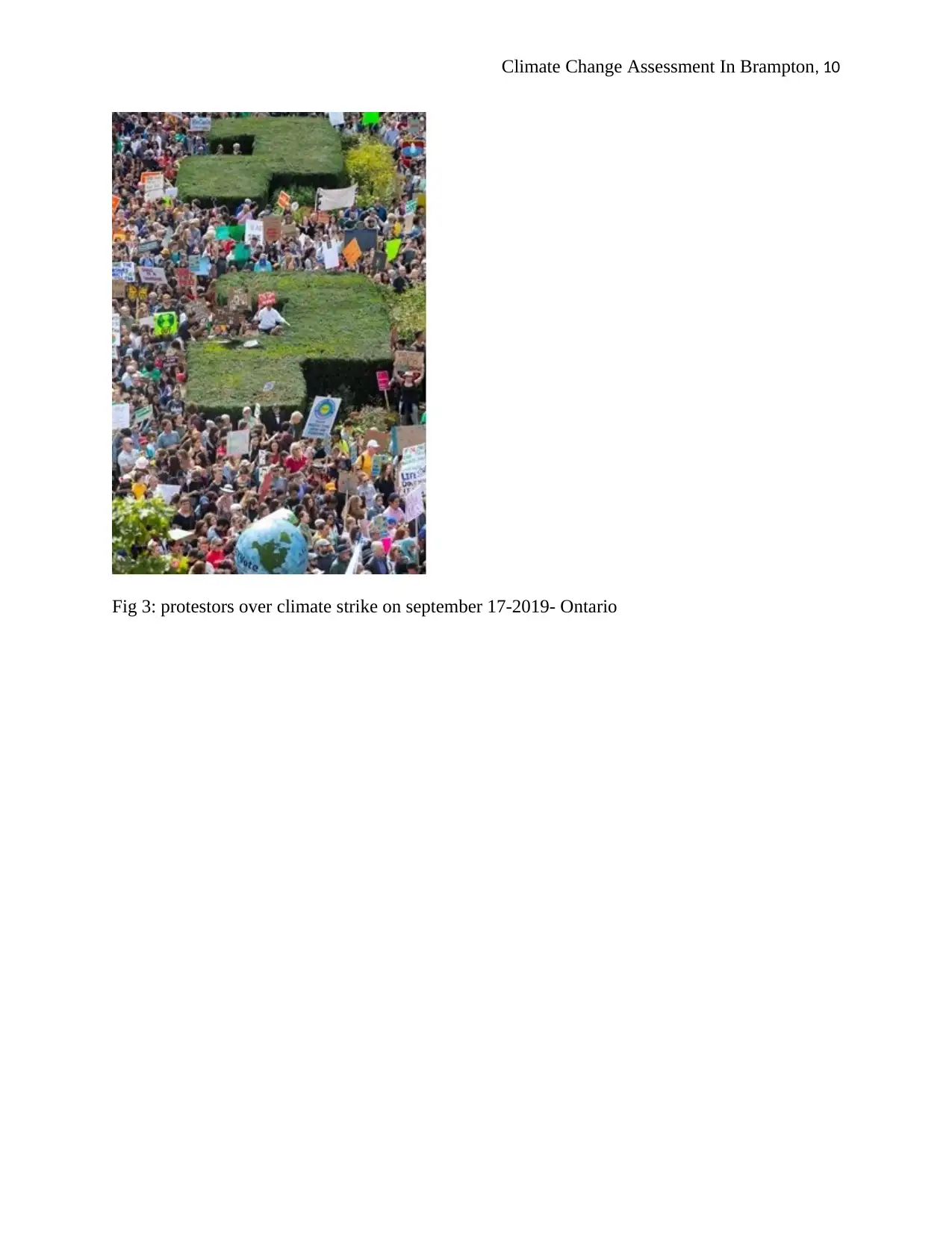
There have been a number of activities which have taken place in regards to climate
change in Ontario, it effects, preparations as well as the impact. The below images depicts some
of the activities which has occurred in the past as well as climatic conditions
The overall scientific agreement is that the change in climate is probably to bring raised
temperatures internationally however, a certain way in which that pattern will influence the
regional climate within Brampton is complicated (Van Patter & Hovorka, 2018). For specific
factors, especially monthly precipitations, humidity, winds as well as indices reliable on daily
sequences, certain adjustments are predicted in wide ranges of uncertainty. Specifically, the area
will probably experience raised temperatures throughout all seasons, and seasonal adjustments in
precipitation distribution, together with larger probability of intense temperature as well as
precipitation events (Daley et al., 2015). During winters, precipitation is more, while slightly
greater in spring. On an average basis, summer is probably to be drier, though punctuated by
greater rainfall events. As the growing season is forecasted to rise approximately between
thirteen and 34 days on average, due to the difficulty of predicting daily variability in climate
models (Deser et al., 2012), unseasonal frost is yet a crucial climate risk (Holland 2010). In
addition, the raised occurrences of intense heat events during the periods of summer may bring
matters of insufficient moisture.
Results
There have been a number of activities which have taken place in regards to climate
change in Ontario, it effects, preparations as well as the impact. The below images depicts some
of the activities which has occurred in the past as well as climatic conditions
⊘ This is a preview!⊘
Do you want full access?
Subscribe today to unlock all pages.
Trusted by 1+ million students worldwide
Climate Change Assessment In Brampton, 10
Fig 3: protestors over climate strike on september 17-2019- Ontario
Fig 3: protestors over climate strike on september 17-2019- Ontario
Paraphrase This Document
Need a fresh take? Get an instant paraphrase of this document with our AI Paraphraser
Climate Change Assessment In Brampton, 11
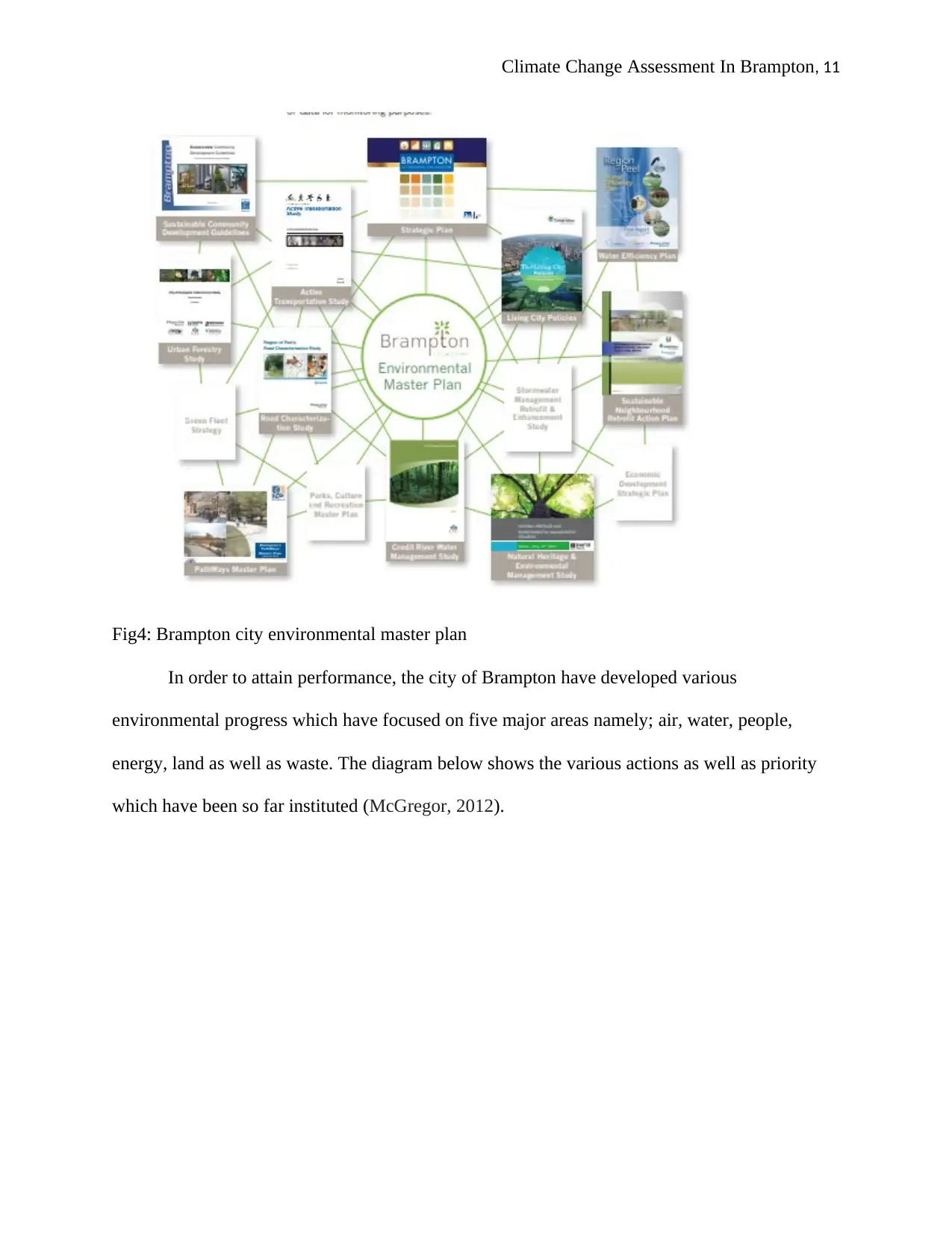
Fig4: Brampton city environmental master plan
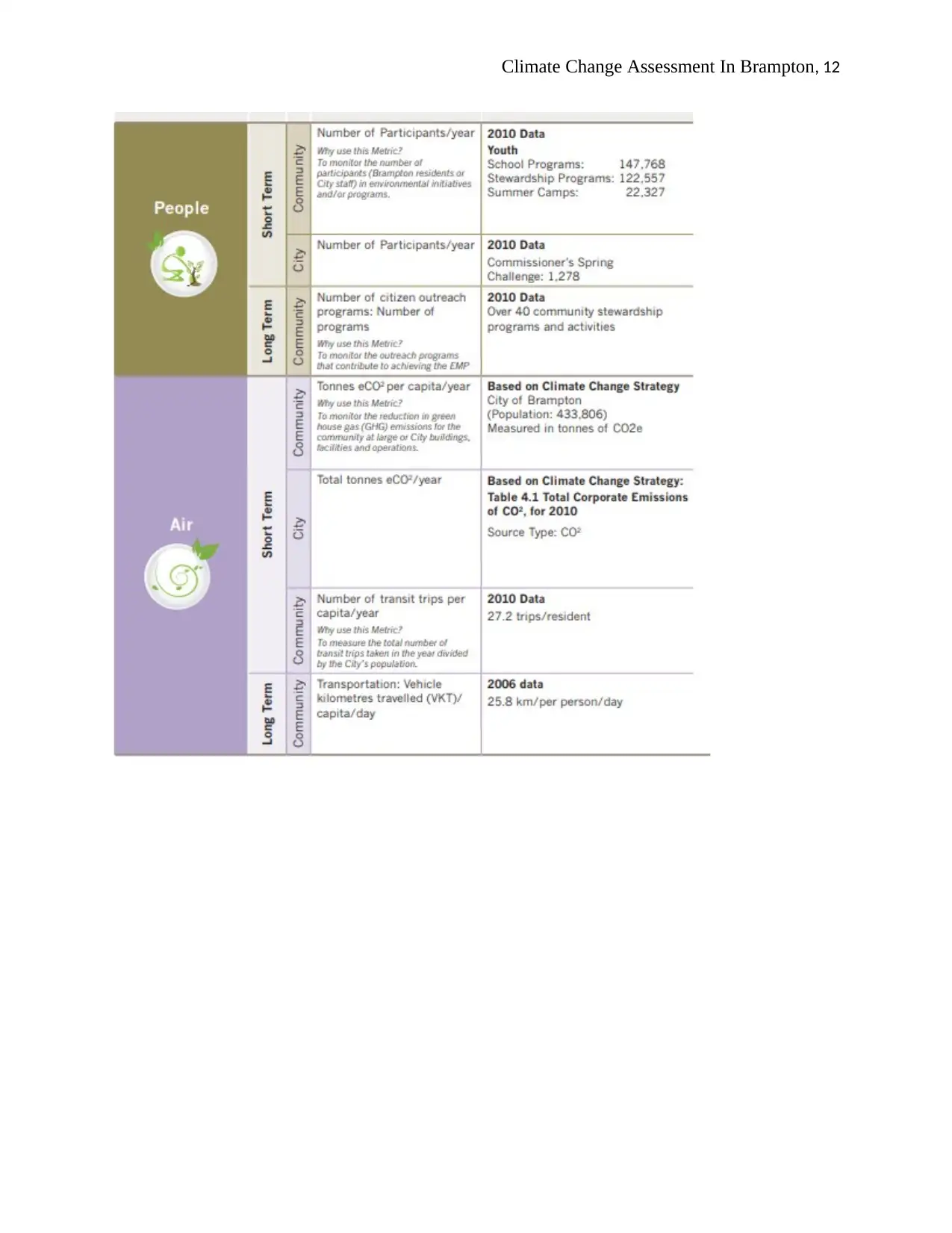
In order to attain performance, the city of Brampton have developed various
environmental progress which have focused on five major areas namely; air, water, people,
energy, land as well as waste. The diagram below shows the various actions as well as priority
which have been so far instituted (McGregor, 2012).
Fig4: Brampton city environmental master plan
In order to attain performance, the city of Brampton have developed various
environmental progress which have focused on five major areas namely; air, water, people,
energy, land as well as waste. The diagram below shows the various actions as well as priority
which have been so far instituted (McGregor, 2012).
Climate Change Assessment In Brampton, 12
⊘ This is a preview!⊘
Do you want full access?
Subscribe today to unlock all pages.
Trusted by 1+ million students worldwide

1 out of 19


Your All-in-One AI-Powered Toolkit for Academic Success.
+13062052269
info@desklib.com
Available 24*7 on WhatsApp / Email
![[object Object]](/_next/static/media/star-bottom.7253800d.svg)
Unlock your academic potential
Copyright © 2020–2026 A2Z Services. All Rights Reserved. Developed and managed by ZUCOL.