Project Management Assignment - BSBPMG512 - Peach Institute
VerifiedAdded on 2023/03/17
|27
|5608
|70
Homework Assignment
AI Summary
This document presents a comprehensive solution to a project management assignment, addressing various key aspects of the field. The assignment begins with a series of knowledge questions, exploring topics such as work breakdown structures (WBS), WBS dictionaries, task sequencing and dependencies, project activity commitments, Gantt charts, the critical path method, and schedule baselines. It delves into the benefits of project baselines, performance assessment, and schedule forecasting. Further, the assignment explores schedule delay analysis, schedule changes, and the management of project scope. The solution provides examples and practical applications of the concepts discussed, including WBS diagrams, Gantt charts, and schedule baselines. The document includes references to support the answers and provides a thorough understanding of project management principles, making it a valuable resource for students studying BSBPMG512 or related courses. The solution also includes appendices with a work breakdown structure, a Gantt chart, a project impact report, and a time management issue list.
Running head: PROJECT MANAGEMENT
Project management
Name of the Student
Name of the University
Author’s Note
Project management
Name of the Student
Name of the University
Author’s Note

Paraphrase This Document
Need a fresh take? Get an instant paraphrase of this document with our AI Paraphraser
1
PROJECT MANAGEMENT
Table of Contents
Assessment task 1: Knowledge Questions......................................................................................4
Answer to question number 1......................................................................................................4
Answer to question number 2......................................................................................................5
Answer to question number 3......................................................................................................5
Answer to question number 4......................................................................................................5
Answer to question number 5......................................................................................................6
Answer to question number 6......................................................................................................7
Answer to question number 7......................................................................................................7
Answer to question number 8....................................................................................................10
Answer to question number 9....................................................................................................10
Answer to question number 10..................................................................................................10
Answer to question number 11..................................................................................................11
Answer to question number 12..................................................................................................11
Answer to question number 13..................................................................................................11
Answer to question number 14..................................................................................................12
Answer to question number 15..................................................................................................12
Answer to question number 16..................................................................................................13
Answer to question number 17..................................................................................................13
Answer to question number 18..................................................................................................14
Answer to question number 19..................................................................................................14
Answer to question number 20..................................................................................................15
Answer to question number 21..................................................................................................15
Answer to question number 22..................................................................................................15
Answer to question number 23..................................................................................................16
Answer to question number 24..................................................................................................16
Answer to question number 25..................................................................................................16
Answer to question number 26..................................................................................................17
Answer to question number 27..................................................................................................17
Answer to question number 28..................................................................................................17
Answer to question number 29..................................................................................................18
Answer to question number 30..................................................................................................18
Answer to question number 31..................................................................................................19
Assessment Task 2 (AT2)..............................................................................................................20
Appendix 1: Work breakdown structure....................................................................................20
PROJECT MANAGEMENT
Table of Contents
Assessment task 1: Knowledge Questions......................................................................................4
Answer to question number 1......................................................................................................4
Answer to question number 2......................................................................................................5
Answer to question number 3......................................................................................................5
Answer to question number 4......................................................................................................5
Answer to question number 5......................................................................................................6
Answer to question number 6......................................................................................................7
Answer to question number 7......................................................................................................7
Answer to question number 8....................................................................................................10
Answer to question number 9....................................................................................................10
Answer to question number 10..................................................................................................10
Answer to question number 11..................................................................................................11
Answer to question number 12..................................................................................................11
Answer to question number 13..................................................................................................11
Answer to question number 14..................................................................................................12
Answer to question number 15..................................................................................................12
Answer to question number 16..................................................................................................13
Answer to question number 17..................................................................................................13
Answer to question number 18..................................................................................................14
Answer to question number 19..................................................................................................14
Answer to question number 20..................................................................................................15
Answer to question number 21..................................................................................................15
Answer to question number 22..................................................................................................15
Answer to question number 23..................................................................................................16
Answer to question number 24..................................................................................................16
Answer to question number 25..................................................................................................16
Answer to question number 26..................................................................................................17
Answer to question number 27..................................................................................................17
Answer to question number 28..................................................................................................17
Answer to question number 29..................................................................................................18
Answer to question number 30..................................................................................................18
Answer to question number 31..................................................................................................19
Assessment Task 2 (AT2)..............................................................................................................20
Appendix 1: Work breakdown structure....................................................................................20

2
PROJECT MANAGEMENT
Appendix 2: Gantt chart.............................................................................................................21
Appendix 3: Project impact report.............................................................................................22
Appendix 4: Time management issue list..................................................................................23
References......................................................................................................................................25
PROJECT MANAGEMENT
Appendix 2: Gantt chart.............................................................................................................21
Appendix 3: Project impact report.............................................................................................22
Appendix 4: Time management issue list..................................................................................23
References......................................................................................................................................25
⊘ This is a preview!⊘
Do you want full access?
Subscribe today to unlock all pages.

Trusted by 1+ million students worldwide
3
PROJECT MANAGEMENT
Assessment task 1: Knowledge Questions
Answer to question number 1
Work package is considered as the lowest level of the work breakdown structure. It is
found that the WBS will be mainly created or developed with the help of scope procedure. The
entire WBS level is helpful in achieving when the entire work accurately for managing the entire
work packages quite effectively [3]. In addition to this, it is found that the work packages are
generally decomposed into activities for creating the proper activity list which further can be
utilized for developing the schedule of the project.
Example of work package is provided below:
Figure 1: Example of work package
(Source: Kerner 2019, pp.13)
Answer to question number 2
The two main essential elements of the work breakdown structure is mainly illustrated
below:
PROJECT MANAGEMENT
Assessment task 1: Knowledge Questions
Answer to question number 1
Work package is considered as the lowest level of the work breakdown structure. It is
found that the WBS will be mainly created or developed with the help of scope procedure. The
entire WBS level is helpful in achieving when the entire work accurately for managing the entire
work packages quite effectively [3]. In addition to this, it is found that the work packages are
generally decomposed into activities for creating the proper activity list which further can be
utilized for developing the schedule of the project.
Example of work package is provided below:
Figure 1: Example of work package
(Source: Kerner 2019, pp.13)
Answer to question number 2
The two main essential elements of the work breakdown structure is mainly illustrated
below:
Paraphrase This Document
Need a fresh take? Get an instant paraphrase of this document with our AI Paraphraser
4
PROJECT MANAGEMENT
WBS dictionary: A WBS dictionary is considered as a reference for each of the
component of the Work breakdown structure which mainly contains information including the
deliverables, tasks, milestones as well as cost [6].
Deliverables: It is very much necessary for the WBS to cover all the needs of the
project. The sum of the entire work in the lower level of the work breakdown structure should
mainly include 100% of the work that is needed by the upper levels of the management.
Answer to question number 3
It is found that the components of sequence as well as dependencies generally reflect the
relationship that exists between tasks in order to properly determine the sequence in project
management activities that are generally needed to performed [8]. These tasks generally have
multiple number of preceding tasks. It is found that all this are generally characterized by various
attributes. Furthermore, dependency is considered as a technique that helps in determining the
type of dependency that is mainly utilized for creating the relationship between the various
activities.
Answer to question number 4
The two different kinds of commitment that each of the project activities generally have
in the project are generally elaborated below:
Completion of project activities on time: The project activities must get completed
within the time that is assigned in the initial phase of the project as per the assumption [9].
Completion of project activities within budget: The project activities must get
completed within the budget that is mainly allocated before starting of the entire project.
PROJECT MANAGEMENT
WBS dictionary: A WBS dictionary is considered as a reference for each of the
component of the Work breakdown structure which mainly contains information including the
deliverables, tasks, milestones as well as cost [6].
Deliverables: It is very much necessary for the WBS to cover all the needs of the
project. The sum of the entire work in the lower level of the work breakdown structure should
mainly include 100% of the work that is needed by the upper levels of the management.
Answer to question number 3
It is found that the components of sequence as well as dependencies generally reflect the
relationship that exists between tasks in order to properly determine the sequence in project
management activities that are generally needed to performed [8]. These tasks generally have
multiple number of preceding tasks. It is found that all this are generally characterized by various
attributes. Furthermore, dependency is considered as a technique that helps in determining the
type of dependency that is mainly utilized for creating the relationship between the various
activities.
Answer to question number 4
The two different kinds of commitment that each of the project activities generally have
in the project are generally elaborated below:
Completion of project activities on time: The project activities must get completed
within the time that is assigned in the initial phase of the project as per the assumption [9].
Completion of project activities within budget: The project activities must get
completed within the budget that is mainly allocated before starting of the entire project.
5
PROJECT MANAGEMENT
Answer to question number 5
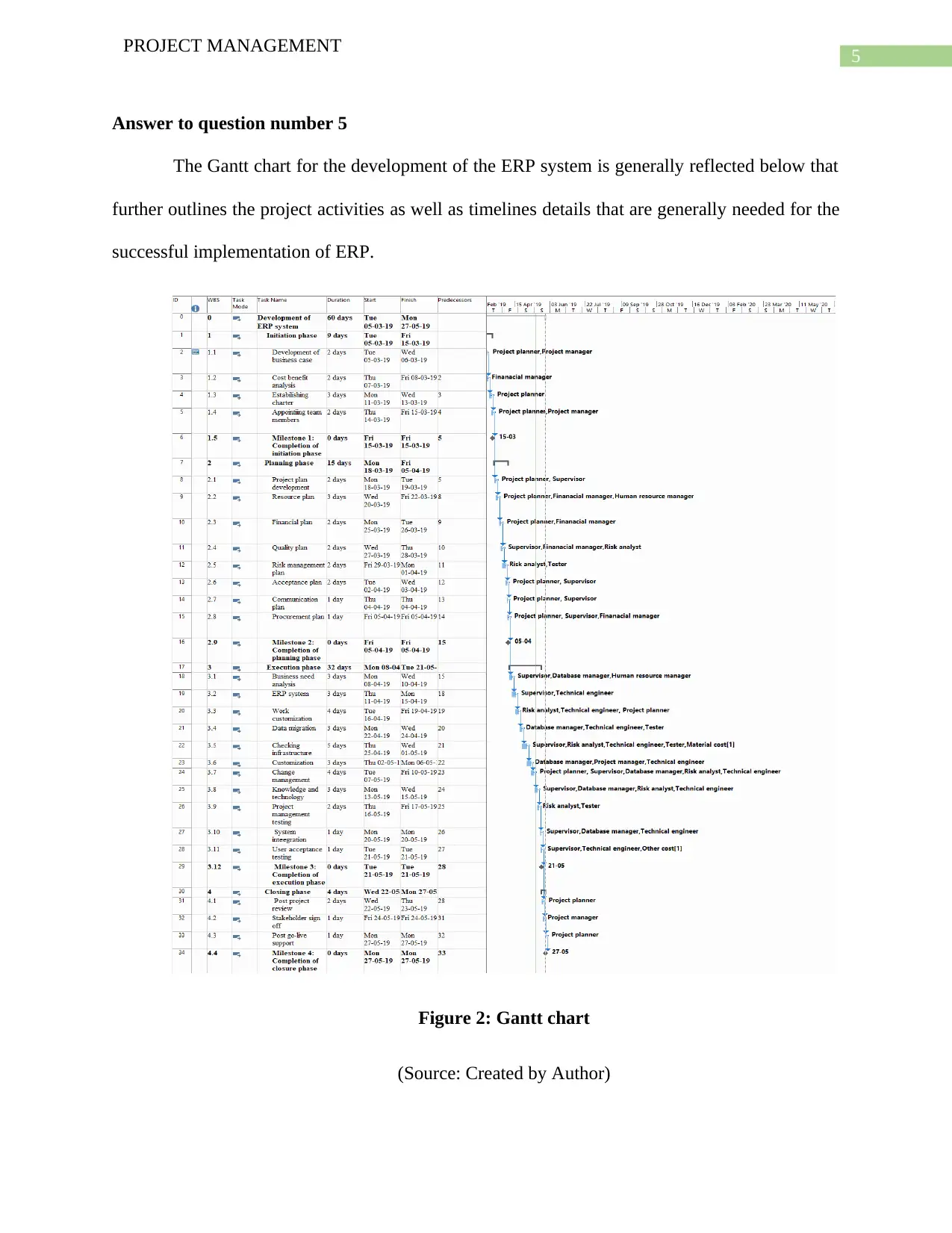
The Gantt chart for the development of the ERP system is generally reflected below that
further outlines the project activities as well as timelines details that are generally needed for the
successful implementation of ERP.
Figure 2: Gantt chart
(Source: Created by Author)
PROJECT MANAGEMENT
Answer to question number 5
The Gantt chart for the development of the ERP system is generally reflected below that
further outlines the project activities as well as timelines details that are generally needed for the
successful implementation of ERP.
Figure 2: Gantt chart
(Source: Created by Author)
⊘ This is a preview!⊘
Do you want full access?
Subscribe today to unlock all pages.
Trusted by 1+ million students worldwide
6
PROJECT MANAGEMENT
Answer to question number 6
The three different benefits that is mainly achieved due to the utilization of critical path
method are mainly illustrated below:
Logical discipline: It is found that the critical path method generally helps in
encouraging logical discipline in context to planning, scheduling as well as control of the entire
projects quite effectively [11].
Standard method of documentation: Critical path method assists in providing a proper
method for documenting as well as communicating the schedule, time as well as cost
performances that are mainly associated with the project.
Easy method of evaluation: CPM method helps in providing an easy method for
properly evaluating the effects related within various technical changes within the project
schedule [14].
Answer to question number 7
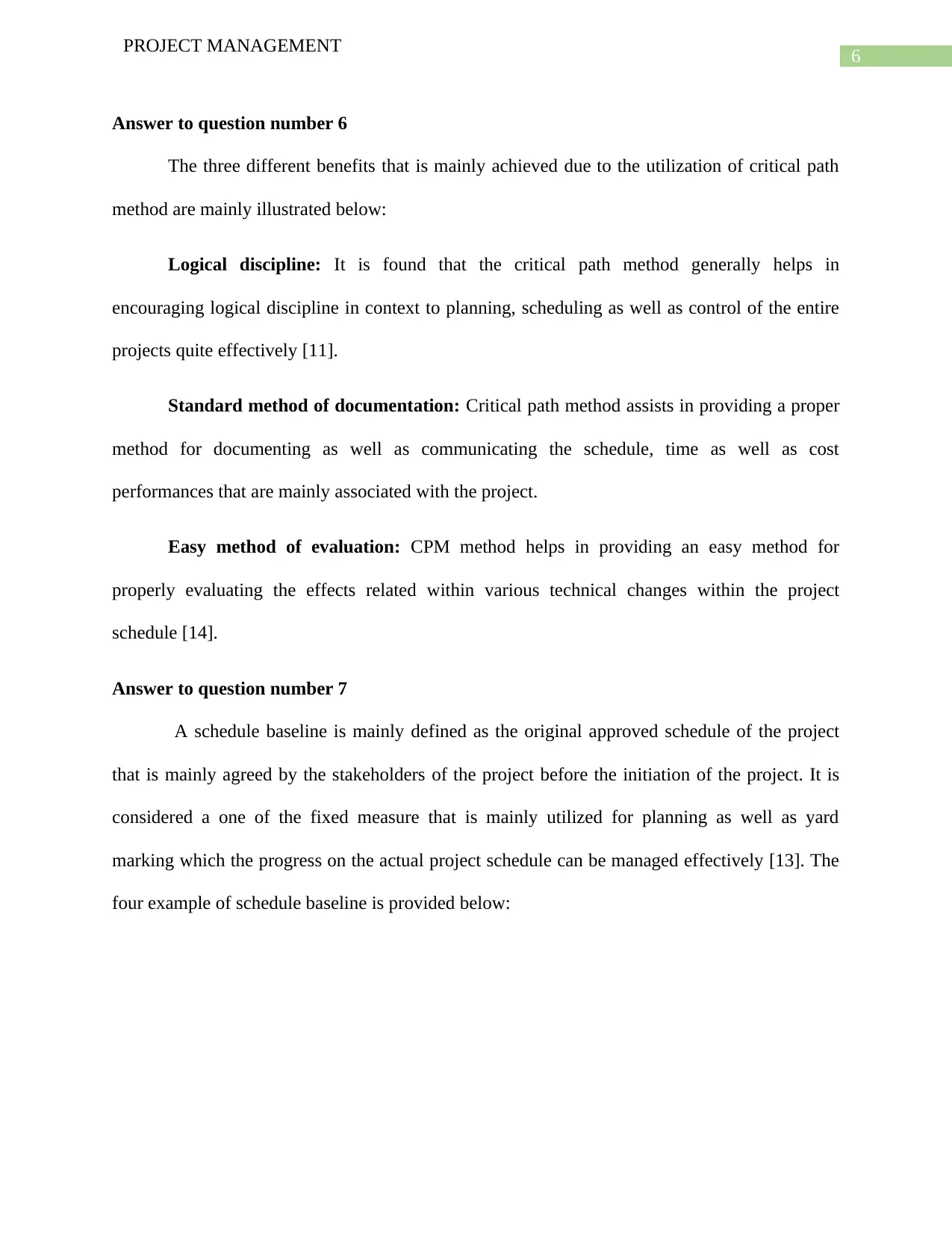
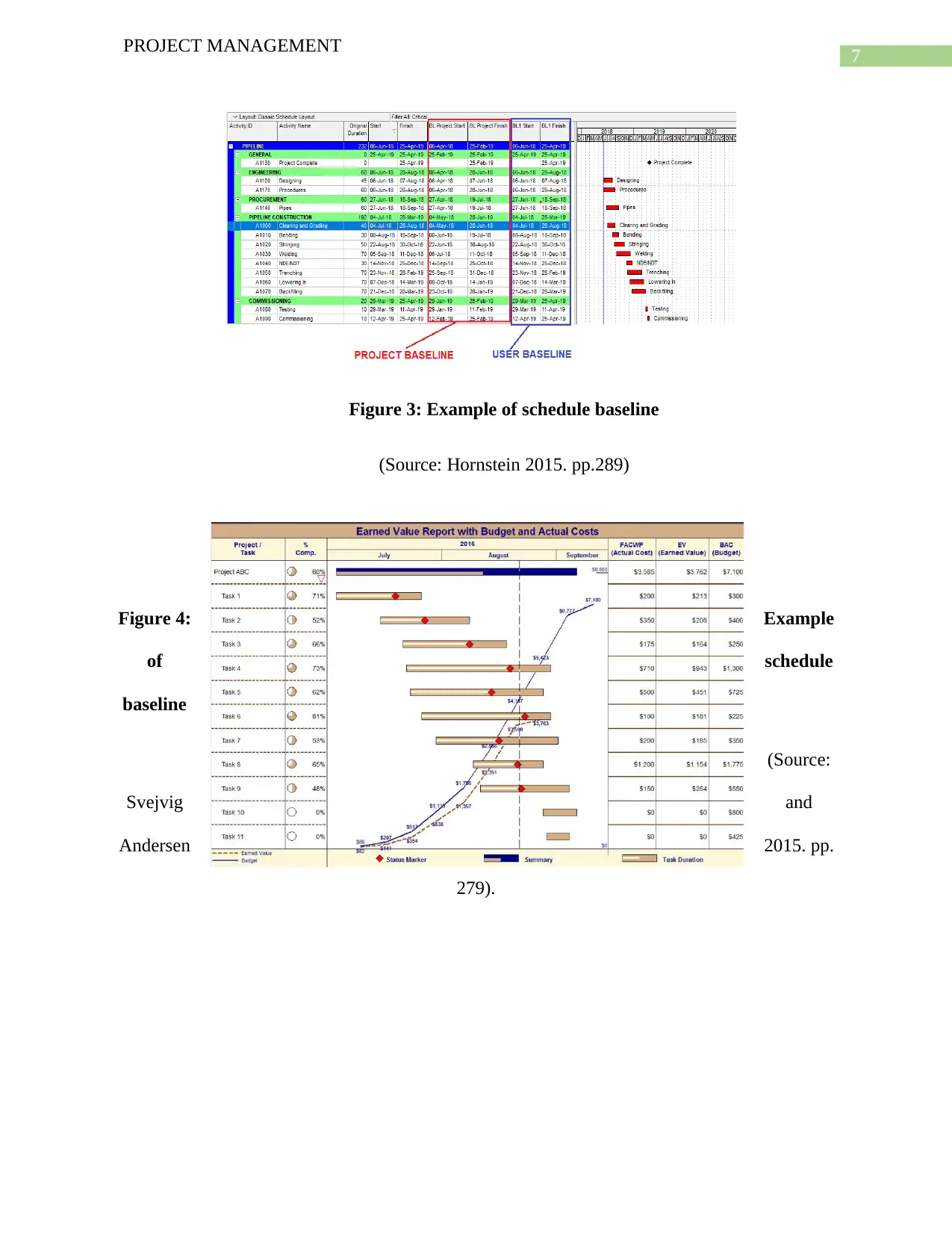
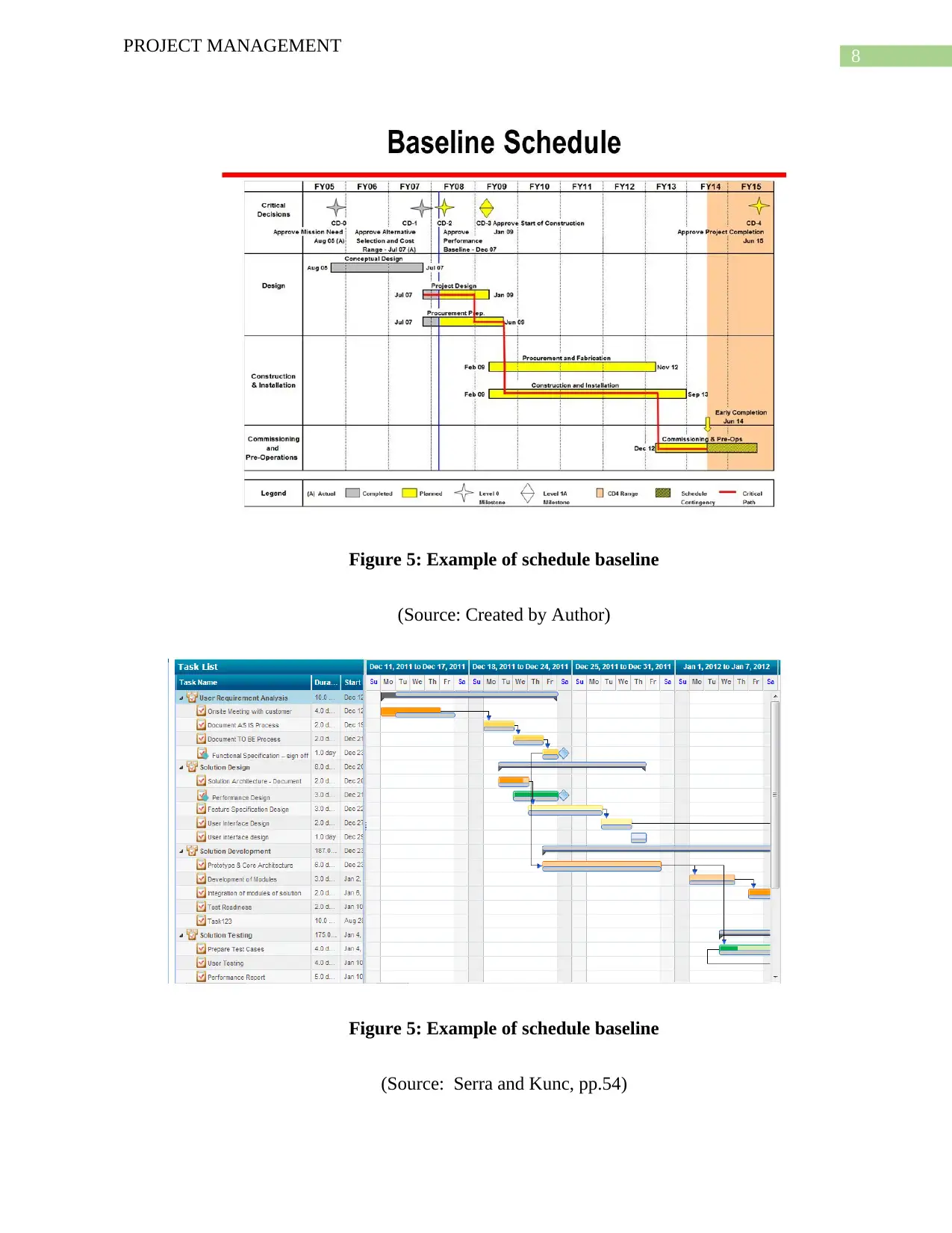
A schedule baseline is mainly defined as the original approved schedule of the project
that is mainly agreed by the stakeholders of the project before the initiation of the project. It is
considered a one of the fixed measure that is mainly utilized for planning as well as yard
marking which the progress on the actual project schedule can be managed effectively [13]. The
four example of schedule baseline is provided below:
PROJECT MANAGEMENT
Answer to question number 6
The three different benefits that is mainly achieved due to the utilization of critical path
method are mainly illustrated below:
Logical discipline: It is found that the critical path method generally helps in
encouraging logical discipline in context to planning, scheduling as well as control of the entire
projects quite effectively [11].
Standard method of documentation: Critical path method assists in providing a proper
method for documenting as well as communicating the schedule, time as well as cost
performances that are mainly associated with the project.
Easy method of evaluation: CPM method helps in providing an easy method for
properly evaluating the effects related within various technical changes within the project
schedule [14].
Answer to question number 7
A schedule baseline is mainly defined as the original approved schedule of the project
that is mainly agreed by the stakeholders of the project before the initiation of the project. It is
considered a one of the fixed measure that is mainly utilized for planning as well as yard
marking which the progress on the actual project schedule can be managed effectively [13]. The
four example of schedule baseline is provided below:
Paraphrase This Document
Need a fresh take? Get an instant paraphrase of this document with our AI Paraphraser
7
PROJECT MANAGEMENT
Figure 3: Example of schedule baseline
(Source: Hornstein 2015. pp.289)
Figure 4: Example
of schedule
baseline
(Source:
Svejvig and
Andersen 2015. pp.
279).
PROJECT MANAGEMENT
Figure 3: Example of schedule baseline
(Source: Hornstein 2015. pp.289)
Figure 4: Example
of schedule
baseline
(Source:
Svejvig and
Andersen 2015. pp.
279).
8
PROJECT MANAGEMENT
Figure 5: Example of schedule baseline
(Source: Created by Author)
Figure 5: Example of schedule baseline
(Source: Serra and Kunc, pp.54)
PROJECT MANAGEMENT
Figure 5: Example of schedule baseline
(Source: Created by Author)
Figure 5: Example of schedule baseline
(Source: Serra and Kunc, pp.54)
⊘ This is a preview!⊘
Do you want full access?
Subscribe today to unlock all pages.
Trusted by 1+ million students worldwide
9
PROJECT MANAGEMENT
Answer to question number 8
The main benefits of having the project baseline are generally elaborated below:
Assessing performance: With the help of the project baseline, proper idea about the
project plans are provided that further helps in tracking the project quite effectively. This further
assists in providing proper information about the variance that is further helpful in future
estimation [14].
Improved estimation: When proper plan is created one needs to estimate each of the
task as well as effort that is mainly required for completing the project [19]. he schedules
baseline are generally helpful in improving the accuracy of estimation if one has proper record of
the previous estimation about the actual outcome of the project.
Answer to question number 9
The correct choice of information that is mainly recorded by the team members in order
to assess the performance period is
Completed intermediate and final deliverables
Answer to question number 10
The information which is recorded during the performance period will be utilized by the
project team in order to keep the entire project on track and for finishing the project activities
within the budget [21]. The performance report generally guides the team to work effectively in
order to meet the goals and objectives of the project and also helps in resolving that are
associated with the project.
PROJECT MANAGEMENT
Answer to question number 8
The main benefits of having the project baseline are generally elaborated below:
Assessing performance: With the help of the project baseline, proper idea about the
project plans are provided that further helps in tracking the project quite effectively. This further
assists in providing proper information about the variance that is further helpful in future
estimation [14].
Improved estimation: When proper plan is created one needs to estimate each of the
task as well as effort that is mainly required for completing the project [19]. he schedules
baseline are generally helpful in improving the accuracy of estimation if one has proper record of
the previous estimation about the actual outcome of the project.
Answer to question number 9
The correct choice of information that is mainly recorded by the team members in order
to assess the performance period is
Completed intermediate and final deliverables
Answer to question number 10
The information which is recorded during the performance period will be utilized by the
project team in order to keep the entire project on track and for finishing the project activities
within the budget [21]. The performance report generally guides the team to work effectively in
order to meet the goals and objectives of the project and also helps in resolving that are
associated with the project.
Paraphrase This Document
Need a fresh take? Get an instant paraphrase of this document with our AI Paraphraser
10
PROJECT MANAGEMENT
Answer to question number 11
In the activity/milestone report graph the shaded portion of the bar generally helps in
reflecting the duration in which the project activities as well as the project schedule generally
represents.
Answer to question number 12
The factor that is required to be considered when scheduling the activity monitoring is:
Is the activity on a critical path?
Answer to question number 13
The five benefits of schedule forecasting are generally elaborated below:
Keeps schedule on track: The forecasting the schedule generally helps in giving idea
about the time that is generally necessary and thus helps in keeping the entire project on track.
Avoids slippage: If the time that is needed for each of the activity is forecasted before
the execution of the project and then following it effectively will generally helpful in avoiding
the issues that are associated with the slippage of project schedule [17].
Avoids budget shortage: Keeping the schedule on track with the help of schedule
forecasting generally helps in avoiding the issues that are associated with the budget of the
project.
Manages performance: It is found that with the help of proper schedule forecasting the
activities of the project can be managed quite effectively [5].
Provides idea about the project progress: Schedule forecasting helps in giving idea
whether the project is on schedule or behind the project schedule
PROJECT MANAGEMENT
Answer to question number 11
In the activity/milestone report graph the shaded portion of the bar generally helps in
reflecting the duration in which the project activities as well as the project schedule generally
represents.
Answer to question number 12
The factor that is required to be considered when scheduling the activity monitoring is:
Is the activity on a critical path?
Answer to question number 13
The five benefits of schedule forecasting are generally elaborated below:
Keeps schedule on track: The forecasting the schedule generally helps in giving idea
about the time that is generally necessary and thus helps in keeping the entire project on track.
Avoids slippage: If the time that is needed for each of the activity is forecasted before
the execution of the project and then following it effectively will generally helpful in avoiding
the issues that are associated with the slippage of project schedule [17].
Avoids budget shortage: Keeping the schedule on track with the help of schedule
forecasting generally helps in avoiding the issues that are associated with the budget of the
project.
Manages performance: It is found that with the help of proper schedule forecasting the
activities of the project can be managed quite effectively [5].
Provides idea about the project progress: Schedule forecasting helps in giving idea
whether the project is on schedule or behind the project schedule
11
PROJECT MANAGEMENT
Answer to question number 14
The three typical issues as well as challenges that might require proper schedule delay
analysis are generally elaborated below:
Budget overflow: It is found that if the project budget increases then it might need
proper schedule delay analysis for identifying the reason behind increment within the budget of
the project [9].
Schedule overshoot: If the time that is required for the completion of the project
increases then it is quite necessary to analyze whether delay has occurred within the project or
not.
Scope changes: If scope of the project generally changes then it can be analyzed that
proper schedule delay analysis is mainly needed within the project [16].
Answer to question number 15
The progress of the entire project will generally be reviewed throughout the life cycle of
the project in order to implement the agreed schedule changes within the project are generally
reflected below:
Tracking the schedule: By tracking the schedule of the project, the project manager
generally able to know whether the progress of the project is on schedule or behind the schedule.
If the project is identified behind the schedule, then the project manager mainly undertakes a
number of activities [16].
Tracking budget: The budget of the project must be tracked on regular basis for
avoiding the additional expenditure within the project. This generally helps in reflecting that the
project activities get completed within the budget that is allocated. However, if the activities does
PROJECT MANAGEMENT
Answer to question number 14
The three typical issues as well as challenges that might require proper schedule delay
analysis are generally elaborated below:
Budget overflow: It is found that if the project budget increases then it might need
proper schedule delay analysis for identifying the reason behind increment within the budget of
the project [9].
Schedule overshoot: If the time that is required for the completion of the project
increases then it is quite necessary to analyze whether delay has occurred within the project or
not.
Scope changes: If scope of the project generally changes then it can be analyzed that
proper schedule delay analysis is mainly needed within the project [16].
Answer to question number 15
The progress of the entire project will generally be reviewed throughout the life cycle of
the project in order to implement the agreed schedule changes within the project are generally
reflected below:
Tracking the schedule: By tracking the schedule of the project, the project manager
generally able to know whether the progress of the project is on schedule or behind the schedule.
If the project is identified behind the schedule, then the project manager mainly undertakes a
number of activities [16].
Tracking budget: The budget of the project must be tracked on regular basis for
avoiding the additional expenditure within the project. This generally helps in reflecting that the
project activities get completed within the budget that is allocated. However, if the activities does
⊘ This is a preview!⊘
Do you want full access?
Subscribe today to unlock all pages.
Trusted by 1+ million students worldwide

1 out of 27


Related Documents


Your All-in-One AI-Powered Toolkit for Academic Success.
+13062052269
info@desklib.com
Available 24*7 on WhatsApp / Email
![[object Object]](/_next/static/media/star-bottom.7253800d.svg)
Unlock your academic potential
Copyright © 2020–2026 A2Z Services. All Rights Reserved. Developed and managed by ZUCOL.