Operation and Maintenance of Building Services: M&E Systems Report
VerifiedAdded on 2022/08/08
|20
|3815
|178
Report
AI Summary
This report analyzes the operation and maintenance of building services, with a focus on monitoring and evaluation (M&E) systems. It begins with an introduction to M&E, defining its role in assessing program implementation and outcomes. The report then delves into the background of building energy consumption, emphasizing the importance of energy efficiency and providing thermal comfort and air quality. Key areas discussed include efficient building design, good lighting design, and major energy-consuming appliances. The report highlights the significance of smart controllers and integrated systems for enhancing building efficiency. Challenges in refining chilled water cooling plants are also addressed, covering fluid issues, equipment replacement, maintenance challenges, poor operative practices, and chiller oversizing. The report concludes by discussing building control strategies, including the importance of high-performing construction, integrated control systems, and the sequence of equipment operations. This comprehensive analysis provides valuable insights into optimizing building performance and energy efficiency through effective M&E systems and operational strategies.
1
OPERATION AND MAINTENANCE OF BUILDING SERVICES
Name of Student
Institution Affiliation
OPERATION AND MAINTENANCE OF BUILDING SERVICES
Name of Student
Institution Affiliation

Paraphrase This Document
Need a fresh take? Get an instant paraphrase of this document with our AI Paraphraser
2
(A) MONITORING AND EVALUATION (M&E) SYSTEMS
Introduction
Monitoring and evaluation systems refers to the tools, indicators and the process which are used
to measure if a program has been implemented according to the plans (monitoring) and if it is
having the intended results (Carroon, 2015).
Monitoring refers to the continues function which makes application of the systematic
collection of data on the given indicators to give the key stakeholders and the management of
the ongoing development interventions with the indicators of the extent of progress and the
attainment of the goals and the progress in the utilization of the allocated resources. While,
evaluation refers to the objective and systematic assessment of a completed or an ongoing
project, policy or program which includes its design, results and implementation. The main aim
of this is to establish the relevance and the attainment of the objectives, effectiveness,
sustainability and its impacts. Once an evaluation has been carried out it should give data which
is useful and at the same time creditable, hence enabling the incorporation of the lessons learnt
into the process of making decisions of both the donors and the recipients.
Background (Readiness assessment)
Buildings usually accounts for approximately 76% of electricity consumption in primary energy
use, this has made it important to reduce the energy consumption in buildings in order to meet
the global energy challenges. The energy efficiency of the given building must be considered as
the improving the overall performance of the given building complex, which is designed to offer
the occupants with a safe, attractive and comfortable working spaces. This calls for superior
(A) MONITORING AND EVALUATION (M&E) SYSTEMS
Introduction
Monitoring and evaluation systems refers to the tools, indicators and the process which are used
to measure if a program has been implemented according to the plans (monitoring) and if it is
having the intended results (Carroon, 2015).
Monitoring refers to the continues function which makes application of the systematic
collection of data on the given indicators to give the key stakeholders and the management of
the ongoing development interventions with the indicators of the extent of progress and the
attainment of the goals and the progress in the utilization of the allocated resources. While,
evaluation refers to the objective and systematic assessment of a completed or an ongoing
project, policy or program which includes its design, results and implementation. The main aim
of this is to establish the relevance and the attainment of the objectives, effectiveness,
sustainability and its impacts. Once an evaluation has been carried out it should give data which
is useful and at the same time creditable, hence enabling the incorporation of the lessons learnt
into the process of making decisions of both the donors and the recipients.
Background (Readiness assessment)
Buildings usually accounts for approximately 76% of electricity consumption in primary energy
use, this has made it important to reduce the energy consumption in buildings in order to meet
the global energy challenges. The energy efficiency of the given building must be considered as
the improving the overall performance of the given building complex, which is designed to offer
the occupants with a safe, attractive and comfortable working spaces. This calls for superior
3
engineering and architectural designs, intelligent operations of the structure and quality
construction practices. (Ba, 2019)
Providing Thermal Comfort and Air Quality
Offering a healthy and comfortable interior environment is one of the main intended purpose of
the energy systems and for the given building it has accounted for almost a third of the total
building energy use. Modern technologies for cooling, heating and ventilation can be a great tool
in achieving large gains in efficiency. At the same time they can enhance the manner in which
the building system meets the needs of the occupants and preferences by offering greater
controls, minimizing undesirable variations in temperature, and at the same time improve the
quality of indoor air (Tolba, 2017). In the given building the opportunities for improvement are
categorized into the following categories:
Efficient building design
This includes:
Landscaping
Passive systems
Enhance building envelope which includes the walls, roof, windows and equipment for
cooling and heating.
Thermal energy storage system which can be part of the structure of the building or just a
separate equipment
Enhanced sensors
Control systems.
engineering and architectural designs, intelligent operations of the structure and quality
construction practices. (Ba, 2019)
Providing Thermal Comfort and Air Quality
Offering a healthy and comfortable interior environment is one of the main intended purpose of
the energy systems and for the given building it has accounted for almost a third of the total
building energy use. Modern technologies for cooling, heating and ventilation can be a great tool
in achieving large gains in efficiency. At the same time they can enhance the manner in which
the building system meets the needs of the occupants and preferences by offering greater
controls, minimizing undesirable variations in temperature, and at the same time improve the
quality of indoor air (Tolba, 2017). In the given building the opportunities for improvement are
categorized into the following categories:
Efficient building design
This includes:
Landscaping
Passive systems
Enhance building envelope which includes the walls, roof, windows and equipment for
cooling and heating.
Thermal energy storage system which can be part of the structure of the building or just a
separate equipment
Enhanced sensors
Control systems.
⊘ This is a preview!⊘
Do you want full access?
Subscribe today to unlock all pages.

Trusted by 1+ million students worldwide
4
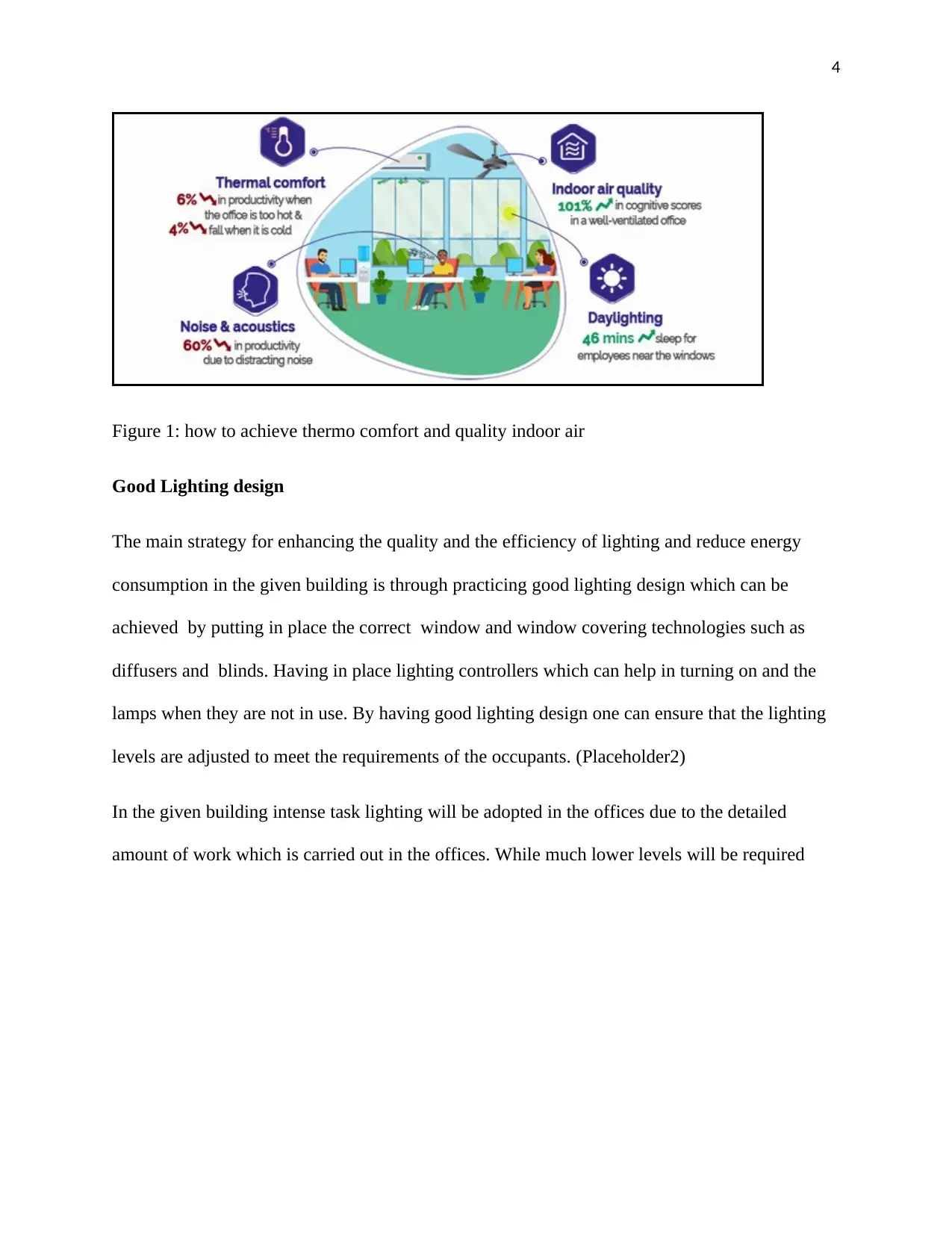
Figure 1: how to achieve thermo comfort and quality indoor air
Good Lighting design
The main strategy for enhancing the quality and the efficiency of lighting and reduce energy
consumption in the given building is through practicing good lighting design which can be
achieved by putting in place the correct window and window covering technologies such as
diffusers and blinds. Having in place lighting controllers which can help in turning on and the
lamps when they are not in use. By having good lighting design one can ensure that the lighting
levels are adjusted to meet the requirements of the occupants. (Placeholder2)
In the given building intense task lighting will be adopted in the offices due to the detailed
amount of work which is carried out in the offices. While much lower levels will be required
Figure 1: how to achieve thermo comfort and quality indoor air
Good Lighting design
The main strategy for enhancing the quality and the efficiency of lighting and reduce energy
consumption in the given building is through practicing good lighting design which can be
achieved by putting in place the correct window and window covering technologies such as
diffusers and blinds. Having in place lighting controllers which can help in turning on and the
lamps when they are not in use. By having good lighting design one can ensure that the lighting
levels are adjusted to meet the requirements of the occupants. (Placeholder2)
In the given building intense task lighting will be adopted in the offices due to the detailed
amount of work which is carried out in the offices. While much lower levels will be required
Paraphrase This Document
Need a fresh take? Get an instant paraphrase of this document with our AI Paraphraser
5
in the hallways. Due to the fact that these elements are influenced by one another , it is very
crucial to evaluate each as a part of an integrated system, it must also be shown that lighting
whether it is offered by artificial or day lighting , can have a great effect on the cooling and
heating loads. The environmental and energy effects of lighting systems will need to be
considered as part of the integrated building performance. (Evaluation, 2017)
The main aim of lighting design is to give the lighting designers the devices and strategies which
can offer maximum lighting performance while minimizing energy use. Coming up with a new
advanced technology it can do much better than the existing system, while it uses use of less
much energy. This can enhance the quality of lighting by allowing greater control by the
user which includes ability to choose the required color and its intensity. The new advanced
lighting system may be able to work for long time without major maintenance or replacement.
Some of the lighting systems that be done to the building include;
Day lighting, Windows and Lighting Controls
The daylight which will be offered by the windows will greatly contribute to the reduction in
artificial lighting by the client and improve on ambiance of the indoor environments.
High efficient lighting devices with acceptable light
in the hallways. Due to the fact that these elements are influenced by one another , it is very
crucial to evaluate each as a part of an integrated system, it must also be shown that lighting
whether it is offered by artificial or day lighting , can have a great effect on the cooling and
heating loads. The environmental and energy effects of lighting systems will need to be
considered as part of the integrated building performance. (Evaluation, 2017)
The main aim of lighting design is to give the lighting designers the devices and strategies which
can offer maximum lighting performance while minimizing energy use. Coming up with a new
advanced technology it can do much better than the existing system, while it uses use of less
much energy. This can enhance the quality of lighting by allowing greater control by the
user which includes ability to choose the required color and its intensity. The new advanced
lighting system may be able to work for long time without major maintenance or replacement.
Some of the lighting systems that be done to the building include;
Day lighting, Windows and Lighting Controls
The daylight which will be offered by the windows will greatly contribute to the reduction in
artificial lighting by the client and improve on ambiance of the indoor environments.
High efficient lighting devices with acceptable light
6
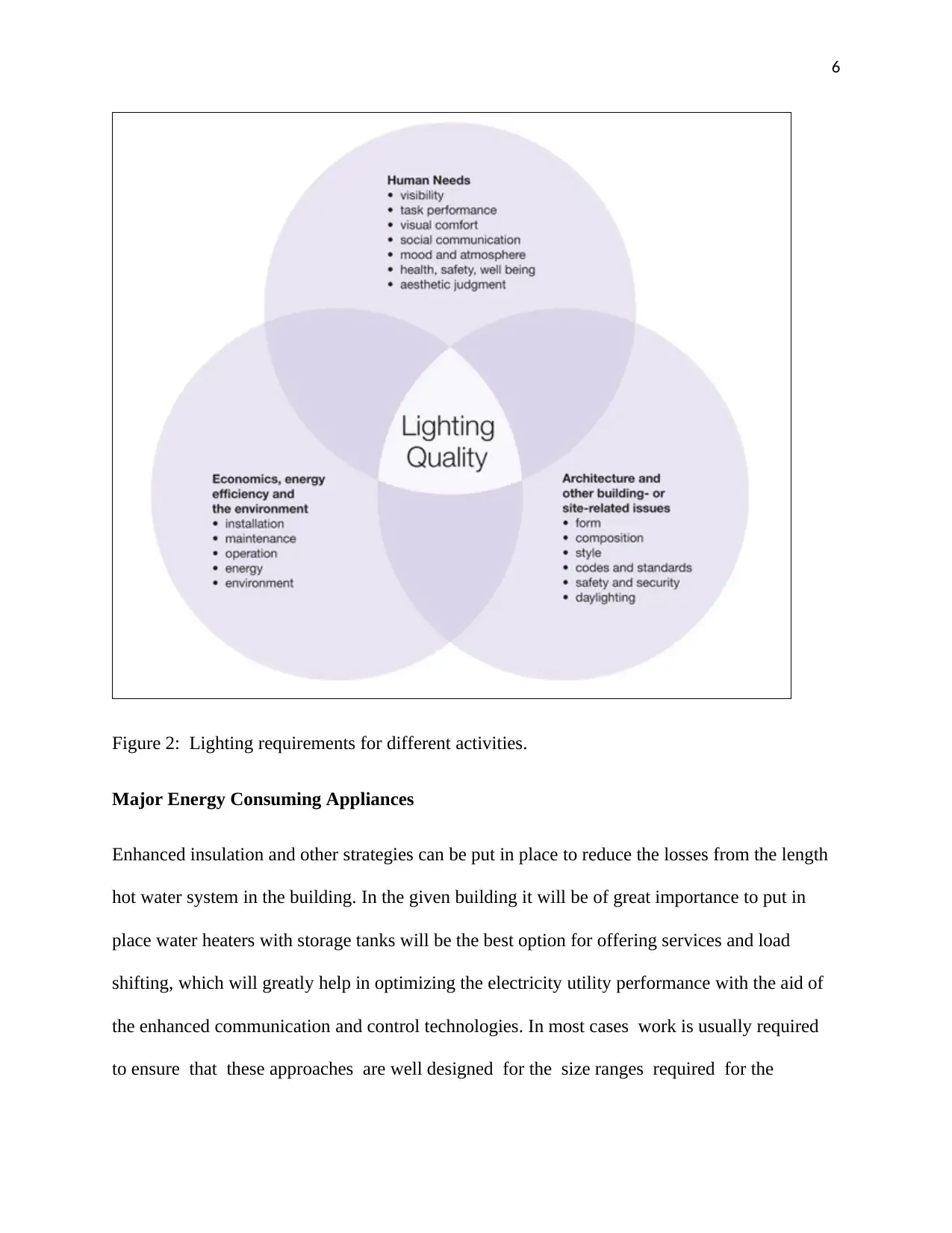
Figure 2: Lighting requirements for different activities.
Major Energy Consuming Appliances
Enhanced insulation and other strategies can be put in place to reduce the losses from the length
hot water system in the building. In the given building it will be of great importance to put in
place water heaters with storage tanks will be the best option for offering services and load
shifting, which will greatly help in optimizing the electricity utility performance with the aid of
the enhanced communication and control technologies. In most cases work is usually required
to ensure that these approaches are well designed for the size ranges required for the
Figure 2: Lighting requirements for different activities.
Major Energy Consuming Appliances
Enhanced insulation and other strategies can be put in place to reduce the losses from the length
hot water system in the building. In the given building it will be of great importance to put in
place water heaters with storage tanks will be the best option for offering services and load
shifting, which will greatly help in optimizing the electricity utility performance with the aid of
the enhanced communication and control technologies. In most cases work is usually required
to ensure that these approaches are well designed for the size ranges required for the
⊘ This is a preview!⊘
Do you want full access?
Subscribe today to unlock all pages.
Trusted by 1+ million students worldwide
7
appliances. Important gains can have ben achieved in the refrigerator performance. (Evaluation,
Gudda, 2015)
Systems-Level Opportunities
Windows, lighting, water heaters, HVAC equipment and other equipment can be equipped with
smart controllers which are usually wireless. This kind of controllers can be able to bring about
many opportunities for enhancing the overall efficiency of the building. These type of controllers
will be able to create other non-energy benefits which will be of great interest to the building
owners. While separate subsystems such as lighting need their own control, the building as a
whole will perform efficiently if all the systems of a building are controlled as a part of an
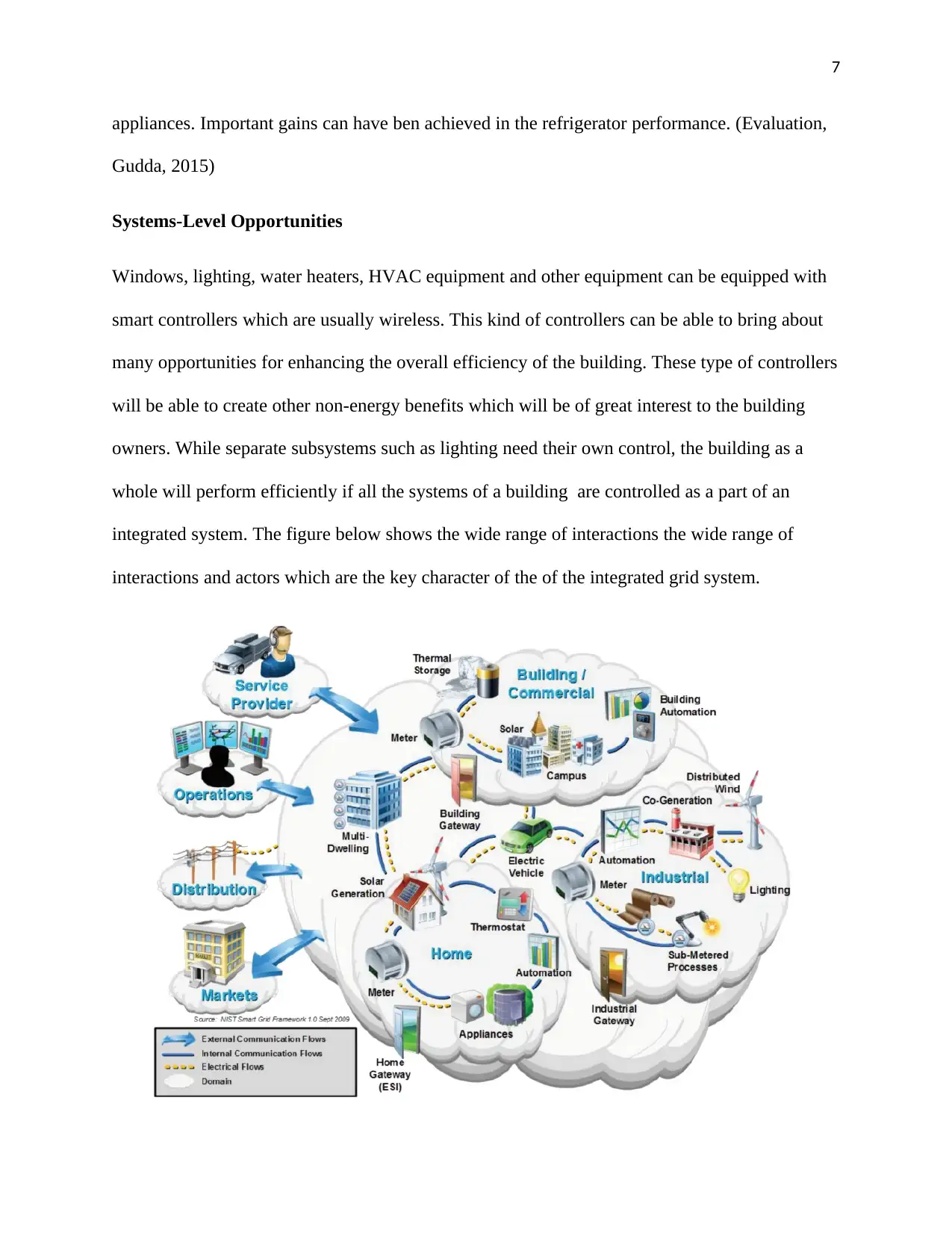
integrated system. The figure below shows the wide range of interactions the wide range of
interactions and actors which are the key character of the of the integrated grid system.
appliances. Important gains can have ben achieved in the refrigerator performance. (Evaluation,
Gudda, 2015)
Systems-Level Opportunities
Windows, lighting, water heaters, HVAC equipment and other equipment can be equipped with
smart controllers which are usually wireless. This kind of controllers can be able to bring about
many opportunities for enhancing the overall efficiency of the building. These type of controllers
will be able to create other non-energy benefits which will be of great interest to the building
owners. While separate subsystems such as lighting need their own control, the building as a
whole will perform efficiently if all the systems of a building are controlled as a part of an
integrated system. The figure below shows the wide range of interactions the wide range of
interactions and actors which are the key character of the of the integrated grid system.
Paraphrase This Document
Need a fresh take? Get an instant paraphrase of this document with our AI Paraphraser
8
The integrated electric system can be able to:
Regulate the room temperatures, ventilations rates, variable louvers
Regulate the major appliances
b. Challenges faced while refining the current chilled water cooling plant.
Heavyweight and industrial commercial applications like chemical processing, manufacturing,
gas and oil refineries exploit freezing towers and other equipment to calm down water in their
operations. Increasingly, environmental principles and other market challenging conditions place
greater strains on the industries. Developed chilling technologies are evolving to assist in
addressing some of these encounters. In oil and gas industry, numerous cooling towers formally
in service were built as a portion of the initial refinery constructions, and are approaching the
expiration of their lives. For the industry to meet the present days demands on production and
other industrial necessities, these towers need to be elevated or get replaced altogether with
better and resourceful equipment. Long lasting maintenance strategies need to be established.
Unfortunately, when trying to improve the already present water cooling plant performance, so
many challenges are counted. They include;
1. challenges for fluids
In gases and oil factories, many apparatus of the industry are usually sleeved with water that is
rolling along in order to cool the liquids and also engross the heat generated. As usual, the
industrial equipment produces a very large amount of heat which is likely to disturb the daily
operations when they are poorly handled. The cooling strongholds should be therefore, applied to
cool this process (Wells, 2013).
The integrated electric system can be able to:
Regulate the room temperatures, ventilations rates, variable louvers
Regulate the major appliances
b. Challenges faced while refining the current chilled water cooling plant.
Heavyweight and industrial commercial applications like chemical processing, manufacturing,
gas and oil refineries exploit freezing towers and other equipment to calm down water in their
operations. Increasingly, environmental principles and other market challenging conditions place
greater strains on the industries. Developed chilling technologies are evolving to assist in
addressing some of these encounters. In oil and gas industry, numerous cooling towers formally
in service were built as a portion of the initial refinery constructions, and are approaching the
expiration of their lives. For the industry to meet the present days demands on production and
other industrial necessities, these towers need to be elevated or get replaced altogether with
better and resourceful equipment. Long lasting maintenance strategies need to be established.
Unfortunately, when trying to improve the already present water cooling plant performance, so
many challenges are counted. They include;
1. challenges for fluids
In gases and oil factories, many apparatus of the industry are usually sleeved with water that is
rolling along in order to cool the liquids and also engross the heat generated. As usual, the
industrial equipment produces a very large amount of heat which is likely to disturb the daily
operations when they are poorly handled. The cooling strongholds should be therefore, applied to
cool this process (Wells, 2013).
9
Despite the above great role that water cooling plant plays in the industrial equipment, there are
quite many encounters in the process. One of them is leakage of fluids which is able to cause
hydrocarbons. Hydrocarbons may pollute the cooling water. (Ojha & Pathak, 2012)
2. Substituting aged towels
Since these old, long standing towels are still used and equally fundamental in the process of
production, substituting them with the modern ones is a challenging responsibility. This is
because the cooling water plant requires upkeep, restoration and replacement which should be
done within the shortest time possible, which can be a challenge. (Kusek & Rist, 2016)
3. Maintenance challenges
Operating records are very important in maintaining a water cooling plant. However, sometimes
keeping such records is overlooked in many organizational buildings. In any case, the records
can be used for maintenance purposes by the operators and technicians. They can use such
information and records to appraise performance of the water plant. (Rossmoore, 2015)
For more effectiveness, operators and technicians should enter information of data on a daily
basis. The data should also be reviewed regularly. This can help to plan for its maintenance.
Arranged inspections are also very important for proper maintenance. (Mukhupa, 2019)
In cases of inspection for maintenance purposes, the cases require a few minutes to finish. Some
other cases like inspecting tubes, the plant should be partially shut down in order to carry out
inspection. This creates a challenge since such inspection maintenance may not be done
regularly.
4 Poor operative practices
Despite the above great role that water cooling plant plays in the industrial equipment, there are
quite many encounters in the process. One of them is leakage of fluids which is able to cause
hydrocarbons. Hydrocarbons may pollute the cooling water. (Ojha & Pathak, 2012)
2. Substituting aged towels
Since these old, long standing towels are still used and equally fundamental in the process of
production, substituting them with the modern ones is a challenging responsibility. This is
because the cooling water plant requires upkeep, restoration and replacement which should be
done within the shortest time possible, which can be a challenge. (Kusek & Rist, 2016)
3. Maintenance challenges
Operating records are very important in maintaining a water cooling plant. However, sometimes
keeping such records is overlooked in many organizational buildings. In any case, the records
can be used for maintenance purposes by the operators and technicians. They can use such
information and records to appraise performance of the water plant. (Rossmoore, 2015)
For more effectiveness, operators and technicians should enter information of data on a daily
basis. The data should also be reviewed regularly. This can help to plan for its maintenance.
Arranged inspections are also very important for proper maintenance. (Mukhupa, 2019)
In cases of inspection for maintenance purposes, the cases require a few minutes to finish. Some
other cases like inspecting tubes, the plant should be partially shut down in order to carry out
inspection. This creates a challenge since such inspection maintenance may not be done
regularly.
4 Poor operative practices
⊘ This is a preview!⊘
Do you want full access?
Subscribe today to unlock all pages.
Trusted by 1+ million students worldwide
10
Practices which are poorly done on chillers are likely going to affect the efficiency and
effectiveness of the chiller.eg in case where the chiller is doing something that it was not
designed to do. The other case is increasing the rate at which water is flowing inside a chiller,
beyond what the manufacturer recommends. This reduces the life and efficiency of the
chiller, and can easily lead to a possible failure.
5 Oversizing a chiller
Sizing a chiller appropriately is vital to its effectiveness and efficiency. This is because the
efficiency of a chiller drops off promptly with a decreasing load. Therefore, when the chiller is
new, it is slightly oversized so that it allows growth in the cooling loads within the chiller
without having necessarily replacing it.
However, given the state of the facility, the loads on a chiller after a given period can be different
from the ones which it was initially designed to do. (Tolba, 2017)
6 Site planning, preparation and boundaries
Location for the construction of water cooling plant and also piping planning and preparations
are very broad and usually the building is generally carried in phases, hence likely to take a long
period of time before completion.
TASK C SECTION 1
How to improve building system operation and equipment performance
Building control strategies
Practices which are poorly done on chillers are likely going to affect the efficiency and
effectiveness of the chiller.eg in case where the chiller is doing something that it was not
designed to do. The other case is increasing the rate at which water is flowing inside a chiller,
beyond what the manufacturer recommends. This reduces the life and efficiency of the
chiller, and can easily lead to a possible failure.
5 Oversizing a chiller
Sizing a chiller appropriately is vital to its effectiveness and efficiency. This is because the
efficiency of a chiller drops off promptly with a decreasing load. Therefore, when the chiller is
new, it is slightly oversized so that it allows growth in the cooling loads within the chiller
without having necessarily replacing it.
However, given the state of the facility, the loads on a chiller after a given period can be different
from the ones which it was initially designed to do. (Tolba, 2017)
6 Site planning, preparation and boundaries
Location for the construction of water cooling plant and also piping planning and preparations
are very broad and usually the building is generally carried in phases, hence likely to take a long
period of time before completion.
TASK C SECTION 1
How to improve building system operation and equipment performance
Building control strategies
Paraphrase This Document
Need a fresh take? Get an instant paraphrase of this document with our AI Paraphraser
11
Building control strategies are the basic components in improving any building structure and
equipment performance. Control system is in charge of ensuring favorite environment exists and
continue to exist in a building system. Building control strategies can include;
1. Meeting a highly performing construction necessities.
Current and efficient structures are basically differently designed, but they still operate under a
more compounded data world, which includes occupancy and weather calculation, network
interactivity and also system incorporation. (Groysman, 2o15)
Application of old control systems stops buildings from providing all the services needed of
modern and high performing structures. It also prevents the structure from supplying finest
comfort to the occupant, trailing and sustaining energy performance and also interfacing with
residents for effective operation.
2. Control systems supporting integration
As constructors are becoming more reflexive while meeting effective goals, current comfort is
primarily supplied through passive essentials like natural ventilation and solar control. Instead of
one large HVAC equipment controlling the thermal control strategy, numerous, spread passive
systems network within the space to regulate variables concurrently.
3. Advance beyond modest systems
Besides the combination challenges above, control mechanisms are shifting from the sensitive
and prompt response of areas controlled largely by HVAC systems to a highly flexible passive
reactions that need projecting control strategies.
Sequence of equipment operations
Building control strategies are the basic components in improving any building structure and
equipment performance. Control system is in charge of ensuring favorite environment exists and
continue to exist in a building system. Building control strategies can include;
1. Meeting a highly performing construction necessities.
Current and efficient structures are basically differently designed, but they still operate under a
more compounded data world, which includes occupancy and weather calculation, network
interactivity and also system incorporation. (Groysman, 2o15)
Application of old control systems stops buildings from providing all the services needed of
modern and high performing structures. It also prevents the structure from supplying finest
comfort to the occupant, trailing and sustaining energy performance and also interfacing with
residents for effective operation.
2. Control systems supporting integration
As constructors are becoming more reflexive while meeting effective goals, current comfort is
primarily supplied through passive essentials like natural ventilation and solar control. Instead of
one large HVAC equipment controlling the thermal control strategy, numerous, spread passive
systems network within the space to regulate variables concurrently.
3. Advance beyond modest systems
Besides the combination challenges above, control mechanisms are shifting from the sensitive
and prompt response of areas controlled largely by HVAC systems to a highly flexible passive
reactions that need projecting control strategies.
Sequence of equipment operations
12
It has three main phases. They include;
Building design phase. Under this phase, system design consists of two parts which include;
How to the building system will be constructed
How the building system is set to function (Lahlou, 2014) (Placeholder3)
Building and construction phase. In this phase, the contractor equips and erects the system
according to the design. The programming of the control system is resulted by the arrangement
of operation in order for the system to operate as it was intended.
Project commissioning phase. Commissioning agent, operating with engineer, suppliers of the
equipment and contractors, validates that the systems function as proposed through the efficient
analytical process.
Mechanical & Electrical equipment performance efficiency
Although the two systems are of different types, in the building system, mechanical and
electrical systems share mutual characteristics together with their components. The
characteristics include conservation, checking and certification desires in the entire system.
Below is a list of areas where the two systems work in harmonization; (Wells, 2013)
Infrastructure
Power and supply circulation
Plant and machinery
Tools and equipment
Ventilation and heating
Telecommunications
It has three main phases. They include;
Building design phase. Under this phase, system design consists of two parts which include;
How to the building system will be constructed
How the building system is set to function (Lahlou, 2014) (Placeholder3)
Building and construction phase. In this phase, the contractor equips and erects the system
according to the design. The programming of the control system is resulted by the arrangement
of operation in order for the system to operate as it was intended.
Project commissioning phase. Commissioning agent, operating with engineer, suppliers of the
equipment and contractors, validates that the systems function as proposed through the efficient
analytical process.
Mechanical & Electrical equipment performance efficiency
Although the two systems are of different types, in the building system, mechanical and
electrical systems share mutual characteristics together with their components. The
characteristics include conservation, checking and certification desires in the entire system.
Below is a list of areas where the two systems work in harmonization; (Wells, 2013)
Infrastructure
Power and supply circulation
Plant and machinery
Tools and equipment
Ventilation and heating
Telecommunications
⊘ This is a preview!⊘
Do you want full access?
Subscribe today to unlock all pages.
Trusted by 1+ million students worldwide

1 out of 20


Related Documents


Your All-in-One AI-Powered Toolkit for Academic Success.
+13062052269
info@desklib.com
Available 24*7 on WhatsApp / Email
![[object Object]](/_next/static/media/star-bottom.7253800d.svg)
Unlock your academic potential
Copyright © 2020–2026 A2Z Services. All Rights Reserved. Developed and managed by ZUCOL.