A Presentation on Marilyn Anne Ray's Theory of Bureaucratic Caring
VerifiedAdded on 2022/08/22
|12
|996
|116
Presentation
AI Summary
This presentation offers a detailed overview of Marilyn Anne Ray's Theory of Bureaucratic Caring. It begins with the theorist's background and the sociopolitical context in which the theory was developed, emphasizing the integration of economic and political patterns with caring as ethical, spiritual, and holistic. The presentation then describes the theory's structural components, including socio-cultural, legal, and technological aspects, and its functional components, such as accountability and specialization. A critique of the theory examines the relationship between its structure and function, highlighting how structural components enhance functionality within healthcare organizations. Diagrams illustrate the theory's concepts, including the circle of contagiousness. The presentation further discusses the theory's usefulness in practice, research, education, and administration, emphasizing its relevance to ethical decision-making, strategic planning, and the understanding of the healthcare process. References to relevant literature support the analysis.
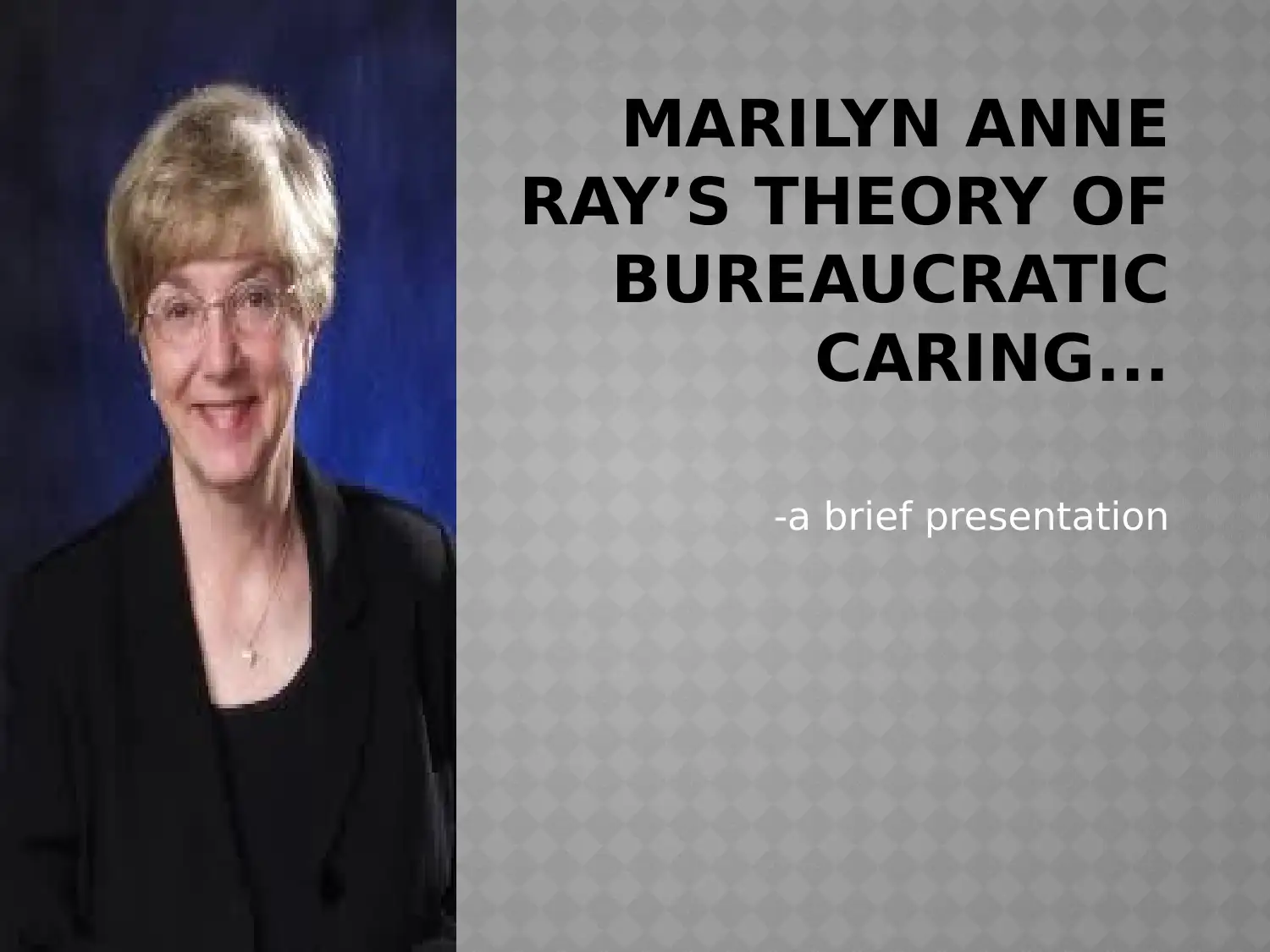
MARILYN ANNE
RAY’S THEORY OF
BUREAUCRATIC
CARING...
-a brief presentation
RAY’S THEORY OF
BUREAUCRATIC
CARING...
-a brief presentation
Paraphrase This Document
Need a fresh take? Get an instant paraphrase of this document with our AI Paraphraser

BACKGROUND OF THE
THEORIST AND THE
SOCIOPOLITICAL CONTEXT
Marilyn Anne Ray holds doctorate in transcultural nursing. Her two decades of
research with Dr. Marian Turkel developed several concepts regarding patient care
process. The theory of bureaucratic theory was developed by Marilyn Anne and
Marian Turkel integrated it into the relevance of the theory into the clinical as well
as administrative practice.
Research revealed that the economic as well as the political patterns were dominant
and the current model of the theory depicts the primacy of caring as ethical,
spiritual and holistic. The theory was developed in such a context where caring
was not only humanistic but also socio-cultural, economical and political (Smith &
Parker, 2015).
THEORIST AND THE
SOCIOPOLITICAL CONTEXT
Marilyn Anne Ray holds doctorate in transcultural nursing. Her two decades of
research with Dr. Marian Turkel developed several concepts regarding patient care
process. The theory of bureaucratic theory was developed by Marilyn Anne and
Marian Turkel integrated it into the relevance of the theory into the clinical as well
as administrative practice.
Research revealed that the economic as well as the political patterns were dominant
and the current model of the theory depicts the primacy of caring as ethical,
spiritual and holistic. The theory was developed in such a context where caring
was not only humanistic but also socio-cultural, economical and political (Smith &
Parker, 2015).

THEORY DESCRIPTION
The structural components of the theory are socio-cultural, legal, technological,
economic, political, educational, and physical.
The assumptions indicate that transcultural caring encompasses beliefs and values
compassion that find significance of the relationships. Through compassion,
nursing strives towards excellence.
The concept of the theory is a process of awareness of caring, viewing truth and
communicating effectively.
The findings of the theory are consistent and proposes the phenomena that are
antithetical actually coexist (Smith & Parker, 2015).
The structural components of the theory are socio-cultural, legal, technological,
economic, political, educational, and physical.
The assumptions indicate that transcultural caring encompasses beliefs and values
compassion that find significance of the relationships. Through compassion,
nursing strives towards excellence.
The concept of the theory is a process of awareness of caring, viewing truth and
communicating effectively.
The findings of the theory are consistent and proposes the phenomena that are
antithetical actually coexist (Smith & Parker, 2015).
⊘ This is a preview!⊘
Do you want full access?
Subscribe today to unlock all pages.

Trusted by 1+ million students worldwide

THEORY DESCRIPTION
CONTINUE…
The functional components of Ray’s theory include accountability, responsibility,
specialization of function and others.
The theory is focused to improve the care delivery process.
Nursing practice is dynamic and contemporary nursing practice occur in the
healthcare organizations that are systematic or bureaucratic in nature.
Bureaucracies help themselves in creating a culturally oriented nursing care and
nurse-patient interaction within the structural components of the theory.
It also considers the environment and nursing problems to enhance the nursing
therapeutics (Smith & Parker, 2015).
CONTINUE…
The functional components of Ray’s theory include accountability, responsibility,
specialization of function and others.
The theory is focused to improve the care delivery process.
Nursing practice is dynamic and contemporary nursing practice occur in the
healthcare organizations that are systematic or bureaucratic in nature.
Bureaucracies help themselves in creating a culturally oriented nursing care and
nurse-patient interaction within the structural components of the theory.
It also considers the environment and nursing problems to enhance the nursing
therapeutics (Smith & Parker, 2015).
Paraphrase This Document
Need a fresh take? Get an instant paraphrase of this document with our AI Paraphraser

THEORY CRITIQUE: RELATIONSHIP
BETWEEN STRUCTURE AND FUNCTION
Strategies of bureaucratic caring has been applied by many nurse managers into their working
settings and it has been analyzed that the functional components of bureaucratic theory becomes
more optimal with the structural components.
The structural components such as socio-cultural, legal, technological, political and others help
in increasing the functionality of the nurses and improves the environment of the healthcare
organization.
Roles of administration and functions of the healthcare managers become the main centre of the
process and it helps in achieving organizational goals and hence, bureaucratic theory as per
my view point focuses to improve organizational functionality (Lusiyana, Yetti &
Kuntarti, 2019).
BETWEEN STRUCTURE AND FUNCTION
Strategies of bureaucratic caring has been applied by many nurse managers into their working
settings and it has been analyzed that the functional components of bureaucratic theory becomes
more optimal with the structural components.
The structural components such as socio-cultural, legal, technological, political and others help
in increasing the functionality of the nurses and improves the environment of the healthcare
organization.
Roles of administration and functions of the healthcare managers become the main centre of the
process and it helps in achieving organizational goals and hence, bureaucratic theory as per
my view point focuses to improve organizational functionality (Lusiyana, Yetti &
Kuntarti, 2019).

RELATIONSHIP BETWEEN STRUCTURE
AND FUNCTION CONTINUE…
Through relationship as well as organizational mission and policy statements, belief
about work emerge.
Healthcare and its activities are strongly interconnected with the social as well as the
economic fabric of nations.
Hence, according to my point of view, the relationship between structure and
function is significant.
The structural components of the theory motivates the nurses to continue their
functionality and to improve the care progress (Lusiyana, Yetti & Kuntarti, 2019).
AND FUNCTION CONTINUE…
Through relationship as well as organizational mission and policy statements, belief
about work emerge.
Healthcare and its activities are strongly interconnected with the social as well as the
economic fabric of nations.
Hence, according to my point of view, the relationship between structure and
function is significant.
The structural components of the theory motivates the nurses to continue their
functionality and to improve the care progress (Lusiyana, Yetti & Kuntarti, 2019).
⊘ This is a preview!⊘
Do you want full access?
Subscribe today to unlock all pages.

Trusted by 1+ million students worldwide

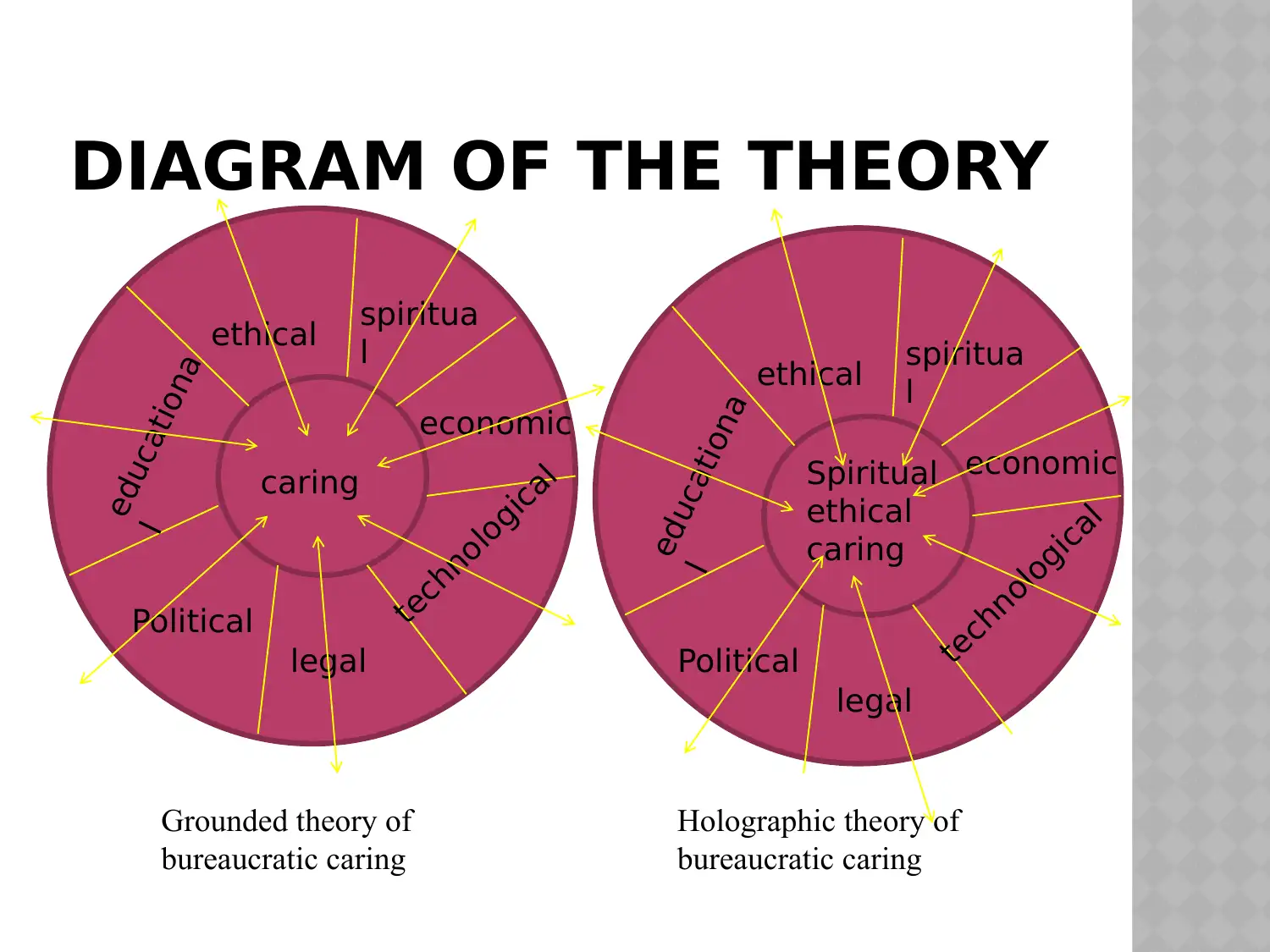
DIAGRAM OF THE THEORY
caring
ethical spiritua
l
economic
technological
legal
Political
educationa
l
Spiritual
ethical
caring
ethical spiritua
l
economic
technological
legal
Political
educationa
l
Grounded theory of
bureaucratic caring
Holographic theory of
bureaucratic caring
caring
ethical spiritua
l
economic
technological
legal
Political
educationa
l
Spiritual
ethical
caring
ethical spiritua
l
economic
technological
legal
Political
educationa
l
Grounded theory of
bureaucratic caring
Holographic theory of
bureaucratic caring
Paraphrase This Document
Need a fresh take? Get an instant paraphrase of this document with our AI Paraphraser

CIRCLE OF
CONTAGIOUSNESS
The bureaucratic theory identified the linkage between caring as socio-
cultural, political, economical.
It illuminates the idea of improving nursing care and enhancing the healthcare
outcome.
The theory reflects spiritual and ethical caring that secures the purpose and
meaning of care.
Due to the effectiveness of the theory, it has been accepted and widely spread
among the nurses throughout the world (Lusiyana, Yetti & Kuntarti, 2019).
CONTAGIOUSNESS
The bureaucratic theory identified the linkage between caring as socio-
cultural, political, economical.
It illuminates the idea of improving nursing care and enhancing the healthcare
outcome.
The theory reflects spiritual and ethical caring that secures the purpose and
meaning of care.
Due to the effectiveness of the theory, it has been accepted and widely spread
among the nurses throughout the world (Lusiyana, Yetti & Kuntarti, 2019).

USEFULNESS TO
PRACTICE
The theory is used to guide practice and make ethical decisions
considering caring as the framework.
The Chief Nurse Executive (CNE) always considers bureaucratic theory
as framework while creating strategic plan for the nurses.
It helps in achieving a balanced and economically effective clinical and
administrative caring.
The application of the theory improves work environment and establishes
relevant ethical care process (Lusiyana, Yetti & Kuntarti, 2019).
PRACTICE
The theory is used to guide practice and make ethical decisions
considering caring as the framework.
The Chief Nurse Executive (CNE) always considers bureaucratic theory
as framework while creating strategic plan for the nurses.
It helps in achieving a balanced and economically effective clinical and
administrative caring.
The application of the theory improves work environment and establishes
relevant ethical care process (Lusiyana, Yetti & Kuntarti, 2019).
⊘ This is a preview!⊘
Do you want full access?
Subscribe today to unlock all pages.

Trusted by 1+ million students worldwide

USEFULNESS TO RESEARCH
AND EDUCATION
The theory is relevant to the nursing research and education as it focuses
in care and the conceptualization of the healthcare process.
According to the theory, bureaucratic caring recognizes spiritual-ethical
caring and the socio-cultural, legal, technological communication
process.
Nurses must be able to understand as well as articulate the politics and
economics of caring in nursing practice and this theory helps in
understanding the objectives and concepts (Smith & Liehr, 2018).
AND EDUCATION
The theory is relevant to the nursing research and education as it focuses
in care and the conceptualization of the healthcare process.
According to the theory, bureaucratic caring recognizes spiritual-ethical
caring and the socio-cultural, legal, technological communication
process.
Nurses must be able to understand as well as articulate the politics and
economics of caring in nursing practice and this theory helps in
understanding the objectives and concepts (Smith & Liehr, 2018).
Paraphrase This Document
Need a fresh take? Get an instant paraphrase of this document with our AI Paraphraser

USEFULNESS TO ADMINISTRATION AND
EXTERNAL COMPONENTS OF THEORY
Administrative nursing research should focus on the relationship among
nursing, patient outcome, caring process and others.
Having in-depth knowledge of the economics and politics in care allows
creativity and helps in transforming the system.
Apart from these, the analyze made it clear that the theory enhances the
personal values, assists in increasing social values and beliefs. Hence, I
think, the theory is socially significant (Lusiyana, Yetti & Kuntarti,
2019).
EXTERNAL COMPONENTS OF THEORY
Administrative nursing research should focus on the relationship among
nursing, patient outcome, caring process and others.
Having in-depth knowledge of the economics and politics in care allows
creativity and helps in transforming the system.
Apart from these, the analyze made it clear that the theory enhances the
personal values, assists in increasing social values and beliefs. Hence, I
think, the theory is socially significant (Lusiyana, Yetti & Kuntarti,
2019).

WORKS CITED
Lusiyana, A., Yetti, K., & Kuntarti, K. (2019). The strategies of bureaucratic caring
implementation by nurse manager: A systematic review. Enfermería Clínica, 29,
41-46.
Smith, M. C., & Parker, M. E. (2015). Nursing theories and nursing practice. FA
Davis.
Smith, M. J., & Liehr, P. R. (Eds.). (2018). Middle range theory for nursing. Springer
Publishing Company.
Lusiyana, A., Yetti, K., & Kuntarti, K. (2019). The strategies of bureaucratic caring
implementation by nurse manager: A systematic review. Enfermería Clínica, 29,
41-46.
Smith, M. C., & Parker, M. E. (2015). Nursing theories and nursing practice. FA
Davis.
Smith, M. J., & Liehr, P. R. (Eds.). (2018). Middle range theory for nursing. Springer
Publishing Company.
⊘ This is a preview!⊘
Do you want full access?
Subscribe today to unlock all pages.

Trusted by 1+ million students worldwide
1 out of 12
Your All-in-One AI-Powered Toolkit for Academic Success.
+13062052269
info@desklib.com
Available 24*7 on WhatsApp / Email
Unlock your academic potential
Copyright © 2020–2025 A2Z Services. All Rights Reserved. Developed and managed by ZUCOL.