Business Management Report: Strategic Planning and Analysis
VerifiedAdded on 2021/06/14
|33
|7515
|425
Report
AI Summary
This comprehensive business management report delves into various assessment tasks, providing an in-depth analysis of strategic planning, risk management, and market research. The report covers critical aspects such as SWOT and PESTLE analyses, development of mission, vision, and value statements, and the identification of key performance indicators. It explores both internal and external sources of information, potential cooperative ventures, and the importance of intellectual property management. The report also includes recommendations for improvement and strategic planning, offering valuable insights into the complexities of business operations and decision-making. The report also includes an analysis of Native Bush Spices, a case study, and provides insights on the importance of core values and their impact on the business.
Running head: BUSINESS MANAGEMENT
Business management
Name of the student
Name of the university
Author Note:
Business management
Name of the student
Name of the university
Author Note:

Paraphrase This Document
Need a fresh take? Get an instant paraphrase of this document with our AI Paraphraser
2
BUSINESS MANAGEMENT
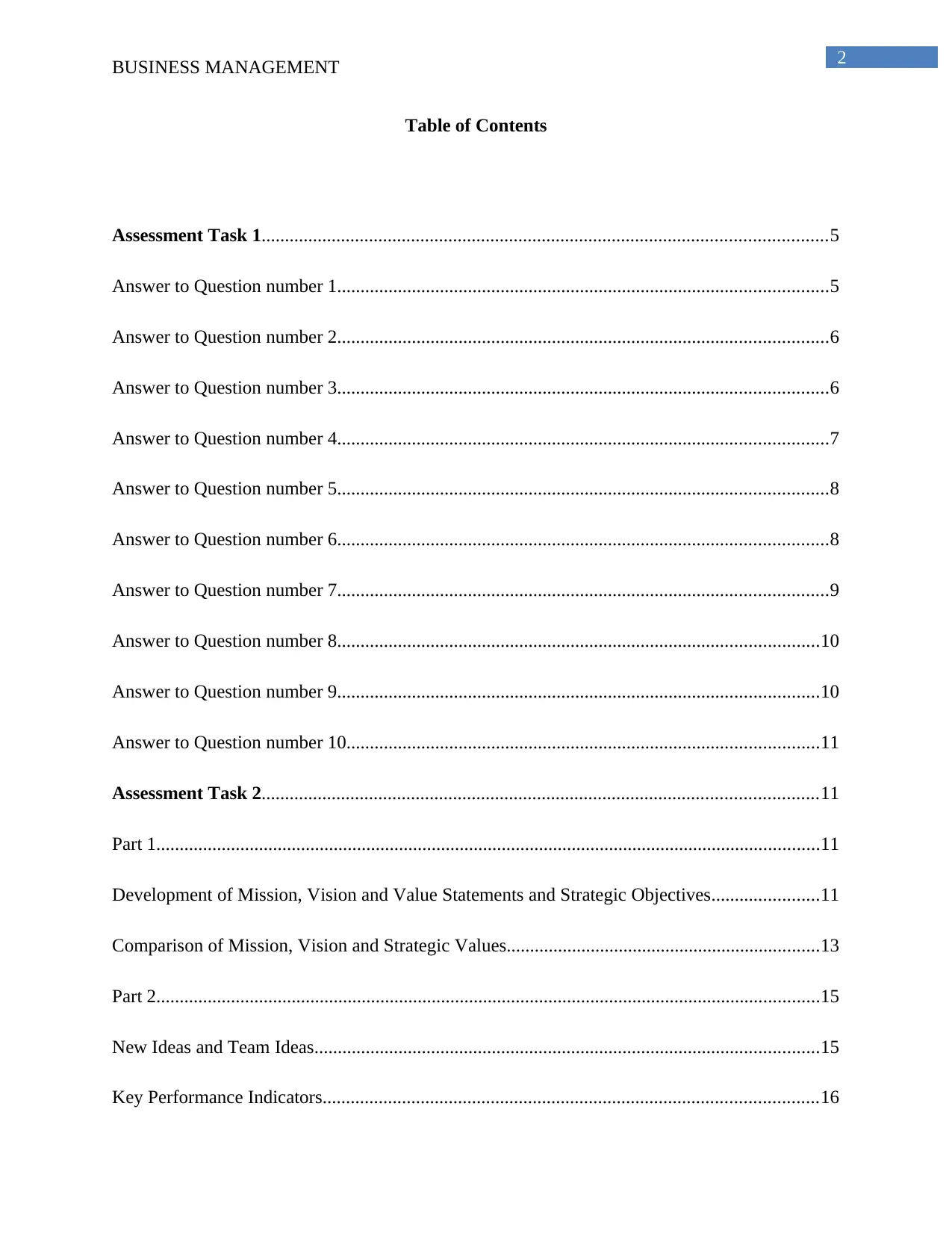
Table of Contents
Assessment Task 1.........................................................................................................................5
Answer to Question number 1.........................................................................................................5
Answer to Question number 2.........................................................................................................6
Answer to Question number 3.........................................................................................................6
Answer to Question number 4.........................................................................................................7
Answer to Question number 5.........................................................................................................8
Answer to Question number 6.........................................................................................................8
Answer to Question number 7.........................................................................................................9
Answer to Question number 8.......................................................................................................10
Answer to Question number 9.......................................................................................................10
Answer to Question number 10.....................................................................................................11
Assessment Task 2.......................................................................................................................11
Part 1..............................................................................................................................................11
Development of Mission, Vision and Value Statements and Strategic Objectives.......................11
Comparison of Mission, Vision and Strategic Values...................................................................13
Part 2..............................................................................................................................................15
New Ideas and Team Ideas............................................................................................................15
Key Performance Indicators..........................................................................................................16
BUSINESS MANAGEMENT
Table of Contents
Assessment Task 1.........................................................................................................................5
Answer to Question number 1.........................................................................................................5
Answer to Question number 2.........................................................................................................6
Answer to Question number 3.........................................................................................................6
Answer to Question number 4.........................................................................................................7
Answer to Question number 5.........................................................................................................8
Answer to Question number 6.........................................................................................................8
Answer to Question number 7.........................................................................................................9
Answer to Question number 8.......................................................................................................10
Answer to Question number 9.......................................................................................................10
Answer to Question number 10.....................................................................................................11
Assessment Task 2.......................................................................................................................11
Part 1..............................................................................................................................................11
Development of Mission, Vision and Value Statements and Strategic Objectives.......................11
Comparison of Mission, Vision and Strategic Values...................................................................13
Part 2..............................................................................................................................................15
New Ideas and Team Ideas............................................................................................................15
Key Performance Indicators..........................................................................................................16
3
BUSINESS MANAGEMENT
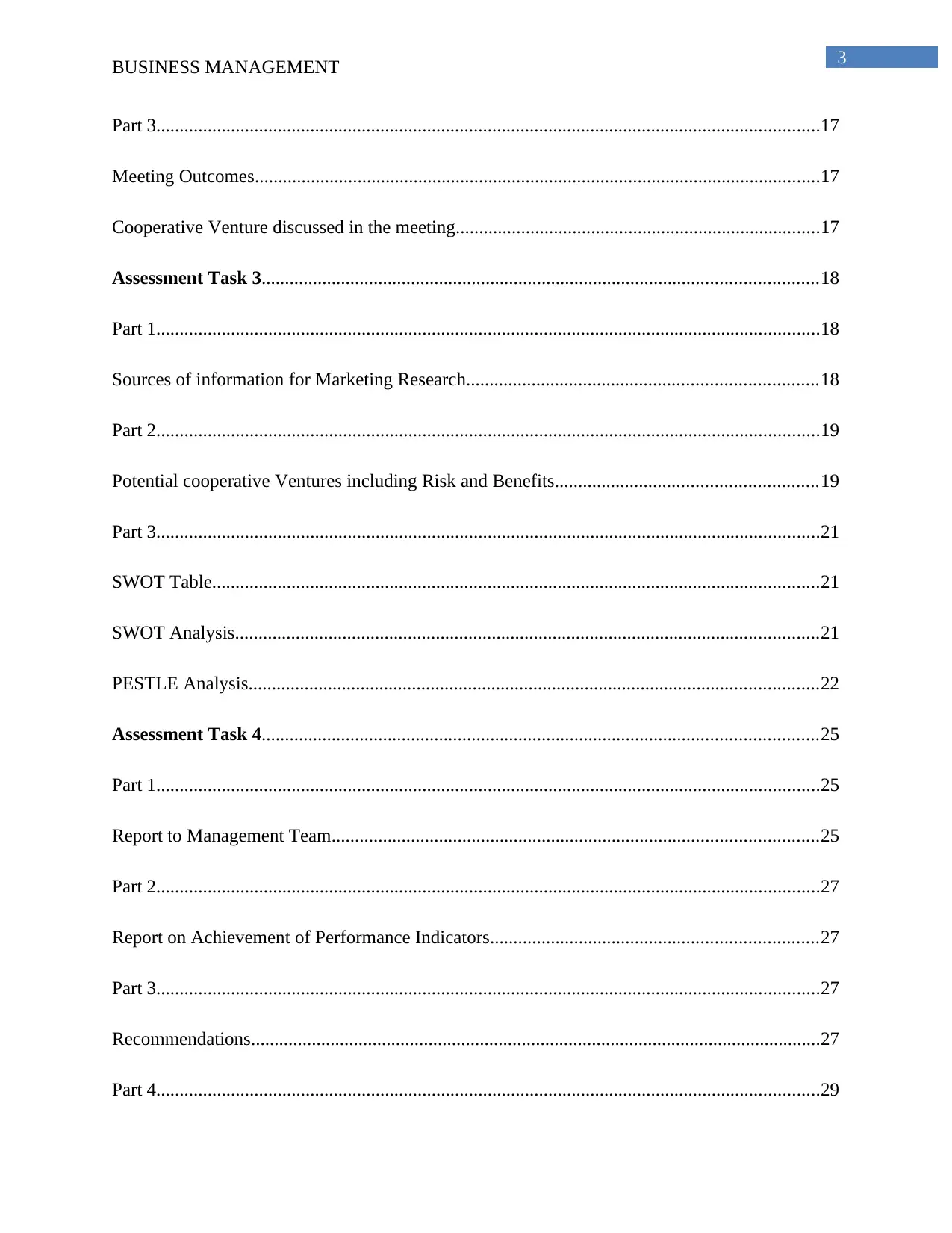
Part 3..............................................................................................................................................17
Meeting Outcomes.........................................................................................................................17
Cooperative Venture discussed in the meeting..............................................................................17
Assessment Task 3.......................................................................................................................18
Part 1..............................................................................................................................................18
Sources of information for Marketing Research...........................................................................18
Part 2..............................................................................................................................................19
Potential cooperative Ventures including Risk and Benefits........................................................19
Part 3..............................................................................................................................................21
SWOT Table..................................................................................................................................21
SWOT Analysis.............................................................................................................................21
PESTLE Analysis..........................................................................................................................22
Assessment Task 4.......................................................................................................................25
Part 1..............................................................................................................................................25
Report to Management Team........................................................................................................25
Part 2..............................................................................................................................................27
Report on Achievement of Performance Indicators......................................................................27
Part 3..............................................................................................................................................27
Recommendations..........................................................................................................................27
Part 4..............................................................................................................................................29
BUSINESS MANAGEMENT
Part 3..............................................................................................................................................17
Meeting Outcomes.........................................................................................................................17
Cooperative Venture discussed in the meeting..............................................................................17
Assessment Task 3.......................................................................................................................18
Part 1..............................................................................................................................................18
Sources of information for Marketing Research...........................................................................18
Part 2..............................................................................................................................................19
Potential cooperative Ventures including Risk and Benefits........................................................19
Part 3..............................................................................................................................................21
SWOT Table..................................................................................................................................21
SWOT Analysis.............................................................................................................................21
PESTLE Analysis..........................................................................................................................22
Assessment Task 4.......................................................................................................................25
Part 1..............................................................................................................................................25
Report to Management Team........................................................................................................25
Part 2..............................................................................................................................................27
Report on Achievement of Performance Indicators......................................................................27
Part 3..............................................................................................................................................27
Recommendations..........................................................................................................................27
Part 4..............................................................................................................................................29
⊘ This is a preview!⊘
Do you want full access?
Subscribe today to unlock all pages.

Trusted by 1+ million students worldwide
4
BUSINESS MANAGEMENT
Report on Achievement of Strategic Planning..............................................................................29
References and Bibliography.........................................................................................................30
BUSINESS MANAGEMENT
Report on Achievement of Strategic Planning..............................................................................29
References and Bibliography.........................................................................................................30
Paraphrase This Document
Need a fresh take? Get an instant paraphrase of this document with our AI Paraphraser
5
BUSINESS MANAGEMENT
Assessment Task 1
Answer to Question number 1
Risks are an integral part in the operations of a business. The management of the different
business enterprises undertakes different strategic actions that help to increase the revenue and
the profits of the business. The management of the business also formulates the different kinds of
specific steps that help to implement the strategy undertaken by the business house (Wright
2016). However the strategies have to be implemented in an effective and constructive way to
avoid any form of risks. Some of the main types of risks associated with the implementation of
strategies in a business enterprise are as follows;
1. Economic Uncertainty- The highly unpredictable market can result in an economic
slump at any given point of time. This may result in the alteration of the implementation
of the strategy. The less demand for the products and services of the company, weak
economic conditions results in the setback for the organizations.
2. Delays in Project Completion- The completion of the total strategic implementation may
result in a number of different steeps that needs to be accomplished accordingly (Suter
2016). However the non-coordination of any one of the departments and the absence of
proper communication between all the departments involved in a particular project will
lead to an unnecessary delay.
3. Government Regulation- New Government Regulations can make life more difficult for
the business organizations to implement their business strategies. Restrictions and
BUSINESS MANAGEMENT
Assessment Task 1
Answer to Question number 1
Risks are an integral part in the operations of a business. The management of the different
business enterprises undertakes different strategic actions that help to increase the revenue and
the profits of the business. The management of the business also formulates the different kinds of
specific steps that help to implement the strategy undertaken by the business house (Wright
2016). However the strategies have to be implemented in an effective and constructive way to
avoid any form of risks. Some of the main types of risks associated with the implementation of
strategies in a business enterprise are as follows;
1. Economic Uncertainty- The highly unpredictable market can result in an economic
slump at any given point of time. This may result in the alteration of the implementation
of the strategy. The less demand for the products and services of the company, weak
economic conditions results in the setback for the organizations.
2. Delays in Project Completion- The completion of the total strategic implementation may
result in a number of different steeps that needs to be accomplished accordingly (Suter
2016). However the non-coordination of any one of the departments and the absence of
proper communication between all the departments involved in a particular project will
lead to an unnecessary delay.
3. Government Regulation- New Government Regulations can make life more difficult for
the business organizations to implement their business strategies. Restrictions and
6
BUSINESS MANAGEMENT
additional financial burdens from the part of the government can be harmful to the
expansion of the business.
Answer to Question number 2
As mentioned earlier different forms of business enterprises faces different types of risk
that makes them vulnerable to outside threats and damages their business reputation. Thus it is
necessary for the management of the business to construct and implement a solid and compact
risk management plan to counter such threats. Two examples of such risk management strategies
include;
1. Risk Identification and Planning- Risk Identification is one of the main component of a
risk management plan. The identification of the risk beforehand helps in the proper
management of the business and also helps to avoid the risks easily. The identification of
the risks can also help the organization to measure the risks accordingly and implement
the necessary steps for its mitigation.
2. Transferring the Risk- The concept of insurance also applies in the smooth running of
the business. The business organization may transfer the risks identified by the
organization to the insurance companies or the shareholders of the business (Suter 2016).
The transfer of the risks helps is one of the major elements of risk management as
because it helps in the smooth running of the business.
Answer to Question number 3
The more the world is placing value on the ideas, the more is the issue of managing the
intellectual property of the business becoming an important topic. The preciseness of the modern
BUSINESS MANAGEMENT
additional financial burdens from the part of the government can be harmful to the
expansion of the business.
Answer to Question number 2
As mentioned earlier different forms of business enterprises faces different types of risk
that makes them vulnerable to outside threats and damages their business reputation. Thus it is
necessary for the management of the business to construct and implement a solid and compact
risk management plan to counter such threats. Two examples of such risk management strategies
include;
1. Risk Identification and Planning- Risk Identification is one of the main component of a
risk management plan. The identification of the risk beforehand helps in the proper
management of the business and also helps to avoid the risks easily. The identification of
the risks can also help the organization to measure the risks accordingly and implement
the necessary steps for its mitigation.
2. Transferring the Risk- The concept of insurance also applies in the smooth running of
the business. The business organization may transfer the risks identified by the
organization to the insurance companies or the shareholders of the business (Suter 2016).
The transfer of the risks helps is one of the major elements of risk management as
because it helps in the smooth running of the business.
Answer to Question number 3
The more the world is placing value on the ideas, the more is the issue of managing the
intellectual property of the business becoming an important topic. The preciseness of the modern
⊘ This is a preview!⊘
Do you want full access?
Subscribe today to unlock all pages.
Trusted by 1+ million students worldwide
7
BUSINESS MANAGEMENT
business world and its globalization has limited the business organizations to make them more
specific and integrated in nature. The management of the companies have to thus make sure that
they have the right set of mitigation strategies in store to meet the challenges. One such example
is;
The business must ensure that all of the employment agreements include a clause that
states that the employees will not bring any intellectual property developed for a third party or
the previous employer into the present company where he is employed. According to, Sadgrove
(2016) the management must also make sure to have a proper recovery plan in place to avoid any
loss that may occur due to the loss in the IP lawsuit. Thus it is important for the business
organization to have a proper and efficient Plan B.
Answer to Question number 4
A SWOT Analysis looks into both the internal and external factors that can have an
impact on the business. The internal factors of the business are the strengths and the weaknesses
of the business and thus the business. On the other hand the other two which are the threats and
the opportunities are the external factors that have an impact on the business enterprises (Nikitin
et al. 2016). Though the number of strategic plans is few, they have a key role in the functioning
of the business. The SWOT analysis is conducted after setting the target stage and the forecasting
of the performance gap of the organization. The gap analysis of the organization provides the
particular size of the strategic task.
Strengths- SWOT analysis helps to identify and analyze the areas where the business
have a major advantage or are performing well. These areas are considered to be the main
BUSINESS MANAGEMENT
business world and its globalization has limited the business organizations to make them more
specific and integrated in nature. The management of the companies have to thus make sure that
they have the right set of mitigation strategies in store to meet the challenges. One such example
is;
The business must ensure that all of the employment agreements include a clause that
states that the employees will not bring any intellectual property developed for a third party or
the previous employer into the present company where he is employed. According to, Sadgrove
(2016) the management must also make sure to have a proper recovery plan in place to avoid any
loss that may occur due to the loss in the IP lawsuit. Thus it is important for the business
organization to have a proper and efficient Plan B.
Answer to Question number 4
A SWOT Analysis looks into both the internal and external factors that can have an
impact on the business. The internal factors of the business are the strengths and the weaknesses
of the business and thus the business. On the other hand the other two which are the threats and
the opportunities are the external factors that have an impact on the business enterprises (Nikitin
et al. 2016). Though the number of strategic plans is few, they have a key role in the functioning
of the business. The SWOT analysis is conducted after setting the target stage and the forecasting
of the performance gap of the organization. The gap analysis of the organization provides the
particular size of the strategic task.
Strengths- SWOT analysis helps to identify and analyze the areas where the business
have a major advantage or are performing well. These areas are considered to be the main
Paraphrase This Document
Need a fresh take? Get an instant paraphrase of this document with our AI Paraphraser
8
BUSINESS MANAGEMENT
success factors of the business and provide the business with a great competitive
advantage. Weaknesses- Weakness puts the company in a disadvantageous position and thus
conducting the following analysis helps the organization to identify the weakness and
rectify them accordingly. Opportunities- The SWOT Analysis also helps to identify the opportunities that provide
an advantageous position to the business. Opportunities are created by external factors
like change in the market and new trends in the market. Threats- The Threats are the next external factors that arise from weaknesses. These
include the likes of the changes in the conditions of the market, rise of able competitors
and many more as such.
Answer to Question number 5
The efficient conduction of a SWOT Analysis is quite easy in nature. A number of
different questions can be derived from each of the four different components of SWOT. These
include the likes of;
1. What are the main assets of the business?
2. What are the things that need to be avoided by the mentioned organization?
3. What are the current ongoing trends in the business?
4. What kind of o0bstacles is faced by the business at the present times?
BUSINESS MANAGEMENT
success factors of the business and provide the business with a great competitive
advantage. Weaknesses- Weakness puts the company in a disadvantageous position and thus
conducting the following analysis helps the organization to identify the weakness and
rectify them accordingly. Opportunities- The SWOT Analysis also helps to identify the opportunities that provide
an advantageous position to the business. Opportunities are created by external factors
like change in the market and new trends in the market. Threats- The Threats are the next external factors that arise from weaknesses. These
include the likes of the changes in the conditions of the market, rise of able competitors
and many more as such.
Answer to Question number 5
The efficient conduction of a SWOT Analysis is quite easy in nature. A number of
different questions can be derived from each of the four different components of SWOT. These
include the likes of;
1. What are the main assets of the business?
2. What are the things that need to be avoided by the mentioned organization?
3. What are the current ongoing trends in the business?
4. What kind of o0bstacles is faced by the business at the present times?
9
BUSINESS MANAGEMENT
Answer to Question number 6
The success of a business organization depends on the presence of an efficient
management team that formulates and implements the strategic needs of the organization. A
PEST analysis is one of the most widely used strategic planning tool (Mullerbeck 2015). The
components of the analysis include the likes of Political, Economical, Social and Technological
aspects that have an impact on the strategic planning of the organization (Nikitin et al. 2016).
The benefit of conduction the mentioned analysis is that it visualizes all the different factors in
one single place for better decision making. It provides all the necessary information that is
needed to conduct the strategic planning.
The PEST analysis can be conducted in a number of different easy steps that includes;
1. Understanding PEST Factors
2. Gathering necessary Information
3. Identification of the Opportunities
4. Identification of the Threats
5. Taking necessary actions to mitigate the Threats
Answer to Question number 7
The main use to conduct the PEST Analysis is to identify the specific factors and devise a
plan of action that are necessary for the smooth running of the business and to avoid any form of
risks. There are a number of different questions that arises as a result of the conduction of the
PEST Analysis. Some of them are as follows;
1. What are the Trading Policies that have an impact on the operations of the business?
BUSINESS MANAGEMENT
Answer to Question number 6
The success of a business organization depends on the presence of an efficient
management team that formulates and implements the strategic needs of the organization. A
PEST analysis is one of the most widely used strategic planning tool (Mullerbeck 2015). The
components of the analysis include the likes of Political, Economical, Social and Technological
aspects that have an impact on the strategic planning of the organization (Nikitin et al. 2016).
The benefit of conduction the mentioned analysis is that it visualizes all the different factors in
one single place for better decision making. It provides all the necessary information that is
needed to conduct the strategic planning.
The PEST analysis can be conducted in a number of different easy steps that includes;
1. Understanding PEST Factors
2. Gathering necessary Information
3. Identification of the Opportunities
4. Identification of the Threats
5. Taking necessary actions to mitigate the Threats
Answer to Question number 7
The main use to conduct the PEST Analysis is to identify the specific factors and devise a
plan of action that are necessary for the smooth running of the business and to avoid any form of
risks. There are a number of different questions that arises as a result of the conduction of the
PEST Analysis. Some of them are as follows;
1. What are the Trading Policies that have an impact on the operations of the business?
⊘ This is a preview!⊘
Do you want full access?
Subscribe today to unlock all pages.
Trusted by 1+ million students worldwide
10
BUSINESS MANAGEMENT
2. How does the opinions of the consumer changes regarding the products and services?
3. What kind of technology is critical or key to the daily business operations of the
organization?
4. Explain the effect of globalization on the market shares of the business.
Answer to Question number 8
Business Information that is received from different kinds of general surveys, data,
books, references are said to be internal sources of information. Such kind of information may
also be received from the likes of the friends, people, customers, stakeholders and other
associates of the business. The two main internal sources are thus;
1. General Surveys- The conduction of different forms of general surveys is important for
the business as because it helps to gain the knowledge of the market which helps the
organization top formulate the business strategies accordingly.
2. Customers- The feedback of the customers is a valuable source of internal information as
it helps the management to design and implement strategies and products or services to
meet their individual demands.
Answer to Question number 9
External Sources of Information comes in a variety of forms. This can be Television and
print media or online sources and many others as such.
1. Print and Television Media- Printing advertisements and published articles in
newspapers, periodicals and journals is a good source of external information. Apart from
BUSINESS MANAGEMENT
2. How does the opinions of the consumer changes regarding the products and services?
3. What kind of technology is critical or key to the daily business operations of the
organization?
4. Explain the effect of globalization on the market shares of the business.
Answer to Question number 8
Business Information that is received from different kinds of general surveys, data,
books, references are said to be internal sources of information. Such kind of information may
also be received from the likes of the friends, people, customers, stakeholders and other
associates of the business. The two main internal sources are thus;
1. General Surveys- The conduction of different forms of general surveys is important for
the business as because it helps to gain the knowledge of the market which helps the
organization top formulate the business strategies accordingly.
2. Customers- The feedback of the customers is a valuable source of internal information as
it helps the management to design and implement strategies and products or services to
meet their individual demands.
Answer to Question number 9
External Sources of Information comes in a variety of forms. This can be Television and
print media or online sources and many others as such.
1. Print and Television Media- Printing advertisements and published articles in
newspapers, periodicals and journals is a good source of external information. Apart from
Paraphrase This Document
Need a fresh take? Get an instant paraphrase of this document with our AI Paraphraser
11
BUSINESS MANAGEMENT
this necessary information can also be obtained from television media that helps in the
development of the business (Li 2014).
2. Online Information- The advancement of the world has changed the way people look
into the market. The growth of the business in the modern days is mainly due to the
advancement of the internet world. The introduction of social media has been a great
source of external information for every business houses.
Answer to Question number 10
The core values of the business support the vision, culture and shape of the business and
respect the company values. They form the essence of the identity of the organizations. The main
purpose of developing organizational value is;
1. It helps in the development of the decision-making process. The decision making
process helps to develop the standard of the product which might be compromised in
the absence of the values followed in the organization.
2. Li (2014) has stated that it helps in the recruitment and retention of the employees and
the customers respectively in the modern competitive world which helps to develop their
business further.
Two techniques that can be used to identify value as part of the strategic planning process
are as follows;
1. Determining the position of the business in the market
2. Development of a solid strategy that includes the mission, vision and strategic plans
of the enterprise
BUSINESS MANAGEMENT
this necessary information can also be obtained from television media that helps in the
development of the business (Li 2014).
2. Online Information- The advancement of the world has changed the way people look
into the market. The growth of the business in the modern days is mainly due to the
advancement of the internet world. The introduction of social media has been a great
source of external information for every business houses.
Answer to Question number 10
The core values of the business support the vision, culture and shape of the business and
respect the company values. They form the essence of the identity of the organizations. The main
purpose of developing organizational value is;
1. It helps in the development of the decision-making process. The decision making
process helps to develop the standard of the product which might be compromised in
the absence of the values followed in the organization.
2. Li (2014) has stated that it helps in the recruitment and retention of the employees and
the customers respectively in the modern competitive world which helps to develop their
business further.
Two techniques that can be used to identify value as part of the strategic planning process
are as follows;
1. Determining the position of the business in the market
2. Development of a solid strategy that includes the mission, vision and strategic plans
of the enterprise
12
BUSINESS MANAGEMENT
Assessment Task 2
Part 1
Development of Mission, Vision and Value Statements and Strategic Objectives
Native Bush Spices is one of the few companies of Australia that develops organic
products and sells them to the consumers. It is important for the management of the mentioned
business organization to develop a proper mission, vision and strategic statement that helps in the
development of the business and also in the expansion of the business. The present mission of
the following business is to make sure that the quality of the products is not compromised
(Handa and Garg 2018). The mission statement of the organization needs to be taken up or
changed according to the changing demands of the people, changing values, changing
experiences and many others as such. The mission statement must be well communicated to the
employees of the organization so that they work accordingly to meet the demands of the
customers by maintaining the quality of the product.
The Vision Statement on the other hand includes a vivid description of the organization
while it effectively and efficiently carries out the different operations of the business. The current
vision statement of the following business organization is to become the most respected and
sought after supplier of the native bush and herbs available in the island continent of Australia
(Handa and Garg 2018). The development and the accomplishment of the vision can be gained
by the state and function of the organization when once it has implemented the strategic plan.
The development of the plan can thus be achieved through meeting realistic targets.
BUSINESS MANAGEMENT
Assessment Task 2
Part 1
Development of Mission, Vision and Value Statements and Strategic Objectives
Native Bush Spices is one of the few companies of Australia that develops organic
products and sells them to the consumers. It is important for the management of the mentioned
business organization to develop a proper mission, vision and strategic statement that helps in the
development of the business and also in the expansion of the business. The present mission of
the following business is to make sure that the quality of the products is not compromised
(Handa and Garg 2018). The mission statement of the organization needs to be taken up or
changed according to the changing demands of the people, changing values, changing
experiences and many others as such. The mission statement must be well communicated to the
employees of the organization so that they work accordingly to meet the demands of the
customers by maintaining the quality of the product.
The Vision Statement on the other hand includes a vivid description of the organization
while it effectively and efficiently carries out the different operations of the business. The current
vision statement of the following business organization is to become the most respected and
sought after supplier of the native bush and herbs available in the island continent of Australia
(Handa and Garg 2018). The development and the accomplishment of the vision can be gained
by the state and function of the organization when once it has implemented the strategic plan.
The development of the plan can thus be achieved through meeting realistic targets.
⊘ This is a preview!⊘
Do you want full access?
Subscribe today to unlock all pages.
Trusted by 1+ million students worldwide

1 out of 33


Related Documents


Your All-in-One AI-Powered Toolkit for Academic Success.
+13062052269
info@desklib.com
Available 24*7 on WhatsApp / Email
![[object Object]](/_next/static/media/star-bottom.7253800d.svg)
Unlock your academic potential
Copyright © 2020–2026 A2Z Services. All Rights Reserved. Developed and managed by ZUCOL.