Business Law: Contractual and Negligence Aspects Analysis
VerifiedAdded on 2020/01/23
|16
|6175
|189
Report
AI Summary
This report provides a comprehensive overview of contract and negligence aspects relevant to business operations. It begins by defining key elements of a contract, including offer, acceptance, consideration, and capacity, and explores different methods of contract formation, such as face-to-face, written, and distance selling, along with their implications. The report then delves into the various terms within contracts, like conditions, warranties, innominate terms, and exemption clauses, and analyzes their significance. Case studies are presented to illustrate the application of contract law principles. The report further differentiates between tort and contractual liability, outlining conditions under which negligence liability can arise in business. Overall, the report offers a practical understanding of contracts and negligence, crucial for anyone setting up or managing a business, including legal formalities and best practices.
ASPECTS OF CONTRACT AND
NEGLIGENCE FOR BUSINESS
1
NEGLIGENCE FOR BUSINESS
1

Paraphrase This Document
Need a fresh take? Get an instant paraphrase of this document with our AI Paraphraser
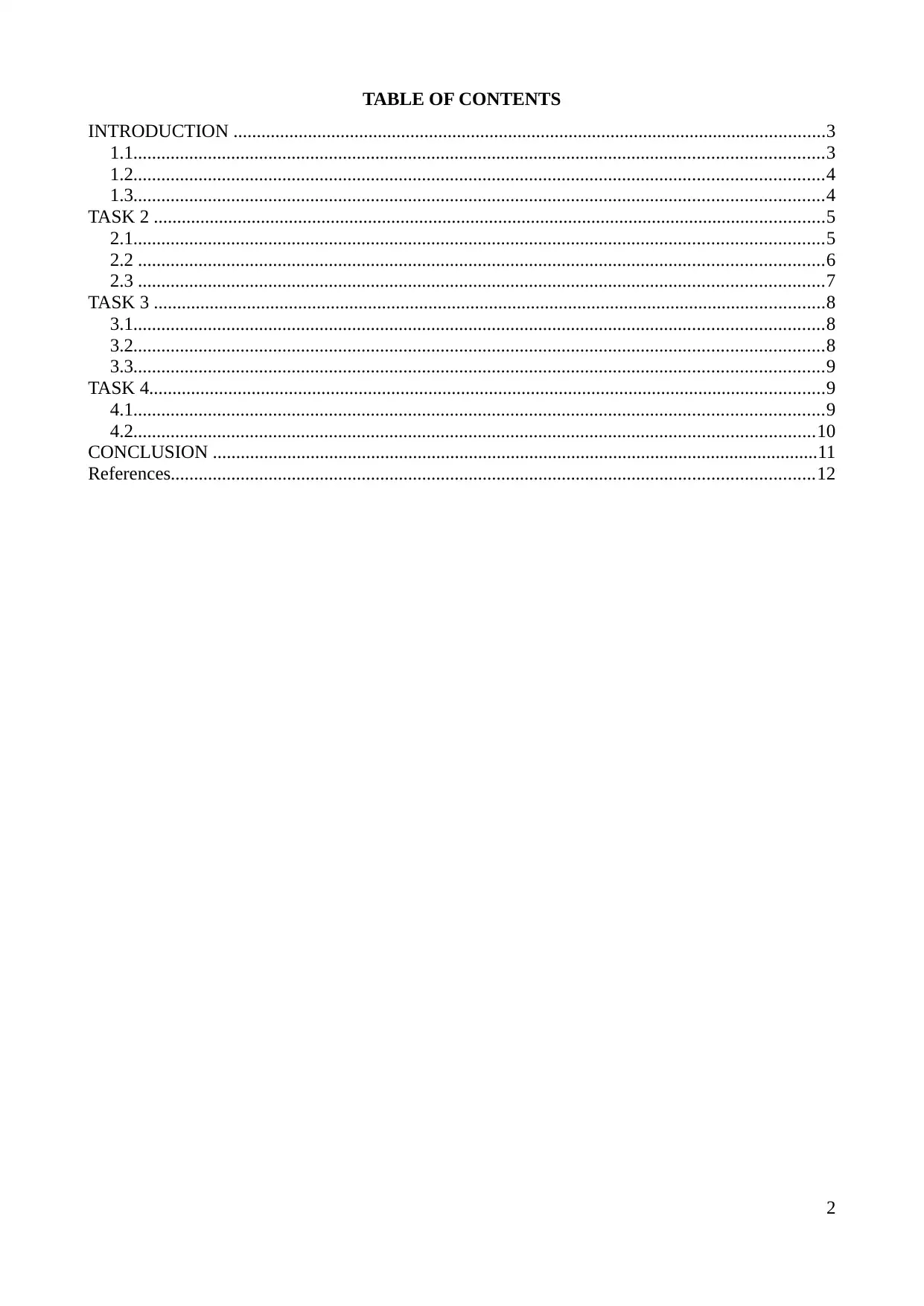
TABLE OF CONTENTS
INTRODUCTION ...............................................................................................................................3
1.1....................................................................................................................................................3
1.2....................................................................................................................................................4
1.3....................................................................................................................................................4
TASK 2 ................................................................................................................................................5
2.1....................................................................................................................................................5
2.2 ...................................................................................................................................................6
2.3 ...................................................................................................................................................7
TASK 3 ................................................................................................................................................8
3.1....................................................................................................................................................8
3.2....................................................................................................................................................8
3.3....................................................................................................................................................9
TASK 4.................................................................................................................................................9
4.1....................................................................................................................................................9
4.2..................................................................................................................................................10
CONCLUSION ..................................................................................................................................11
References..........................................................................................................................................12
2
INTRODUCTION ...............................................................................................................................3
1.1....................................................................................................................................................3
1.2....................................................................................................................................................4
1.3....................................................................................................................................................4
TASK 2 ................................................................................................................................................5
2.1....................................................................................................................................................5
2.2 ...................................................................................................................................................6
2.3 ...................................................................................................................................................7
TASK 3 ................................................................................................................................................8
3.1....................................................................................................................................................8
3.2....................................................................................................................................................8
3.3....................................................................................................................................................9
TASK 4.................................................................................................................................................9
4.1....................................................................................................................................................9
4.2..................................................................................................................................................10
CONCLUSION ..................................................................................................................................11
References..........................................................................................................................................12
2
INTRODUCTION
Aspect of contract and negligence for business is a an organizes and systematic process
which supports in performing the work of the organization in an successful manner. Contracts are
signed between two or more parties for determining terms and conditions of business (Berger and
Lester 2015). It is vital that legal formalities should be completed in an appropriate manner for
making proper contract. Present report is based on aspects of contract and negligence for business
and various elements of contract are mentioned in it. Methods of forming contract and importance
of various elements that are used for making contract are mentioned in it. In addition to this impact
of forming contracts by means of face to face, written and distance selling methods are explained.
Furthermore evaluation of different terms in the given contract has been mentioned and elements of
contract are also described. Moreover difference between tort and contractual liability is explained
and different conditions due to which liability for negligence can arise in business are described.
1.1
Peter Abraham is looking to set up a self employed building contractor and for this it is
required that he should posses proper knowledge about contracts. There is need for following a
systematic and organized process for making agreements with another parties (McInnes, Kerr and
VanDuzer, 2013). It is vital that some significant elements should be included while forming the
contract and these elements are as described-
Offer :- When one party gives offer to another party for determining the terms and conditions of
business than it is declared as offer given. According to the case of Carlill v Carbolic Smoke ball
co. it has been referred that contractual agreements are analysed in terms of offer and acceptance.
One party which gives offer to another party than the party is known as offerer and the another
party is known as offeree. Offer is most significant term of contract as with out offer it is not
possible for inviting someone to make agreement.
Acceptance :- Offer given by one party is accepted by another and it shown willingness of party for
accepting the terms and conditions which are mentioned in the contract. As per the case of Entorres
v Miles Far East [1955] it has been referred that the acceptance must be communicated to the
offeree. It is also vital that the terms of the acceptance should match with the terms and conditions
that are mentioned in the agreements. Acceptance is significant term as if another party who has
been given offer will not accept terms and conditions of contract it will not be declared as a valid
contract.
Consideration :- It is assertive that there should be consideration in the contract. Consideration is
defined as promise which is done in exchange for promise made by another party. It is also defined
3
Aspect of contract and negligence for business is a an organizes and systematic process
which supports in performing the work of the organization in an successful manner. Contracts are
signed between two or more parties for determining terms and conditions of business (Berger and
Lester 2015). It is vital that legal formalities should be completed in an appropriate manner for
making proper contract. Present report is based on aspects of contract and negligence for business
and various elements of contract are mentioned in it. Methods of forming contract and importance
of various elements that are used for making contract are mentioned in it. In addition to this impact
of forming contracts by means of face to face, written and distance selling methods are explained.
Furthermore evaluation of different terms in the given contract has been mentioned and elements of
contract are also described. Moreover difference between tort and contractual liability is explained
and different conditions due to which liability for negligence can arise in business are described.
1.1
Peter Abraham is looking to set up a self employed building contractor and for this it is
required that he should posses proper knowledge about contracts. There is need for following a
systematic and organized process for making agreements with another parties (McInnes, Kerr and
VanDuzer, 2013). It is vital that some significant elements should be included while forming the
contract and these elements are as described-
Offer :- When one party gives offer to another party for determining the terms and conditions of
business than it is declared as offer given. According to the case of Carlill v Carbolic Smoke ball
co. it has been referred that contractual agreements are analysed in terms of offer and acceptance.
One party which gives offer to another party than the party is known as offerer and the another
party is known as offeree. Offer is most significant term of contract as with out offer it is not
possible for inviting someone to make agreement.
Acceptance :- Offer given by one party is accepted by another and it shown willingness of party for
accepting the terms and conditions which are mentioned in the contract. As per the case of Entorres
v Miles Far East [1955] it has been referred that the acceptance must be communicated to the
offeree. It is also vital that the terms of the acceptance should match with the terms and conditions
that are mentioned in the agreements. Acceptance is significant term as if another party who has
been given offer will not accept terms and conditions of contract it will not be declared as a valid
contract.
Consideration :- It is assertive that there should be consideration in the contract. Consideration is
defined as promise which is done in exchange for promise made by another party. It is also defined
3
⊘ This is a preview!⊘
Do you want full access?
Subscribe today to unlock all pages.

Trusted by 1+ million students worldwide
as worth rendered by any party in exchange of guarantee that is made by another party . As per the
case of Lampleigh v Braithwait (1615) it has been observed that Lampleigh consideration was made
in past and Braithwait's promise to pay can be linked with earlier request made by Braithwaite's
promise that he has earlier.
Capacity :- It is defined as limit and ability of parties for entering into a valid contract. It is vital that
persons who are getting involved in making agreements should be of sound mind (O'malley, 2012).
Any person suffering from any mental disease can not be declared as eligible for signing
agreements with another party.
1.2
Peter Abraham is about to enter into a business and it is essential that he should posses
appropriate knowledge related to procedure of making contract. Various methods of forming
contract and their impact are as described-
(1) Face to Face :- When any contract is signed by face to face medium than in this type of method
there is lack of evidence. If any party breeches terms and conditions of contract than it becomes
difficult for another party to take legal action against the defaulter (Sweetand Schneier, 2012). It is
an oral method of making agreements and there is no evidence between both the parties that they
have determined some specific conditions for doing business.
(2) Written contract :- This method is appropriate and effective for making contract and in this
legal formalities are completed by all the parties who gets involved in signing the
agreement. In written contract all the terms and conditions of business are mentioned in
appropriate manner and all the parties gets agree on those specific terms (Thampapillai, Tan
and Bozzi, 2012). If any party breeches the condition for making contract than another party
can take legal actions.
ADVANTAGE :- Proper evidence are present with the parties which can be used for making claims
for damages. All the parties sign written documents and due to that proper evidences are present
with all the parties involved for signing contract.
DISADVANTAGE :- It is a complicated and time consuming process and due to that it requires that
appropriate documents should be collected while signing contract.
(3) Distance selling :- It is a cost effective and time saving method of signing contract and it is
done by making use of Telephone and internet. In this method sometime delay occur as both
the parties which are involved in doing contract are sitting at distance and due to this there is
absence of effective communication channel. Lack of proper interaction creates problems in
determining terms and conditions of business and due to this errors occur while making
4
case of Lampleigh v Braithwait (1615) it has been observed that Lampleigh consideration was made
in past and Braithwait's promise to pay can be linked with earlier request made by Braithwaite's
promise that he has earlier.
Capacity :- It is defined as limit and ability of parties for entering into a valid contract. It is vital that
persons who are getting involved in making agreements should be of sound mind (O'malley, 2012).
Any person suffering from any mental disease can not be declared as eligible for signing
agreements with another party.
1.2
Peter Abraham is about to enter into a business and it is essential that he should posses
appropriate knowledge related to procedure of making contract. Various methods of forming
contract and their impact are as described-
(1) Face to Face :- When any contract is signed by face to face medium than in this type of method
there is lack of evidence. If any party breeches terms and conditions of contract than it becomes
difficult for another party to take legal action against the defaulter (Sweetand Schneier, 2012). It is
an oral method of making agreements and there is no evidence between both the parties that they
have determined some specific conditions for doing business.
(2) Written contract :- This method is appropriate and effective for making contract and in this
legal formalities are completed by all the parties who gets involved in signing the
agreement. In written contract all the terms and conditions of business are mentioned in
appropriate manner and all the parties gets agree on those specific terms (Thampapillai, Tan
and Bozzi, 2012). If any party breeches the condition for making contract than another party
can take legal actions.
ADVANTAGE :- Proper evidence are present with the parties which can be used for making claims
for damages. All the parties sign written documents and due to that proper evidences are present
with all the parties involved for signing contract.
DISADVANTAGE :- It is a complicated and time consuming process and due to that it requires that
appropriate documents should be collected while signing contract.
(3) Distance selling :- It is a cost effective and time saving method of signing contract and it is
done by making use of Telephone and internet. In this method sometime delay occur as both
the parties which are involved in doing contract are sitting at distance and due to this there is
absence of effective communication channel. Lack of proper interaction creates problems in
determining terms and conditions of business and due to this errors occur while making
4
Paraphrase This Document
Need a fresh take? Get an instant paraphrase of this document with our AI Paraphraser
contract.
ADVANTAGE :- Parties who are sitting at far places can easily make contracts and in addition to
this contracts should be made in appropriate manner. Business can be expanded and contracts can
be signed through telephones, faxes and couriers.
DISADVANTAGE :- it is a time consuming process and sometimes errors can also occur as all the
parties making contracts are not sitting face to face.
1.3
There are various terms that are mentioned in contracts which are needed to be known by
Peter Abraham. It is vital that he should be aware about these terms so that he can effectively
manage his business operations in an successful manner (Lupton, 2013). Divers terms that are used
while making agreements are as follows :-
Conditions :- it is defined as basic objective for making a contract and principles reasons for making
agreements are known as conditions (Public acts, 2016). conditions are the terms which are
essential to be performed by all the parties involved in the contract. If any party get involves in
activities of breaching the conditions than another party make claims against the defaulter party.
Major terms of contract are defined by conditions.
Warranty :- It is given by offerer related to various business conditions that he is offering to another
party (Marks, Marks and Jackson, 2013). If any condition occurs when rupture of warranty is done
than in this case legal actions can be claimed. If warranty is breached than damaged party can sue
the another for losses suffered by them. Case of Bettini v Gye 1876 QBD 183 describes that if
warranty is not completed by a party than claims can be made for the damages caused.
Innominate terms :- These are the terms which are applicable for all the parties that have signed the
contract. Various conditions and terms of contracts are defined through innominate terms.
Innominate terms are not categorize as conditions or warranty and these are considered as
intermediary terms. According to the case of
The Mihalis Angelos [1970] 3 WLR 601 it has been referred that contract can come to an end if any
party fails in performing required innominate terms of contract.
Exemption clause :- It is essential that limits should be defined for claiming damages and harms
under the contract (Dorfman and Cather, 2012). Exemptions clause are basically of three types
which includes limitation, true and time clause. As per the case of Parker v South Eastern Railway
(1877) 2 CPD 416 It has been concluded that a a party can not move away from their liability by
making use of exclusion clause.
5
ADVANTAGE :- Parties who are sitting at far places can easily make contracts and in addition to
this contracts should be made in appropriate manner. Business can be expanded and contracts can
be signed through telephones, faxes and couriers.
DISADVANTAGE :- it is a time consuming process and sometimes errors can also occur as all the
parties making contracts are not sitting face to face.
1.3
There are various terms that are mentioned in contracts which are needed to be known by
Peter Abraham. It is vital that he should be aware about these terms so that he can effectively
manage his business operations in an successful manner (Lupton, 2013). Divers terms that are used
while making agreements are as follows :-
Conditions :- it is defined as basic objective for making a contract and principles reasons for making
agreements are known as conditions (Public acts, 2016). conditions are the terms which are
essential to be performed by all the parties involved in the contract. If any party get involves in
activities of breaching the conditions than another party make claims against the defaulter party.
Major terms of contract are defined by conditions.
Warranty :- It is given by offerer related to various business conditions that he is offering to another
party (Marks, Marks and Jackson, 2013). If any condition occurs when rupture of warranty is done
than in this case legal actions can be claimed. If warranty is breached than damaged party can sue
the another for losses suffered by them. Case of Bettini v Gye 1876 QBD 183 describes that if
warranty is not completed by a party than claims can be made for the damages caused.
Innominate terms :- These are the terms which are applicable for all the parties that have signed the
contract. Various conditions and terms of contracts are defined through innominate terms.
Innominate terms are not categorize as conditions or warranty and these are considered as
intermediary terms. According to the case of
The Mihalis Angelos [1970] 3 WLR 601 it has been referred that contract can come to an end if any
party fails in performing required innominate terms of contract.
Exemption clause :- It is essential that limits should be defined for claiming damages and harms
under the contract (Dorfman and Cather, 2012). Exemptions clause are basically of three types
which includes limitation, true and time clause. As per the case of Parker v South Eastern Railway
(1877) 2 CPD 416 It has been concluded that a a party can not move away from their liability by
making use of exclusion clause.
5
TASK 2
2.1
According to the case mentioned Carol 's apartment where he was living was unfurnished.
For making it properly furnished it she took some significant initiatives. She pursues Gumtree,
which was an online classified advertisements. Carol saw the advertisements in which it was
mentioned that : “MOVING. For sale. A VERY NICE BROWN LEATHER COUCH . The couch
was priced at £600. Under the advertisement it was mentioned with an accompanying photograph
and contact information. Carol was in wish to purchase the commodity and so E-mailed on contact
number which was mentioned in the advertisements. In the E-mail Carol mentioned that she wants
to purchase the couch. In this case there was an offer for selling the couch and offeror has
mentioned price of the couch and its photograph. It is a valid contract as there is acceptance and
Offer present in the agreement. All the necessary elements which are required for making contract
are present so it can be described as valid contract. In the present case advertisement given in the
newspaper was an offer and carol sent an E-mail on the contacts given in the add. It was acceptance
of offer which was given. In this case all the essential elements of contracts are present so it is a
valid case. As per the case of Pharmaceutical Society of Great Britain v Boots Cash Chemists
(Southern) Ltd it has been referred that display of product in store with a price attached is not sole
sufficient to be considered and declared as an offer. It is considered as an invitation to treat. In the
present case scenario also the advertisement given was can not be considered as an offer and it is
invitation of treat. On these grounds carol does not have rights for taking legal action.
CASE-2
As per the given case Preston's son Devi was seeking a cyber security job with a company naming
George, Smith & Fogarty. His father was a well known person and they mailed a letter to the
company in which they promised to give the company £150,000 if they gets ready to hire his son.
The management of the company has already taken decision for hiring Devi. When the letter was
received by the company they decided to enforce it against Peterson. In this case it is unethical
behaviour shown by Peterson when he offered money to the company. It is illegal to give bribe and
strict punishments have been decided by government against it. It is an invalid contract and George
cannot enforce the promise. The step taken by preston cant be described as lawful and so the
contract is invalid in legal terms. According to the case of Re Casey's Patent (1892) it has been
referred that bargaining done in the contract should be valid and legal. In the present case father of
Devi was offering bribe for his son which is a illegal step and it can not be declared as valid offer.
It is vital that for a contract to be valid it must have a valid consideration. In this case past
6
2.1
According to the case mentioned Carol 's apartment where he was living was unfurnished.
For making it properly furnished it she took some significant initiatives. She pursues Gumtree,
which was an online classified advertisements. Carol saw the advertisements in which it was
mentioned that : “MOVING. For sale. A VERY NICE BROWN LEATHER COUCH . The couch
was priced at £600. Under the advertisement it was mentioned with an accompanying photograph
and contact information. Carol was in wish to purchase the commodity and so E-mailed on contact
number which was mentioned in the advertisements. In the E-mail Carol mentioned that she wants
to purchase the couch. In this case there was an offer for selling the couch and offeror has
mentioned price of the couch and its photograph. It is a valid contract as there is acceptance and
Offer present in the agreement. All the necessary elements which are required for making contract
are present so it can be described as valid contract. In the present case advertisement given in the
newspaper was an offer and carol sent an E-mail on the contacts given in the add. It was acceptance
of offer which was given. In this case all the essential elements of contracts are present so it is a
valid case. As per the case of Pharmaceutical Society of Great Britain v Boots Cash Chemists
(Southern) Ltd it has been referred that display of product in store with a price attached is not sole
sufficient to be considered and declared as an offer. It is considered as an invitation to treat. In the
present case scenario also the advertisement given was can not be considered as an offer and it is
invitation of treat. On these grounds carol does not have rights for taking legal action.
CASE-2
As per the given case Preston's son Devi was seeking a cyber security job with a company naming
George, Smith & Fogarty. His father was a well known person and they mailed a letter to the
company in which they promised to give the company £150,000 if they gets ready to hire his son.
The management of the company has already taken decision for hiring Devi. When the letter was
received by the company they decided to enforce it against Peterson. In this case it is unethical
behaviour shown by Peterson when he offered money to the company. It is illegal to give bribe and
strict punishments have been decided by government against it. It is an invalid contract and George
cannot enforce the promise. The step taken by preston cant be described as lawful and so the
contract is invalid in legal terms. According to the case of Re Casey's Patent (1892) it has been
referred that bargaining done in the contract should be valid and legal. In the present case father of
Devi was offering bribe for his son which is a illegal step and it can not be declared as valid offer.
It is vital that for a contract to be valid it must have a valid consideration. In this case past
6
⊘ This is a preview!⊘
Do you want full access?
Subscribe today to unlock all pages.
Trusted by 1+ million students worldwide
consideration is not valid. For example from the case of Re McArdle (1951) Ch 669 it has been
referred that the promise that has been made for making payment has came after consideration been
performed. Due to this reason promise for making payment can not be binding. Past consideration
can not be considered as valid.
2.2
CASE 3-
According to the given case scenario a couple decided to book a table in a popular London
restaurant. When they were entering in the premises at the side of entrance the man handed over his
overcoat in which a wallet was kept. There was amount of £ 500 which was kept under the wallet.
A receipt was given to the man by porter and on the back side of the receipt it was mentioned that “
ALL the valuables must be properly removed from the jacket pockets and the restaurant will not be
held responsible for any missing stolen item”. When the man was about to give payment he realized
that his wallet was left in the overcoat and he moved to collect it. When he checked the wallet it was
realized by him that the money is missing from the pockets.
He made claim against the management of restaurant for recovering the money which was
there in his wallet. The restaurant refused to pay back the money to the man and declared that its not
the liability of the management. It was told to man that it is properly mentioned on the back side of
the slip that restaurant will not be held responsible for and missing or stolen item. In this case
restaurant was moving away from their liability by making use of Exclusion clause. The man has
forgotten the wallet which was kept inside the overcoat and it was missing from the overcoat. Under
the exclusion clause some details and descriptions are mentioned in written format that party will
not be accountable for certain happenings and issues. It becomes liability of the restaurant to receive
claims made by the man whose wallet was missing from the overcoat. Restaurant cant move away
from the accountability by making use of exclusion clause. Case of L'Estrange v Graucob [1934] 2
KB 394 describes that a party can not move away from their accountability be making use of
exclusion clause. For making an exclusion clause to be valid it is assertive that it should be brought
to notice of the other party. For exclusion case to be valid it is required that it must be brought to the
attention of parties before the contract. It has been ascertained that in this case restaurant can be
held liable and responsible for paying the damages that are sustained by clients. From the case of
Olley v Marlborough Court Hotel Ltd (1949) It has been held that it is critical that exclusion
needs to be brought in the attention of parties.
CASE 4 :-
7
referred that the promise that has been made for making payment has came after consideration been
performed. Due to this reason promise for making payment can not be binding. Past consideration
can not be considered as valid.
2.2
CASE 3-
According to the given case scenario a couple decided to book a table in a popular London
restaurant. When they were entering in the premises at the side of entrance the man handed over his
overcoat in which a wallet was kept. There was amount of £ 500 which was kept under the wallet.
A receipt was given to the man by porter and on the back side of the receipt it was mentioned that “
ALL the valuables must be properly removed from the jacket pockets and the restaurant will not be
held responsible for any missing stolen item”. When the man was about to give payment he realized
that his wallet was left in the overcoat and he moved to collect it. When he checked the wallet it was
realized by him that the money is missing from the pockets.
He made claim against the management of restaurant for recovering the money which was
there in his wallet. The restaurant refused to pay back the money to the man and declared that its not
the liability of the management. It was told to man that it is properly mentioned on the back side of
the slip that restaurant will not be held responsible for and missing or stolen item. In this case
restaurant was moving away from their liability by making use of Exclusion clause. The man has
forgotten the wallet which was kept inside the overcoat and it was missing from the overcoat. Under
the exclusion clause some details and descriptions are mentioned in written format that party will
not be accountable for certain happenings and issues. It becomes liability of the restaurant to receive
claims made by the man whose wallet was missing from the overcoat. Restaurant cant move away
from the accountability by making use of exclusion clause. Case of L'Estrange v Graucob [1934] 2
KB 394 describes that a party can not move away from their accountability be making use of
exclusion clause. For making an exclusion clause to be valid it is assertive that it should be brought
to notice of the other party. For exclusion case to be valid it is required that it must be brought to the
attention of parties before the contract. It has been ascertained that in this case restaurant can be
held liable and responsible for paying the damages that are sustained by clients. From the case of
Olley v Marlborough Court Hotel Ltd (1949) It has been held that it is critical that exclusion
needs to be brought in the attention of parties.
CASE 4 :-
7
Paraphrase This Document
Need a fresh take? Get an instant paraphrase of this document with our AI Paraphraser
As per the given case Aaron rented a house from Zehphra which was not occupied from a
long period of time. Conditions of the house were also not good and it was fallen into disrepair.
Aaron took initiatives for making positive improvements in the structure of the house and for that
he spent significant amount of money. Zehphra has promised Aaron that he is not going to increase
the rent for next five years. After making this promise Zehphra passed away and the house was
occupied by Yeti. New owner decided to increase the rent of the house but Aaron refused for it.
Aaron mentioned that Zehphra has promised for not making increments in the rent of the property
for coming 5 years.
Yeti has terminated the tenancy and Aaron also submitted a bill claiming compensation for
making improvements in structure of the building. Yeti has refused to pay the amount and state that
there was no such conditions mentioned in the tenancy agreements stating that such compensations
was payable. Implied terms are defined as statements which are assumed to be included in the
agreements. Implied terms are not properly mentioned and stated in the contract. In this case also
Zehphra has made oral promise but any valid agreement was not signed between both the parties
related to increment of rents. In this case no prior approval was taken from the owner for repairing
the house and also no any legal contract was signed between both the parties. Yeti is not responsible
for paying money to Aaron for making improvements in the property. No legal contracts was signed
between Aaron and Zehphra and only verbal promise was made by him. According to the case of
The Moorcock (1889) 14 PD 64 it has been referred that no legal actions can be taken on the basis
of implied terms. Case mentioned in the scenario deals with the implied terms and the court was
imply by the Custom to Compensate Aaron for the investment made on the property. From the case
of Hutten VS Warren it has been referred that Judgement was held in the favour of Tenant and the
case was for the implied terms.
2.3
CASE 5
According to the given case the policyholder applied for the motor insurance in a firm.
While the procedure of applying in the proposal form it was asked “ Have you or anyone who will
be drive been involved in any motor accident or make a claim during the last five years”. The
policyholder declared that he was not involved in any such incident and so he is eligible for taking
the policy. Situations occur when claims for policyholder was stolen, it came to the knowledge of
the insurer that policyholder has made theft claim under his previous motor policy within the
duration of last five years. The insurer voided the policy from the starting date and rejected the
policyholder's claim. It was argued by the policyholder that he was not liable for disclosing any
8
long period of time. Conditions of the house were also not good and it was fallen into disrepair.
Aaron took initiatives for making positive improvements in the structure of the house and for that
he spent significant amount of money. Zehphra has promised Aaron that he is not going to increase
the rent for next five years. After making this promise Zehphra passed away and the house was
occupied by Yeti. New owner decided to increase the rent of the house but Aaron refused for it.
Aaron mentioned that Zehphra has promised for not making increments in the rent of the property
for coming 5 years.
Yeti has terminated the tenancy and Aaron also submitted a bill claiming compensation for
making improvements in structure of the building. Yeti has refused to pay the amount and state that
there was no such conditions mentioned in the tenancy agreements stating that such compensations
was payable. Implied terms are defined as statements which are assumed to be included in the
agreements. Implied terms are not properly mentioned and stated in the contract. In this case also
Zehphra has made oral promise but any valid agreement was not signed between both the parties
related to increment of rents. In this case no prior approval was taken from the owner for repairing
the house and also no any legal contract was signed between both the parties. Yeti is not responsible
for paying money to Aaron for making improvements in the property. No legal contracts was signed
between Aaron and Zehphra and only verbal promise was made by him. According to the case of
The Moorcock (1889) 14 PD 64 it has been referred that no legal actions can be taken on the basis
of implied terms. Case mentioned in the scenario deals with the implied terms and the court was
imply by the Custom to Compensate Aaron for the investment made on the property. From the case
of Hutten VS Warren it has been referred that Judgement was held in the favour of Tenant and the
case was for the implied terms.
2.3
CASE 5
According to the given case the policyholder applied for the motor insurance in a firm.
While the procedure of applying in the proposal form it was asked “ Have you or anyone who will
be drive been involved in any motor accident or make a claim during the last five years”. The
policyholder declared that he was not involved in any such incident and so he is eligible for taking
the policy. Situations occur when claims for policyholder was stolen, it came to the knowledge of
the insurer that policyholder has made theft claim under his previous motor policy within the
duration of last five years. The insurer voided the policy from the starting date and rejected the
policyholder's claim. It was argued by the policyholder that he was not liable for disclosing any
8
information related to his previous theft claims because the insurer was concerned not to meet it.
The insurer deserves the right to void the policy as the policy holder has not provided authentic and
relevant information about his previous claims. It is illegal activity which is done by the
policyholder. It is vital that appropriate details should be provided by the policyholder while taking
the insurance policy. According to the case of Esso Petroleum v Mardon [1976] QB 801 it has been
observed that if any party fails in fulfilling terms and conditions of contract than another party can
breach the contract onthis ground. In the present case as proper information was not provided by
policyholder so legal claims can be taken by insurer and policy can be closed from the starting date.
CASE 6
According to the case mentioned it was clearly denied by the policyholder that no modifications has
been made in the car. In the first question of proposal form it was asked that whether the car has
been modified with its internal parts. It was declared by the policyholder that the car has not been
modified from the maker's specification and no alterations has been made in spoilers, skirts, alloy
and wheels. second question in the proposal form inquire whether any claims have been made by
policyholder in last five years. It was also declared by the policyholder that the person was not
involved in any kind of accident or losses during the last five years. When it was investigated by the
insurer it came to light that the car had not been fitted with oversized wheels and other parts of the
car. The insurer decided to refuse for claims and also cancelled the policy from the starting state. It
was stated by policyholder that she had bought the car with all the modifications are already done in
the car. Policyholder also stated that she was not aware that his husband has made some
modifications in the car. In the present case the insurer deserve the rights to void the policy from the
starting date. The reason being policy holder has not provided appropriate information to the
insurance company.
TASK 3
3.1
Tort liability is defined as accountability of a individual towards state and civic
responsibilities of a person comes under this. On the other hand contractual liability is made with
the consent of a person. Contractual liability that is created by consent of a person where as no prior
permission is taken in the tort liability (Carter and Courtney, 2016). If any party breaches the terms
and conditions of a contract than the individual comes under the category of contractual liability.
Punishments are given by state when the cases belongs to contractual liability where as civil actions
are taken by person against the offender in the tort liability. Tort is legal mistakes committed by the
offender under which harm is caused to any individual. Whenever any person enters contractual
9
The insurer deserves the right to void the policy as the policy holder has not provided authentic and
relevant information about his previous claims. It is illegal activity which is done by the
policyholder. It is vital that appropriate details should be provided by the policyholder while taking
the insurance policy. According to the case of Esso Petroleum v Mardon [1976] QB 801 it has been
observed that if any party fails in fulfilling terms and conditions of contract than another party can
breach the contract onthis ground. In the present case as proper information was not provided by
policyholder so legal claims can be taken by insurer and policy can be closed from the starting date.
CASE 6
According to the case mentioned it was clearly denied by the policyholder that no modifications has
been made in the car. In the first question of proposal form it was asked that whether the car has
been modified with its internal parts. It was declared by the policyholder that the car has not been
modified from the maker's specification and no alterations has been made in spoilers, skirts, alloy
and wheels. second question in the proposal form inquire whether any claims have been made by
policyholder in last five years. It was also declared by the policyholder that the person was not
involved in any kind of accident or losses during the last five years. When it was investigated by the
insurer it came to light that the car had not been fitted with oversized wheels and other parts of the
car. The insurer decided to refuse for claims and also cancelled the policy from the starting state. It
was stated by policyholder that she had bought the car with all the modifications are already done in
the car. Policyholder also stated that she was not aware that his husband has made some
modifications in the car. In the present case the insurer deserve the rights to void the policy from the
starting date. The reason being policy holder has not provided appropriate information to the
insurance company.
TASK 3
3.1
Tort liability is defined as accountability of a individual towards state and civic
responsibilities of a person comes under this. On the other hand contractual liability is made with
the consent of a person. Contractual liability that is created by consent of a person where as no prior
permission is taken in the tort liability (Carter and Courtney, 2016). If any party breaches the terms
and conditions of a contract than the individual comes under the category of contractual liability.
Punishments are given by state when the cases belongs to contractual liability where as civil actions
are taken by person against the offender in the tort liability. Tort is legal mistakes committed by the
offender under which harm is caused to any individual. Whenever any person enters contractual
9
⊘ This is a preview!⊘
Do you want full access?
Subscribe today to unlock all pages.
Trusted by 1+ million students worldwide
obligations than the individual owes a duty to the party with whom the contract is signed. Tort
liability are imposed by legislative frameworks and contractual liabilities are voluntarily
undertaken. According to the case of Caparo v. Dickman itb has been referred that the claims made
against the damages are reasonable and so it becomes accountability of the person to pay for the
harm that has been caused due to his mistakes.
3.2
Negligence is defined as conditions under which a person fails to take appropriate care in
specific circumstances. There are some elements which are mandatory for the negligence and it
includes duty of care in which the manufacture is accountable for services and products that he has
rendered to its consumers. If negligence is shown while rendering duty of care than employer can
be held accountable for harm and damages caused. (Oni-Ojo and Iyiola, 2014). In addition to this
breach of duty is one more significant element that is considered under negligence. If any party
shows failure in fulfilling terms and conditions that are mentioned in contract than it is declared as
breach of duty and innocent party deserve right to take legal action. In addition to this remoteness
of damages are also considered as important part of negligence. Under remoteness of damages
extent to which damages are caused to a part are accessed and while proving cases of negligence it
is vital to show remoteness of damages. It is vital that all the elements should be considered while
ensuring liability of negligence. It is assertive that negligence should be proved while making
claims and taking legal action against the wrongdoer. As per the case of Donoghue v Stevenson
[1932] AC 562 it has been adverted that it is assertive that for proving negligence it is essential
that the claimant must prove that defendant owed them a duty of care. In addition to this it is also
required that claimant must prove that the breach of duty caused damages and defendant was in
breach of that duty. Under the case claims made by Mrs Donoghue were proved reasonable and the
case established the modern law of negligence. Ginger beer manufacture was ordered to pay
compensation to Mrs Donoghue for negligence made by him for making the product.
3.3
Vicarious liability is defined as responsibility and accountability of owners of the enterprises
towards mistakes committed by their staff members (Carter and Courtney, 2016). Doctrine of
common law imposes vicarious liability and it is vital that all the guidelines should be followed by
staff members of the company (Vicarious liability. 2016). When any damage and harm is caused
due to mistakes committed by staff members of any organization than owner or employer of the
company will be held responsible for mistakes committed by them (Lupton, 2013). If legal claims
are proved than it becomes accountability of the owner to pay compensations for wrongdoing of
10
liability are imposed by legislative frameworks and contractual liabilities are voluntarily
undertaken. According to the case of Caparo v. Dickman itb has been referred that the claims made
against the damages are reasonable and so it becomes accountability of the person to pay for the
harm that has been caused due to his mistakes.
3.2
Negligence is defined as conditions under which a person fails to take appropriate care in
specific circumstances. There are some elements which are mandatory for the negligence and it
includes duty of care in which the manufacture is accountable for services and products that he has
rendered to its consumers. If negligence is shown while rendering duty of care than employer can
be held accountable for harm and damages caused. (Oni-Ojo and Iyiola, 2014). In addition to this
breach of duty is one more significant element that is considered under negligence. If any party
shows failure in fulfilling terms and conditions that are mentioned in contract than it is declared as
breach of duty and innocent party deserve right to take legal action. In addition to this remoteness
of damages are also considered as important part of negligence. Under remoteness of damages
extent to which damages are caused to a part are accessed and while proving cases of negligence it
is vital to show remoteness of damages. It is vital that all the elements should be considered while
ensuring liability of negligence. It is assertive that negligence should be proved while making
claims and taking legal action against the wrongdoer. As per the case of Donoghue v Stevenson
[1932] AC 562 it has been adverted that it is assertive that for proving negligence it is essential
that the claimant must prove that defendant owed them a duty of care. In addition to this it is also
required that claimant must prove that the breach of duty caused damages and defendant was in
breach of that duty. Under the case claims made by Mrs Donoghue were proved reasonable and the
case established the modern law of negligence. Ginger beer manufacture was ordered to pay
compensation to Mrs Donoghue for negligence made by him for making the product.
3.3
Vicarious liability is defined as responsibility and accountability of owners of the enterprises
towards mistakes committed by their staff members (Carter and Courtney, 2016). Doctrine of
common law imposes vicarious liability and it is vital that all the guidelines should be followed by
staff members of the company (Vicarious liability. 2016). When any damage and harm is caused
due to mistakes committed by staff members of any organization than owner or employer of the
company will be held responsible for mistakes committed by them (Lupton, 2013). If legal claims
are proved than it becomes accountability of the owner to pay compensations for wrongdoing of
10
Paraphrase This Document
Need a fresh take? Get an instant paraphrase of this document with our AI Paraphraser
their employees. Employer of the enterprise is accountable for wrong conduct of workers,
managers, supervisors and other contract workers. In addition to this they are also responsible for
mistakes committed by business partners and other workforce participants. By referring to the case
of Catholic Child Welfare Society v Institute of the Brothers of the Christian Schoolsit it is observed
that it becomes responsibility of the enterprise if any unlawful action is taken by the employer.
Individuals who suffer from harm and damages deserves the right to take legal actions against the
party who is accountable for claiming the damages. Employer of the corporation needs to bear the
consequences of ant wrongdoing and unlawful action committed by any staff member
(Thampapillai, Tan and Bozzi, 2012). It becomes liability of business owners to ensure adequate
precautions while executing the functions of business in proper manner. There are various
conditions under which employer of organization becomes vicarious liable. It is vital that there
should be employee employer relationship and proper employment contract should be signed
between both the parties. In addition to this employer becomes liable when accident happens during
working hours.
TASK 4
4.1
CASE 7
Mr. brown was facing some health related issues and so he went to Goodmays hospital for
complaining of chest pain and breathing problems. Treatment was given to him by a nurse who
telephoned the doctor who was present on duty. The doctor has asked the nurse to prescribe some
over the counter pain killer. Mr. brown passed away next day he was brought to the hospital and he
was having Pneumonia which was caused due to toxic moulds in his house. Widow of Mr. brown
has right to make claims for the following situations-
(a)
The hospital can be held responsible for negligence as proper treatment was not provided to
Mr. brown and due to this his health conditions got worsened. The nurse who was giving treatment
to Mr brown has not taken initiatives for properly doing diagnosis of Mr. brown and due to it it was
get delayed in providing appropriate care to the patient. The doctor took no care for doing proper
medical examination of patient due to which the tragic incident happened and Mr. brown passed
away. Legal actions can be taken by wife of the person against the hospital for negligence done by
their staff members. It was serious mistakes committed by staff members including doctor and
nurses due to which this incident happened. According to the case of Tarasoff v. Regents of the
University of California, 551 P.2d 334 A patient has described his psychiatrist that he thinks about
11
managers, supervisors and other contract workers. In addition to this they are also responsible for
mistakes committed by business partners and other workforce participants. By referring to the case
of Catholic Child Welfare Society v Institute of the Brothers of the Christian Schoolsit it is observed
that it becomes responsibility of the enterprise if any unlawful action is taken by the employer.
Individuals who suffer from harm and damages deserves the right to take legal actions against the
party who is accountable for claiming the damages. Employer of the corporation needs to bear the
consequences of ant wrongdoing and unlawful action committed by any staff member
(Thampapillai, Tan and Bozzi, 2012). It becomes liability of business owners to ensure adequate
precautions while executing the functions of business in proper manner. There are various
conditions under which employer of organization becomes vicarious liable. It is vital that there
should be employee employer relationship and proper employment contract should be signed
between both the parties. In addition to this employer becomes liable when accident happens during
working hours.
TASK 4
4.1
CASE 7
Mr. brown was facing some health related issues and so he went to Goodmays hospital for
complaining of chest pain and breathing problems. Treatment was given to him by a nurse who
telephoned the doctor who was present on duty. The doctor has asked the nurse to prescribe some
over the counter pain killer. Mr. brown passed away next day he was brought to the hospital and he
was having Pneumonia which was caused due to toxic moulds in his house. Widow of Mr. brown
has right to make claims for the following situations-
(a)
The hospital can be held responsible for negligence as proper treatment was not provided to
Mr. brown and due to this his health conditions got worsened. The nurse who was giving treatment
to Mr brown has not taken initiatives for properly doing diagnosis of Mr. brown and due to it it was
get delayed in providing appropriate care to the patient. The doctor took no care for doing proper
medical examination of patient due to which the tragic incident happened and Mr. brown passed
away. Legal actions can be taken by wife of the person against the hospital for negligence done by
their staff members. It was serious mistakes committed by staff members including doctor and
nurses due to which this incident happened. According to the case of Tarasoff v. Regents of the
University of California, 551 P.2d 334 A patient has described his psychiatrist that he thinks about
11
killing a girl and due to this mentally he feels disturbed. Sometimes later it was observed that a girl
was killed by the boy. It is a leading and significant case which describes about negligence of duty
of care and duty to warn. It is vital that proper care and attention should be provided by health care
professional to the patients and if any negligence is found than legal actions can be taken against
such person (Contract consideration, 2016). in this case remoteness of damage is vary high as client
has become dead due to negligence shown by staff members of hospital. Widower of Mr brown
deserves right to take legal action against the management of Hospital.
(b)
The hospital can not be held responsible for negligence in a specific situation if the staff
members would have taken appropriate care of the patient. No initiatives were taken by doctor and
nurse for doing medical examination of patients before prescribing medicines to them. Individuals
who are providing services to patients in health care sector should render their duties in proper
manner and follow all the guidelines and instructions of medical sector. If proper care would have
been provided by doctor and nurses than hospital administration deserves the right to refuse the
claim and hospital will not be held responsible for negligence in specific conditions. Under
remoteness of damages it defines that in case of negligence the claimant must prove that harm and
damages have been caused due to negligence shown by a person or a group. Remoteness of
damages needs to be proved while making claims for negligence.
4.2
CASE 8
As per the given case a driver working for an executive chauffeur company was sent to pick up a
client at the airport. While waiting for the flight the driver decided to take few glasses of alcohol.
When he was going back for clients hotel a accident occurred and he crashed into a lamp post and
injuries were suffered by the client. Investigations were carried out and it was found that driver was
over the drink driving limit. Customers have decided to sue the chauffer company and it is lawful
decision taken by the client. According to the case of Honeywill and Stein Ltd v Larkin Brothers Ltd
employer of the venture were held responsible for unlawful action taken by the photographer who
was working in the firm. Photographer was involved in some wrong and unlawful actions and he
photographed interior of a theatre which was not allowed. In this case employer of the company
was held liable for mistakes and illegal action of their worker. In the present case it was wrong that
driver has taken alcohol and due to it accident happened. In the investigations it was proved that
driver was over the drink and driving limits which led towards causing such a serious accident.
Under vicarious liability some legal principles have been mentioned and it is vital to follow all the
12
was killed by the boy. It is a leading and significant case which describes about negligence of duty
of care and duty to warn. It is vital that proper care and attention should be provided by health care
professional to the patients and if any negligence is found than legal actions can be taken against
such person (Contract consideration, 2016). in this case remoteness of damage is vary high as client
has become dead due to negligence shown by staff members of hospital. Widower of Mr brown
deserves right to take legal action against the management of Hospital.
(b)
The hospital can not be held responsible for negligence in a specific situation if the staff
members would have taken appropriate care of the patient. No initiatives were taken by doctor and
nurse for doing medical examination of patients before prescribing medicines to them. Individuals
who are providing services to patients in health care sector should render their duties in proper
manner and follow all the guidelines and instructions of medical sector. If proper care would have
been provided by doctor and nurses than hospital administration deserves the right to refuse the
claim and hospital will not be held responsible for negligence in specific conditions. Under
remoteness of damages it defines that in case of negligence the claimant must prove that harm and
damages have been caused due to negligence shown by a person or a group. Remoteness of
damages needs to be proved while making claims for negligence.
4.2
CASE 8
As per the given case a driver working for an executive chauffeur company was sent to pick up a
client at the airport. While waiting for the flight the driver decided to take few glasses of alcohol.
When he was going back for clients hotel a accident occurred and he crashed into a lamp post and
injuries were suffered by the client. Investigations were carried out and it was found that driver was
over the drink driving limit. Customers have decided to sue the chauffer company and it is lawful
decision taken by the client. According to the case of Honeywill and Stein Ltd v Larkin Brothers Ltd
employer of the venture were held responsible for unlawful action taken by the photographer who
was working in the firm. Photographer was involved in some wrong and unlawful actions and he
photographed interior of a theatre which was not allowed. In this case employer of the company
was held liable for mistakes and illegal action of their worker. In the present case it was wrong that
driver has taken alcohol and due to it accident happened. In the investigations it was proved that
driver was over the drink and driving limits which led towards causing such a serious accident.
Under vicarious liability some legal principles have been mentioned and it is vital to follow all the
12
⊘ This is a preview!⊘
Do you want full access?
Subscribe today to unlock all pages.
Trusted by 1+ million students worldwide

1 out of 16


Related Documents


Your All-in-One AI-Powered Toolkit for Academic Success.
+13062052269
info@desklib.com
Available 24*7 on WhatsApp / Email
![[object Object]](/_next/static/media/star-bottom.7253800d.svg)
Unlock your academic potential
Copyright © 2020–2026 A2Z Services. All Rights Reserved. Developed and managed by ZUCOL.