MBA Business Development Plan: Plastic Recycling Plant in India
VerifiedAdded on 2022/12/14
|42
|13722
|361
Project
AI Summary
This document presents a detailed business development plan focused on establishing a plastic recycling plant in India. It begins with an introduction that outlines the problem of plastic waste, its environmental impact, and the need for recycling initiatives. The plan includes a comprehensive literature review providing context and background information on plastic recycling. The methodology section details the research approach, including the research aim, objectives, research questions, and the significance of the study. It explores research methods, survey techniques, market research, and feasibility tests. The plan also addresses the challenges of the plastic recycling industry, particularly in India, and proposes solutions. The analysis section presents data analysis and findings. The conclusion and recommendations provide insights and suggestions for the successful implementation of the business plan. The main topic revolves around the recycling of plastic waste into meaningful substances, aiming to address environmental concerns and promote sustainability. This plan aims to evaluate the profits earned by setting up a plastic recycling plant in India and provides ways for overcoming the challenges. The plan is designed to be a valuable resource for students and professionals interested in the business of plastic recycling.
Business Development
Plan
Plan

Paraphrase This Document
Need a fresh take? Get an instant paraphrase of this document with our AI Paraphraser
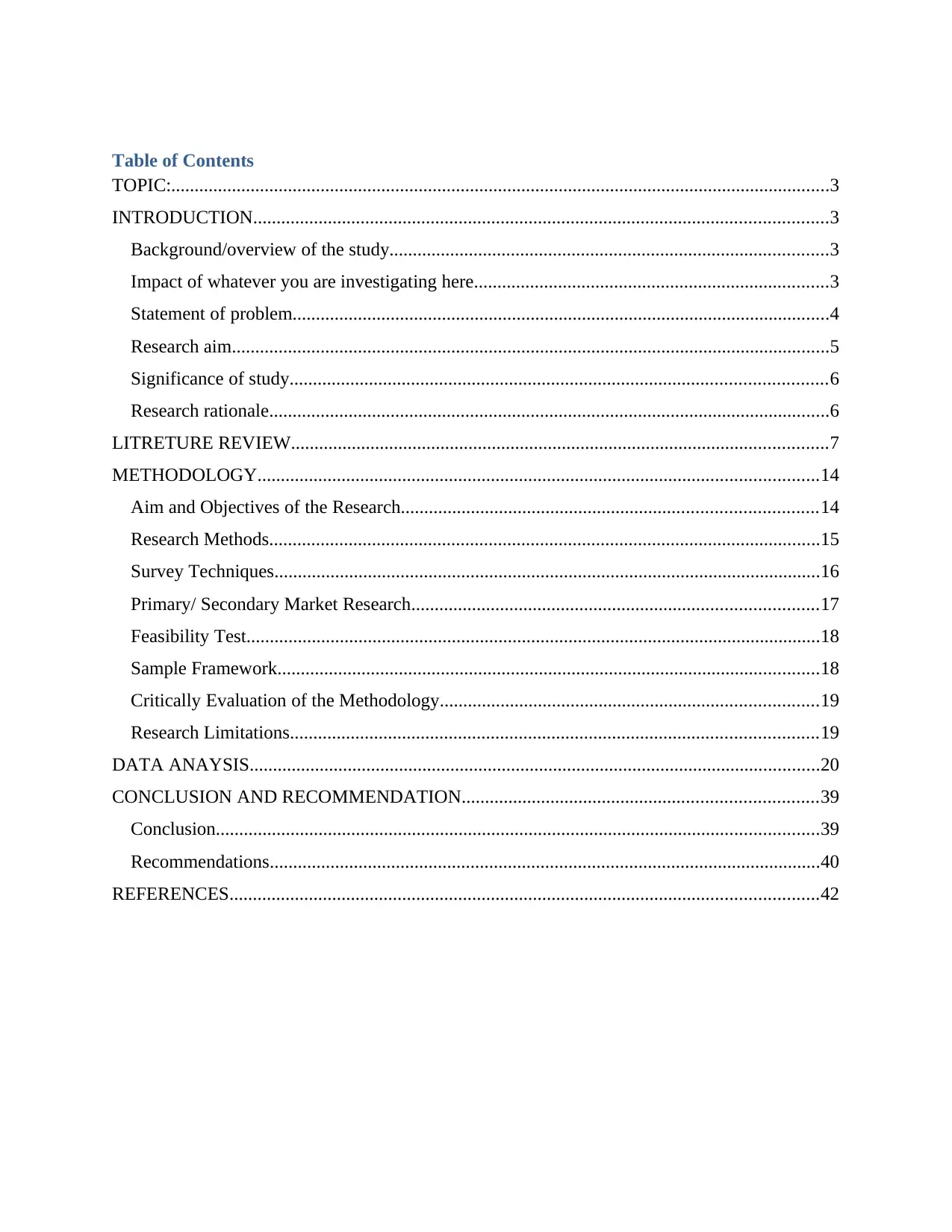
Table of Contents
TOPIC:.............................................................................................................................................3
INTRODUCTION...........................................................................................................................3
Background/overview of the study..............................................................................................3
Impact of whatever you are investigating here............................................................................3
Statement of problem...................................................................................................................4
Research aim................................................................................................................................5
Significance of study...................................................................................................................6
Research rationale........................................................................................................................6
LITRETURE REVIEW...................................................................................................................7
METHODOLOGY........................................................................................................................14
Aim and Objectives of the Research.........................................................................................14
Research Methods......................................................................................................................15
Survey Techniques.....................................................................................................................16
Primary/ Secondary Market Research.......................................................................................17
Feasibility Test...........................................................................................................................18
Sample Framework....................................................................................................................18
Critically Evaluation of the Methodology.................................................................................19
Research Limitations.................................................................................................................19
DATA ANAYSIS..........................................................................................................................20
CONCLUSION AND RECOMMENDATION............................................................................39
Conclusion.................................................................................................................................39
Recommendations......................................................................................................................40
REFERENCES..............................................................................................................................42
TOPIC:.............................................................................................................................................3
INTRODUCTION...........................................................................................................................3
Background/overview of the study..............................................................................................3
Impact of whatever you are investigating here............................................................................3
Statement of problem...................................................................................................................4
Research aim................................................................................................................................5
Significance of study...................................................................................................................6
Research rationale........................................................................................................................6
LITRETURE REVIEW...................................................................................................................7
METHODOLOGY........................................................................................................................14
Aim and Objectives of the Research.........................................................................................14
Research Methods......................................................................................................................15
Survey Techniques.....................................................................................................................16
Primary/ Secondary Market Research.......................................................................................17
Feasibility Test...........................................................................................................................18
Sample Framework....................................................................................................................18
Critically Evaluation of the Methodology.................................................................................19
Research Limitations.................................................................................................................19
DATA ANAYSIS..........................................................................................................................20
CONCLUSION AND RECOMMENDATION............................................................................39
Conclusion.................................................................................................................................39
Recommendations......................................................................................................................40
REFERENCES..............................................................................................................................42
TOPIC:
The main topic of business development plan is related with plastic recycling plant in India.
INTRODUCTION
Background/overview of the study
Plastics appear lightweight, flexible, and robust, however these are being seen as a threat to
mammals, aquatic life, and subsequent generations of human kind, despite their pervasive
appearance and vital role in all of our technical advances, from vehicles and electronics to
substitute coronary arteries. Recent studies of plastic as well as micro plastic waste in each and
every nook and cranny of the environment have raised global awareness of the dangers that the
increasing the using plastic materials has created. This has led to calls for far more conventional
materials to supplement industrial plastics in certain ways. This sector hires many disadvantaged
groups and supplies processed plastics towards the Indian economy somewhere at lowest
possible prices. Although being stereotyped as low-skilled, workers throughout this industry
have acquired a wide range of cost-effective expertise. Aside from quality concerns, unregulated
plastic manufacturing, as practised in India, is linked to a slew of society and the environment.
Employment without safety features, open disposal of factory wastes and wastewaters,
unregulated processing of fractions containing toxic chemicals, and forced labour are all
common unsafe activities. Although recyclers are often mindful of health, economic, and
financial threats, they frequently lose the courage to make a difference. To list a couple, exposure
to such chemicals has now been attributed to disease, disruption to the immune and homeostatic
mechanisms, and behaviour modification. Hazardous materials are normally not processed in
India and are instead burned in regulated incinerators. Unrestrained recycling of these hazardous
materials, like the one undertaken in India's shadow economy, poses a risk of harmful
compounds being emitted into the atmosphere. As a result, it has the ability to cause damage to
people and animals.
Impact of whatever you are investigating here
Instead of lightweight packets, India's unofficial plastics recycling rate has concentrated on
the much more profitable liquid and water bottle, that are simpler to collect and process.
However, the country has produced some of the most innovative solutions to this vexing issue.
Both of these activities are taking place in the context of a government pressure to improve the
The main topic of business development plan is related with plastic recycling plant in India.
INTRODUCTION
Background/overview of the study
Plastics appear lightweight, flexible, and robust, however these are being seen as a threat to
mammals, aquatic life, and subsequent generations of human kind, despite their pervasive
appearance and vital role in all of our technical advances, from vehicles and electronics to
substitute coronary arteries. Recent studies of plastic as well as micro plastic waste in each and
every nook and cranny of the environment have raised global awareness of the dangers that the
increasing the using plastic materials has created. This has led to calls for far more conventional
materials to supplement industrial plastics in certain ways. This sector hires many disadvantaged
groups and supplies processed plastics towards the Indian economy somewhere at lowest
possible prices. Although being stereotyped as low-skilled, workers throughout this industry
have acquired a wide range of cost-effective expertise. Aside from quality concerns, unregulated
plastic manufacturing, as practised in India, is linked to a slew of society and the environment.
Employment without safety features, open disposal of factory wastes and wastewaters,
unregulated processing of fractions containing toxic chemicals, and forced labour are all
common unsafe activities. Although recyclers are often mindful of health, economic, and
financial threats, they frequently lose the courage to make a difference. To list a couple, exposure
to such chemicals has now been attributed to disease, disruption to the immune and homeostatic
mechanisms, and behaviour modification. Hazardous materials are normally not processed in
India and are instead burned in regulated incinerators. Unrestrained recycling of these hazardous
materials, like the one undertaken in India's shadow economy, poses a risk of harmful
compounds being emitted into the atmosphere. As a result, it has the ability to cause damage to
people and animals.
Impact of whatever you are investigating here
Instead of lightweight packets, India's unofficial plastics recycling rate has concentrated on
the much more profitable liquid and water bottle, that are simpler to collect and process.
However, the country has produced some of the most innovative solutions to this vexing issue.
Both of these activities are taking place in the context of a government pressure to improve the
⊘ This is a preview!⊘
Do you want full access?
Subscribe today to unlock all pages.

Trusted by 1+ million students worldwide
volume of material throughout Indian culture. By 2022, that Indian state needs to double per
person plastics use, likely as a proxy for economic progress and expanded high technology.
Plastic-containing commodities like consumer electronic devices, packaged food, and different
kitchen appliances are in high economies such as India due to the country's rapid growth. As a
result, issues relating to the handling of plastic pollution would become increasingly relevant.
The existence of the informal sector, which consists of a large number of smaller companies as
well as self-employed people with very little limited official status, coordinated around entire
value chain through selection to processing, storage, and processing elements, is primarily
responsible for India's status as a recycling country. This sector hires many disadvantaged groups
and supplies recycled materials towards the Indian economy just at affordable prices. In Delhi,
recycling process is a big economic operation, employ approximately 20,000-25,000 needs and
give a source of income for their households and neighbourhoods. Recycling plants in Delhi
recycle not just to plastic waste produced in the region, and also (and primarily) plastic waste
from several other sections of India as other nations also like Malaysia and Indonesia.
Statement of problem
Plastic recycling remains, on the whole, a renewable practise because it reduces the use of
fossil fuels, carbon pollution, and waste disposal. Certain amounts of plastic pollution, on the
other hand, contain toxic chemicals that need special handling and, sometimes in circumstances,
removal. Brominated fire retardants (used for fire retardant) and toxic metals (stabiliser and
pigment), mercury (pigment), and sulphide (flame - resistant motivator) are all harmful plastic
compounds. To list a couple, exposure to such chemicals has been attributed to disease,
disruption to the nervous and homeostatic mechanisms, and behavioural issues. The main issue,
though, is a lack of or insufficient environmental management at the local level. As a result, the
most basic prerequisite is a technical growth strategy that minimises environmental deterioration.
Plastic, a type of plastic, has replaced synthetic products in nearly every facet of life and has
become an indispensable part of our culture. In the past few decades, nature has seen a
significant rise in the manufacture of plastics, and also an uptick with use of plastic products.
Plastics' strength and durability therefore steadily improved over time. Plastics intake is expected
to increase over the next five years, following a similar trend in the previous five years. Local
municipalities, but at the other level, are adapting to consumer uproar by banning disposable
bags, particularly ultra-thin plastic containers as well as Styrofoam-based items. The central
person plastics use, likely as a proxy for economic progress and expanded high technology.
Plastic-containing commodities like consumer electronic devices, packaged food, and different
kitchen appliances are in high economies such as India due to the country's rapid growth. As a
result, issues relating to the handling of plastic pollution would become increasingly relevant.
The existence of the informal sector, which consists of a large number of smaller companies as
well as self-employed people with very little limited official status, coordinated around entire
value chain through selection to processing, storage, and processing elements, is primarily
responsible for India's status as a recycling country. This sector hires many disadvantaged groups
and supplies recycled materials towards the Indian economy just at affordable prices. In Delhi,
recycling process is a big economic operation, employ approximately 20,000-25,000 needs and
give a source of income for their households and neighbourhoods. Recycling plants in Delhi
recycle not just to plastic waste produced in the region, and also (and primarily) plastic waste
from several other sections of India as other nations also like Malaysia and Indonesia.
Statement of problem
Plastic recycling remains, on the whole, a renewable practise because it reduces the use of
fossil fuels, carbon pollution, and waste disposal. Certain amounts of plastic pollution, on the
other hand, contain toxic chemicals that need special handling and, sometimes in circumstances,
removal. Brominated fire retardants (used for fire retardant) and toxic metals (stabiliser and
pigment), mercury (pigment), and sulphide (flame - resistant motivator) are all harmful plastic
compounds. To list a couple, exposure to such chemicals has been attributed to disease,
disruption to the nervous and homeostatic mechanisms, and behavioural issues. The main issue,
though, is a lack of or insufficient environmental management at the local level. As a result, the
most basic prerequisite is a technical growth strategy that minimises environmental deterioration.
Plastic, a type of plastic, has replaced synthetic products in nearly every facet of life and has
become an indispensable part of our culture. In the past few decades, nature has seen a
significant rise in the manufacture of plastics, and also an uptick with use of plastic products.
Plastics' strength and durability therefore steadily improved over time. Plastics intake is expected
to increase over the next five years, following a similar trend in the previous five years. Local
municipalities, but at the other level, are adapting to consumer uproar by banning disposable
bags, particularly ultra-thin plastic containers as well as Styrofoam-based items. The central
Paraphrase This Document
Need a fresh take? Get an instant paraphrase of this document with our AI Paraphraser
government is already planning to ban polyethylene terephthalate, or PVC, a product used
throughout infrastructural projects that releases harmful compounds further into atmosphere
when inappropriately dispose through.
Research aim
The main aim of this research is to make a plant which will mainly operate to recycle the
plastic waste into meaningful substances. The integrity and accountability of a certification
program are specifically correlated to its performance, which necessitates that perhaps the
standards board adhere to global best practices. Off from one another because of the need to
build a stable market for product registration, the registration program for recyclable materials
which needed additional seed financing at first, so qualification premiums can be obtained until
sustainable and environmentally conscious companies are sustainable. Implementing global
standards in the qualification scheme's development could aid in securing this venture capital. As
starting points, they have the ability to stimulate the transition of India's local recycling sector to
one that is more productive. But nevertheless, these companies are having a difficult time
breaking through into Indian plastic recycling industry since their materials are generally
differentiated towards less sustainable manner recycled materials: there seem to be actually no
funding structures in place to allow their activities noticeable.
Research aim
“To examine the business development plan for setting up plastic recycling plant in India
for proper use of Plastic”
Research Objectives
To understand the term plastic recycling plant
To examine the use of plastic by set up the plastic recycling plant
To evaluate the profits earned by setting plastic recycling plant in India
To determine the challenges under setting plastic recycling plant in India
To measure the ways for overcoming the challenges that is present at the time of setting
plastic recycling plant in India.
Research Questions
What is the term plastic recycling plant?
What is the use of plastic by set up the plastic recycling plant?
What profits are earned by setting plastic recycling plant in India?
throughout infrastructural projects that releases harmful compounds further into atmosphere
when inappropriately dispose through.
Research aim
The main aim of this research is to make a plant which will mainly operate to recycle the
plastic waste into meaningful substances. The integrity and accountability of a certification
program are specifically correlated to its performance, which necessitates that perhaps the
standards board adhere to global best practices. Off from one another because of the need to
build a stable market for product registration, the registration program for recyclable materials
which needed additional seed financing at first, so qualification premiums can be obtained until
sustainable and environmentally conscious companies are sustainable. Implementing global
standards in the qualification scheme's development could aid in securing this venture capital. As
starting points, they have the ability to stimulate the transition of India's local recycling sector to
one that is more productive. But nevertheless, these companies are having a difficult time
breaking through into Indian plastic recycling industry since their materials are generally
differentiated towards less sustainable manner recycled materials: there seem to be actually no
funding structures in place to allow their activities noticeable.
Research aim
“To examine the business development plan for setting up plastic recycling plant in India
for proper use of Plastic”
Research Objectives
To understand the term plastic recycling plant
To examine the use of plastic by set up the plastic recycling plant
To evaluate the profits earned by setting plastic recycling plant in India
To determine the challenges under setting plastic recycling plant in India
To measure the ways for overcoming the challenges that is present at the time of setting
plastic recycling plant in India.
Research Questions
What is the term plastic recycling plant?
What is the use of plastic by set up the plastic recycling plant?
What profits are earned by setting plastic recycling plant in India?
What are the challenges that are arises under setting plastic recycling plant in India?
What are the ways for overcoming the challenges that is present at the time of setting
plastic recycling plant in India?
Significance of study
Systematic plastic recycling companies find it difficult to cope with these low-cost
frameworks, particularly should they choose to meet or exceed social and ecological legal
criteria to manufacture more sustainable way renewable energy. Furthermore, because of their
need to store gathered and often partly recycled micro plastics, they are often identified with
informal participants and behaviours. A standard for sustainable way plastic bottles particles and
gelatin may be a key component in accelerating the transformation to a more efficient plastic
recycling industry. This system will make it possible to verify, certify, and publicise the services
offered by sustainable recyclable materials.
If a market for slightly elevated recycled materials is sometimes created and fulfilled by
packaged goods, so fabricators that produce certified goods would be able to operate
commercially viable companies. As a result, this report concentrated on the "warm" aspects of
classification rather than the technological material consistency of recyclable materials.
Although it is a frequent problem, there are few general conditions that can be provided since
each future recycler would have various needs. A registration scheme for moderate recycled
plastics like drops and powder form may be a good way to help with the transition. Businesses
should be forced to charge a price on their approved goods, with the added value understood by
the consumer. To be genuinely revolutionary for the industry, the certification will need to be
based on several of the conservation foundations. It should fail to secure the economic value of
higher-quality recycling while still taking into account environmental and social issues.
Research rationale
The aim of this development plan was to gather the appropriate sectorial context information
for creating a product rating system. Four main areas that need to be considered for a structure
were identified in consultation with stakeholders. Possible future credential shareholders were
identified, the Indian reprocessing industry was characterised with an emphasis on its market and
financial condition, as well as an analysis of regulated contaminants in plastic pollution, and also
track and trace issues and strategies for waste material fractions going through both the
environmental field, was completed. The research found a significant number of possible
What are the ways for overcoming the challenges that is present at the time of setting
plastic recycling plant in India?
Significance of study
Systematic plastic recycling companies find it difficult to cope with these low-cost
frameworks, particularly should they choose to meet or exceed social and ecological legal
criteria to manufacture more sustainable way renewable energy. Furthermore, because of their
need to store gathered and often partly recycled micro plastics, they are often identified with
informal participants and behaviours. A standard for sustainable way plastic bottles particles and
gelatin may be a key component in accelerating the transformation to a more efficient plastic
recycling industry. This system will make it possible to verify, certify, and publicise the services
offered by sustainable recyclable materials.
If a market for slightly elevated recycled materials is sometimes created and fulfilled by
packaged goods, so fabricators that produce certified goods would be able to operate
commercially viable companies. As a result, this report concentrated on the "warm" aspects of
classification rather than the technological material consistency of recyclable materials.
Although it is a frequent problem, there are few general conditions that can be provided since
each future recycler would have various needs. A registration scheme for moderate recycled
plastics like drops and powder form may be a good way to help with the transition. Businesses
should be forced to charge a price on their approved goods, with the added value understood by
the consumer. To be genuinely revolutionary for the industry, the certification will need to be
based on several of the conservation foundations. It should fail to secure the economic value of
higher-quality recycling while still taking into account environmental and social issues.
Research rationale
The aim of this development plan was to gather the appropriate sectorial context information
for creating a product rating system. Four main areas that need to be considered for a structure
were identified in consultation with stakeholders. Possible future credential shareholders were
identified, the Indian reprocessing industry was characterised with an emphasis on its market and
financial condition, as well as an analysis of regulated contaminants in plastic pollution, and also
track and trace issues and strategies for waste material fractions going through both the
environmental field, was completed. The research found a significant number of possible
⊘ This is a preview!⊘
Do you want full access?
Subscribe today to unlock all pages.
Trusted by 1+ million students worldwide
stakeholders and recycling agencies that could be approved. A number of NGOs working in the
area of recycling facilities are also considered to be significant collaborators. Depending on the
types of market models and levels of economies of scale, approval of plastic resin items can be
difficult. The methods used to recycle plastics, but from the other side, are relatively simple to
incorporate sustainable way and therefore are fairly sequential, which can make equitable
validation easier even though these procedures are distributed through a supply chain. In waste
plastics, regulated substances such as harmful chemicals, toxic substances, as well as
formaldehyde are available, which they must be properly handled. The application of these
chemicals in waste products is, however, reasonably well understood, and hence does not pose
an impossible challenge.
Structure of the Research
LITRETURE REVIEW
A literature review is termed as a scholarly paper which represents the existing skills and
knowledge involving substantive findings and the theoretical and methodological contribution
towards a study. Literature plays an imperative role in each investigation as it provides
theoretical framework via analysis of the previous investigation or the information that area
already available in relation to a specified area. in the context of this present business
development plan literature review is imperative in providing suitable theoretical framework in
the manner of providing suitable concepts, models, theories that are widely based over the aspect
of examine the business development plan for setting up plastic recycling plant in India for
proper use of Plastic. Therefore, this section helps the researcher in enhancing theoretical
understanding in relation to the chosen subject.
Plastic's pervasiveness in contemporary society suggests that it will join the recycle network
from an apparently endless number of places. That being said, not even all plastic pollution is
ideal for recycling or productive. In a city where the majority of waste disposal is handled by
private, unregulated players who adopt a solely commercial rationale, this means that a
significant amount of plastic waste goes unclaimed and ends up as litter. Materials are found in
many goods as part of a diverse blend of ingredients that can often involve materials, plastic,
rubber, including plastic. Manual breakdown is frequently needed for these items in process of
separating plastic pollution fractions (plastic scrap). To get better rates, a first sorting of plastics
by solvent should be done at the shoe cobbler.
area of recycling facilities are also considered to be significant collaborators. Depending on the
types of market models and levels of economies of scale, approval of plastic resin items can be
difficult. The methods used to recycle plastics, but from the other side, are relatively simple to
incorporate sustainable way and therefore are fairly sequential, which can make equitable
validation easier even though these procedures are distributed through a supply chain. In waste
plastics, regulated substances such as harmful chemicals, toxic substances, as well as
formaldehyde are available, which they must be properly handled. The application of these
chemicals in waste products is, however, reasonably well understood, and hence does not pose
an impossible challenge.
Structure of the Research
LITRETURE REVIEW
A literature review is termed as a scholarly paper which represents the existing skills and
knowledge involving substantive findings and the theoretical and methodological contribution
towards a study. Literature plays an imperative role in each investigation as it provides
theoretical framework via analysis of the previous investigation or the information that area
already available in relation to a specified area. in the context of this present business
development plan literature review is imperative in providing suitable theoretical framework in
the manner of providing suitable concepts, models, theories that are widely based over the aspect
of examine the business development plan for setting up plastic recycling plant in India for
proper use of Plastic. Therefore, this section helps the researcher in enhancing theoretical
understanding in relation to the chosen subject.
Plastic's pervasiveness in contemporary society suggests that it will join the recycle network
from an apparently endless number of places. That being said, not even all plastic pollution is
ideal for recycling or productive. In a city where the majority of waste disposal is handled by
private, unregulated players who adopt a solely commercial rationale, this means that a
significant amount of plastic waste goes unclaimed and ends up as litter. Materials are found in
many goods as part of a diverse blend of ingredients that can often involve materials, plastic,
rubber, including plastic. Manual breakdown is frequently needed for these items in process of
separating plastic pollution fractions (plastic scrap). To get better rates, a first sorting of plastics
by solvent should be done at the shoe cobbler.
Paraphrase This Document
Need a fresh take? Get an instant paraphrase of this document with our AI Paraphraser
Plastic scrap traders then purchase surplus plastic pieces and organise them into various
forms of plastic. Pigments, stabilisers, fire retardants, synthetic polymers, and other fillers are
widely applied to plastics in order to achieve the desired properties. Any of those ingredients, as
mentioned in the beginning, may be harmful to human health and environment. Additives may
also be impurities that cause recyclers' recycling costs to rise. Biodegradable materials are
classified by solvent, material, and “rating,” that relates to how the plastics is fresh, reused once,
or reused many times, in order to create a simple and homogeneous recyclable materials. Easy
methods such as image, sounding when struck, scent when burned, reaction with organic
solvents, as well as other simple approaches are used by plastic waste sorting machines to
distinguish resins. All of this happened without any kind of defence. Plastics are sorted by
“degree” depending on their optical characteristics (shininess, colour) and also their stiffness
(polymers weaken when reused involves the breaking breakdown of hydrogen bonding), which
is almost always used in better manner. My work entails assessing the reliability and safety of
certain endogenous plastic recognition approaches. A similar concern is the involvement or
interaction with controlled or unnecessary contaminants, such as residual substances of bottles.
This kinds of requirements are mostly derived from previous agreements by product producers,
rather than from consumer protection rules. As a result, the number of chemicals used by
downstream producers can vary. As with ingredients, there seem to be no known universal limit
values as well as no widely accessible lists which chemicals in question.
A common criterion in this group is for the manufacturing firm to demonstrate that the
processed substance has never communicate with a particular chemical, which necessitates full
traceability as well as great understanding about where certain substances are used in
manufacturing and in homes. Manufacturers of post-industrial waste will also be required to
certify in principle that no contaminants of significance are used on their property. It depends
upon the quality criteria to also be met as well as the material in problem if measures will play
some efficient and appropriate role throughout this issue. Measurements are unable to satisfy a
"no-touch" criterion. Despite making significant efforts to incorporate transparency in global
production processes, the plastics recycling plants surveyed have failed to satisfy their same
demands, and also the standards of international and domestic downstream producers. A
qualification scheme tailored to the Indian context can therefore not just to add new standards,
but also include a cohesive and adaptable solution of traceability that is also globally credible.
forms of plastic. Pigments, stabilisers, fire retardants, synthetic polymers, and other fillers are
widely applied to plastics in order to achieve the desired properties. Any of those ingredients, as
mentioned in the beginning, may be harmful to human health and environment. Additives may
also be impurities that cause recyclers' recycling costs to rise. Biodegradable materials are
classified by solvent, material, and “rating,” that relates to how the plastics is fresh, reused once,
or reused many times, in order to create a simple and homogeneous recyclable materials. Easy
methods such as image, sounding when struck, scent when burned, reaction with organic
solvents, as well as other simple approaches are used by plastic waste sorting machines to
distinguish resins. All of this happened without any kind of defence. Plastics are sorted by
“degree” depending on their optical characteristics (shininess, colour) and also their stiffness
(polymers weaken when reused involves the breaking breakdown of hydrogen bonding), which
is almost always used in better manner. My work entails assessing the reliability and safety of
certain endogenous plastic recognition approaches. A similar concern is the involvement or
interaction with controlled or unnecessary contaminants, such as residual substances of bottles.
This kinds of requirements are mostly derived from previous agreements by product producers,
rather than from consumer protection rules. As a result, the number of chemicals used by
downstream producers can vary. As with ingredients, there seem to be no known universal limit
values as well as no widely accessible lists which chemicals in question.
A common criterion in this group is for the manufacturing firm to demonstrate that the
processed substance has never communicate with a particular chemical, which necessitates full
traceability as well as great understanding about where certain substances are used in
manufacturing and in homes. Manufacturers of post-industrial waste will also be required to
certify in principle that no contaminants of significance are used on their property. It depends
upon the quality criteria to also be met as well as the material in problem if measures will play
some efficient and appropriate role throughout this issue. Measurements are unable to satisfy a
"no-touch" criterion. Despite making significant efforts to incorporate transparency in global
production processes, the plastics recycling plants surveyed have failed to satisfy their same
demands, and also the standards of international and domestic downstream producers. A
qualification scheme tailored to the Indian context can therefore not just to add new standards,
but also include a cohesive and adaptable solution of traceability that is also globally credible.
Between crushing and injection moulding, some advanced recycling facilities using sink-float
sorting to distinguish heavy and strong plastic segments, which involves adding sodium
hydroxide solution to maximise its density. Since it has less contaminants, the light portion is
alluded to as "simple" polymer and can also be marketed at increased costs.
The strong portion is labelled "FR" plastic, implying that its weight is due to the presence of
harmful chemicals. Although the inclusion of harmful chemicals does improve density, other
chemicals can have the same impact. The policy maker tries to figure out how much of this "FR"
plastic is really flame defective and if it contains dangerous brominated harmful chemicals. The
market for "FR" plastic is poor, but it does exist, and it comes from producers of goods that need
thermal stability, such as electrical products. Those companies usually purchase “FR” plastic
straight from of the processing or injection moulding units that work with that as well. The
prevalence of managed chemicals throughout recyclable materials makes it difficult for
biodegradable materials to be sold. The number of contaminants subject to international
organizations regulations is surprisingly limited, and their presence in the recycling process is
comparatively well-known. While certain empirical checks may be needed to credibly prove that
materials are within required thresholds, the intensity of such measures may not be so strong as
to make recycling uneconomical, and they should be based on the global state-of-the-art, that
mostly limits oneself to several measures per commodity and input material annually
environments where there has been a genuine concern. The introduction of specifications by
individual upstream customers of recycled materials, particularly the "no-touch" specifications,
is of particular concern. A compliance organisation can promote discussions between recycling
centres and consumers of recycled materials about how such standards should be applied,
ensuring that all approved parties are on the same footing. The ISO IWA 19 GP recommends
taking a step-by-step approach to introducing changes. This means that each company
undergoing certification should work with the certification department to formulate a roadmap
for how it needs to change its operations. To maintain a level playing field, the anticipated rate of
progress must be transparently established. Though minimum standards (i.e., adhering to legal
requirements as well as any specific qualification programme requirements) are necessary and
should be applied in a credible way, companies should be given time to enact these requirements.
This is particularly vital to ensure that small companies will take part in the certification
process. The introduction of requirements by single downstream buyers of recycled plastics,
sorting to distinguish heavy and strong plastic segments, which involves adding sodium
hydroxide solution to maximise its density. Since it has less contaminants, the light portion is
alluded to as "simple" polymer and can also be marketed at increased costs.
The strong portion is labelled "FR" plastic, implying that its weight is due to the presence of
harmful chemicals. Although the inclusion of harmful chemicals does improve density, other
chemicals can have the same impact. The policy maker tries to figure out how much of this "FR"
plastic is really flame defective and if it contains dangerous brominated harmful chemicals. The
market for "FR" plastic is poor, but it does exist, and it comes from producers of goods that need
thermal stability, such as electrical products. Those companies usually purchase “FR” plastic
straight from of the processing or injection moulding units that work with that as well. The
prevalence of managed chemicals throughout recyclable materials makes it difficult for
biodegradable materials to be sold. The number of contaminants subject to international
organizations regulations is surprisingly limited, and their presence in the recycling process is
comparatively well-known. While certain empirical checks may be needed to credibly prove that
materials are within required thresholds, the intensity of such measures may not be so strong as
to make recycling uneconomical, and they should be based on the global state-of-the-art, that
mostly limits oneself to several measures per commodity and input material annually
environments where there has been a genuine concern. The introduction of specifications by
individual upstream customers of recycled materials, particularly the "no-touch" specifications,
is of particular concern. A compliance organisation can promote discussions between recycling
centres and consumers of recycled materials about how such standards should be applied,
ensuring that all approved parties are on the same footing. The ISO IWA 19 GP recommends
taking a step-by-step approach to introducing changes. This means that each company
undergoing certification should work with the certification department to formulate a roadmap
for how it needs to change its operations. To maintain a level playing field, the anticipated rate of
progress must be transparently established. Though minimum standards (i.e., adhering to legal
requirements as well as any specific qualification programme requirements) are necessary and
should be applied in a credible way, companies should be given time to enact these requirements.
This is particularly vital to ensure that small companies will take part in the certification
process. The introduction of requirements by single downstream buyers of recycled plastics,
⊘ This is a preview!⊘
Do you want full access?
Subscribe today to unlock all pages.
Trusted by 1+ million students worldwide
especially "no-touch" requirements, is a source of greater concern. A certification organisation
should promote discussions between recyclers and consumers of recycled materials about how
these standards should be applied, ensuring that all accredited parties are on the same playing
field.
Marketing mix analysis
To effectively understand the concept of recycling plastic it is very prominent to
emphasis on the packaging of plastic packaging from recycled post- consumer drinking bottle. In
this firm will focus on availability of market in India that is mainly in the eastern part of UP. In
plastic industry there is usually a no brand name (Priyadarshini and Abhilash, 2020). In India
population of several states like Varanasi, Allahabad, Jodhpur are basically focus on the income
group families who mainly focus on the plastic products rather than fibre that is cheaper in cost.
Due to this many plastic recycling companies are highly focus on implementing their business in
India so that they will earn high amount of profits and revenues along with gaining long term
sustainability within the marketplace. Hence, in India there is huge market to exploit. In terms of
Allahabad in INDIA where around 500 tons of solid waste is produced from the 15 tons of
plastic bags and around 7 tons of plastic bottles are generates per day. Thus this helps plastic
recycling industry to get the raw material on continuous basis. In this recycling plastic plant sell
raw material for packaging to the small companies within the area of India and approximately 30
small and medium scale business enterprise are indulging within this working and support setting
recycling plant in India. Due to this large amount of industrial customers are available in India
that highly supports Indian Economy in the world. To understand the marketing strategy this
report reflects the Marketing mix of the industry that is presented below:
Products and services- As the recycling plastic business plant provides the wide range
of plastic products to customers like households and raw material for packaging (Kumar and et.
al., 2020). To recycle the products of plastic there is an effective processed is used to
polyethylene Terephthalate that is considered as PET. It is one of the thermoplastic polymer
viscos that belongs to the polyester family. The major properly of this compound is transparent
in nature due to this reason it is used for packaging the plastic products. Although, the PET
processed has several strength that includes ductility, stiffness and hardness. After an recycling
plastic industry completed the process of recycling for which an extruded plastic is to be
generated. In terms of recycling plastic a plastic extrusion is termed as high volume
should promote discussions between recyclers and consumers of recycled materials about how
these standards should be applied, ensuring that all accredited parties are on the same playing
field.
Marketing mix analysis
To effectively understand the concept of recycling plastic it is very prominent to
emphasis on the packaging of plastic packaging from recycled post- consumer drinking bottle. In
this firm will focus on availability of market in India that is mainly in the eastern part of UP. In
plastic industry there is usually a no brand name (Priyadarshini and Abhilash, 2020). In India
population of several states like Varanasi, Allahabad, Jodhpur are basically focus on the income
group families who mainly focus on the plastic products rather than fibre that is cheaper in cost.
Due to this many plastic recycling companies are highly focus on implementing their business in
India so that they will earn high amount of profits and revenues along with gaining long term
sustainability within the marketplace. Hence, in India there is huge market to exploit. In terms of
Allahabad in INDIA where around 500 tons of solid waste is produced from the 15 tons of
plastic bags and around 7 tons of plastic bottles are generates per day. Thus this helps plastic
recycling industry to get the raw material on continuous basis. In this recycling plastic plant sell
raw material for packaging to the small companies within the area of India and approximately 30
small and medium scale business enterprise are indulging within this working and support setting
recycling plant in India. Due to this large amount of industrial customers are available in India
that highly supports Indian Economy in the world. To understand the marketing strategy this
report reflects the Marketing mix of the industry that is presented below:
Products and services- As the recycling plastic business plant provides the wide range
of plastic products to customers like households and raw material for packaging (Kumar and et.
al., 2020). To recycle the products of plastic there is an effective processed is used to
polyethylene Terephthalate that is considered as PET. It is one of the thermoplastic polymer
viscos that belongs to the polyester family. The major properly of this compound is transparent
in nature due to this reason it is used for packaging the plastic products. Although, the PET
processed has several strength that includes ductility, stiffness and hardness. After an recycling
plastic industry completed the process of recycling for which an extruded plastic is to be
generated. In terms of recycling plastic a plastic extrusion is termed as high volume
Paraphrase This Document
Need a fresh take? Get an instant paraphrase of this document with our AI Paraphraser
manufacturing process in which the raw plastic is melted and convert into a continuous profile.
In this the products that business enterprise is producing are: Cleaning and recycled flakes of
PET and bottles that mainly recovered from the consumer beverage bottles. Household finished
plastic bottles where the industry will manufacture the plastic tubes of various diameters, plastic
kitchenware that is mainly for end user. Conversion of PET flake in to thermo formers those
moulds plastic sheets into usable products. This PET flake is mainly used to produce high
visibility packaging and also provide help to beverage companies for packaging. Recycled
products are mainly used under the construction products such as damp proof membrane,
drainage pipes, ducting, flooring, bins, street signs and planters are effectively made from plastic.
They are generally cost competitive and resistance to damage. In this local authorities and
schools are highly able to demonstrate recycled products so that people of nation understand the
importance of recycled plastic. This will encourage the business plan for setting recycling plastic
plant in India.
Pricing strategy- This strategy is an essential marketing mix strategy within the business
industry. In this the pricing within plastic recycling plant is based on penetrate pricing strategy.
In recycled plastic business the price of household plastic goods have to set lower than the
market price (Wagner and et. al., 2019). Within this the PET flakes and bottles the prices will be
lower than the competitor that means the lower price helps in getting the contracts of PET bottles
and sheets from several companies. In terms of kitchenware and several other household
products industry offers the combo offers along with discount that is mainly expected by the
customers in the marketplace.
Distribution strategy- It is very essential to set the distribution strategy so that
customers will get the products and services easily and conveniently. In terms of the planting the
recycling plant in India the best distribution centre is Allahabad city which effectively maintains
the supply of goods and services (Aryan,Yadav and Samadder, 2019). From the distribution
centre, they provide the recycles plastic products to the local small grocery shop from where the
customer easily gets the products. However, this industry also hires small hawkers who will
roam around the street of city and sell the products door to door so that customers will get the
products at their door. This also create awareness in the marketplace about the products so that
high profitability results are attained by business in their long term survival.
In this the products that business enterprise is producing are: Cleaning and recycled flakes of
PET and bottles that mainly recovered from the consumer beverage bottles. Household finished
plastic bottles where the industry will manufacture the plastic tubes of various diameters, plastic
kitchenware that is mainly for end user. Conversion of PET flake in to thermo formers those
moulds plastic sheets into usable products. This PET flake is mainly used to produce high
visibility packaging and also provide help to beverage companies for packaging. Recycled
products are mainly used under the construction products such as damp proof membrane,
drainage pipes, ducting, flooring, bins, street signs and planters are effectively made from plastic.
They are generally cost competitive and resistance to damage. In this local authorities and
schools are highly able to demonstrate recycled products so that people of nation understand the
importance of recycled plastic. This will encourage the business plan for setting recycling plastic
plant in India.
Pricing strategy- This strategy is an essential marketing mix strategy within the business
industry. In this the pricing within plastic recycling plant is based on penetrate pricing strategy.
In recycled plastic business the price of household plastic goods have to set lower than the
market price (Wagner and et. al., 2019). Within this the PET flakes and bottles the prices will be
lower than the competitor that means the lower price helps in getting the contracts of PET bottles
and sheets from several companies. In terms of kitchenware and several other household
products industry offers the combo offers along with discount that is mainly expected by the
customers in the marketplace.
Distribution strategy- It is very essential to set the distribution strategy so that
customers will get the products and services easily and conveniently. In terms of the planting the
recycling plant in India the best distribution centre is Allahabad city which effectively maintains
the supply of goods and services (Aryan,Yadav and Samadder, 2019). From the distribution
centre, they provide the recycles plastic products to the local small grocery shop from where the
customer easily gets the products. However, this industry also hires small hawkers who will
roam around the street of city and sell the products door to door so that customers will get the
products at their door. This also create awareness in the marketplace about the products so that
high profitability results are attained by business in their long term survival.
Advertising and promotional strategy- It is one of the essential element of marketing
mix where the each and every business and industry focus on promoting their goods and services
to reach the target market audience. The plastic recycling plant is developed in India that reflects
their identity in B2B and B2C marketplace where they adopts the use of two different
promotional strategies. For promoting the products under B2C Market Company use the flyers
that involve whole description of products such as price, offers, discounts, utility and benefits.
For B2B market, company need to focus on promoting the products on social media by
developing their websites from where they spread the contact among several business
enterprises. Social media is very useful promotional tool to provide the details of goods that the
companies need to offers to their end user.
Segmentation refers to the process of dividing the market into small groups so that more
defined categories are developed. This dimension segments the customers and audiences into
small groups that share similar nature such as demographics, interest, needs and location. The
plastic recycling market analysis is mainly segmented into material, recycling process, regions
and applications. In this material segment is sub segmented under Polyethylene Terephthalate,
high and low density polyethylene etc. within this the PET holds the large market share to share
owing to widely used such as packaging, electronics and others. In this the application
segmentation is sub segmented under the packaging, construction, textile and many others
(Prakash and PS, 2019). Under this packaging holds large market share that enhance the uses of
plastic packaging due to extended self that mainly delivers the protection against light, oxygen
and bacteria. In this regional segmentation is mainly based on Asia pacific region that dominant
the plastic recycling market. In this several rules and code of conduct are formulates to support
environmental growth. Increment in the usage of plastic due to growing population and
economic growth within the Asia region helps in developing profitability of plastic recycling
industry.
Target market- Under plastic recycling industry, the target market is the Asian pacific
region where the demand of plastic is high because of high range of population in the country. In
this India is the countries where population of using plastic products are high because in India
mainly people are belong to middle class family. In Asia pacific recycling market the market size
is high because of high volume and value of the plastic products.
mix where the each and every business and industry focus on promoting their goods and services
to reach the target market audience. The plastic recycling plant is developed in India that reflects
their identity in B2B and B2C marketplace where they adopts the use of two different
promotional strategies. For promoting the products under B2C Market Company use the flyers
that involve whole description of products such as price, offers, discounts, utility and benefits.
For B2B market, company need to focus on promoting the products on social media by
developing their websites from where they spread the contact among several business
enterprises. Social media is very useful promotional tool to provide the details of goods that the
companies need to offers to their end user.
Segmentation refers to the process of dividing the market into small groups so that more
defined categories are developed. This dimension segments the customers and audiences into
small groups that share similar nature such as demographics, interest, needs and location. The
plastic recycling market analysis is mainly segmented into material, recycling process, regions
and applications. In this material segment is sub segmented under Polyethylene Terephthalate,
high and low density polyethylene etc. within this the PET holds the large market share to share
owing to widely used such as packaging, electronics and others. In this the application
segmentation is sub segmented under the packaging, construction, textile and many others
(Prakash and PS, 2019). Under this packaging holds large market share that enhance the uses of
plastic packaging due to extended self that mainly delivers the protection against light, oxygen
and bacteria. In this regional segmentation is mainly based on Asia pacific region that dominant
the plastic recycling market. In this several rules and code of conduct are formulates to support
environmental growth. Increment in the usage of plastic due to growing population and
economic growth within the Asia region helps in developing profitability of plastic recycling
industry.
Target market- Under plastic recycling industry, the target market is the Asian pacific
region where the demand of plastic is high because of high range of population in the country. In
this India is the countries where population of using plastic products are high because in India
mainly people are belong to middle class family. In Asia pacific recycling market the market size
is high because of high volume and value of the plastic products.
⊘ This is a preview!⊘
Do you want full access?
Subscribe today to unlock all pages.
Trusted by 1+ million students worldwide

1 out of 42


Your All-in-One AI-Powered Toolkit for Academic Success.
+13062052269
info@desklib.com
Available 24*7 on WhatsApp / Email
![[object Object]](/_next/static/media/star-bottom.7253800d.svg)
Unlock your academic potential
Copyright © 2020–2026 A2Z Services. All Rights Reserved. Developed and managed by ZUCOL.