Business Environment Analysis: Factors, Policies, and Impact Report
VerifiedAdded on 2019/12/03
|14
|3567
|374
Report
AI Summary
This report provides a comprehensive analysis of the business environment, focusing on how various factors influence business operations. It begins with an introduction to the business environment and its impact on business activities, followed by an examination of different types of business organizations and their purposes. The report includes a stakeholder analysis, using British Airways as a case study to illustrate the influence of stakeholders on business decisions. It then delves into economic systems, policies (fiscal and monetary), and market structures, such as oligopoly, to understand their effects on business operations. Furthermore, the report explores market forces like demand and supply, cost analysis, and trends, along with the cultural and social environments that shape business strategies. The analysis of competition and regulatory mechanisms, including antitrust and market liberalization, provides a detailed view of how businesses adapt to external factors. The report concludes with an overview of the key elements that contribute to the success and sustainability of businesses within the broader economic and social landscape.

BUSINESS ENVIRONMENT

Paraphrase This Document
Need a fresh take? Get an instant paraphrase of this document with our AI Paraphraser
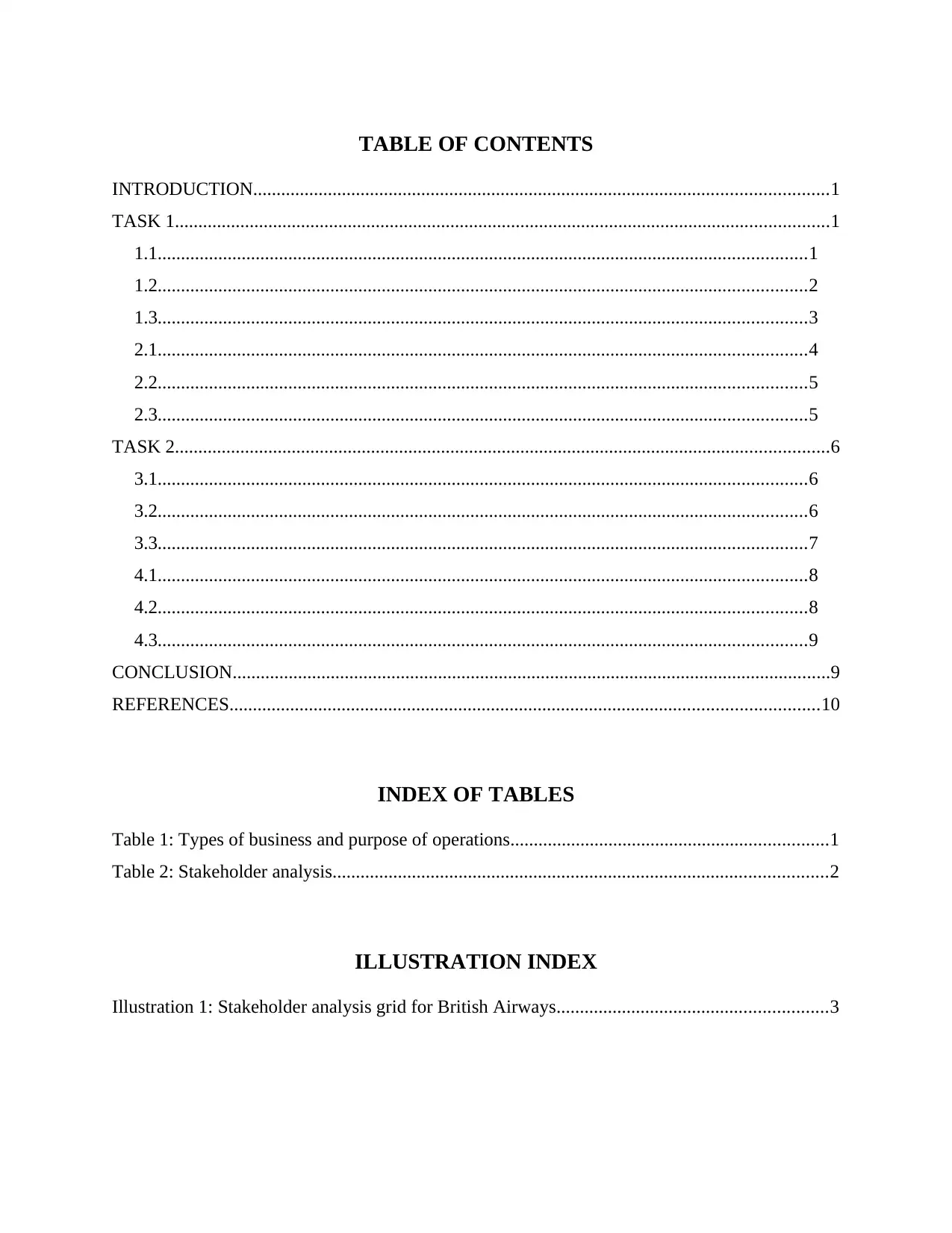
TABLE OF CONTENTS
INTRODUCTION...........................................................................................................................1
TASK 1............................................................................................................................................1
1.1...........................................................................................................................................1
1.2...........................................................................................................................................2
1.3...........................................................................................................................................3
2.1...........................................................................................................................................4
2.2...........................................................................................................................................5
2.3...........................................................................................................................................5
TASK 2............................................................................................................................................6
3.1...........................................................................................................................................6
3.2...........................................................................................................................................6
3.3...........................................................................................................................................7
4.1...........................................................................................................................................8
4.2...........................................................................................................................................8
4.3...........................................................................................................................................9
CONCLUSION................................................................................................................................9
REFERENCES..............................................................................................................................10
INDEX OF TABLES
Table 1: Types of business and purpose of operations....................................................................1
Table 2: Stakeholder analysis..........................................................................................................2
ILLUSTRATION INDEX
Illustration 1: Stakeholder analysis grid for British Airways..........................................................3
INTRODUCTION...........................................................................................................................1
TASK 1............................................................................................................................................1
1.1...........................................................................................................................................1
1.2...........................................................................................................................................2
1.3...........................................................................................................................................3
2.1...........................................................................................................................................4
2.2...........................................................................................................................................5
2.3...........................................................................................................................................5
TASK 2............................................................................................................................................6
3.1...........................................................................................................................................6
3.2...........................................................................................................................................6
3.3...........................................................................................................................................7
4.1...........................................................................................................................................8
4.2...........................................................................................................................................8
4.3...........................................................................................................................................9
CONCLUSION................................................................................................................................9
REFERENCES..............................................................................................................................10
INDEX OF TABLES
Table 1: Types of business and purpose of operations....................................................................1
Table 2: Stakeholder analysis..........................................................................................................2
ILLUSTRATION INDEX
Illustration 1: Stakeholder analysis grid for British Airways..........................................................3
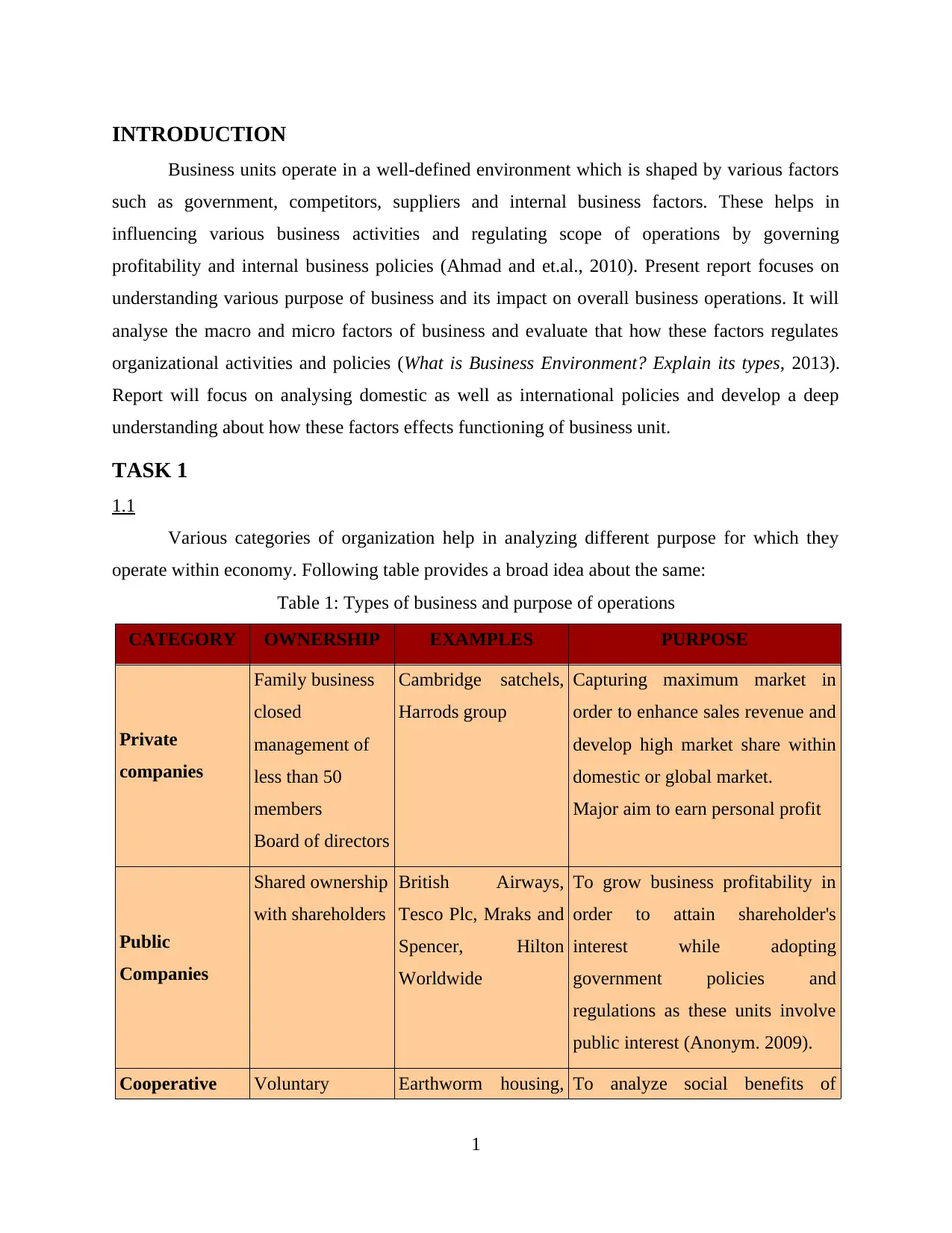
INTRODUCTION
Business units operate in a well-defined environment which is shaped by various factors
such as government, competitors, suppliers and internal business factors. These helps in
influencing various business activities and regulating scope of operations by governing
profitability and internal business policies (Ahmad and et.al., 2010). Present report focuses on
understanding various purpose of business and its impact on overall business operations. It will
analyse the macro and micro factors of business and evaluate that how these factors regulates
organizational activities and policies (What is Business Environment? Explain its types, 2013).
Report will focus on analysing domestic as well as international policies and develop a deep
understanding about how these factors effects functioning of business unit.
TASK 1
1.1
Various categories of organization help in analyzing different purpose for which they
operate within economy. Following table provides a broad idea about the same:
Table 1: Types of business and purpose of operations
CATEGORY OWNERSHIP EXAMPLES PURPOSE
Private
companies
Family business
closed
management of
less than 50
members
Board of directors
Cambridge satchels,
Harrods group
Capturing maximum market in
order to enhance sales revenue and
develop high market share within
domestic or global market.
Major aim to earn personal profit
Public
Companies
Shared ownership
with shareholders
British Airways,
Tesco Plc, Mraks and
Spencer, Hilton
Worldwide
To grow business profitability in
order to attain shareholder's
interest while adopting
government policies and
regulations as these units involve
public interest (Anonym. 2009).
Cooperative Voluntary Earthworm housing, To analyze social benefits of
1
Business units operate in a well-defined environment which is shaped by various factors
such as government, competitors, suppliers and internal business factors. These helps in
influencing various business activities and regulating scope of operations by governing
profitability and internal business policies (Ahmad and et.al., 2010). Present report focuses on
understanding various purpose of business and its impact on overall business operations. It will
analyse the macro and micro factors of business and evaluate that how these factors regulates
organizational activities and policies (What is Business Environment? Explain its types, 2013).
Report will focus on analysing domestic as well as international policies and develop a deep
understanding about how these factors effects functioning of business unit.
TASK 1
1.1
Various categories of organization help in analyzing different purpose for which they
operate within economy. Following table provides a broad idea about the same:
Table 1: Types of business and purpose of operations
CATEGORY OWNERSHIP EXAMPLES PURPOSE
Private
companies
Family business
closed
management of
less than 50
members
Board of directors
Cambridge satchels,
Harrods group
Capturing maximum market in
order to enhance sales revenue and
develop high market share within
domestic or global market.
Major aim to earn personal profit
Public
Companies
Shared ownership
with shareholders
British Airways,
Tesco Plc, Mraks and
Spencer, Hilton
Worldwide
To grow business profitability in
order to attain shareholder's
interest while adopting
government policies and
regulations as these units involve
public interest (Anonym. 2009).
Cooperative Voluntary Earthworm housing, To analyze social benefits of
1
⊘ This is a preview!⊘
Do you want full access?
Subscribe today to unlock all pages.

Trusted by 1+ million students worldwide
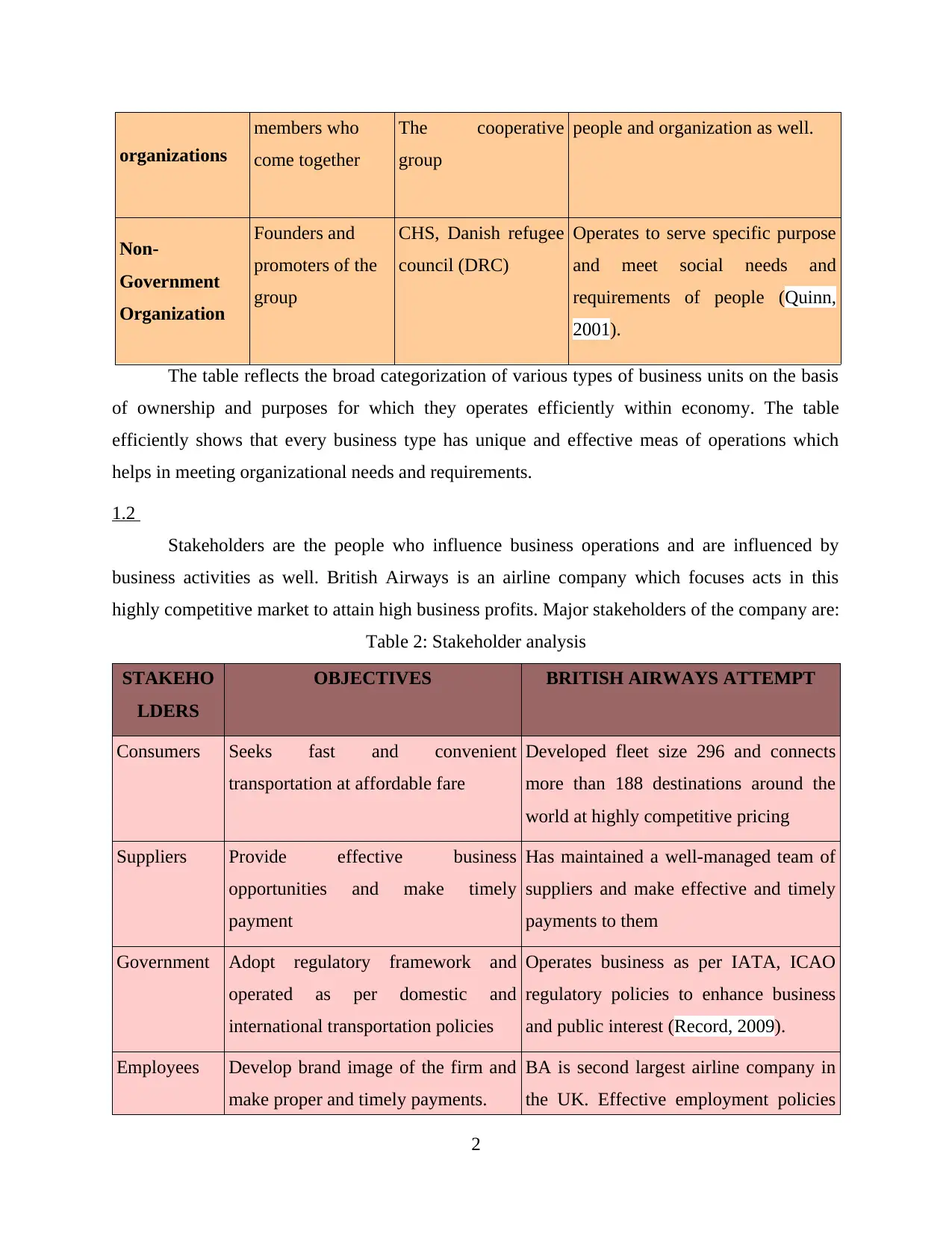
organizations
members who
come together
The cooperative
group
people and organization as well.
Non-
Government
Organization
Founders and
promoters of the
group
CHS, Danish refugee
council (DRC)
Operates to serve specific purpose
and meet social needs and
requirements of people (Quinn,
2001).
The table reflects the broad categorization of various types of business units on the basis
of ownership and purposes for which they operates efficiently within economy. The table
efficiently shows that every business type has unique and effective meas of operations which
helps in meeting organizational needs and requirements.
1.2
Stakeholders are the people who influence business operations and are influenced by
business activities as well. British Airways is an airline company which focuses acts in this
highly competitive market to attain high business profits. Major stakeholders of the company are:
Table 2: Stakeholder analysis
STAKEHO
LDERS
OBJECTIVES BRITISH AIRWAYS ATTEMPT
Consumers Seeks fast and convenient
transportation at affordable fare
Developed fleet size 296 and connects
more than 188 destinations around the
world at highly competitive pricing
Suppliers Provide effective business
opportunities and make timely
payment
Has maintained a well-managed team of
suppliers and make effective and timely
payments to them
Government Adopt regulatory framework and
operated as per domestic and
international transportation policies
Operates business as per IATA, ICAO
regulatory policies to enhance business
and public interest (Record, 2009).
Employees Develop brand image of the firm and
make proper and timely payments.
BA is second largest airline company in
the UK. Effective employment policies
2
members who
come together
The cooperative
group
people and organization as well.
Non-
Government
Organization
Founders and
promoters of the
group
CHS, Danish refugee
council (DRC)
Operates to serve specific purpose
and meet social needs and
requirements of people (Quinn,
2001).
The table reflects the broad categorization of various types of business units on the basis
of ownership and purposes for which they operates efficiently within economy. The table
efficiently shows that every business type has unique and effective meas of operations which
helps in meeting organizational needs and requirements.
1.2
Stakeholders are the people who influence business operations and are influenced by
business activities as well. British Airways is an airline company which focuses acts in this
highly competitive market to attain high business profits. Major stakeholders of the company are:
Table 2: Stakeholder analysis
STAKEHO
LDERS
OBJECTIVES BRITISH AIRWAYS ATTEMPT
Consumers Seeks fast and convenient
transportation at affordable fare
Developed fleet size 296 and connects
more than 188 destinations around the
world at highly competitive pricing
Suppliers Provide effective business
opportunities and make timely
payment
Has maintained a well-managed team of
suppliers and make effective and timely
payments to them
Government Adopt regulatory framework and
operated as per domestic and
international transportation policies
Operates business as per IATA, ICAO
regulatory policies to enhance business
and public interest (Record, 2009).
Employees Develop brand image of the firm and
make proper and timely payments.
BA is second largest airline company in
the UK. Effective employment policies
2
Paraphrase This Document
Need a fresh take? Get an instant paraphrase of this document with our AI Paraphraser
help to attain highly satisfied working
system for employees.
Investors Develop business operations to
maximize profitability
Adopted competitive strategies to attain
high profitability and growth in the
competitive market.
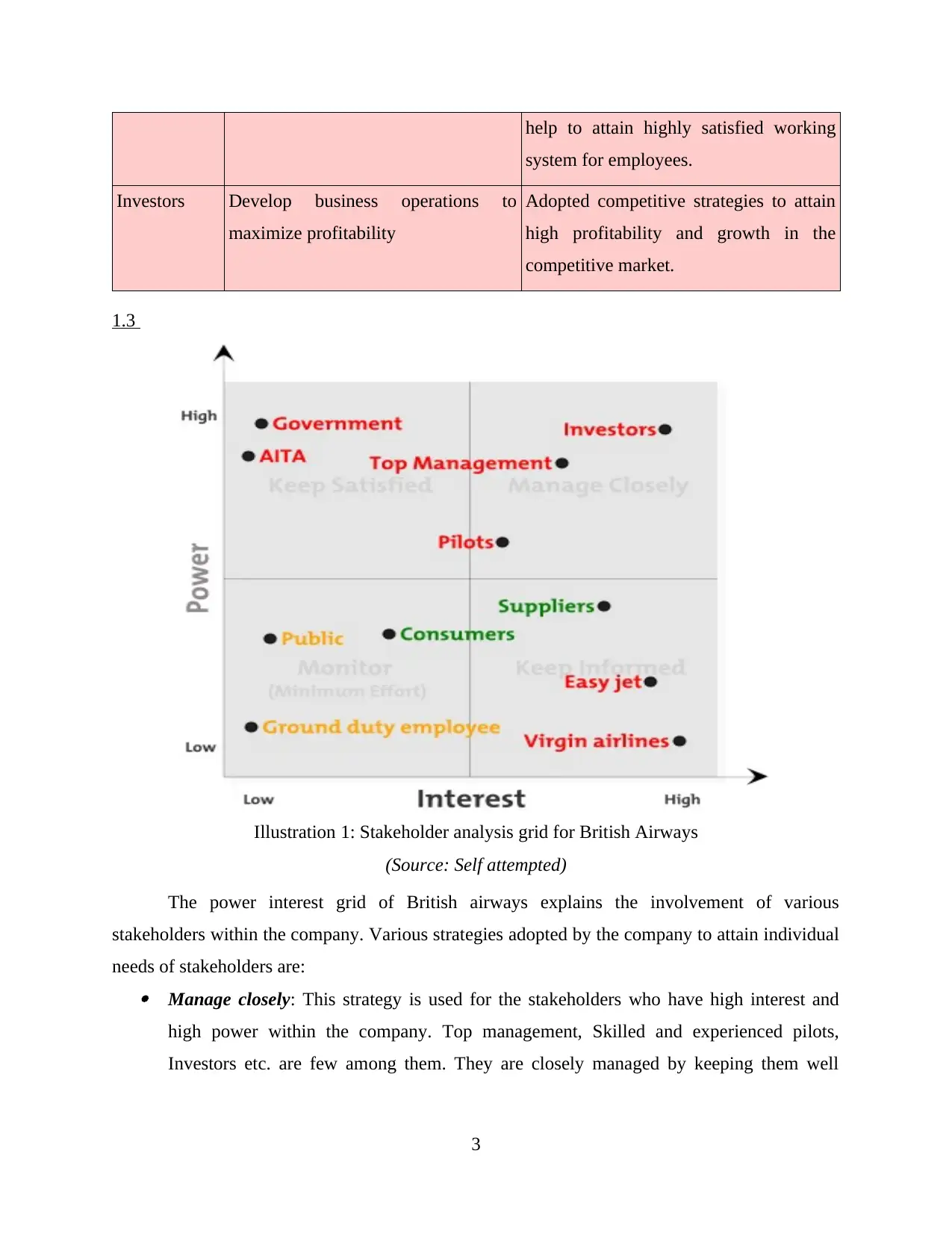
1.3
Illustration 1: Stakeholder analysis grid for British Airways
(Source: Self attempted)
The power interest grid of British airways explains the involvement of various
stakeholders within the company. Various strategies adopted by the company to attain individual
needs of stakeholders are: Manage closely: This strategy is used for the stakeholders who have high interest and
high power within the company. Top management, Skilled and experienced pilots,
Investors etc. are few among them. They are closely managed by keeping them well
3
system for employees.
Investors Develop business operations to
maximize profitability
Adopted competitive strategies to attain
high profitability and growth in the
competitive market.
1.3
Illustration 1: Stakeholder analysis grid for British Airways
(Source: Self attempted)
The power interest grid of British airways explains the involvement of various
stakeholders within the company. Various strategies adopted by the company to attain individual
needs of stakeholders are: Manage closely: This strategy is used for the stakeholders who have high interest and
high power within the company. Top management, Skilled and experienced pilots,
Investors etc. are few among them. They are closely managed by keeping them well
3
informed, regular communication, involving in strategic planning etc are few measures
for the same (Shaikh, 2010). Keep satisfied: This strategy is adopted for government and regulatory bodies such as
AITA etc. who have high level of powers but low interest in company’s internal
operations. Maintaining effective communication and operating under regulatory
boundaries helps in keeping them satisfied. Keep informed: This strategy is adopted for stakeholders who have high interest and low
power in business operations such as competitors (Easy Jet, Virgin airlines), employees
etc. Company adopts the strategy of keeping them informed through annual reports,
advertisement, company accounts and audits etc.
Monitor: Ground level employees, consumers, suppliers etc. are the stakeholders who
have Low interest and low power in the internal business operations of the company.
Thus company puts low efforts for analyzing the needs of this sector.
2.1
Economic system of the country helps in analyzing the measure of control and freedom
decision making for business within the country (Xahir, 2012). Economic systems help in
answering basic equations like what to produce, how to produce and when to produce. Major
economic systems existing within the global market are: Market economy: This is the free economy where government intervention in minimum
for business decisions. Business regulations and resource allocation decisions are
controlled and developed individually (Timmers, 2002.). Command economy: The central power of the country has the sole rights of all the
business related decisions. The economy is price-maker thus all resource allocation is
regulated by the central power of control
Mixed economy: Here both private and public sector coincides and operates business
operations. The resource allocation powers are shared and controlled mutually.
UK economy is mixed thus resources allocation power is shared between private and
public sector. Resources are limited within the economy thus government take efficient control
of the same. The organizational policies and procedures thus are formed while abiding
government regulations.
4
for the same (Shaikh, 2010). Keep satisfied: This strategy is adopted for government and regulatory bodies such as
AITA etc. who have high level of powers but low interest in company’s internal
operations. Maintaining effective communication and operating under regulatory
boundaries helps in keeping them satisfied. Keep informed: This strategy is adopted for stakeholders who have high interest and low
power in business operations such as competitors (Easy Jet, Virgin airlines), employees
etc. Company adopts the strategy of keeping them informed through annual reports,
advertisement, company accounts and audits etc.
Monitor: Ground level employees, consumers, suppliers etc. are the stakeholders who
have Low interest and low power in the internal business operations of the company.
Thus company puts low efforts for analyzing the needs of this sector.
2.1
Economic system of the country helps in analyzing the measure of control and freedom
decision making for business within the country (Xahir, 2012). Economic systems help in
answering basic equations like what to produce, how to produce and when to produce. Major
economic systems existing within the global market are: Market economy: This is the free economy where government intervention in minimum
for business decisions. Business regulations and resource allocation decisions are
controlled and developed individually (Timmers, 2002.). Command economy: The central power of the country has the sole rights of all the
business related decisions. The economy is price-maker thus all resource allocation is
regulated by the central power of control
Mixed economy: Here both private and public sector coincides and operates business
operations. The resource allocation powers are shared and controlled mutually.
UK economy is mixed thus resources allocation power is shared between private and
public sector. Resources are limited within the economy thus government take efficient control
of the same. The organizational policies and procedures thus are formed while abiding
government regulations.
4
⊘ This is a preview!⊘
Do you want full access?
Subscribe today to unlock all pages.
Trusted by 1+ million students worldwide
2.2
Economic policies help in regulating the flow of money thus controlling inflation,
government rates, budgets etc. Business operations of British Airways are highly influenced by
the same. Fiscal policy: This policy ensures the proper measures for funding for the business. It is
regulated by tax rates. British airways have direct impact of the same on pricing policy
and profitability of the company. Higher tax rates increases prices of air face and cost of
operations (Gottheil, 2013). Tax rate cutting enhances profitability and helps in adjusting
low price air fares. The aggregate result is fall in overall sales of the company.
Monitory policy: This policy regulates the flow of money within economy interest rates.
High rates of interest restrict funding measures for BA thus company avoids borrowing.
While low interest rates are effective for fund borrowing and expanding business
operations efficiently (Hall, 2013). Higher inflation leads to rise in interest rate. This
situation results in fall in sales of the company as consumers inflation reduces their
disposable income.
2.3
The competition and regulatory mechanism for British Airways has highly helped the
business unit in efficiently shaping its business operations. Regulatory bodies such as OFT,
CMA etc keeps a close check and control over all the competition policies and enforcemnet of
law as well. The four key pillars of the same are explained henceforth: Antitrust and cartels: This regulation has helped in eliminating market barriers and
elimination of agreements which may restrict effective competition policies for the
company. Thus, British Airways has developed fair means of competition restricting
competitive measures. Market liberalization: This has helped in developing high and effective competition thus
minimizing monopolistic operations. BA has gained effective market share and success
through this measures thus developing second largest airline company in the UK (Haigh,
and Brubaker, 2010). State aid control: This measure has developed effective funding measures for new and
aspirant business organization seeking business opportunities in the sector. This policy
has raised high and subsequent level of competition for BA.
5
Economic policies help in regulating the flow of money thus controlling inflation,
government rates, budgets etc. Business operations of British Airways are highly influenced by
the same. Fiscal policy: This policy ensures the proper measures for funding for the business. It is
regulated by tax rates. British airways have direct impact of the same on pricing policy
and profitability of the company. Higher tax rates increases prices of air face and cost of
operations (Gottheil, 2013). Tax rate cutting enhances profitability and helps in adjusting
low price air fares. The aggregate result is fall in overall sales of the company.
Monitory policy: This policy regulates the flow of money within economy interest rates.
High rates of interest restrict funding measures for BA thus company avoids borrowing.
While low interest rates are effective for fund borrowing and expanding business
operations efficiently (Hall, 2013). Higher inflation leads to rise in interest rate. This
situation results in fall in sales of the company as consumers inflation reduces their
disposable income.
2.3
The competition and regulatory mechanism for British Airways has highly helped the
business unit in efficiently shaping its business operations. Regulatory bodies such as OFT,
CMA etc keeps a close check and control over all the competition policies and enforcemnet of
law as well. The four key pillars of the same are explained henceforth: Antitrust and cartels: This regulation has helped in eliminating market barriers and
elimination of agreements which may restrict effective competition policies for the
company. Thus, British Airways has developed fair means of competition restricting
competitive measures. Market liberalization: This has helped in developing high and effective competition thus
minimizing monopolistic operations. BA has gained effective market share and success
through this measures thus developing second largest airline company in the UK (Haigh,
and Brubaker, 2010). State aid control: This measure has developed effective funding measures for new and
aspirant business organization seeking business opportunities in the sector. This policy
has raised high and subsequent level of competition for BA.
5
Paraphrase This Document
Need a fresh take? Get an instant paraphrase of this document with our AI Paraphraser
Merger control: This regulation focuses on managing business growth measure through
effective merger and acquisitions (Manning, 2013). BA has developed high prospects of
reducing market competition as it has developed subsequent market position. These
policies are regulated and governed by Office of Fair Trading (OFT) and it helps in
managing the merger policies and measures.
TASK 2
3.1
The major market structures existing within an economy are perfect competition,
monopolistic competition, oligopoly and monopoly. British Airways is operating under oligopoly
market structure as:
There is limited number of large firms in the market which constitutes overall market
operations.
The company offers identical services to its consumers
The entry of new firm creates an entry barrier due to cost requirement
The pricing and output decisions of the company have a direct impact on the organizational
operations.
6
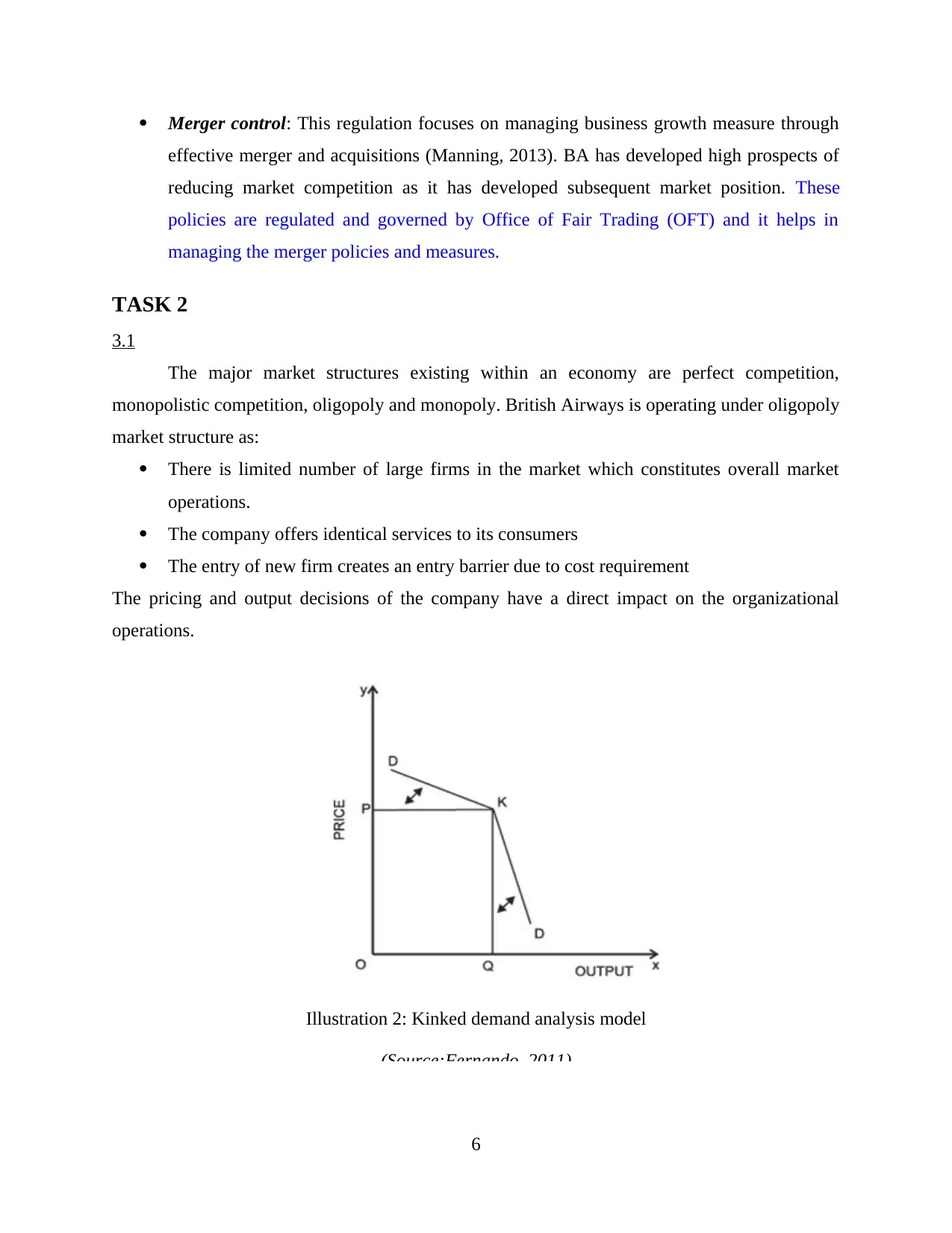
Illustration 2: Kinked demand analysis model
(Source:Fernando, 2011)
effective merger and acquisitions (Manning, 2013). BA has developed high prospects of
reducing market competition as it has developed subsequent market position. These
policies are regulated and governed by Office of Fair Trading (OFT) and it helps in
managing the merger policies and measures.
TASK 2
3.1
The major market structures existing within an economy are perfect competition,
monopolistic competition, oligopoly and monopoly. British Airways is operating under oligopoly
market structure as:
There is limited number of large firms in the market which constitutes overall market
operations.
The company offers identical services to its consumers
The entry of new firm creates an entry barrier due to cost requirement
The pricing and output decisions of the company have a direct impact on the organizational
operations.
6
Illustration 2: Kinked demand analysis model
(Source:Fernando, 2011)
Pricing decision: BA offers homogeneous services to its buyers and has likelihood in the
services offered. To overcome this collusion BA keenly observes the competitive
strategies and existing demand and supply within the market (Oakland and Tanner,
2007). Thus implement competition pricing measures to effectively fight the existing
competition. Due to limited market players the competition within the market is limited
as well. Hence, the determination of prices are done by interdependent pricing and price
wars as well. The organizations closely predict counter moves of their rivals and
determine the prices accordingly.
Output decision: Output decisions focuses on developing exclusive and differential
services within the market in order to create an edge within the market. Product
differentiation by developing low cost traveling measures or differential services helps in
attaining competitive advantage.
MARKET
STRUCTURE
PRICING DECISION OUTPUT DECISIONS
Perfect
competition
Price is set equal to the marginal cost
(Seller is the price taker consumers are
the king/queen of the market)
Consumer demand, competitor's
strategy, tastes and preferences
Oligopoly
Industry players, determining market
forces
maximizes profits by producing
where marginal revenue equals
marginal costs
Monopoly Seller is the price maker
Industry- sole power to raise its prices
Industry regulated output with
minimum consumer relevance.
3.2
The market forces which help in regulating the business operations of British airways are: Demand and Supply: This is the most effective and crucial factor that helps BA in
analyzing the needs and requirements of the consumers. The company compares the past
data and future trends in order to analyses and evaluate current market demands and
possible measures to attain the same (Cohen and et.al., 2006).
7
services offered. To overcome this collusion BA keenly observes the competitive
strategies and existing demand and supply within the market (Oakland and Tanner,
2007). Thus implement competition pricing measures to effectively fight the existing
competition. Due to limited market players the competition within the market is limited
as well. Hence, the determination of prices are done by interdependent pricing and price
wars as well. The organizations closely predict counter moves of their rivals and
determine the prices accordingly.
Output decision: Output decisions focuses on developing exclusive and differential
services within the market in order to create an edge within the market. Product
differentiation by developing low cost traveling measures or differential services helps in
attaining competitive advantage.
MARKET
STRUCTURE
PRICING DECISION OUTPUT DECISIONS
Perfect
competition
Price is set equal to the marginal cost
(Seller is the price taker consumers are
the king/queen of the market)
Consumer demand, competitor's
strategy, tastes and preferences
Oligopoly
Industry players, determining market
forces
maximizes profits by producing
where marginal revenue equals
marginal costs
Monopoly Seller is the price maker
Industry- sole power to raise its prices
Industry regulated output with
minimum consumer relevance.
3.2
The market forces which help in regulating the business operations of British airways are: Demand and Supply: This is the most effective and crucial factor that helps BA in
analyzing the needs and requirements of the consumers. The company compares the past
data and future trends in order to analyses and evaluate current market demands and
possible measures to attain the same (Cohen and et.al., 2006).
7
⊘ This is a preview!⊘
Do you want full access?
Subscribe today to unlock all pages.
Trusted by 1+ million students worldwide
Cost analysis: The cost of operations regulates the profitability and pricing policy of
company. The changing prices of fuel has a direct impact on the cost of operations for
BA thus the organizations plans and analyze these forces in order to regulate the cost of
the company thus adopting competitive pricing measures.
Trends and preferences: BA offers transportation services thus the company efficiently
analysis current trends and preferences of consumers in order to estimate the demand. For
example the festive season trends increases traveling demand thus company plans offers
accordingly.
3.3
Cultural and social environment has high impact on the business operations. BA offers
effective transportation measures for travelers. The cultural factors thus contribute in the
following measures: Developing social behavior: BA focuses on connecting people countries and culture
which helps in providing access to global markets. To achieve this measure the company
focuses o attaining the cultural needs and demands for leisure experience. Thus cultural
factors helps in analyzing various measures of social benefits that may help company in
gaining high measures of sales (Fernando, 2011.). For example social behavior of UK
demands effective food services as non-vegetarian platter however Asian continent
demand veterinarian food as well thus cultural factors helps in planning social benefits
for people. Labor market trends: Labor market trends helps in developing cost effective measures
for operating business operations for BA. For example BA hires financial staff from
countries demanding low cost of labor. This helps the company n saving efficient cost
thus regulating cost of operations.
Planning air traffic: Planning of air routes is also done by analyzing cultural factors of
countries. For example the New years in China is celebrate in the month of February
which depicts that the demand for air travel will be high in the holiday season for the
country. Thus company may plan routes accordingly (Manning, 2013).
8
company. The changing prices of fuel has a direct impact on the cost of operations for
BA thus the organizations plans and analyze these forces in order to regulate the cost of
the company thus adopting competitive pricing measures.
Trends and preferences: BA offers transportation services thus the company efficiently
analysis current trends and preferences of consumers in order to estimate the demand. For
example the festive season trends increases traveling demand thus company plans offers
accordingly.
3.3
Cultural and social environment has high impact on the business operations. BA offers
effective transportation measures for travelers. The cultural factors thus contribute in the
following measures: Developing social behavior: BA focuses on connecting people countries and culture
which helps in providing access to global markets. To achieve this measure the company
focuses o attaining the cultural needs and demands for leisure experience. Thus cultural
factors helps in analyzing various measures of social benefits that may help company in
gaining high measures of sales (Fernando, 2011.). For example social behavior of UK
demands effective food services as non-vegetarian platter however Asian continent
demand veterinarian food as well thus cultural factors helps in planning social benefits
for people. Labor market trends: Labor market trends helps in developing cost effective measures
for operating business operations for BA. For example BA hires financial staff from
countries demanding low cost of labor. This helps the company n saving efficient cost
thus regulating cost of operations.
Planning air traffic: Planning of air routes is also done by analyzing cultural factors of
countries. For example the New years in China is celebrate in the month of February
which depicts that the demand for air travel will be high in the holiday season for the
country. Thus company may plan routes accordingly (Manning, 2013).
8
Paraphrase This Document
Need a fresh take? Get an instant paraphrase of this document with our AI Paraphraser
4.1
The changes in global policies have direct impact on the business operation of all over
the world. Global changes in trade regimes caused by major organizational units such as WTO,
CAA etc has impacted business of BA as follows: Provides wide business opportunities: The global policies for trade operation helps BA
in developing wide market opportunities for growth and development within international
market (Oakland and Tanner, 2007). Well-developed business operations and fleet size of
the company helps in grabbing effective market expansion opportunities thus growing
business reach.
Enhance competitiveness: Regulatory bodies such as WTO, AITA etc. helps in
developing standard measures of operating business in the global market (Timmers,
2002). This enhances the market competition for the company thus developing high and
effective measures for growth in the global economy. For example, aviation industry of
the UK has developed standard measures of business operation which provides its
competitive edge within market.
4.2
The impact of global factors on the business operations of British Airways can be
examined as follows: Political factors: The political factors help in analyzing the impact of various regional
policies and regulation on business operations of BA. The political factors are significant
for basic business operations as aviation polices are sensitive for national growth and
safety of countries (Anonym. 2009). Economic factors: GDP Rate, internal development, employment rate and population of
the country is effectively considered by BA while planning business operations and
growth prospect of business. Social factors: These are significant as it helps in analyzing the trends and demands that
impact the growth of business within the competitive market. Social factors help in
analyzing changing trends and demands within countries.
Technological factors: Technology is an integral part of aviation business. This helps in
developing business operation and enhancing high and effective prospect for growth and
9
The changes in global policies have direct impact on the business operation of all over
the world. Global changes in trade regimes caused by major organizational units such as WTO,
CAA etc has impacted business of BA as follows: Provides wide business opportunities: The global policies for trade operation helps BA
in developing wide market opportunities for growth and development within international
market (Oakland and Tanner, 2007). Well-developed business operations and fleet size of
the company helps in grabbing effective market expansion opportunities thus growing
business reach.
Enhance competitiveness: Regulatory bodies such as WTO, AITA etc. helps in
developing standard measures of operating business in the global market (Timmers,
2002). This enhances the market competition for the company thus developing high and
effective measures for growth in the global economy. For example, aviation industry of
the UK has developed standard measures of business operation which provides its
competitive edge within market.
4.2
The impact of global factors on the business operations of British Airways can be
examined as follows: Political factors: The political factors help in analyzing the impact of various regional
policies and regulation on business operations of BA. The political factors are significant
for basic business operations as aviation polices are sensitive for national growth and
safety of countries (Anonym. 2009). Economic factors: GDP Rate, internal development, employment rate and population of
the country is effectively considered by BA while planning business operations and
growth prospect of business. Social factors: These are significant as it helps in analyzing the trends and demands that
impact the growth of business within the competitive market. Social factors help in
analyzing changing trends and demands within countries.
Technological factors: Technology is an integral part of aviation business. This helps in
developing business operation and enhancing high and effective prospect for growth and
9
development. The modern and latest technology helps the organization in gaining a
competitive advantage in the economy
4.3
EU policies on travel and tourism have effective impact on business operation of BA.
These are enumerated as follows: Safety and security measures: The strict and regulated airport and tourism security
policies have direct impact on the business operations of BA. The company has to
redirect and change its internal policies to effectively regulate its business operations.
SINGLE EUROPEAN SKY (SES) is the initiative taken by EU to ensure safety and
security of airspace and aviation operations. Consumer protection legislation is adopted
by the government recently to save consumers from policies and actions of the
companies. Volcanic ash eruption was the example for the same.
Environmental factors: EU is focusing on regulating carbon emission through airways.
The changes in policies have developed various strategies to reduce carbon emission.
This will initially increase the cost for BA (Climate Change. 2015). However this will
help the company in enhancing its brand image within the market by developing a picture
of environment safe measure of traveling. EU emission trading scheme (ETS) was
established to sort climate change by reducing industrial greenhouse gas emissions cost.
It is compulsory for British Airways always go in line with environment friendly way to
manage impact on the environment (Climate Change. 2015).
CONCLUSION
Every business unit operates within the economy to establish its business efficiently and
maximize it sales in order to gain high profit margins and effective growth rate. Every business
unit focuses on meeting stakeholder's objectives to attain effective business purpose. Analyzing
the above report it can be clearly determined that market competition for the company in high
and effective. To enhance its competitive image the organization must adopt competitive pricing
measures and develop effective measures for product differentiation in order to create an edge
within the market. Moreover an in-depth market research will help the company in identifying
unique demands of consumers. By achieving those demands the company will develop an
effective market position.
10
competitive advantage in the economy
4.3
EU policies on travel and tourism have effective impact on business operation of BA.
These are enumerated as follows: Safety and security measures: The strict and regulated airport and tourism security
policies have direct impact on the business operations of BA. The company has to
redirect and change its internal policies to effectively regulate its business operations.
SINGLE EUROPEAN SKY (SES) is the initiative taken by EU to ensure safety and
security of airspace and aviation operations. Consumer protection legislation is adopted
by the government recently to save consumers from policies and actions of the
companies. Volcanic ash eruption was the example for the same.
Environmental factors: EU is focusing on regulating carbon emission through airways.
The changes in policies have developed various strategies to reduce carbon emission.
This will initially increase the cost for BA (Climate Change. 2015). However this will
help the company in enhancing its brand image within the market by developing a picture
of environment safe measure of traveling. EU emission trading scheme (ETS) was
established to sort climate change by reducing industrial greenhouse gas emissions cost.
It is compulsory for British Airways always go in line with environment friendly way to
manage impact on the environment (Climate Change. 2015).
CONCLUSION
Every business unit operates within the economy to establish its business efficiently and
maximize it sales in order to gain high profit margins and effective growth rate. Every business
unit focuses on meeting stakeholder's objectives to attain effective business purpose. Analyzing
the above report it can be clearly determined that market competition for the company in high
and effective. To enhance its competitive image the organization must adopt competitive pricing
measures and develop effective measures for product differentiation in order to create an edge
within the market. Moreover an in-depth market research will help the company in identifying
unique demands of consumers. By achieving those demands the company will develop an
effective market position.
10
⊘ This is a preview!⊘
Do you want full access?
Subscribe today to unlock all pages.
Trusted by 1+ million students worldwide

1 out of 14


Related Documents


Your All-in-One AI-Powered Toolkit for Academic Success.
+13062052269
info@desklib.com
Available 24*7 on WhatsApp / Email
![[object Object]](/_next/static/media/star-bottom.7253800d.svg)
Unlock your academic potential
Copyright © 2020–2025 A2Z Services. All Rights Reserved. Developed and managed by ZUCOL.