Business Finance Report: Financial Management, Ratios, and Improvement
VerifiedAdded on 2023/06/15
|15
|2454
|303
Report
AI Summary
This report delves into the core aspects of business finance, emphasizing the critical role of financial management in organizational success. It covers key concepts such as financial planning, fund protection, resource allocation, investment opportunities, and financial decision-making. The report also examines financial statements, including income statements, balance sheets, and cash flow statements, highlighting the use of ratios for assessing profitability, liquidity, and efficiency. A business performance review analyzes profitability, liquidity, and efficiency, alongside strategies to improve financial performance such as debt recovery and capital management. Desklib provides comprehensive resources, including past papers and solved assignments, to aid students in mastering these concepts.

Business Finance

Paraphrase This Document
Need a fresh take? Get an instant paraphrase of this document with our AI Paraphraser
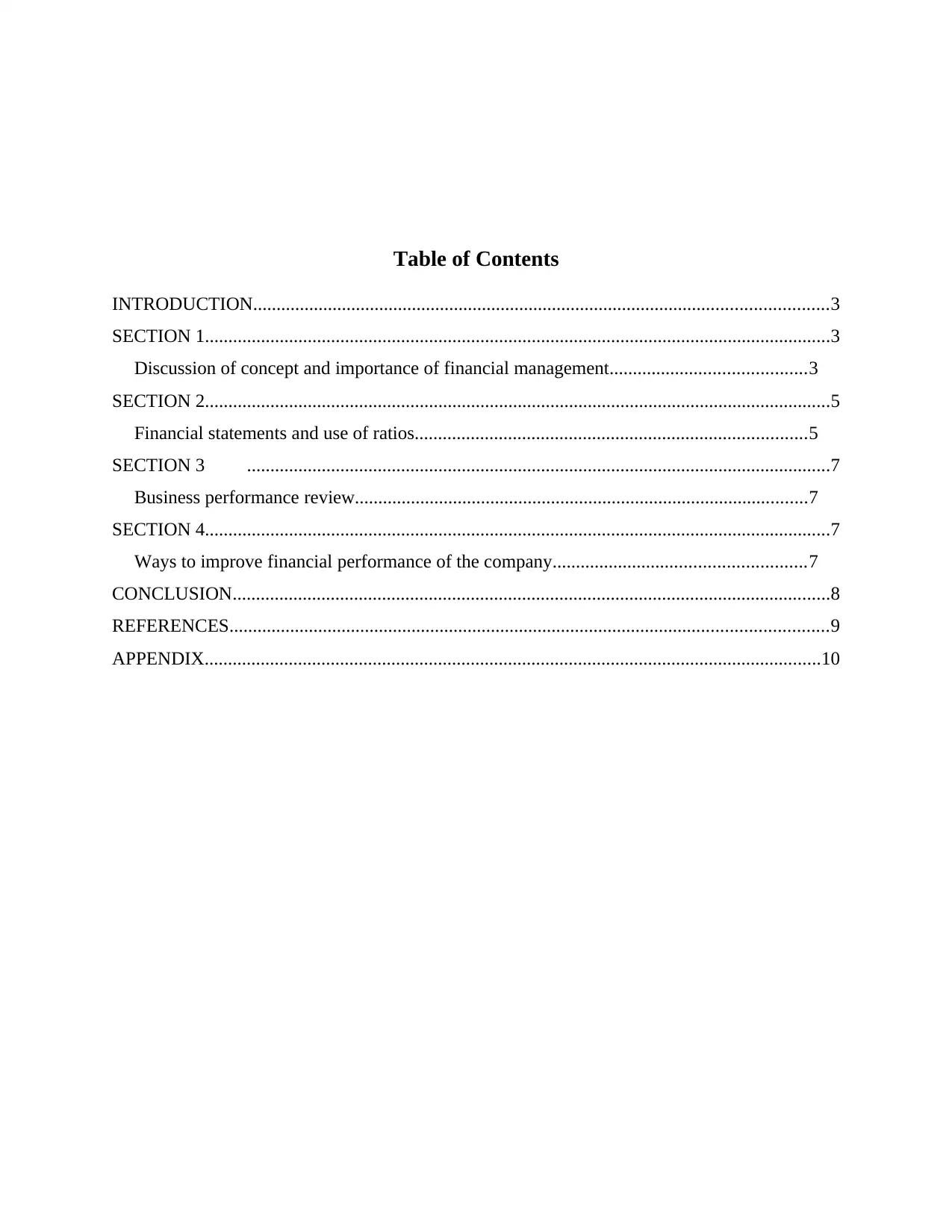
Table of Contents
INTRODUCTION...........................................................................................................................3
SECTION 1......................................................................................................................................3
Discussion of concept and importance of financial management..........................................3
SECTION 2......................................................................................................................................5
Financial statements and use of ratios....................................................................................5
SECTION 3 .............................................................................................................................7
Business performance review.................................................................................................7
SECTION 4......................................................................................................................................7
Ways to improve financial performance of the company......................................................7
CONCLUSION................................................................................................................................8
REFERENCES................................................................................................................................9
APPENDIX....................................................................................................................................10
INTRODUCTION...........................................................................................................................3
SECTION 1......................................................................................................................................3
Discussion of concept and importance of financial management..........................................3
SECTION 2......................................................................................................................................5
Financial statements and use of ratios....................................................................................5
SECTION 3 .............................................................................................................................7
Business performance review.................................................................................................7
SECTION 4......................................................................................................................................7
Ways to improve financial performance of the company......................................................7
CONCLUSION................................................................................................................................8
REFERENCES................................................................................................................................9
APPENDIX....................................................................................................................................10
INTRODUCTION
Business finance refers to the funds which is required by the business to conduct their
daily operations and to achieve business objectives. To operate business, finance acts as a
lifeblood which is not just a requirement to the business but also an important need to the
business. For the business the requirement of funds is required at every stage including the
starting of business, to obtain the funds for capital assets to the business or because of any
challenges which might be faced by the business(Panagiotakopoulos, 2020). The importance of
having funds in the business is in larger way which helps in running every activity of the
business. The requirement of finance is not just used in conducting the business operations but it
is also used for the development of business or to make the expansion of business. This report
will cover importance of financial management, discussion of main financial statements and the
uses of ratios, the process which business might use to improve their financial performance.
SECTION 1
Discussion of concept and importance of financial management
Financial planning is related with planning, organizing and making the controlling on the
activities which are related with finance so that the funds of an enterprise can be utilised in a
productive way(Nudurupati, Garengo and Bititci, 2021). Financial management is an important
part for the business because it is an ideal way by which the financial activities of business can
be undertaken in an easier way. When the funds in a company will remain in a managed way
then their will be regular and adequate supply of funds. For meeting the objectives of a
organisation it is very important that the business is having sufficient funds so that their short
term and long term goals can be achieved. When their will be sufficient funds in the organisation
then in that case, the finance department will make the best decisions irrespective of the budget
that they will be require to spend.
The importance of financial management has been discussed below-
Financial planning- Financial management is related with making the planning of funds
which is considered to be a basic requirement of business. Financial planning is important
for the business so that the correct and prompt actions can be undertaken instead of
getting worried about the later stage of financial management. Every successful and
Business finance refers to the funds which is required by the business to conduct their
daily operations and to achieve business objectives. To operate business, finance acts as a
lifeblood which is not just a requirement to the business but also an important need to the
business. For the business the requirement of funds is required at every stage including the
starting of business, to obtain the funds for capital assets to the business or because of any
challenges which might be faced by the business(Panagiotakopoulos, 2020). The importance of
having funds in the business is in larger way which helps in running every activity of the
business. The requirement of finance is not just used in conducting the business operations but it
is also used for the development of business or to make the expansion of business. This report
will cover importance of financial management, discussion of main financial statements and the
uses of ratios, the process which business might use to improve their financial performance.
SECTION 1
Discussion of concept and importance of financial management
Financial planning is related with planning, organizing and making the controlling on the
activities which are related with finance so that the funds of an enterprise can be utilised in a
productive way(Nudurupati, Garengo and Bititci, 2021). Financial management is an important
part for the business because it is an ideal way by which the financial activities of business can
be undertaken in an easier way. When the funds in a company will remain in a managed way
then their will be regular and adequate supply of funds. For meeting the objectives of a
organisation it is very important that the business is having sufficient funds so that their short
term and long term goals can be achieved. When their will be sufficient funds in the organisation
then in that case, the finance department will make the best decisions irrespective of the budget
that they will be require to spend.
The importance of financial management has been discussed below-
Financial planning- Financial management is related with making the planning of funds
which is considered to be a basic requirement of business. Financial planning is important
for the business so that the correct and prompt actions can be undertaken instead of
getting worried about the later stage of financial management. Every successful and
⊘ This is a preview!⊘
Do you want full access?
Subscribe today to unlock all pages.

Trusted by 1+ million students worldwide
growing business takes the activity of financial planning of utmost importance because if
they will not be able to make the management of funds properly then the objectives of a
business will not be accomplished.
Protecting funds- The main aim for which financial management is used is because that
it helps in safeguarding the funds towards that place which will be most productive for
the business(Di Vaio and et. al., 2020). The main aim is to protect the finance so that the
business objectives of an enterprise can be achieved. So the finance department of a
business have to make the identification of the funds that where it is required and will be
allocated so that the smooth functioning of a business can be taken place. The funds are
important to be protected because at times when the management of a company will find
out any new opportunity that will require higher level of investment then they will make
the decision of making investment. If proper management of finance will be made then in
this case, the investment that will be made will be safe.
Allocation of funds- The importance of financial management is also for making the
allocation of funds successfully and with great productiveness. The main motive of
utilising the financial management system is that how the funds needs to be allocated in
different areas of business (Al-Emran and et. al., 2018). When the use of funds is made in
a proper way then in this case, the assets of business increases and enhances the
operational proficiency for the business. Every business recruit a finance specialist who
have full knowledge as to how the business can make the proper allocation of funds and
also that how they can make the reduction in expenses in business.
Investment opportunities- When the business will be able to make the proper
utilisation of funds then in this situation, they can make the identification of best
investment opportunity. The funds which has to be managed means that ways by which
business have identified that how they have to work on the management of their funds
and if this will be done then they will get the best opportunity for making and identifying
the best investment opportunity. Depending upon the range of risk which the business
can take, managing the funds will be the best way for the investment.
Financial decision- The other importance of financial management is the financial
decision which will be made only if the finance in business is managed in a proper way.
When the business makes the financial decision then in this case, these decisions cannot
they will not be able to make the management of funds properly then the objectives of a
business will not be accomplished.
Protecting funds- The main aim for which financial management is used is because that
it helps in safeguarding the funds towards that place which will be most productive for
the business(Di Vaio and et. al., 2020). The main aim is to protect the finance so that the
business objectives of an enterprise can be achieved. So the finance department of a
business have to make the identification of the funds that where it is required and will be
allocated so that the smooth functioning of a business can be taken place. The funds are
important to be protected because at times when the management of a company will find
out any new opportunity that will require higher level of investment then they will make
the decision of making investment. If proper management of finance will be made then in
this case, the investment that will be made will be safe.
Allocation of funds- The importance of financial management is also for making the
allocation of funds successfully and with great productiveness. The main motive of
utilising the financial management system is that how the funds needs to be allocated in
different areas of business (Al-Emran and et. al., 2018). When the use of funds is made in
a proper way then in this case, the assets of business increases and enhances the
operational proficiency for the business. Every business recruit a finance specialist who
have full knowledge as to how the business can make the proper allocation of funds and
also that how they can make the reduction in expenses in business.
Investment opportunities- When the business will be able to make the proper
utilisation of funds then in this situation, they can make the identification of best
investment opportunity. The funds which has to be managed means that ways by which
business have identified that how they have to work on the management of their funds
and if this will be done then they will get the best opportunity for making and identifying
the best investment opportunity. Depending upon the range of risk which the business
can take, managing the funds will be the best way for the investment.
Financial decision- The other importance of financial management is the financial
decision which will be made only if the finance in business is managed in a proper way.
When the business makes the financial decision then in this case, these decisions cannot
Paraphrase This Document
Need a fresh take? Get an instant paraphrase of this document with our AI Paraphraser
be changed and in working on the financial decision lot of investment of funds needs to
be made. The decision of finance impacts the business in a lot many way so in this the
management of finance becomes very important(Niemimaa and et. al., 2019).
SECTION 2
Financial statements and use of ratios
Financial statements are the formal records of the activities in the business that are related
to monetary terms. These statements are produced by the company so that they can communicate
the financial position of the business to the relevant users of the business. Types of financial
statements are discussed below:
Income statement
This is one of the most essential statement that is prepared by the organisation to analyse
the income and expenditures of the business that the organisation has gone through in a
particular financial year (Jones, 2020). This statement is prepared to calculate the net profit or
loss that the business has reported in a particular financial year. The incomes that the business
has reported in the financial year are credited whereas all the expenditures are treated on the
debit side of the statement. If the total of income is greater than the expenditure in the particular
financial year than the business has reported profit of the difference amount. In case the
expenditure of the business is higher than the income, than the business will report loss in the
particular financial year.
Balance Sheet
Balance sheet is one of the most important financial statement of the business that is used
by the users to analyse the financial condition of the business by reviewing the book value and
net worth of the business. This statement consists of Assets, liabilities and shareholder's fund, the
total of the shareholder's fund and liabilities should be equal to the assets that the company
currently hold.
Assets= Liabilities + Shareholder's fund
Assets column consists of the short term and the long term assets that the company has whereas
the liabilities column consists of all the obligations that the business have.
Cash flow statement
be made. The decision of finance impacts the business in a lot many way so in this the
management of finance becomes very important(Niemimaa and et. al., 2019).
SECTION 2
Financial statements and use of ratios
Financial statements are the formal records of the activities in the business that are related
to monetary terms. These statements are produced by the company so that they can communicate
the financial position of the business to the relevant users of the business. Types of financial
statements are discussed below:
Income statement
This is one of the most essential statement that is prepared by the organisation to analyse
the income and expenditures of the business that the organisation has gone through in a
particular financial year (Jones, 2020). This statement is prepared to calculate the net profit or
loss that the business has reported in a particular financial year. The incomes that the business
has reported in the financial year are credited whereas all the expenditures are treated on the
debit side of the statement. If the total of income is greater than the expenditure in the particular
financial year than the business has reported profit of the difference amount. In case the
expenditure of the business is higher than the income, than the business will report loss in the
particular financial year.
Balance Sheet
Balance sheet is one of the most important financial statement of the business that is used
by the users to analyse the financial condition of the business by reviewing the book value and
net worth of the business. This statement consists of Assets, liabilities and shareholder's fund, the
total of the shareholder's fund and liabilities should be equal to the assets that the company
currently hold.
Assets= Liabilities + Shareholder's fund
Assets column consists of the short term and the long term assets that the company has whereas
the liabilities column consists of all the obligations that the business have.
Cash flow statement
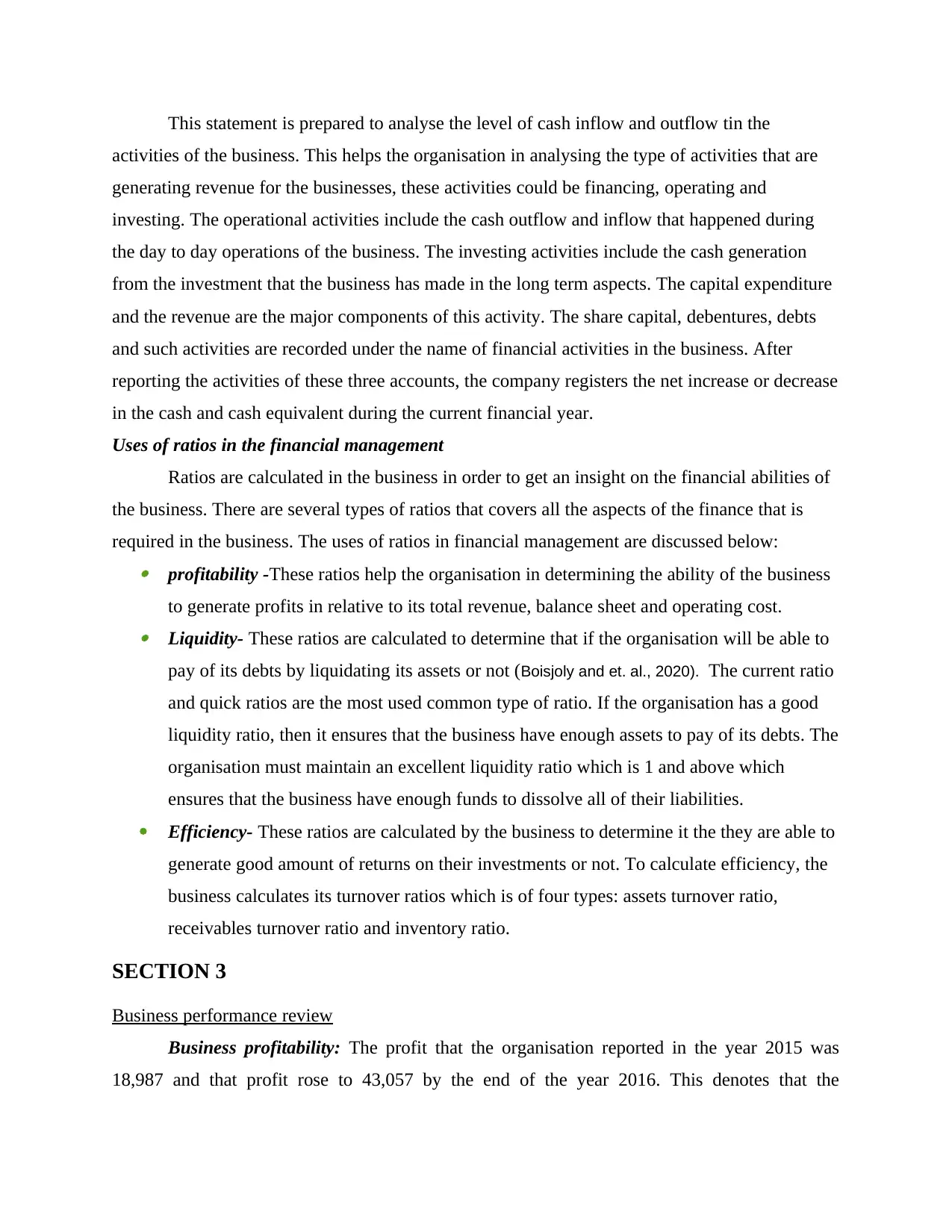
This statement is prepared to analyse the level of cash inflow and outflow tin the
activities of the business. This helps the organisation in analysing the type of activities that are
generating revenue for the businesses, these activities could be financing, operating and
investing. The operational activities include the cash outflow and inflow that happened during
the day to day operations of the business. The investing activities include the cash generation
from the investment that the business has made in the long term aspects. The capital expenditure
and the revenue are the major components of this activity. The share capital, debentures, debts
and such activities are recorded under the name of financial activities in the business. After
reporting the activities of these three accounts, the company registers the net increase or decrease
in the cash and cash equivalent during the current financial year.
Uses of ratios in the financial management
Ratios are calculated in the business in order to get an insight on the financial abilities of
the business. There are several types of ratios that covers all the aspects of the finance that is
required in the business. The uses of ratios in financial management are discussed below: profitability -These ratios help the organisation in determining the ability of the business
to generate profits in relative to its total revenue, balance sheet and operating cost. Liquidity- These ratios are calculated to determine that if the organisation will be able to
pay of its debts by liquidating its assets or not (Boisjoly and et. al., 2020). The current ratio
and quick ratios are the most used common type of ratio. If the organisation has a good
liquidity ratio, then it ensures that the business have enough assets to pay of its debts. The
organisation must maintain an excellent liquidity ratio which is 1 and above which
ensures that the business have enough funds to dissolve all of their liabilities.
Efficiency- These ratios are calculated by the business to determine it the they are able to
generate good amount of returns on their investments or not. To calculate efficiency, the
business calculates its turnover ratios which is of four types: assets turnover ratio,
receivables turnover ratio and inventory ratio.
SECTION 3
Business performance review
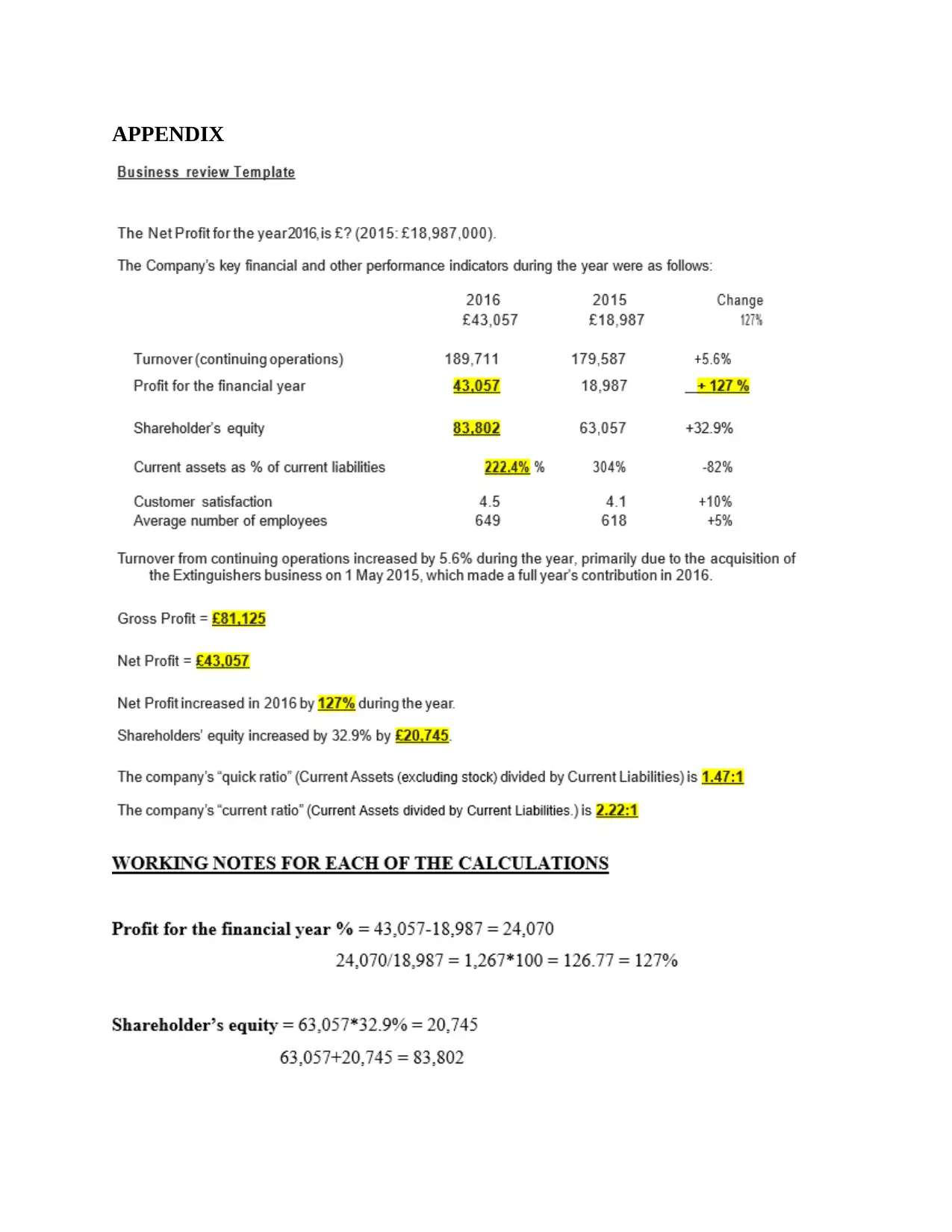
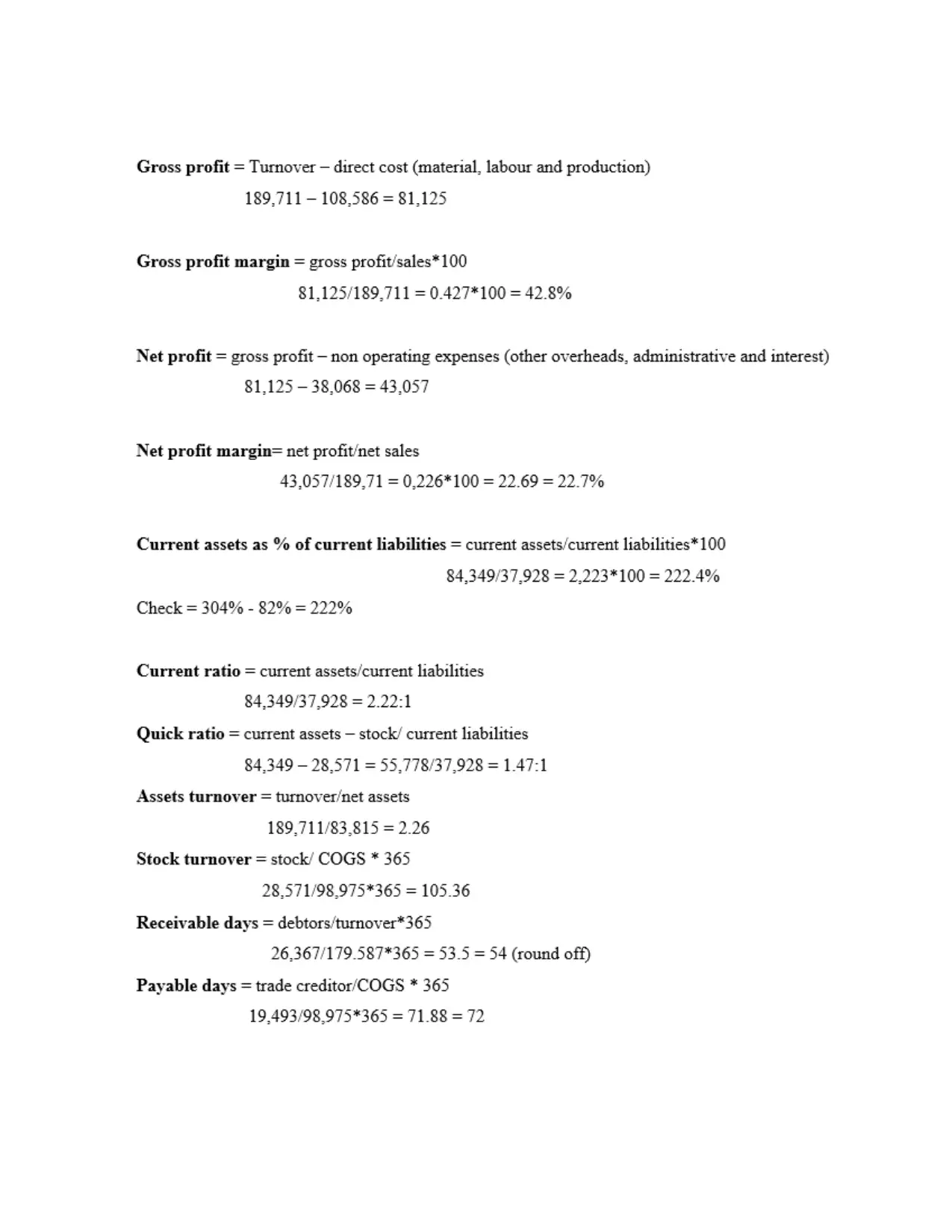
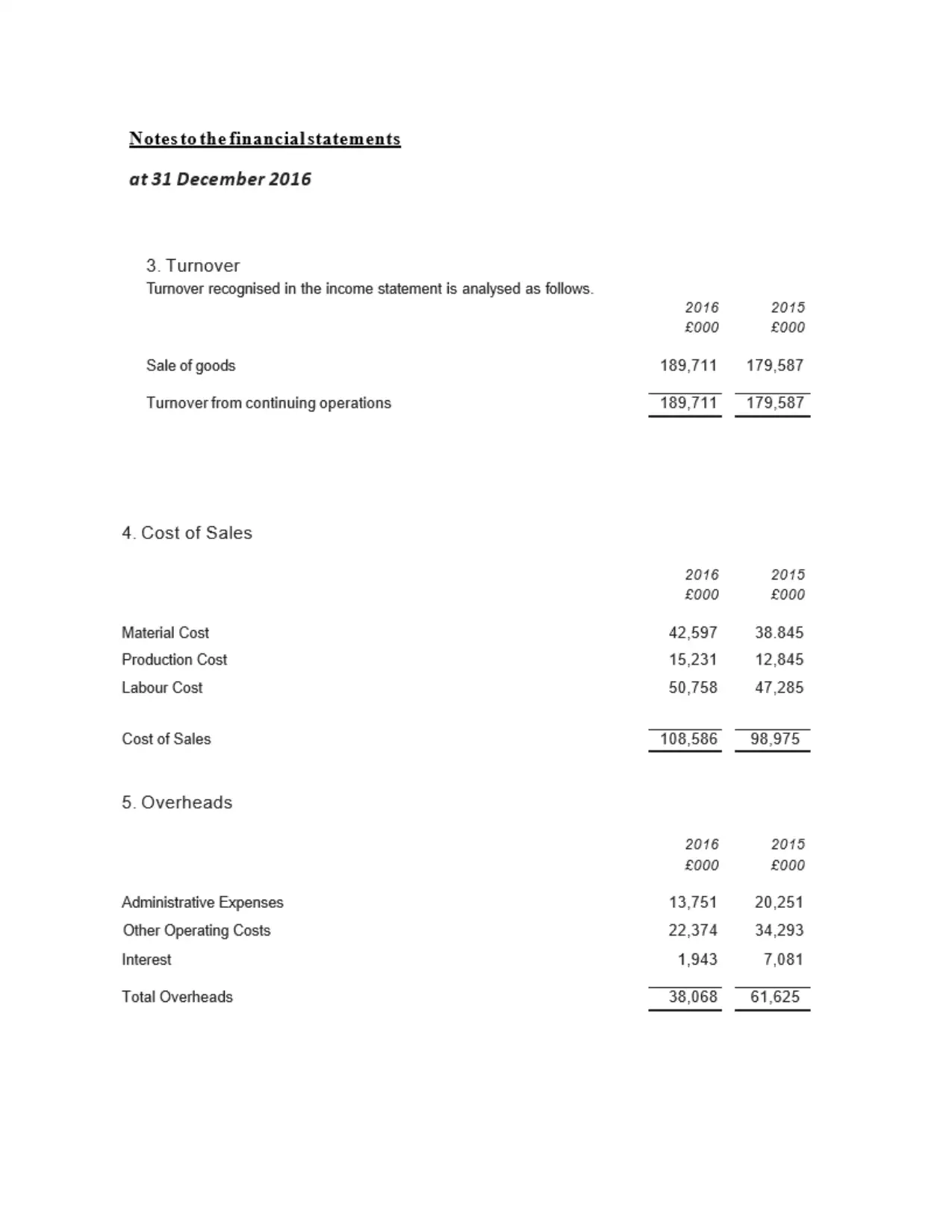
Business profitability: The profit that the organisation reported in the year 2015 was
18,987 and that profit rose to 43,057 by the end of the year 2016. This denotes that the
activities of the business. This helps the organisation in analysing the type of activities that are
generating revenue for the businesses, these activities could be financing, operating and
investing. The operational activities include the cash outflow and inflow that happened during
the day to day operations of the business. The investing activities include the cash generation
from the investment that the business has made in the long term aspects. The capital expenditure
and the revenue are the major components of this activity. The share capital, debentures, debts
and such activities are recorded under the name of financial activities in the business. After
reporting the activities of these three accounts, the company registers the net increase or decrease
in the cash and cash equivalent during the current financial year.
Uses of ratios in the financial management
Ratios are calculated in the business in order to get an insight on the financial abilities of
the business. There are several types of ratios that covers all the aspects of the finance that is
required in the business. The uses of ratios in financial management are discussed below: profitability -These ratios help the organisation in determining the ability of the business
to generate profits in relative to its total revenue, balance sheet and operating cost. Liquidity- These ratios are calculated to determine that if the organisation will be able to
pay of its debts by liquidating its assets or not (Boisjoly and et. al., 2020). The current ratio
and quick ratios are the most used common type of ratio. If the organisation has a good
liquidity ratio, then it ensures that the business have enough assets to pay of its debts. The
organisation must maintain an excellent liquidity ratio which is 1 and above which
ensures that the business have enough funds to dissolve all of their liabilities.
Efficiency- These ratios are calculated by the business to determine it the they are able to
generate good amount of returns on their investments or not. To calculate efficiency, the
business calculates its turnover ratios which is of four types: assets turnover ratio,
receivables turnover ratio and inventory ratio.
SECTION 3
Business performance review
Business profitability: The profit that the organisation reported in the year 2015 was
18,987 and that profit rose to 43,057 by the end of the year 2016. This denotes that the
⊘ This is a preview!⊘
Do you want full access?
Subscribe today to unlock all pages.
Trusted by 1+ million students worldwide
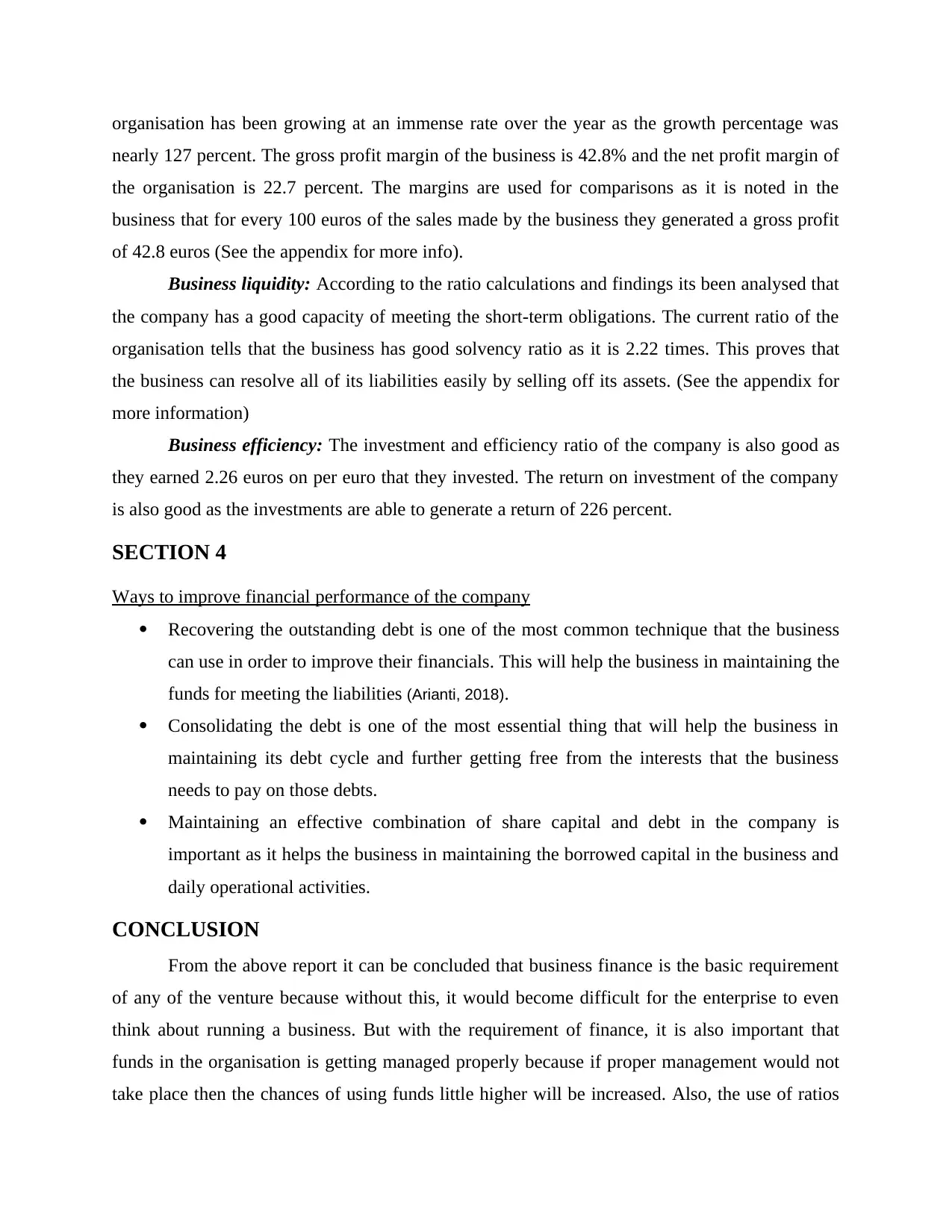
organisation has been growing at an immense rate over the year as the growth percentage was
nearly 127 percent. The gross profit margin of the business is 42.8% and the net profit margin of
the organisation is 22.7 percent. The margins are used for comparisons as it is noted in the
business that for every 100 euros of the sales made by the business they generated a gross profit
of 42.8 euros (See the appendix for more info).
Business liquidity: According to the ratio calculations and findings its been analysed that
the company has a good capacity of meeting the short-term obligations. The current ratio of the
organisation tells that the business has good solvency ratio as it is 2.22 times. This proves that
the business can resolve all of its liabilities easily by selling off its assets. (See the appendix for
more information)
Business efficiency: The investment and efficiency ratio of the company is also good as
they earned 2.26 euros on per euro that they invested. The return on investment of the company
is also good as the investments are able to generate a return of 226 percent.
SECTION 4
Ways to improve financial performance of the company
Recovering the outstanding debt is one of the most common technique that the business
can use in order to improve their financials. This will help the business in maintaining the
funds for meeting the liabilities (Arianti, 2018).
Consolidating the debt is one of the most essential thing that will help the business in
maintaining its debt cycle and further getting free from the interests that the business
needs to pay on those debts.
Maintaining an effective combination of share capital and debt in the company is
important as it helps the business in maintaining the borrowed capital in the business and
daily operational activities.
CONCLUSION
From the above report it can be concluded that business finance is the basic requirement
of any of the venture because without this, it would become difficult for the enterprise to even
think about running a business. But with the requirement of finance, it is also important that
funds in the organisation is getting managed properly because if proper management would not
take place then the chances of using funds little higher will be increased. Also, the use of ratios
nearly 127 percent. The gross profit margin of the business is 42.8% and the net profit margin of
the organisation is 22.7 percent. The margins are used for comparisons as it is noted in the
business that for every 100 euros of the sales made by the business they generated a gross profit
of 42.8 euros (See the appendix for more info).
Business liquidity: According to the ratio calculations and findings its been analysed that
the company has a good capacity of meeting the short-term obligations. The current ratio of the
organisation tells that the business has good solvency ratio as it is 2.22 times. This proves that
the business can resolve all of its liabilities easily by selling off its assets. (See the appendix for
more information)
Business efficiency: The investment and efficiency ratio of the company is also good as
they earned 2.26 euros on per euro that they invested. The return on investment of the company
is also good as the investments are able to generate a return of 226 percent.
SECTION 4
Ways to improve financial performance of the company
Recovering the outstanding debt is one of the most common technique that the business
can use in order to improve their financials. This will help the business in maintaining the
funds for meeting the liabilities (Arianti, 2018).
Consolidating the debt is one of the most essential thing that will help the business in
maintaining its debt cycle and further getting free from the interests that the business
needs to pay on those debts.
Maintaining an effective combination of share capital and debt in the company is
important as it helps the business in maintaining the borrowed capital in the business and
daily operational activities.
CONCLUSION
From the above report it can be concluded that business finance is the basic requirement
of any of the venture because without this, it would become difficult for the enterprise to even
think about running a business. But with the requirement of finance, it is also important that
funds in the organisation is getting managed properly because if proper management would not
take place then the chances of using funds little higher will be increased. Also, the use of ratios
Paraphrase This Document
Need a fresh take? Get an instant paraphrase of this document with our AI Paraphraser

helps the business in providing important information about the efficiency and utilization of
resources.
resources.
REFERENCES
Books and Journals
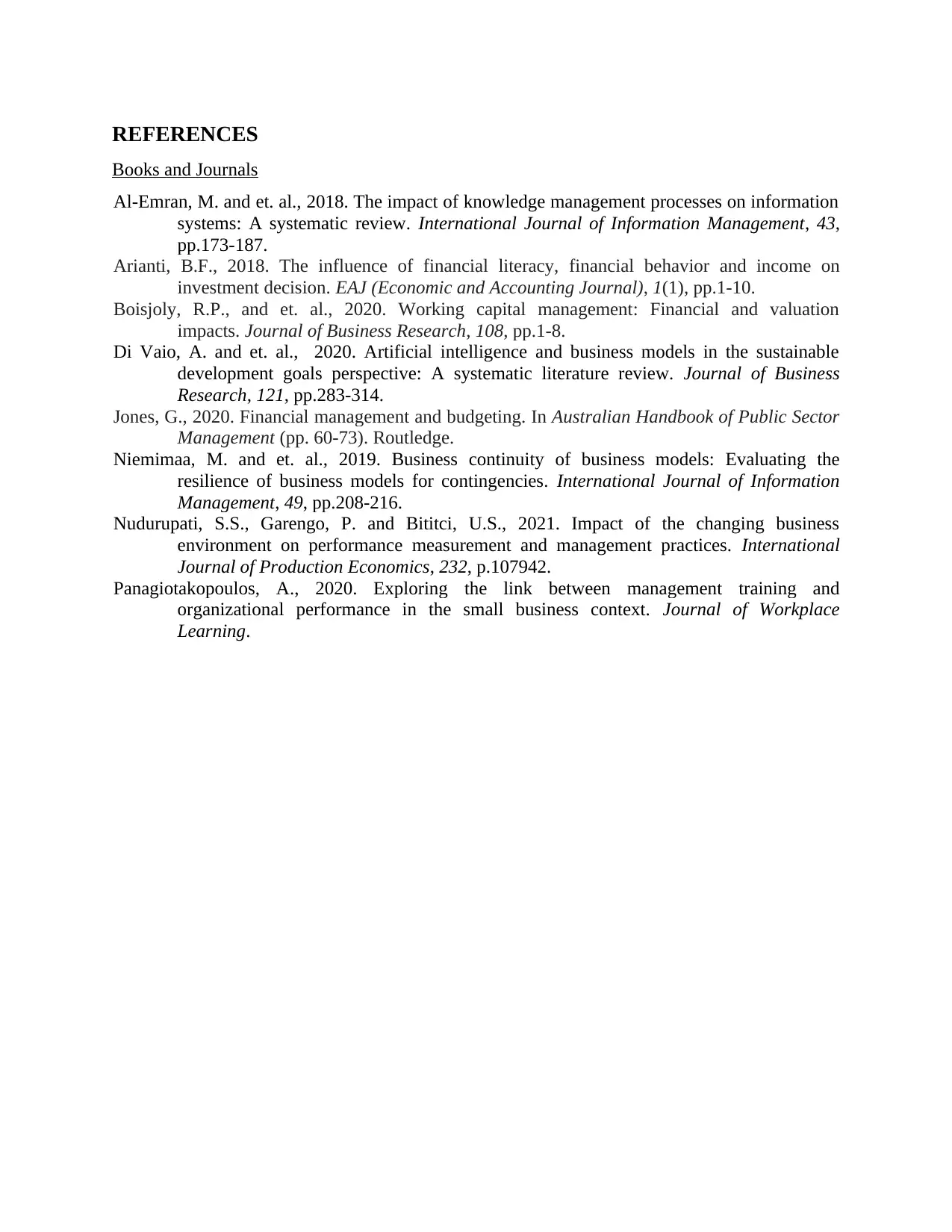
Al-Emran, M. and et. al., 2018. The impact of knowledge management processes on information
systems: A systematic review. International Journal of Information Management, 43,
pp.173-187.
Arianti, B.F., 2018. The influence of financial literacy, financial behavior and income on
investment decision. EAJ (Economic and Accounting Journal), 1(1), pp.1-10.
Boisjoly, R.P., and et. al., 2020. Working capital management: Financial and valuation
impacts. Journal of Business Research, 108, pp.1-8.
Di Vaio, A. and et. al., 2020. Artificial intelligence and business models in the sustainable
development goals perspective: A systematic literature review. Journal of Business
Research, 121, pp.283-314.
Jones, G., 2020. Financial management and budgeting. In Australian Handbook of Public Sector
Management (pp. 60-73). Routledge.
Niemimaa, M. and et. al., 2019. Business continuity of business models: Evaluating the
resilience of business models for contingencies. International Journal of Information
Management, 49, pp.208-216.
Nudurupati, S.S., Garengo, P. and Bititci, U.S., 2021. Impact of the changing business
environment on performance measurement and management practices. International
Journal of Production Economics, 232, p.107942.
Panagiotakopoulos, A., 2020. Exploring the link between management training and
organizational performance in the small business context. Journal of Workplace
Learning.
Books and Journals
Al-Emran, M. and et. al., 2018. The impact of knowledge management processes on information
systems: A systematic review. International Journal of Information Management, 43,
pp.173-187.
Arianti, B.F., 2018. The influence of financial literacy, financial behavior and income on
investment decision. EAJ (Economic and Accounting Journal), 1(1), pp.1-10.
Boisjoly, R.P., and et. al., 2020. Working capital management: Financial and valuation
impacts. Journal of Business Research, 108, pp.1-8.
Di Vaio, A. and et. al., 2020. Artificial intelligence and business models in the sustainable
development goals perspective: A systematic literature review. Journal of Business
Research, 121, pp.283-314.
Jones, G., 2020. Financial management and budgeting. In Australian Handbook of Public Sector
Management (pp. 60-73). Routledge.
Niemimaa, M. and et. al., 2019. Business continuity of business models: Evaluating the
resilience of business models for contingencies. International Journal of Information
Management, 49, pp.208-216.
Nudurupati, S.S., Garengo, P. and Bititci, U.S., 2021. Impact of the changing business
environment on performance measurement and management practices. International
Journal of Production Economics, 232, p.107942.
Panagiotakopoulos, A., 2020. Exploring the link between management training and
organizational performance in the small business context. Journal of Workplace
Learning.
⊘ This is a preview!⊘
Do you want full access?
Subscribe today to unlock all pages.
Trusted by 1+ million students worldwide
APPENDIX
Paraphrase This Document
Need a fresh take? Get an instant paraphrase of this document with our AI Paraphraser
⊘ This is a preview!⊘
Do you want full access?
Subscribe today to unlock all pages.
Trusted by 1+ million students worldwide

1 out of 15


Related Documents


Your All-in-One AI-Powered Toolkit for Academic Success.
+13062052269
info@desklib.com
Available 24*7 on WhatsApp / Email
![[object Object]](/_next/static/media/star-bottom.7253800d.svg)
Unlock your academic potential
Copyright © 2020–2026 A2Z Services. All Rights Reserved. Developed and managed by ZUCOL.