Business Law for Managers: Consideration and Negligence
VerifiedAdded on 2019/12/03
|12
|3863
|230
Report
AI Summary
This report delves into the core principles of business law relevant to managers. It begins by defining business law and its significance, then explores the concept of consideration within contract law, including its elements and the implications of its presence or absence. The report examines the case of Williams v Roffey, illustrating the practical application of consideration. It further analyzes the tort of negligence, referencing the case of Caparo v Dickman to explain its components. Additionally, the report outlines the duties of directors as per The Companies Act 2006, emphasizing fiduciary duties and their importance in the business environment. The report provides a comprehensive overview of key legal concepts essential for effective business management.
Business law for
managers
managers

Paraphrase This Document
Need a fresh take? Get an instant paraphrase of this document with our AI Paraphraser
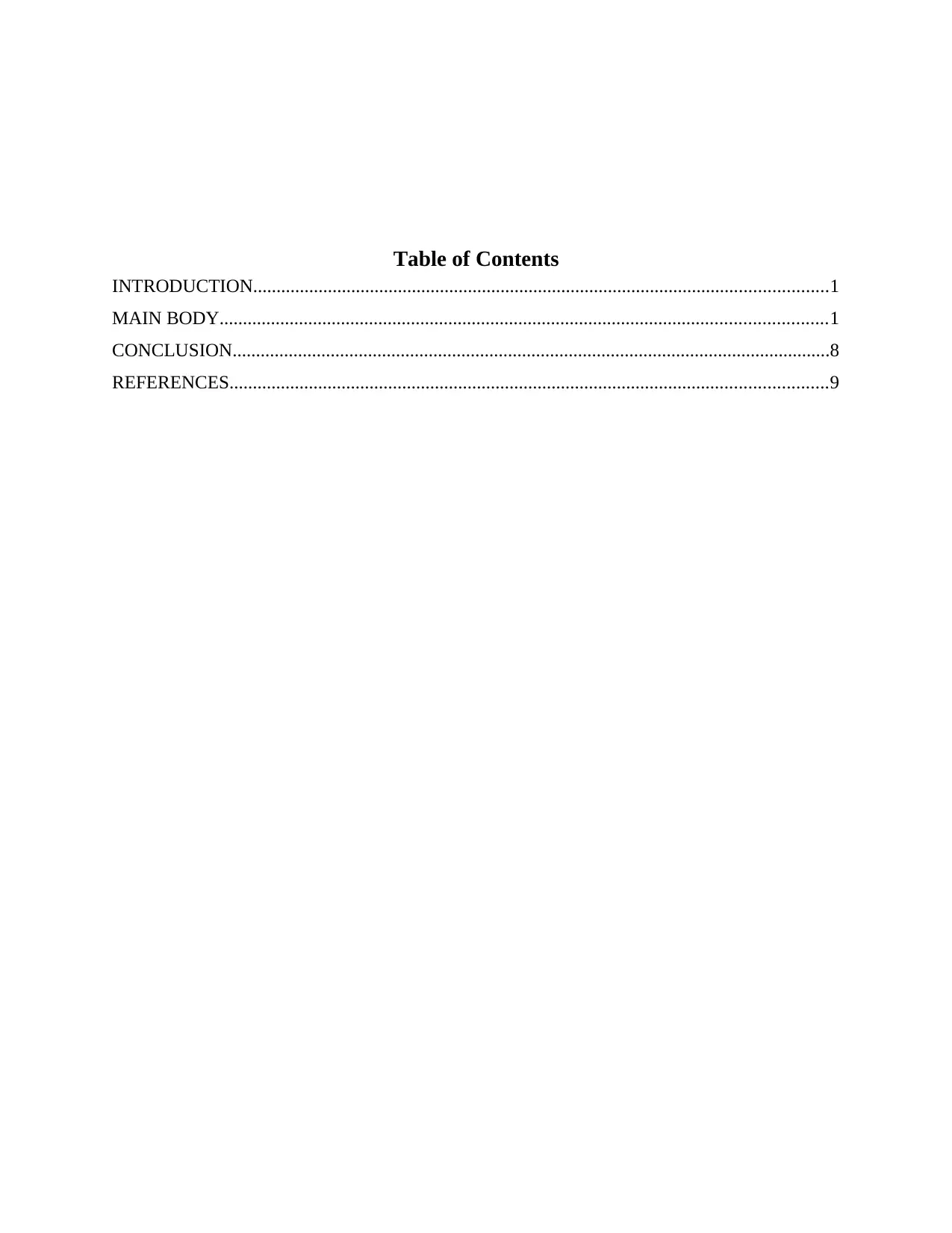
Table of Contents
INTRODUCTION...........................................................................................................................1
MAIN BODY..................................................................................................................................1
CONCLUSION................................................................................................................................8
REFERENCES................................................................................................................................9
INTRODUCTION...........................................................................................................................1
MAIN BODY..................................................................................................................................1
CONCLUSION................................................................................................................................8
REFERENCES................................................................................................................................9
INTRODUCTION
Business law is also termed as commercial law which includes rules, regulations or
legislation in relation to trade of goods or services. By taking into consideration the various
aspects of business law manager is able to deal with different business entities in an effective
manner. In addition to this, it also provides assistance to the manager in performing business
activities and functions within the area of company law. The present report will discuss the
elements or theories of consideration. Besides this, it will also shed light on the case of
Williams’s v Roffey 1990 which states the history of doctrine of consideration. Further, it will
also develop understanding about tort of negligence by taking into consideration the case of
Caparo v Dickman. This project report also depicts the duties of directors as per The Companies
Act 2006. Along with it, it will also examine the fiduciary duties and its importance to prevent
the business environment.
MAIN BODY
Consideration is one of the important elements for forming valid contract. Without the
availability of consideration a valid contract cannot be formed. Consideration is the promise
made by an individual to perform the desired act or to refrain the person who is legally bound to
perform the act. Consideration can be present in the valid contract in the form of past, present
and future consideration. . In order to form a valid contract, consideration is required to have the
value that is objectively determined. (Alcock, Bird and Gale, 2007). In case of bilateral contract,
consideration is made in regard to the promise made by both the parties with mutual
understanding. Similarly, in case of Unilateral contract promise is consideration for the promise
and performance is the consideration for the promise. Thus, in order to form a legally bind
agreement; availability of consideration is necessary. Availability of the consideration in the
agreements is not only necessary to form a legal agreement, it availability provides various
benefits to each and every party in case of any fraud made by the opposite party (Ayres, 2012).
Thus, availability of consideration results in enforcing the ability of agreement. Likewise non
availability of consideration results in unenforced ability of the agreement.
Various elements of the consideration that are required for the formation of the valid contract
are as follows:-
Consideration must not be illegal, immoral or opposed to any public policy.
1
Business law is also termed as commercial law which includes rules, regulations or
legislation in relation to trade of goods or services. By taking into consideration the various
aspects of business law manager is able to deal with different business entities in an effective
manner. In addition to this, it also provides assistance to the manager in performing business
activities and functions within the area of company law. The present report will discuss the
elements or theories of consideration. Besides this, it will also shed light on the case of
Williams’s v Roffey 1990 which states the history of doctrine of consideration. Further, it will
also develop understanding about tort of negligence by taking into consideration the case of
Caparo v Dickman. This project report also depicts the duties of directors as per The Companies
Act 2006. Along with it, it will also examine the fiduciary duties and its importance to prevent
the business environment.
MAIN BODY
Consideration is one of the important elements for forming valid contract. Without the
availability of consideration a valid contract cannot be formed. Consideration is the promise
made by an individual to perform the desired act or to refrain the person who is legally bound to
perform the act. Consideration can be present in the valid contract in the form of past, present
and future consideration. . In order to form a valid contract, consideration is required to have the
value that is objectively determined. (Alcock, Bird and Gale, 2007). In case of bilateral contract,
consideration is made in regard to the promise made by both the parties with mutual
understanding. Similarly, in case of Unilateral contract promise is consideration for the promise
and performance is the consideration for the promise. Thus, in order to form a legally bind
agreement; availability of consideration is necessary. Availability of the consideration in the
agreements is not only necessary to form a legal agreement, it availability provides various
benefits to each and every party in case of any fraud made by the opposite party (Ayres, 2012).
Thus, availability of consideration results in enforcing the ability of agreement. Likewise non
availability of consideration results in unenforced ability of the agreement.
Various elements of the consideration that are required for the formation of the valid contract
are as follows:-
Consideration must not be illegal, immoral or opposed to any public policy.
1
⊘ This is a preview!⊘
Do you want full access?
Subscribe today to unlock all pages.

Trusted by 1+ million students worldwide
Consideration should be real not vague.
Consideration can move from one person to another
Consideration can be past, present and future(Bayern, 2015)
Consideration can move at the desired of the promisor.
Consideration should be legal
Consideration should be something to which the promisor is legally bound to perform it.
The main reason for the consideration is that the availability of the consideration in the contract
aids the entities to form valid contract and at the same time availability of it helps the parties to
easily sue the defendant party (Benson, 2011). Availability of consideration also assists the
injury party to recover damages and loss of money suffered by him.
Various case study related to the concept of consideration is as follows:-
Williams v Roffey Bros [1990] 2 WLR 1153]. According to the case the both the party
entered into the contract in order to build 27 flats. If the contract is not completed on time than in
that case the contract will be subject to liquidated damage. . The defendant (contractor) pays
£20000 to the claimant in order to build the flats. After 6 months, claimant released that the
agreed sum of money was less and in lieu of which he went to the defendant and defendant
promised to pay £575 extra per flat. But the defendant only paid £500 and then he stopped
paying. In lieu of which contract claimant has stopped working. Thus, it was the mistake of the
claimant that he has not provided any consideration as he was under the contractual duty to
complete the task. Therefore, after taking into consideration the contract law it can be concluded
that defendant is liable to make extra payment to the claimant as per the promise made by him.
Lqampleigh v Braithwaite [1615] EWHC KB J17]. According to the case, the claimant
has killed the person and was punished to be hanged. Defendant had told the claimant to request
the king to forgive him for the crime made by him. The defendant told the claimant that if
claimant is able to get pardon from the king than in that he will give him £100. After many
efforts claimant was able to get pardon from the king. But as per the promise made defendant
refused to pay him £100. Thus, this case indicates the situation of past consideration. . Thus,
according to the concept of consideration in contract law the defendant is liable to pay £100 to
claimant.
Doctrine of the consideration is one of the important doctrines within the common law of
the contract. Without the availability of the doctrine of consideration, an agreement cannot be
2
Consideration can move from one person to another
Consideration can be past, present and future(Bayern, 2015)
Consideration can move at the desired of the promisor.
Consideration should be legal
Consideration should be something to which the promisor is legally bound to perform it.
The main reason for the consideration is that the availability of the consideration in the contract
aids the entities to form valid contract and at the same time availability of it helps the parties to
easily sue the defendant party (Benson, 2011). Availability of consideration also assists the
injury party to recover damages and loss of money suffered by him.
Various case study related to the concept of consideration is as follows:-
Williams v Roffey Bros [1990] 2 WLR 1153]. According to the case the both the party
entered into the contract in order to build 27 flats. If the contract is not completed on time than in
that case the contract will be subject to liquidated damage. . The defendant (contractor) pays
£20000 to the claimant in order to build the flats. After 6 months, claimant released that the
agreed sum of money was less and in lieu of which he went to the defendant and defendant
promised to pay £575 extra per flat. But the defendant only paid £500 and then he stopped
paying. In lieu of which contract claimant has stopped working. Thus, it was the mistake of the
claimant that he has not provided any consideration as he was under the contractual duty to
complete the task. Therefore, after taking into consideration the contract law it can be concluded
that defendant is liable to make extra payment to the claimant as per the promise made by him.
Lqampleigh v Braithwaite [1615] EWHC KB J17]. According to the case, the claimant
has killed the person and was punished to be hanged. Defendant had told the claimant to request
the king to forgive him for the crime made by him. The defendant told the claimant that if
claimant is able to get pardon from the king than in that he will give him £100. After many
efforts claimant was able to get pardon from the king. But as per the promise made defendant
refused to pay him £100. Thus, this case indicates the situation of past consideration. . Thus,
according to the concept of consideration in contract law the defendant is liable to pay £100 to
claimant.
Doctrine of the consideration is one of the important doctrines within the common law of
the contract. Without the availability of the doctrine of consideration, an agreement cannot be
2
Paraphrase This Document
Need a fresh take? Get an instant paraphrase of this document with our AI Paraphraser
considered as unenforceable even if a valid acceptance and offer has been made (Clark and
Knight, 2008). Therefore, the court attitude towards doctrine of consideration wants that in order
to form a valid contract the promisee must promise or give something in return of the promise
made by him (Fried, 2015). Thus, it can be concluded that only availability of offer and
acceptance between the people cannot form a legal contract in the eye of the court. Moreover, in
order to understand more deeply the concept of doctrine of consideration, the case study of
William v Roffey has been undertaken. Thus, after applying the concept of Doctrine of
consideration it could be concluded that defendant is fully liable to pay extra sum of money
promised by him to the claimant.
Looking at the present given scenario, consideration should not be abolished. However,
it is considered as the significant element for formulating the valid contract (Gardner, 2011).
Without the considerations or stipulations, contract or agreement is not enforceable by the law.
According to Mindy Chen- Wishart, consideration still play significant role in the contract law.
Henceforth, in order to develop legal or valid contract it is important for the government of UK
to follow the line of reasoning taken into consideration by the court of appeal in the given case
study of Williams v Roffey Bros. However, doctrine of consideration put more emphasis on
practical benefits rather than the legal benefits. Thus, in place of abolishing the consideration,
UK Government should seek to make sure that contract has all the badge of enforceability,
promissory estopple and unconscionability (Halpin, 2010). This would lead to indicate the
problems present whenever the contract is exercised in unfair manner.
In the English law, doctrine of consideration was started with very basic definition that is
a reason for enforceability. Further, the rule of consideration came into existence wherever and
whenever a contract is categorized in the price. At present, it is a complex model with various
rules and stipulations and being stated that, considerations are important even in a simple
contract.
Looking at the present given case, yes the performance of consideration is good enough.
Henceforth, the concept of consideration should not be abolished. However, it helped the course
of different business entities and parties to form a valid contract which is enforceable by the law.
In case, if valid offer is made and valid acceptance is presented and there is no consideration than
according to the English law it will not be considered as the contract which is enforceable by the
3
Knight, 2008). Therefore, the court attitude towards doctrine of consideration wants that in order
to form a valid contract the promisee must promise or give something in return of the promise
made by him (Fried, 2015). Thus, it can be concluded that only availability of offer and
acceptance between the people cannot form a legal contract in the eye of the court. Moreover, in
order to understand more deeply the concept of doctrine of consideration, the case study of
William v Roffey has been undertaken. Thus, after applying the concept of Doctrine of
consideration it could be concluded that defendant is fully liable to pay extra sum of money
promised by him to the claimant.
Looking at the present given scenario, consideration should not be abolished. However,
it is considered as the significant element for formulating the valid contract (Gardner, 2011).
Without the considerations or stipulations, contract or agreement is not enforceable by the law.
According to Mindy Chen- Wishart, consideration still play significant role in the contract law.
Henceforth, in order to develop legal or valid contract it is important for the government of UK
to follow the line of reasoning taken into consideration by the court of appeal in the given case
study of Williams v Roffey Bros. However, doctrine of consideration put more emphasis on
practical benefits rather than the legal benefits. Thus, in place of abolishing the consideration,
UK Government should seek to make sure that contract has all the badge of enforceability,
promissory estopple and unconscionability (Halpin, 2010). This would lead to indicate the
problems present whenever the contract is exercised in unfair manner.
In the English law, doctrine of consideration was started with very basic definition that is
a reason for enforceability. Further, the rule of consideration came into existence wherever and
whenever a contract is categorized in the price. At present, it is a complex model with various
rules and stipulations and being stated that, considerations are important even in a simple
contract.
Looking at the present given case, yes the performance of consideration is good enough.
Henceforth, the concept of consideration should not be abolished. However, it helped the course
of different business entities and parties to form a valid contract which is enforceable by the law.
In case, if valid offer is made and valid acceptance is presented and there is no consideration than
according to the English law it will not be considered as the contract which is enforceable by the
3
law (Hillman, 2012). However, the concept of consideration and doctrine of consideration helps
in protecting the interest of claimant against the fraud or any other negative activities.
The concept of consideration should be passed because it helps the companies to enter
into agreement and form a valid contract. Nowadays, unavailability of consideration leads to
formation of invalid contract. Further, this concept is applied to each contract whether it is
simple or complex (Keay, 2007). According to the given case, War v Byham follows the
concepts and doctrine of consideration whereas, R v Select Move does not undertakes concepts
of consideration. However, rationale behind following the concepts of consideration within the
case of War v Byham because there is promise to pay the extra money for any fraud or
discrimination. In case where payment of debt need to made as in the case of R v Select Move
Ltd [1995], considerations does not take place (Mughal and Ahamd, 2012). Therefore, it can be
said from the both cases that concept of consideration is only applicable or applied where
practical benefit is promised for instance; extra or advance payment is made. While on the other
hand, it is not applicable to the situation where payment is made for the debts.
The word tort refers to the wrongful act for which the law provides remedy to deal with
the offence that is committed by the one party over the other party. Tort is the law which is
designed in order to provide the relief to person who has suffered harm from the wrongful acts of
others. This law constitute of rights, obligations to provide relief and help in establishing
defendant against the pecuniary damage which is caused to the person (Sim, 2009). It has been
derived from the combination of the common-law principles and legislative act. A person who
suffers from the health issue is known as plaintiff and the seller who was liable for the ill health
of the customer is known as tortfeasor.
There are certain types of tort law which involves private parties in order to resolve the
different issues which are faced that are related to the injury of certain parties. In certain cases,
when the issue is not big the court provides relief to the tortfeasor by not taking any legal action
against them.
Negligence tort occurs when the party poses unreasonable risk of harm to the person and
the property (Trebilcock and Leng, 2006). It occurs when the party fails to provide proper care to
the prudential person as per their requirement. In simple manner it is a breach of the duty by the
personal that is a wrong-doer of a sensible regulation of care against the damage which is caused
by the personnel in the greater form. For example: the person who is walking down the street and
4
in protecting the interest of claimant against the fraud or any other negative activities.
The concept of consideration should be passed because it helps the companies to enter
into agreement and form a valid contract. Nowadays, unavailability of consideration leads to
formation of invalid contract. Further, this concept is applied to each contract whether it is
simple or complex (Keay, 2007). According to the given case, War v Byham follows the
concepts and doctrine of consideration whereas, R v Select Move does not undertakes concepts
of consideration. However, rationale behind following the concepts of consideration within the
case of War v Byham because there is promise to pay the extra money for any fraud or
discrimination. In case where payment of debt need to made as in the case of R v Select Move
Ltd [1995], considerations does not take place (Mughal and Ahamd, 2012). Therefore, it can be
said from the both cases that concept of consideration is only applicable or applied where
practical benefit is promised for instance; extra or advance payment is made. While on the other
hand, it is not applicable to the situation where payment is made for the debts.
The word tort refers to the wrongful act for which the law provides remedy to deal with
the offence that is committed by the one party over the other party. Tort is the law which is
designed in order to provide the relief to person who has suffered harm from the wrongful acts of
others. This law constitute of rights, obligations to provide relief and help in establishing
defendant against the pecuniary damage which is caused to the person (Sim, 2009). It has been
derived from the combination of the common-law principles and legislative act. A person who
suffers from the health issue is known as plaintiff and the seller who was liable for the ill health
of the customer is known as tortfeasor.
There are certain types of tort law which involves private parties in order to resolve the
different issues which are faced that are related to the injury of certain parties. In certain cases,
when the issue is not big the court provides relief to the tortfeasor by not taking any legal action
against them.
Negligence tort occurs when the party poses unreasonable risk of harm to the person and
the property (Trebilcock and Leng, 2006). It occurs when the party fails to provide proper care to
the prudential person as per their requirement. In simple manner it is a breach of the duty by the
personal that is a wrong-doer of a sensible regulation of care against the damage which is caused
by the personnel in the greater form. For example: the person who is walking down the street and
4
⊘ This is a preview!⊘
Do you want full access?
Subscribe today to unlock all pages.
Trusted by 1+ million students worldwide
some barrel full of color fall upon him and cause injury to the personal. The painter owed a duty
of care and uses the proper instrument to avoid the injury to the passers. With the proper care, the
negligence tort can be avoided with the help of proving different elements which are associated
with the injury which causes actual damage to the passers.
In context to the case Donoghue v. Stevenson which is also known as the snail in the
bottle case. It developed the modern concept which was based on negligence aspect where the
person is entitled and owe the duty of care to the injured person by the other person. Many a
time, the manufacturers fail to provide the effective product to the customer and it may result in
injury. So in order to avoid it the defects can be identified beforehand which will help in
establishing the different legal principles and precedents. The person who suffers from damage
can claim damage from the manufacturer of the product.
Neighbor principle is the principle of law which stated that the person should take the
reasonable care in order to avoid acts that likely cause injury to the neighbor (Levmore and
Sharkey, 2012). It includes all the persons that are easily affected by the act. They ought to claim
the damages which are caused to them as per the negligence for the injured parties.
Economic loss refers to the loss which arises due to the condition when the individual or
the organization encounters loss. It is generally recorded in the balance sheet of the organization
at the end of the financial year (Davies, 2007). With the reference to the case of Caparo
Industries Plc v. Dickman is the leading case of tort and it is the test-fold test. The plaintiffs have
foreseen the damages from the accountants as per their negligence and liability for the economic
loss as the situation was limited to a certain extend. In accordance to the case, the duty of care
was not owed and there was proximity that was identified between Caparo and auditors as they
were not aware about existence of the wrong accounts.
The case is based on the incremental approach which emphasis that there is no contractual
relationship among the accountants and the stakeholders. It is the test which comprises of three
different stages in order to obligate the person to provide duty of care. In context to the case, the
following aspects need to be determined to meet the claimed needs of the person.
Firstly, the person should adopt the neighbor principle to impose duty of care.
Secondly, the customer should have foreseen the loss in a proper manner (Tort - Caparo
v Dickman, 2003).
5
of care and uses the proper instrument to avoid the injury to the passers. With the proper care, the
negligence tort can be avoided with the help of proving different elements which are associated
with the injury which causes actual damage to the passers.
In context to the case Donoghue v. Stevenson which is also known as the snail in the
bottle case. It developed the modern concept which was based on negligence aspect where the
person is entitled and owe the duty of care to the injured person by the other person. Many a
time, the manufacturers fail to provide the effective product to the customer and it may result in
injury. So in order to avoid it the defects can be identified beforehand which will help in
establishing the different legal principles and precedents. The person who suffers from damage
can claim damage from the manufacturer of the product.
Neighbor principle is the principle of law which stated that the person should take the
reasonable care in order to avoid acts that likely cause injury to the neighbor (Levmore and
Sharkey, 2012). It includes all the persons that are easily affected by the act. They ought to claim
the damages which are caused to them as per the negligence for the injured parties.
Economic loss refers to the loss which arises due to the condition when the individual or
the organization encounters loss. It is generally recorded in the balance sheet of the organization
at the end of the financial year (Davies, 2007). With the reference to the case of Caparo
Industries Plc v. Dickman is the leading case of tort and it is the test-fold test. The plaintiffs have
foreseen the damages from the accountants as per their negligence and liability for the economic
loss as the situation was limited to a certain extend. In accordance to the case, the duty of care
was not owed and there was proximity that was identified between Caparo and auditors as they
were not aware about existence of the wrong accounts.
The case is based on the incremental approach which emphasis that there is no contractual
relationship among the accountants and the stakeholders. It is the test which comprises of three
different stages in order to obligate the person to provide duty of care. In context to the case, the
following aspects need to be determined to meet the claimed needs of the person.
Firstly, the person should adopt the neighbor principle to impose duty of care.
Secondly, the customer should have foreseen the loss in a proper manner (Tort - Caparo
v Dickman, 2003).
5
Paraphrase This Document
Need a fresh take? Get an instant paraphrase of this document with our AI Paraphraser
Finally, they should impose the proper care in order to deal with it and adopt the
reasonable aspect over the duty of care.
This is the aspect which is related to combination of different aspects to avoid causing harm to
the person either physically or mentally.
With the reference to the case of Hedley Byrne v Heller Partners Ltd it clearly indicates
the aspects of economic loss which arise to the misstatement of the negligence. In order to make
the decision, the information aspects were misrepresented and the other party owes the notion as
the reliance has been rejected. As the relationship between the parties were sufficiently
proximate which create the duty of care.
Before discussing the statement of that 'The companies Act 2006 will not change the
essential nature of directors duties, the duties are couched in largely discretional and unclear
terms, in which no method of enforcement of directors' general duties by non-shareholders is
provided.’ one needs to understand different terms and legal aspects. In accordance with The
Companies Act 2006, directors are the backbone of an organization who manages the affairs of
an organization (Velasco, 2016). They are the essential element of the business organization and
are appointed by the existing board of directors. Directors play a vital role in framing and
implementing policies of the company. They are the part of well structured team and thereby
assume shared goals and responsibilities within an organization. They frame strategies by
overseeing condition of the business environment and make their best efforts towards attaining
organizational goals and objectives.
Further, fiduciary duty consists of the legal obligations in which one party makes
decisions in the best interest of another party. Party who make obligation is known as fiduciary
that act in the behalf of another party and take care the money or property of concerned person.
Fiduciary duties play a vital in protecting rights of individual in today's business environment.
For instance: John has $15,000 which he wants to invest in the mutual fund and thereby take
advice from the financial advisor to invest money in highly profitable securities. To make
investment, John has made financial advice from two authorities such as Advisor A and Advisor
B. In this, Advisor A is fiduciary authority whereas Advisor B is not the fiducial authority. In
accordance with the case, John had purchased funds from both authorities. As per the fiduciary
duty, Advisor A is obliged to recommend the fund at lower expense ratio without charging any
commission. Advisor B can charge commission from John for the services because he is not
6
reasonable aspect over the duty of care.
This is the aspect which is related to combination of different aspects to avoid causing harm to
the person either physically or mentally.
With the reference to the case of Hedley Byrne v Heller Partners Ltd it clearly indicates
the aspects of economic loss which arise to the misstatement of the negligence. In order to make
the decision, the information aspects were misrepresented and the other party owes the notion as
the reliance has been rejected. As the relationship between the parties were sufficiently
proximate which create the duty of care.
Before discussing the statement of that 'The companies Act 2006 will not change the
essential nature of directors duties, the duties are couched in largely discretional and unclear
terms, in which no method of enforcement of directors' general duties by non-shareholders is
provided.’ one needs to understand different terms and legal aspects. In accordance with The
Companies Act 2006, directors are the backbone of an organization who manages the affairs of
an organization (Velasco, 2016). They are the essential element of the business organization and
are appointed by the existing board of directors. Directors play a vital role in framing and
implementing policies of the company. They are the part of well structured team and thereby
assume shared goals and responsibilities within an organization. They frame strategies by
overseeing condition of the business environment and make their best efforts towards attaining
organizational goals and objectives.
Further, fiduciary duty consists of the legal obligations in which one party makes
decisions in the best interest of another party. Party who make obligation is known as fiduciary
that act in the behalf of another party and take care the money or property of concerned person.
Fiduciary duties play a vital in protecting rights of individual in today's business environment.
For instance: John has $15,000 which he wants to invest in the mutual fund and thereby take
advice from the financial advisor to invest money in highly profitable securities. To make
investment, John has made financial advice from two authorities such as Advisor A and Advisor
B. In this, Advisor A is fiduciary authority whereas Advisor B is not the fiducial authority. In
accordance with the case, John had purchased funds from both authorities. As per the fiduciary
duty, Advisor A is obliged to recommend the fund at lower expense ratio without charging any
commission. Advisor B can charge commission from John for the services because he is not
6
obliged to perform fiduciary duties. Thus, fiducial duties and fiduciary offers financial benefits
to the investor.
The previous Company Act was 1985 which is introduced by the parliament of UK of
Great Britain. Such act entails that companies is required to register themselves at the time of
their formation. In addition to this, it also states the roles and responsibilities of companies,
managers as well as secretaries. In 2006, Companies Act is reformed to remove the several
deficiencies which are present in the existing act. In the new act, various provisions are
introduced for the public and private companies. In addition to this, it also makes modifications
in the roles and responsibilities of directors.
There are various amendments have that takes place in the previous laws and legislation.
It is the main cause, due to which Chancellor of Exchequer had reformed The Companies Act in
June, 2001. There are several changes that have taken place in duties, roles and responsibilities
of directors after the amendments in the act. Several Sections in relation the directors duties As
per The Companies Act 2006 that are as follows:
Section 171: Such section entails that directors requires to act within their powers by taking into
consideration the terms.
Section 172: Director has duty to promote success of the company. This section was included in
order to enshrine in act that referred to the principle.
Section 173: Regulation related to independent judgment. This section was introduced in order to
independently exercise the powers and rights of the directors.
Section 175: Regulation related to conflict management. This section was developed in order to
apply no-conflict rule that are applied to the directors.
Section 176: Provisions related to acceptance of benefit.
Section 177: Disclosure about company's transaction. This section requires that the directors
should expose the interest that he has in lieu of the company.
All such sections strengthened Companies Act and thereby contribute in the growth or
development of an organization.
7
to the investor.
The previous Company Act was 1985 which is introduced by the parliament of UK of
Great Britain. Such act entails that companies is required to register themselves at the time of
their formation. In addition to this, it also states the roles and responsibilities of companies,
managers as well as secretaries. In 2006, Companies Act is reformed to remove the several
deficiencies which are present in the existing act. In the new act, various provisions are
introduced for the public and private companies. In addition to this, it also makes modifications
in the roles and responsibilities of directors.
There are various amendments have that takes place in the previous laws and legislation.
It is the main cause, due to which Chancellor of Exchequer had reformed The Companies Act in
June, 2001. There are several changes that have taken place in duties, roles and responsibilities
of directors after the amendments in the act. Several Sections in relation the directors duties As
per The Companies Act 2006 that are as follows:
Section 171: Such section entails that directors requires to act within their powers by taking into
consideration the terms.
Section 172: Director has duty to promote success of the company. This section was included in
order to enshrine in act that referred to the principle.
Section 173: Regulation related to independent judgment. This section was introduced in order to
independently exercise the powers and rights of the directors.
Section 175: Regulation related to conflict management. This section was developed in order to
apply no-conflict rule that are applied to the directors.
Section 176: Provisions related to acceptance of benefit.
Section 177: Disclosure about company's transaction. This section requires that the directors
should expose the interest that he has in lieu of the company.
All such sections strengthened Companies Act and thereby contribute in the growth or
development of an organization.
7
⊘ This is a preview!⊘
Do you want full access?
Subscribe today to unlock all pages.
Trusted by 1+ million students worldwide
CONCLUSION
From the report it can be interpreted that proper rules and regulations has to be followed by
the personal in order to create duty of care by adopting various consideration. Further it can be
concluded that the proper consideration and principle should be adopted in order to avoid
negligence. Various fiduciary duties are examined in a proper manner to prevent business
environment.
8
From the report it can be interpreted that proper rules and regulations has to be followed by
the personal in order to create duty of care by adopting various consideration. Further it can be
concluded that the proper consideration and principle should be adopted in order to avoid
negligence. Various fiduciary duties are examined in a proper manner to prevent business
environment.
8
Paraphrase This Document
Need a fresh take? Get an instant paraphrase of this document with our AI Paraphraser
REFERENCES
Books & Journals
Alcock, A., Bird, J. and Gale, S., 2007. Companies Act 2006: the new law.Business Law Review.
p. 129.
Ayres, I., 2012. Studies in Contract Law. Foundation Press.
Bayern, S.J., 2015. Offer and Acceptance in Modern Contract Law: A Needles Concept. Cal. L.
Rev. 103. p. 67.
Benson, P., 2011. The Idea of Consideration. University of Toronto Law Journal. 61(2). pp. 241-
278.
Bonell, M.J., 2009. An international restatement of contract law: the UNIDROIT Principles of
International Commercial Contracts. Martinus Nijhoff Publishers.
Clark, G.L. and Knight, E.R., 2008. Implications of the UK Companies Act 2006 for institutional
investors and the market for corporate social responsibility. U. Pa. J. Bus. L. 11. p. 259.
Fried, C., 2015. Contract as promise: A theory of contractual obligation. Oxford University
Press.
Gardner, J., 2011. What is Tort Law For? Part 1. The Place of Corrective Justice. Law and
Philosophy. 30(1). pp. 1-50.
Halpin, D.W., 2010. Construction management. John Wiley & Sons.
Hillman, R.A., 2012. The Richness of Contract Law (Vol. 28). Springer Science & Business
Media.
Keay, A., 2007. Section 172 (1) of the Companies Act 2006: An interpretation and assessment.
Company Lawyer. 28(4). pp. 106-110.
Mughal, J.R.D. and Ahamd, M., 2012. Law of Consideration in Contract.Munir Ahamd, Law of
Consideration in Contract (October 26, 2012).
Sim, D., 2009. Contract, Consideration and Consistency.
Trebilcock, M. and Leng, J., 2006. The role of formal contract law and enforcement in economic
development. Virginia Law Review. pp. 1517-1580.
Online
Davies, J., 2007. A guide to directors’ responsibilities under the Companies Act 2006. [Pdf].
Available through:< http://www.accaglobal.com/content/dam/acca/global/PDF-
technical/business-law/tech-tp-cdd.pdf>. [Accessed on 6th January 2016].
9
Books & Journals
Alcock, A., Bird, J. and Gale, S., 2007. Companies Act 2006: the new law.Business Law Review.
p. 129.
Ayres, I., 2012. Studies in Contract Law. Foundation Press.
Bayern, S.J., 2015. Offer and Acceptance in Modern Contract Law: A Needles Concept. Cal. L.
Rev. 103. p. 67.
Benson, P., 2011. The Idea of Consideration. University of Toronto Law Journal. 61(2). pp. 241-
278.
Bonell, M.J., 2009. An international restatement of contract law: the UNIDROIT Principles of
International Commercial Contracts. Martinus Nijhoff Publishers.
Clark, G.L. and Knight, E.R., 2008. Implications of the UK Companies Act 2006 for institutional
investors and the market for corporate social responsibility. U. Pa. J. Bus. L. 11. p. 259.
Fried, C., 2015. Contract as promise: A theory of contractual obligation. Oxford University
Press.
Gardner, J., 2011. What is Tort Law For? Part 1. The Place of Corrective Justice. Law and
Philosophy. 30(1). pp. 1-50.
Halpin, D.W., 2010. Construction management. John Wiley & Sons.
Hillman, R.A., 2012. The Richness of Contract Law (Vol. 28). Springer Science & Business
Media.
Keay, A., 2007. Section 172 (1) of the Companies Act 2006: An interpretation and assessment.
Company Lawyer. 28(4). pp. 106-110.
Mughal, J.R.D. and Ahamd, M., 2012. Law of Consideration in Contract.Munir Ahamd, Law of
Consideration in Contract (October 26, 2012).
Sim, D., 2009. Contract, Consideration and Consistency.
Trebilcock, M. and Leng, J., 2006. The role of formal contract law and enforcement in economic
development. Virginia Law Review. pp. 1517-1580.
Online
Davies, J., 2007. A guide to directors’ responsibilities under the Companies Act 2006. [Pdf].
Available through:< http://www.accaglobal.com/content/dam/acca/global/PDF-
technical/business-law/tech-tp-cdd.pdf>. [Accessed on 6th January 2016].
9
Levmore, S. and Sharkey, C.M., 2012.Foundations of tort law. LexisNexis. Case study:
Donoghue v. Stevenson (1932)., 2014.[Online]. Available through:<
http://lawgovpol.com/case-study-donoghue-v-stevenson-1932/>. [Accessed on 6th
January 2016].
Tort - Caparo v Dickman., 2003. [Online]. Available through:< http://www.lawteacher.net/free-
law-essays/tort-law/tort-caparo-v-dickman.php>. [Accessed on 6th January 2016].
Velasco, J., 2016. How many fiduciary duties are there in corporate law. [Online]. Available
through:< http://lawreview.usc.edu/index.php/articles-how-many-fiduciary-
duties-are- there-in-corporate-law/>. [Accessed on 6th January 2016].ate
10
Donoghue v. Stevenson (1932)., 2014.[Online]. Available through:<
http://lawgovpol.com/case-study-donoghue-v-stevenson-1932/>. [Accessed on 6th
January 2016].
Tort - Caparo v Dickman., 2003. [Online]. Available through:< http://www.lawteacher.net/free-
law-essays/tort-law/tort-caparo-v-dickman.php>. [Accessed on 6th January 2016].
Velasco, J., 2016. How many fiduciary duties are there in corporate law. [Online]. Available
through:< http://lawreview.usc.edu/index.php/articles-how-many-fiduciary-
duties-are- there-in-corporate-law/>. [Accessed on 6th January 2016].ate
10
⊘ This is a preview!⊘
Do you want full access?
Subscribe today to unlock all pages.
Trusted by 1+ million students worldwide

1 out of 12


Related Documents


Your All-in-One AI-Powered Toolkit for Academic Success.
+13062052269
info@desklib.com
Available 24*7 on WhatsApp / Email
![[object Object]](/_next/static/media/star-bottom.7253800d.svg)
Unlock your academic potential
Copyright © 2020–2026 A2Z Services. All Rights Reserved. Developed and managed by ZUCOL.