Business Leader Strategies and Corporate Social Responsibility
VerifiedAdded on 2022/09/18
|141
|38259
|18
Project
AI Summary
This doctoral study by Franklyn Abraham explores the strategies business leaders use to fulfill Corporate Social Responsibility (CSR) and enhance profitability, grounded in stakeholder theory. The qualitative multiple case study examines four SME leaders in Maryland and Virginia, using semi-structured interviews and profit/loss statements. The research identifies three primary themes: responsible employee engagement, responsible governance, and increased transparency. The study highlights the importance of CSR for organizational success and offers implications for positive social change, particularly through increased corporate philanthropic donations and community development. The study includes a comprehensive review of the literature, detailed methodology, findings, and recommendations for action and further research, offering valuable insights for business leaders seeking to integrate CSR into their strategic planning and operations. The study emphasizes the need for CSR strategies, especially for small businesses, and offers valuable insights into the practical application of CSR principles.
Walden UniversityWalden University
ScholarWorksScholarWorks
Walden Dissertations and Doctoral Studies Walden Dissertations and Doctoral Studies
Collection
2020
Business Leader Strategies that Fulfill Corporate SocialBusiness Leader Strategies that Fulfill Corporate Social
ResponsibilityResponsibility
Franklyn Abraham
Walden University
Follow this and additional works at: https://scholarworks.waldenu.edu/dissertations
Part of the Business Commons
This Dissertation is brought to you for free and open access by the Walden Dissertations and Doctoral Studies
Collection at ScholarWorks. It has been accepted for inclusion in Walden Dissertations and Doctoral Studies by an
authorized administrator of ScholarWorks. For more information, please contact ScholarWorks@waldenu.edu.
ScholarWorksScholarWorks
Walden Dissertations and Doctoral Studies Walden Dissertations and Doctoral Studies
Collection
2020
Business Leader Strategies that Fulfill Corporate SocialBusiness Leader Strategies that Fulfill Corporate Social
ResponsibilityResponsibility
Franklyn Abraham
Walden University
Follow this and additional works at: https://scholarworks.waldenu.edu/dissertations
Part of the Business Commons
This Dissertation is brought to you for free and open access by the Walden Dissertations and Doctoral Studies
Collection at ScholarWorks. It has been accepted for inclusion in Walden Dissertations and Doctoral Studies by an
authorized administrator of ScholarWorks. For more information, please contact ScholarWorks@waldenu.edu.

Paraphrase This Document
Need a fresh take? Get an instant paraphrase of this document with our AI Paraphraser
Walden University
College of Management and Technology
This is to certify that the doctoral study by
Franklyn Abraham
has been found to be complete and satisfactory in all respects,
and that any and all revisions required by
the review committee have been made.
Review Committee
Dr. Lisa Cave, Committee Chairperson, Doctor of Business Administration Faculty
Dr. Janie Mayo, Committee Member, Doctor of Business Administration Faculty
Dr. Gwendolyn Dooley, University Reviewer, Doctor of Business Administration Faculty
Chief Academic Officer and Provost
Sue Subocz, Ph.D.
Walden University
2020
College of Management and Technology
This is to certify that the doctoral study by
Franklyn Abraham
has been found to be complete and satisfactory in all respects,
and that any and all revisions required by
the review committee have been made.
Review Committee
Dr. Lisa Cave, Committee Chairperson, Doctor of Business Administration Faculty
Dr. Janie Mayo, Committee Member, Doctor of Business Administration Faculty
Dr. Gwendolyn Dooley, University Reviewer, Doctor of Business Administration Faculty
Chief Academic Officer and Provost
Sue Subocz, Ph.D.
Walden University
2020
Abstract
Business Leader Strategies that Fulfill Corporate Social Responsibility
by
Franklyn Abraham
MS, University of North Texas, 2015
BS, Prairie View A&M University, 1997
Doctoral Study Submitted in Partial Fulfillment
of the Requirements for the Degree of
Doctor of Business Administration
Walden University
February 2020
Business Leader Strategies that Fulfill Corporate Social Responsibility
by
Franklyn Abraham
MS, University of North Texas, 2015
BS, Prairie View A&M University, 1997
Doctoral Study Submitted in Partial Fulfillment
of the Requirements for the Degree of
Doctor of Business Administration
Walden University
February 2020
⊘ This is a preview!⊘
Do you want full access?
Subscribe today to unlock all pages.

Trusted by 1+ million students worldwide
Abstract
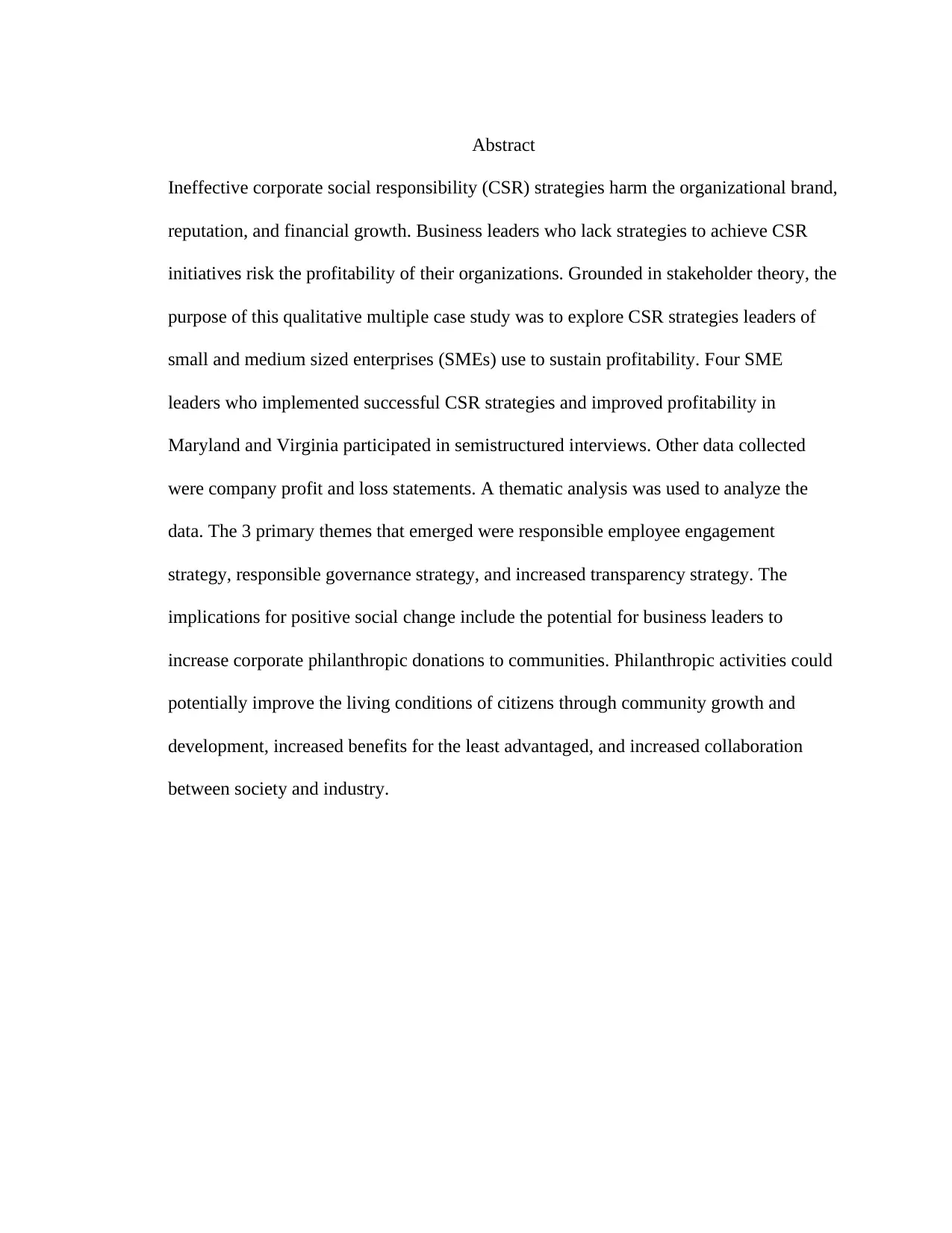
Ineffective corporate social responsibility (CSR) strategies harm the organizational brand,
reputation, and financial growth. Business leaders who lack strategies to achieve CSR
initiatives risk the profitability of their organizations. Grounded in stakeholder theory, the
purpose of this qualitative multiple case study was to explore CSR strategies leaders of
small and medium sized enterprises (SMEs) use to sustain profitability. Four SME
leaders who implemented successful CSR strategies and improved profitability in
Maryland and Virginia participated in semistructured interviews. Other data collected
were company profit and loss statements. A thematic analysis was used to analyze the
data. The 3 primary themes that emerged were responsible employee engagement
strategy, responsible governance strategy, and increased transparency strategy. The
implications for positive social change include the potential for business leaders to
increase corporate philanthropic donations to communities. Philanthropic activities could
potentially improve the living conditions of citizens through community growth and
development, increased benefits for the least advantaged, and increased collaboration
between society and industry.
Ineffective corporate social responsibility (CSR) strategies harm the organizational brand,
reputation, and financial growth. Business leaders who lack strategies to achieve CSR
initiatives risk the profitability of their organizations. Grounded in stakeholder theory, the
purpose of this qualitative multiple case study was to explore CSR strategies leaders of
small and medium sized enterprises (SMEs) use to sustain profitability. Four SME
leaders who implemented successful CSR strategies and improved profitability in
Maryland and Virginia participated in semistructured interviews. Other data collected
were company profit and loss statements. A thematic analysis was used to analyze the
data. The 3 primary themes that emerged were responsible employee engagement
strategy, responsible governance strategy, and increased transparency strategy. The
implications for positive social change include the potential for business leaders to
increase corporate philanthropic donations to communities. Philanthropic activities could
potentially improve the living conditions of citizens through community growth and
development, increased benefits for the least advantaged, and increased collaboration
between society and industry.
Paraphrase This Document
Need a fresh take? Get an instant paraphrase of this document with our AI Paraphraser
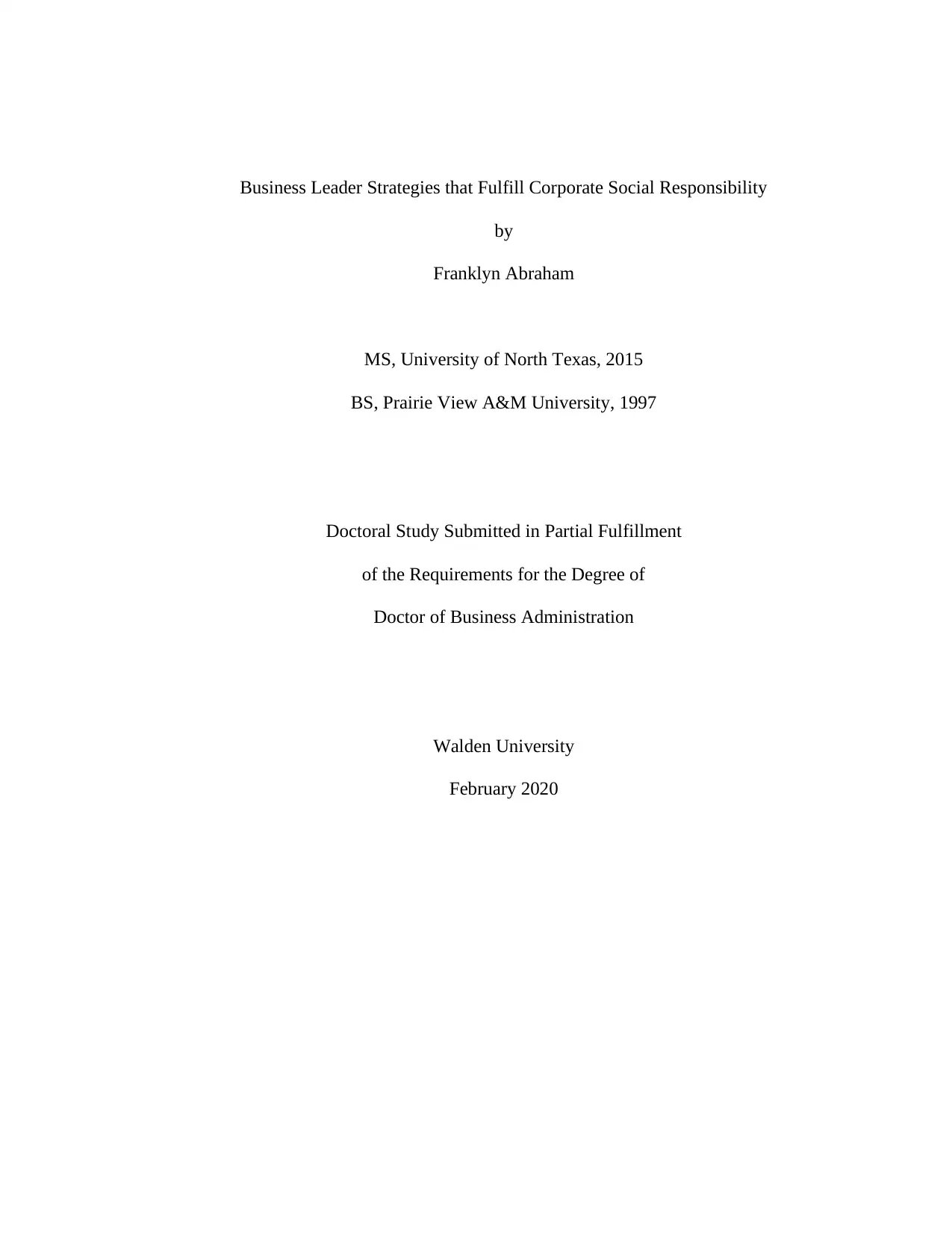
Business Leader Strategies that Fulfill Corporate Social Responsibility
by
Franklyn Abraham
MS, University of North Texas, 2015
BS, Prairie View A&M University, 1997
Doctoral Study Submitted in Partial Fulfillment
of the Requirements for the Degree of
Doctor of Business Administration
Walden University
February 2020
by
Franklyn Abraham
MS, University of North Texas, 2015
BS, Prairie View A&M University, 1997
Doctoral Study Submitted in Partial Fulfillment
of the Requirements for the Degree of
Doctor of Business Administration
Walden University
February 2020
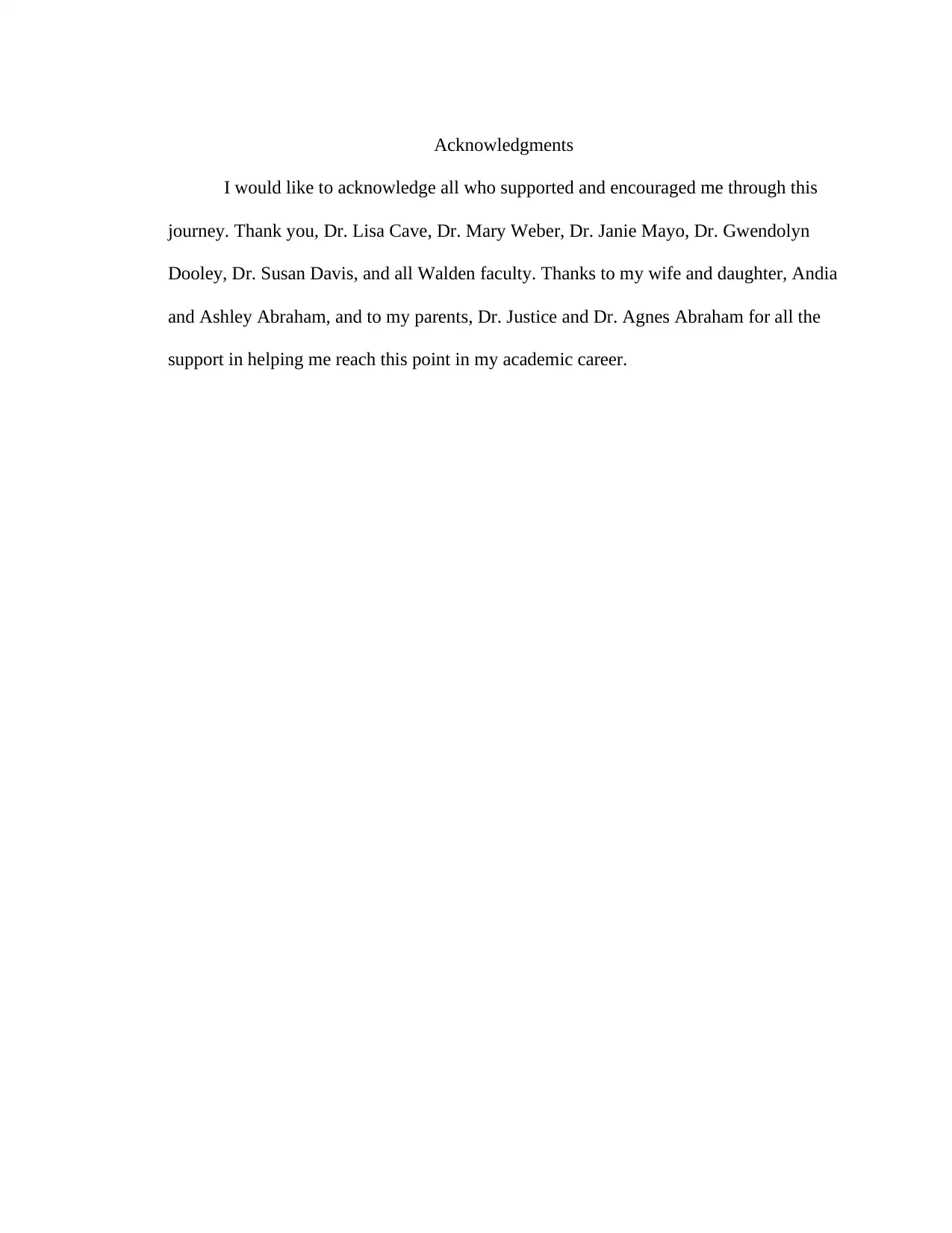
Acknowledgments
I would like to acknowledge all who supported and encouraged me through this
journey. Thank you, Dr. Lisa Cave, Dr. Mary Weber, Dr. Janie Mayo, Dr. Gwendolyn
Dooley, Dr. Susan Davis, and all Walden faculty. Thanks to my wife and daughter, Andia
and Ashley Abraham, and to my parents, Dr. Justice and Dr. Agnes Abraham for all the
support in helping me reach this point in my academic career.
I would like to acknowledge all who supported and encouraged me through this
journey. Thank you, Dr. Lisa Cave, Dr. Mary Weber, Dr. Janie Mayo, Dr. Gwendolyn
Dooley, Dr. Susan Davis, and all Walden faculty. Thanks to my wife and daughter, Andia
and Ashley Abraham, and to my parents, Dr. Justice and Dr. Agnes Abraham for all the
support in helping me reach this point in my academic career.
⊘ This is a preview!⊘
Do you want full access?
Subscribe today to unlock all pages.
Trusted by 1+ million students worldwide
i
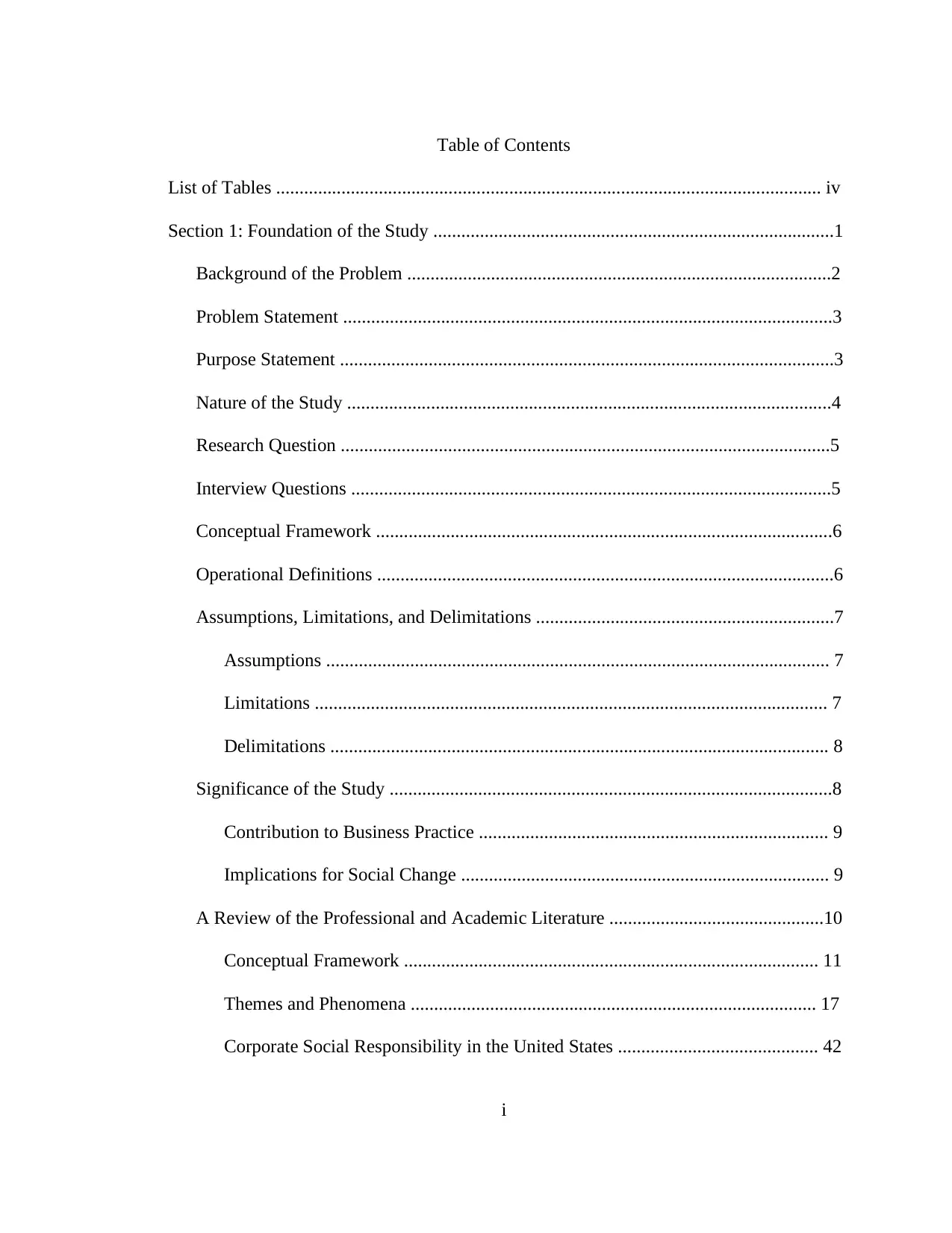
Table of Contents
List of Tables ..................................................................................................................... iv
Section 1: Foundation of the Study ......................................................................................1
Background of the Problem ...........................................................................................2
Problem Statement .........................................................................................................3
Purpose Statement ..........................................................................................................3
Nature of the Study ........................................................................................................4
Research Question .........................................................................................................5
Interview Questions .......................................................................................................5
Conceptual Framework ..................................................................................................6
Operational Definitions ..................................................................................................6
Assumptions, Limitations, and Delimitations ................................................................7
Assumptions ............................................................................................................ 7
Limitations .............................................................................................................. 7
Delimitations ........................................................................................................... 8
Significance of the Study ...............................................................................................8
Contribution to Business Practice ........................................................................... 9
Implications for Social Change ............................................................................... 9
A Review of the Professional and Academic Literature ..............................................10
Conceptual Framework ......................................................................................... 11
Themes and Phenomena ....................................................................................... 17
Corporate Social Responsibility in the United States ........................................... 42
Table of Contents
List of Tables ..................................................................................................................... iv
Section 1: Foundation of the Study ......................................................................................1
Background of the Problem ...........................................................................................2
Problem Statement .........................................................................................................3
Purpose Statement ..........................................................................................................3
Nature of the Study ........................................................................................................4
Research Question .........................................................................................................5
Interview Questions .......................................................................................................5
Conceptual Framework ..................................................................................................6
Operational Definitions ..................................................................................................6
Assumptions, Limitations, and Delimitations ................................................................7
Assumptions ............................................................................................................ 7
Limitations .............................................................................................................. 7
Delimitations ........................................................................................................... 8
Significance of the Study ...............................................................................................8
Contribution to Business Practice ........................................................................... 9
Implications for Social Change ............................................................................... 9
A Review of the Professional and Academic Literature ..............................................10
Conceptual Framework ......................................................................................... 11
Themes and Phenomena ....................................................................................... 17
Corporate Social Responsibility in the United States ........................................... 42
Paraphrase This Document
Need a fresh take? Get an instant paraphrase of this document with our AI Paraphraser
ii
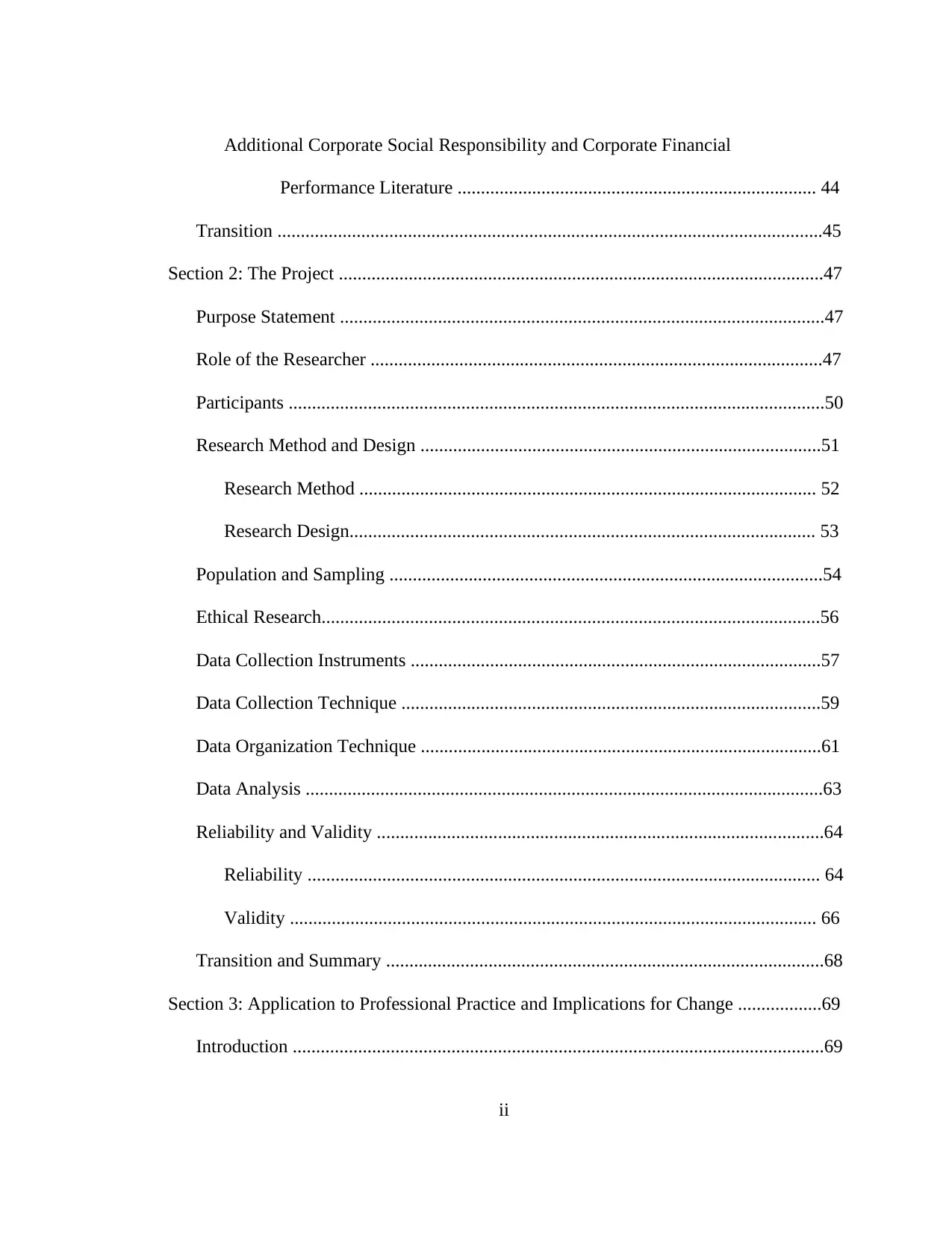
Additional Corporate Social Responsibility and Corporate Financial
Performance Literature ............................................................................. 44
Transition .....................................................................................................................45
Section 2: The Project ........................................................................................................47
Purpose Statement ........................................................................................................47
Role of the Researcher .................................................................................................47
Participants ...................................................................................................................50
Research Method and Design ......................................................................................51
Research Method .................................................................................................. 52
Research Design.................................................................................................... 53
Population and Sampling .............................................................................................54
Ethical Research...........................................................................................................56
Data Collection Instruments ........................................................................................57
Data Collection Technique ..........................................................................................59
Data Organization Technique ......................................................................................61
Data Analysis ...............................................................................................................63
Reliability and Validity ................................................................................................64
Reliability .............................................................................................................. 64
Validity ................................................................................................................. 66
Transition and Summary ..............................................................................................68
Section 3: Application to Professional Practice and Implications for Change ..................69
Introduction ..................................................................................................................69
Additional Corporate Social Responsibility and Corporate Financial
Performance Literature ............................................................................. 44
Transition .....................................................................................................................45
Section 2: The Project ........................................................................................................47
Purpose Statement ........................................................................................................47
Role of the Researcher .................................................................................................47
Participants ...................................................................................................................50
Research Method and Design ......................................................................................51
Research Method .................................................................................................. 52
Research Design.................................................................................................... 53
Population and Sampling .............................................................................................54
Ethical Research...........................................................................................................56
Data Collection Instruments ........................................................................................57
Data Collection Technique ..........................................................................................59
Data Organization Technique ......................................................................................61
Data Analysis ...............................................................................................................63
Reliability and Validity ................................................................................................64
Reliability .............................................................................................................. 64
Validity ................................................................................................................. 66
Transition and Summary ..............................................................................................68
Section 3: Application to Professional Practice and Implications for Change ..................69
Introduction ..................................................................................................................69
iii
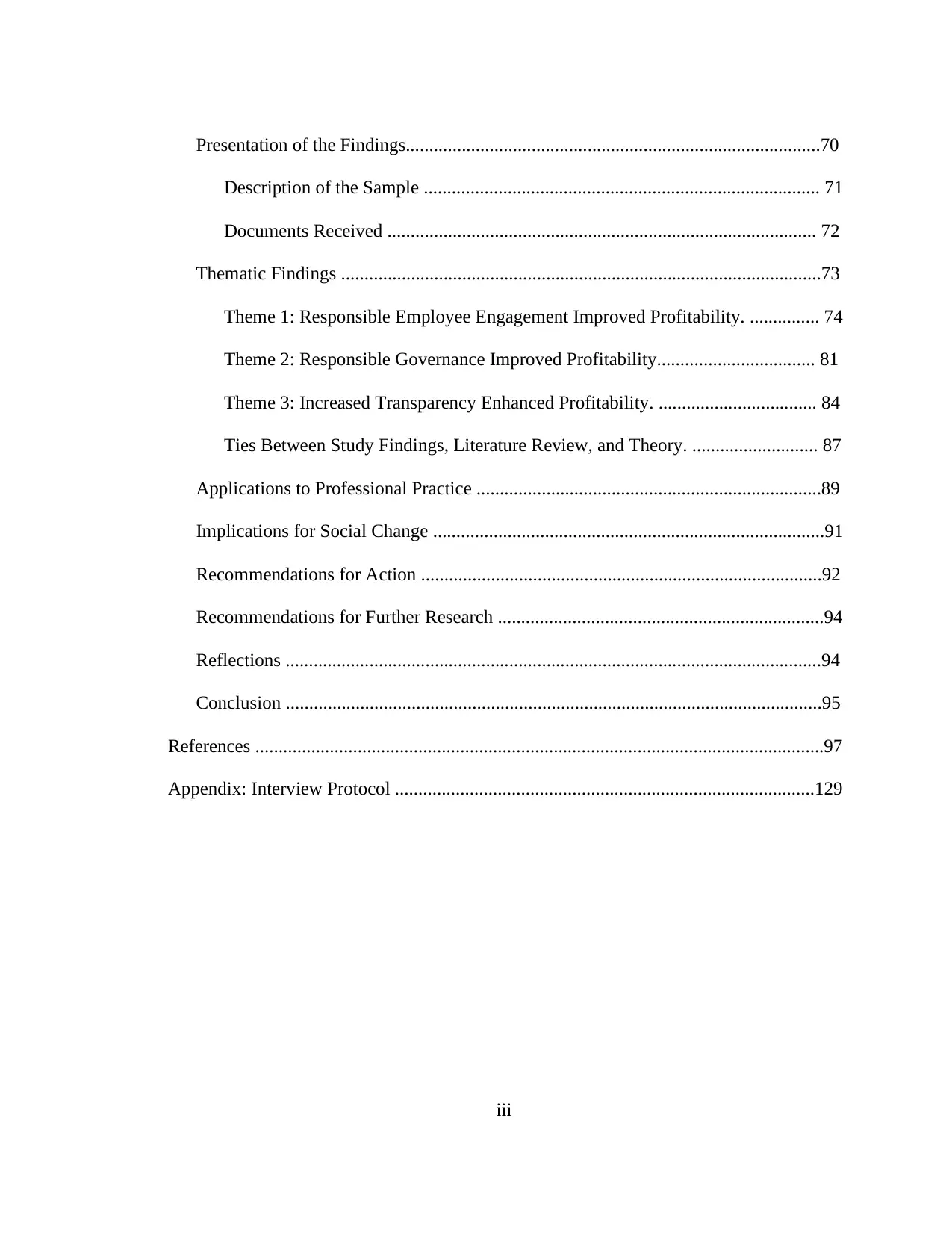
Presentation of the Findings.........................................................................................70
Description of the Sample ..................................................................................... 71
Documents Received ............................................................................................ 72
Thematic Findings .......................................................................................................73
Theme 1: Responsible Employee Engagement Improved Profitability. ............... 74
Theme 2: Responsible Governance Improved Profitability.................................. 81
Theme 3: Increased Transparency Enhanced Profitability. .................................. 84
Ties Between Study Findings, Literature Review, and Theory. ........................... 87
Applications to Professional Practice ..........................................................................89
Implications for Social Change ....................................................................................91
Recommendations for Action ......................................................................................92
Recommendations for Further Research ......................................................................94
Reflections ...................................................................................................................94
Conclusion ...................................................................................................................95
References ..........................................................................................................................97
Appendix: Interview Protocol ..........................................................................................129
Presentation of the Findings.........................................................................................70
Description of the Sample ..................................................................................... 71
Documents Received ............................................................................................ 72
Thematic Findings .......................................................................................................73
Theme 1: Responsible Employee Engagement Improved Profitability. ............... 74
Theme 2: Responsible Governance Improved Profitability.................................. 81
Theme 3: Increased Transparency Enhanced Profitability. .................................. 84
Ties Between Study Findings, Literature Review, and Theory. ........................... 87
Applications to Professional Practice ..........................................................................89
Implications for Social Change ....................................................................................91
Recommendations for Action ......................................................................................92
Recommendations for Further Research ......................................................................94
Reflections ...................................................................................................................94
Conclusion ...................................................................................................................95
References ..........................................................................................................................97
Appendix: Interview Protocol ..........................................................................................129
⊘ This is a preview!⊘
Do you want full access?
Subscribe today to unlock all pages.
Trusted by 1+ million students worldwide

iv
List of Tables
Table 1. Literature Review Source Content ......................................................................11
Table 2. Major Emergent Themes and Subthemes ...........................................................70
Table 3. Participant Years in Eligibility Criteria ..............................................................72
List of Tables
Table 1. Literature Review Source Content ......................................................................11
Table 2. Major Emergent Themes and Subthemes ...........................................................70
Table 3. Participant Years in Eligibility Criteria ..............................................................72
Paraphrase This Document
Need a fresh take? Get an instant paraphrase of this document with our AI Paraphraser
1
Section 1: Foundation of the Study
Business leaders leverage strategies over decades to improve performance. Griffin
and Molloy (2015) noted that the largest corporations in the United States can grow at a
faster pace than the general economy. The growth coupled with general competition
among firms may benefit the economic sector but may not always benefit society as a
whole. A historic example of the adverse effects of business growth was the global great
recession of 2008. The economic meltdown mainly blamed on corporate greed and
ethical problems affected not only corporations, but communities and the environment,
and started a debate on the need for corporate ethics and responsibility (Griffin &
Molloy, 2015).
The corporate social responsibility (CSR) versus profitability debate leads to a
general question: What strategies do business leaders use to achieve CSR activities that
result in increased profitability? To answer the question, I explored the strategies that
several business leaders employed to achieve CSR activities profitably. The elements of
Section 1 include the background of the problem, problem statement, purpose statement,
nature of the study, and research and interview questions. I review the conceptual
framework, operational definitions, assumptions, limitations, delimitations, and
significance of the study. I then present a review of the professional and academic
literature and the foundation of the study. I conclude with a summary and transition to
Chapter 2.
Section 1: Foundation of the Study
Business leaders leverage strategies over decades to improve performance. Griffin
and Molloy (2015) noted that the largest corporations in the United States can grow at a
faster pace than the general economy. The growth coupled with general competition
among firms may benefit the economic sector but may not always benefit society as a
whole. A historic example of the adverse effects of business growth was the global great
recession of 2008. The economic meltdown mainly blamed on corporate greed and
ethical problems affected not only corporations, but communities and the environment,
and started a debate on the need for corporate ethics and responsibility (Griffin &
Molloy, 2015).
The corporate social responsibility (CSR) versus profitability debate leads to a
general question: What strategies do business leaders use to achieve CSR activities that
result in increased profitability? To answer the question, I explored the strategies that
several business leaders employed to achieve CSR activities profitably. The elements of
Section 1 include the background of the problem, problem statement, purpose statement,
nature of the study, and research and interview questions. I review the conceptual
framework, operational definitions, assumptions, limitations, delimitations, and
significance of the study. I then present a review of the professional and academic
literature and the foundation of the study. I conclude with a summary and transition to
Chapter 2.
2
Background of the Problem
Business leaders historically used CSR models to become socially accountable to
stakeholders and the community in the absence of regulatory oversight or intervention
from external bodies. CSR was once a voluntary moral business obligation that became
an integral part of strategic planning resulting from increased demands from consumers
and governmental regulators (Miller, 2016). According to Boulouta and Pitelas (2014),
successful CSR strategies increase a company’s competitiveness. Agan, Kuzey, Acar, and
Açıkgöz (2016) and Rhou, Singal, and Koh (2016) also concluded that CSR has a
positive influence on the profitability and competitive advantage of responsible firms.
Karim, SangHyun, Carter, and Mo (2015) characterized CSR practices as having a net
positive impact on business. Šontaitė-Petkevičienė (2015) further suggested that business
leaders who failed to engage in CSR compromise organizational profitability. However,
many of the largest companies worldwide that reported CSR activities in 2015 lacked
strategies to achieve CSR promises, resulting in lower corporate profits (Thorne,
Mahoney, Gregory, & Convery, 2015). There is a need for CSR strategies that business
leaders can implement to increase profitability because the lack of strategies creates a
void.
According to Euchner (2016), business leaders constantly explore tools and seek
ways to align corporate initiatives with profitability goals. Leaders may find strategic
business decisions especially challenging when CSR and financial measures point in
opposing directions (Bento, Mertins, & White, 2017). Given the findings of value in
engaging in CSR, leaders need strategies to justify and implement CSR in business. CSR
Background of the Problem
Business leaders historically used CSR models to become socially accountable to
stakeholders and the community in the absence of regulatory oversight or intervention
from external bodies. CSR was once a voluntary moral business obligation that became
an integral part of strategic planning resulting from increased demands from consumers
and governmental regulators (Miller, 2016). According to Boulouta and Pitelas (2014),
successful CSR strategies increase a company’s competitiveness. Agan, Kuzey, Acar, and
Açıkgöz (2016) and Rhou, Singal, and Koh (2016) also concluded that CSR has a
positive influence on the profitability and competitive advantage of responsible firms.
Karim, SangHyun, Carter, and Mo (2015) characterized CSR practices as having a net
positive impact on business. Šontaitė-Petkevičienė (2015) further suggested that business
leaders who failed to engage in CSR compromise organizational profitability. However,
many of the largest companies worldwide that reported CSR activities in 2015 lacked
strategies to achieve CSR promises, resulting in lower corporate profits (Thorne,
Mahoney, Gregory, & Convery, 2015). There is a need for CSR strategies that business
leaders can implement to increase profitability because the lack of strategies creates a
void.
According to Euchner (2016), business leaders constantly explore tools and seek
ways to align corporate initiatives with profitability goals. Leaders may find strategic
business decisions especially challenging when CSR and financial measures point in
opposing directions (Bento, Mertins, & White, 2017). Given the findings of value in
engaging in CSR, leaders need strategies to justify and implement CSR in business. CSR
⊘ This is a preview!⊘
Do you want full access?
Subscribe today to unlock all pages.
Trusted by 1+ million students worldwide

1 out of 141


Related Documents


Your All-in-One AI-Powered Toolkit for Academic Success.
+13062052269
info@desklib.com
Available 24*7 on WhatsApp / Email
![[object Object]](/_next/static/media/star-bottom.7253800d.svg)
Unlock your academic potential
Copyright © 2020–2026 A2Z Services. All Rights Reserved. Developed and managed by ZUCOL.