Analysis of Business Operations in Rental Property Management
VerifiedAdded on 2023/06/09
|11
|1817
|431
Report
AI Summary
This report provides a comprehensive analysis of business operations within the context of rental property management. It begins by exploring the measurement of operational aspects, emphasizing the use of benchmarking to evaluate performance and identify areas for improvement. The report then delves into the structure of operations, examining different ownership models and their implications. A significant portion is dedicated to supply chain management, covering aspects such as managing properties and assets, forecasting demand, and streamlining logistics. The value chain is also analyzed, outlining the roles of suppliers, factories, warehouses, distributors, and technical support centers. Quality control aspects are discussed, highlighting the importance of adhering to industry standards. Finally, the report examines the role of technology in real estate operations, including the use of PropTech to enhance efficiency and investment strategies. The conclusion summarizes the key findings and emphasizes the importance of integrating various operational elements for success.

Running head: BUSINESS OPERATIONS
Business Operations
Name of Student:
Name of University:
Author’s Note:
Business Operations
Name of Student:
Name of University:
Author’s Note:
Paraphrase This Document
Need a fresh take? Get an instant paraphrase of this document with our AI Paraphraser

1BUSINESS OPERATIONS
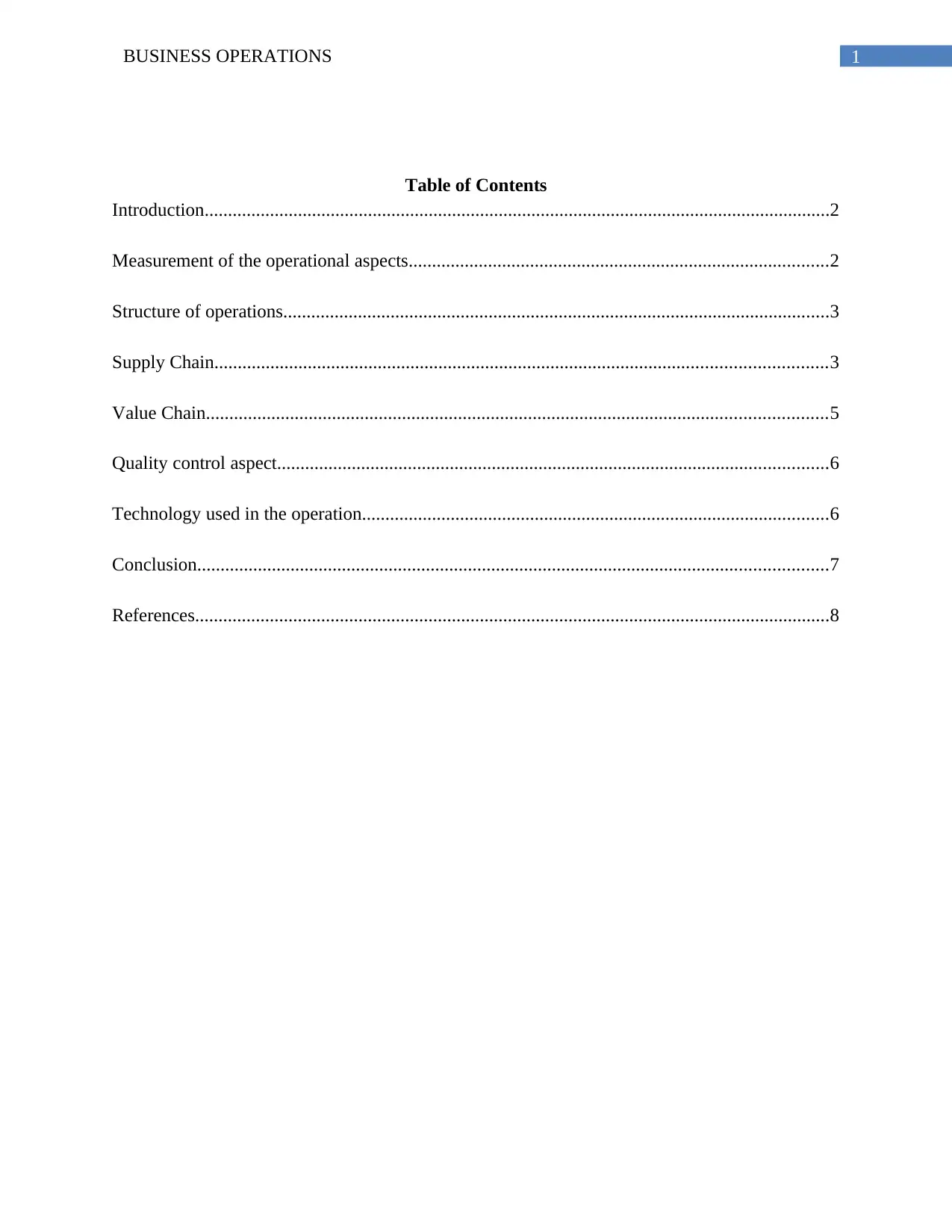
Table of Contents
Introduction......................................................................................................................................2
Measurement of the operational aspects..........................................................................................2
Structure of operations.....................................................................................................................3
Supply Chain...................................................................................................................................3
Value Chain.....................................................................................................................................5
Quality control aspect......................................................................................................................6
Technology used in the operation....................................................................................................6
Conclusion.......................................................................................................................................7
References........................................................................................................................................8
Table of Contents
Introduction......................................................................................................................................2
Measurement of the operational aspects..........................................................................................2
Structure of operations.....................................................................................................................3
Supply Chain...................................................................................................................................3
Value Chain.....................................................................................................................................5
Quality control aspect......................................................................................................................6
Technology used in the operation....................................................................................................6
Conclusion.......................................................................................................................................7
References........................................................................................................................................8

2BUSINESS OPERATIONS
Introduction
Rental property management is depicted to specialize in terms of the property
management. Irrespective of the total number of the rental homes owned the real property
management is designed for saving the money at each stage. Several clients of the company have
put stress on the interruptions to the homeowners such as owners with single property or unable
to sell property or relocate.
The study will depict the blueprint which will measure operational aspects in Rental
property management. Some of the other aspects of the report will include structure of the
operations, value chain and quality control along technology implemented in operation. The
value generated will include the configurations of resources such as suppliers, factories,
warehouses, distributors, technical support centres, engineering design and sales offices
(Direction, 2018).
Measurement of the operational aspects
The use of benchmarking facility is seen to be most appropriate for the measurement of
the real estate performance which is applicable in the efficient and sustainable maintenance
management of the existing facilities. The operational aspects of the performance will be
measured in terms of various types of the tools such as demonstrating the appropriate
methodology of the facility management benchmarking system. This will begin with the
evaluation of the internal evaluation thereby comparing the performance in Rental property
management over the years. This method of the measurement of the operational aspects of the
property will be conducive in reviewing the property portfolio for the acquisition and disposal
Introduction
Rental property management is depicted to specialize in terms of the property
management. Irrespective of the total number of the rental homes owned the real property
management is designed for saving the money at each stage. Several clients of the company have
put stress on the interruptions to the homeowners such as owners with single property or unable
to sell property or relocate.
The study will depict the blueprint which will measure operational aspects in Rental
property management. Some of the other aspects of the report will include structure of the
operations, value chain and quality control along technology implemented in operation. The
value generated will include the configurations of resources such as suppliers, factories,
warehouses, distributors, technical support centres, engineering design and sales offices
(Direction, 2018).
Measurement of the operational aspects
The use of benchmarking facility is seen to be most appropriate for the measurement of
the real estate performance which is applicable in the efficient and sustainable maintenance
management of the existing facilities. The operational aspects of the performance will be
measured in terms of various types of the tools such as demonstrating the appropriate
methodology of the facility management benchmarking system. This will begin with the
evaluation of the internal evaluation thereby comparing the performance in Rental property
management over the years. This method of the measurement of the operational aspects of the
property will be conducive in reviewing the property portfolio for the acquisition and disposal
⊘ This is a preview!⊘
Do you want full access?
Subscribe today to unlock all pages.

Trusted by 1+ million students worldwide

3BUSINESS OPERATIONS
purposes (Tucker, Masuri and Cotgrave 2017). This model will be also able to compare the
various properties for estimating the improvement potential in the properties. The use of
benchmarking will be also helpful for the company in setting the standards which are seen to be
related to setting the standards for a specific performance and raising the expectations through
shared practices (Direction, 2018).
Structure of operations
The structure for the operations is segregated across four main options. These relates to
the sole ownership, partnership, company and trust. The sole ownership is determined to be
depicted in terms of the income generation for the property in case it is expected to make a loss.
In this manner, it has been depicted that the residential values of the property are seen to be
based on the several types of the depiction related to the generation of the profits. The
partnership structure is related to the funding considered with the funding from the joint banking
account. Despite of this, the partnership can be unequal. The main structure for operations is
depicted with company. In this aspect, it is easy to rearrange ownership and change the
shareholding percentage. The operations measurements will also consider tax benefits which
limited liability (Jmv.co.nz, 2018).
Supply Chain
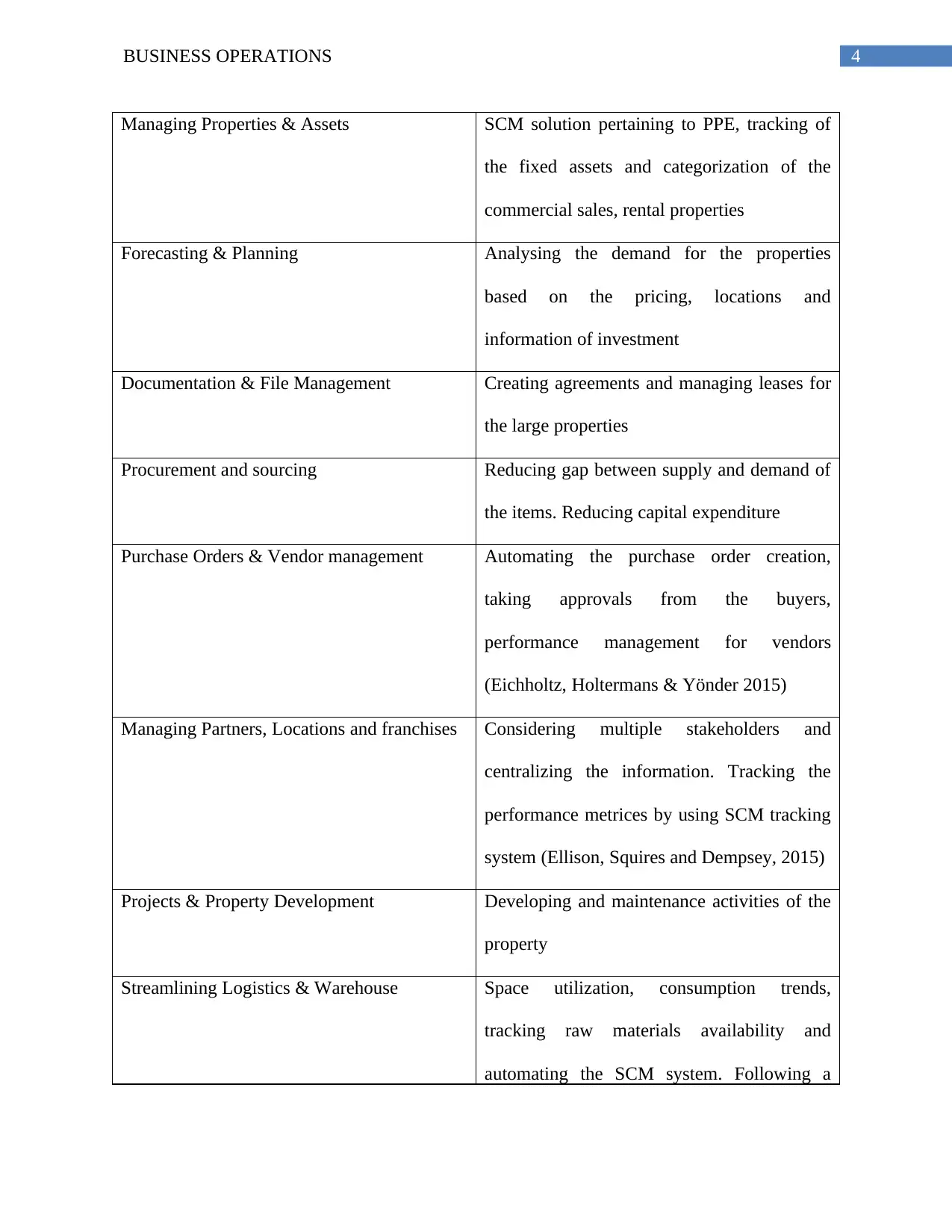
The supply chain management related to the property is considered with the managing of
properties and assets, forecasting and planning of the property demand. Some of the other
aspects of the SCM is taken into account with the documentation, sourcing, procurement, vendor
management, managing partners and property development opportunities.
purposes (Tucker, Masuri and Cotgrave 2017). This model will be also able to compare the
various properties for estimating the improvement potential in the properties. The use of
benchmarking will be also helpful for the company in setting the standards which are seen to be
related to setting the standards for a specific performance and raising the expectations through
shared practices (Direction, 2018).
Structure of operations
The structure for the operations is segregated across four main options. These relates to
the sole ownership, partnership, company and trust. The sole ownership is determined to be
depicted in terms of the income generation for the property in case it is expected to make a loss.
In this manner, it has been depicted that the residential values of the property are seen to be
based on the several types of the depiction related to the generation of the profits. The
partnership structure is related to the funding considered with the funding from the joint banking
account. Despite of this, the partnership can be unequal. The main structure for operations is
depicted with company. In this aspect, it is easy to rearrange ownership and change the
shareholding percentage. The operations measurements will also consider tax benefits which
limited liability (Jmv.co.nz, 2018).
Supply Chain
The supply chain management related to the property is considered with the managing of
properties and assets, forecasting and planning of the property demand. Some of the other
aspects of the SCM is taken into account with the documentation, sourcing, procurement, vendor
management, managing partners and property development opportunities.
Paraphrase This Document
Need a fresh take? Get an instant paraphrase of this document with our AI Paraphraser

4BUSINESS OPERATIONS
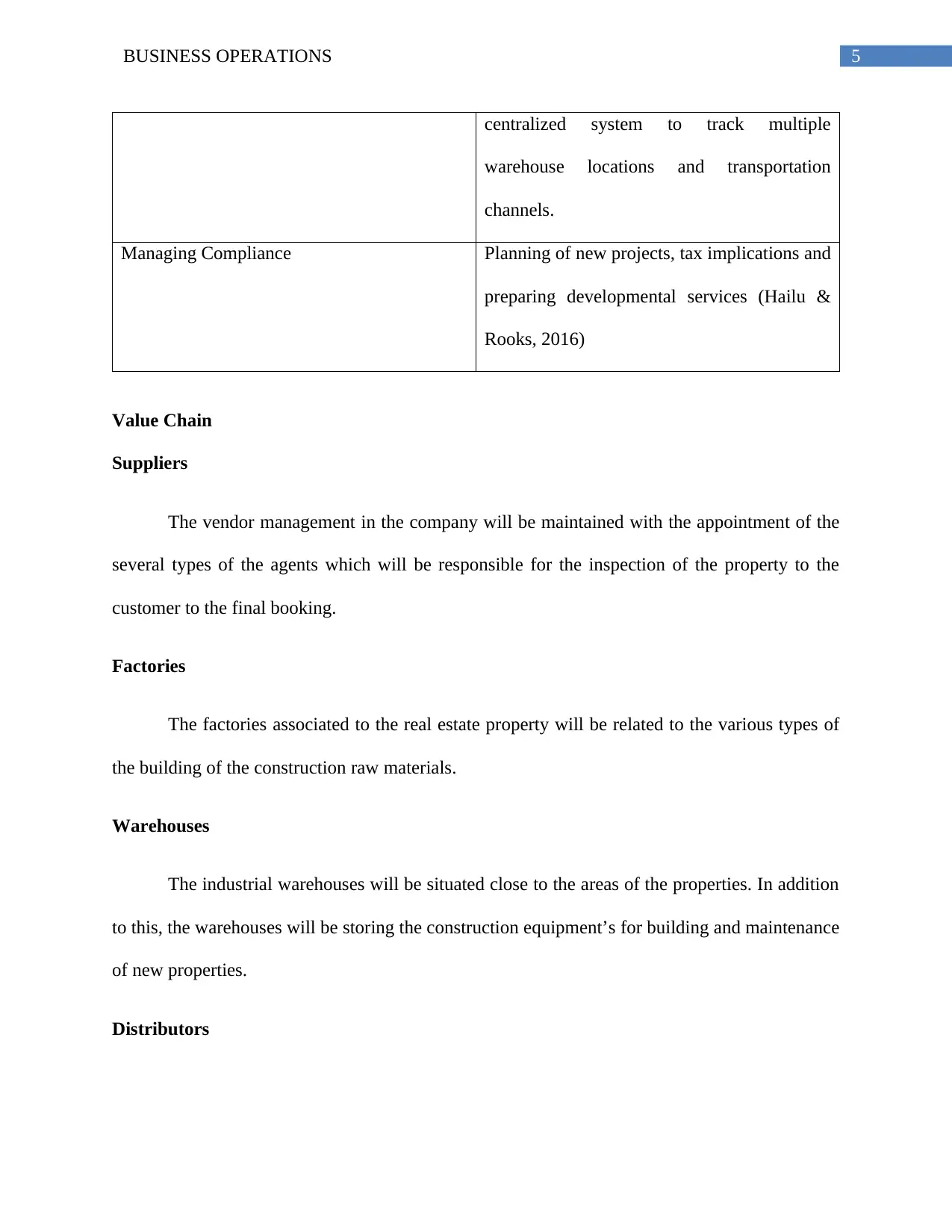
Managing Properties & Assets SCM solution pertaining to PPE, tracking of
the fixed assets and categorization of the
commercial sales, rental properties
Forecasting & Planning Analysing the demand for the properties
based on the pricing, locations and
information of investment
Documentation & File Management Creating agreements and managing leases for
the large properties
Procurement and sourcing Reducing gap between supply and demand of
the items. Reducing capital expenditure
Purchase Orders & Vendor management Automating the purchase order creation,
taking approvals from the buyers,
performance management for vendors
(Eichholtz, Holtermans & Yönder 2015)
Managing Partners, Locations and franchises Considering multiple stakeholders and
centralizing the information. Tracking the
performance metrices by using SCM tracking
system (Ellison, Squires and Dempsey, 2015)
Projects & Property Development Developing and maintenance activities of the
property
Streamlining Logistics & Warehouse Space utilization, consumption trends,
tracking raw materials availability and
automating the SCM system. Following a
Managing Properties & Assets SCM solution pertaining to PPE, tracking of
the fixed assets and categorization of the
commercial sales, rental properties
Forecasting & Planning Analysing the demand for the properties
based on the pricing, locations and
information of investment
Documentation & File Management Creating agreements and managing leases for
the large properties
Procurement and sourcing Reducing gap between supply and demand of
the items. Reducing capital expenditure
Purchase Orders & Vendor management Automating the purchase order creation,
taking approvals from the buyers,
performance management for vendors
(Eichholtz, Holtermans & Yönder 2015)
Managing Partners, Locations and franchises Considering multiple stakeholders and
centralizing the information. Tracking the
performance metrices by using SCM tracking
system (Ellison, Squires and Dempsey, 2015)
Projects & Property Development Developing and maintenance activities of the
property
Streamlining Logistics & Warehouse Space utilization, consumption trends,
tracking raw materials availability and
automating the SCM system. Following a

5BUSINESS OPERATIONS
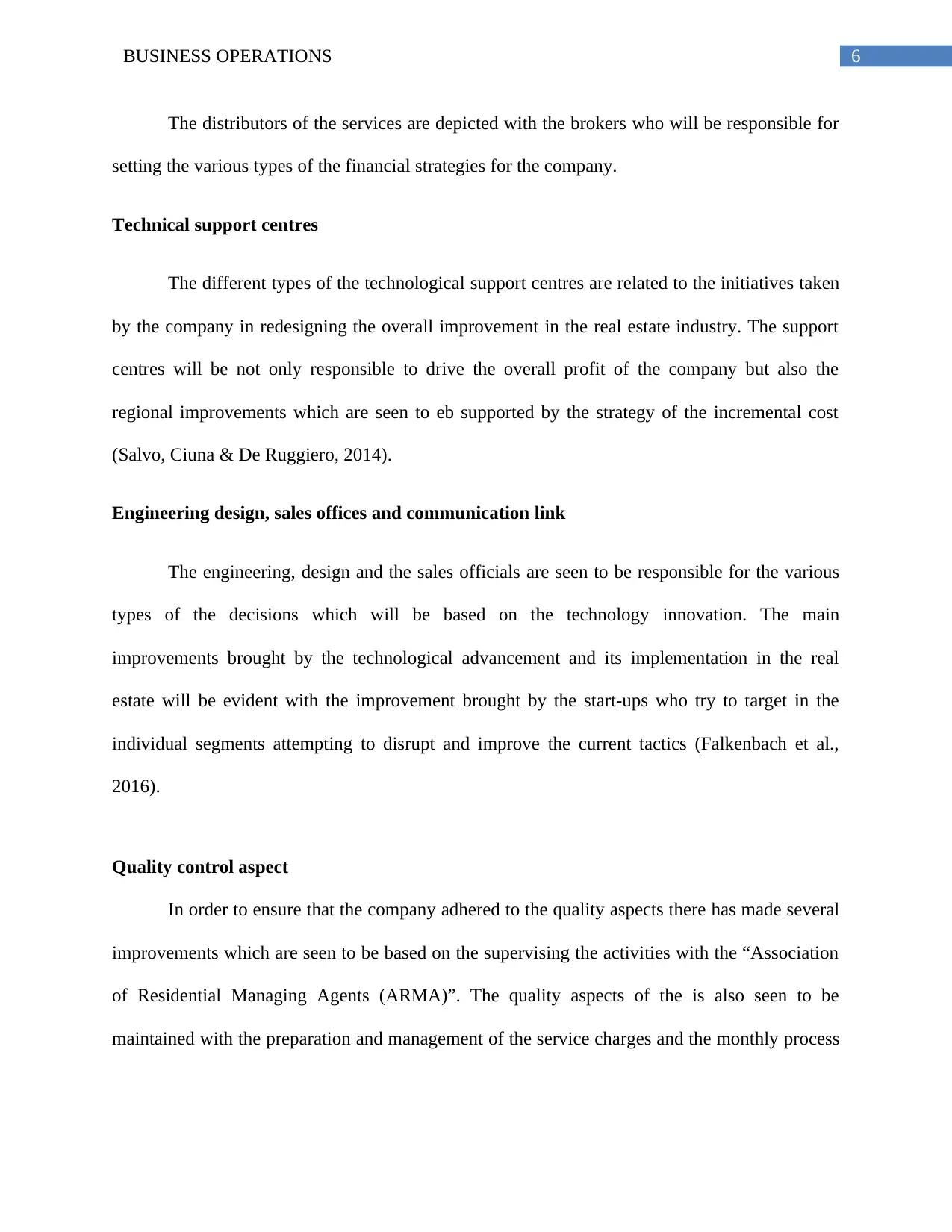
centralized system to track multiple
warehouse locations and transportation
channels.
Managing Compliance Planning of new projects, tax implications and
preparing developmental services (Hailu &
Rooks, 2016)
Value Chain
Suppliers
The vendor management in the company will be maintained with the appointment of the
several types of the agents which will be responsible for the inspection of the property to the
customer to the final booking.
Factories
The factories associated to the real estate property will be related to the various types of
the building of the construction raw materials.
Warehouses
The industrial warehouses will be situated close to the areas of the properties. In addition
to this, the warehouses will be storing the construction equipment’s for building and maintenance
of new properties.
Distributors
centralized system to track multiple
warehouse locations and transportation
channels.
Managing Compliance Planning of new projects, tax implications and
preparing developmental services (Hailu &
Rooks, 2016)
Value Chain
Suppliers
The vendor management in the company will be maintained with the appointment of the
several types of the agents which will be responsible for the inspection of the property to the
customer to the final booking.
Factories
The factories associated to the real estate property will be related to the various types of
the building of the construction raw materials.
Warehouses
The industrial warehouses will be situated close to the areas of the properties. In addition
to this, the warehouses will be storing the construction equipment’s for building and maintenance
of new properties.
Distributors
⊘ This is a preview!⊘
Do you want full access?
Subscribe today to unlock all pages.

Trusted by 1+ million students worldwide

6BUSINESS OPERATIONS
The distributors of the services are depicted with the brokers who will be responsible for
setting the various types of the financial strategies for the company.
Technical support centres
The different types of the technological support centres are related to the initiatives taken
by the company in redesigning the overall improvement in the real estate industry. The support
centres will be not only responsible to drive the overall profit of the company but also the
regional improvements which are seen to eb supported by the strategy of the incremental cost
(Salvo, Ciuna & De Ruggiero, 2014).
Engineering design, sales offices and communication link
The engineering, design and the sales officials are seen to be responsible for the various
types of the decisions which will be based on the technology innovation. The main
improvements brought by the technological advancement and its implementation in the real
estate will be evident with the improvement brought by the start-ups who try to target in the
individual segments attempting to disrupt and improve the current tactics (Falkenbach et al.,
2016).
Quality control aspect
In order to ensure that the company adhered to the quality aspects there has made several
improvements which are seen to be based on the supervising the activities with the “Association
of Residential Managing Agents (ARMA)”. The quality aspects of the is also seen to be
maintained with the preparation and management of the service charges and the monthly process
The distributors of the services are depicted with the brokers who will be responsible for
setting the various types of the financial strategies for the company.
Technical support centres
The different types of the technological support centres are related to the initiatives taken
by the company in redesigning the overall improvement in the real estate industry. The support
centres will be not only responsible to drive the overall profit of the company but also the
regional improvements which are seen to eb supported by the strategy of the incremental cost
(Salvo, Ciuna & De Ruggiero, 2014).
Engineering design, sales offices and communication link
The engineering, design and the sales officials are seen to be responsible for the various
types of the decisions which will be based on the technology innovation. The main
improvements brought by the technological advancement and its implementation in the real
estate will be evident with the improvement brought by the start-ups who try to target in the
individual segments attempting to disrupt and improve the current tactics (Falkenbach et al.,
2016).
Quality control aspect
In order to ensure that the company adhered to the quality aspects there has made several
improvements which are seen to be based on the supervising the activities with the “Association
of Residential Managing Agents (ARMA)”. The quality aspects of the is also seen to be
maintained with the preparation and management of the service charges and the monthly process
Paraphrase This Document
Need a fresh take? Get an instant paraphrase of this document with our AI Paraphraser

7BUSINESS OPERATIONS
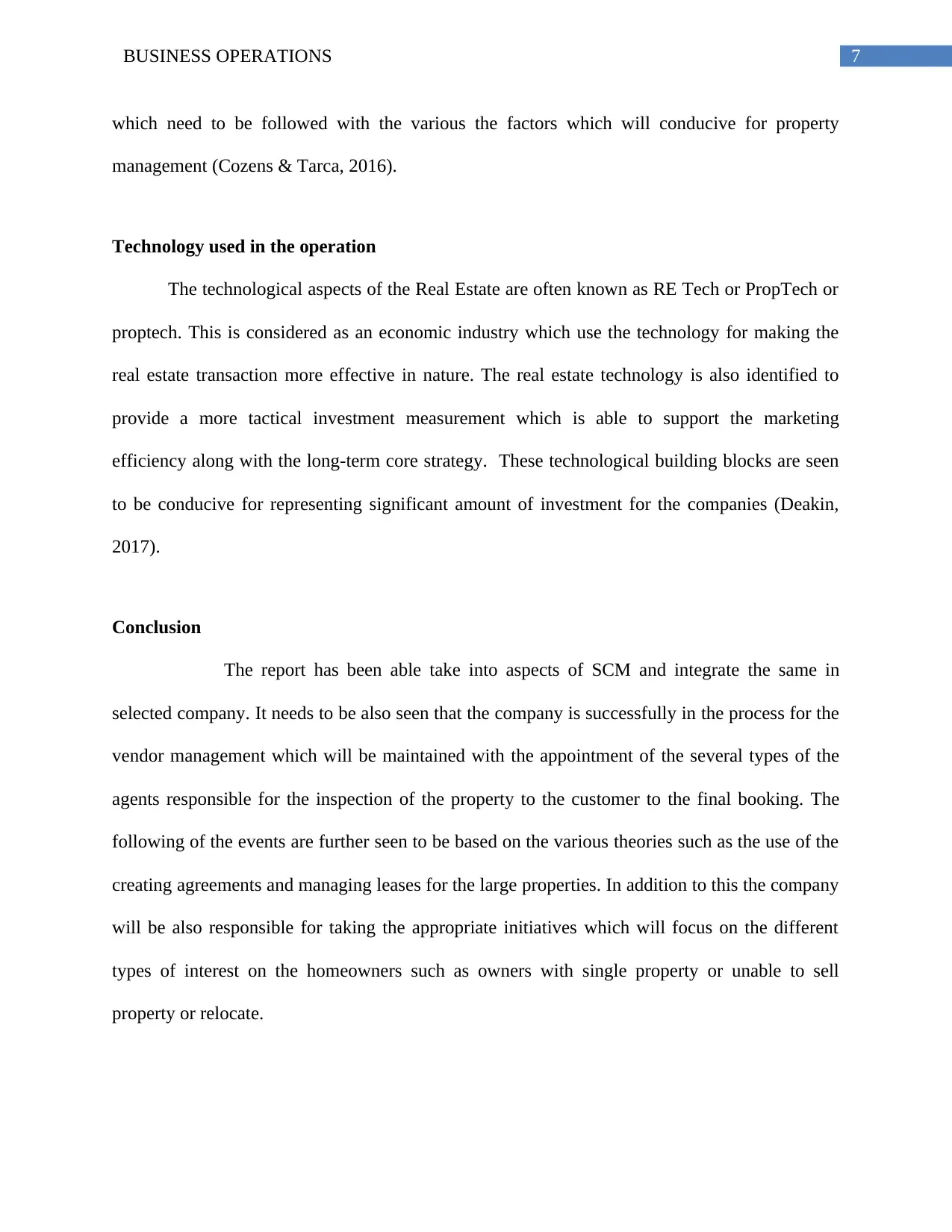
which need to be followed with the various the factors which will conducive for property
management (Cozens & Tarca, 2016).
Technology used in the operation
The technological aspects of the Real Estate are often known as RE Tech or PropTech or
proptech. This is considered as an economic industry which use the technology for making the
real estate transaction more effective in nature. The real estate technology is also identified to
provide a more tactical investment measurement which is able to support the marketing
efficiency along with the long-term core strategy. These technological building blocks are seen
to be conducive for representing significant amount of investment for the companies (Deakin,
2017).
Conclusion
The report has been able take into aspects of SCM and integrate the same in
selected company. It needs to be also seen that the company is successfully in the process for the
vendor management which will be maintained with the appointment of the several types of the
agents responsible for the inspection of the property to the customer to the final booking. The
following of the events are further seen to be based on the various theories such as the use of the
creating agreements and managing leases for the large properties. In addition to this the company
will be also responsible for taking the appropriate initiatives which will focus on the different
types of interest on the homeowners such as owners with single property or unable to sell
property or relocate.
which need to be followed with the various the factors which will conducive for property
management (Cozens & Tarca, 2016).
Technology used in the operation
The technological aspects of the Real Estate are often known as RE Tech or PropTech or
proptech. This is considered as an economic industry which use the technology for making the
real estate transaction more effective in nature. The real estate technology is also identified to
provide a more tactical investment measurement which is able to support the marketing
efficiency along with the long-term core strategy. These technological building blocks are seen
to be conducive for representing significant amount of investment for the companies (Deakin,
2017).
Conclusion
The report has been able take into aspects of SCM and integrate the same in
selected company. It needs to be also seen that the company is successfully in the process for the
vendor management which will be maintained with the appointment of the several types of the
agents responsible for the inspection of the property to the customer to the final booking. The
following of the events are further seen to be based on the various theories such as the use of the
creating agreements and managing leases for the large properties. In addition to this the company
will be also responsible for taking the appropriate initiatives which will focus on the different
types of interest on the homeowners such as owners with single property or unable to sell
property or relocate.

8BUSINESS OPERATIONS
⊘ This is a preview!⊘
Do you want full access?
Subscribe today to unlock all pages.

Trusted by 1+ million students worldwide

9BUSINESS OPERATIONS
References
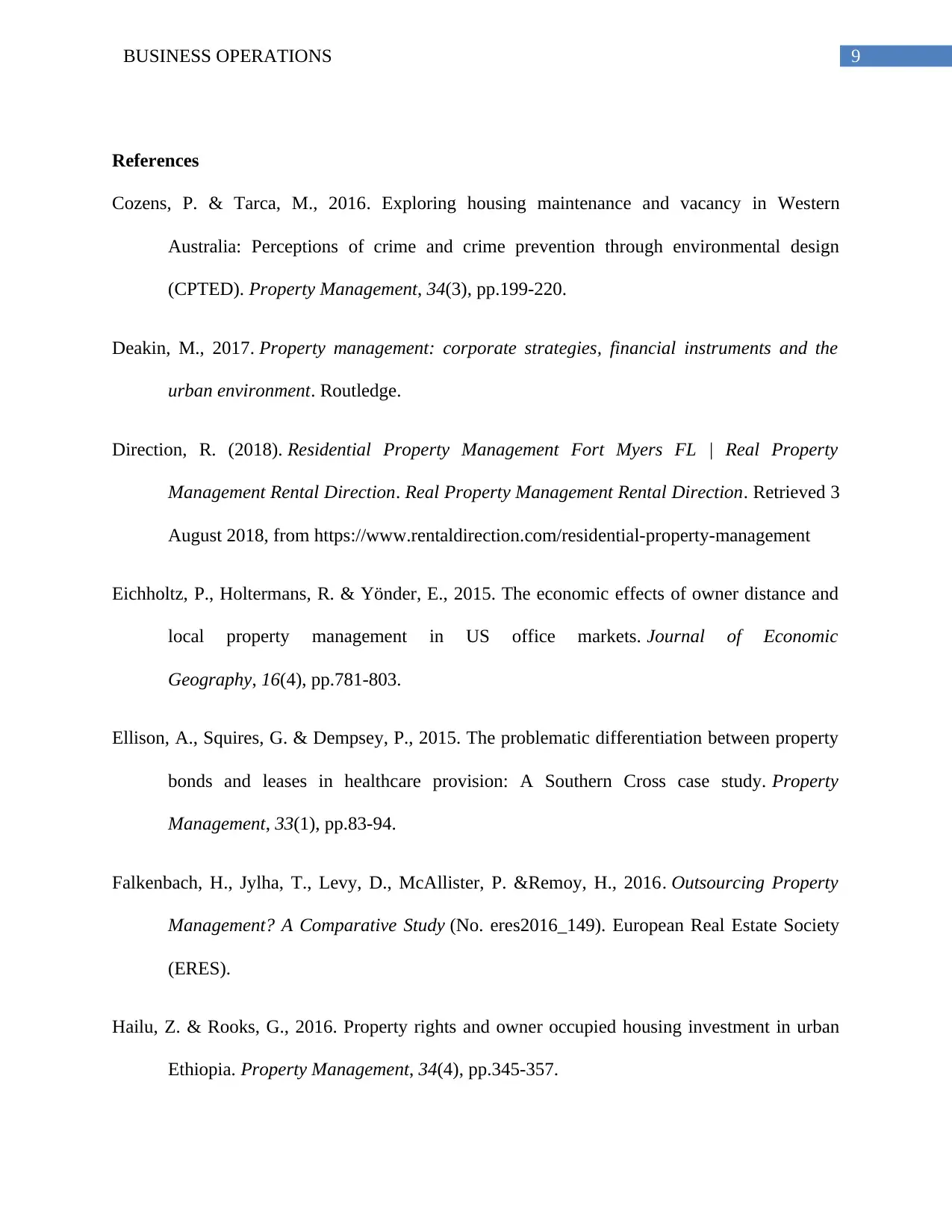
Cozens, P. & Tarca, M., 2016. Exploring housing maintenance and vacancy in Western
Australia: Perceptions of crime and crime prevention through environmental design
(CPTED). Property Management, 34(3), pp.199-220.
Deakin, M., 2017. Property management: corporate strategies, financial instruments and the
urban environment. Routledge.
Direction, R. (2018). Residential Property Management Fort Myers FL | Real Property
Management Rental Direction. Real Property Management Rental Direction. Retrieved 3
August 2018, from https://www.rentaldirection.com/residential-property-management
Eichholtz, P., Holtermans, R. & Yönder, E., 2015. The economic effects of owner distance and
local property management in US office markets. Journal of Economic
Geography, 16(4), pp.781-803.
Ellison, A., Squires, G. & Dempsey, P., 2015. The problematic differentiation between property
bonds and leases in healthcare provision: A Southern Cross case study. Property
Management, 33(1), pp.83-94.
Falkenbach, H., Jylha, T., Levy, D., McAllister, P. &Remoy, H., 2016. Outsourcing Property
Management? A Comparative Study (No. eres2016_149). European Real Estate Society
(ERES).
Hailu, Z. & Rooks, G., 2016. Property rights and owner occupied housing investment in urban
Ethiopia. Property Management, 34(4), pp.345-357.
References
Cozens, P. & Tarca, M., 2016. Exploring housing maintenance and vacancy in Western
Australia: Perceptions of crime and crime prevention through environmental design
(CPTED). Property Management, 34(3), pp.199-220.
Deakin, M., 2017. Property management: corporate strategies, financial instruments and the
urban environment. Routledge.
Direction, R. (2018). Residential Property Management Fort Myers FL | Real Property
Management Rental Direction. Real Property Management Rental Direction. Retrieved 3
August 2018, from https://www.rentaldirection.com/residential-property-management
Eichholtz, P., Holtermans, R. & Yönder, E., 2015. The economic effects of owner distance and
local property management in US office markets. Journal of Economic
Geography, 16(4), pp.781-803.
Ellison, A., Squires, G. & Dempsey, P., 2015. The problematic differentiation between property
bonds and leases in healthcare provision: A Southern Cross case study. Property
Management, 33(1), pp.83-94.
Falkenbach, H., Jylha, T., Levy, D., McAllister, P. &Remoy, H., 2016. Outsourcing Property
Management? A Comparative Study (No. eres2016_149). European Real Estate Society
(ERES).
Hailu, Z. & Rooks, G., 2016. Property rights and owner occupied housing investment in urban
Ethiopia. Property Management, 34(4), pp.345-357.
Paraphrase This Document
Need a fresh take? Get an instant paraphrase of this document with our AI Paraphraser

10BUSINESS OPERATIONS
Jmv.co.nz. (2018). Residential rental property. [online] Available at:
http://www.jmv.co.nz/Publications/Residential+rental+property.html [Accessed 4 Aug.
2018].
Salvo, F., Ciuna, M. & De Ruggiero, M., 2014. Property prices index numbers and derived
indices. Property management, 32(2), pp.139-153.
Tucker, M.P., Masuri, M.R.A. & Cotgrave, A., 2017. Critical strategic issues for the integration
of facilities management into the development process. Property Management, 35(4),
pp.380-393.
Jmv.co.nz. (2018). Residential rental property. [online] Available at:
http://www.jmv.co.nz/Publications/Residential+rental+property.html [Accessed 4 Aug.
2018].
Salvo, F., Ciuna, M. & De Ruggiero, M., 2014. Property prices index numbers and derived
indices. Property management, 32(2), pp.139-153.
Tucker, M.P., Masuri, M.R.A. & Cotgrave, A., 2017. Critical strategic issues for the integration
of facilities management into the development process. Property Management, 35(4),
pp.380-393.
1 out of 11
Related Documents
Your All-in-One AI-Powered Toolkit for Academic Success.
+13062052269
info@desklib.com
Available 24*7 on WhatsApp / Email
Unlock your academic potential
Copyright © 2020–2026 A2Z Services. All Rights Reserved. Developed and managed by ZUCOL.