Business Plan for G.S. Cements Cement Manufacturing Company
VerifiedAdded on 2022/09/09
|14
|2921
|26
Project
AI Summary
This business plan outlines the strategy for G.S. Cements, a cement manufacturing company targeting the UK market. The plan details key business information, including legal status and ownership, and outlines short-term and long-term objectives. It includes a comprehensive marketing plan with market analysis, objectives, target market identification, and a marketing mix. Business operations, including strengths, weaknesses, opportunities, and threats (SWOT), are also analyzed. The financial section provides projected revenue, expenses, and profitability. The feasibility analysis assesses the potential for success. The plan emphasizes high-quality products, competitive pricing, and strategic market positioning. The company aims to achieve profitability within the first year and expand its market presence through both online and offline marketing campaigns. The plan projects financial statements and analyzes cash flow, demonstrating the potential for sustainable growth and positive returns.
RUNNING HEAD: Management of Firm
Management of Firm
Management of Firm

Paraphrase This Document
Need a fresh take? Get an instant paraphrase of this document with our AI Paraphraser
Management of Firm 1
Management of Firm 2
Contents
Introduction......................................................................................................................................3
Key Business Information...............................................................................................................3
Business Position and Long Term Strategy.....................................................................................3
Marketing Plan.................................................................................................................................4
Business Operation..........................................................................................................................7
Financial Accounts & Statements....................................................................................................8
Feasibility Analysis.........................................................................................................................9
References......................................................................................................................................10
Appendices....................................................................................................................................12
Contents
Introduction......................................................................................................................................3
Key Business Information...............................................................................................................3
Business Position and Long Term Strategy.....................................................................................3
Marketing Plan.................................................................................................................................4
Business Operation..........................................................................................................................7
Financial Accounts & Statements....................................................................................................8
Feasibility Analysis.........................................................................................................................9
References......................................................................................................................................10
Appendices....................................................................................................................................12
⊘ This is a preview!⊘
Do you want full access?
Subscribe today to unlock all pages.

Trusted by 1+ million students worldwide
Management of Firm 3
Introduction
The purpose of this paper is to enlighten the reader with the information about business plan of
cement manufacturing company “G.S. Cements”. The business is aiming it introduce its services
from the beginning of New Year. The organization is focusing on serving the cement to the
builders and other manufacturing organizations present in the market of United Kingdom. Being
a new venture, the organization is aiming to correctly analyse the construction industry and then
introduce their business in the target market (Kajaste, and Hurme 2016). The below mentioned
business plan highlight the details about the business information of the company, key marketing
aspects, business operation process and financial feasibility of the company to perform in the
upcoming year. The business plan would help the organization in appropriately understanding
the market and implementing the business strategies accordingly. More details about the paper
are discussed below:
Key Business Information
Business Name: G.S. Cements
Address: F-1 Royal Street, London, UK
Legal Status: the legal status of the organization G.S. Cements explains that it is a privately held
organization present in the market. A privately held organization is one that is operated for a
profit making motive in the external market. Government has no power held in their hand for the
given organization. This organization is not listed on any stock exchange as well. The company
will be formed under the company law 2006. The liability in this type of formation is distributed
equally among the shareholders.
Key Personal Information: 51% of shares of the G.S. Cement is held by Lara Austin and Garry
Shepherd. Both the owners are civil engineers who have worked in several construction
organizations between starting their own venture in the construction industry.
Business Position and Long Term Strategy
Business objective
Introduction
The purpose of this paper is to enlighten the reader with the information about business plan of
cement manufacturing company “G.S. Cements”. The business is aiming it introduce its services
from the beginning of New Year. The organization is focusing on serving the cement to the
builders and other manufacturing organizations present in the market of United Kingdom. Being
a new venture, the organization is aiming to correctly analyse the construction industry and then
introduce their business in the target market (Kajaste, and Hurme 2016). The below mentioned
business plan highlight the details about the business information of the company, key marketing
aspects, business operation process and financial feasibility of the company to perform in the
upcoming year. The business plan would help the organization in appropriately understanding
the market and implementing the business strategies accordingly. More details about the paper
are discussed below:
Key Business Information
Business Name: G.S. Cements
Address: F-1 Royal Street, London, UK
Legal Status: the legal status of the organization G.S. Cements explains that it is a privately held
organization present in the market. A privately held organization is one that is operated for a
profit making motive in the external market. Government has no power held in their hand for the
given organization. This organization is not listed on any stock exchange as well. The company
will be formed under the company law 2006. The liability in this type of formation is distributed
equally among the shareholders.
Key Personal Information: 51% of shares of the G.S. Cement is held by Lara Austin and Garry
Shepherd. Both the owners are civil engineers who have worked in several construction
organizations between starting their own venture in the construction industry.
Business Position and Long Term Strategy
Business objective
Paraphrase This Document
Need a fresh take? Get an instant paraphrase of this document with our AI Paraphraser
Management of Firm 4
Short term objective: the short term business objective refers to the objectives that the business
should complete within the time period of 1- 3 years. The objective of the company G.S.
Cements is to open an office at the Royal Street in London and initiate meetings in that market.
The objective of the organization is to make strength of 100 employees at the end of first year.
Also, the organization aims to attain a profitable position in the external market (Supino, et. al.,
2016).
Long term objective: the long term objectives of the company are the objectives of the company
that are defined for a longer period of time that is more than 3 years. The organization aims to
repay the loans by the end of fifth year of the organization. Also, long term objective of G.S.
Cements is to open a new branch in that market of Greater Manchester.
Vision: G.S. Cements aspire to build a strong and adhesive bond with the customers by
providing them high quality products in the market.
USP and Differentiation: the organization focuses on attaining competitive edge in the market by
providing high quality products in the market. The organization aims to offer an executive to the
customers who would assist them in creating the right formation of cement how to make better
use of it. After sales services would provide differentiation to the organization in the target
market (Amrina, and Vilsi 2015).
Marketing Plan
Marketing Analysis: the external environment of the country UK states that the government has
several projects lined up for the upcoming years that would require cement, wires etc. products.
Further, environmental conditions are stable and fit for the production of cement. The economic
value of the company is stable which means people can afford to recreate their buildings etc. The
industry analysis states that industry shows growth along with the GDP which means that it is
profitable for the investors to invest in the cement industry. This industry contributes 7% to the
overall GDP of the nation. Therefore, it is profitable to invest in this business for the investors to
attain profitability (Liu, and Fan 2018).
Market Objectives: the marketing objectives of the business plan of G.S. Cements is introduce
both offline and online campaigns in the market to promote the sales of products. The
Short term objective: the short term business objective refers to the objectives that the business
should complete within the time period of 1- 3 years. The objective of the company G.S.
Cements is to open an office at the Royal Street in London and initiate meetings in that market.
The objective of the organization is to make strength of 100 employees at the end of first year.
Also, the organization aims to attain a profitable position in the external market (Supino, et. al.,
2016).
Long term objective: the long term objectives of the company are the objectives of the company
that are defined for a longer period of time that is more than 3 years. The organization aims to
repay the loans by the end of fifth year of the organization. Also, long term objective of G.S.
Cements is to open a new branch in that market of Greater Manchester.
Vision: G.S. Cements aspire to build a strong and adhesive bond with the customers by
providing them high quality products in the market.
USP and Differentiation: the organization focuses on attaining competitive edge in the market by
providing high quality products in the market. The organization aims to offer an executive to the
customers who would assist them in creating the right formation of cement how to make better
use of it. After sales services would provide differentiation to the organization in the target
market (Amrina, and Vilsi 2015).
Marketing Plan
Marketing Analysis: the external environment of the country UK states that the government has
several projects lined up for the upcoming years that would require cement, wires etc. products.
Further, environmental conditions are stable and fit for the production of cement. The economic
value of the company is stable which means people can afford to recreate their buildings etc. The
industry analysis states that industry shows growth along with the GDP which means that it is
profitable for the investors to invest in the cement industry. This industry contributes 7% to the
overall GDP of the nation. Therefore, it is profitable to invest in this business for the investors to
attain profitability (Liu, and Fan 2018).
Market Objectives: the marketing objectives of the business plan of G.S. Cements is introduce
both offline and online campaigns in the market to promote the sales of products. The
Management of Firm 5
organization should focus on making better use of online tools like Facebook, Twitter, Instagram
etc. to promote the product and its brand in the market. The business should connect with several
building organizations in the market so as to offer them discount and initiate sales through them
as well. The marketing objective of the company is to drive the customers towards the business
using promotional techniques (Jamali, et. al., 2017).
Target Market: the target market of the organization involve different kinds of people related to
construction industry. The company should target different builder applying for construction
tender in the market. Apart from that, the organization should also target companies that sell
products like tiles, bricks and stones. These people would direct sales for the organization
through referrals. The company should also target general public would want to build their house
or office. Thus, the organization should mainly target people on the basis of their occupation and
the middle income level household people who wants to build their house (Gessa-Perera, and
González-Expósito 2017).
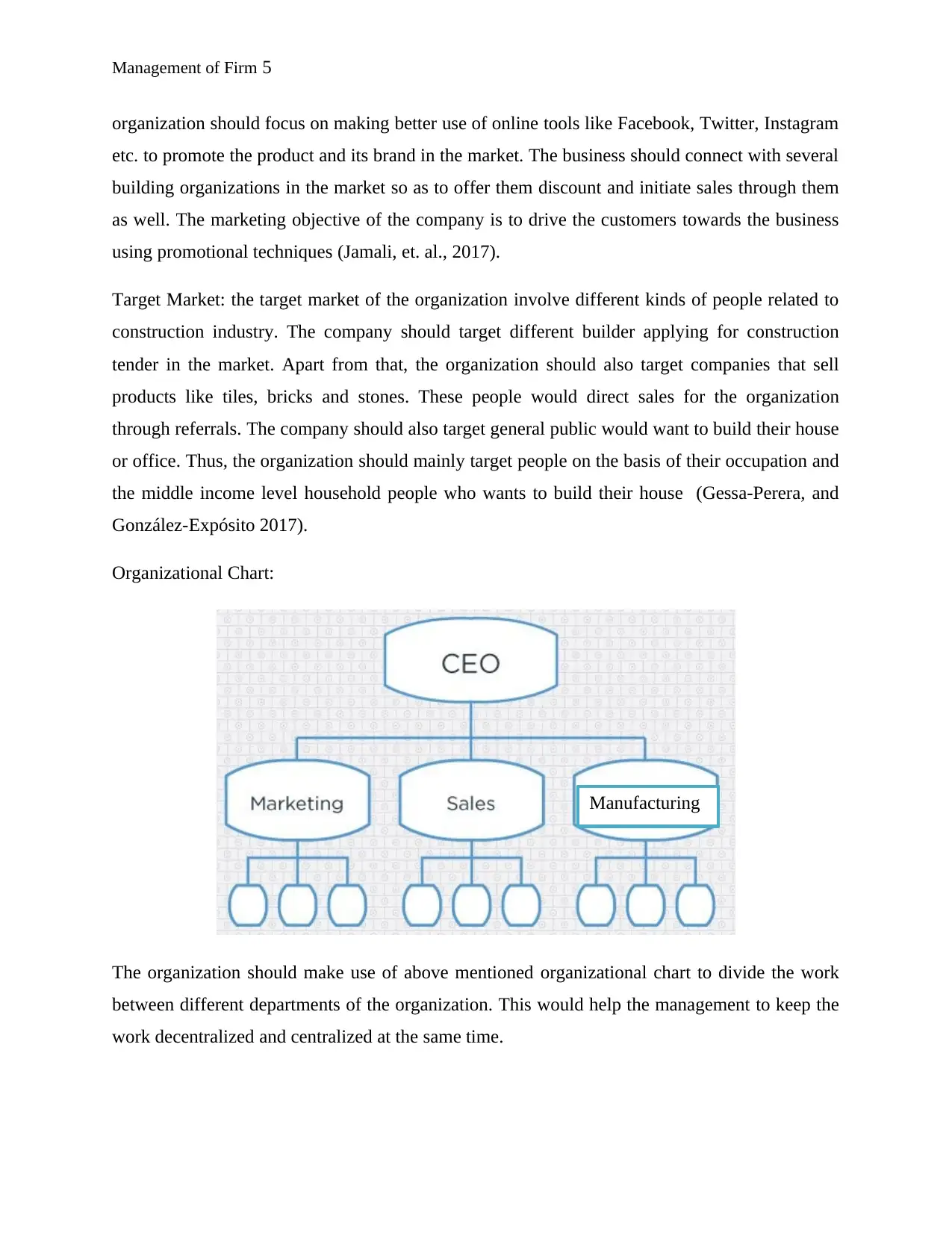
Organizational Chart:
The organization should make use of above mentioned organizational chart to divide the work
between different departments of the organization. This would help the management to keep the
work decentralized and centralized at the same time.
Manufacturing
organization should focus on making better use of online tools like Facebook, Twitter, Instagram
etc. to promote the product and its brand in the market. The business should connect with several
building organizations in the market so as to offer them discount and initiate sales through them
as well. The marketing objective of the company is to drive the customers towards the business
using promotional techniques (Jamali, et. al., 2017).
Target Market: the target market of the organization involve different kinds of people related to
construction industry. The company should target different builder applying for construction
tender in the market. Apart from that, the organization should also target companies that sell
products like tiles, bricks and stones. These people would direct sales for the organization
through referrals. The company should also target general public would want to build their house
or office. Thus, the organization should mainly target people on the basis of their occupation and
the middle income level household people who wants to build their house (Gessa-Perera, and
González-Expósito 2017).
Organizational Chart:
The organization should make use of above mentioned organizational chart to divide the work
between different departments of the organization. This would help the management to keep the
work decentralized and centralized at the same time.
Manufacturing
⊘ This is a preview!⊘
Do you want full access?
Subscribe today to unlock all pages.
Trusted by 1+ million students worldwide
Management of Firm 6
Competitors: Heidelberg Cement Group and Mixit Company are the two biggest competitors for
the company G.S. Cements in the target market. The company Mixit is present in the market of
cement from past 30 years. The company is trusted by the people and works with excellent staff
to regular attain productivity for the business. The organization is also present on different online
platforms in the market. The company Heidelberg Cement Group has served their products in
rail connection, asphalt plants, terminals etc. formation. The company also make use of
innovation logistics in the market and has created new record of pumping concrete over a
distance of 1.3 km to a construction site in the year 2014 (Mix it 2019).
Marketing Mix:
Product: the organization is aiming to sell cement mix in order. G.S. Cements is solely involved
in manufacturing and selling cements in the market. The organization has done not opted for
diversification in the market, as they want to attain growth through strongly placing their single
product in the market. The cement of the company is strong and adhesive and is used in
constructing large buildings. The company also offer workshops and trainings to employees so
that they can create products according to the expectation of the customers (Sucic, et. al., 2016).
Price: the company majorly target middle income level customers present in the market.
Therefore, the prices set for their products are economic only. As the cement product is usually
required in large quantity therefore, keep the price of products low would help the organization
to achieve competitive advantage in the target market. Also, the organization should make use of
competitive pricing strategy in the market so as to attract customers and provide nominal prices
to them. This would help the organization to compare the prices of the products offered by
competitors in the market and then setup the prices accordingly (Jansen 2017).
Place: as the company is a new venture presented in the tough competitive market, so that they
aiming to start their business by settling in the local market. Therefore, the organization has
initially focused on attract the customers present in the market of London. After the successful
completion of 3 years, the organization is focusing on expanding its business in Greater
Manchester. London is the largest city of UK which means that there is high scope of company
to attract customers and initiate sales (Ottman 2017).
Competitors: Heidelberg Cement Group and Mixit Company are the two biggest competitors for
the company G.S. Cements in the target market. The company Mixit is present in the market of
cement from past 30 years. The company is trusted by the people and works with excellent staff
to regular attain productivity for the business. The organization is also present on different online
platforms in the market. The company Heidelberg Cement Group has served their products in
rail connection, asphalt plants, terminals etc. formation. The company also make use of
innovation logistics in the market and has created new record of pumping concrete over a
distance of 1.3 km to a construction site in the year 2014 (Mix it 2019).
Marketing Mix:
Product: the organization is aiming to sell cement mix in order. G.S. Cements is solely involved
in manufacturing and selling cements in the market. The organization has done not opted for
diversification in the market, as they want to attain growth through strongly placing their single
product in the market. The cement of the company is strong and adhesive and is used in
constructing large buildings. The company also offer workshops and trainings to employees so
that they can create products according to the expectation of the customers (Sucic, et. al., 2016).
Price: the company majorly target middle income level customers present in the market.
Therefore, the prices set for their products are economic only. As the cement product is usually
required in large quantity therefore, keep the price of products low would help the organization
to achieve competitive advantage in the target market. Also, the organization should make use of
competitive pricing strategy in the market so as to attract customers and provide nominal prices
to them. This would help the organization to compare the prices of the products offered by
competitors in the market and then setup the prices accordingly (Jansen 2017).
Place: as the company is a new venture presented in the tough competitive market, so that they
aiming to start their business by settling in the local market. Therefore, the organization has
initially focused on attract the customers present in the market of London. After the successful
completion of 3 years, the organization is focusing on expanding its business in Greater
Manchester. London is the largest city of UK which means that there is high scope of company
to attract customers and initiate sales (Ottman 2017).
Paraphrase This Document
Need a fresh take? Get an instant paraphrase of this document with our AI Paraphraser
Management of Firm 7
Promotion: the company should introduce series of campaigns in the market so as to attract
customers. They should advertise the brand on different social media platforms so as to let the
customers know about the new product and the brand. They should also showcase the brand
through online sources like print media. The company should also invest in CSR activities so as
to gain interest of customers (Charter 2017).
Inventory Control and Quality Assurance Management: the inventory control system should be
used by the organization so as to implement effective waste management techniques in the
market. Also they should assign the duty to the supervision to ensure the quality of the cement
produced by them. Both the systems would help the organization effectively increasing the
productivity and profitability of the company (Yang, and Gabrielsson 2017).
Business Operation
Business Strategy:
Strength: product is the biggest strength of the company as the business produce high quality
products in the market. Every building majorly depends on the bricks and cement used in its
formation. Therefore, the company focuses on serving high quality products in the market and
satisfy the requirements of the customers. The manufacturing plant of the organization is also
organized in such a way to eliminate wastage and produce the products on time (Hair, Page, and
Brunsveld 2019).
Weakness: the weakness of the company is that they do not have adequate market exposure.
Resulting in which they fail to capture all the customers present in the external environment. The
company can the customers present in the market of London but they cannot attract the
customers present in other parts of UK. Resulting in which, the organization face difficulty in
supplying the products to the customers present in market (Armstrong, et. al., 2018).
Opportunities: product development and market expansion are the two biggest opportunities for
the company. Through the product development strategy, the business can easily offer different
products required during construction of a building. This would help the organization to offer
new products to the same customers present in the market. Market expansion strategy would help
the organization to initiate sales in different parts of UK.
Promotion: the company should introduce series of campaigns in the market so as to attract
customers. They should advertise the brand on different social media platforms so as to let the
customers know about the new product and the brand. They should also showcase the brand
through online sources like print media. The company should also invest in CSR activities so as
to gain interest of customers (Charter 2017).
Inventory Control and Quality Assurance Management: the inventory control system should be
used by the organization so as to implement effective waste management techniques in the
market. Also they should assign the duty to the supervision to ensure the quality of the cement
produced by them. Both the systems would help the organization effectively increasing the
productivity and profitability of the company (Yang, and Gabrielsson 2017).
Business Operation
Business Strategy:
Strength: product is the biggest strength of the company as the business produce high quality
products in the market. Every building majorly depends on the bricks and cement used in its
formation. Therefore, the company focuses on serving high quality products in the market and
satisfy the requirements of the customers. The manufacturing plant of the organization is also
organized in such a way to eliminate wastage and produce the products on time (Hair, Page, and
Brunsveld 2019).
Weakness: the weakness of the company is that they do not have adequate market exposure.
Resulting in which they fail to capture all the customers present in the external environment. The
company can the customers present in the market of London but they cannot attract the
customers present in other parts of UK. Resulting in which, the organization face difficulty in
supplying the products to the customers present in market (Armstrong, et. al., 2018).
Opportunities: product development and market expansion are the two biggest opportunities for
the company. Through the product development strategy, the business can easily offer different
products required during construction of a building. This would help the organization to offer
new products to the same customers present in the market. Market expansion strategy would help
the organization to initiate sales in different parts of UK.
Management of Firm 8
Threats: high degree of competition is the biggest threat for the organization in the business
environment. The organization is going to compete with several other organizations present in
the international market and the organizations that are serving to customers from past several
decades. Resulting in which, it is difficult for the organization create their position in such
competitive market (Tukker, and Tischner 2017).
Financial Accounts & Statements
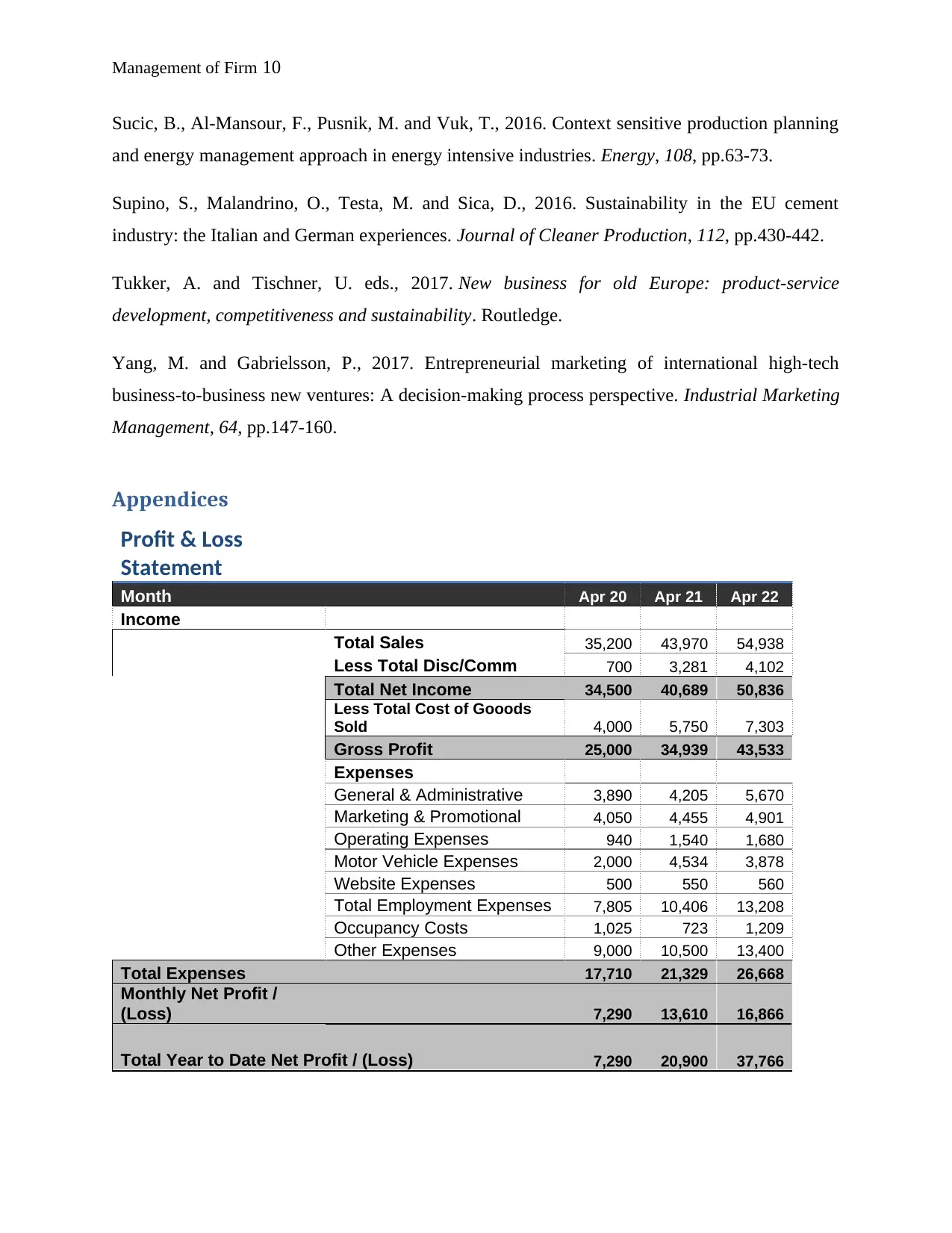
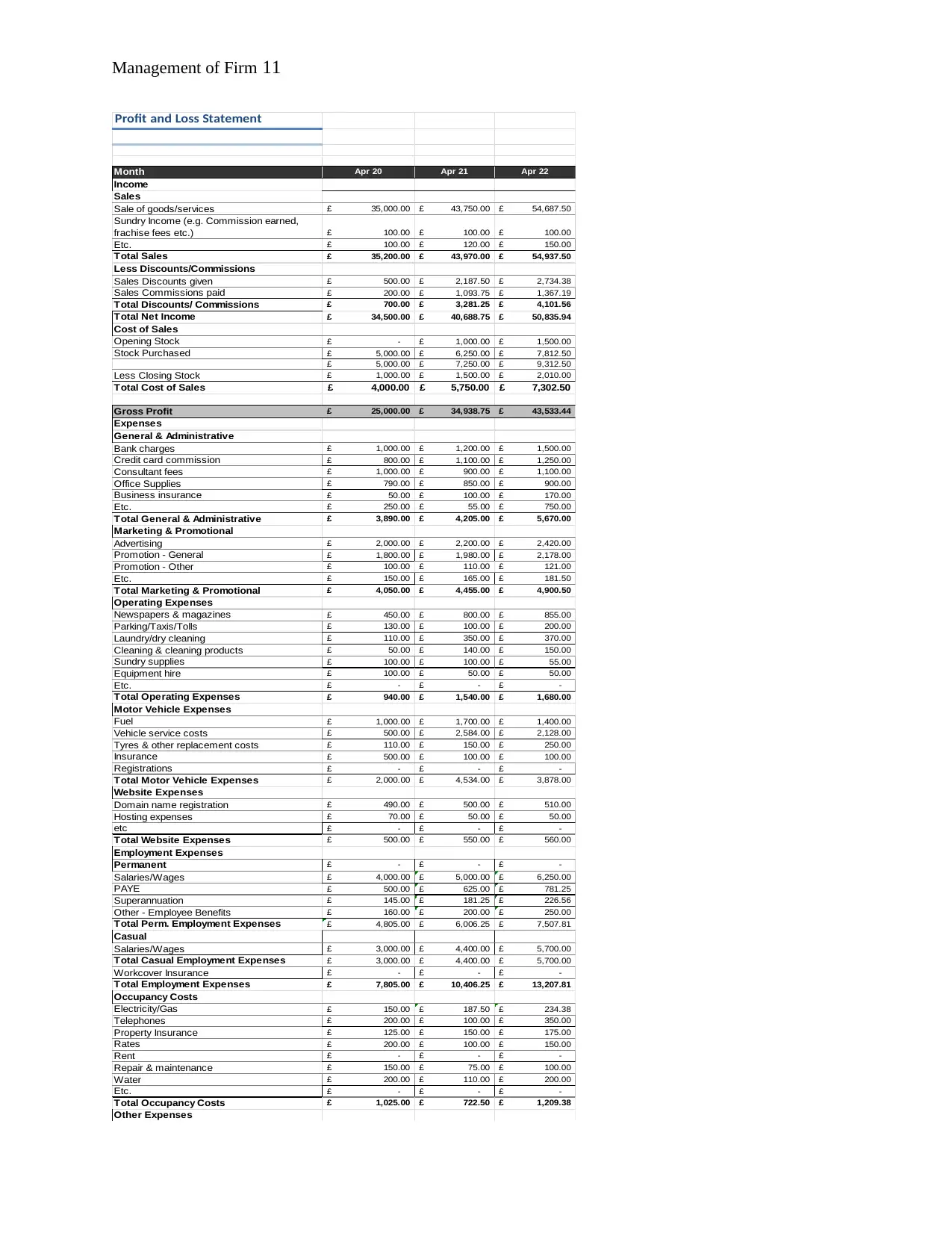
It is expected that the organization will earn profits from its initial year itself. Also, it is projected
that the business will increase its profitability by 25% with each passing year. Below mentioned
are the projections for the company G.S. Cement. Through the P & L statements, it is expected
that the organization would attain total revenue of £ 35200 and £ 43970 and £ 54938 in the
subsequent years. Total expense of the organization G.S. Cements in the initial year would be £
17710 which would increase to £ 26668 to in the year 2022. The overall net profit of the
company that they would achieve in the beginning would be £ 7290. The balance sheet of the
company stated that they had high volume of current assets with the organization so as to meet
the day to day needs initially. The amount of bank overdraft would be paid by the organization
through the profits earned. The liabilities of the company would reduce from 2020 to 2022 and
the profitability would increase. The cash flow activities of the company would should positive
returns for the initiate period. The company would have surplus cash at the end of year.
Feasibility Analysis
It is expected that the organization is make use of funds present with the owner in the market.
Further, they will also acquire loan from financial institution so as to balance the debt equity
ratio. Owner’s funds help the organization to save themselves from the problem of loan
repayment in the external market as the company had to pay loans with interest to the banks. The
feasibility study of the company states that it is profitable for the organization to invest in the
cement business. The market is upgrading more tenders are coming from the contractor for huge
infrastructure development, due to which the need of cement also arises. Further, it is expected
that the organization would provide profitability in its initial year. Further, in the next two years
the business would grow with 25% growth rate (Goldratt 2017).
Threats: high degree of competition is the biggest threat for the organization in the business
environment. The organization is going to compete with several other organizations present in
the international market and the organizations that are serving to customers from past several
decades. Resulting in which, it is difficult for the organization create their position in such
competitive market (Tukker, and Tischner 2017).
Financial Accounts & Statements
It is expected that the organization will earn profits from its initial year itself. Also, it is projected
that the business will increase its profitability by 25% with each passing year. Below mentioned
are the projections for the company G.S. Cement. Through the P & L statements, it is expected
that the organization would attain total revenue of £ 35200 and £ 43970 and £ 54938 in the
subsequent years. Total expense of the organization G.S. Cements in the initial year would be £
17710 which would increase to £ 26668 to in the year 2022. The overall net profit of the
company that they would achieve in the beginning would be £ 7290. The balance sheet of the
company stated that they had high volume of current assets with the organization so as to meet
the day to day needs initially. The amount of bank overdraft would be paid by the organization
through the profits earned. The liabilities of the company would reduce from 2020 to 2022 and
the profitability would increase. The cash flow activities of the company would should positive
returns for the initiate period. The company would have surplus cash at the end of year.
Feasibility Analysis
It is expected that the organization is make use of funds present with the owner in the market.
Further, they will also acquire loan from financial institution so as to balance the debt equity
ratio. Owner’s funds help the organization to save themselves from the problem of loan
repayment in the external market as the company had to pay loans with interest to the banks. The
feasibility study of the company states that it is profitable for the organization to invest in the
cement business. The market is upgrading more tenders are coming from the contractor for huge
infrastructure development, due to which the need of cement also arises. Further, it is expected
that the organization would provide profitability in its initial year. Further, in the next two years
the business would grow with 25% growth rate (Goldratt 2017).
⊘ This is a preview!⊘
Do you want full access?
Subscribe today to unlock all pages.
Trusted by 1+ million students worldwide
Management of Firm 9
References
Amrina, E. and Vilsi, A.L., 2015. Key performance indicators for sustainable manufacturing
evaluation in cement industry. Procedia Cirp, 26, pp.19-23.
Armstrong, G.M., Kotler, P., Harker, M.J. and Brennan, R., 2018. Marketing: an introduction.
Pearson UK.
Charter, M., 2017. Greener marketing: A responsible approach to business. UK: Routledge.
Gessa-Perera, A. and González-Expósito, I., 2017. Opportunities for waste recovery to improve
the carbon footprint in the Spanish cement industry under a cap and trade system: Insights from a
case study. Journal of cleaner production, 142, pp.3665-3675.
Goldratt, E.M., 2017. Critical chain: A business novel. UK: Routledge.
Hair Jr, J.F., Page, M. and Brunsveld, N., 2019. Essentials of business research methods. UK:
Routledge.
Jamali, G., Karimi Asl, E., Hashemkhani Zolfani, S. and Šaparauskas, J., 2017. Analysing larg
supply chain management comoptitive strategies in iranian cement industries. Economics and
Management.
Jansen, W., 2017. New business models for the knowledge economy. UK: Routledge.
Kajaste, R. and Hurme, M., 2016. Cement industry greenhouse gas emissions–management
options and abatement cost. Journal of Cleaner Production, 112, pp.4041-4052.
Liu, X. and Fan, Y., 2018. Business perspective to the national greenhouse gases emissions
trading scheme: a survey of cement companies in China. Energy Policy, 112, pp.141-151.
Mix it., (2019) About Us [online]. Available from < https://www.mixit.co.uk/about-us>
[accessed on 15 Dec. 19].
Ottman, J., 2017. The new rules of green marketing: Strategies, tools, and inspiration for
sustainable branding. Routledge.
References
Amrina, E. and Vilsi, A.L., 2015. Key performance indicators for sustainable manufacturing
evaluation in cement industry. Procedia Cirp, 26, pp.19-23.
Armstrong, G.M., Kotler, P., Harker, M.J. and Brennan, R., 2018. Marketing: an introduction.
Pearson UK.
Charter, M., 2017. Greener marketing: A responsible approach to business. UK: Routledge.
Gessa-Perera, A. and González-Expósito, I., 2017. Opportunities for waste recovery to improve
the carbon footprint in the Spanish cement industry under a cap and trade system: Insights from a
case study. Journal of cleaner production, 142, pp.3665-3675.
Goldratt, E.M., 2017. Critical chain: A business novel. UK: Routledge.
Hair Jr, J.F., Page, M. and Brunsveld, N., 2019. Essentials of business research methods. UK:
Routledge.
Jamali, G., Karimi Asl, E., Hashemkhani Zolfani, S. and Šaparauskas, J., 2017. Analysing larg
supply chain management comoptitive strategies in iranian cement industries. Economics and
Management.
Jansen, W., 2017. New business models for the knowledge economy. UK: Routledge.
Kajaste, R. and Hurme, M., 2016. Cement industry greenhouse gas emissions–management
options and abatement cost. Journal of Cleaner Production, 112, pp.4041-4052.
Liu, X. and Fan, Y., 2018. Business perspective to the national greenhouse gases emissions
trading scheme: a survey of cement companies in China. Energy Policy, 112, pp.141-151.
Mix it., (2019) About Us [online]. Available from < https://www.mixit.co.uk/about-us>
[accessed on 15 Dec. 19].
Ottman, J., 2017. The new rules of green marketing: Strategies, tools, and inspiration for
sustainable branding. Routledge.
Paraphrase This Document
Need a fresh take? Get an instant paraphrase of this document with our AI Paraphraser
Management of Firm 10
Sucic, B., Al-Mansour, F., Pusnik, M. and Vuk, T., 2016. Context sensitive production planning
and energy management approach in energy intensive industries. Energy, 108, pp.63-73.
Supino, S., Malandrino, O., Testa, M. and Sica, D., 2016. Sustainability in the EU cement
industry: the Italian and German experiences. Journal of Cleaner Production, 112, pp.430-442.
Tukker, A. and Tischner, U. eds., 2017. New business for old Europe: product-service
development, competitiveness and sustainability. Routledge.
Yang, M. and Gabrielsson, P., 2017. Entrepreneurial marketing of international high-tech
business-to-business new ventures: A decision-making process perspective. Industrial Marketing
Management, 64, pp.147-160.
Appendices
Profit & Loss
Statement
Month Apr 20 Apr 21 Apr 22
Income
Total Sales 35,200 43,970 54,938
Less Total Disc/Comm 700 3,281 4,102
Total Net Income 34,500 40,689 50,836
Less Total Cost of Gooods
Sold 4,000 5,750 7,303
Gross Profit 25,000 34,939 43,533
Expenses
General & Administrative 3,890 4,205 5,670
Marketing & Promotional 4,050 4,455 4,901
Operating Expenses 940 1,540 1,680
Motor Vehicle Expenses 2,000 4,534 3,878
Website Expenses 500 550 560
Total Employment Expenses 7,805 10,406 13,208
Occupancy Costs 1,025 723 1,209
Other Expenses 9,000 10,500 13,400
Total Expenses 17,710 21,329 26,668
Monthly Net Profit /
(Loss) 7,290 13,610 16,866
Total Year to Date Net Profit / (Loss) 7,290 20,900 37,766
Sucic, B., Al-Mansour, F., Pusnik, M. and Vuk, T., 2016. Context sensitive production planning
and energy management approach in energy intensive industries. Energy, 108, pp.63-73.
Supino, S., Malandrino, O., Testa, M. and Sica, D., 2016. Sustainability in the EU cement
industry: the Italian and German experiences. Journal of Cleaner Production, 112, pp.430-442.
Tukker, A. and Tischner, U. eds., 2017. New business for old Europe: product-service
development, competitiveness and sustainability. Routledge.
Yang, M. and Gabrielsson, P., 2017. Entrepreneurial marketing of international high-tech
business-to-business new ventures: A decision-making process perspective. Industrial Marketing
Management, 64, pp.147-160.
Appendices
Profit & Loss
Statement
Month Apr 20 Apr 21 Apr 22
Income
Total Sales 35,200 43,970 54,938
Less Total Disc/Comm 700 3,281 4,102
Total Net Income 34,500 40,689 50,836
Less Total Cost of Gooods
Sold 4,000 5,750 7,303
Gross Profit 25,000 34,939 43,533
Expenses
General & Administrative 3,890 4,205 5,670
Marketing & Promotional 4,050 4,455 4,901
Operating Expenses 940 1,540 1,680
Motor Vehicle Expenses 2,000 4,534 3,878
Website Expenses 500 550 560
Total Employment Expenses 7,805 10,406 13,208
Occupancy Costs 1,025 723 1,209
Other Expenses 9,000 10,500 13,400
Total Expenses 17,710 21,329 26,668
Monthly Net Profit /
(Loss) 7,290 13,610 16,866
Total Year to Date Net Profit / (Loss) 7,290 20,900 37,766
Management of Firm 11
Profit and Loss Statement
Month Apr 20 Apr 21 Apr 22
Income
Sales
Sale of goods/services 35,000.00£ 43,750.00£ 54,687.50£
Sundry Income (e.g. Commission earned,
frachise fees etc.) 100.00£ 100.00£ 100.00£
Etc. 100.00£ 120.00£ 150.00£
Total Sales 35,200.00£ 43,970.00£ 54,937.50£
Less Discounts/Commissions
Sales Discounts given 500.00£ 2,187.50£ 2,734.38£
Sales Commissions paid 200.00£ 1,093.75£ 1,367.19£
Total Discounts/ Commissions 700.00£ 3,281.25£ 4,101.56£
Total Net Income 34,500.00£ 40,688.75£ 50,835.94£
Cost of Sales
Opening Stock -£ 1,000.00£ 1,500.00£
Stock Purchased 5,000.00£ 6,250.00£ 7,812.50£
5,000.00£ 7,250.00£ 9,312.50£
Less Closing Stock 1,000.00£ 1,500.00£ 2,010.00£
Total Cost of Sales 4,000.00£ 5,750.00£ 7,302.50£
Gross Profit 25,000.00£ 34,938.75£ 43,533.44£
Expenses
General & Administrative
Bank charges 1,000.00£ 1,200.00£ 1,500.00£
Credit card commission 800.00£ 1,100.00£ 1,250.00£
Consultant fees 1,000.00£ 900.00£ 1,100.00£
Office Supplies 790.00£ 850.00£ 900.00£
Business insurance 50.00£ 100.00£ 170.00£
Etc. 250.00£ 55.00£ 750.00£
Total General & Administrative 3,890.00£ 4,205.00£ 5,670.00£
Marketing & Promotional
Advertising 2,000.00£ 2,200.00£ 2,420.00£
Promotion - General 1,800.00£ 1,980.00£ 2,178.00£
Promotion - Other 100.00£ 110.00£ 121.00£
Etc. 150.00£ 165.00£ 181.50£
Total Marketing & Promotional 4,050.00£ 4,455.00£ 4,900.50£
Operating Expenses
Newspapers & magazines 450.00£ 800.00£ 855.00£
Parking/Taxis/Tolls 130.00£ 100.00£ 200.00£
Laundry/dry cleaning 110.00£ 350.00£ 370.00£
Cleaning & cleaning products 50.00£ 140.00£ 150.00£
Sundry supplies 100.00£ 100.00£ 55.00£
Equipment hire 100.00£ 50.00£ 50.00£
Etc. -£ -£ -£
Total Operating Expenses 940.00£ 1,540.00£ 1,680.00£
Motor Vehicle Expenses
Fuel 1,000.00£ 1,700.00£ 1,400.00£
Vehicle service costs 500.00£ 2,584.00£ 2,128.00£
Tyres & other replacement costs 110.00£ 150.00£ 250.00£
Insurance 500.00£ 100.00£ 100.00£
Registrations -£ -£ -£
Total Motor Vehicle Expenses 2,000.00£ 4,534.00£ 3,878.00£
Website Expenses
Domain name registration 490.00£ 500.00£ 510.00£
Hosting expenses 70.00£ 50.00£ 50.00£
etc -£ -£ -£
Total Website Expenses 500.00£ 550.00£ 560.00£
Employment Expenses
Permanent -£ -£ -£
Salaries/Wages 4,000.00£ 5,000.00£ 6,250.00£
PAYE 500.00£ 625.00£ 781.25£
Superannuation 145.00£ 181.25£ 226.56£
Other - Employee Benefits 160.00£ 200.00£ 250.00£
Total Perm. Employment Expenses 4,805.00£ 6,006.25£ 7,507.81£
Casual
Salaries/Wages 3,000.00£ 4,400.00£ 5,700.00£
Total Casual Employment Expenses 3,000.00£ 4,400.00£ 5,700.00£
Workcover Insurance -£ -£ -£
Total Employment Expenses 7,805.00£ 10,406.25£ 13,207.81£
Occupancy Costs
Electricity/Gas 150.00£ 187.50£ 234.38£
Telephones 200.00£ 100.00£ 350.00£
Property Insurance 125.00£ 150.00£ 175.00£
Rates 200.00£ 100.00£ 150.00£
Rent -£ -£ -£
Repair & maintenance 150.00£ 75.00£ 100.00£
Water 200.00£ 110.00£ 200.00£
Etc. -£ -£ -£
Total Occupancy Costs 1,025.00£ 722.50£ 1,209.38£
Other Expenses
Machineries 7,000.00£ 8,000.00£ 10,000.00£
Vehicles 1,500.00£ 1,500.00£ 1,500.00£
Equipment 500.00£ 1,000.00£ 1,900.00£
Total Other Expenses 9,000.00£ 10,500.00£ 13,400.00£
Total Expenses 17,710.00£ 21,328.75£ 26,667.69£
Net Profit / (Loss) 7,290.00£ 13,610.00£ 16,865.75£
Profit and Loss Statement
Month Apr 20 Apr 21 Apr 22
Income
Sales
Sale of goods/services 35,000.00£ 43,750.00£ 54,687.50£
Sundry Income (e.g. Commission earned,
frachise fees etc.) 100.00£ 100.00£ 100.00£
Etc. 100.00£ 120.00£ 150.00£
Total Sales 35,200.00£ 43,970.00£ 54,937.50£
Less Discounts/Commissions
Sales Discounts given 500.00£ 2,187.50£ 2,734.38£
Sales Commissions paid 200.00£ 1,093.75£ 1,367.19£
Total Discounts/ Commissions 700.00£ 3,281.25£ 4,101.56£
Total Net Income 34,500.00£ 40,688.75£ 50,835.94£
Cost of Sales
Opening Stock -£ 1,000.00£ 1,500.00£
Stock Purchased 5,000.00£ 6,250.00£ 7,812.50£
5,000.00£ 7,250.00£ 9,312.50£
Less Closing Stock 1,000.00£ 1,500.00£ 2,010.00£
Total Cost of Sales 4,000.00£ 5,750.00£ 7,302.50£
Gross Profit 25,000.00£ 34,938.75£ 43,533.44£
Expenses
General & Administrative
Bank charges 1,000.00£ 1,200.00£ 1,500.00£
Credit card commission 800.00£ 1,100.00£ 1,250.00£
Consultant fees 1,000.00£ 900.00£ 1,100.00£
Office Supplies 790.00£ 850.00£ 900.00£
Business insurance 50.00£ 100.00£ 170.00£
Etc. 250.00£ 55.00£ 750.00£
Total General & Administrative 3,890.00£ 4,205.00£ 5,670.00£
Marketing & Promotional
Advertising 2,000.00£ 2,200.00£ 2,420.00£
Promotion - General 1,800.00£ 1,980.00£ 2,178.00£
Promotion - Other 100.00£ 110.00£ 121.00£
Etc. 150.00£ 165.00£ 181.50£
Total Marketing & Promotional 4,050.00£ 4,455.00£ 4,900.50£
Operating Expenses
Newspapers & magazines 450.00£ 800.00£ 855.00£
Parking/Taxis/Tolls 130.00£ 100.00£ 200.00£
Laundry/dry cleaning 110.00£ 350.00£ 370.00£
Cleaning & cleaning products 50.00£ 140.00£ 150.00£
Sundry supplies 100.00£ 100.00£ 55.00£
Equipment hire 100.00£ 50.00£ 50.00£
Etc. -£ -£ -£
Total Operating Expenses 940.00£ 1,540.00£ 1,680.00£
Motor Vehicle Expenses
Fuel 1,000.00£ 1,700.00£ 1,400.00£
Vehicle service costs 500.00£ 2,584.00£ 2,128.00£
Tyres & other replacement costs 110.00£ 150.00£ 250.00£
Insurance 500.00£ 100.00£ 100.00£
Registrations -£ -£ -£
Total Motor Vehicle Expenses 2,000.00£ 4,534.00£ 3,878.00£
Website Expenses
Domain name registration 490.00£ 500.00£ 510.00£
Hosting expenses 70.00£ 50.00£ 50.00£
etc -£ -£ -£
Total Website Expenses 500.00£ 550.00£ 560.00£
Employment Expenses
Permanent -£ -£ -£
Salaries/Wages 4,000.00£ 5,000.00£ 6,250.00£
PAYE 500.00£ 625.00£ 781.25£
Superannuation 145.00£ 181.25£ 226.56£
Other - Employee Benefits 160.00£ 200.00£ 250.00£
Total Perm. Employment Expenses 4,805.00£ 6,006.25£ 7,507.81£
Casual
Salaries/Wages 3,000.00£ 4,400.00£ 5,700.00£
Total Casual Employment Expenses 3,000.00£ 4,400.00£ 5,700.00£
Workcover Insurance -£ -£ -£
Total Employment Expenses 7,805.00£ 10,406.25£ 13,207.81£
Occupancy Costs
Electricity/Gas 150.00£ 187.50£ 234.38£
Telephones 200.00£ 100.00£ 350.00£
Property Insurance 125.00£ 150.00£ 175.00£
Rates 200.00£ 100.00£ 150.00£
Rent -£ -£ -£
Repair & maintenance 150.00£ 75.00£ 100.00£
Water 200.00£ 110.00£ 200.00£
Etc. -£ -£ -£
Total Occupancy Costs 1,025.00£ 722.50£ 1,209.38£
Other Expenses
Machineries 7,000.00£ 8,000.00£ 10,000.00£
Vehicles 1,500.00£ 1,500.00£ 1,500.00£
Equipment 500.00£ 1,000.00£ 1,900.00£
Total Other Expenses 9,000.00£ 10,500.00£ 13,400.00£
Total Expenses 17,710.00£ 21,328.75£ 26,667.69£
Net Profit / (Loss) 7,290.00£ 13,610.00£ 16,865.75£
⊘ This is a preview!⊘
Do you want full access?
Subscribe today to unlock all pages.
Trusted by 1+ million students worldwide

1 out of 14


Related Documents


Your All-in-One AI-Powered Toolkit for Academic Success.
+13062052269
info@desklib.com
Available 24*7 on WhatsApp / Email
![[object Object]](/_next/static/media/star-bottom.7253800d.svg)
Unlock your academic potential
Copyright © 2020–2026 A2Z Services. All Rights Reserved. Developed and managed by ZUCOL.