Business Research for Hoteliers - Analyzing Hotel Centennial Issues
VerifiedAdded on 2023/05/30
|21
|5294
|415
Report
AI Summary
This report investigates the challenges faced by Hotel Centennial in Australia, particularly the decline in its restaurant sales and market share. The literature review explores factors such as customer perception, employee satisfaction, and the effective use of data analysis. It examines how traveler service quality expectations, customer relationships, consumer purchase intentions, and consumer value perception impact the hotel's performance. The report also highlights the importance of data analytics and technological adaptation in maintaining competitiveness. The research references various studies on hotel management, customer loyalty, and the impact of marketing activities on consumer behavior, providing a comprehensive overview of the issues affecting Hotel Centennial's success. Desklib offers similar solved assignments for students.
BUSINESS RESEARCH FOR HOTELIERS

Paraphrase This Document
Need a fresh take? Get an instant paraphrase of this document with our AI Paraphraser
SECTION 1: RESEARCH CONTEXT
The scope of the current study evaluates the challenges that Hotel Centennial is
facing in Australia. With challenges faced in its restaurant, sales figures of the restaurant have
drastically transformed leading to reduced market share. The current scope of literature
analysis reviews the factors that might have impacted lowering sales of the reentrant and
hence of the Hotel. A brief research methodology for the purpose of undertaking the study
has been undertaken, which reflects the way in which the study progresses.
SECTION 2: LITERATURE REVIEW
2.1 SECONDARY DATA SEARCH
Analysis of suitable literature is integral for understanding possible areas in which
Hotel Centennial is committing errors, which in turn is affecting its sales figures. For the
current study, various secondary sources such as journals, articles, and books were searched
that could provide relevant factors that contribute to the hotel industry segment. The study
has evaluated secondary sources mostly from Google Scholar and from online library books
as well as journals. Exclusion criteria for studies include taking not more than 10-year-old
literature articles. The keyword search criteria used for the study mostly included, "Impact on
Customer perception for hotel brands", "Customer Satisfaction criteria for hotel companies",
"Data analysis use in hotel companies", and "Factors Determining Success for Hotel brands".
The results depicted over 75 articles taken together from which 12 articles and books were
selected which could contribute to this study. A brief qualitative analysis of literature is
undertaken below.
Centennial problems have arisen from a host of external and internal factors. With
expected growth being lower the Hotel has aimed at undertaking more investments within the
Hotel. The shareholders of the Hotel are also annoyed at the incapability of the Hotel to
The scope of the current study evaluates the challenges that Hotel Centennial is
facing in Australia. With challenges faced in its restaurant, sales figures of the restaurant have
drastically transformed leading to reduced market share. The current scope of literature
analysis reviews the factors that might have impacted lowering sales of the reentrant and
hence of the Hotel. A brief research methodology for the purpose of undertaking the study
has been undertaken, which reflects the way in which the study progresses.
SECTION 2: LITERATURE REVIEW
2.1 SECONDARY DATA SEARCH
Analysis of suitable literature is integral for understanding possible areas in which
Hotel Centennial is committing errors, which in turn is affecting its sales figures. For the
current study, various secondary sources such as journals, articles, and books were searched
that could provide relevant factors that contribute to the hotel industry segment. The study
has evaluated secondary sources mostly from Google Scholar and from online library books
as well as journals. Exclusion criteria for studies include taking not more than 10-year-old
literature articles. The keyword search criteria used for the study mostly included, "Impact on
Customer perception for hotel brands", "Customer Satisfaction criteria for hotel companies",
"Data analysis use in hotel companies", and "Factors Determining Success for Hotel brands".
The results depicted over 75 articles taken together from which 12 articles and books were
selected which could contribute to this study. A brief qualitative analysis of literature is
undertaken below.
Centennial problems have arisen from a host of external and internal factors. With
expected growth being lower the Hotel has aimed at undertaking more investments within the
Hotel. The shareholders of the Hotel are also annoyed at the incapability of the Hotel to
achieve desired performance levels. Moreover, the recent sentiments regarding the Hotel had
not been supportive as shareholders have sold as they saw no new value generated. In order
to evaluate, the current challenges a host of factors might be seen to be responsible amongst
which major being customer perception, employee satisfaction, and data analysis not was
being used extensively by the Hotel.
a. Investigate Importance travellers have on service quality while making travel
decisions: As per Dominici and Guzzo (2010) there are various factors which affects
customer satisfaction in the hotel industry. Organization in the hotel sector needs to attract as
well as retain customer interests such that they are able to create a sustainable advantage for
themselves. With the increasing scope of hotel and increasing competition within Australia,
organization's need to develop a culture that focuses on internal as well as external customers.
Nittala and Kameswari (2009) highlighted the importance of internal marketing for customer
satisfaction in the hotel sector. The authors stressed the fact that internal marketing is the key
to deriving competitive advantage in the market. Employees have a central role to play in the
hotels sector for attracting, building, maintaining a relationship with customers. Internal
marketing is programs are generally undertaken in large numbers across organizations.
Centennial recent high rates of attrition are an indication that the Hotel is fewer programs that
are oriented towards its employees and professionals. Jafri (2010) identified that
organizational commitment and employee's innovative behavior can contribute significantly
towards the success of a hotel organization. All the studies indicate that greater the employee
satisfaction, it is more likely that employees will innovate and contribute in a positive manner
towards the organization. From this literature, it can be understood that Centennial employee
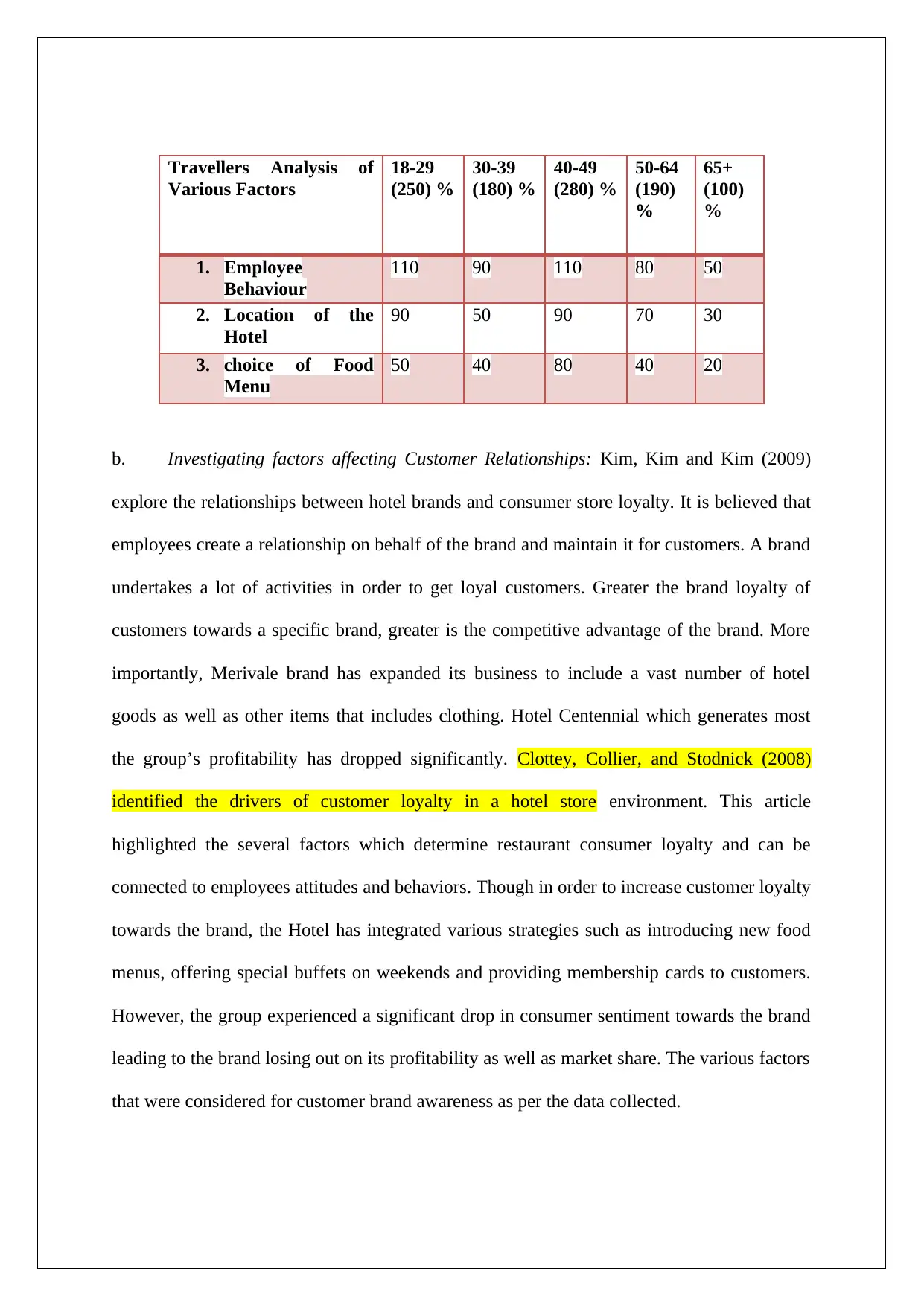
turnover could indicate a potential reason for its fallout from the leading position. The figure
below reflects the various parameters of importance travellers attach while undertaking travel
decision.
not been supportive as shareholders have sold as they saw no new value generated. In order
to evaluate, the current challenges a host of factors might be seen to be responsible amongst
which major being customer perception, employee satisfaction, and data analysis not was
being used extensively by the Hotel.
a. Investigate Importance travellers have on service quality while making travel
decisions: As per Dominici and Guzzo (2010) there are various factors which affects
customer satisfaction in the hotel industry. Organization in the hotel sector needs to attract as
well as retain customer interests such that they are able to create a sustainable advantage for
themselves. With the increasing scope of hotel and increasing competition within Australia,
organization's need to develop a culture that focuses on internal as well as external customers.
Nittala and Kameswari (2009) highlighted the importance of internal marketing for customer
satisfaction in the hotel sector. The authors stressed the fact that internal marketing is the key
to deriving competitive advantage in the market. Employees have a central role to play in the
hotels sector for attracting, building, maintaining a relationship with customers. Internal
marketing is programs are generally undertaken in large numbers across organizations.
Centennial recent high rates of attrition are an indication that the Hotel is fewer programs that
are oriented towards its employees and professionals. Jafri (2010) identified that
organizational commitment and employee's innovative behavior can contribute significantly
towards the success of a hotel organization. All the studies indicate that greater the employee
satisfaction, it is more likely that employees will innovate and contribute in a positive manner
towards the organization. From this literature, it can be understood that Centennial employee
turnover could indicate a potential reason for its fallout from the leading position. The figure
below reflects the various parameters of importance travellers attach while undertaking travel
decision.
⊘ This is a preview!⊘
Do you want full access?
Subscribe today to unlock all pages.

Trusted by 1+ million students worldwide
Travellers Analysis of
Various Factors
18-29
(250) %
30-39
(180) %
40-49
(280) %
50-64
(190)
%
65+
(100)
%
1. Employee
Behaviour
110 90 110 80 50
2. Location of the
Hotel
90 50 90 70 30
3. choice of Food
Menu
50 40 80 40 20
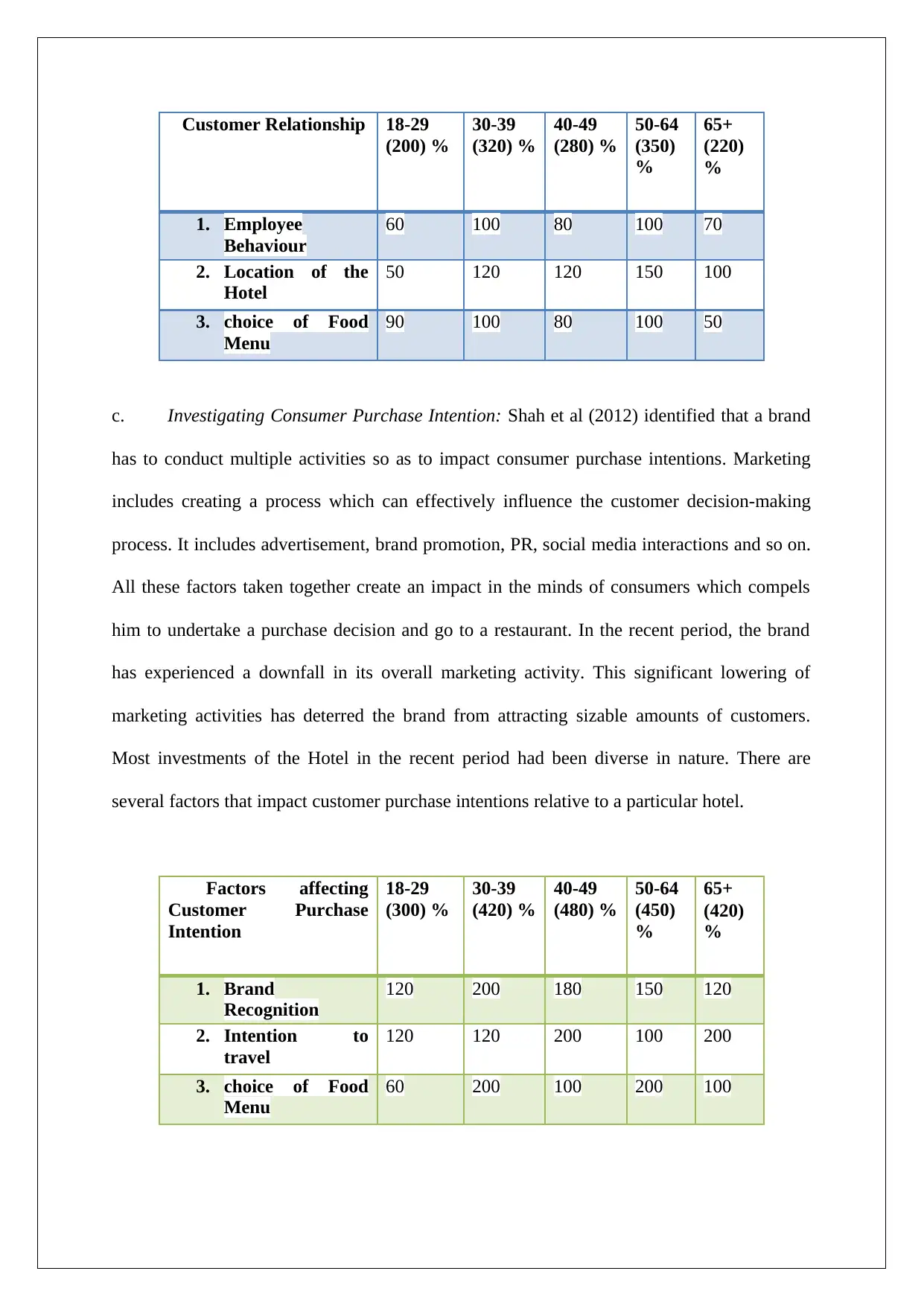
b. Investigating factors affecting Customer Relationships: Kim, Kim and Kim (2009)
explore the relationships between hotel brands and consumer store loyalty. It is believed that
employees create a relationship on behalf of the brand and maintain it for customers. A brand
undertakes a lot of activities in order to get loyal customers. Greater the brand loyalty of
customers towards a specific brand, greater is the competitive advantage of the brand. More
importantly, Merivale brand has expanded its business to include a vast number of hotel
goods as well as other items that includes clothing. Hotel Centennial which generates most
the group’s profitability has dropped significantly. Clottey, Collier, and Stodnick (2008)
identified the drivers of customer loyalty in a hotel store environment. This article
highlighted the several factors which determine restaurant consumer loyalty and can be
connected to employees attitudes and behaviors. Though in order to increase customer loyalty
towards the brand, the Hotel has integrated various strategies such as introducing new food
menus, offering special buffets on weekends and providing membership cards to customers.
However, the group experienced a significant drop in consumer sentiment towards the brand
leading to the brand losing out on its profitability as well as market share. The various factors
that were considered for customer brand awareness as per the data collected.
Various Factors
18-29
(250) %
30-39
(180) %
40-49
(280) %
50-64
(190)
%
65+
(100)
%
1. Employee
Behaviour
110 90 110 80 50
2. Location of the
Hotel
90 50 90 70 30
3. choice of Food
Menu
50 40 80 40 20
b. Investigating factors affecting Customer Relationships: Kim, Kim and Kim (2009)
explore the relationships between hotel brands and consumer store loyalty. It is believed that
employees create a relationship on behalf of the brand and maintain it for customers. A brand
undertakes a lot of activities in order to get loyal customers. Greater the brand loyalty of
customers towards a specific brand, greater is the competitive advantage of the brand. More
importantly, Merivale brand has expanded its business to include a vast number of hotel
goods as well as other items that includes clothing. Hotel Centennial which generates most
the group’s profitability has dropped significantly. Clottey, Collier, and Stodnick (2008)
identified the drivers of customer loyalty in a hotel store environment. This article
highlighted the several factors which determine restaurant consumer loyalty and can be
connected to employees attitudes and behaviors. Though in order to increase customer loyalty
towards the brand, the Hotel has integrated various strategies such as introducing new food
menus, offering special buffets on weekends and providing membership cards to customers.
However, the group experienced a significant drop in consumer sentiment towards the brand
leading to the brand losing out on its profitability as well as market share. The various factors
that were considered for customer brand awareness as per the data collected.
Paraphrase This Document
Need a fresh take? Get an instant paraphrase of this document with our AI Paraphraser
Customer Relationship 18-29
(200) %
30-39
(320) %
40-49
(280) %
50-64
(350)
%
65+
(220)
%
1. Employee
Behaviour
60 100 80 100 70
2. Location of the
Hotel
50 120 120 150 100
3. choice of Food
Menu
90 100 80 100 50
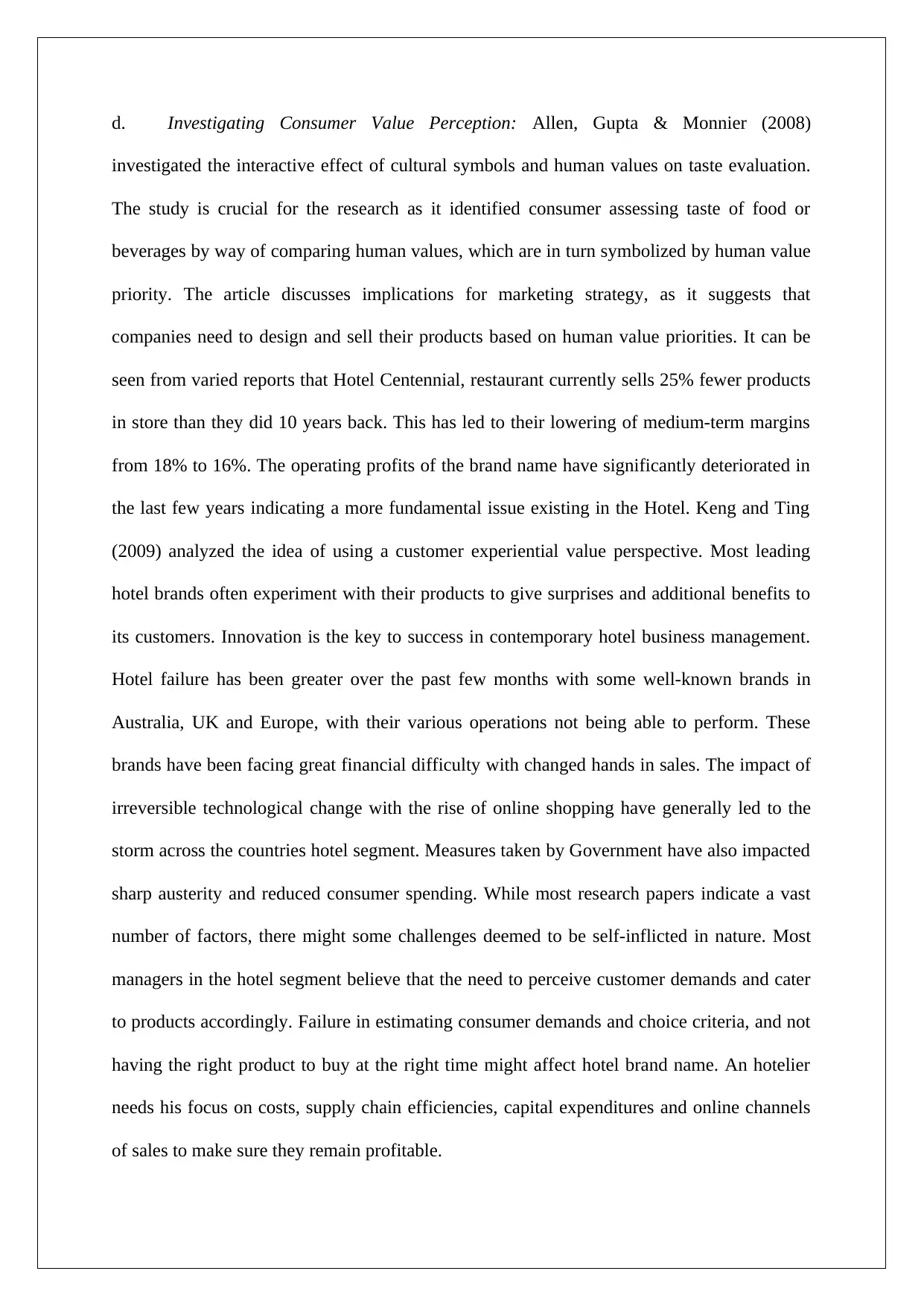
c. Investigating Consumer Purchase Intention: Shah et al (2012) identified that a brand
has to conduct multiple activities so as to impact consumer purchase intentions. Marketing
includes creating a process which can effectively influence the customer decision-making
process. It includes advertisement, brand promotion, PR, social media interactions and so on.
All these factors taken together create an impact in the minds of consumers which compels
him to undertake a purchase decision and go to a restaurant. In the recent period, the brand
has experienced a downfall in its overall marketing activity. This significant lowering of
marketing activities has deterred the brand from attracting sizable amounts of customers.
Most investments of the Hotel in the recent period had been diverse in nature. There are
several factors that impact customer purchase intentions relative to a particular hotel.
Factors affecting
Customer Purchase
Intention
18-29
(300) %
30-39
(420) %
40-49
(480) %
50-64
(450)
%
65+
(420)
%
1. Brand
Recognition
120 200 180 150 120
2. Intention to
travel
120 120 200 100 200
3. choice of Food
Menu
60 200 100 200 100
(200) %
30-39
(320) %
40-49
(280) %
50-64
(350)
%
65+
(220)
%
1. Employee
Behaviour
60 100 80 100 70
2. Location of the
Hotel
50 120 120 150 100
3. choice of Food
Menu
90 100 80 100 50
c. Investigating Consumer Purchase Intention: Shah et al (2012) identified that a brand
has to conduct multiple activities so as to impact consumer purchase intentions. Marketing
includes creating a process which can effectively influence the customer decision-making
process. It includes advertisement, brand promotion, PR, social media interactions and so on.
All these factors taken together create an impact in the minds of consumers which compels
him to undertake a purchase decision and go to a restaurant. In the recent period, the brand
has experienced a downfall in its overall marketing activity. This significant lowering of
marketing activities has deterred the brand from attracting sizable amounts of customers.
Most investments of the Hotel in the recent period had been diverse in nature. There are
several factors that impact customer purchase intentions relative to a particular hotel.
Factors affecting
Customer Purchase
Intention
18-29
(300) %
30-39
(420) %
40-49
(480) %
50-64
(450)
%
65+
(420)
%
1. Brand
Recognition
120 200 180 150 120
2. Intention to
travel
120 120 200 100 200
3. choice of Food
Menu
60 200 100 200 100
d. Investigating Consumer Value Perception: Allen, Gupta & Monnier (2008)
investigated the interactive effect of cultural symbols and human values on taste evaluation.
The study is crucial for the research as it identified consumer assessing taste of food or
beverages by way of comparing human values, which are in turn symbolized by human value
priority. The article discusses implications for marketing strategy, as it suggests that
companies need to design and sell their products based on human value priorities. It can be
seen from varied reports that Hotel Centennial, restaurant currently sells 25% fewer products
in store than they did 10 years back. This has led to their lowering of medium-term margins
from 18% to 16%. The operating profits of the brand name have significantly deteriorated in
the last few years indicating a more fundamental issue existing in the Hotel. Keng and Ting
(2009) analyzed the idea of using a customer experiential value perspective. Most leading
hotel brands often experiment with their products to give surprises and additional benefits to
its customers. Innovation is the key to success in contemporary hotel business management.
Hotel failure has been greater over the past few months with some well-known brands in
Australia, UK and Europe, with their various operations not being able to perform. These
brands have been facing great financial difficulty with changed hands in sales. The impact of
irreversible technological change with the rise of online shopping have generally led to the
storm across the countries hotel segment. Measures taken by Government have also impacted
sharp austerity and reduced consumer spending. While most research papers indicate a vast
number of factors, there might some challenges deemed to be self-inflicted in nature. Most
managers in the hotel segment believe that the need to perceive customer demands and cater
to products accordingly. Failure in estimating consumer demands and choice criteria, and not
having the right product to buy at the right time might affect hotel brand name. An hotelier
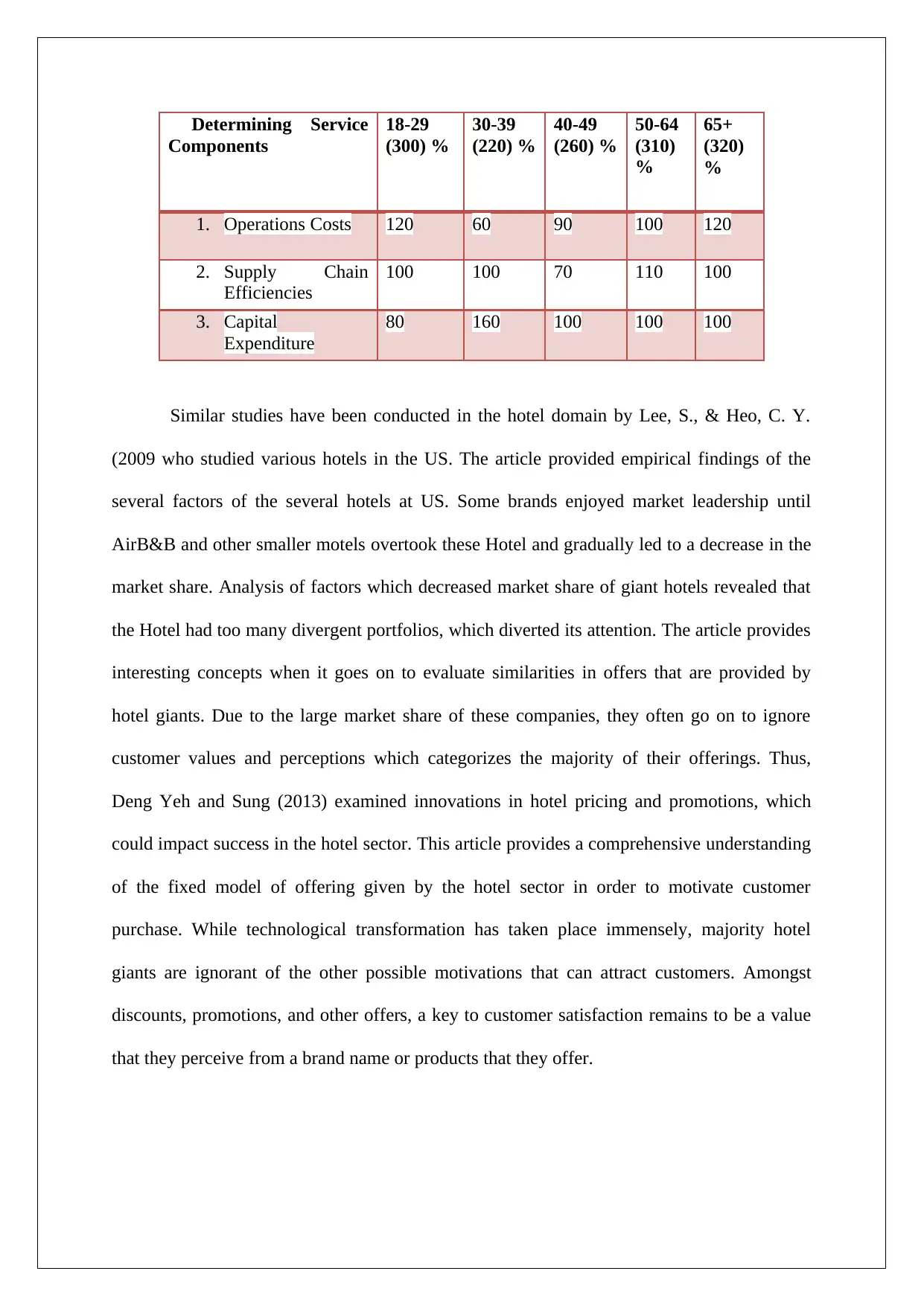
needs his focus on costs, supply chain efficiencies, capital expenditures and online channels
of sales to make sure they remain profitable.
investigated the interactive effect of cultural symbols and human values on taste evaluation.
The study is crucial for the research as it identified consumer assessing taste of food or
beverages by way of comparing human values, which are in turn symbolized by human value
priority. The article discusses implications for marketing strategy, as it suggests that
companies need to design and sell their products based on human value priorities. It can be
seen from varied reports that Hotel Centennial, restaurant currently sells 25% fewer products
in store than they did 10 years back. This has led to their lowering of medium-term margins
from 18% to 16%. The operating profits of the brand name have significantly deteriorated in
the last few years indicating a more fundamental issue existing in the Hotel. Keng and Ting
(2009) analyzed the idea of using a customer experiential value perspective. Most leading
hotel brands often experiment with their products to give surprises and additional benefits to
its customers. Innovation is the key to success in contemporary hotel business management.
Hotel failure has been greater over the past few months with some well-known brands in
Australia, UK and Europe, with their various operations not being able to perform. These
brands have been facing great financial difficulty with changed hands in sales. The impact of
irreversible technological change with the rise of online shopping have generally led to the
storm across the countries hotel segment. Measures taken by Government have also impacted
sharp austerity and reduced consumer spending. While most research papers indicate a vast
number of factors, there might some challenges deemed to be self-inflicted in nature. Most
managers in the hotel segment believe that the need to perceive customer demands and cater
to products accordingly. Failure in estimating consumer demands and choice criteria, and not
having the right product to buy at the right time might affect hotel brand name. An hotelier
needs his focus on costs, supply chain efficiencies, capital expenditures and online channels
of sales to make sure they remain profitable.
⊘ This is a preview!⊘
Do you want full access?
Subscribe today to unlock all pages.
Trusted by 1+ million students worldwide
Determining Service
Components
18-29
(300) %
30-39
(220) %
40-49
(260) %
50-64
(310)
%
65+
(320)
%
1. Operations Costs 120 60 90 100 120
2. Supply Chain
Efficiencies
100 100 70 110 100
3. Capital
Expenditure
80 160 100 100 100
Similar studies have been conducted in the hotel domain by Lee, S., & Heo, C. Y.
(2009 who studied various hotels in the US. The article provided empirical findings of the
several factors of the several hotels at US. Some brands enjoyed market leadership until
AirB&B and other smaller motels overtook these Hotel and gradually led to a decrease in the
market share. Analysis of factors which decreased market share of giant hotels revealed that
the Hotel had too many divergent portfolios, which diverted its attention. The article provides
interesting concepts when it goes on to evaluate similarities in offers that are provided by
hotel giants. Due to the large market share of these companies, they often go on to ignore
customer values and perceptions which categorizes the majority of their offerings. Thus,
Deng Yeh and Sung (2013) examined innovations in hotel pricing and promotions, which
could impact success in the hotel sector. This article provides a comprehensive understanding
of the fixed model of offering given by the hotel sector in order to motivate customer
purchase. While technological transformation has taken place immensely, majority hotel
giants are ignorant of the other possible motivations that can attract customers. Amongst
discounts, promotions, and other offers, a key to customer satisfaction remains to be a value
that they perceive from a brand name or products that they offer.
Components
18-29
(300) %
30-39
(220) %
40-49
(260) %
50-64
(310)
%
65+
(320)
%
1. Operations Costs 120 60 90 100 120
2. Supply Chain
Efficiencies
100 100 70 110 100
3. Capital
Expenditure
80 160 100 100 100
Similar studies have been conducted in the hotel domain by Lee, S., & Heo, C. Y.
(2009 who studied various hotels in the US. The article provided empirical findings of the
several factors of the several hotels at US. Some brands enjoyed market leadership until
AirB&B and other smaller motels overtook these Hotel and gradually led to a decrease in the
market share. Analysis of factors which decreased market share of giant hotels revealed that
the Hotel had too many divergent portfolios, which diverted its attention. The article provides
interesting concepts when it goes on to evaluate similarities in offers that are provided by
hotel giants. Due to the large market share of these companies, they often go on to ignore
customer values and perceptions which categorizes the majority of their offerings. Thus,
Deng Yeh and Sung (2013) examined innovations in hotel pricing and promotions, which
could impact success in the hotel sector. This article provides a comprehensive understanding
of the fixed model of offering given by the hotel sector in order to motivate customer
purchase. While technological transformation has taken place immensely, majority hotel
giants are ignorant of the other possible motivations that can attract customers. Amongst
discounts, promotions, and other offers, a key to customer satisfaction remains to be a value
that they perceive from a brand name or products that they offer.
Paraphrase This Document
Need a fresh take? Get an instant paraphrase of this document with our AI Paraphraser
Perception Customer
Values
18-29
(200) %
30-39
(320) %
40-49
(280) %
50-64
(350)
%
65+
(220)
%
4. Human Values 60 100 80 100 70
5. Technological
Transformation
50 120 120 150 100
6. Failure in
synchronizing with
brand
90 100 80 100 50
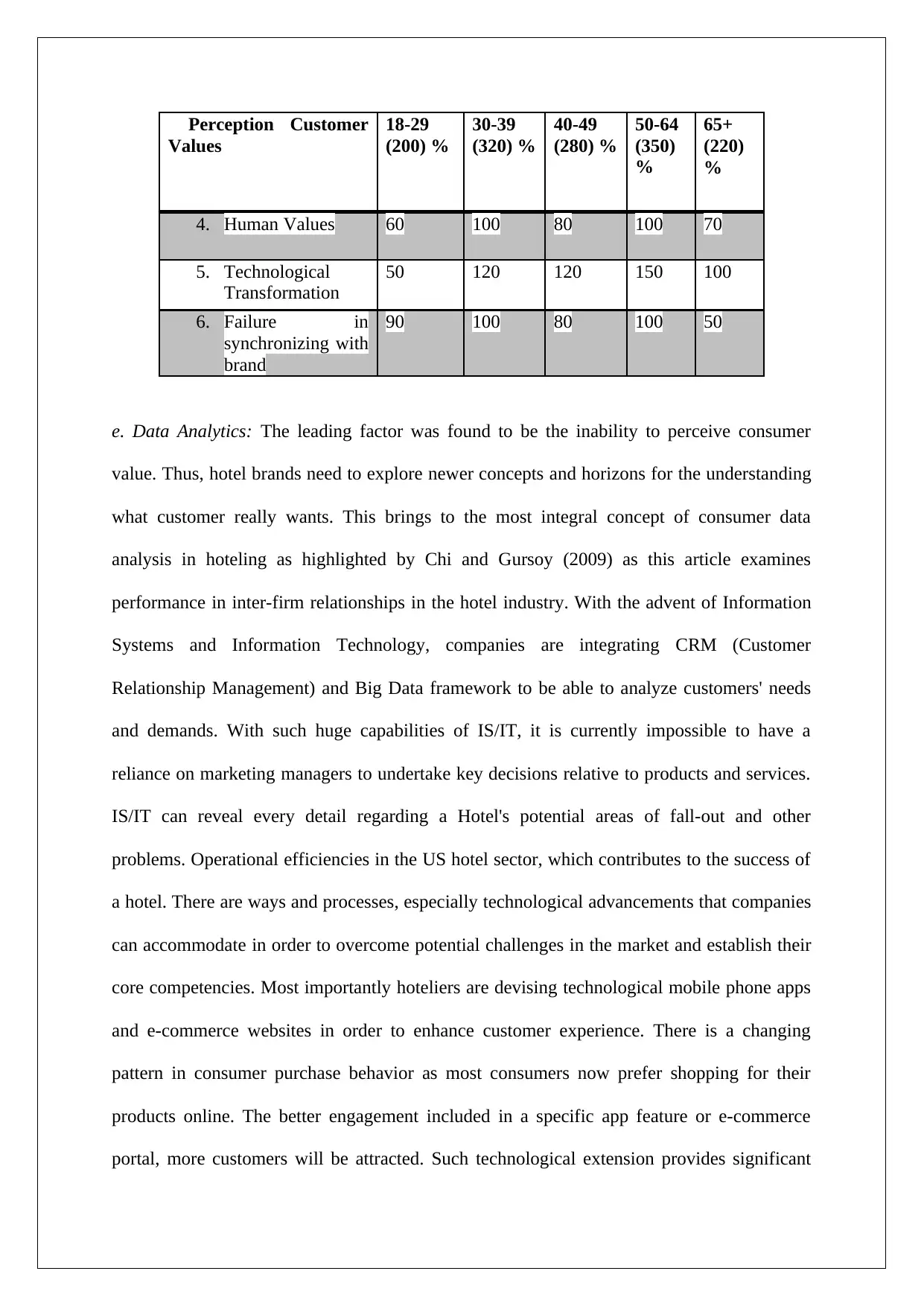
e. Data Analytics: The leading factor was found to be the inability to perceive consumer
value. Thus, hotel brands need to explore newer concepts and horizons for the understanding
what customer really wants. This brings to the most integral concept of consumer data
analysis in hoteling as highlighted by Chi and Gursoy (2009) as this article examines
performance in inter-firm relationships in the hotel industry. With the advent of Information
Systems and Information Technology, companies are integrating CRM (Customer
Relationship Management) and Big Data framework to be able to analyze customers' needs
and demands. With such huge capabilities of IS/IT, it is currently impossible to have a
reliance on marketing managers to undertake key decisions relative to products and services.
IS/IT can reveal every detail regarding a Hotel's potential areas of fall-out and other
problems. Operational efficiencies in the US hotel sector, which contributes to the success of
a hotel. There are ways and processes, especially technological advancements that companies
can accommodate in order to overcome potential challenges in the market and establish their
core competencies. Most importantly hoteliers are devising technological mobile phone apps
and e-commerce websites in order to enhance customer experience. There is a changing
pattern in consumer purchase behavior as most consumers now prefer shopping for their
products online. The better engagement included in a specific app feature or e-commerce
portal, more customers will be attracted. Such technological extension provides significant
Values
18-29
(200) %
30-39
(320) %
40-49
(280) %
50-64
(350)
%
65+
(220)
%
4. Human Values 60 100 80 100 70
5. Technological
Transformation
50 120 120 150 100
6. Failure in
synchronizing with
brand
90 100 80 100 50
e. Data Analytics: The leading factor was found to be the inability to perceive consumer
value. Thus, hotel brands need to explore newer concepts and horizons for the understanding
what customer really wants. This brings to the most integral concept of consumer data
analysis in hoteling as highlighted by Chi and Gursoy (2009) as this article examines
performance in inter-firm relationships in the hotel industry. With the advent of Information
Systems and Information Technology, companies are integrating CRM (Customer
Relationship Management) and Big Data framework to be able to analyze customers' needs
and demands. With such huge capabilities of IS/IT, it is currently impossible to have a
reliance on marketing managers to undertake key decisions relative to products and services.
IS/IT can reveal every detail regarding a Hotel's potential areas of fall-out and other
problems. Operational efficiencies in the US hotel sector, which contributes to the success of
a hotel. There are ways and processes, especially technological advancements that companies
can accommodate in order to overcome potential challenges in the market and establish their
core competencies. Most importantly hoteliers are devising technological mobile phone apps
and e-commerce websites in order to enhance customer experience. There is a changing
pattern in consumer purchase behavior as most consumers now prefer shopping for their
products online. The better engagement included in a specific app feature or e-commerce
portal, more customers will be attracted. Such technological extension provides significant
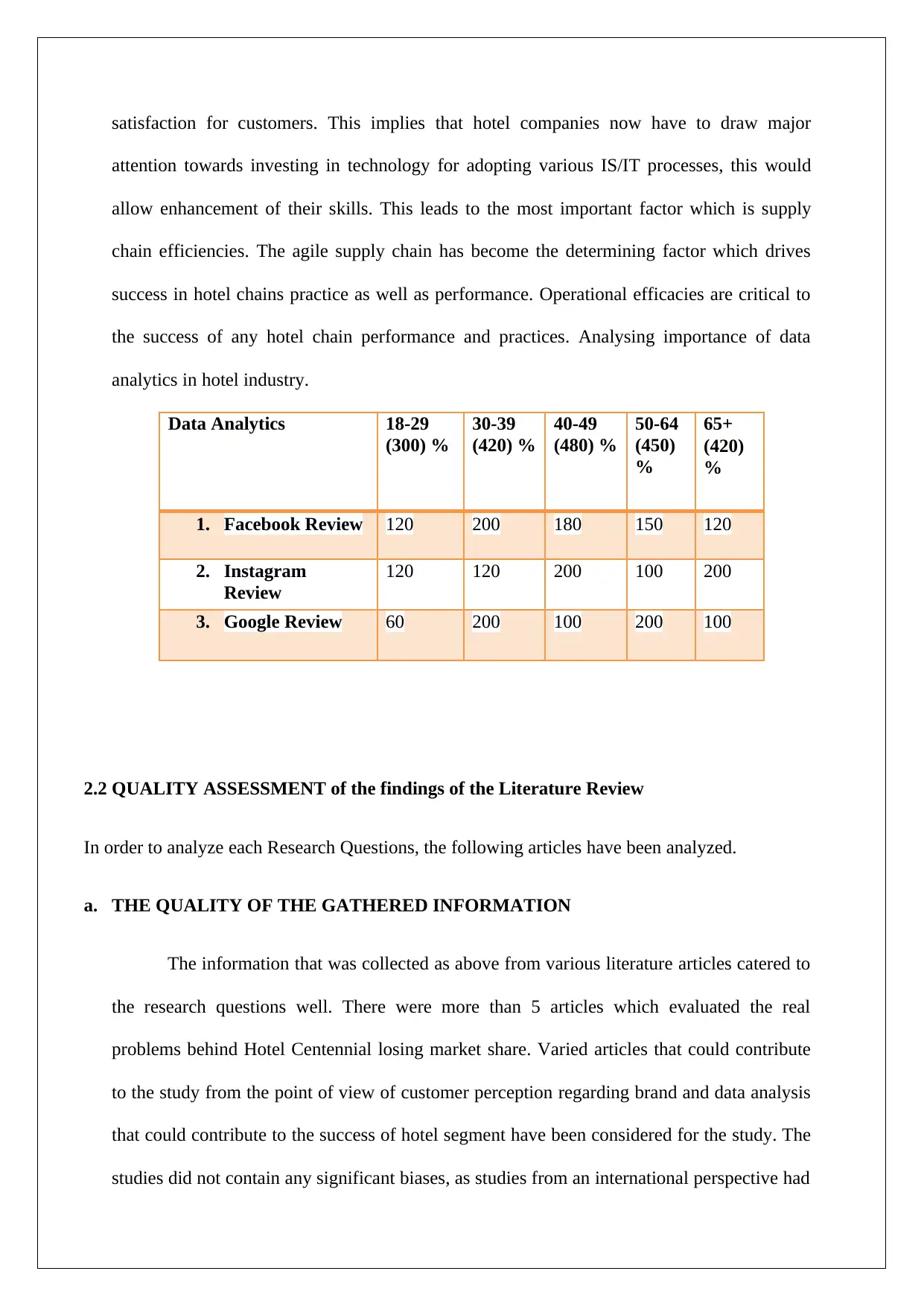
satisfaction for customers. This implies that hotel companies now have to draw major
attention towards investing in technology for adopting various IS/IT processes, this would
allow enhancement of their skills. This leads to the most important factor which is supply
chain efficiencies. The agile supply chain has become the determining factor which drives
success in hotel chains practice as well as performance. Operational efficacies are critical to
the success of any hotel chain performance and practices. Analysing importance of data
analytics in hotel industry.
Data Analytics 18-29
(300) %
30-39
(420) %
40-49
(480) %
50-64
(450)
%
65+
(420)
%
1. Facebook Review 120 200 180 150 120
2. Instagram
Review
120 120 200 100 200
3. Google Review 60 200 100 200 100
2.2 QUALITY ASSESSMENT of the findings of the Literature Review
In order to analyze each Research Questions, the following articles have been analyzed.
a. THE QUALITY OF THE GATHERED INFORMATION
The information that was collected as above from various literature articles catered to
the research questions well. There were more than 5 articles which evaluated the real
problems behind Hotel Centennial losing market share. Varied articles that could contribute
to the study from the point of view of customer perception regarding brand and data analysis
that could contribute to the success of hotel segment have been considered for the study. The
studies did not contain any significant biases, as studies from an international perspective had
attention towards investing in technology for adopting various IS/IT processes, this would
allow enhancement of their skills. This leads to the most important factor which is supply
chain efficiencies. The agile supply chain has become the determining factor which drives
success in hotel chains practice as well as performance. Operational efficacies are critical to
the success of any hotel chain performance and practices. Analysing importance of data
analytics in hotel industry.
Data Analytics 18-29
(300) %
30-39
(420) %
40-49
(480) %
50-64
(450)
%
65+
(420)
%
1. Facebook Review 120 200 180 150 120
2. Instagram
Review
120 120 200 100 200
3. Google Review 60 200 100 200 100
2.2 QUALITY ASSESSMENT of the findings of the Literature Review
In order to analyze each Research Questions, the following articles have been analyzed.
a. THE QUALITY OF THE GATHERED INFORMATION
The information that was collected as above from various literature articles catered to
the research questions well. There were more than 5 articles which evaluated the real
problems behind Hotel Centennial losing market share. Varied articles that could contribute
to the study from the point of view of customer perception regarding brand and data analysis
that could contribute to the success of hotel segment have been considered for the study. The
studies did not contain any significant biases, as studies from an international perspective had
⊘ This is a preview!⊘
Do you want full access?
Subscribe today to unlock all pages.
Trusted by 1+ million students worldwide
been collected. No country based analytical study had been considered for this study as it
could lead to significant cultural biases. As indicated above studies not older than 10 years
had been selected and other studies from before that period had been excluded. Each of the
studies was limited in scope identifying relevant areas of knowledge. As journals of customer
perception dealt with customer attitudes and customer behavior. Moreover, journals of data
analysis impact on the hotel segment dealt with such preview.
b. THE REMAINING GAPS IN THE KNOWLEDGE
Deriving from the above literature, it can be ascertained that various factors affect
sales in the hotel sector. While business processes are being transformed gradually there is a
great reliance on technology to substitute human capabilities. Major hotel giants make use of
extensive data collection and analysis for making major decisions related to their brand name.
Thus, the role of this study will aim at fulfilling the gap existing in previous literature to
identify the role of technology indirectly contributing to the hotel industry.
SECTION 3: METHODOLOGY
3.1 RESEARCH OBJECTIVE
The current scope of the study will aim at filling the literature gap to identify ways in
which technology could impact success in the hotel segment in Australia (Neuman, 2013).
could lead to significant cultural biases. As indicated above studies not older than 10 years
had been selected and other studies from before that period had been excluded. Each of the
studies was limited in scope identifying relevant areas of knowledge. As journals of customer
perception dealt with customer attitudes and customer behavior. Moreover, journals of data
analysis impact on the hotel segment dealt with such preview.
b. THE REMAINING GAPS IN THE KNOWLEDGE
Deriving from the above literature, it can be ascertained that various factors affect
sales in the hotel sector. While business processes are being transformed gradually there is a
great reliance on technology to substitute human capabilities. Major hotel giants make use of
extensive data collection and analysis for making major decisions related to their brand name.
Thus, the role of this study will aim at fulfilling the gap existing in previous literature to
identify the role of technology indirectly contributing to the hotel industry.
SECTION 3: METHODOLOGY
3.1 RESEARCH OBJECTIVE
The current scope of the study will aim at filling the literature gap to identify ways in
which technology could impact success in the hotel segment in Australia (Neuman, 2013).
Paraphrase This Document
Need a fresh take? Get an instant paraphrase of this document with our AI Paraphraser
None of the literature identified above contributes directly to identify the contribution of
technology in the hotel domain.
3.2 RESEARCH APPROACH TO APPLIED
In order to conduct this study, a suitable methodology needs to be specified as a
research methodology is the most essential part of any study. A research approach can be
qualitative or quantitative in nature on the basis of its requirement (Lewis, 2015). The study
will adopt a qualitative approach as it aims at evaluating the various factors that have led to
the diminishing market share of Hotel Centennial. The study will be guided by the conceptual
phenomenon of theoretical structure from ideas. The ideas such as customer perception
regarding a hotel brand might affect its profitability, data analysis of customers enable to
customize their offers and so on. In order to draw inferences from such general instances as
identified in the study, a top-down approach will be adopted to arrive at the more specific
approach from general ones. Thus, the deductive approach will be used for this study, as such
approaches a researcher's thought processes are guided. The study will undertake explorative
methodology to evaluate multiple primary data collected from the hotel sector to study the
problem more clearly.
3.3 DETAILS OF THE RESEARCH DESIGN AND METHODOLOGY TO BE APPLIED
As the aim of exploratory research is to study a problem more clearly and to establish
priorities and then develop operational definitions. It is ideally suited for an informal
qualitative approach for consumers, employee’s management and competitors. This type of
approach is more suited as the aim of exploratory research does not provide usefulness for
decision making; rather they provide useful insight into the given situation. Similarly,, in this
technology in the hotel domain.
3.2 RESEARCH APPROACH TO APPLIED
In order to conduct this study, a suitable methodology needs to be specified as a
research methodology is the most essential part of any study. A research approach can be
qualitative or quantitative in nature on the basis of its requirement (Lewis, 2015). The study
will adopt a qualitative approach as it aims at evaluating the various factors that have led to
the diminishing market share of Hotel Centennial. The study will be guided by the conceptual
phenomenon of theoretical structure from ideas. The ideas such as customer perception
regarding a hotel brand might affect its profitability, data analysis of customers enable to
customize their offers and so on. In order to draw inferences from such general instances as
identified in the study, a top-down approach will be adopted to arrive at the more specific
approach from general ones. Thus, the deductive approach will be used for this study, as such
approaches a researcher's thought processes are guided. The study will undertake explorative
methodology to evaluate multiple primary data collected from the hotel sector to study the
problem more clearly.
3.3 DETAILS OF THE RESEARCH DESIGN AND METHODOLOGY TO BE APPLIED
As the aim of exploratory research is to study a problem more clearly and to establish
priorities and then develop operational definitions. It is ideally suited for an informal
qualitative approach for consumers, employee’s management and competitors. This type of
approach is more suited as the aim of exploratory research does not provide usefulness for
decision making; rather they provide useful insight into the given situation. Similarly,, in this
case, the scholar is aiming at gaining suitable insight into the challenges that are currently
being faced at the hotel.
3.4 THE SPECIFIC RESEARCH TECHNIQUE RECOMMENDED
There are varied techniques available for the purpose of data collection such as Focus
Groups, Interviews, Surveys, Experiments or Observation (Gomm, 2008). In order to conduct
this study survey will be used as it is the most appropriate for this study. The survey will be
used for this study so that respondents can express their opinions more freely and are not
bounded by fixed or specific questions. As the researcher is aiming at exploring all possible
reason that could attribute to lowering of the market share of the hotel, more and versatile
opinions from participants will be required for this purpose. Moreover, according to the
population behavior, it can be ascertained that customers, employees or managers or
competitors might not be able to provide direct answers to specific questions. As they clearly
express their views and opinions, more in-depth will be the study’s findings. It might allow
reflecting on a point that earlier was not considered. This method is aligned with the
Research Approach of the exploratory method, as the aim of the study is not decision making
rather provide insight into the situation prevailing.
3.5 THE POPULATION(S)
The population that will be the focus of interest for this particular study will be
internal and external customers of the Hotel. Internal customers would include employees,
management, competitors, whereas external customers will include consumers. Primary data
or first-hand data will be collected for this study. Data will be collected from all over
Australia, especially from the major outlets of Hotel Centennial based in cities such as
Sydney, Melbourne, and so on. The data as stated above will be collected through interviews
and a population size of 200 people will be ascertained. The composition of the population
being faced at the hotel.
3.4 THE SPECIFIC RESEARCH TECHNIQUE RECOMMENDED
There are varied techniques available for the purpose of data collection such as Focus
Groups, Interviews, Surveys, Experiments or Observation (Gomm, 2008). In order to conduct
this study survey will be used as it is the most appropriate for this study. The survey will be
used for this study so that respondents can express their opinions more freely and are not
bounded by fixed or specific questions. As the researcher is aiming at exploring all possible
reason that could attribute to lowering of the market share of the hotel, more and versatile
opinions from participants will be required for this purpose. Moreover, according to the
population behavior, it can be ascertained that customers, employees or managers or
competitors might not be able to provide direct answers to specific questions. As they clearly
express their views and opinions, more in-depth will be the study’s findings. It might allow
reflecting on a point that earlier was not considered. This method is aligned with the
Research Approach of the exploratory method, as the aim of the study is not decision making
rather provide insight into the situation prevailing.
3.5 THE POPULATION(S)
The population that will be the focus of interest for this particular study will be
internal and external customers of the Hotel. Internal customers would include employees,
management, competitors, whereas external customers will include consumers. Primary data
or first-hand data will be collected for this study. Data will be collected from all over
Australia, especially from the major outlets of Hotel Centennial based in cities such as
Sydney, Melbourne, and so on. The data as stated above will be collected through interviews
and a population size of 200 people will be ascertained. The composition of the population
⊘ This is a preview!⊘
Do you want full access?
Subscribe today to unlock all pages.
Trusted by 1+ million students worldwide

1 out of 21


Related Documents


Your All-in-One AI-Powered Toolkit for Academic Success.
+13062052269
info@desklib.com
Available 24*7 on WhatsApp / Email
![[object Object]](/_next/static/media/star-bottom.7253800d.svg)
Unlock your academic potential
Copyright © 2020–2026 A2Z Services. All Rights Reserved. Developed and managed by ZUCOL.