Decision-Making, MIS, and Business Strategy Report
VerifiedAdded on 2022/08/13
|10
|1979
|21
Report
AI Summary
This report provides a comprehensive analysis of decision-making processes within organizations, focusing on the application of management information systems (MIS) to support strategic, managerial, and operational decisions. It begins with an examination of Porter's value chain analysis, illustrating how organizations can add value and gain a competitive advantage. The report then delves into the roles and responsibilities of MIS departments, the importance of decision-making at various organizational levels, and the application of sensitivity, what-if, and goal-seeking analyses. Furthermore, it explores the measurement of organizational business decisions using Key Performance Indicators (KPIs) and Critical Success Factors (CSFs). The study utilizes the Sheikh Zayed Grand Mosque Centre as a case study, providing real-world examples and insights into the practical application of these concepts.
Running head: DECISION-MAKING
DECISION-MAKING
Name of Student
Name of the University
Author Note
DECISION-MAKING
Name of Student
Name of the University
Author Note

Paraphrase This Document
Need a fresh take? Get an instant paraphrase of this document with our AI Paraphraser

1DECISION-MAKING
2DECISION-MAKING
Table of Contents
Response to question 1: Porters value chain analysis and the way the same is applied to the
selected organization to add value.............................................................................................2
Response to question 2: The roles and responsibilities of the MIS department........................3
Response to question 3: The importance of decision-making for managers.............................5
Response to question 4: Comparison of the sensitivity analysis, what if analysis and goal
seeking analysis..........................................................................................................................6
Response to question 5: Explanation and measurement of the organizational business
decision......................................................................................................................................7
References..................................................................................................................................8
Table of Contents
Response to question 1: Porters value chain analysis and the way the same is applied to the
selected organization to add value.............................................................................................2
Response to question 2: The roles and responsibilities of the MIS department........................3
Response to question 3: The importance of decision-making for managers.............................5
Response to question 4: Comparison of the sensitivity analysis, what if analysis and goal
seeking analysis..........................................................................................................................6
Response to question 5: Explanation and measurement of the organizational business
decision......................................................................................................................................7
References..................................................................................................................................8
⊘ This is a preview!⊘
Do you want full access?
Subscribe today to unlock all pages.

Trusted by 1+ million students worldwide
3DECISION-MAKING
Response to question 1: Porters value chain analysis and the way the same
is applied to the selected organization to add value
The porters value chain analysis is a concept of management that discusses about the
creation of additional value with the help of the value creation framework that ultimately
helps an organization in providing them with a competitive advantage. Moreover when an
organization provides additional value to its customers the chances of them being profitable
in the long run also increases. This concept was first developed by Michael Porter who
defined it as a collection of all those activities that a company performs in order to value for
the customers. The main advantage of the Porters value chain analysis is that it focuses on the
activities and the systems itself with the customers at the centre rather than accounting and
the department expenses activities. Moreover under the value chain analysis, the activities of
the company are divided into two main parts: primary activities and supporting activities (de
Mozota 1998). The primary activities includes- Inbound logistics activities, operations,
outbound logistics activities, marketing and sales and also services. The supporting value
activities includes- firms infrastructure, human resource management, technology
development and procurement activities.
The organization under study that is sheikh zayed grand mosque centre, provides
additional value for the customers using the Porters value chain analysis model. This is I so
because the centre provides a number of customer or visitors services such as provides
various religious courses, Al Thikr Al Hakeem, helping the visitors with their Friday Sermon
and also helps them in their Ramdan activities. A number of Quran recitation and
memorization courses are organised by the centre. The affiliates get an opportunity to
understand all the rules governing the Qur’an recitation and they also memorise the holy
Quran within the supervision of qualified reciters. Moreover the sheikh zayed grand mosque
Response to question 1: Porters value chain analysis and the way the same
is applied to the selected organization to add value
The porters value chain analysis is a concept of management that discusses about the
creation of additional value with the help of the value creation framework that ultimately
helps an organization in providing them with a competitive advantage. Moreover when an
organization provides additional value to its customers the chances of them being profitable
in the long run also increases. This concept was first developed by Michael Porter who
defined it as a collection of all those activities that a company performs in order to value for
the customers. The main advantage of the Porters value chain analysis is that it focuses on the
activities and the systems itself with the customers at the centre rather than accounting and
the department expenses activities. Moreover under the value chain analysis, the activities of
the company are divided into two main parts: primary activities and supporting activities (de
Mozota 1998). The primary activities includes- Inbound logistics activities, operations,
outbound logistics activities, marketing and sales and also services. The supporting value
activities includes- firms infrastructure, human resource management, technology
development and procurement activities.
The organization under study that is sheikh zayed grand mosque centre, provides
additional value for the customers using the Porters value chain analysis model. This is I so
because the centre provides a number of customer or visitors services such as provides
various religious courses, Al Thikr Al Hakeem, helping the visitors with their Friday Sermon
and also helps them in their Ramdan activities. A number of Quran recitation and
memorization courses are organised by the centre. The affiliates get an opportunity to
understand all the rules governing the Qur’an recitation and they also memorise the holy
Quran within the supervision of qualified reciters. Moreover the sheikh zayed grand mosque
Paraphrase This Document
Need a fresh take? Get an instant paraphrase of this document with our AI Paraphraser
4DECISION-MAKING
centre is aimed at increasing the society’s awareness with the help of various forums and
seminars. The visitors are helped with their Friday sermons with the help of Friday sermons
available on website. Moreover different projects are also organised by the sheikh zayed
grand mosque centre such as the Ramadan lanterns and Fasting guest project.
Response to question 2: The roles and responsibilities of the MIS
department
The roles and responsibilities of the MIS department includes- Chief information
officer (CIO), CKO or the chief knowledge Officer, the Chief privacy officer (CPO), the
Chief security officer (CSO) and the Chief technology officers. The Chief information officer
is responsible for looking after the use of Information technology and ensures the strategic
alignment of the same with the overall goals and objectives of business. The CKO or the
Chief knowledge officer is the one responsible for managing the organization knowledge
through its collection, maintenance and also distribution (Chaudhuri & Narasayya 2001). The
Chief privacy officer or the CPO on the other hand is responsible for making sure that the
business information is used legally and ethically. The CSO or the chief security officer is
responsible for looking after the security of the Information technology systems. The chief
technology officer is responsible for looking after the speed, accuracy, throughput,
availability and Reliability of IT. There may or may not be all these different positions in an
organization because sometimes the top managers are responsible for looking after all the
activities and the duties.
centre is aimed at increasing the society’s awareness with the help of various forums and
seminars. The visitors are helped with their Friday sermons with the help of Friday sermons
available on website. Moreover different projects are also organised by the sheikh zayed
grand mosque centre such as the Ramadan lanterns and Fasting guest project.
Response to question 2: The roles and responsibilities of the MIS
department
The roles and responsibilities of the MIS department includes- Chief information
officer (CIO), CKO or the chief knowledge Officer, the Chief privacy officer (CPO), the
Chief security officer (CSO) and the Chief technology officers. The Chief information officer
is responsible for looking after the use of Information technology and ensures the strategic
alignment of the same with the overall goals and objectives of business. The CKO or the
Chief knowledge officer is the one responsible for managing the organization knowledge
through its collection, maintenance and also distribution (Chaudhuri & Narasayya 2001). The
Chief privacy officer or the CPO on the other hand is responsible for making sure that the
business information is used legally and ethically. The CSO or the chief security officer is
responsible for looking after the security of the Information technology systems. The chief
technology officer is responsible for looking after the speed, accuracy, throughput,
availability and Reliability of IT. There may or may not be all these different positions in an
organization because sometimes the top managers are responsible for looking after all the
activities and the duties.
5DECISION-MAKING
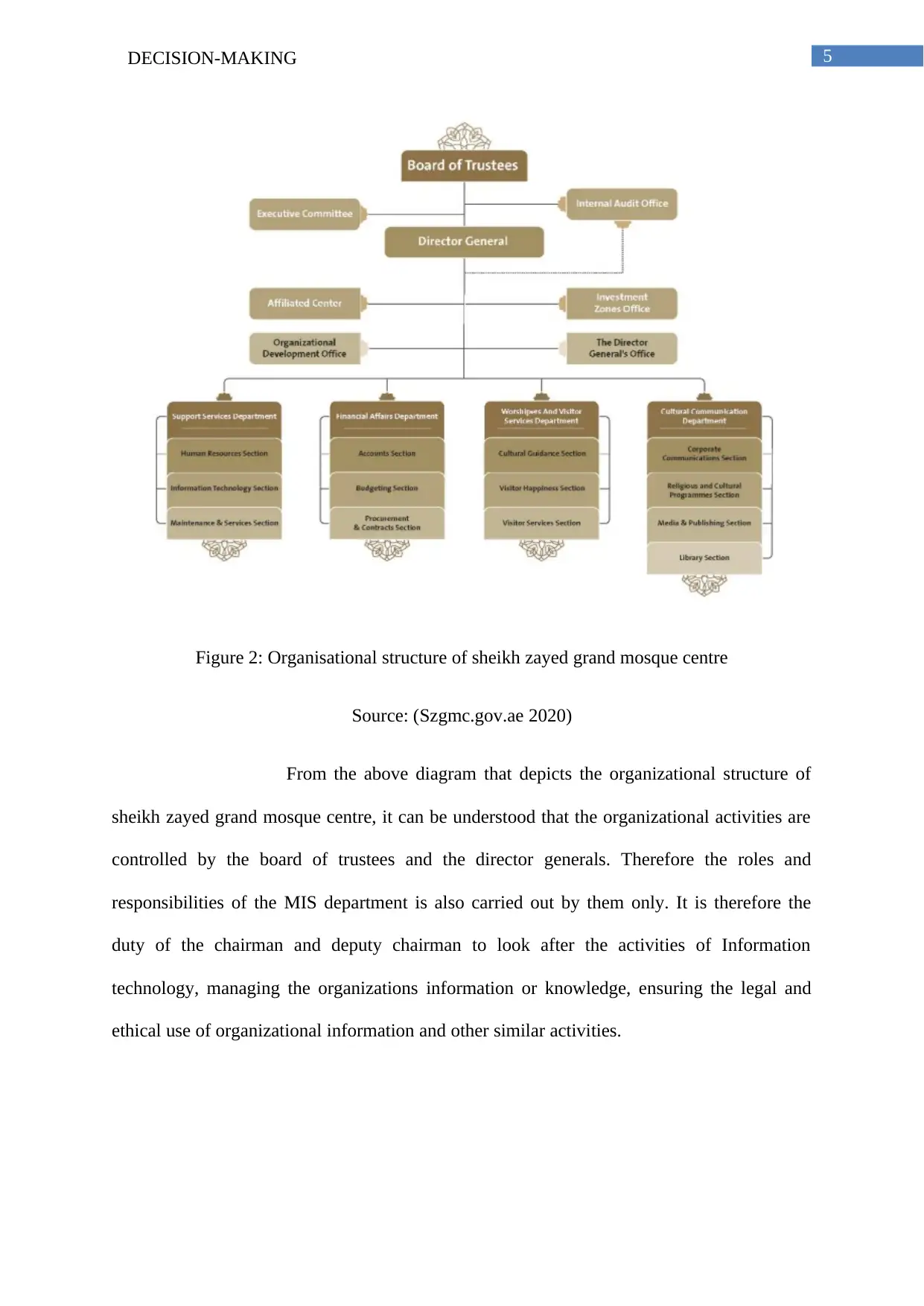
Figure 2: Organisational structure of sheikh zayed grand mosque centre
Source: (Szgmc.gov.ae 2020)
From the above diagram that depicts the organizational structure of
sheikh zayed grand mosque centre, it can be understood that the organizational activities are
controlled by the board of trustees and the director generals. Therefore the roles and
responsibilities of the MIS department is also carried out by them only. It is therefore the
duty of the chairman and deputy chairman to look after the activities of Information
technology, managing the organizations information or knowledge, ensuring the legal and
ethical use of organizational information and other similar activities.
Figure 2: Organisational structure of sheikh zayed grand mosque centre
Source: (Szgmc.gov.ae 2020)
From the above diagram that depicts the organizational structure of
sheikh zayed grand mosque centre, it can be understood that the organizational activities are
controlled by the board of trustees and the director generals. Therefore the roles and
responsibilities of the MIS department is also carried out by them only. It is therefore the
duty of the chairman and deputy chairman to look after the activities of Information
technology, managing the organizations information or knowledge, ensuring the legal and
ethical use of organizational information and other similar activities.
⊘ This is a preview!⊘
Do you want full access?
Subscribe today to unlock all pages.
Trusted by 1+ million students worldwide
6DECISION-MAKING
Response to question 3: The importance of decision-making for managers
The decisions making process comprises of six main steps that is- the problem
identification, data collection, solution generation, solution test, solution selection and
solution implementation. The decision making process is important for the managers at all the
three primary levels of strategic decision making, managerial decision making and
operational decision making. Moreover decision is made and problems are solved at every
level of the organization. Moreover the decisions made by the mangers have some major
effects on the organizations business ad also its culture. Decision making at the operations
level includes- control, development and maintenance of the business activities by the
organizational employees that are required to be carried out for the purpose of carrying out
day to day operations (Abernethy and Guthrie 1994). The decisions made at the operations
level is usually made by the lower management employees, analysts and also the staff. The
main focus of this decision is on functional and the internal activities. The time frame of this
decision includes day to day operations or the decision is usually for a shorter period of time.
The type of decision made at this level is that of recurring, structured and also
repetitive nature. The MIS type is information and the metrics for measuring these decisions
include the key performance indicators. Some of the major examples of activities or the types
of systems at this level includes- training and development, payroll, scheduling, accounts
payable and receivable. The decisions making made at the managerial level includes-
evaluation, adaptation and leverage change by the employees. The decision made at this level
is usually semi structured that is the decision s occur in situations where the established
processes help them in evaluating all the potential solutions, however it is not enough to lead
definite decisions. The employees who make the decisions at this level include- middle
management employees, directors and even managers. The main focus of these decisions is
on the cross functional activities and also internal activities, the time frame of these decisions
Response to question 3: The importance of decision-making for managers
The decisions making process comprises of six main steps that is- the problem
identification, data collection, solution generation, solution test, solution selection and
solution implementation. The decision making process is important for the managers at all the
three primary levels of strategic decision making, managerial decision making and
operational decision making. Moreover decision is made and problems are solved at every
level of the organization. Moreover the decisions made by the mangers have some major
effects on the organizations business ad also its culture. Decision making at the operations
level includes- control, development and maintenance of the business activities by the
organizational employees that are required to be carried out for the purpose of carrying out
day to day operations (Abernethy and Guthrie 1994). The decisions made at the operations
level is usually made by the lower management employees, analysts and also the staff. The
main focus of this decision is on functional and the internal activities. The time frame of this
decision includes day to day operations or the decision is usually for a shorter period of time.
The type of decision made at this level is that of recurring, structured and also
repetitive nature. The MIS type is information and the metrics for measuring these decisions
include the key performance indicators. Some of the major examples of activities or the types
of systems at this level includes- training and development, payroll, scheduling, accounts
payable and receivable. The decisions making made at the managerial level includes-
evaluation, adaptation and leverage change by the employees. The decision made at this level
is usually semi structured that is the decision s occur in situations where the established
processes help them in evaluating all the potential solutions, however it is not enough to lead
definite decisions. The employees who make the decisions at this level include- middle
management employees, directors and even managers. The main focus of these decisions is
on the cross functional activities and also internal activities, the time frame of these decisions
Paraphrase This Document
Need a fresh take? Get an instant paraphrase of this document with our AI Paraphraser
7DECISION-MAKING
is daily, monthly or yearly and therefore is usually for a shorter period of time. The MIS type
in this level is business intelligence. The third level of decision making includes a strategic
one. At this level the overall gaols and objectives and strategies are made by managers and
the decision are usually unstructured one that is there are no rules or procedures that can
guide the managers in making a right decision and therefore the decision making at this level
involves the highest risks.
Response to question 4: Comparison of the sensitivity analysis, what if
analysis and goal seeking analysis
The Managerial support system of DSS includes making use of four main quantitative
models that is what if analysis, sensitivity analysis, goal seeking analysis and optimization
analysis. The what if analysis includes checking the impact of the change in form of
assumption in the proposed solution. The sensitivity analysis includes- the study of the
change that in some parts of the models and the impact of the same on the other parts. The
goal seeking analysis includes finding inputs that can help in achieving gaols such as a
desired output level and the optimization analysis includes- extension of the goal seeking
analysis and also includes findings optimum values for targets by continuously changing the
other variables that are subject to specified constraints.
Moreover under the sensitivity analysis, the impact of a single change over the current
model is studied. For instance if the inventory levels keep on changing continually, then the
supply of the inventory may fall much below before the issues of the inventory is made to
other parts of the supply chain. This will require watching the inventory levels to understand
its sensitivity. On the other hand, the what if analysis studies the way the change affects the
inputs or the assumptions. For instance if there are any changes in the economic conditions
then the way it will be affecting the sales of a company will be called the what if analysis.
is daily, monthly or yearly and therefore is usually for a shorter period of time. The MIS type
in this level is business intelligence. The third level of decision making includes a strategic
one. At this level the overall gaols and objectives and strategies are made by managers and
the decision are usually unstructured one that is there are no rules or procedures that can
guide the managers in making a right decision and therefore the decision making at this level
involves the highest risks.
Response to question 4: Comparison of the sensitivity analysis, what if
analysis and goal seeking analysis
The Managerial support system of DSS includes making use of four main quantitative
models that is what if analysis, sensitivity analysis, goal seeking analysis and optimization
analysis. The what if analysis includes checking the impact of the change in form of
assumption in the proposed solution. The sensitivity analysis includes- the study of the
change that in some parts of the models and the impact of the same on the other parts. The
goal seeking analysis includes finding inputs that can help in achieving gaols such as a
desired output level and the optimization analysis includes- extension of the goal seeking
analysis and also includes findings optimum values for targets by continuously changing the
other variables that are subject to specified constraints.
Moreover under the sensitivity analysis, the impact of a single change over the current
model is studied. For instance if the inventory levels keep on changing continually, then the
supply of the inventory may fall much below before the issues of the inventory is made to
other parts of the supply chain. This will require watching the inventory levels to understand
its sensitivity. On the other hand, the what if analysis studies the way the change affects the
inputs or the assumptions. For instance if there are any changes in the economic conditions
then the way it will be affecting the sales of a company will be called the what if analysis.
8DECISION-MAKING
The goal seeking analysis includes carrying out an analysis to achieve a desired goal through
selection of a solution. For instance if the revenue is decided to be increased then the sales
has to be increased and the cost on the other hand has to be decreased for meeting the gaols.
Response to question 5: Explanation and measurement of the
organizational business decision
In order to measure the business decision, KPI and Critical success factors are used
The KPI or the key performance indicator is quantifiable metrics that is used by a company in
order to evaluate its progress towards the success factors (Lönnqvist and Pirttimäki, 2006).
Some of these indicators are the turnover rates, product returns, number of new customers
made by a company and also the average spending of a customer. The critical success factors
include various elements that are important for the success of business strategy and there can
be many key performance indicators for one critical success factor. And the key performance
indicators on the other hand measure the Critical success factors progress through different
internal and external measurements. External KPI includes- the market share or the share of
the market occupied by an organization and the internal KPI measures the return on
investment. Moreover efficiency and effectiveness metrics can be used for measuring the
MIS performance such as the transaction speed and others and it can also help in measuring
the impact of MIS on different activities and business processes.
The goal seeking analysis includes carrying out an analysis to achieve a desired goal through
selection of a solution. For instance if the revenue is decided to be increased then the sales
has to be increased and the cost on the other hand has to be decreased for meeting the gaols.
Response to question 5: Explanation and measurement of the
organizational business decision
In order to measure the business decision, KPI and Critical success factors are used
The KPI or the key performance indicator is quantifiable metrics that is used by a company in
order to evaluate its progress towards the success factors (Lönnqvist and Pirttimäki, 2006).
Some of these indicators are the turnover rates, product returns, number of new customers
made by a company and also the average spending of a customer. The critical success factors
include various elements that are important for the success of business strategy and there can
be many key performance indicators for one critical success factor. And the key performance
indicators on the other hand measure the Critical success factors progress through different
internal and external measurements. External KPI includes- the market share or the share of
the market occupied by an organization and the internal KPI measures the return on
investment. Moreover efficiency and effectiveness metrics can be used for measuring the
MIS performance such as the transaction speed and others and it can also help in measuring
the impact of MIS on different activities and business processes.
⊘ This is a preview!⊘
Do you want full access?
Subscribe today to unlock all pages.
Trusted by 1+ million students worldwide
9DECISION-MAKING
References
Szgmc.gov.ae (2020). Sheikh Zayed Grand Mosque Center. [online] Szgmc.gov.ae. Available
at: https://www.szgmc.gov.ae/en/Home [Accessed 16 Feb. 2020].
Chaudhuri, S., & Narasayya, V. (2001). U.S. Patent No. 6,223,171. Washington, DC: U.S.
Patent and Trademark Office.
de Mozota, B.B., 1998. Structuring strategic design management: Michael Porter's value
chain. Design Management Journal (Former Series), 9(2), pp.26-31.
Abernethy, M.A. and Guthrie, C.H., 1994. An empirical assessment of the “fit” between
strategy and management information system design. Accounting & Finance, 34(2), pp.49-
66.
Lönnqvist, A. and Pirttimäki, V., 2006. The measurement of business
intelligence. Information systems management, 23(1), p.32.
References
Szgmc.gov.ae (2020). Sheikh Zayed Grand Mosque Center. [online] Szgmc.gov.ae. Available
at: https://www.szgmc.gov.ae/en/Home [Accessed 16 Feb. 2020].
Chaudhuri, S., & Narasayya, V. (2001). U.S. Patent No. 6,223,171. Washington, DC: U.S.
Patent and Trademark Office.
de Mozota, B.B., 1998. Structuring strategic design management: Michael Porter's value
chain. Design Management Journal (Former Series), 9(2), pp.26-31.
Abernethy, M.A. and Guthrie, C.H., 1994. An empirical assessment of the “fit” between
strategy and management information system design. Accounting & Finance, 34(2), pp.49-
66.
Lönnqvist, A. and Pirttimäki, V., 2006. The measurement of business
intelligence. Information systems management, 23(1), p.32.

1 out of 10


Your All-in-One AI-Powered Toolkit for Academic Success.
+13062052269
info@desklib.com
Available 24*7 on WhatsApp / Email
![[object Object]](/_next/static/media/star-bottom.7253800d.svg)
Unlock your academic potential
Copyright © 2020–2026 A2Z Services. All Rights Reserved. Developed and managed by ZUCOL.