Assignment on Business and System Analyst Roles and Responsibilities
VerifiedAdded on 2019/09/22
|8
|1057
|213
Homework Assignment
AI Summary
This assignment presents an analysis of the roles and responsibilities of business analysts and system analysts, including required skills and knowledge. It covers key aspects such as requirement elicitation, project planning, and system design. The document also compares and contrasts the two roles, highlighting differences in their focus and tasks. Furthermore, the assignment provides a case study on a warehouse application, advocating for the use of the Scrum methodology over the SDLC process due to its adaptability and transparency in managing changing business requirements. The solution also includes a process diagram illustrating a revised approach to handling order quantities in a supply chain scenario.

exercise 10 answers
Student name:
9 November, 2016
Student name:
9 November, 2016
Paraphrase This Document
Need a fresh take? Get an instant paraphrase of this document with our AI Paraphraser

Contents
ANSWER 1.............................................................................................................................................2
ANSWER a..........................................................................................................................................2
ANSWER b.........................................................................................................................................2
ANSWER c..........................................................................................................................................3
ANSWER 2.............................................................................................................................................3
ANSWER a..........................................................................................................................................3
ANSWER b.........................................................................................................................................4
ANSWER c..........................................................................................................................................4
ANSWER d.........................................................................................................................................5
ANSWER e..........................................................................................................................................5
ANSWER 3.............................................................................................................................................5
ANSWER 4.............................................................................................................................................5
ANSWER 1.............................................................................................................................................2
ANSWER a..........................................................................................................................................2
ANSWER b.........................................................................................................................................2
ANSWER c..........................................................................................................................................3
ANSWER 2.............................................................................................................................................3
ANSWER a..........................................................................................................................................3
ANSWER b.........................................................................................................................................4
ANSWER c..........................................................................................................................................4
ANSWER d.........................................................................................................................................5
ANSWER e..........................................................................................................................................5
ANSWER 3.............................................................................................................................................5
ANSWER 4.............................................................................................................................................5

ANSWER 1
ANSWER a
The primary job responsibilities of a business analyst are:
1. To assist the project business case or scenario
2. Requirement elicitation.
3. Plan and monitor the project.
4. Organizing the requirements.
5. Requirement analysis
6. Management of requirement
7. To translate and simplify the requirement,
ANSWER b
The knowledge needed by business analyst is:
1. Business analysis tools: nowadays the tools are used for analysis and modelling, thus one
needs to have knowledge and hands on experience.
2. Visual modelling: the projects now require a visual model of the system, thus one should
have knowledge and should be able to create visual model
3. Software engineering practices: one should be well versed with software engineering
practices like SDLC, Agile etc.
4. Documentation standard practices: key role of business analyst is to prepare requirement
document thus one must have knowledge about ISO standards etc.
5. Industry standards and demands: since the technology and the requirements are changing
every day, one must keep up with them.
ANSWER a
The primary job responsibilities of a business analyst are:
1. To assist the project business case or scenario
2. Requirement elicitation.
3. Plan and monitor the project.
4. Organizing the requirements.
5. Requirement analysis
6. Management of requirement
7. To translate and simplify the requirement,
ANSWER b
The knowledge needed by business analyst is:
1. Business analysis tools: nowadays the tools are used for analysis and modelling, thus one
needs to have knowledge and hands on experience.
2. Visual modelling: the projects now require a visual model of the system, thus one should
have knowledge and should be able to create visual model
3. Software engineering practices: one should be well versed with software engineering
practices like SDLC, Agile etc.
4. Documentation standard practices: key role of business analyst is to prepare requirement
document thus one must have knowledge about ISO standards etc.
5. Industry standards and demands: since the technology and the requirements are changing
every day, one must keep up with them.
⊘ This is a preview!⊘
Do you want full access?
Subscribe today to unlock all pages.

Trusted by 1+ million students worldwide

ANSWER c
The personal traits that the business analyst need are as follows:
1. Documentation skill: one of the jobs of BA is to manage and document the requirement,
hence they should be good at preparing good documentation.
2. Problem solving skills: in a project there are always challenges and hidden requirements.
One must have abilities to get through them and bring the best results.
3. Requirement analysis skills: it is an important part. So one should be able to analyse the
requirements and create useful rules.
4. Communication skills: one must able to present his or her ideas and also have good listing
skills to gather user requirements and also provide with solutions.
ANSWER 2
ANSWER a
The primary responsibilities of a system analyst are:
1. Analysis of technical requirements
2. System planning
3. Designing the plan for the system flow
4. Ensuring technical requirements are included in the system
5. Testing the system
6. Providing visual model to the system developers in order to help them
7. Analysing system strengths and weakness or limitation
8. Deploy the system
9. Documenting the system like user guides etc.
The personal traits that the business analyst need are as follows:
1. Documentation skill: one of the jobs of BA is to manage and document the requirement,
hence they should be good at preparing good documentation.
2. Problem solving skills: in a project there are always challenges and hidden requirements.
One must have abilities to get through them and bring the best results.
3. Requirement analysis skills: it is an important part. So one should be able to analyse the
requirements and create useful rules.
4. Communication skills: one must able to present his or her ideas and also have good listing
skills to gather user requirements and also provide with solutions.
ANSWER 2
ANSWER a
The primary responsibilities of a system analyst are:
1. Analysis of technical requirements
2. System planning
3. Designing the plan for the system flow
4. Ensuring technical requirements are included in the system
5. Testing the system
6. Providing visual model to the system developers in order to help them
7. Analysing system strengths and weakness or limitation
8. Deploy the system
9. Documenting the system like user guides etc.
Paraphrase This Document
Need a fresh take? Get an instant paraphrase of this document with our AI Paraphraser

ANSWER b
Knowledge required by the system analyst are:
1. Programming language: since he or she has to deploy and test the system, thus they must
have knowledge about different languages so that they can know about the errors.
2. Visual modelling: they provide models to developers, thus they should also understand it
themself
3. Documentation practices: they are responsible to prepare documents like manuals, thus
they must have knowledge about this
4. Database: databases are backbone of an application. Thus they must have knowledge on
order to deploy the product.
5. New platforms: with the changing technological platforms, they must keep up with the
advancements
6. Testing practices: this knowledge help them to test the product and its moules.
ANSWER c
The skills that system analyst should possess are:
problem-solving skills in order to cope with challenges
The ability to gather information from previous documents and analyse them.
Good communication skills to present their ideas or implement changes.
The ability to provide technical help to developers or analyse technical requirements.
ANSWER d
No I would not choose system analysts as a profession because I have lesser inclination towards the
system development and more towards the business analyst job. I’m good at requirement
Knowledge required by the system analyst are:
1. Programming language: since he or she has to deploy and test the system, thus they must
have knowledge about different languages so that they can know about the errors.
2. Visual modelling: they provide models to developers, thus they should also understand it
themself
3. Documentation practices: they are responsible to prepare documents like manuals, thus
they must have knowledge about this
4. Database: databases are backbone of an application. Thus they must have knowledge on
order to deploy the product.
5. New platforms: with the changing technological platforms, they must keep up with the
advancements
6. Testing practices: this knowledge help them to test the product and its moules.
ANSWER c
The skills that system analyst should possess are:
problem-solving skills in order to cope with challenges
The ability to gather information from previous documents and analyse them.
Good communication skills to present their ideas or implement changes.
The ability to provide technical help to developers or analyse technical requirements.
ANSWER d
No I would not choose system analysts as a profession because I have lesser inclination towards the
system development and more towards the business analyst job. I’m good at requirement

engineering rather than software analysis. Moreover I have better visual modelling and requirement
gathering skills. So I feel less focused on being a system analyst.
ANSWER e
Job of business analyst is different from that of the system analyst. Business analyst has analyse the
requirements and then to prepare the documents whereas system analyst has to analyse the system
being developed and provide the documents to the developers developed by the business analyst.
The business analyst prepares the models whereas SA documents user manuals. Business analyst
doesn’t deploy and test the system whereas system analyst does. BA deals with business
requirements and SA deals with technical requirements.
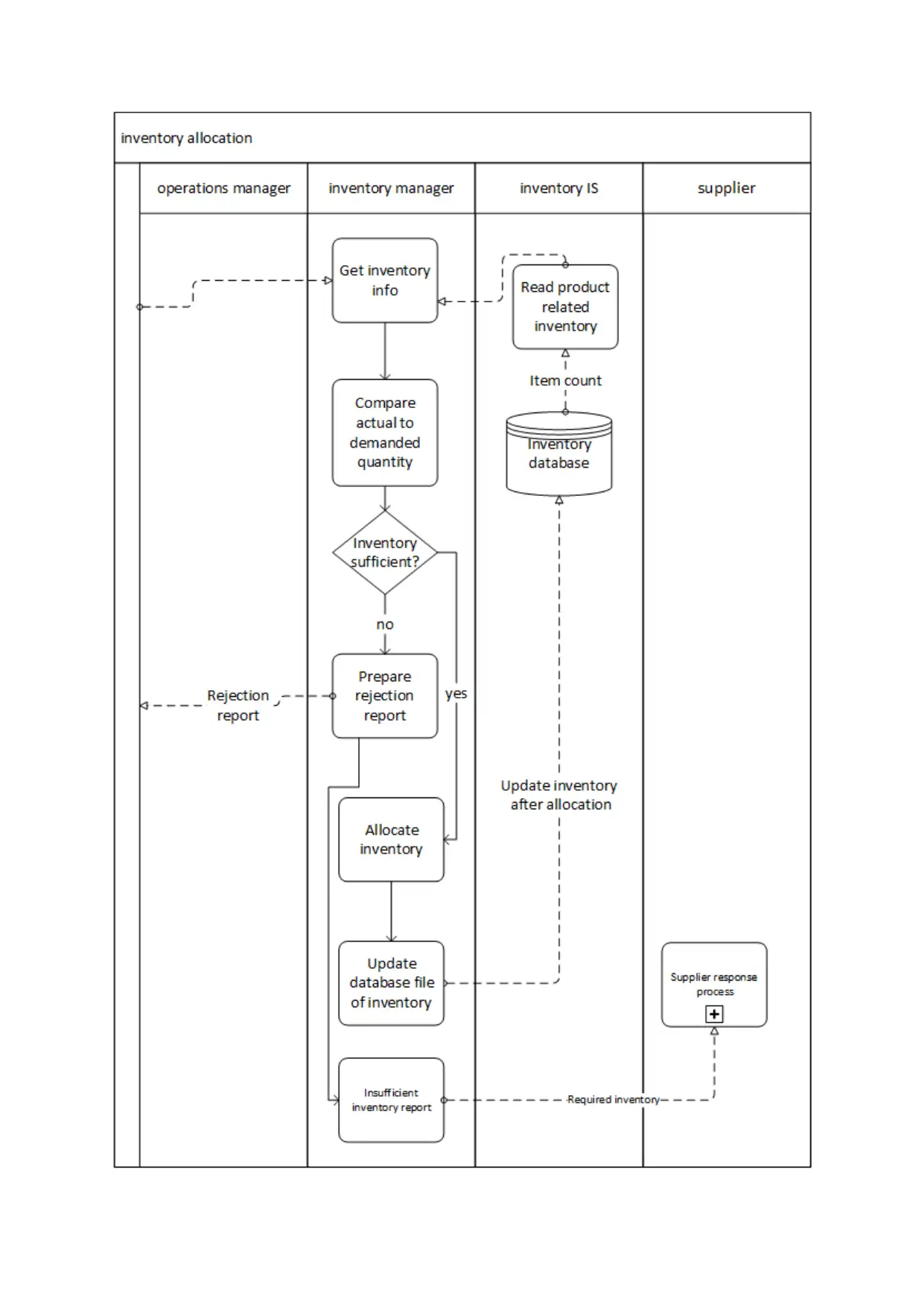
ANSWER 3
The problem with the allocation was that whenever the quantity requested was higher than the
available one, the request would be rejected and revised quotation would be accepted. But there
was no provision to prepare reports about such insufficiency and inform the supplier so that lesser
order are rejected. The same has been revised in the Process diagram which is as follows:
gathering skills. So I feel less focused on being a system analyst.
ANSWER e
Job of business analyst is different from that of the system analyst. Business analyst has analyse the
requirements and then to prepare the documents whereas system analyst has to analyse the system
being developed and provide the documents to the developers developed by the business analyst.
The business analyst prepares the models whereas SA documents user manuals. Business analyst
doesn’t deploy and test the system whereas system analyst does. BA deals with business
requirements and SA deals with technical requirements.
ANSWER 3
The problem with the allocation was that whenever the quantity requested was higher than the
available one, the request would be rejected and revised quotation would be accepted. But there
was no provision to prepare reports about such insufficiency and inform the supplier so that lesser
order are rejected. The same has been revised in the Process diagram which is as follows:
⊘ This is a preview!⊘
Do you want full access?
Subscribe today to unlock all pages.

Trusted by 1+ million students worldwide

Paraphrase This Document
Need a fresh take? Get an instant paraphrase of this document with our AI Paraphraser

ANSWER 4
The application I would choose is opening a warehouse. The most important part is creating and
maintaining inventory. I would use a scrum methodology because products are something that will
keep on increasing and there will be addition of properties to it after intervals. The SDLC process is
build and fox type. To add changes to it is a very complex, time consuming and a costly task.
Whereas a process like scrum saves time and effort. There is lack of transparency is SDLC where
scrum makes project more transparent. Large projects like warehouse require easy change
implementation, cost saving, accounting of team effort etc. In SDLC work will be divided between
teams and one will not know about the other. This make the application development a complex
process whereas in such large projects, the changes may be needed to get updated to the system
soon enough, thus team must know who is doing want. There should be a process visibility which
scrum provides. Although SCRUM needs expertise more than the SDLC methodology and the results
are better in SCRUM. Due to the changing business requirements and increasing user needs, it’s only
SCRUM that can adapt the project to the changing needs in a reliable, consistent and easy manner.
The application I would choose is opening a warehouse. The most important part is creating and
maintaining inventory. I would use a scrum methodology because products are something that will
keep on increasing and there will be addition of properties to it after intervals. The SDLC process is
build and fox type. To add changes to it is a very complex, time consuming and a costly task.
Whereas a process like scrum saves time and effort. There is lack of transparency is SDLC where
scrum makes project more transparent. Large projects like warehouse require easy change
implementation, cost saving, accounting of team effort etc. In SDLC work will be divided between
teams and one will not know about the other. This make the application development a complex
process whereas in such large projects, the changes may be needed to get updated to the system
soon enough, thus team must know who is doing want. There should be a process visibility which
scrum provides. Although SCRUM needs expertise more than the SDLC methodology and the results
are better in SCRUM. Due to the changing business requirements and increasing user needs, it’s only
SCRUM that can adapt the project to the changing needs in a reliable, consistent and easy manner.
1 out of 8
Related Documents
Your All-in-One AI-Powered Toolkit for Academic Success.
+13062052269
info@desklib.com
Available 24*7 on WhatsApp / Email
Unlock your academic potential
Copyright © 2020–2025 A2Z Services. All Rights Reserved. Developed and managed by ZUCOL.