MTH 151 H Calculus I Writing Assignment #2: Bulb Illumination
VerifiedAdded on 2023/01/17
|4
|615
|67
Homework Assignment
AI Summary
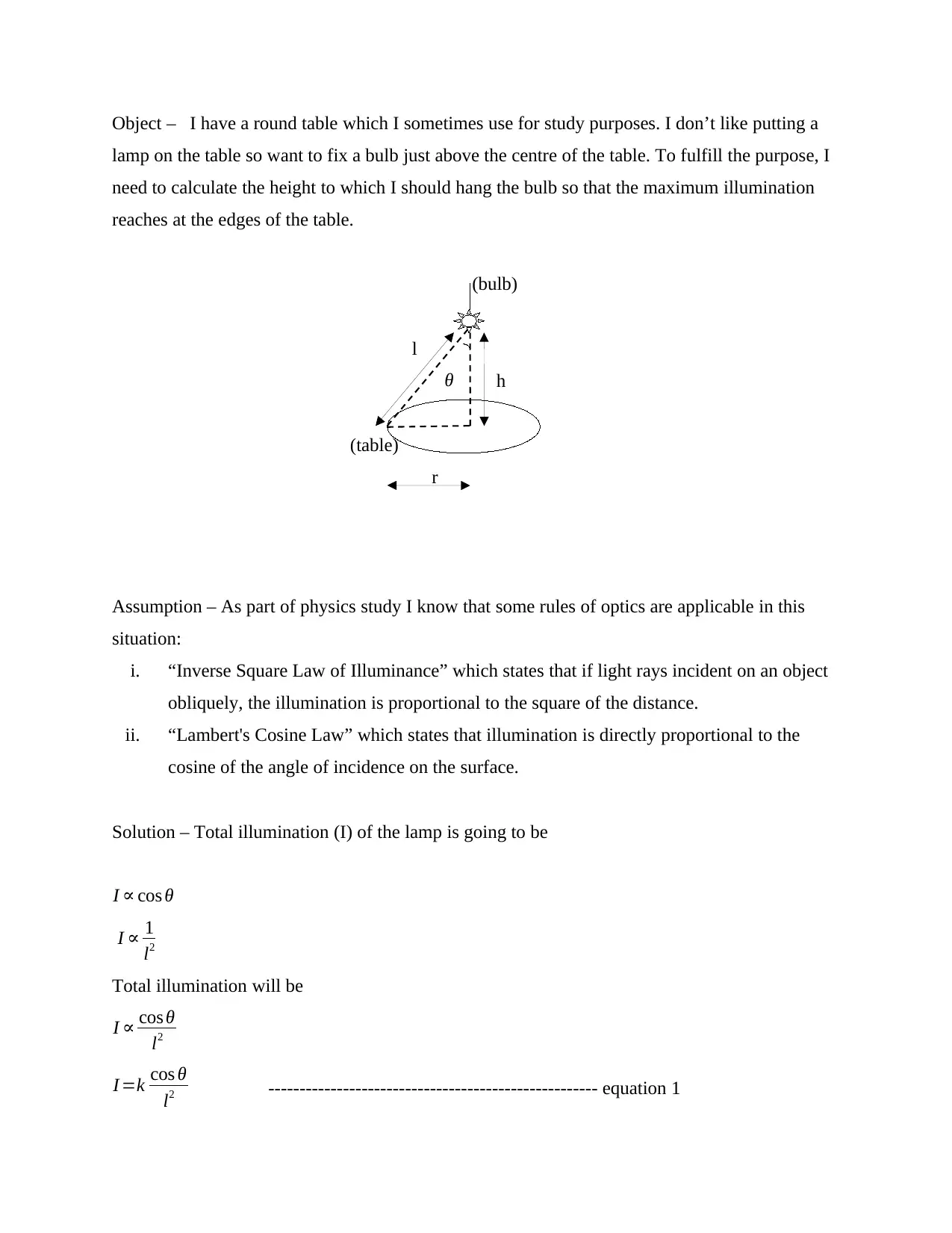
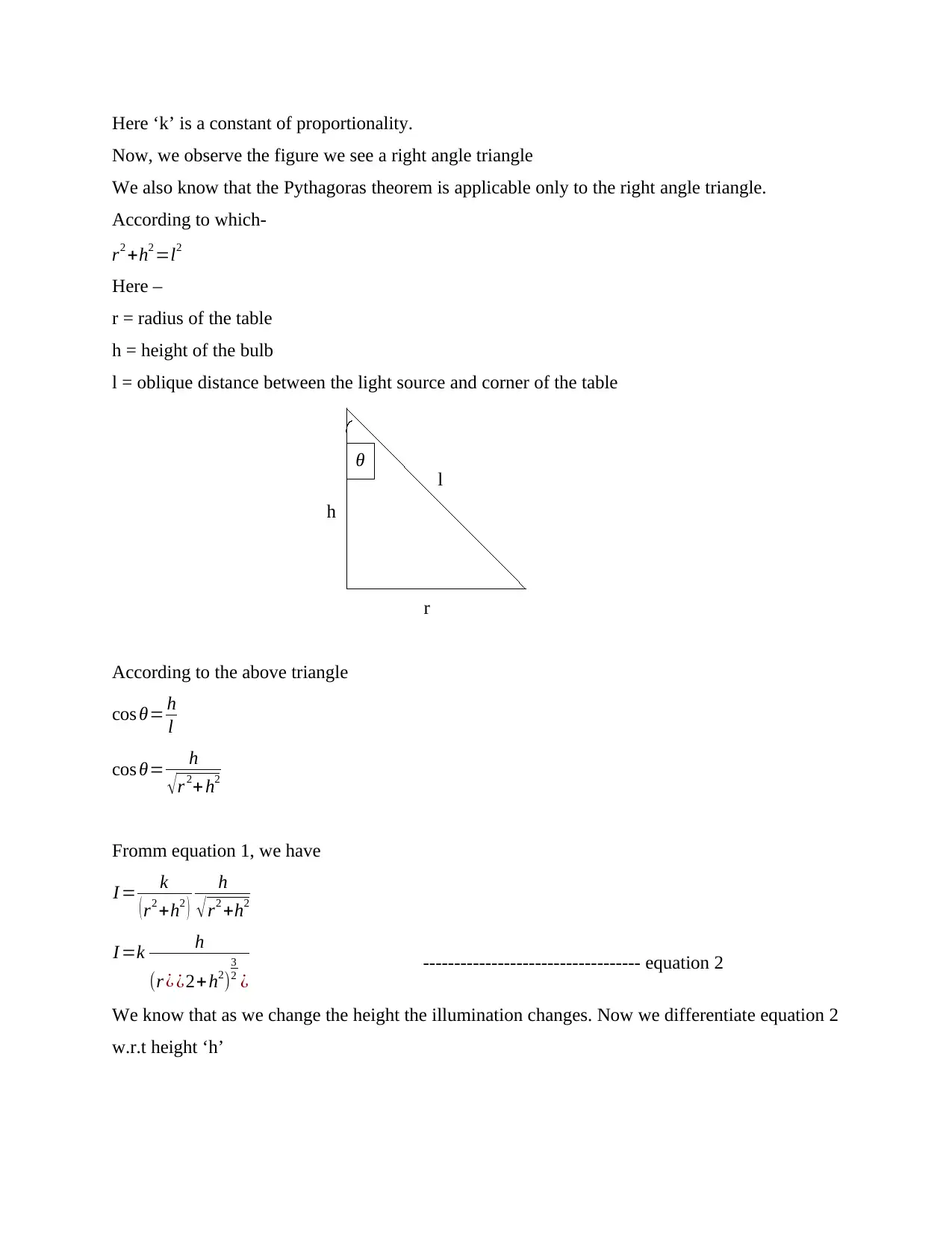
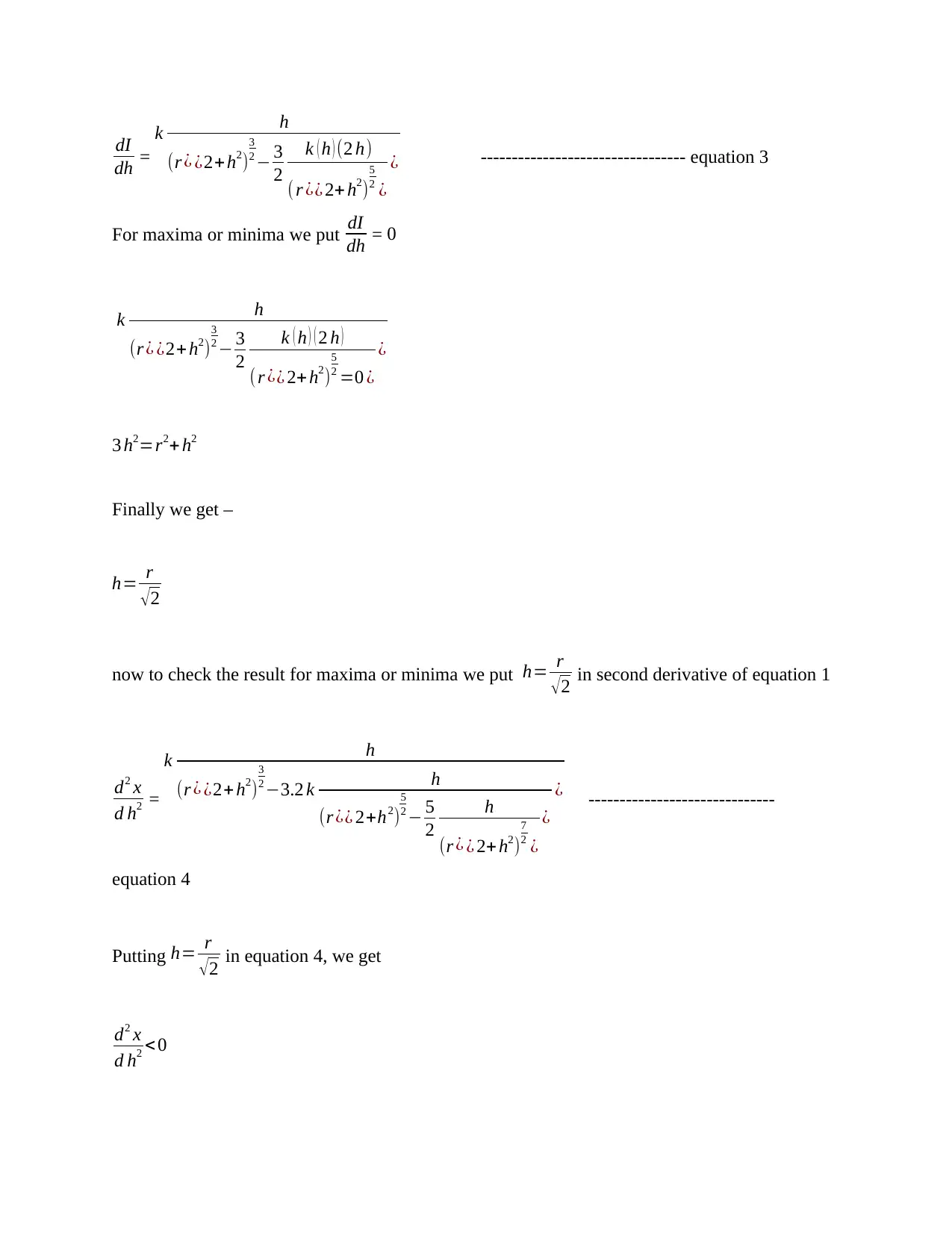
This document presents a detailed solution to a Calculus I writing assignment, creatively applying calculus principles to a real-world physics problem. The assignment focuses on determining the optimal height to hang a bulb above a round table to maximize illumination at the edges. The solution utilizes the "Inverse Square Law of Illuminance" and "Lambert's Cosine Law" from optics, formulating equations and employing differentiation to find the height that yields maximum illumination. The student applies the Pythagorean theorem and trigonometric functions to establish relationships between the bulb's height, the table's radius, and the oblique distance to the table's edge. By differentiating the illumination equation with respect to height and setting it to zero, the student derives the optimal height, demonstrating a strong understanding of calculus and its application to optimization problems. The final result, confirmed by the second derivative test, provides a clear and concise answer to the problem.




1 out of 4


Your All-in-One AI-Powered Toolkit for Academic Success.
+13062052269
info@desklib.com
Available 24*7 on WhatsApp / Email
![[object Object]](/_next/static/media/star-bottom.7253800d.svg)
Copyright © 2020–2026 A2Z Services. All Rights Reserved. Developed and managed by ZUCOL.