Financial Management: Corporate Tax, CAPM and Investment Decisions
VerifiedAdded on 2023/06/15
|8
|1594
|474
Homework Assignment
AI Summary
This assignment provides a detailed analysis of the Australian government's decision to reduce the corporate tax rate to 25%, examining both the positive and negative implications of this policy. It discusses how the tax cut aims to stimulate economic growth by attracting foreign investment and fostering job creation. However, it also considers the potential drawbacks, particularly the impact of Australia's dividend imputation system, which may limit the benefits for domestic shareholders. The analysis includes calculations and explanations related to investment returns, risk assessment using the Capital Asset Pricing Model (CAPM), and portfolio analysis. Furthermore, it evaluates the effectiveness of the tax cut in enhancing Australia's global competitiveness compared to other countries like the US, concluding with recommendations for alternative measures to promote economic growth. The assignment also contains numerical problems related to financial mathematics, including present value calculations and loan amortization.

1
Assessment 2
Assessment 2
Paraphrase This Document
Need a fresh take? Get an instant paraphrase of this document with our AI Paraphraser

2
Solution to Question 3:
Introduction
The present essay is developed for presenting an analysis of the decision of Australian
government to reduce the corporate tax rate to 25%. The corporate tax rate is regarded to be a
direct tax rate that is imposed by the government of a country on the income of a legal business
entity. In this context, the Australian government is reducing the corporate tax rate for promoting
economic growth in the country through job creation and seeking more foreign investment.
However, there are considerations regarding the benefits achieved by lowering the tax rate by the
government in the presence of the dividend imputation system which can outweigh its benefits.
In this context, the essay discusses the positive and implications associated with the Australian
corporate tax rate policy.
Positive and Negative Views Associated with Australian Tax Rate Reduction
The Australian government has introduced the legislation of Treasury Law Amendment,
that is, the Enterprise Tax Plan bill in the year 2016 with the specific aim of reduction in the
corporate tax from 30% to 25% for all the business corporations operating in Australia. The bill
was later amended to be applied only on the corporate entities having an annual turnover of less
that $25 million for the 2017-18 year and $50% for the 2018-19 year. The decision is taken by
the government with the aim to promote economic growth through improving the business
productivity and thus increasing the Gross Domestic Product (GDP). It will also help in gaining
foreign investment through promoting foreign companies to invest in Australia for realizing tax
benefits. It will also help in job creation and improving living standards of people over time.
Therefore, lowering the tax rate would promote the global competitiveness of Australia and
driving the productive growth of the business sector (Australian Taxation Office, 2018).
However, it is also assessed that that the change proposed in the tax system of the country
would cost about $2.7 billion to the government over the coming period of time. Also, it will cost
the commonwealth Budget about $48.2 billion and therefore the government has to incur large
investment in execution of corporate rate tax reduction policy (Australian Taxation Office,
2018). There is an also concern over the benefits achieved by reducing the corporate rate tax
policy with the presence of dividend tax imputation system. It is a tax system in which the tax
Solution to Question 3:
Introduction
The present essay is developed for presenting an analysis of the decision of Australian
government to reduce the corporate tax rate to 25%. The corporate tax rate is regarded to be a
direct tax rate that is imposed by the government of a country on the income of a legal business
entity. In this context, the Australian government is reducing the corporate tax rate for promoting
economic growth in the country through job creation and seeking more foreign investment.
However, there are considerations regarding the benefits achieved by lowering the tax rate by the
government in the presence of the dividend imputation system which can outweigh its benefits.
In this context, the essay discusses the positive and implications associated with the Australian
corporate tax rate policy.
Positive and Negative Views Associated with Australian Tax Rate Reduction
The Australian government has introduced the legislation of Treasury Law Amendment,
that is, the Enterprise Tax Plan bill in the year 2016 with the specific aim of reduction in the
corporate tax from 30% to 25% for all the business corporations operating in Australia. The bill
was later amended to be applied only on the corporate entities having an annual turnover of less
that $25 million for the 2017-18 year and $50% for the 2018-19 year. The decision is taken by
the government with the aim to promote economic growth through improving the business
productivity and thus increasing the Gross Domestic Product (GDP). It will also help in gaining
foreign investment through promoting foreign companies to invest in Australia for realizing tax
benefits. It will also help in job creation and improving living standards of people over time.
Therefore, lowering the tax rate would promote the global competitiveness of Australia and
driving the productive growth of the business sector (Australian Taxation Office, 2018).
However, it is also assessed that that the change proposed in the tax system of the country
would cost about $2.7 billion to the government over the coming period of time. Also, it will cost
the commonwealth Budget about $48.2 billion and therefore the government has to incur large
investment in execution of corporate rate tax reduction policy (Australian Taxation Office,
2018). There is an also concern over the benefits achieved by reducing the corporate rate tax
policy with the presence of dividend tax imputation system. It is a tax system in which the tax

3
paid by the company is imputed to the shareholders through the use of tax credit for reducing the
income tax payable on distribution. Thus, the presence of dividend imputation system in the
country eliminates the double taxation of cash payouts to the shareholders by providing them
franking credits (Reduction of Corporate Tax Rate – Benefits for Small to Medium Business,
2017).
In the presence of imputation system in Australia, the resident shareholders have to pay
out the additional tax on the dividend gain received due to reduction in corporate tax rate. This
we because franking credit available to the shareholders is dependent on the tax rate and
therefore the increased dividend received by them due to tax rate cut will be of no benefit to the
Australian shareholders. However, it many benefit the foreign shareholders in Australia as the
imputation system is not applicable for non-resident shareholders. They receive fully franked
dividends and thus the additional dividend received by them is not entitled for any further tax
and thus they will receive the benefit of corporate tax cut through gaining larger dividends.
Therefore, the implementation of the new tax rate policy in Australia of reducing the tax paid by
entities will not result in promoting economic growth in the country as the profits realized by
Australian shareholders are limited with the implementation of such policy (Corporate tax cuts –
myth, 2018).
The Australian tax rate cut reduction is not an effective step towards promoting the global
competitiveness of the country through improving its economic growth as that achieved by the
US. This is largely due to the benefits of corporate tax rate outweighed by the dividend
imputation system in the country. Thus, the government needs to identify and implement other
measures for promoting economic growth of the country (Australian Taxation Office, 2018).
Conclusion
Thus, it can be stated from the discussion held in the overall essay that corporate tax rate
cut can boost the economic growth in a country in the absence of any tax imputation system. The
presence of franking credits passed to the shareholders restrict them from achieving any extra
benefit through increased dividend received by them due to reduction in corporate tax rate.
paid by the company is imputed to the shareholders through the use of tax credit for reducing the
income tax payable on distribution. Thus, the presence of dividend imputation system in the
country eliminates the double taxation of cash payouts to the shareholders by providing them
franking credits (Reduction of Corporate Tax Rate – Benefits for Small to Medium Business,
2017).
In the presence of imputation system in Australia, the resident shareholders have to pay
out the additional tax on the dividend gain received due to reduction in corporate tax rate. This
we because franking credit available to the shareholders is dependent on the tax rate and
therefore the increased dividend received by them due to tax rate cut will be of no benefit to the
Australian shareholders. However, it many benefit the foreign shareholders in Australia as the
imputation system is not applicable for non-resident shareholders. They receive fully franked
dividends and thus the additional dividend received by them is not entitled for any further tax
and thus they will receive the benefit of corporate tax cut through gaining larger dividends.
Therefore, the implementation of the new tax rate policy in Australia of reducing the tax paid by
entities will not result in promoting economic growth in the country as the profits realized by
Australian shareholders are limited with the implementation of such policy (Corporate tax cuts –
myth, 2018).
The Australian tax rate cut reduction is not an effective step towards promoting the global
competitiveness of the country through improving its economic growth as that achieved by the
US. This is largely due to the benefits of corporate tax rate outweighed by the dividend
imputation system in the country. Thus, the government needs to identify and implement other
measures for promoting economic growth of the country (Australian Taxation Office, 2018).
Conclusion
Thus, it can be stated from the discussion held in the overall essay that corporate tax rate
cut can boost the economic growth in a country in the absence of any tax imputation system. The
presence of franking credits passed to the shareholders restrict them from achieving any extra
benefit through increased dividend received by them due to reduction in corporate tax rate.
⊘ This is a preview!⊘
Do you want full access?
Subscribe today to unlock all pages.

Trusted by 1+ million students worldwide

4
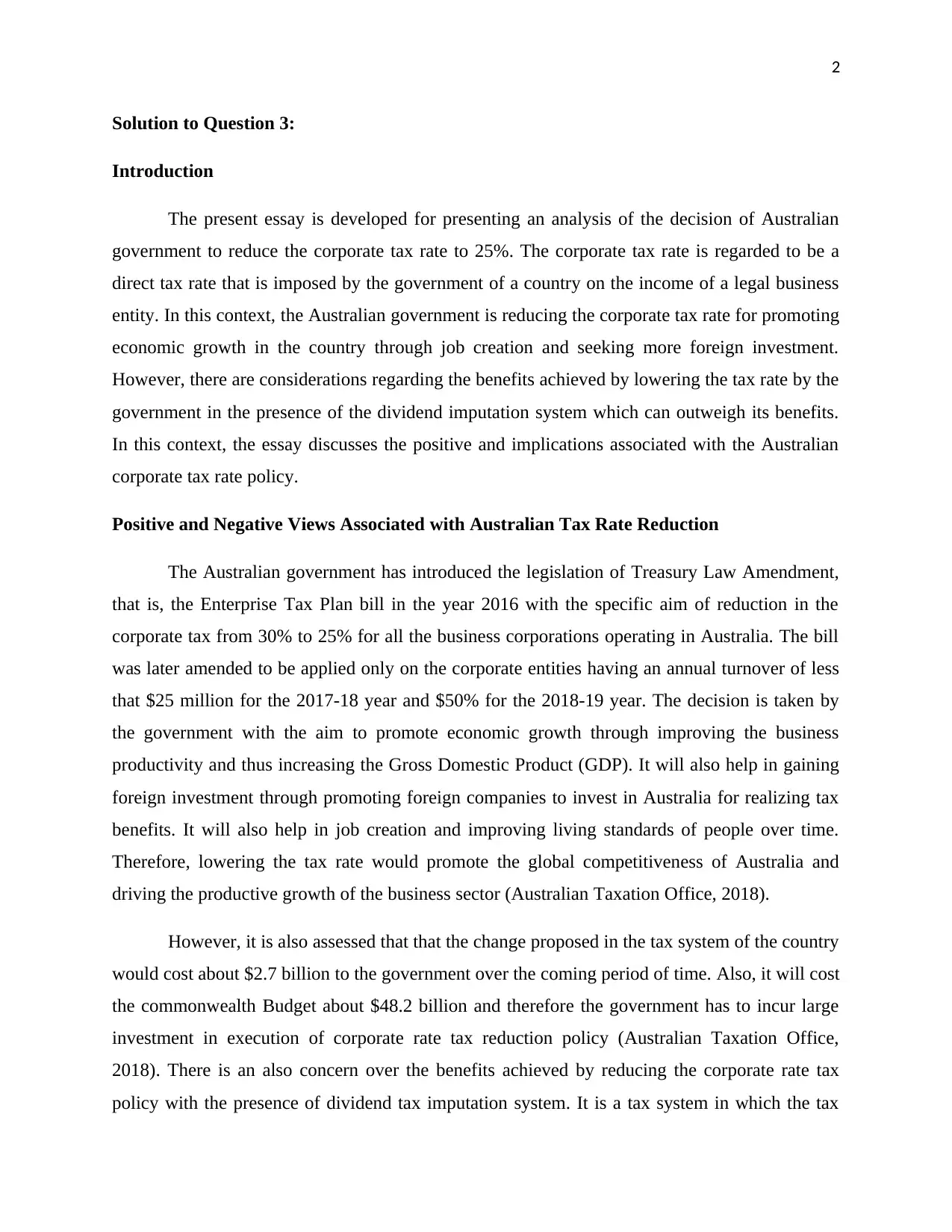
Solution to question 4:
Answer I:
Date Closing Price Holding Peroid Return (Answer i)
NAB BHP Market NAB BHP Market Portfolio
12/31/2015 26.69 21.91 4154.30
1/31/2016 24.19 22.61 4040.10 -9.37% 3.19% -2.75% -0.57%
2/29/2016 26.24 25.90 4207.30 8.47% 14.55% 4.14% 12.73%
3/31/2016 27.19 31.34 4348.00 3.62% 21.00% 3.34% 15.79%
4/30/2016 27.15 26.97 4448.30 -0.15% -13.94% 2.31% -9.80%
5/31/2016 25.43 28.56 4323.80 -6.34% 5.90% -2.80% 2.23%
6/30/2016 26.54 29.69 4588.50 4.36% 3.96% 6.12% 4.08%
7/31/2016 27.34 30.00 4479.80 3.01% 1.04% -2.37% 1.64%
8/31/2016 27.87 34.65 4480.60 1.94% 15.50% 0.02% 11.43%
9/30/2016 28.00 35.02 4395.60 0.47% 1.07% -1.90% 0.89%
10/31/2016 28.93 37.54 4506.70 3.32% 7.20% 2.53% 6.03%
11/30/2016 29.70 35.78 4695.80 2.66% -4.69% 4.20% -2.48%
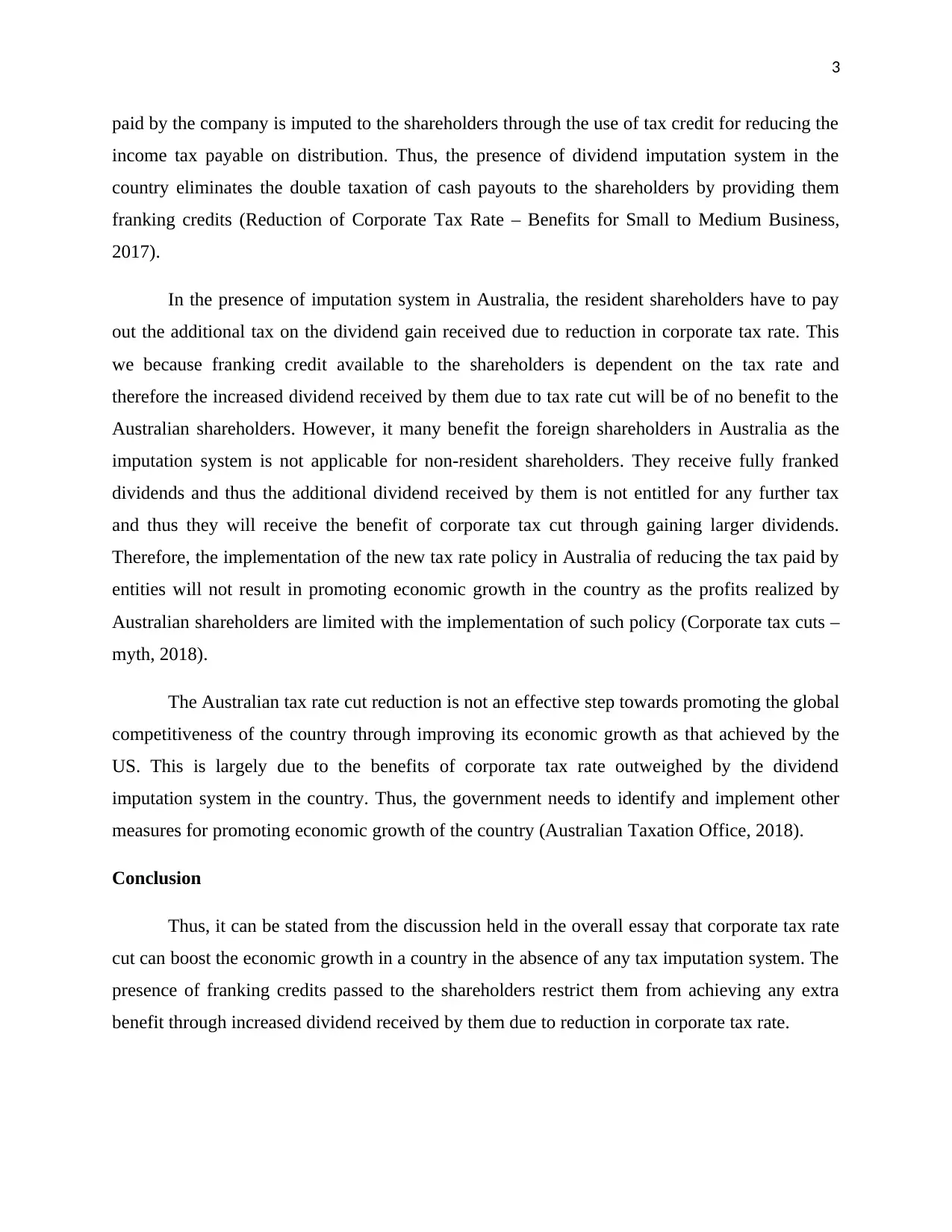
01/01/2016
01/02/2016
01/03/2016
01/04/2016
01/05/2016
01/06/2016
01/07/2016
01/08/2016
01/09/2016
01/10/2016
01/11/2016
01/12/2016
-20.00%
-15.00%
-10.00%
-5.00%
0.00%
5.00%
10.00%
15.00%
20.00%
25.00%
Holding Peroid Returns
NAB
BHP
Market
Time
HPR
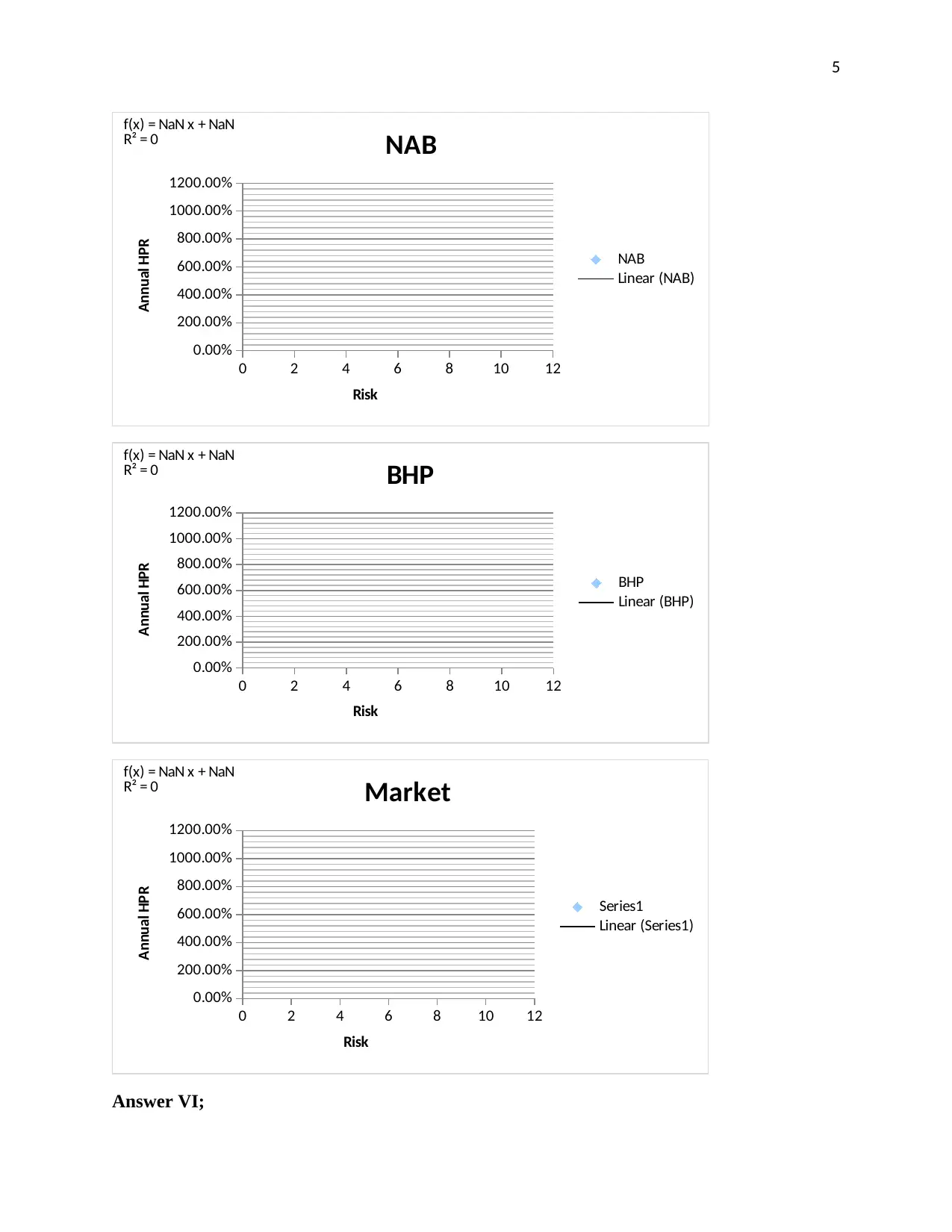
Answer II to IV:
3/31/2016 27.19 31.34 4348.00 3.62% 21.00% 3.34% 15.79%
4/30/2016 27.15 26.97 4448.30 -0.15% -13.94% 2.31% -9.80%
5/31/2016 25.43 28.56 4323.80 -6.34% 5.90% -2.80% 2.23%
6/30/2016 26.54 29.69 4588.50 4.36% 3.96% 6.12% 4.08%
Answer V:
Solution to question 4:
Answer I:
Date Closing Price Holding Peroid Return (Answer i)
NAB BHP Market NAB BHP Market Portfolio
12/31/2015 26.69 21.91 4154.30
1/31/2016 24.19 22.61 4040.10 -9.37% 3.19% -2.75% -0.57%
2/29/2016 26.24 25.90 4207.30 8.47% 14.55% 4.14% 12.73%
3/31/2016 27.19 31.34 4348.00 3.62% 21.00% 3.34% 15.79%
4/30/2016 27.15 26.97 4448.30 -0.15% -13.94% 2.31% -9.80%
5/31/2016 25.43 28.56 4323.80 -6.34% 5.90% -2.80% 2.23%
6/30/2016 26.54 29.69 4588.50 4.36% 3.96% 6.12% 4.08%
7/31/2016 27.34 30.00 4479.80 3.01% 1.04% -2.37% 1.64%
8/31/2016 27.87 34.65 4480.60 1.94% 15.50% 0.02% 11.43%
9/30/2016 28.00 35.02 4395.60 0.47% 1.07% -1.90% 0.89%
10/31/2016 28.93 37.54 4506.70 3.32% 7.20% 2.53% 6.03%
11/30/2016 29.70 35.78 4695.80 2.66% -4.69% 4.20% -2.48%
01/01/2016
01/02/2016
01/03/2016
01/04/2016
01/05/2016
01/06/2016
01/07/2016
01/08/2016
01/09/2016
01/10/2016
01/11/2016
01/12/2016
-20.00%
-15.00%
-10.00%
-5.00%
0.00%
5.00%
10.00%
15.00%
20.00%
25.00%
Holding Peroid Returns
NAB
BHP
Market
Time
HPR
Answer II to IV:
3/31/2016 27.19 31.34 4348.00 3.62% 21.00% 3.34% 15.79%
4/30/2016 27.15 26.97 4448.30 -0.15% -13.94% 2.31% -9.80%
5/31/2016 25.43 28.56 4323.80 -6.34% 5.90% -2.80% 2.23%
6/30/2016 26.54 29.69 4588.50 4.36% 3.96% 6.12% 4.08%
Answer V:
Paraphrase This Document
Need a fresh take? Get an instant paraphrase of this document with our AI Paraphraser

5
0 2 4 6 8 10 12
0.00%
200.00%
400.00%
600.00%
800.00%
1000.00%
1200.00%
f(x) = NaN x + NaN
R² = 0 NAB
NAB
Linear (NAB)
Risk
Annual HPR
0 2 4 6 8 10 12
0.00%
200.00%
400.00%
600.00%
800.00%
1000.00%
1200.00%
f(x) = NaN x + NaN
R² = 0 BHP
BHP
Linear (BHP)
Risk
Annual HPR
0 2 4 6 8 10 12
0.00%
200.00%
400.00%
600.00%
800.00%
1000.00%
1200.00%
f(x) = NaN x + NaN
R² = 0 Market
Series1
Linear (Series1)
Risk
Annual HPR
Answer VI;
0 2 4 6 8 10 12
0.00%
200.00%
400.00%
600.00%
800.00%
1000.00%
1200.00%
f(x) = NaN x + NaN
R² = 0 NAB
NAB
Linear (NAB)
Risk
Annual HPR
0 2 4 6 8 10 12
0.00%
200.00%
400.00%
600.00%
800.00%
1000.00%
1200.00%
f(x) = NaN x + NaN
R² = 0 BHP
BHP
Linear (BHP)
Risk
Annual HPR
0 2 4 6 8 10 12
0.00%
200.00%
400.00%
600.00%
800.00%
1000.00%
1200.00%
f(x) = NaN x + NaN
R² = 0 Market
Series1
Linear (Series1)
Risk
Annual HPR
Answer VI;

6
0.8
1.2
1.6
2
0.00%
2.00%
4.00%
6.00%
8.00%
10.00%
12.00%
14.00%
16.00%
f(x) = − 0.0886217765660425 x + 0.225002443482491
R² = 1
NAB
NAB
Linear (NAB)
Risk
Annual HPR
0.8 1 1.2 1.4 1.6 1.8 2 2.2
0.00%
10.00%
20.00%
30.00%
40.00%
50.00%
60.00%
70.00%
80.00%
90.00%
100.00%
f(x) = − 0.786783382410866 x + 1.67131104101424
R² = 1
BHP
BHP
Linear (BHP)
Risk
Annual HPR
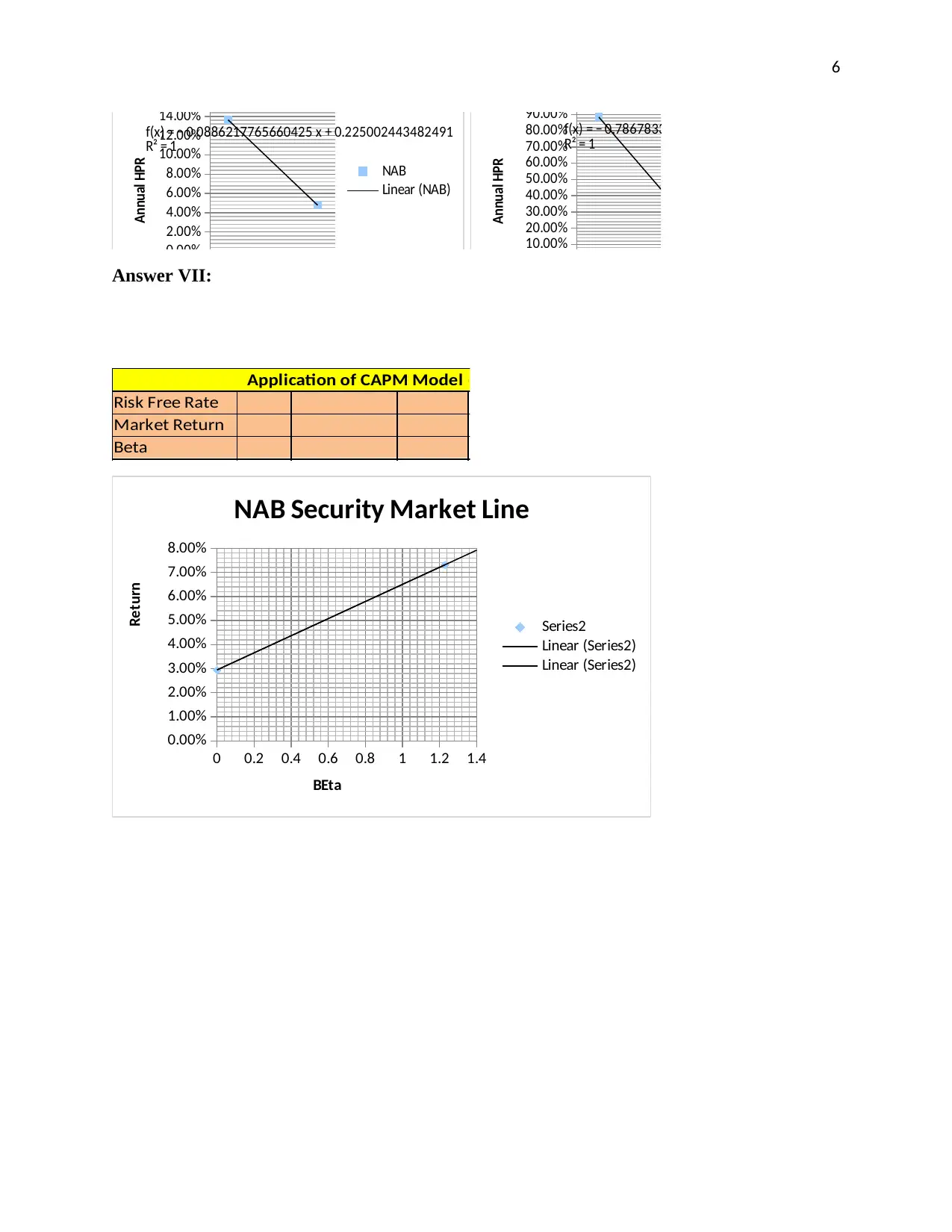
Answer VII:
Application of CAPM Model (Answer vi)
Risk Free Rate
Market Return
Beta
0 0.2 0.4 0.6 0.8 1 1.2 1.4
0.00%
1.00%
2.00%
3.00%
4.00%
5.00%
6.00%
7.00%
8.00%
NAB Security Market Line
Series2
Linear (Series2)
Linear (Series2)
BEta
Return
0.8
1.2
1.6
2
0.00%
2.00%
4.00%
6.00%
8.00%
10.00%
12.00%
14.00%
16.00%
f(x) = − 0.0886217765660425 x + 0.225002443482491
R² = 1
NAB
NAB
Linear (NAB)
Risk
Annual HPR
0.8 1 1.2 1.4 1.6 1.8 2 2.2
0.00%
10.00%
20.00%
30.00%
40.00%
50.00%
60.00%
70.00%
80.00%
90.00%
100.00%
f(x) = − 0.786783382410866 x + 1.67131104101424
R² = 1
BHP
BHP
Linear (BHP)
Risk
Annual HPR
Answer VII:
Application of CAPM Model (Answer vi)
Risk Free Rate
Market Return
Beta
0 0.2 0.4 0.6 0.8 1 1.2 1.4
0.00%
1.00%
2.00%
3.00%
4.00%
5.00%
6.00%
7.00%
8.00%
NAB Security Market Line
Series2
Linear (Series2)
Linear (Series2)
BEta
Return
⊘ This is a preview!⊘
Do you want full access?
Subscribe today to unlock all pages.

Trusted by 1+ million students worldwide

7
0 0.1 0.2 0.3 0.4 0.5 0.6 0.7 0.8 0.9 1
0.00%
1.00%
2.00%
3.00%
4.00%
5.00%
6.00%
7.00%
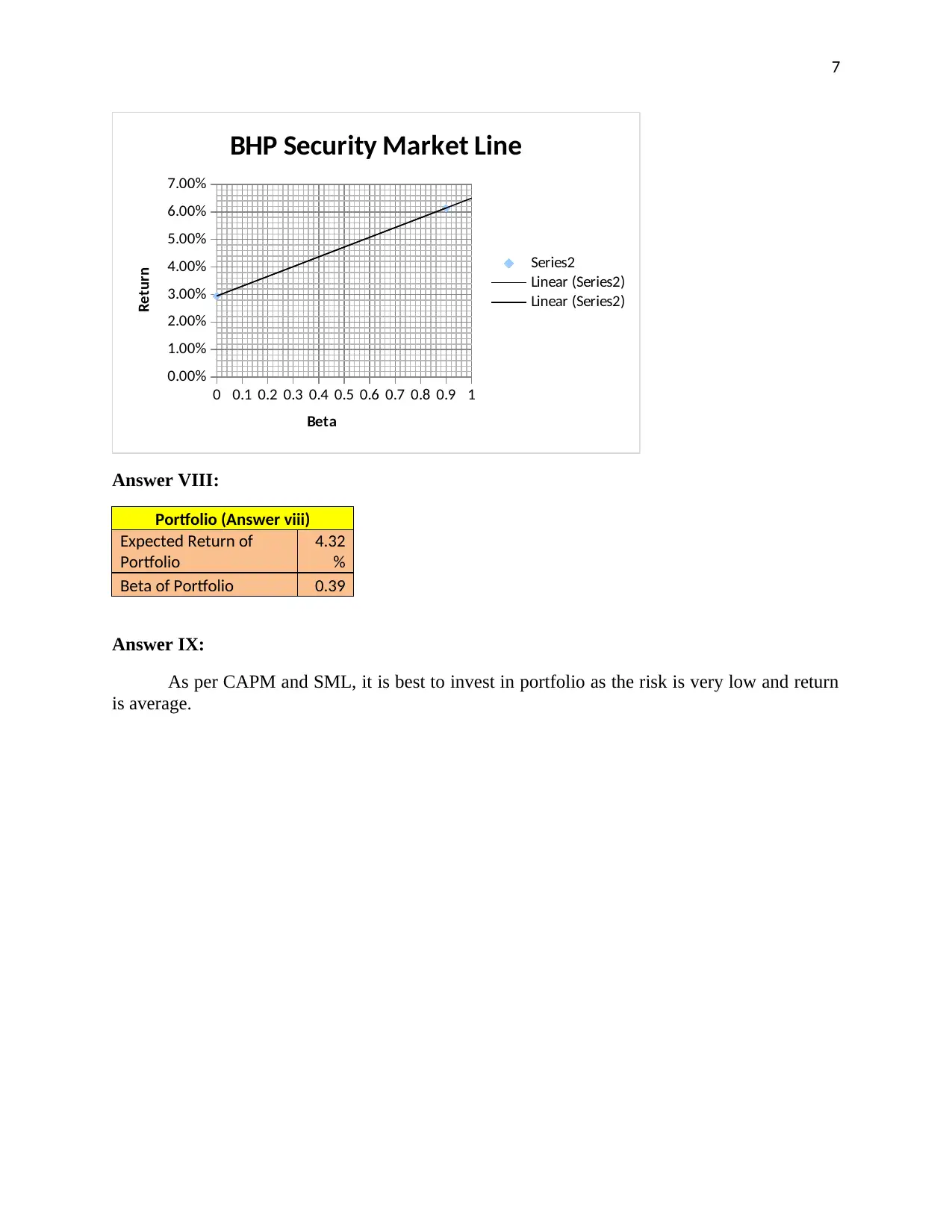
BHP Security Market Line
Series2
Linear (Series2)
Linear (Series2)
Beta
Return
Answer VIII:
Portfolio (Answer viii)
Expected Return of
Portfolio
4.32
%
Beta of Portfolio 0.39
Answer IX:
As per CAPM and SML, it is best to invest in portfolio as the risk is very low and return
is average.
0 0.1 0.2 0.3 0.4 0.5 0.6 0.7 0.8 0.9 1
0.00%
1.00%
2.00%
3.00%
4.00%
5.00%
6.00%
7.00%
BHP Security Market Line
Series2
Linear (Series2)
Linear (Series2)
Beta
Return
Answer VIII:
Portfolio (Answer viii)
Expected Return of
Portfolio
4.32
%
Beta of Portfolio 0.39
Answer IX:
As per CAPM and SML, it is best to invest in portfolio as the risk is very low and return
is average.
Paraphrase This Document
Need a fresh take? Get an instant paraphrase of this document with our AI Paraphraser

8
References
Australian Taxation Office. 2018. Reducing the corporate tax rate. Retrieved 6 April, 2018, from
https://www.ato.gov.au/General/New-legislation/In-detail/Direct-taxes/Income-tax-for-
businesses/Reducing-the-corporate-tax-rate/
Corporate tax cuts – myth?. 2018. Retrieved 6 April, 2018, from
http://www.greenwoods.com.au/insights/riposte/27-april-2017-corporate-tax-cuts-myth/
Reduction of Corporate Tax Rate – Benefits for Small to Medium Business. 2017. Retrieved 6
April, 2018, from https://www.pherrus.com.au/corporate-tax-rate-reduction/
References
Australian Taxation Office. 2018. Reducing the corporate tax rate. Retrieved 6 April, 2018, from
https://www.ato.gov.au/General/New-legislation/In-detail/Direct-taxes/Income-tax-for-
businesses/Reducing-the-corporate-tax-rate/
Corporate tax cuts – myth?. 2018. Retrieved 6 April, 2018, from
http://www.greenwoods.com.au/insights/riposte/27-april-2017-corporate-tax-cuts-myth/
Reduction of Corporate Tax Rate – Benefits for Small to Medium Business. 2017. Retrieved 6
April, 2018, from https://www.pherrus.com.au/corporate-tax-rate-reduction/
1 out of 8
Related Documents
Your All-in-One AI-Powered Toolkit for Academic Success.
+13062052269
info@desklib.com
Available 24*7 on WhatsApp / Email
Unlock your academic potential
Copyright © 2020–2026 A2Z Services. All Rights Reserved. Developed and managed by ZUCOL.